
This is the fourth of a series of 5 blog posts about the 1st Class Kidz Digital radio project that took place in Hatton Cruden PS. Introductory post can be viewed here. In relation to Enterprise in education the Curriculum for Excellence website argues that good enterprising teaching and learning should: provide opportunities for learners [...]
This is the fourth of a series of 5 blog posts about the 1st Class Kidz Digital radio project that took place in Hatton Cruden PS. Introductory post can be viewed here. In relation to Enterprise in education the Curriculum for Excellence website argues that good enterprising teaching and learning should: provide opportunities for learners [...]
This is the third of a series of 5 blog posts about the 1st Class Kidz Digital radio project that took place in Hatton Cruden PS. Introductory post can be viewed here.
 One of the most important ingredients in ant radio show id the presenter, or in the case of a music station, the DJs. I met with two sest of DJs at 1st Class Kidz Digital and chatted to both. First up are DJ Groove and DJ Tic-Tac. Have a listen to our chat:
These boys said a number of things during our chat that really chimed with me in terms of how this experience had impacted on them as learners. These phrases included,
“Mr Mier has given us the independence to work on this project”
“This radio project has made me look forward to coming to school, it’s not just textbooks now!”
“Everyone is focused on their jobs and we are all responsible…well most of us anyway!”
We learn from our mistakes…it’s a good experience to learn from your mistakes.”
I then met DJ DBoy and DJ Fluff Hop and chatted with them about what the inspiration for their comedy interludes were. To help me understand this they run through a rehearsal of their forthcoming show with me. Have a listen:
It is clear from that short chat with these boys just how involved and serious about this fun yet demanding learning experience they are. Watch out for these up and coming DJs on a local radio station near you in the future!
This is the third of a series of 5 blog posts about the 1st Class Kidz Digital radio project that took place in Hatton Cruden PS. Introductory post can be viewed here. One of the most important ingredients in ant radio show id the presenter, or in the case of a music station, the DJs. [...]
This is the third of a series of 5 blog posts about the 1st Class Kidz Digital radio project that took place in Hatton Cruden PS. Introductory post can be viewed here. One of the most important ingredients in ant radio show id the presenter, or in the case of a music station, the DJs. [...]
This is the second of a series of 5 blog posts about the 1st Class Kidz Digital radio project that took place in Hatton Cruden PS. Introductory post can be viewed here.
 One of the most important jobs at 1st Class Kidz Digital was that of the Station Manager. Efficient performance in this role was integral to any broadcasts being on time and of the appropriate quality so it was with great delight that I managed to spend some time speaking to Niamh who was a very effective StationManager. Niamh had been walking round the classroom speaking to the children and was taking time to ensure that all was well and that all tasks were well under way and that the show would be ready in time for broadcast. She then called a team whole meeting which she chaired. You can see a brief part of this meeting in this video.
After this I took some time to talk to Niamh about her role and what she felt she had learned from it. She said that she was delighted to get the role as Station manager after interview and that that process in irself was a great learning experience. She also said that she felt she had developed a great deal of confidence because she had to speak to the team all the time to ensure all was going to plan and that she had learned to listen more because she had to resolve difficulties and problems when they arose- all to the satisfaction, where possible, of everyone!
You can hear my chat with Niamh here:
I was really struck by what I saw at the team meeting. Not only was there a very confident and effective Station Manager but her team were also working in a similar way AS were the rest of the pupils when giving their updates. The children in this class have really embraced the responsibilities given to them and clearly shown how they can react in such a positive manner to learning experiences that have purpose, cohesion and relevance.
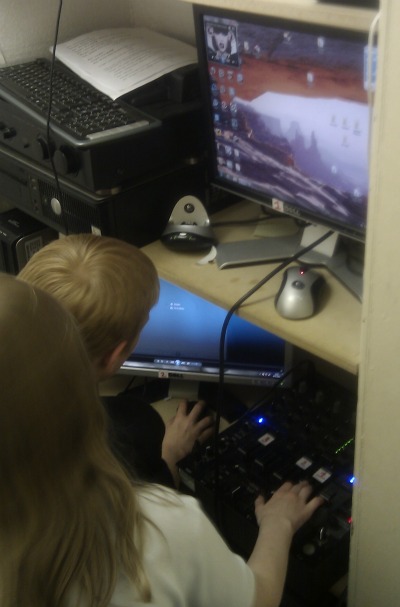 One of the most exciting and rewarding aspects of teaching is being able to bring your own talents and interests to the fore to help drive learning. Chris Mier from Hatton Cruden PS in Aberdeesnhire has done just that this year when he decided to bring the skills and experience he had honed in working in radio and DJing on the internet to the life and learning of his P.7 class. This interest of his was the catalyst for a project that crossed all curricular boundaries and made so many connections across learning. This series of 5 posts will hopefully give you a flavour of this exciting project and yet another illustration of the standards that children can achieve when the bar of aspiration and expectation is raised.
In the teacher’s cupboard in Mr Mier’s room is a cupboard. You know the type – the ones where books, paints, resources etc are kept. However, this cupboard is a little bit different from most. Have a look to see what is inside this one:

This range of resources that includes the cutting edge DJ equipment Tracktor was the resource that enabled Mr Mier to establish a whole class enterprise project based on a radio broadcasting business. 1st Class Kidz Digital radio company became a real enterprise over the course of the second half of last year in this P.7 class. My discussion with Mr Mier about this project can be heard here:
Getting started
 Mr Mier created 25 jobs in 1st Class Kidz Digital that needed to filled. This meant that the perfect opportunity to teach the children about letter writing, CVs, interview techniques within a purposeful and relevant context was established. The children then had to apply for the jobs and were then interviewed for these jobs by some of the parents of the children. Their decisions were then fed back to Mr Mier who posted the newly filled positions on the class Glow site. Once the elation and disappointment of success or other wise had settled it was down to work and to start getting the radio shows produced!
The range of jobs
A radio station needs DJs of course but what else does it require? Well, a station manager was appointed and she was in essence the boss. She held weekly whole class meetings where she was given updates on progress from the DJs, scriptwriters, jingle creators, news reporters, weather reporters, sport reporters, advertising team, art & design team and the class blogger. Each ‘employee’ had to ensure that they were on task and that all necessary work was completed by an agreed due date.
Impact on learning
Mr Mier talked about the success that this enterprising approach to learning had had on his pupils and in particular he talked about his perceptions of:
Having spent an afternoon with the team at 1st Class Kidz Digital I have to say how impressed I was with their industry, creativity and maturity. I think that this shows how Curriculum for Excellence can work so well when a teacher uses specific skills that they have to create purposeful learning experiences for children; experiences that make them want to come to school, to learn, to achieve and to show us just what they can do.
Thank you to all at Hatton Cruden PS and 1st Class Kidz Digital for making me so welcome.
Back in 2003/4 some of my colleagues at the University of Dundee introduced e-portfolio, via Blackboard, to the PGCE(S) course. This was designed to enhance levels of responsibility, ownership and peer collaboration in the course. I was not directly linked to this work as it was led by Bob Doig, Graham Williamson and Joe McLuckie but I watched it develop and grow and became very interested in how this innovative and thoughtful use of technology could enhance learning. In essence the students at Dundee used the GTC’s SITE Benchmarks as the template to which they would document their progress and achievements over the duration of the course. Students would work in peer sets of three and would offer formative feedback on each others work at set times of the academic calendar and whenever else they felt it appropriate. A range of evidence could be drawn upon to show just how the students were meeting each of the benchmarks.
These levels of learner responsibility, ownership and peer collaboration were very much in evidence ‘Doon in the Wee Room‘ in Tarves PS when I saw the children using their iCans; Aberdeenshire Council’s own solution for eportfolio. Quite some way ahead of many others in relation to this the team there had worked with RM to use their Honeycomb service to create a space where children could store their work, share it and reference it to assist in their learning. All this would link with Glow. It made me think about my time back at Dundee but also to think how delightful it was to see this same approach being used with learners of such a young age.
When I was watching the children in Mr Cordiner’s class using a range of technologies I spotted one young learner working with Digital Scrapbook. I asked her what she was doing and she told me that she was making an iCan. What this meant was that she was making her own graphic that would detail something specific that she had been learning about or how to do, and then, in her own words, she’d pop it in to Glow. Watch this video clip to see the exchange between us but when watching look at how natural a part of learning this appears to be for this young girl. It appears that the children in this class and no doubt in others where the iCan is being used are becoming more and more involved in determining the success and challenges they are having or facing in their own progress.
I spotted a display of a selection of iCans that the children had already done and captured some of them. Have a look at what these P.2 children can do.

In view of Building the Curriculum 5 and the introduction of profiles in to P.7 this coming academic year and in to S.3 as of 2012/13 it is very encouraging to see authorities such as Aberdeenshire already make headway in to the area of children developing and maintaining their own learning profiles/eportfolios. As well as the bespoke and robust solution of the Aberdeenshire’s iCan there are other schools and authorities using Glow blogs as a means of profiling too. For Scottish teachers who would like to begin to explore how you could use Glow blogs to help develop profiling/eportfolio in your own context then this Glow group is of great use. (Glow login required)
For those of you who are attending The Scottish Learning Festival 2012 this year then please do bear in mind that there are quite a few teacher led seminars related to eportfolio and how resources such as Glow blogs can assist here.
Finally, may I say thank you to all at Tarves PS for sharing their exciting and very impressive work with me and for making me so very welcome. Good luck with those iCans!
 Stop-motion animation used to be something that seemed unattainable to me. I remember many years ago watching movies that my uncle had made that had a number of toy cars and trains moving in a orchestrated fashion. Although I now know that he had been using the technique of stop-motion animation at the time I was in awe of the fact that there were no hands helping to move these toys and props… this was a strange magic! I didn’t realise that this was the same technique that was being used in many children’s TV programmes such as Bagpuss, Trumpton and movies such as King Kong (1933). A few years later stop-motion animation came very much to the fore in my generation’s TV viewing experience when Morph made his appearance on Take Hart. It was amazing to see such entertainment and life come to our screens from a simple ball of plasticene.
When I was ‘Doon in the Wee Room’ recently in Tarves PS I saw this very same entertainment, life AND learning in evidence as some P.2/3 children were making their own stop-motion animation using a basic set that they had made, stop-motion animation software, a digital camera and some plasticene. In my discussion with the class teacher I had learned that this activity had arisen as a result of a discussion with the children about 3D shape. One child had made a sphere out of plasticene but had then cut out a mouth and made the sphere talk. This led to an idea to create an animation all about 3D shape and then their subsequent attempts to bring it to life…

In relation to Curriculum for Excellence it is clear that Technologies TCH 1-04b is being addressed here but the main focus of this learning activity is embedded in Mathematics, namely a focus on 3D Shape MTH1-16a. We can also see from the video how the children are working effectively together to make this project work. Even more importantly in my view is that from this early stage in this classroom these children are being given the framework of opportunities to engage with contexts for learning where they can use digital technologies to create and not just consume. How can such positive attitudes, embedded in their perceptions of themselves as learners, at this stage of their development influence and inform these children’s expectations of themselves, their developing skill-sets and ways in which they can apply these across the range of learning experiences that they will encounter? This can only be good for learners.
The challenge for us all in education is to ensure that we continue to offer such challenging and rich learning environments and experiences where our children can show us just what they can do.
In Scotland as in many countries throughout the world, active learning is seen as an appropriate way for children and young people to develop vital skills and knowledge and a positive attitude to learning. In order for active learning to be embedded in environments that offer challenge, demand and appeal we must have teachers and support staff who are well informed and skilled enough in all requisite areas to be able to do this. This series of three blogposts will feature a teacher from Tarves PS in Aberdeenshire who has made great efforts to embed technologies into the life and learning of his classroom so that they can play an active, purposeful and integral part in his pupil’s learning experiences.
Jonathan Cordiner
Having spent 2 years on secondment as a member of the Glow Development team in Aberdeenshire Jonathan Cordiner was keen to return to class so that he could apply, in his own practice, the range of resources and approaches to learning that he had been promoting in his Development Officer role.

On a recent visit to Aberdeenshire it was recommended that I pay a visit to Jonathan’s class to see just how he had been making progress with embedding technologies in to the life and learning of his class. Having worked with him before on some GBL related initiatives I fully expected to see some good practice particularly in view of the high standard and high aspirational levels that he and the team in Glow team in Aberdeenshire attained. On arrival at the school I was welcomed with a wonderfully happy chorus of that great Scottish folk song – Doon in the Wee Room. It set the tone for our visit because it was obvious that everyone is happy, everyone is there, and we’re a’ makin’ merry each in his chair, doon in the wee room underneath the stair.
It was also immediately obvious that the high standards he had been used to in his development role had been maintained and that technology was something that the children in his P2/3 class were more than used to. I saw technology purposefully embedded across a range of contexts that included his pupils:
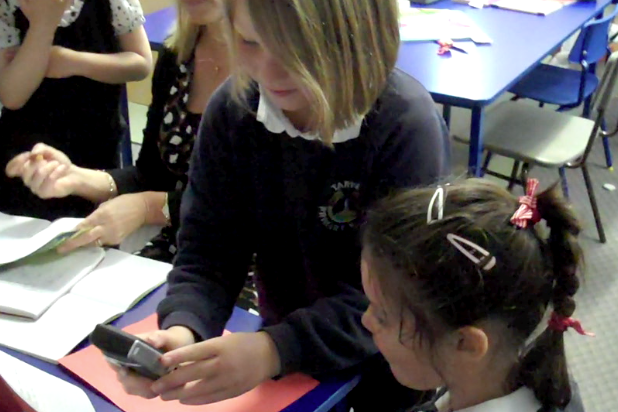 The level of competence and confidence in the use of a range of technologies displayed by the children exemplified just how a thoughtful and skilled teacher can create the active, purposeful and challenging environment that children can thrive in. You can clearly see this as you watch the video that is embedded in this post and as you do please reflect on just how at ease the children are with the technologies that you see them using. How far down the road of developing and attaining CfE outcomes such as TCH 1-03a, TCH 1-04a & TCH 1-04b do you think these children are?
If there had been more time then the aspects of CfE that were linked to the wider learning experiences in which the Technology use was embedded could have been teased out a bit more because it is clear from what I saw that Technologies were seamlessly woven in to the fabric of learning in this classroom.
Mr Cordiner’s class has since moved on to their next challenge with Technologies by making their own computer games with 2DIY. You can view some of these in their class Glow group.
What an experience these pupils are having ‘Doon in the Wee Room‘ at Tarves School. Isn’t this what school should be about? I am very pleased to say that in my experience in visiting schools throughout Scotland that there are very many teachers like Mr Cordiner who are embedding this level of challenge, demand and expectation in all aspects of learning but who are also effectively embedding technologies in and across learning.
Thank you to all at Tarves PS for sharing their great work and for making me so welcome.
On the last Tuesday of the term, I was able to talk with pupils from Loriston and Kirkhill primary schools over Glow Meet about their P7-S1 transition project. Along with Charleston and Abbotswell primary schools, all primary 7 pupils studied Healthy Living as the basis of a transition project to Kincorth Academy. This is a little taster of what went on during the project. You will be able to find out more at SLF 2011 on Thursday 22 September, 1.15pm at this seminar.
Using a dedicated glow group, pupils from all schools were asked to design and upload a flyer to promote healthy living to a document store. All pupils had access to these stores and were encouraged to look at others work and leave comments. However, flyers were not the only media that the pupils created and shared.
My ex Consolarium colleague, Charlie Love, spent time with all 4 primary schools, giving them all an overview and a few lessons on using Scratch to create games. They also used the tutorials available in the Consolarium Glow Group, as well as looked at remixing projects from the Scratch website.
The pupils were incredibly motivated and challenged by the this activity and they told me in the meeting that while it was hard to do the programming, they worked through the problems as groups. If they couldn’t find a solution, they used a forum within Glow to ask for help / get feedback from their classmates / peers in another school / a teacher.
These games were also uploaded to the Glow group for feedback from other schools. One of the boys in Kirkhill primary school told me that the feedback he got back via glow helped him make his game more playable. This was echoed by pupils at Loriston primary school.
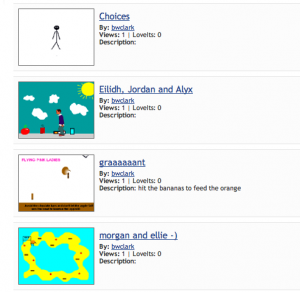 All pupils found the the online community a valuable source of help and feedback, but would of liked to have Mr Love there in person more often to help out with any problems they had. However, by not having he expert on hand, meant the the pupils did have to seek alternative help. As well as the online Glow community, in many cases, some pupils who really got into the game design / scratch projects, became the in-class expert that many pupils turned to for help.
You can play some of the games online at the Scratch website here, or, if you have a Glow account, visit the glow group and see all games and flyers here.
Within the group, pupils from P7 and the secondary schools were encouraged to use a forum to discuss any questions / fears they may have about coming up to the Academy as well as seek help with their Scratch Projects.

You can find out more about this transition project, its links to CfE, use of Glow and their first experience of Game Design at SLF 2011 – sign up here.
 So, it’s the end of the school year and Modern Foreign Language pupils at Firrhill High School in Edinburgh have been reflecting on the use of My French Coach on the Nintendo DS in their French lessons. One of the pupils, wrote about her and her classmates experience of the DS in the school magazine, Firrhill Heights.
You can read her article here.
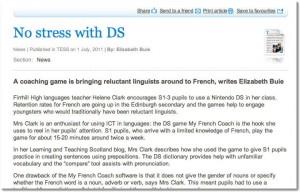 Helene Clark, the languages teacher who lead the project is delighted with the impact the game has had on her pupils learning and spoke to Elizabeth Buie at the TES about her experience. You can read the article here.
As a result of the project, Helene submitted a proposal for funding from the PTA at the school in order to buy language based DS games, and other games the Consolarium have used in the past, to be kept in the school library for pupils to borrow in order to improve their French, or indeed get a taster of a new language. Helene stated:
I managed to purchase 14 games for our school library, as well as 2 DS consoles. The idea is that children will be able to borrow the games as they can borrow books to practice French, German, Spanish and Mandarin at their leisure. I have also purchased a couple of “My Word coach” and “Brain Training” games to show that some games can be used to support literacy and numeracy.
The My French Coach games for the DS have been discontinued, however, Ubisoft have made the game (and others) available on the iPod touch / iPad at a cost of £2.99 from the AppStore, thus making it even more accessible to pupils / departments who have these devices.
I met Fraser Christie, PT Computing at Braeview Academy in Dundee, at a game design CPD event we held a few months ago. During the event, we started talking about various aspects of technology, computing and CfE in the classroom and got on to the subject of Arduino. I have previously written about Arduino here. After our discussion, Fraser expressed an interest in trying out the rapid prototyping toolkit in his school. I managed to send up a few kits from the Consolarium up to the school and last week I managed to grab a few minutes with an S2 pupil, Paul, who had been using the Arduino kits at lunchtime and after school.
 Paul quickly gave me a demonstration of the Arduino toolkit and managed to very quickly create a simple circuit. During his demonstration, Paul clearly demonstrated a firm understanding of electrical components their purpose. The video also demonstrates the possibility of using Arduino kits to address some for the science experiences and outcomes, such as SCN 4-09c : ‘engineer an electronic system to provide a practical solution to a real-life situation’ and others within the Electricity E’s and O’s.
 Paul later demonstrated how the Arduino can be programmed using the Processing progamming language – again, demonstrating an understanding of the code, in this case, how to change the speed of a servo. This has significant links to the Computing E’s and O’s, in particular TCH 4-09a – ‘By learning the basic principles of a programming language or control technology, I can design a solution to a scenario, implement it and evaluate its success’.
Paul is obviously interested in electronics and computing, and makes a number of references to using online videos to develop his understanding of the circuit making and coding, all in his own time, taking responsibility for his learning. At the end of this video, Paul talks about building a real device – a hidden gumball machine and goes on to talk about the need to not only design/build the circuit and create the program, but to physically build the housing for the device. Within a school context, this could offer links with Design and Technology in order to physically build the object.
I spoke with Fraser after Paul had left us, and he talked about his hopes for the Arduino kits in school for next term. Already he has a rising number interested pupils like Paul who are keen to get hands on with the kits at lunchtimes and after schools, but he intends to use the Arduino kits with his 15 Advanced Higher Computing pupils (pupils are from various schools, but being hosted at Braeview next session) and hopes to inspire them to use the technology as part of their AH projects. He has also made connections with Dundee University and is hoping to work with them next session in order to develop Arduino in school.
 It is also worth noting that if delving into the processing programming language seems a bit too much at the start, then there is an alternative. Using the Scratch application framework, the folks over at Citilab have created S4A – Scratch for Arduino. This allows user to use a Scratch like environment to program the Arduino.
 Some months ago we began a pilot project in three local authorities using a resource called The Land of Me. At one of the early meetings in Dundee we met Bernadette Donald from Wallacetown Nursery and she talked about how she planned to use this resource to help support teaching and learning in her setting. Bernadette talked about the opportunities that can arise from the context of this resource, particularly in relation to taking the children outdoors. This aspiration to take learning outdoors resonates very loudly with the aims of Curriculum for Excellence. Part of the rationale that can be found in Curriculum for Excellence through Outdoor Learning states that:
Outdoor learning experiences are often remembered for a lifetime. Integrating learning and outdoor experiences, whether through play in the immediate grounds or adventures further afield, provides relevance and depth to the curriculum in ways that are difficult to achieve indoors…it signposts ways for teachers, educators and their partners to plan for and use the outdoor environment to provide imaginative learning and teaching which is relevant, lively and motivating.1 all staff at every level of involvement with the education of children and young people have a responsibility to make the most of the outdoor environment to support the delivery of the experiences and outcomes of Curriculum for Excellence……Well-constructed and well-planned outdoor learning helps develop the skills of enquiry, critical thinking and reflection necessary for our children and young people to meet the social, economic and environmental challenges of life in the 21st century. Outdoor learning connects children and young people with the natural world, with our built heritage and our culture and society, and encourages lifelong involvement and activity in Scotland’s outdoors.
Taking this rationale on board and considering the needs of her learners Berrnadette planned to take the learning away from the digital screen and to use the context of The Land of Me to allow her and her colleagues to take it out in to the woods (Templeton Woods) so that the children could build a den! She also thought this was a perfect opportunity to introduce this environment to many children who live quite close to it but who have never been to visit this forest on their doorstep. Have a look at this montage of photographs that shows what happened on their visit. Click on the picture to view the slideshow:

Bernadette and I managed to get some time to chat about the Land of Me and to find out why she was interested in taking learning outdoors and just what it was about this resource that enabled this to happen. Have a listen to what Bernadette had to say about this.
As a result of our conversation being interrupted by a youngster in her Royal Wedding dress the interview is in two parts: Here is the end of our discussion!
Bernadette points out a number of issues about this resource and her subsequent pedagogy when planning to use it. These include:
The experience of taking learning outdoors is seen within CfE as one of the fundamental aspects of teaching and learning that will contribute to the development of the whole person. The aspiration to expose learners to an adventurous approach to learning is also at the core of outdoor pedagogy.
It is also argued that the outdoor environment encourages staff and pupils to see each other in a different light, building positive relationships and improving self-awareness and understanding of others. Building dens in the woods is a great place to start!
 Many of the CPD opportunities Charlie Love and myself have offered over the last 18 months have been based on using Scratch to engage learners and teachers with some hands on game design activities. Particularly in primary schools. However, is difficult to work with ALL the schools we are invited to. Enter GlowTV….
GlowTV
At 11am on Wednesday 22nd June, we will be running an online workshop on game design with Scratch via GlowTV. This session is an introduction to Scratch for creating games and will take you through the Scratch interface and simple programming. During the broadcast we will make a fully working game. You will be amazed at what you can do in so little time! Ideally suited for CfE levels 2 and 3 for both staff and pupils. You can watch the broadcast and build the game along with it if you want.

Support materials for the game we will make on the day will be available via the Consolarium glow group for use during and after. More details on this early next week.
You will also be able to ask questions during the session and we will try and answer them for you.
Get Involved!
1. Sign up for GlowTV
2. Register for the session – make sure to use the hashtag #glowtv3
3. If you want to build the game along with the broadcast, you will need Scratch installed on your computer. Download Scratch here for free from http://scratch.mit.edu
We are looking forward to seeing you on the 22nd! Why not check out the other forthcoming GlowTV events and even think about getting involved yourself!
Actually, that should be “If they build, they will come….”
Build what though? Enter Arduino.
Arduino is an open-source electronics prototyping platform based on flexible, easy-to-use hardware and software. It’s intended for artists, designers, hobbyists, and anyone interested in creating interactive objects or environments.
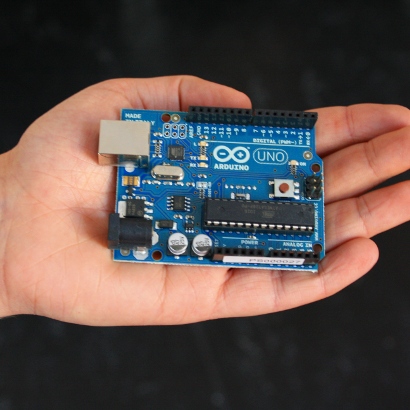
I have been playing around with arduino for a while now and on friday 11th March I had the opportunity to attend an arduino work shop for schools, thanks to Steve Bunce at Vital.
What strikes me about Arduino is the opportunities if offers to link up subjects in the context of CfE. Not only can our learners be offered the opportunity to learn to program, but can get some physical hands on time by building a device, learning about resistors, actuators, transistors, motors and a number of other electrical and mechanical devices. There are even soft Arduino components (such as the Lilypad) that allow learners to build electronic clothing. A quick search on Youtube or Vimeo for Arduino will give you a flavour of the types of projects that can be built.
Make Magazine is a great resource to get some Arduino inspiration and starter tips.
The Consolarium have bought some Arduino starter kits and are working with Braeview Academy in Dundee to see how effective it can be within the curriculum.
As part of the game design work the Consolarium have been carrying out, we often visit subject leaders meetings and are invited to ISIS days to do some CPD with staff. Recently, I visited a group of computing teachers in Ayr to take them through possible uses of BYOB in their Computing courses as a follow on / extension to Scratch. The session was well received and the teachers seemed quite inspired to take BYOB forward in their schools. However, it was perhaps the use of external devices with Scratch or BYOB that really caught their eye.
Scratch 1.4 and BYOB have the ability to interact with external hardware such as Picoboards through the sensor options. However, it’s not just Picoboards that can interact with Scratch.
Lego Wedo
The Lego Wedo sensors and motors can also be used with the sensors. In particular, the LEGO® WeDo™ Robotics Motion Sensor and the LEGO® WeDo™ Robotics Tilt Sensor can be used to detect the outside world. Note – a Lego Power Functions Extension Wire and Lego USB hub are also required.
What’s really interesting about this in terms of the gaming world is that there is potential for pupils to use these sensors to build their own controller for a game – perhaps linking up with Design and Technology / 3D Modelling courses to design and build their own controllers that could house the lego sensors. I demonstrated about this at a Teachmeet last year.
Kinect
Then we come to the Kinect. Yes, the Microsoft Kinect Motion Sensor can be used with Scratch! Stephen Howell took some time to get the Kinect sensor to interact and work with Scratch as an input device. Watch his demo below:
Scratch and Kinect from Stephen Howell on Vimeo.
Find out how to do this on Stephen’s blog. I have used Stephen’s program and was really engaged and excited by it. I think it would make Game Design with Scratch even more attractive and challenging for our learners.
Console Controllers
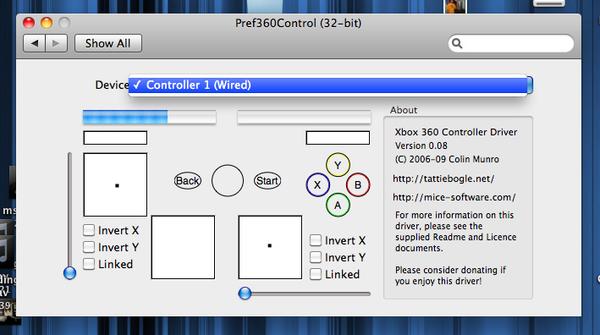 If our learners are creating games with Scratch, why not get them to play/control their games with their own console controllers? There are many controller mapping programs available for PC and Mac that will allow users to map their keyboard and mouse presses to a controller. So, if our pupils create a game that uses the arrow keys to move, why not map the arrow keys to the controller allowing the player to use hardware that they are familiar with, that sits within their own cultural domain, to play the game?
Microphone
Finally, what about other modes of control? The sensor blocks in Scratch have a loudness command. Could we challenge our learners to create a game that responds to noise levels? For example, consider this:
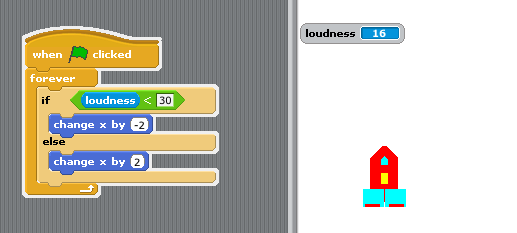
Using the loudness sensor we can control the left / right movement of the rocket.
Overall….
While Scratch and BYOB are not specifically deigned to create games, they are often used for this task as they offer a friendly, easy to use environment. However, by using additional gaming hardware, we can create a learning environment that should hopefully resonate with our pupils and encourage them to engage with the game design process further.
 Over the years we have worked with so many teachers and seen them use commercial off the shelf games in such a way that they are able to make purposeful, relevant and appealing links to traditional curriculum objectives. This has been the case in nursery, primary and secondary settings. We have found that handing over ownership of initial GBL ideas to teachers empowers them to bring their own idiosyncrasies to the table and to build experiences that can meet the needs of their learners. Here is another example of how teachers have done just that.
How would you use the context of Mario Kart to help P.2 and P.3 children develop a real interest in and understanding off the healthy eating plate? Well. I wonder if there is anything that we can learn from the children at Bargarran PS, Mario and his gang in Mario Kart?!:
Changing a Gran’s point of view…
This example of how childrens’ learning can be situated within an appealing context sits nicely with the thoughts of one of the children’s grannies that I had the pleasure of chatting with at Bargarran PS’ Mario Kart Open Afternoon. I first met Mrs Fortescue, who has a grandson in P.2, in the corridor just as the afternoon kicked off. Her first words to me were, “It wasn’t like this at school in my day – this isn’t school, they’re just playing!” As a result of this chat I I asked if I could come back and speak to her after she’d seen what has been happening in the class… Have a listen to what Mrs Fortesuce had to say 30 minutes later:
As you can hear Mrs Fortescue was somewhat taken aback by what she saw, by what her grand-daughter had been doing and what she was able to tell her Grannie all about. Some of Mrs Fortescue’s main points about what she had seen include:
A consensus from the grandparents on the day?
I also spoke with another Grannie to see if this was a lucky or pressured change of heart. Mrs Hall has a grandson at the school as well and her interview was equally as positive as Mrs Fortescue’s:
The main points raised about the positive aspect of what she had seen at the open afternoon included:
If schools can build purposeful learning experiences that can engender such buy in from the children, their parents and their grandparents then maybe we are doing something right? Let’s not lose sight of what some of the parents and grandparents have said – if the resource has appeal than why not put it to good use to help children learn?
Hopefully this series of posts has helped convey some of the industry, life and sense of excitement about learning that I witnessed in my time at Bargarran PS. Thank you to everyone involved with this project and a huge thank you to those who shared their thoughts with us. Do feel free to leave a comment, question or observation on any of these posts.
 In the early days of the Consolarium a big part of our work in promoting the practice of game based learning involved addressing many of the concerns that teachers had about using such resources and contexts in their schools. Informed reference, we hope, was made to the many folk devils and moral panics associated with games back then but one major concern that was invariably thrown up by schools was – what might parents say about children ‘playing computer games’ in school when they should be learning?! Our experience over the past 5 years of promoting this work has been that parents have been more than pleasantly surprised at how GBL contexts have worked for their child/children. This ‘evidence’ in the parents eyes of good learning experiences may also be complemented by the changing nature of how computer games are now placed in family life. When we first started out the games console was still seen as something that kids did in the shadowy solitude of their bedrooms but haven’t things changed now? How many families do you know that have a console in a main living area and who will use this as part of family play? How many dads out there are red hot at FIFA11, how many mums have a Wii Fit or Zumba game as part of their keep-fit regime and how many grannies have Scrabble on their DS? Times have changed have they not? Are computer games still the folk devil of a few years ago?
At the recent Mario Kart open afternoon at Bargarran PS I saw just how far the practice of game based learning has come in relation to how it is being perceived by children’s parents and guardians. At this event I witnessed a classroom packed with mums and dads, grannies and grandads all buzzing with excitement about what the children had been learning. Some of them were also more than keen to have a go at the game and get their name on the parents’ leaderboard!
I took the chance to chat with some mums and dads at the event to try to get their honest views of the use of a games console in classrooms and what impact the experience of the Mario Kart topic was having on their children.
Have a listen to my chat with Mrs Mavers who has a son is in P.2
The first parent that I interviewed was Mrs Mavers, a mum who was very keen to get the No.1 slot on the Mario Kart Parents’ leaderboard.
As you will have heard Mrs Mavers is of the opinion that this experience has been great for her son. Here are some of the points Mrs Mavers raised:
Have a listen to my chat with Mr & Mrs Brown who has son is in P.2
I took the opportunity to chat with the parents of a P.2 boy who were keen to let me know just how good an idea they felt the Mario Kart topic was and how it had had such a positive experience on their son. Have a listen:
As you will have heard Mr & Mrs Brown are also of the opinion that this experience has been great for their son. Here are some of the points Mr & Mrs Brown raised:
In my discussions with the class teachers it was clear that they see links between the school and the home as very important. They set out in the initial stages to ensure that good channels of communication were set-up and maintained and that the opportunity to celebrate and share the children’s learning with their parents was built in to the programme. All of this, coupled with the focused way that the Mario Kart resource has been used has again shown just how good teachers can use good resources to effect good teaching and learning. It’s great to see the parents supporting such practice.
 Parental involvement in the life and learning of a school can be an incredibly valuable asset. This is particularly true when parent/carers are active agents in understanding and supporting what is going in their child’s classroom. As we heard in the first of this series of posts the teachers involved had kept parents fully informed in relation to the rationale of the Mario Kart project. To further cement this relationship both classes planned a Mario Kart afternoon to share the learning that had been happening with their Mario Kart topic. Here is a short clip of parents coming in to the classroom. Also look out for the examples of the children sharing their learning with adults. They are so keen to show off what they have been doing. As you watch the clip do you get a sense that there is a real buzz about learning here? as the children excitedly share what they have been doing? A great thing to see in a classroom.
There was so much learning linked with this topic for the parent s to have a look a through. Literacy was something that was addressed quite heavily through this topic and one task that had the children creating their own Driving Licences was very eye-catching and had proved to be very popular with the children. (Unable to share due to children’s details included on their mock licences). Another popular writing activity involved the children coming with a basic character bible for a new Mario Kart character. Have a look at some of their work:
Have a closer look at some of them:
New Mario Kart Character: Holly Zoom Zoom
New Mario Kart Character: Queen Niamh
New Mario Kart Character: Queen Lola
New Mario Kart Character: Transform
I’m sure that the parents who came along to the Mario Kart Open Afternoon were very impressed with the range and quality of work that had been going on. The wall displays around the classroom drew many admiring glances and inquisitive comments from the mums, dads, grannies & granddads.
At the beginning of 2010 the Consolarium team, in their attempts to sow the seeds of innovative practice in schools, announced a competition that was to be held at that year’s Scottish Learning Festival. Based around the game Mario Kart for the Nintendo Wii the challenge was to se how fast you pupils could complete a lap of one the Mario Kart tracks. Teacher verified times were then emailed to us to be added to our Scottish Schools Mario Kart leaderboard. We must have loaned out over 20 sets of Mario Karts to schools across Scotland with the expectation that the game play would lead to a range of ways in which curricular activity could grow from the contextual hub ofd this game.
Sometimes when you plant seeds unexpectedly beautiful things can grow…
I was contacted by Wilma Leaburn, a QIO from Renfrewshire, a few months back and invited to a Mario Kart CPD evening at a school in Paisley. Apparently a number of teachers had taken this practice forward and a CPD session to share their experiences had been organised and so oversubscribed that another two evenings were to be delivered. The evening itself was a fantastic example of how creative teachers can be and how, when give the chance, their own idiosyncrasies can lead to wonderful learning experiences that meet the needs of their learners. At this event I met a teacher called Julie Paterson who invited me to Mario Kart open afternoon for parents and carers at her school, Bargarran PS in Erskine. This series of posts will feature my observations at this event.
What’s in the box? Creating the context
The children I met at Bargarran PS were just superb. They welcomed me into their class and were so eager to share with me what had been happening and what they had been learning about. In the middle of our earlier conversations it became clear that the arrival of the Wii into their class had been a bit special. Apparently, a gold box arrived one day and the question being asked was ; What’s inside the box? Lets let the children carry on the story…
The writing activity that arose from this early context creation was featured on the wall. Have a look at some of the children’s writing:
The Teachers’ Perspective
Julie Paterson and Jill Day were the P.2 and P.3 teachers that led this project. I took the opportunity to interview them after the Mario Kart open afternoon had ended.
Some of the strong messages about their observations and experiences with the Mario Kart project are:
“The parents have been incredibly supportive.”
“Sharing information and plans with the parents at the beginning of the project helped build that trust with parents.”
“The initial attention-grabbing context creation captured the children’s imagination and interest.”
‘Some children, who maybe don’t engage as well as the teachers would like in class, showed increased levels of motivation and willingness to engage with learning.”
“The Mario Kart project had a particularly positive impact on boys attitudes to learning.”
“Fun, personalisation and choice should be at the heart of learning experiences within contexts for learning in Curriculum for Excellence.”
Thank you to the teachers, the pupils and parents at Bargarran PS for making us so welcome and for sharing the life of learning with in their classrooms with us,
*Second guest post from Judi Regan and Dawn Calder at Menzieshill Nursery School, Dundee who are involved with our Kinectimals initiative. Read their first post too.
The children at Menzieshill Nursery School in Dundee are continuing to explore and investigate Kinectimals and extend and develop through games based learning. This blog update, we are focussing on some Health and Well-being experiences and outcomes and these will be highlighted throughout.
Kinectimals offers a fantastic opportunity for physical movement and skill development within an ICT context. A favourite mini game is using a football with the cub, providing ways to manage and control body movements (HWB 0-21a and HWB 0-22a). Children learn to move themselves to the left or to the right, depending on where the ball is kicked back to them, and are frequently left puffing and commenting “I’m sweating!” This allows investigation into raised heart rates – “Put your hand on your chest and feel your heart beating faster” – “why do you think that is?” (HWB 0-28a)
Turn-taking and co-operation skills are enhanced by Kinectimals (HWB 0-23a) and children are independently working out ways to take turns by themselves. We have been using a 5 minute sand timer as a visual aid, however some children are choosing to swap turns depending on the game or toy the cub chooses to bring to play with.
 This style of learning really suits our young digital natives and we have seen many occasions where children are encouraging and sharing tips with their peers. (HWB 0-11a) It’s clear the children love the animated characters in this game, which each group has named. (A challenge in itself, given the noise in the nursery!) The children refer to the cubs by name – “I’m scooting Blacky with the water pistol!” and “I like stroking Spot” giving ownership and different ways to express feelings. (HWB 0-01a)
We made fluffy animal tabards for the children to re-create some of the inside games outside, for example, throwing small balls at targets, and some of the driving games. These have been very popular so much so, we are in the process of making more!
As we have progressed, the staff have become more confident in the start-up sequence and navigating their way around the game.
Now the better weather is with us, as with all nursery schools, the curriculum and just about all the activities move outdoors and we have not been using the game quite as regularly as before, however, as mentioned earlier, the animal costumes have been popular. We intend to use our Beebot (outdoors on a mat) to extend and develop the concept of Kinectimals by dressing up the beebot as one of the cubs and designing a Beebot mat along the lines of some of the games within Kinectimals, for example, when Beebot cub lands on a particular square, the directions may say, “throw the beanbag at the targets” – similar to the gameplay. Our aim is to continue the link with Kinectimals in an outdoor environment.
Check back again later for further updates on our journey into the wonderful world of the Kinectimals!
Over the past 18 months, the Consolarium team have been looking at how to get game design into schools, from the earliest possible stage, in order to develop our ‘creation not consumption’ approach to gaming and it’s links with Curriculum for Excellence.
We have worked with individual schools, teachers, pupils, school clusters and local authority working groups. We have delivered CPD to groups of primary and secondary teachers, as well Computing specialists and spoken at and/or ran workshops at various national events, as well as running the games design competition for SLF 2010. We have also developed a range of support tutorials hosted within our glow group.
However, it is fair to say that most of work has been focussed on developing game design skills from early primary to S2 with tools such as Scratch, BYOB, Kodu and 2DIY. These environments have allowed our learners, and indeed teachers, to really engage with the technical side of game design by removing the fear of the unknown. Indeed, many primary colleagues were concerned with how they would approach outcome TCH 2-09a and TCH 3-09a : ‘Using appropriate software, I can work collaboratively to design an interesting and entertaining game …’. The feedback we have been given from staff and the great work we have observed in our visits to various schools shows us that we are beginning to see game design utilised in Scottish class rooms with confidence and enthusiasm.
While this is still a hugely important part of the work that we do, it’s time to look at what’s next. At the moment, our glow group has resources for learning XNA and a few Blender 3d tutorials more suited to the senior school that some people have been using, however, in June and July, we’d like to extend our resources for post S2 game design. How do we develop their skills, without repetition?

Again, many free tools are available, such as Unity, and the Corona SDK. These are game design tools that offer more challenge in terms of programming and are cross platform. At this point, we’d like to hear your thoughts on resources you would like to see developed. In particular, is there a particular development environment you would like to use more than the others?
Please let us know what you think we should look at in terms of developing and delivering support for game design for post S2 pupils.
The band Sting hail from P.7 at Gavinburn PS, Old Kilpatrick in West Dunbartonshire. Their song VIP in NYC is due for imminent release and will, the band hopes, be featured on playlists on your music player very soon! Have a listen to their song and watch the accompanying video that the band made to go along with it:
Look at what children can do when they are faced with a challenge that is set within a context that resonates with them. Look at what children can do when a school embraces and integrates ICT in such a way that children’s skill levels progress and develop over the years. Look at what children can do when ICTs are embedded in sound teaching and learning experiences. Just look at what our children can do!
The video that you have just watched clearly demonstrates a high level of ICT literacy in the use of video editing software to tell the story of their song. In this case (and in the other nine examples in this series of posts) iMovie, from the iLife suite of software from Apple, has been used and techniques such as green screen, stop-motion animation, time lapse and transitions have been confidently and competently employed by these children in amongst the basic skills of shooting, uploading and editing their movie. A question for us to consider is where do these chidren sit in relation to progress in the Curriculum for Excellence Technology Outcomes. What would you use in order to assess performance and progress here? Your comments in relation to this would be most welcome…
Meet the children behind the band….
I managed to grab some time to chat with the children behind Sting and I asked them a bit about their experience of the Band in a Box project at Gavinburn PS. Have a listen to what they had to say:
 The whole idea of the Guitar Hero (Band in a Box) Project was that in keeping with methodologies that Primary teachers have employed for many years, the actual game is used rarely in class but it acts as the source from which a collaborative story can be constructed. This collaborative story acts as the contextual hub around which learning in other curricular areas can be structured in a cohesive, purposeful and relevant fashion. The main thrust of the collaborative story that is created in this project is that the children develop a character that joins a rock band. This character then lives and breathes along with the other band members and is the vehicle through which learning is situated. As a result, associated tasks are directly linked to the developing life of this ‘rock character’ and the suspension of disbelief is continually in play as these older P.7 children get themselves lost in the developing experiences of their character. This kind of activity has the potential, if used thoughtfully, to position the aims of Curriculum for Excellence in purposeful, challenging and appealing ways.
Let’s explore how aspects of curricular learning have been developed in this project by looking at some work done by the pupils in this band:
Curriculum for Excellence: Literacy
Literacy is at the heart of this project and in particular the need to work as an effective member of a team is central to success in this project. The teachers involved in the planning of this topic wanted to focus on developing children’s ability to work effectively in teams and so decided to refer to LIT 2-02a in order to assess this aspect of learning.
The children were also presented with literacy tasks that were challenging but that sat perfectly within the collaborative story that developed as their band took life. Here we can see how the band comes to life in a magazine article that has been written by the children. Look at how they have also demonstrated their ability to use a desktop publishing application in a confident and skilled way.
One of the band members from fellow Gavinburn PS stablemate’s Explosion gets interviewed
The teachers involved in the planning of this topic decided to refer to LIT 2-02a in order to assess this aspect of learning.
This example shows how the children have demonstrated their understanding of functional writing for an audience in the creation of a merchandise ordering form for distribution to parents and other guests at the school’s Band in a Box open evening. Look at how they have also demonstrated their ability to use a desktop publishing application in a confident and skilled way.
Sting’s merchandise ordering form
The teachers involved in the planning of this topic decided to refer to LIT 2-27a in order to assess this aspect of learning.
Our experiences over the past few years in using the Guitar Hero/Band in a Box idea have been that the initial stages of setting up the band and developing a rock alter-ego to partner the pupil on the collaborative learning journey they undertake as their ‘band evolves can be very powerful. Here we meet the band members of Kcor as described by the children in the earlier stages of the project:
Meet Mason Alexander from Sting
The teachers involved were very interested to ensure that the performance aspects of children’s work over the course of this project and so ensured that the following outcomes were also at the heart of the planning process: Spelling LIT 2-12a, Punctuation and Structure LIT 2-22a, Sense and Purpose LIT 2-23a
Curriculum for Excellence: Numeracy
One of the earlier ideas that came with the beginnings of the Guitar Hero in class project work was the opportunity to include a European Tour. This allowed exploration of European countries but also an opportunity to present purposeful, challenging and appealing tasks involving the use of money. The idea of costing a tour was born. At Gavinburn PS, however, they have taken that a step further… Direct links with learning French are maximised because each of the bands receives a letter from a French music agent who invites them to visit a French city and play a gig there. A budget is in place and the children then have to work out all travel and accommodation costs to fulfil that gig.
Sting’s Lyon trip budget breakdown
The teachers involved in the planning of this topic decided to refer to MNU 2-09a in order to assess this aspect of learning.
Curriculum for Excellence: Music
With the use of Garageband from the iLife suite of tools that comes installed on Mac computers, the group was able to structure and compose an original song. The music you are listening to was put together using the preset loops available within Garageband. Inspired by contemporary music from the rock and R’n’B world as well as the Guitar Hero tracks, the group decided on the style of song the group wanted to compose. They auditioned and selected guitar riffs, drum patterns, bass lines and piano fills, as well as textures and other loops from hundreds of samples available. The group then created the track by arranging and layering their selected loops into verses, choruses and musical breaks. Once the original backing track was created, they then recorded the vocals. Looking at the Expressive Arts Music outcomes, it is clear to see that these young learners are displaying evidence of EXA 2-18a and EXA 3-17a.
Curriculum for Excellence: Modern Foreign Languages
Following on from the budget task the children then had to script and record their interview with a French music journalist. It is interesting to note that the Headteacher and the class teachers noting a marked change in attitude to learning French as a result of it being situated within this context. This also came through in discusions with the children.
Sting’s French music journalist interview script
The teachers involved in the planning of this topic decided to refer to M.LAN 2-07b in order to assess this aspect of learning.
Have a listen to Sting’s interview with a French music journalist:
The teachers involved in the planning of this topic decided to refer to M.LAN 2-03b in order to assess this aspect of learning.
Congratulations to all the children involved in the band Sting and to the staff at Gavinburn PS for enabling these pupils to meet the challenge of Band in a Box in such a confident and successful fashion.
Visit the other nine posts as well to see how this work was not a one-off.
The band Riot! hail from P.7 at Gavinburn PS, Old Kilpatrick in West Dunbartonshire. Their song The Start of the Beginning is due for imminent release and will, the band hopes, be featured on playlists on your music player very soon! Have a listen to their song and watch the accompanying video that the band made to go along with it:
Look at what children can do when they are faced with a challenge that is set within a context that resonates with them. Look at what children can do when a school embraces and integrates ICT in such a way that children’s skill levels progress and develop over the years. Look at what children can do when ICTs are embedded in sound teaching and learning experiences. Just look at what our children can do!
The video that you have just watched clearly demonstrates a high level of ICT literacy in the use of video editing software to tell the story of their song. In this case (and in the other nine examples in this series of posts) iMovie, from the iLife suite of software from Apple, has been used and techniques such as green screen, stop-motion animation, time lapse and transitions have been confidently and competently employed by these children in amongst the basic skills of shooting, uploading and editing their movie. A question for us to consider is where do these chidren sit in relation to progress in the Curriculum for Excellence Technology Outcomes. What would you use in order to assess performance and progress here? Your comments in relation to this would be most welcome…
Meet the children behind the band…
I managed to grab some time to chat with the children behind Riot! and I asked them a bit about their experience of the Band in a Box project at Gavinburn PS. Have a listen to what they had to say:
The whole idea of the Guitar Hero (Band in a Box) Project was that in keeping with methodologies that Primary teachers have employed for many years, the actual game is used rarely in class but it acts as the source from which a collaborative story can be constructed. This collaborative story acts as the contextual hub around which learning in other curricular areas can be structured in a cohesive, purposeful and relevant fashion. The main thrust of the collaborative story that is created in this project is that the children develop a character that joins a rock band. This character then lives and breathes along with the other band members and is the vehicle through which learning is situated. As a result, associated tasks are directly linked to the developing life of this ‘rock character’ and the suspension of disbelief is continually in play as these older P.7 children get themselves lost in the developing experiences of their character. This kind of activity has the potential, if used thoughtfully, to position the aims of Curriculum for Excellence in purposeful, challenging and appealing ways.
Let’s explore how aspects of curricular learning have been developed in this project by looking at some work done by the pupils in this band:
Curriculum for Excellence: Literacy
Literacy is at the heart of this project and in particular the need to work as an effective member of a team is central to success in this project. The teachers involved in the planning of this topic wanted to focus on developing children’s ability to work effectively in teams and so decided to refer to LIT 2-02a in order to assess this aspect of learning.
The children were also presented with many literacy tasks that were challenging but that sat perfectly within the collaborative story that developed as their band took life. This example shows how the children have demonstrated their understanding of functional writing for an audience in the creation of a merchandise ordering form for distribution to parents and other guests at the school’s Band in a Box open evening. Look at how they have also demonstrated their ability to use a desktop publishing application in a confident and skilled way.
Riot!’s merchandise ordering form
The teachers involved in the planning of this topic decided to refer to LIT 2-02a in order to assess this aspect of learning.
Our experiences over the past few years in using the Guitar Hero/Band in a Box idea have been that the initial stages of setting up the band and developing a rock alter-ego to partner the pupil on the collaborative learning journey they undertake as their ‘band evolves can be very powerful. Here we meet the band members of Kcor as described by the children in the earlier stages of the project:
Meet Anton Weiss Blue from Riot!
The teachers involved were very interested to ensure that the performance aspects of children’s work over the course of this project and so ensured that the following outcomes were also at the heart of the planning process: Spelling LIT 2-12a, Punctuation and Structure LIT 2-22a, Sense and Purpose LIT 2-23a
Curriculum for Excellence: Music
With the use of Garageband from the iLife suite of tools that comes installed on Mac computers, the group was able to structure and compose an original song. The music you are listening to was put together using the preset loops available within Garageband. Inspired by contemporary music from the rock and R’n’B world as well as the Guitar Hero tracks, the group decided on the style of song the group wanted to compose. They auditioned and selected guitar riffs, drum patterns, bass lines and piano fills, as well as textures and other loops from hundreds of samples available. The group then created the track by arranging and layering their selected loops into verses, choruses and musical breaks. Once the original backing track was created, they then recorded the vocals. Looking at the Expressive Arts Music outcomes, it is clear to see that these young learners are displaying evidence of EXA 2-18a and EXA 3-17a.
Curriculum for Excellence: Modern Foreign Languages
Following on from the budget task the children then had to script and record their interview with a French music journalist. It is interesting to note that the Headteacher and the class teachers noting a marked change in attitude to learning French as a result of it being situated within this context. This also came through in discusions with the children.
Riot!’s French music journalist interview script
The teachers involved in the planning of this topic decided to refer to M.LAN 2-07b in order to assess this aspect of learning.
Have a listen to Kcor’s interview with a French music journalist:
The teachers involved in the planning of this topic decided to refer to M.LAN 2-03b in order to assess this aspect of learning.
Congratulations to all the children involved in the band Kcor and to the staff at Gavinburn PS for enabling these pupils to meet the challenge of Band in a Box in such a confident and successful fashion.
Visit the other nine posts as well to see how this work was not a one-off.
