
One of the outputs from the Student Writing Online Project was our manifesto for teaching online. It’s a set of statements that try to capture something of what is generative and exciting about teaching at a distance, and in digital environments.
The manifesto has had some press in the past few weeks, and it’s been exciting! Its web site is at http://onlineteachingmanifesto.wordpress.com/
Here’s a video interpretation of the manifesto, created by James Lamb.
via jenrossity
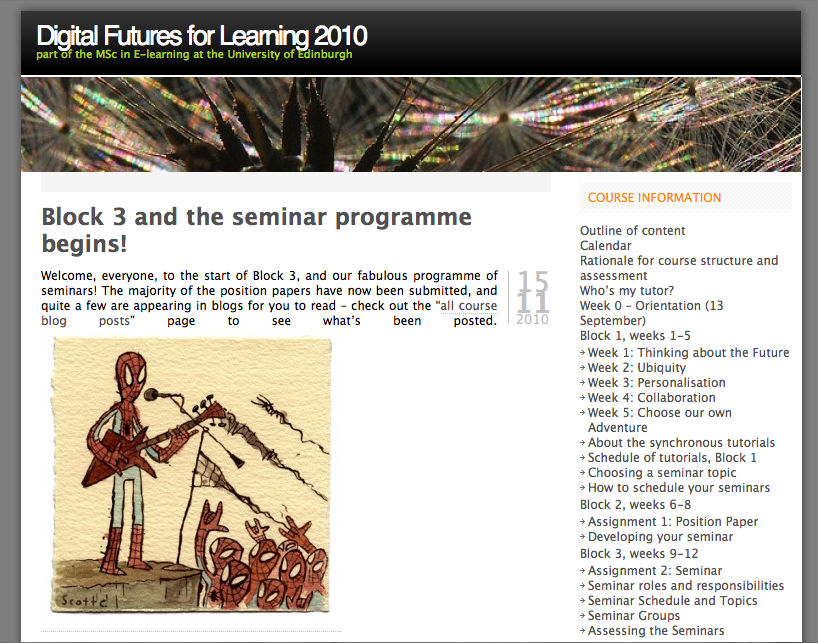
My option course on the MSc in E-learning is called “Digital Futures for Learning“. It’s a great course (if I do say so myself!) which is designed around student-developed and peer-assessed online events on topics relating to the core themes of the course. It means that we always have a chance to learn about and discuss the very latest developments in the field, as students are developing their events and position papers about 2 weeks before they lead them.
The course runs every two years, and it’s due to run again in September. Last time (in 2010) it was built on three broad themes:
ubiquity
personalisation
collaboration
and we read about issues related to mobile learning, the internet of things, remix, the politics of personalisation, and so on. Students produced amazing seminars on topics including the ethics of research in augmented environments, augmented reality and blended learning, ‘rip mix burn’ and learning, and controller-free technology. One of the seminar archives is here.
This year, I’m thinking that the themes might be ubiquity and openness (to bring in edupunk, Open Educational Resources, big data and so on) – wondering if we need a third, as these two cover so much ground. Still considering – comments welcome!
via jenrossity
Here is the Prezi from a presentation I gave this week at the IT Futures conference in Edinburgh.
It’s based on this book chapter. Of course I can’t take credit for the cartoons! But the student and teacher quotes are all (anonymised) from my PhD interview data.
via jenrossity
It’s been a while since my last post, but in the interim I had my viva (examination) and am pleased to say that it went well! And I’m even more pleased to say that it’s all over. Hooray!

Very early on in my research I started to explore the idea of the ‘mask’ as a useful metaphor for high-stakes online reflection. A mask is artificial, in the sense that isn’t a natural part of the body, but it has a profound relationship with identity and with the idea of the face. That relationship has been explored in theatre, anthropology, sociology, literature and culture. Like the experiences of students and teachers, the mask turned out to be complex, and by the time I came to analyse my data I had identified six mask ‘genres’. These have structured my thesis. I’ve written about them a bit in this blog, and there’s a recently published paper of mine that describes them in some detail. In this post, I’ll describe how the mask metaphor worked, and what issues I focused on in the research.
The six mask types I used were: performance, trace, disguise, protection, discipline and transformation. Each of these helped me think in a different way about my data, and about what I was trying to do in arguing for a different kind of approach to online reflective practices.
Here’s a brief rundown of how I used the masks:
performance – masks worn to portray a character, for the benefit of an audience. In my thesis, I used this mask to explore how students perform particular sorts of reflective identities, and their awareness of different sorts of audiences.
trace – death masks, which are commemorations of a person who has died, and are more or less faithful representations, or “traces”, of that person, formed from an impression of their face after death. I asked how we might see digital archives and databases, which store the reflective writing of students, as traces, and what this implies about control and ownership.
disguise – masks that are intended to hide a person’s identity. I applied the metaphor of the mask as disguise to reflective practices themselves, showing how ‘authenticity’ and ‘development’ disguise practices of surveillance and confessional (in the Foucauldian sense* of constructing and legitimising certain kinds of knowledge as “truth”).
protection – strong masks worn to protect the face and head while doing dangerous work. I argued that the way online reflection is taught and structured through digital templates can protect students from the vulnerability of confession, but at the cost of limiting and constraining other possibilities of expression.
discipline – masks with two purposes: to restrain or injure the wearer, and to display the consequences of unacceptable behaviour to the wider community. I suggested that reflection in professional education produces identities through processes of repetition and training, with the aim of shaping the practice of would-be professionals.
transformation – masks worn during rituals or ceremonies to produce transformative effects on the wearer and the community. Reflection is intended to transform practice and selfhood through contemplation over time, but I explored how online reflection can make use of speed, risk and fragmentation to produce different kinds of identity or subjectivity shifts.
*I think it would be a good idea in the next post to talk a bit about how I used the theories of Michel Foucault to make certain kinds of arguments about reflective practices. That will be fun to write!
Here’s the paper that describes some of the conceptual issues in my research, including the masks:
Ross, J. (2011). Traces of self: online reflective practices and performances in higher education (PDF). Teaching in Higher Education, 16/1.
Mask images copyright info:
[1] Creative Commons licensed work by Giant Gingkgo, http://www.flickr.com/photos/giantginkgo/162974551/
[2] L’Inconnue de la Seine, http://commons.wikimedia.org/wiki/File:Inconnue.jpg. Retrieved 6/8/11.
[3] Stock image by Brasil2, http://www.istockphoto.com
[4] Stock image by KeithBinns, http://www.istockphoto.com
[5] © 2005 David Monniaux; http://en.wikipedia.org/wiki/File:Branks_dsc05369.jpg. Retrieved 6/8/2011.
[6] Stock image by stellalevi, http://www.istockphoto.com
via jenrossity
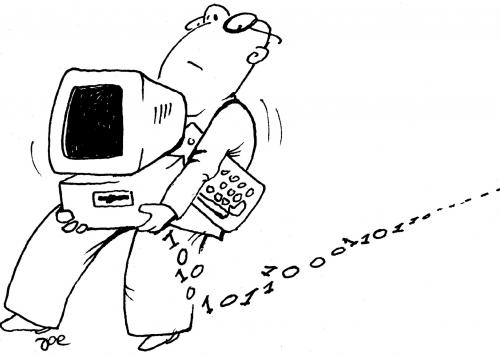 In the last post, I explained the idea for my research – to look at the increasing use of assessed and online reflection in higher education. Not many people seemed to be talking about this particular combination of factors and how they might play out in practice. I really wanted to know how teachers and students were negotiating what I saw as a tricky dilemma: reflective writing is supposed to be authentic and personal, but assessment and being online pull it in other directions, towards an awareness of an audience and a fear of losing control.
To find out more, I interviewed 12 teachers and 20 students from across six higher education programmes in the UK. All had been involved in assessed (or what I’ve been calling “high-stakes”) online reflection for a year or more (1 teacher was no longer doing so, but all the rest of the interviewees were at the time of the interviews). A range of subject areas were included in the research, but all of them were professional or vocational in focus, which seems to match the way that online and assessed reflection is being adopted. Half the programmes were at undergraduate level, and half at postgraduate. Some were online, some campus-based, and one was a blended programme where students spent blocks of time on campus and other blocks interacting online.
I wasn’t sure what to expect from my interviews. Would any students or teachers describe a problem with high-stakes online reflection? If not, what would they say? If they did, how would they get past it in order to do what needed to be done? What strategies did they use to make sense of their practices?
Here are some examples of the kinds of questions I asked students and teachers in my interviews.
For students:
For teachers:
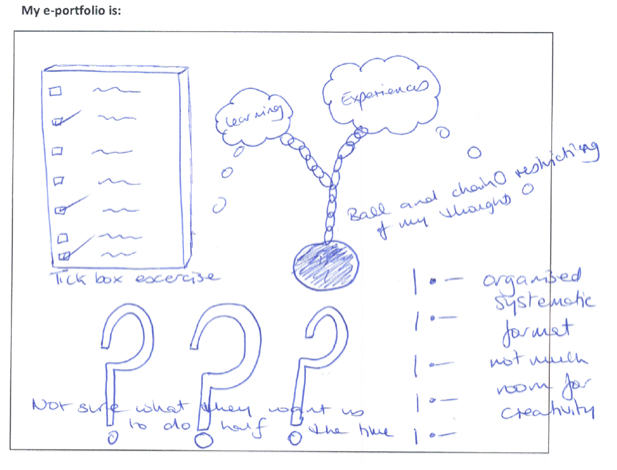
I also asked interviewees to describe or draw a metaphor for their e-portfolios or blogs. I got some really funny and insightful responses this way. Here’s one, where a student describes her e-portfolio as being like a “ball and chain restricting my thoughts”, and like a “tick box exercise”:
It turns out I was right to think there were some tensions around these practices. Different people experienced them differently. For example, some students very straightforwardly wanted to do what was required of them, but didn’t know how. Others understood what was expected, but felt constrained by those expectations. Some of their teachers felt uncomfortable about the possibility that they exercised power over their students through assessing reflection, but at the same time believed that they could help their students be empowered through reflection.
Many students worried about what to say, and what not to say, in their online reflections. Some teachers worried about that, too, and wondered what consequences online disclosure might have for students down the road. They tried to address this by doing things like policing students’ reflections, or producing very structured templates for students to fill in. Both teachers and students sometimes imagined they weren’t actually doing things “on the web”, in order to feel safer.
Some teachers saw reflection as a way of ensuring that students were “fit for practice” in their chosen profession, and welcomed more visibility of students’ learning processes. But students often struggled to produce the sorts of reflective writing that their teachers wanted, which was often very different from other kinds of writing they’d had to do before.
In short, there was a lot going on, and a lot that wasn’t really being discussed or even necessarily acknowledged. It seemed to me that certain kinds of practices and concerns were being “masked” or disguised by the way that high-stakes online reflection was being understood and explained to students.
In the next post, I’ll talk about the way that I ended up using the metaphor of the mask – which I’ve been talking about for a few years now – to structure the PhD.
via jenrossity

So, I said I would write some blog posts about my phd research – what it was about, what I did, and what conclusions I’ve drawn from it. This is the first one of those. It explains what provoked me to do this research. I’ll follow it up with explanations about the questions I was trying to answer, the arguments I made, and what I’ve learned and concluded – that will be for future posts.
The idea for the research came back in 2005/06 because I wanted to understand more about a practice that seemed to be increasingly common in higher education courses in the UK at least: assessing online reflection. There’s still not a lot of evidence that shows exactly how widespread this is, but some research that the Centre for Recording Achievement in the UK has done over the past few years indicates that it is a fairly common practice, especially in professional programmes (like teaching, medicine, social work and law).
If you’re wondering what ‘reflection’ means in this context, so was I. A fairly standard definition of reflection is that it’s a way of deliberately looking back at things you’ve experienced, done or thought in the past to understand and know yourself better. Writing reflections down might also allow you to capture and review how you change over time. Different people say that the point of this self-knowledge is: to become more authentic; to be more aware of how you’ve been shaped by external influences; to be more flexible and able to develop yourself; to become a better professional; to make your learning more personal; to learn more effectively.
So, why assess reflection? One explanation is that students won’t willingly engage in anything that doesn’t ‘count’ in assessment terms. The argument is that they need the motivation of marks in order to make them do this thing – reflection – that is good for them. Giving something a mark also shows that teachers value it, and that’s important, especially as university education gets more time-pressured for both teachers and students.
But what effect does assessment of reflection have? Questions have been debated in a few academic articles about the relationship between self-development and external requirements, about how to prevent students from censoring themselves or trying to write to please their assessors, and about how something as individual as reflection might be assessed fairly. The most interesting questions for me were: aren’t there really profound tensions between assessment and the concept of self-motivated, personal, authentic reflection? How do teachers and students negotiate those tensions, and what does reflection become in those circumstances?
What about doing reflection online – what were the issues there? When I started my research, online environments, like e-portfolios, were being talked about a lot as a wonderful development in helping students record their development through reflection and also through storage of ‘evidence’ of learning and achievement. These environments were often visually attractive, offered a lot of support and structure, and they were trendy and digital. Doing reflection online could also solve practical problems like storage of and access to reflections.
Some people were concerned about the effect of having reflection stored on the web – they were worried about surveillance, about privacy, and about accidental disclosure of things that were confidential or too personal. So online reflection as a concept seemed to involve a delicate balance between disclosure (which is the whole point of reflection) and caution and control (which you need because the web is ‘dangerous’). In attempting to deal with these new concerns, some of the earlier unanswered questions about assessment and reflection seem to have been abandoned.
I wanted to know: what happens when you throw all of this stuff together – reflection, assessment, and the web? That’s what my phd research was about.
If you’re interested reading more about some of this, I suggest these references:
Ayala, J. (2006). Electronic portfolios for whom? Educause Quarterly, 29(1). Retrieved: 21 July 2011. http://www.educause.edu/apps/eq/eqm06/eqm0613.asp?bhcp=1
Boud, D. (2001). Using journal writing to enhance reflective practice. New Directions for Adult and Continuing Education, 2001(90), pp. 9-18.
Creme, P. (2005). Should student learning journals be assessed? Assessment & Evaluation in Higher Education, 30(3), pp. 287–296.
Kimball, M. (2005). Database e-portfolio systems: A critical appraisal. Computers and Composition, 22(4), pp. 434-458.
Strivens, J., Baume, D., Grant, S., Owen, C., Ward, R., & Nicol, D. (2009). The role of e-portfolios in formative and summative assessment: Report of the JISC-funded study. Wigan: Centre for Recording Achievement. Retrieved: 26 July 2011. http://www.jisc.ac.uk/whatwedo/programmes/elearningcapital/studyontheroleofeportfolios.aspx
Strivens, J., & Ward, R. (2010). An overview of the development of Personal Development Planning (PDP) and e-Portfolio practice in UK higher education. Journal of Learning Development in Higher Education, Special Edition: Researching and Evaluating Personal Development Planning and e-Portfolio Practice, pp. 1-23. Retrieved: 26 July 2011. http://www.aldinhe.ac.uk/ojs/index.php?journal=jldhe&page=article&op=view&path[]=114
via jenrossity
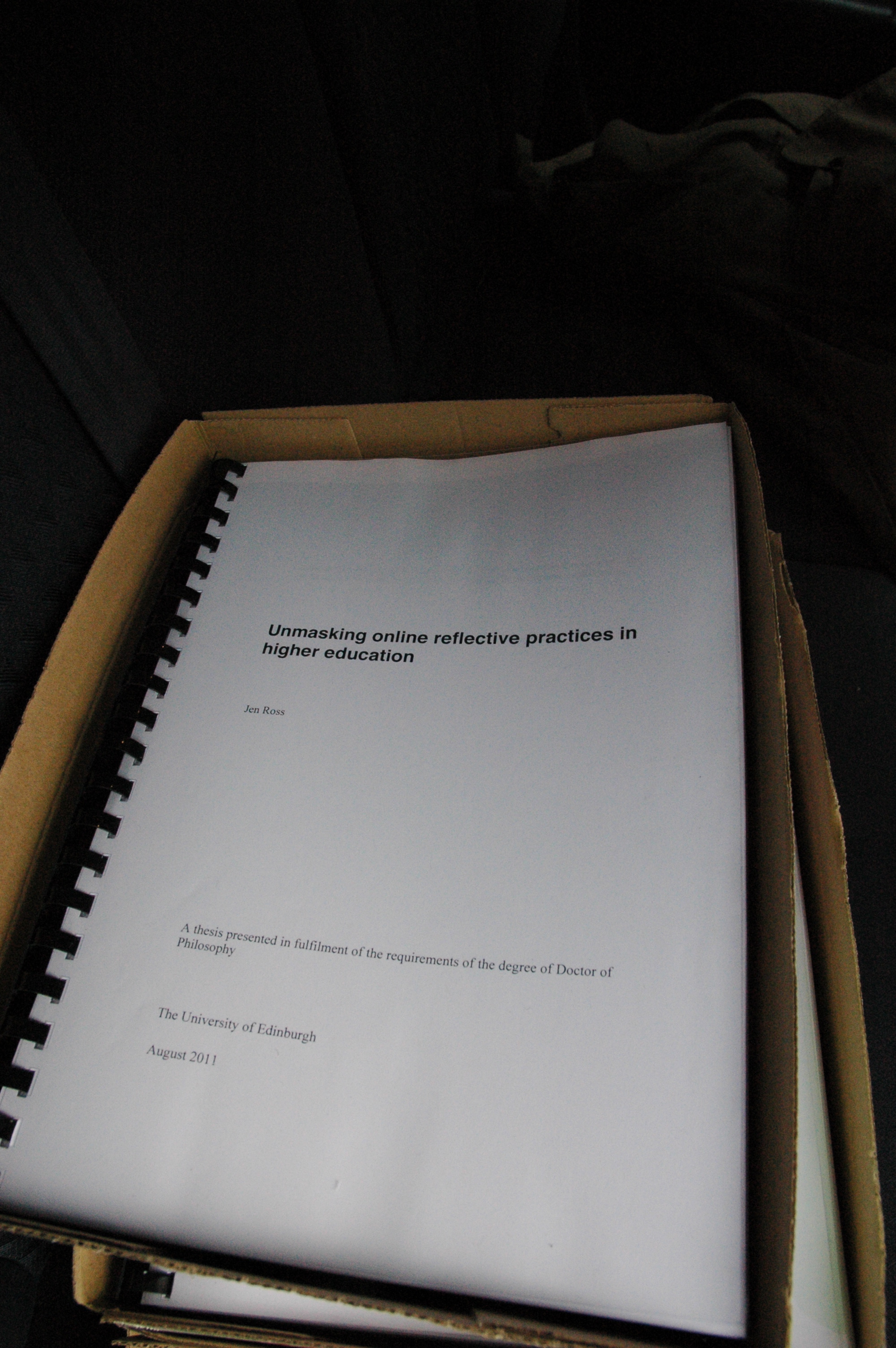 I’m really happy to say that I submitted my phd thesis this afternoon. I’m pretty much out of words, but here’s the abstract. I’ll write more soon – perhaps a small series of blog posts about the research and where it might go from here.
My viva is on 11 October, so the blog posts may have to wait til after that!
Unmasking online reflective practices in higher education
Online reflective practices that are high-stakes – summatively assessed, or used as evidence for progression or membership in a professional body – are increasingly prevalent in higher education, especially in professional and vocational programmes. A combination of factors is influencing their emergence: an e-learning agenda that promises efficiency and ubiquity; a proliferation of employability, transferable skills and personal development planning policies; a culture of surveillance which prizes visibility and transparency; and teacher preference for what are seen as empowering pedagogies.
This thesis analyses qualitative interview data to explore how students and teachers negotiate issues of audience, performance and authenticity in their high-stakes online reflective practices. Using mask metaphors, and taking a post-structuralist and specifically Foucauldian perspective, the work examines themes of performance, trace, disguise, protection, discipline and transformation. The central argument is that the effects of both compulsory reflection, and writing online, destabilise and ultimately challenge the humanist ideals on which reflective practices are based: those of a ‘true self’ which can be revealed, understood, recorded, improved or liberated through the process of writing about thoughts and experiences.
Rather than revealing and developing the ‘true self’, reflecting online and for assessment produces fragmented, performing, cautious, strategic selves. As a result, it offers an opportunity to work critically with an awareness of audience, genres of writing and shifting subjectivity. This is rarely, if ever, explicitly the goal of such practices. Instead, online reflective practices are imported wholesale from their offline counterparts without acknowledgement of the difference that being online makes, and issues of power in high-stakes reflection are disguised or ignored. Discourses of authentic self-knowledge, personal and professional development, and transformative learning are not appropriate to the nature of high-stakes online reflection. The combination creates passivity, anxiety and calculation, it normalises surveillance, and it produces rituals of confession and compliance. More critical approaches to high-stakes online reflection, which take into account addressivity, experimentation and digitality, are proposed.
via jenrossity
 It’s going to be a busy year of research! The main thing is that I am finishing writing up my PhD this year, and will be submitting at the end of August. I’ll post up some bits and pieces as I go.
My paper, Traces of self: online reflective practices and performances in higher education, has just been published in Teaching in Higher Education, 16/1. The issue’s table of contents is online.
I have a chapter appearing in the forthcoming edited collection, Exploring the Theory, Pedagogy and Practice of Networked Learning. It’s being published by Springer in 2011, edited by Lone Dirckinck-Holmfeld, Vivien Hodgson and David McConnell.
The “student writing: innovative online strategies for assessment and feedback” proejct is finishing up in May and, along with a manifesto, the team will be writing a couple of papers for publication over the next few months, drawing on the data produced by a series of student-generated virtual ethnographies of courses on the MSc in E-learning programme.
The digital futures of cultural heritage education project has two workshops this year, in March and June, and those should be a really interesting extension of the excellent open seminar held in October.
via jenrossity
My paper about what we can learn from translation studies theory about qualitative research transcription has just been published in the open-access journal Forum: Qualitative Social Research – here is a link to it, and the reference:
Ross, J. (2010). Was that Infinity or Affinity? Applying Insights from Translation Studies to Qualitative Research Transcription. Forum: Qualitative Social Research, 11/2. http://www.qualitative-research.net/index.php/fqs/article/view/1357
This is my first sole-authored full paper, so I’m very excited!
via jenrossity
E-learning and Digital Cultures was a 12-week course taught by me and Siân Bayne as part of the MSc in E-learning programme. It was innovative for the programme because of the nature of its engagement with digital cultures: it was open-access and disaggregated (you can see for yourself by browsing the web site), and made use of blogs, lifestreaming, twitter and a range of social and user-generated tools from across the web.
We’ll be presenting a paper at the Academic Identities for the 21st Century conference at Strathclyde University in June called “Posthuman academic identities in digital environments”, drawing on Siân’s recent work on uncanny digital pedagogies to talk about some of what we’ve learned from this course: how to work productively with volatility, disorientation, and strangeness.
via jenrossity
 For this year’s Edublog Awards, I want to nominate the University of Edinburgh’s MSc in E-learning virtual graduation on 26 November 2009. Four of the students from the programme attended a graduation ceremony in Second Life, while two graduated in the University’s face to face ceremony in McEwan Hall. It was an extremely moving and amazing experience, especially when the principal asked those in McEwan Hall to give a round of applause for the virtual attendees. The whole concept and event (masterminded by my colleague Fiona Littleton) really deserves an Edublog award, I think!
Nomination for best educational use of a virtual world: Virtual Graduation at the University of Edinburgh
Update: Virtual Graduation won!! More information here: https://www.wiki.ed.ac.uk/display/VueWiki/Virtual+Graduation

via jenrossity
I wrote a review of Martin Hand’s book “Making Digital Cultures” for the Resource Centre for Cyberculture Studies, and this was published (with the author’s response) this month:
http://rccs.usfca.edu/bookinfo.asp?BookID=444&ReviewID=643
I really liked this book, and in fact Chapter 1 is now a core reading on the “E-learning and Digital Cultures” course at the University of Edinburgh.
via jenrossity
 I’ll be giving at talk at the Society for Research into Higher Education conference on Wednesday 9 December called Reflective practices as masks: a new way to think about reflection in higher education
Summary: This paper discusses ongoing research into how students and teachers negotiate issues of identity, authenticity, ownership, privacy and performativity in high-stakes online reflection in higher education. I define high-stakes reflection as reflection which is summatively assessed or has a gatekeeping function into a profession, and use a metaphor of the mask to draw out different aspects of high-stakes reflection online: performance, disguise, protection, transformation, discipline and trace. Conceiving of online reflective practices in these mutiple and overlapping ways has implications for how educators understand and support reflection, and the expectations we place on our students in terms of what high-stakes reflective writing can and should accomplish. These practices should support development of academic or professional identity and voice through explicit engagement with matters of authenticity, power, narrative, subjectivity and agency – not through a discourse which frames the recording and improvement of the “true self” as the ultimate goal of reflective practice.
I’ll be giving a longer talk on similar themes at the University of Glasgow’s Learning and Teaching Centre’s seminar series, on Wednesday 13 January 2010. I will have time at this second event to share more of the data that’s emerging from my PhD research.
I’ve been thinking about the masks for a while, and I’m now starting to draw some conclusions about what I think that thinking about reflective practices in this way might imply for teaching and learning. Both of these talks will represent the cutting edge of my ongoing doctoral research looking at online reflective practices in Higher Education!
via jenrossity
The web site for the Student writing: innovative online strategies for assessment and feedback project (which we call SWOP for short) is now online at http://www.education.ed.ac.uk/swop/
The first stage of data generation is now under way with the appointment of our first four postgraduate research associates, who are keeping ethnographic accounts of their courses and facilitating a wiki for assessment and feedback stories.
via jenrossity
I’m looking forward to giving a short talk at the first seminar in the ESRC funded Literacy in the Digital University series – http://literacyinthedigitaluniversity.blogspot.com/2009/09/seminar-1-programme.html . The title of my talk is “Personal, professional and academic voices in online reflection: new literacies for new media practices”. I’ll post up slides or something as soon as they’re available!
via jenrossity
Here’s a paper that Siân Bayne and I wrote for the 2007 Society for Research in Higher Education conference – we are working on revising it in light of all the new literature about digital natives/immigrants/net generation since then, but I think the core arguments are still current, so thought I’d post it up here.
The ‘digital native’ and ‘digital immigrant’: a dangerous opposition
via jenrossity
A small group of colleagues and I have been successful in getting funding for a two year project looking at innovative online strategies for assessment of and feedback on student writing. We’ll be looking in depth at digital writing practices on the University of Edinburgh’s MSc in E-learning programme, including:
The project officially started yesterday, and I’ll be heading it up. I’m really excited about it, especially because one of the things we’ll be doing is inviting students on the programme to work with us as co-researchers, conducting a series of ethnographies of particular courses and helping to develop an “assessment and feedback stories” wiki. We’ll also draw on archived data from the programme since it launched in 2006.
I’d really like to hear about other projects people have done which have used similar methodologies or explored similar themes. Please get in touch if you know of any!
via jenrossity
I wrote this paper to coincide with a seminar I gave at the Institute for Advanced Studies in the Humanities (IASH) in February 2009. It looks at the process of transcription of qualitative research interviews as an act of translation.
“Like any translation, transcription is an act of negotiation. Errors, interpretations and decisions made in transcribing form part of the data to be analysed. The paper explores some current issues in translation studies, and applies them to qualitative research transcribing, touching on concerns relevant to both social scientists and translators: power, situatedness, and the non-transparency of language. I argue that in drawing on important theoretical work being done in translation studies, social scientists can make more conscious decisions about how they interpret and represent their data, and ultimately can conduct better research.”
I would welcome your comments on this draft.
Was that infinity or affinity?: qualitative research transcription as translation , Jen Ross, January 2009
via jenrossity
My colleague and supervisor Hamish Macleod and I first presented this paper at the 3rd Ideas in Cyberspace Education symposium at Loch Lomond in Scotland in March 2007. It draws in part on our experiences with the MSc in E-learning at Edinburgh. We’ve since revised it and it’s currently being considered for publication in an ICE3 book.
The paper takes a jester’s, trickster’s and fool’s look at teaching in online spaces. We argue that teaching in digital environments is different and requires different attitudes and strategies than its offline counterpart. We use archetypal, literary and historical characters of the fool, jester and trickster as metaphors to explore issues of authority, risk, innocence, fun, complexity, liminality and absurdity.
The paper was great fun to write, and I hope you enjoy it as well! Comments are very welcome.
Structure, authority and other noncepts: teaching in fool-ish spaces (PDF)
via jenrossity
Here is my PhD-related paper for the AoIR conference in Copenhagen in October.
Abstract:
This paper explores some conceptual issues emerging from my research into the question of how students and teachers negotiate issues of identity, authenticity, ownership, privacy and performativity in high-stakes online reflection in higher education.
The traces produced by online reflection are traces of a cultural moment and a political imperative, as much as traces of individuals. This paper critically examines how a humanist discourse of a ‘true self’, which can be understood or revealed through reflection, masks the increasingly invasive character of educational practices which demand confession and self-surveillance as evidence of progress and learning, and asks: in what ways might working online complicate, corroborate or undermine notions of the ‘true self’ in these contexts?
Download Traces of self: online reflective practices and performances in higher education as a PDF file.
via jenrossity
I have been exploring the mask as a metaphor for high-stakes reflection. Having begun with two categories of mask – disguise and performance – I have now identified six (overlapping) genres:
Protection:
 Protective masks are worn while doing dangerous work (fighting or welding for example). Armour is an interesting sub-genre because it is both protective and a display of strength designed to intimidate the enemy. Different cultures had different traditions of armour design – European armour tended to be anonymous, while Japanese armour was designed to look vicious and frightening.
Disguise:
 The idea of a person’s ‘true self’ or, in some cases, their deformity, being hidden behind a mask is an extremely common metaphor in art, literature, popular culture and in everyday life. Power is also often described as being ‘masked’: “Modern ‘power is tolerable only on condition that it mask a substantial part of itself. Its success is proportional to its ability to hide its own mechanisms’ (HS 86)” (Dreyfus and Rabinow 1982, 134). The image here is called “The Treacherous Patriot Unmask’d”, from the National Portrait Gallery collection.
Performance:
 Theatrical traditions around the world involve performers donning masks to portray different characters. The distinction between performance and disguise is extremely blurry, but we might say that disguise is primarily intended to hide something, while performance is primarily intended to show something.
Trace:
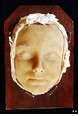 The death mask (Mary Queen of Scots’ is pictured here) constitutes a physical trace or archive of the person who has died. It is obviously not for the person it represents, and nor does that person have any say or control over the matter – making it an interesting route to exploring agency and archive in online reflective practices.
Transformation:
 “Demon masks are still used in healing rituals in Sri Lanka… One of the most powerful cures… is a masked performance in which the demon associated with the ailment, and others who may also have played a role in causing it, are made to appear” (British Museum, online). Formal, ritual performances involving masks are transformative in the moment, but may also have a lasting impact on communities and individuals.
Punishment:
 The scold’s bridle (pictured here) was used in Scotland from at least the mid-sixteenth century to punish women for talking too much, nagging, or inappropriate speech – it worked by restraining and sometimes injuring the tongue . Other forms of punishment involved masks which simultaneously restrained or injured the wearer and publicly humiliated them .
The extent to which online reflective practices can be understood as masks is an issue I want to explore more, and I hope to use these metaphors as structuring elements in my research.
References
British Museum. Changing Face: masks from the British Museum. retrieved 16 December 2007. <http://www.britishmuseum.org/explore/online_tours/museum_and_exhibition/
changing_face_masks/changing_face_masks.aspx>.
Dreyfus, H., & Rabinow, P. (1982). Michel Foucault: Beyond Structuralism and Hermeneutics. Padstow: T.J. Press Ltd.
via jenrossity
Preamble: ever since I started my part-time doctoral research just over a year ago I’ve known that I really want to blog about it eventually. Other researchers’ blogs (Chris Sessums, danah boyd, Lilia Efimova – to name a few I admire) have become really important to me not only in terms of their content but also in giving me ideas about what kinds of researcher it’s possible to be, and how to communicate well in this medium. I think it’s time for me to start practicing.
I became interested in online reflective practices when I worked as e-portfolio co-ordinator in the School of Education at the University of Edinburgh. These practices are well-established in many programmes in my School, and part of my role was supporting lecturers and tutors to envision how they could move their existing offline activities online (into electronic portfolios).
One of the things I found really fascinating in the e-portfolio literature was Barrett and Carney’s idea of ‘conflicting’ or ‘competing’ paradigms: ‘positivist’ (product-driven, performative, externally assessed, based on externally defined outcomes), vs ‘constructivist’ (process-driven, reflective, learner constructed outcomes) (2005, p7-8). These are also sometimes described as ‘map’ and ‘mirror’ portfolios. This helped me understand what I was seeing in discussions I had with colleagues about what the purpose of the (e)portfolio was. (I don’t think this is unique to e-portfolios, but I do think that the move towards database-driven storage of portfolios exposes these tensions, since it lends itself much more to assessment-driven and administrative uses than do local portfolios (paper-based or electronic, but not stored in a central database) (Kimball 2005). Also, any time we talk about doing things differently the question of what we’re actually trying to achieve seems to come up.)
Then I became interested in the extent to which the tension between these ‘conflicting’ paradigms might in fact be an intrinsic part of professional reflective practices. Reflective practice is a key focus in teacher education, for example, and informs many of the professional development activities undertaken as part of programmes and placements. The professional community values self-regulation (General Teaching Council Scotland, “Transition from Student to Teacher.” http://www.gtcs.org.uk/Probation/GainingFullRegistration/Trans): aspiring teachers have to show that they understand and can use the language of reflection, critical thinking and practice development, and that they are willing and able to embrace the ethos of continual self-assessment and improvement. In other words, reflection and self-regulation form part of the basis on which candidates are judged to be competent professionals. So, it seems there is complex relationship between reflection and performance. When what is being assessed or judged is the learner’s ability to be reflective, then reflection itself is performative.
To describe this, along with ‘map’ and ‘mirror’, I have added a third category: portfolio as ‘mask’. I’ve been working on this metaphor a bit over the past few months and am delighted by its richness – so far I’ve identified at least 6 (overlapping) genres of mask: protection, disguise, performance, memory, transformation, punishment. I’ll post more about that another day.
Over the past year, as well as continuing to write and think about e-portfolios, I have been exploring literature around narrative, performativity, identity, professional development and authenticity, and am theorising from a broadly post-structuralist perspective about identity performances. I’m now at the stage of thinking about data generation and I realise that, although I started out by thinking quite specifically about e-portfolios and professional practices (see my PhD proposal), the landscape in higher education includes a lot of online reflective practices around blogging as well. However, since what I am really interested in is the relationship between performance, performativity and reflection, some blogging contexts are more relevant than others. In particular, blogging which is summatively assessed seems to me to carry the same kind of tensions I’ve been talking about with regard to e-portfolios and professional education.
My current thinking is that these practices, grouped together, might usefully be described as ‘high-stakes reflection’, and that this is what I want to explore in my research.
What else might fit into this category? Could scholarly blogging constitute a third strand of high-stakes reflection in higher education, in the sense that it is intimately connected with the academic’s reputation and identity?
“why do I blog under my own name? …I feel that part of my ‘authority’ here on the blog when I’m writing more serious posts depends on you the readers knowing exactly who I am and how and why I’m qualified to do this.” (Howard 2005, http://www.earlymodernweb.org.uk/emn/index.php/archives/2005/09/so-why-w )
An element of choice could set this type of high-stakes reflection apart. Students are not allowed, for the most part, to choose whether to participate in the reflective assessments or professional development activities their lecturers assign to them. Academic bloggers, on the other hand, appear to be free to choose whether and what to blog. However, it may increasingly be the case that in some fields (like e-learning, to name one I know well), academics are expected to blog in much the same way that they are expected to publish in more traditional settings. Anyway, that’s more thinking I need to do, and also I need to decide if this third strand is too ‘out there’ to fit in to my current research project, focussing as it would on academics (or perhaps research students – making it maybe too ‘in here’!) rather than taught students in higher education.
I also need to do more digging to discover if ‘high-stakes reflection’ is a term I should be attributing to someone, or whether I made it up. If anyone’s heard it before, please let me know!
References
Barrett, H. and J. Carney. (2005). “Conflicting Paradigms and Competing Purposes in Electronic Portfolio Development.” Retrieved 12 July, 2006 from http://electronicportfolios.com/portfolios/LEAJournal-BarrettCarney.pdf
Kimball, M. (2005). “Database e-portfolio systems: a critical appraisal.” Computers and Composition 22: 434-458.
via jenrossity
I’ve just figured out how to import blog posts into my Facebook profile as ‘notes’ (use the “import a blog” setting in the Notes, enter the RSS feed for your blog, then Facebook will add a new note whenever you write a new post). In fact, I’ve only just realised today how many RSS feeds there are in Facebook. I’ve just subscribed to my friends’ status updates, and posted items, via my RSS reader (NetNewsWire).
via jenrossity
A quick note about the research project I’m currently involved in – the National Museums Online Learning Project. This involves a consortium of English national museums:
working together to develop new ways of getting their digital collections used in schools, and by adult learners. My role is as part of the University of Edinburgh’s research team, evaluating the project (formatively and summatively).
There’s more about the project here: http://www.vam.ac.uk/about_va/online_learning/index.html
via jenrossity
ICE3 is next week, and Hamish and I are putting the finishing touches on our paper. http://www.education.ed.ac.uk/ice3/papers/macleodross.html
It’s been a really exciting process.
via jenrossity