Log on:
Powered by Elgg

Feed detail

December 06, 2019

Is there time for learning in the workplace?

Photo by Steve Wheeler
It was great to be back in Berlin - that wonderful, glittering city - to speak at Online Educa Berlin, or OEB Global, as it's now called. The event also incorporates Learning Technologies Germany, and I was invited to present a spotlight session on Day 2 with the above title (see link below).

The conference itself, held at the expansive Hotel Intercontinental in Budapester Straße was attended by thousands of delegates from around the world, and it was a delight to meet up and spend some time chatting with old friends from decades of working in educational technology, including Julian Stodd, Mike Sharples, Paul Kirschner, Donald Clark, Don Taylor, Michelle Selinger, Tom Wambeke, Ulf-Daniel Ehlers, Heike Philp, Gilly Salmon, Shannon Tipton, Laura Overton, Armin Hopp, Rhona Sharp, Maren Deepwell, Martin Hawksey, Jef Staes, Christian Glahn, Morten Paulsen, Charles Jennings, Bryan Alexander, Eric Sheninger, Alejandro Armellini, Paul Bacsich, Audrey Watters, Rolf Rheinhardt and Mirjam Neelen. It was also great to hook up again with the EADL crew including Jens Greefe, John Trasler, Ellen Gunning, Chris Wolstenholme and Tony Horsfield, and of course, the chair for my session - the wonderful Ildiko Mazar.

The great thing about this being in Berlin at this time of the year - other than the crisp weather, gluhwein, great food, Christmas markets, lights and shopping - is that OEB Global represents all the sectors of learning, and each has specific sessions and strands that focus on primary, secondary, tertiary and professional education as well as unified sessions where the keynotes and spotlight speeches connect every idea together. I met several colleagues for the first time, even though I had probably 'known' and interacted with them on Twitter for years. These included Benjamin Doxtdator, Mar Camacho, Andreas Keller, Paul Hearn, Neil Lasher, Tarkan Gürbüz, Laura Czerniewicz and Inge de Waard. If I have left anyone out, I apologise, but OEB Global is a very large conference. Below is
the recording of my Spotlight presentation complete with slides.

The abstract: In this talk we will explore the issues and challenges of learning within the workplace. What are the benefits and limitations? How can we achieve direct learning transfer, while maintaining a healthy work/life balance? We will explore micro-learning, personal and personalised learning as current methods and will discuss some key case studies about how large organisations successfully support and promote L&D. We will also examine the role new technology can play in promoting effective L&D and critically evaluate practices that are rooted in traditional learning/training environments.


OEB Global will return to Berlin between December 2-4, 2020.

Creative Commons License
Is there time for learning in the workplace? by Steve Wheeler was written in Plymouth, England and is licensed under a Creative Commons Attribution-NonCommercial-ShareAlike 3.0 Unported License.


#TwistedTropes 24: Maslow's awkward hierarchy

Photo from Wikimedia Commons
Everything was awkward about the famous psychologist Abraham Maslow. Born in New York, USA he attempted to become an Olympic weightlifter, but failed miserably due to his lack of co-ordination, frail physique and love of Toblerone (there is no evidence for this; this is a cynical advertising stunt using product placement - Editor). As a young man, Maslow had very few friends, so he made books his companions, married one of his cousins by accident, and then spent the rest of his life trying to discover the meaning of life. His interests turned to the human condition and he attempted to develop a universal, worldwide categorisation of human needs, which he based very fairly on the observation a very small and privileged, largely white and male sample of rich and famous people (sarcasm - Editor).

Maslow never visited Egypt, and was not particularly knowledgeable about pyramids (except for Toblerone - Editor). It was quite a surprise to him then, when his life's work, known as the Hierarchy of Human Needs was turned into a pyramid. No-one knows who created this pyramid, because it is beyond any human intelligence, and would have taken a super-human feat to achieve, way beyond the technology of the day (you've been watching Ancient Aliens on the History Channel again - Editor). So Maslow, along with the rest of the world, was baffled by the pyramid representation of his theory.

Sadly, Maslow's Hierarchy became famous for the wrong reasons when learning professionals began to use the pyramid version in their PowerPoint presentations. When asked why they were using this version, many said that they liked to 'have colourful triangles on the slides, to break up the endless bullet points and columns of text.' This was awkward. When asked what 'self actualisation' meant, most learning professionals responded with 'I don't know'. This was also awkward, considering the fact that these professionals were responsible for the learning of entire multi-national corporations. Even more awkward was the idea that people would need to progress from physiological needs, through safety, social and esteem needs, before they could achieve the mythical pinnacle of 'self actualisation' that no-one actually understood.

A lesser known but more practical theory is Maslow's Hierarchy of Human Knees, which came from his lifetime obsession with exercise and joints. In the theory, Maslow argued that knees are the intermediate level of walking achievement, and must first be preceded by ankles. This sequence of ankles and knees must be achieved before the ultimate goal of hips can be attained. Unfortunately, Maslow died suddenly while out jogging, before he could start work on his Hierarchy of Human Wrists, Elbows and Shoulders. A little known fact is that the song 'Heads and Shoulders, Knees and Toes' was written in honour of Maslow (this is the most ridiculous thing you've written so far - Editor).

Next time: 25: Schindler's shopping list

Previous posts in the #TwistedTropes series
1. Pavlov's drooling dog
2. Chekhov's smoking gun
3. Occam's bloody razor
4. Schrödinger’s undead cat
5. Pandora's closed box
6. Frankenstein's well-meaning monster
7. Thor's lost hammer
8. Noah's character ark
9. Hobson's multiple choice
10. Fibonacci's annoying sequence
11. Plato's empty cave
12. Dante's lukewarm inferno
13. Sod's unlucky law
14. Aladdin's miserly lamp
15. Batman's tangled cape
16. Cupid's bent arrow
17. Fermat's dodgy last theorem
18. Moore's obsolete law
19. Lucifer's idiotic fall
20. Adam's poisoned apple
21. Hadrian's busted wall
22. Montezuma's terrible revenge
23. Dale's shameful cone

Creative Commons License
Maslow's awkward hierarchy by Steve Wheeler was written in London, England and is licensed under a Creative Commons Attribution-NonCommercial-ShareAlike 3.0 Unported License.


December 05, 2019

#TwistedTrope 23. Dale's shameful cone

An important use of Dale's cone: Image from Wikimedia Commons
Dale's cone is a very funny idea. It was invented by British comic actor Edgar 'Jim' Dale who knew a lot about making people laugh, but not very much about education. While on a day trip to Blackpool, the young Jim accidentally dropped his ice-cream on the sand. After a long screaming fit, he calmed down enough to notice that the up-turned cone made a pyramid shape that could be divided into convenient segments (I'm not sure this is entirely accurate - Editor).

Dale's cone of experience is so named because once teachers experience it, they realise that it is a fairly useless theory in education (well, mostly - some are still fooled by it - Editor). Dale's cone - remember the convenient segments? - claims that we only remember 10 percent of what we learn in lectures, 20 percent of what we hear, and 30 percent of what we see, and so on - but ultimately, we remember 90 percent of what we teach to others. This is not believable because there are many people who are not teachers, but they still remember a lot. Also, I'm a teacher, and I often forget lots of things such as

Anyway, some learning professionals believe the cone is useful, because it seems intuitive and conveniently gives neat percentages of what happens to memory in different conditions, even though it's misleading and also a corruption of what was intended. It was so popular it became known as Dale's pyramid of earning (is this a typo? - Editor) because Mr Dale made a lot of money out of the idea. This is despite it having less substance than soft-serve ice-cream - which was incidentally invented by another British comic actor called Margaret Hilda Thatcher - and is now considered to be snake-oil (another thing Mrs Thatcher was famous for - Editor). And yet it still caught on as a credible theory to explain memory, because those who believed in it didn't do their research and/or failed to question its validity. This is similar to believing in learning styles, unicorns and politicians who tell the truth.

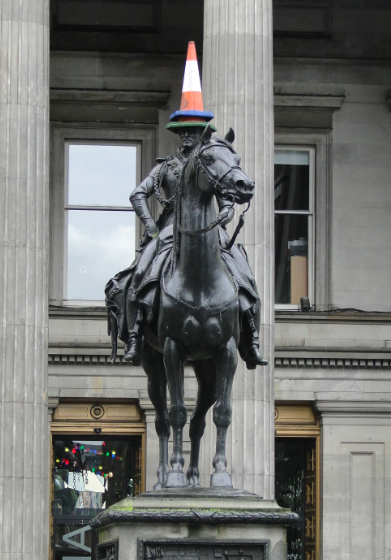
Today in the United Kingdom, Dale's crappy cone of experience is so popular it has multiplied and is seen everywhere on the roads. Where the cones are grouped together in large numbers, making driving difficult, it is known as a 'cone zone.' Every year at the festive season (actually all year round - Editor), many people in Britain, especially those living in Scotland, go out on the town to celebrate Dale's crappy cone, by climbing up high and placing replicas onto the heads of stone statues (see picture above). This is considered to be the best possible use of Dales's cone of shame.

Editor's note: I don't know what the author was smoking when he wrote this, but please take it all with a pinch of salt - as you should with Dale's Cone of Experience.

Next time: 24: Maslow's awkward hierarchy

Previous posts in the #TwistedTropes series
1. Pavlov's drooling dog
2. Chekhov's smoking gun
3. Occam's bloody razor
4. Schrödinger’s undead cat
5. Pandora's closed box
6. Frankenstein's well-meaning monster
7. Thor's lost hammer
8. Noah's character ark
9. Hobson's multiple choice
10. Fibonacci's annoying sequence
11. Plato's empty cave
12. Dante's lukewarm inferno
13. Sod's unlucky law
14. Aladdin's miserly lamp
15. Batman's tangled cape
16. Cupid's bent arrow
17. Fermat's dodgy last theorem
18. Moore's obsolete law
19. Lucifer's idiotic fall
20. Adam's poisoned apple
21. Hadrian's busted wall
22. Montezuma's terrible revenge

Creative Commons License
Dale's shameful cone by Steve Wheeler was written in London, England and is licensed under a Creative Commons Attribution-NonCommercial-ShareAlike 3.0 Unported License.


#TwistedTropes 22. Montezuma's terrible revenge

Image from Wikimedia Commons 
So let's say you visit Mexico (other countries are available - Editor), and you foolishly drink some of the tap-water, or perhaps indulge in some dodgy food. Later that day, you become aware of a strange feeling building in your lower reaches .... and slowly, it grows.

Soon you discover that you are not able to travel more than a couple of steps from the toilet, because quite frankly, the bottom is dropping out of your world. You realise this is more than just a tummy upset. It's a serious, recurrent volcanic eruption that is fermenting in your nether regions, and nothing can stop it. You just have to sit it out, if you know what I mean (this is known as Montezuma's revenge. I deal with it regularly in this job - Editor)

Later, when you begin to recover from that strange, impossible ordeal of 'going' through the eye of a needle, you wonder why the local population aren't similarly affected by Montezuma's revenge. Then you read Wikipedia and discover that the locals are immune to the bacterial infection that has laid you low. The truth is, you'd need to live in Mexico for a long time before it stopped affecting you. In short, you'd need to be a resident rather than a visitor to avoid any problems (wondering if David White is reading this? - Editor).

Then you realise it could have been a lot worse. If you had visited Mexico 500 years ago during Montezuma's reign you would notice the hotel standards were quite poor. The tourist business was fairly primitive and flights were irregular (what are you talking about? - Editor). If you had strayed off the beaten track, you might easily have caught by the Aztecs, and sacrificed in a very nasty way (is there a nice way to be sacrificed? - Editor). Montezuma became chief executive of the Aztec empire in 1502 and he became a powerful boss with a very large penthouse office, a huge salary with share options, a Lear jet and stuff (this is a bit over the top - Editor). But his power came to nothing when Spanish troops, led by Hernán Cortés invaded the country and killed him in 1520 (20 minutes past 3 in the afternoon). A wholesale slaughter, enslavement and privatisation of all public services ensued, which didn't please the Aztecs one bit.

So Montezuma's revenge is so called for a reason. According to Wiktionary: "The condition is seen as “retribution” for the slaughter and enslavement of the Aztec people by Spanish conquistador Hernán Cortés on 13 August 1521." So be careful how you treat other people. Shake hands and make friends instead of subjugating them. Don't slaughter and enslave them - buy them dinner. Just make sure it's well cooked.

Next time: 23: Dale's shameful cone

Previous posts in the #TwistedTropes series
1. Pavlov's drooling dog
2. Chekhov's smoking gun
3. Occam's bloody razor
4. Schrödinger’s undead cat
5. Pandora's closed box
6. Frankenstein's well-meaning monster
7. Thor's lost hammer
8. Noah's character ark
9. Hobson's multiple choice
10. Fibonacci's annoying sequence
11. Plato's empty cave
12. Dante's lukewarm inferno
13. Sod's unlucky law
14. Aladdin's miserly lamp
15. Batman's tangled cape
16. Cupid's bent arrow
17. Fermat's dodgy last theorem
18. Moore's obsolete law
19. Lucifer's idiotic fall
20. Adam's poisoned apple
21. Hadrian's busted wall

Creative Commons License
Hadrian's busted wall by Steve Wheeler was written in from a bed in Cancun Hospital, Mexico and is licensed under a Creative Commons Attribution-NonCommercial-ShareAlike 3.0 Unported License.


December 01, 2019

#TwistedTropes 21. Hadrian's busted wall

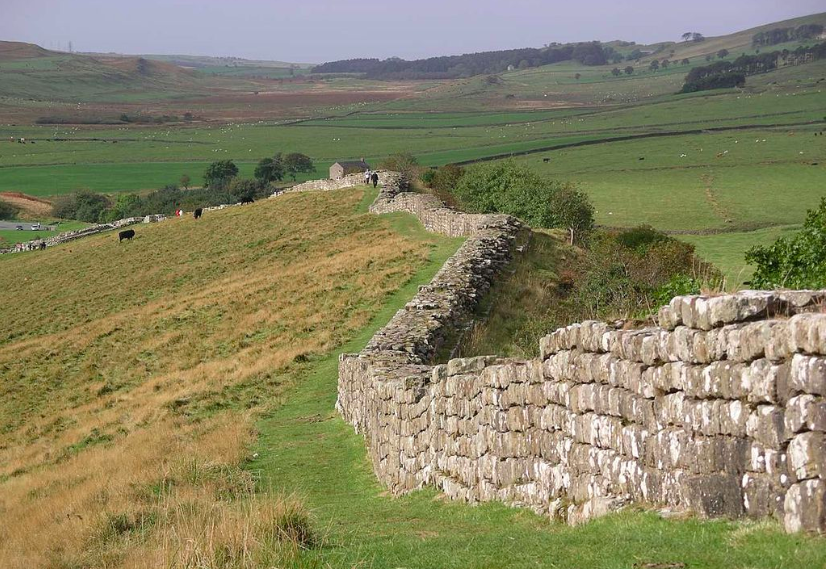
Hadrian's back yard. Photo from Wikimedia Commons
In his youth, the Roman Emperor Hadrian was a spoilt rich kid. His dad was something big in the city and Hadrian was lucky enough to marry into the royal family. By the time he became emperor of Rome in 117, he was already a playboy and perpetual tourist, spending his time travelling around the empire in his private jet (This simply cannot true - Editor). Hadrian enjoyed playing brutal contact sports, and built up an intimidating physique. He was very aggressive on the sports field, often barging into his opponents, which led to his nickname 'The Large Hadrian Collider' (Can you fact check these last two sentences please? - Editor).

Hadrian was also xenophobic - which is not only my best opportunity to use a word beginning with 'x', it also means that he didn't much fancy having to share his land - which he'd stolen - with bagpipe players, people who wore kilts or those who ate deep fried Mars bars - in other words, the Scots (That's quite rude. Several of my friends are Scottish - Editor).

Hadrian hated the Scots so much that in 122 he had a very big wall built across his back garden to keep them out. 'They're not stealing any apples from my trees,' he vowed. But this was not really a very fruitful idea. All that blood, sweat and tears spent erecting a large barrier did no good for anyone except the emperor. Those who were kept out got very mad and did everything they possibly could to get over it, around it or through it (which they did); those who paid for the wall questioned the huge cost of construction; those who built it were on zero hours contracts and many were injured by flying haggises; and the border guards who had to staff the wall resented having to stand out in all weather, freezing their buns off and soaked through to the skin; all of this was just to satisfy the ill-informed, mad-cap policies of a dictator. This kind of xenophobia and huge waste of public money to build a wall simply wouldn't happen today (Oh yeah? - Editor).

The moral of this story is that you should build bridges instead of walls. You'll never be able to keep people out by restricting their freedom of movement. People are social and have a deep need to be together, so walls are stupid ideas. Once you build a wall you have to maintain it. If you don't it will fall down, and while it's up, Banksy and his mates will draw all over it. So you need to put even more effort in to maintaining it than you did in building it in the first place. That's why Hadrian's Wall eventually crashed to the ground in 1989, and people from both sides crossed over, embraced each other, and got very very drunk together (I think you're confusing this with the Berlin Wall. I'm calling a halt to this post - Editor).

Next time: 22: Montezuma's terrible revenge

Previous posts in the #TwistedTropes series
1. Pavlov's drooling dog
2. Chekhov's smoking gun
3. Occam's bloody razor
4. Schrödinger’s undead cat
5. Pandora's closed box
6. Frankenstein's well-meaning monster
7. Thor's lost hammer
8. Noah's character ark
9. Hobson's multiple choice
10. Fibonacci's annoying sequence
11. Plato's empty cave
12. Dante's lukewarm inferno
13. Sod's unlucky law
14. Aladdin's miserly lamp
15. Batman's tangled cape
16. Cupid's bent arrow
17. Fermat's dodgy last theorem
18. Moore's obsolete law
19. Lucifer's idiotic fall
20. Adam's poisoned apple

Creative Commons License
Hadrian's busted wall by Steve Wheeler was written in Berlin, Germany and is licensed under a Creative Commons Attribution-NonCommercial-ShareAlike 3.0 Unported License.


November 21, 2019

#TwistedTropes 20. Adam's poisoned apple

Photo by Patrick McFall on Flickr
A little knowledge is a dangerous thing, it's said. Twisted Trope no. 20 is all about knowing too much, and/or overstepping the mark. In the previous post you were introduced to one of the arch-villains of this story. Hope you guessed his name. He's a bigger liar than a whole truckload of politicians. He's even more evil than Thanos, Captain Hook and Adolf Hitler combined, and probably the inspiration behind them all. He's as bad as (OK, we get it - Editor).

The story tells us that Lucifer was a powerful angel who became too proud, rebelled against God and got evicted from the Big Brother House. Where does he end up? Ironically - but great for the narrative - he turns up down here on earth, where he is able to tempt Adam and Eve to do naughty things that will corrupt their otherwise pure minds.

Adam and Eve live in their garden of Eden, innocently tending to the plants and animals. Basically they are nudist farmers, and they don't have a care in the world. Eden is paradise. There are no weeds to worry about, there is no sickness, the weather is lovely, there's plenty to eat and drink, and they can binge-watch their favourite box sets whenever they want (hmmm - Editor). But there's a catch. God has already told them that although they have free run of the entire garden, there is one thing they should never, ever do, and that is to eat fruit from the 'tree of knowledge of good and evil'. It's the one line they mustn't cross and their friendship relies completely on that trust. Why the tree is there in the garden and why it isn't fenced off with some kind of force field is baffling. It's proper asking for trouble.

Lucifer, now for some reason in the form of a snake, totally tempts Eve to eat of the fruit. The Bible never says it's an apple but Steve Jobs thought it would be a great marketing ploy (surely this can't be true - Editor). Eve bites a chunk out of the fruit, and calls Adam over to try it too. Suddenly, their eyes are opened, and the gullible pair realise they have done exactly what God told them not to do. They know too much, and now they're in trouble. What's worse, they see they literally have nothing to wear. This was in the days before Primark was invented, so they have to make their own clothes (other brands are available - Editor).

When God next visits them for tea and cake, He's heartbroken to discover their betrayal of his trust, and Adam and Eve leave the garden forever. It's a double eviction from the Big Brother House. If the snake had legs he would have been dancing for joy, knowing he had poisoned a beautiful friendship. But then God turns to him and shows Lucifer his ultimate destination, which doesn't exactly involve any ice in his drinks. And they all live unhappily ever after.

Stories like this leave me thinking: what exactly was in the fruit that caused all the problems? And why isn't it on sale in the shops today? Maybe it was the act of disobedience that was the problem, but why was it called the tree of knowledge of good and evil? What was the knowledge that God didn't want people to know? Was it harmful for us? Is there such a thing as forbidden knowledge? If there is, what kinds of knowledge should we never be able to access? Would it need to be removed from the curriculum? And if I told you my view, would you Adam and Eve it?

Next time: 21: Hadrian's busted wall

Previous posts in the #TwistedTropes series
1. Pavlov's drooling dog
2. Chekhov's smoking gun
3. Occam's bloody razor
4. Schrödinger’s undead cat
5. Pandora's closed box
6. Frankenstein's well-meaning monster
7. Thor's lost hammer
8. Noah's character ark
9. Hobson's multiple choice
10. Fibonacci's annoying sequence
11. Plato's empty cave
12. Dante's lukewarm inferno
13. Sod's unlucky law
14. Aladdin's miserly lamp
15. Batman's tangled cape
16. Cupid's bent arrow
17. Fermat's dodgy last theorem
18. Moore's obsolete law
19. Lucifer's idiotic fall

Creative Commons License
Adam's poisoned apple by Steve Wheeler was written in Plymouth, England and is licensed under a Creative Commons Attribution-NonCommercial-ShareAlike 3.0 Unported License.


November 20, 2019

#TwistedTropes 19. Lucifer's idiotic fall

Photo by David Clode on unsplash
They say pride comes before a fall. But this wasn't just a fall. It was a catastrophic misjudgement that led to the most spectacular downfall in history.

Lucifer, the first and greatest prince of the angelic hosts, oversteps the mark, and discovers that he's not too high and mighty for a good spanking. But there is no trial by TV interview, or questioning from the FBI for this errant prince. Lucifer is suddenly and dramatically out. As quick as that. But what was it he did to deserve such a rapid eviction?

Lucifer starts out as a beautiful being of light, 'the shining one', the 'son of the morning', even better looking than George Clooney. He is God's most impressive creation, but then he becomes too proud and believes he is greater than his creator. He challenges God for supremacy and ends up crashing down to earth, all burnt and twisted.

It's probably the most idiotic thing Lucifer could have done, and there is no opportunity for redemption. God (who probably bears a passing resemblance to Morgan Freeman) unceremoniously casts him out, Lucifer's power goes down the toilet, and now he has nothing to contemplate but a fiery end (Is this a curry joke? - Editor). Now lower than a snake's belly, he becomes the 'desolate one' aka Stan (I think this is a typo - Editor).

So what does he do? Bitter and angry, Lucifer decides that if he's going to fall, he'll take as many with him as he can. His pride has now been transformed into spite and revenge. So he starts by making sure that a third of all the angels follow him, and like his status updates. They become 'demons' and they serve him as he attempts to overthrow his creator. He doesn't have a hope in Hell, of course. You can't fight against God.

Challenging the supreme being was a stupid decision to make. Lucifer had the world at his feet but he decided it wasn't enough. He wanted to be the greatest and the best and that meant trying to rise above his creator. He found out that yes, pride does come before a fall. And now there's hell to pay.

Epilogue: Take care not to become so full of pride yourself that you lose your perspective. What you have right now may seem less than you might wish, but at least it's yours. Don't be impulsive and lose what you already have by reaching for something that isn't within your grasp. And don't be so arrogant that you become unteachable. If it all goes wrong, you don't know just how far you might fall.

Next time: 20. Adam's poisoned apple

Previous posts in the #TwistedTropes series
1. Pavlov's drooling dog
2. Chekhov's smoking gun
3. Occam's bloody razor
4. Schrödinger’s undead cat
5. Pandora's closed box
6. Frankenstein's well-meaning monster
7. Thor's lost hammer
8. Noah's character ark
9. Hobson's multiple choice
10. Fibonacci's annoying sequence
11. Plato's empty cave
12. Dante's lukewarm inferno
13. Sod's unlucky law
14. Aladdin's miserly lamp
15. Batman's tangled cape
16. Cupid's bent arrow
17. Fermat's dodgy last theorem
18. Moore's obsolete law

Creative Commons License
Lucifer's idiotic fall by Steve Wheeler was written in Plymouth, England and is licensed under a Creative Commons Attribution-NonCommercial-ShareAlike 3.0 Unported License.


November 19, 2019

#TwistedTropes 18. Moore's obsolete law

Photo from Wikimedia Commons
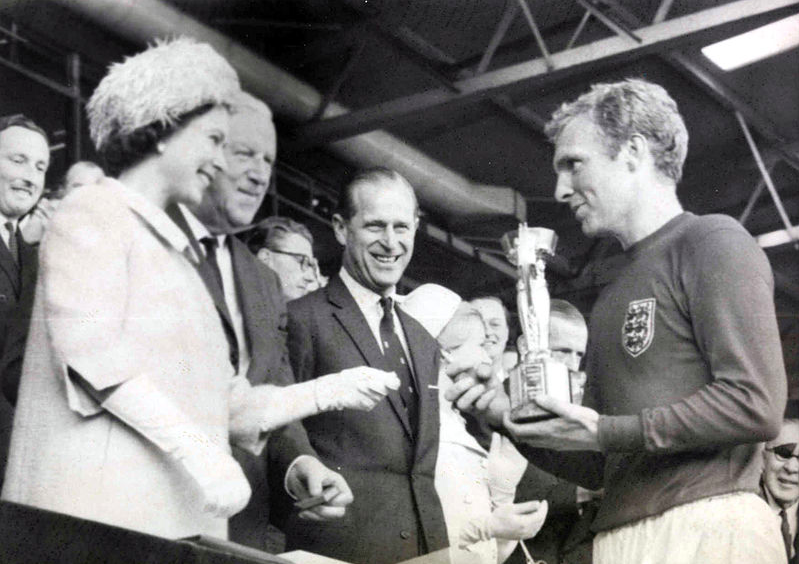
Moore’s Law is named after Bobby Moore, an electronics expert who also captained England to win the final of the football world cup in 1966 (I don't think this is entirely accurate - Editor).

A year earlier in 1965, Moore saw that transistors were shrinking so fast that every year twice as many could fit onto a chip. In 1975 he predicted the pace would double every two years. Later that year Moore retired after scoring his final two goals (known as a double) in a second division match against Scunthorpe FC.

Moore is less, apparently, because his law isn't holding up any more. Some people say Moore's law is now dead, while others suggest it is in intensive care and in need of resuscitation. The problem with Moore's law is that like any other law, it is only good until something better comes along and it's substituted, or the circumstances change. Rapid technical advances down the wing have caused problems (what? - Editor), and Moore's law is slowing down, just as Bobby did in the years before he retired from football (this football thing is simply not true - Editor). Moore's law was a very successful marketing ploy, but it simply hasn't got the legs anymore, and it looks like an own goal has (right, enough of the football metaphors. I'm closing this post down - Editor).


November 18, 2019

#TwistedTropes 17. Fermat's dodgy theorem

Image from Max Pixel
It was a nightmare writing this post, because annoyingly, I can't understand a word of it. I'm not a mathematician, but Pierre de Fermat was (in a part-time sense), and he was a lawyer in his day job. That makes the whole thing even more annoying. You can imagine, being both a mathematician and a lawyer, he would be in two minds working out any equation. Question: What is 5+3? The mathematician - 'eight'. The lawyer - 'What would you like it to be?'

Anyway, take a deep breath - here we go: Fermat's (last) theorem states that no three positive integers a, b, and c satisfy the equation an + bn = cn for any integer value of n greater than 2. The cases n = 1 and n = 2 have been known since antiquity to have an infinite number of solutions.

Blimey, if you can understand that, you have a better brain than I have. I mean, what the...? I think Fermat was having a giraffe.

And also, what the hell is a theorem? I looked it up and apparently it's 'a general proposition not self-evident but proved by a chain of reasoning; a truth established by means of accepted truths.' Well that's crystal clear then. Again, I'm none the wiser, so don't ask me to give you an example. It's absolute gobbledygook. There's even a pretentious semi-colon in there, which leads me to conclude that the writer was right up his own (enough of that, calm down - Editor). Anyway, a theorem in understandable terms is a formal statement that can be shown to be true through logic.

Fermat had probably had a belly-full after a lifetime of chalkboards and courtrooms, but he reckoned he had one more theorem to write and then he was done. So he deliberately devised a theorem that was so complex and diabolical that no-one could prove it, not even himself (this is all a bit far fetched - Editor). Then all the mathy types scratched their heads and frowned, and then scratched their heads some more. They all tried hard to work it out.

Down the years hundreds of mathematicians submitted 'proofs', but each and every one was wrong. Or incomplete. Or in one case, a blueprint for a multi-storey carpark by mistake (surely not? - Editor). And then, after more unsuccessful attempts than you could shake a slide-rule at, they gave up. It drove others mad. No wonder it was called his last theorem. I can hear them telling him - "Oi Fermat, that's your last one. You're banned, mate. Don't ever darken our door again." At his funeral you might hear Fermat sniggering from inside his coffin. "That's foxed 'em all," he would be saying, "sort that one out if you can..."

Well, someone did. Eventually. It took more than 350 years mind, before another mathematician (who wasn't also a lawyer) took it upon himself to put Fermat in his place. In 1995, a British mathematician called Andrew Wiles published the final proof for Fermat's last theorem, and it was correct!

This only goes to show. You should never give up. Even the most difficult problem can be solved if enough thought and effort goes into it. Resilience is important, and so is determination. If you believe in yourself, you can achieve absolutely anything. Even proving Fermat's last theorem. And that about sums it up.

Next time: 18. Moore's obsolete law

Previous posts in the #TwistedTropes series
1. Pavlov's drooling dog
2. Chekhov's smoking gun
3. Occam's bloody razor
4. Schrödinger’s undead cat
5. Pandora's closed box
6. Frankenstein's well-meaning monster
7. Thor's lost hammer
8. Noah's character ark
9. Hobson's multiple choice
10. Fibonacci's annoying sequence
11. Plato's empty cave
12. Dante's lukewarm inferno
13. Sod's unlucky law
14. Aladdin's miserly lamp
15. Batman's tangled cape
16. Cupid's bent arrow

Creative Commons License
Fermat's dodgy theorem by Steve Wheeler was written in Plymouth, England and is licensed under a Creative Commons Attribution-NonCommercial-ShareAlike 3.0 Unported License.


November 16, 2019

#TwistedTropes 16. Cupid's bent arrow

Photo from PxHere
In ancient mythology, Cupid is the 'god of love'. More accurately, he's the god of desire, attraction and lust. Cupid's arrow is always meant to aim true, to capture the 'true love of your heart'. What it's really doing is saying to your head 'Wow, they're really fit. I wonder if I stand a chance?'

So what if the arrow was bent, and didn't fly straight? I'll come back to this later.

What is not widely known is that old Cupid liked a bit of variety. He sneakily used two types of arrows. The golden tipped ones, if they hit you, caused you to fall in love. They filled you with uncontrollable desire - or bluntly, lust. His other set of arrows were lead tipped, and if one of those hit you, it created a strong repulsion, a desire to run away from what might otherwise be your object of desire. So Cupid would be considered quite a powerful figure in ancient times, and would probably be blamed for many of the emotions people felt. It was kind of an explanation for what happened in real life, but whatever it was I wish he'd put some clothes on. I'm trying to eat my lunch.

Anyway, teaching can be a bit like cupid's bow. Our influence as educators can be very powerful. We can either use a golden arrow, to turn students on to learning, or we can take the lead alternative, and then they become bored, disengaged, repulsed. Success or failure often depends on the level of passion we invest in our pedagogy and the belief we have in education. It doesn't matter how good your resources are, or whether you have a great classroom environment. If you lack the passion to inspire students, you might as well be shooting at your target with a bent arrow.

Next time: 17. Fermat's dodgy theorem

Previous posts in the #TwistedTropes series
1. Pavlov's drooling dog
2. Chekhov's smoking gun
3. Occam's bloody razor
4. Schrödinger’s undead cat
5. Pandora's closed box
6. Frankenstein's well-meaning monster
7. Thor's lost hammer
8. Noah's character ark
9. Hobson's multiple choice
10. Fibonacci's annoying sequence
11. Plato's empty cave
12. Dante's lukewarm inferno
13. Sod's unlucky law
14. Aladdin's miserly lamp
15. Batman's tangled cape

Creative Commons License
Cupid's bent arrow by Steve Wheeler was written in Plymouth, England and is licensed under a Creative Commons Attribution-NonCommercial-ShareAlike 3.0 Unported License.


November 15, 2019

#TwistedTropes 15. Batman's tangled cape

Image from Wikimedia Commons
What is the point of wearing a cape? They were very popular during Victorian times, but now? Does anyone wear a cape these days? Do you? No, me neither. So that makes Batman something of a freak then.

He's never without his cape. He wears it all of the time, probably even when he's on holiday, and probably in bed, and in the shower too (where does Batman go on holiday? Is it Cape Town? - Editor).

Well, I asked around, called a few friends who are DC Universe experts (geeks really - Editor), and apparently, Batman's cape allows him to 'glide smoothly through the air', and it also has some 'protective capabilities', although they wouldn't be drawn on what these were.

I'm not convinced.

I'll probably rattle a few cages by writing this, but the Caped Crusader isn't really a superhero - at least not in the same way as Superman or Superwoman. He has no natural superpowers.

He relies heavily on his technology, and I suppose his cape is a part of that gadget arsenal. So what would happen if his gadgets failed? What if his cape got all tangled up when he was flying around? Wouldn't that be a disaster? Would he crash to the ground and get all busted up?

How often do teachers rely on technology or gadgets, only for those tools to let them down at the critical moment? Isn't that one of a teacher's worst nightmares? Victim of your own device. The power cut cuts your power.

You don't want to look like an idiot in front of your class of students, but you persevere because using technology does seem to add a frisson of je ne sais qoi to a lesson (French? You looked that up on Google translate didn't you? - Editor).

Teachers are not like Batman, no matter how much they yearn to emulate the Dark Knight. They don't need technology and gadgets to be great teachers. Their true superpowers are found in their ability to inspire, and to engage students and to motivate them to learn.

Good teachers can connect with students, enliven their subject with enthusiasm and passion, and I'm damned sure they don't need to fly around the room to impress. All they have to do is boldly fight ignorance with knowledge. With or without a cape.

Next time: 16. Cupid's bent arrow

Previous posts in the #TwistedTropes series
1. Pavlov's drooling dog
2. Chekhov's smoking gun
3. Occam's bloody razor
4. Schrödinger’s undead cat
5. Pandora's closed box
6. Frankenstein's well-meaning monster
7. Thor's lost hammer
8. Noah's character ark
9. Hobson's multiple choice
10. Fibonacci's annoying sequence
11. Plato's empty cave
12. Dante's lukewarm inferno
13. Sod's unlucky law
14. Aladdin's miserly lamp

Creative Commons License
Batman's tangled cape by Steve Wheeler was written in Plymouth, England and is licensed under a Creative Commons Attribution-NonCommercial-ShareAlike 3.0 Unported License.


November 14, 2019

#TwistedTropes 14. Aladdin's miserly lamp

Photo from Pixabay
There's a very old story that has been handed down through the generations. In it, a young street urchin called Aladdin breaks into a cave. He finds a lamp, and when he rubs it, spectacular stuff occurs. Why Aladdin rubbed the lamp inside a dark cave when he could have be lighting it up baffles me. But rub it he did, and then the magic happened.

Out popped an all-powerful being who seemed more generous than a sozzled granny on Christmas eve. 'Your wish is my command' says the big orange genie who is duty bound to grant three wishes to the holder of the lamp. Aladdin is also in possession of a magic carpet and a magic ring. In fact everything is magic in this story.

But there is a catch.

As generous as the genie claimed to be, the only wish he couldn't (or wouldn't) fulfil was a wish for unlimited wishes. This was pretty useless as far as Aladdin was concerned, because he was a greedy little toerag, who earned his sordid living by nicking other people's stuff. It was the first thing that occurred inside Aladdin's diseased imagination when the genie appeared; ask the genie for unlimited wishes, and you could milk this golden goose until the cows came home (that really is the worst mixed metaphor I've ever seen - Editor). But Aladdin didn't get away with it - the genie said no.

Even though he was a mighty, powerful being, perhaps the orange genie had limited resources (he never disclosed his tax returns so we will never know). Or maybe he was just as tight as a camel's bum in a sandstorm. Perhaps you couldn't expect him to keep giving out free stuff ad infinitum. Or maybe too many wishes was a bad thing, even for a greedy little thief like Aladdin. Ultimately, restricting him to an arbitrary three wishes actually turned out to be a good thing, because it made Aladdin think about what was really important to him.

Restricted resources sometimes do that to you. You make the most of the limited chances you have, and necessity is the mother of invention. Teachers make do a lot of the time, because there are no genies or lamps in school, and a MAT isn't a magic carpet (this is now officially ridiculous - Editor). Pity really, but that's probably the reason many teachers are insanely creative. So teachers, if you had a magic lamp - what three wishes would you make?

At the end of the story, Aladdin ends up obscenely rich and marries the princess (as you do) but owning the lamp takes a great toll on him. After wrestling with his conscience, he eventually decides to release the genie. The big orange genie loses all his cosmic powers but eventually becomes the head of state of a very large country. Perhaps the biggest country there is. Everyone says so. Meanwhile, the princess has triplets, and Aladdin is left at home literally holding the babies while she fulfils her official obligations. Aladdin is accused of using performance enhancing rugs, but gets away with it when he receives a presidential pardon (please let me out of here - Editor). Any way you look at this, you should be careful what you wish for.

Next time: Batman's tangled cape

Previous posts in the #TwistedTropes series
1. Pavlov's drooling dog
2. Chekhov's smoking gun
3. Occam's bloody razor
4. Schrödinger’s undead cat
5. Pandora's closed box
6. Frankenstein's well-meaning monster
7. Thor's lost hammer
8. Noah's character ark
9. Hobson's multiple choice
10. Fibonacci's annoying sequence
11. Plato's empty cave
12. Dante's lukewarm inferno
13. Sod's unlucky law

Creative Commons License
Aladdin's miserly lamp by Steve Wheeler was written in Plymouth, England and is licensed under a Creative Commons Attribution-NonCommercial-ShareAlike 3.0 Unported License.


November 13, 2019

Information, innovation and meaning

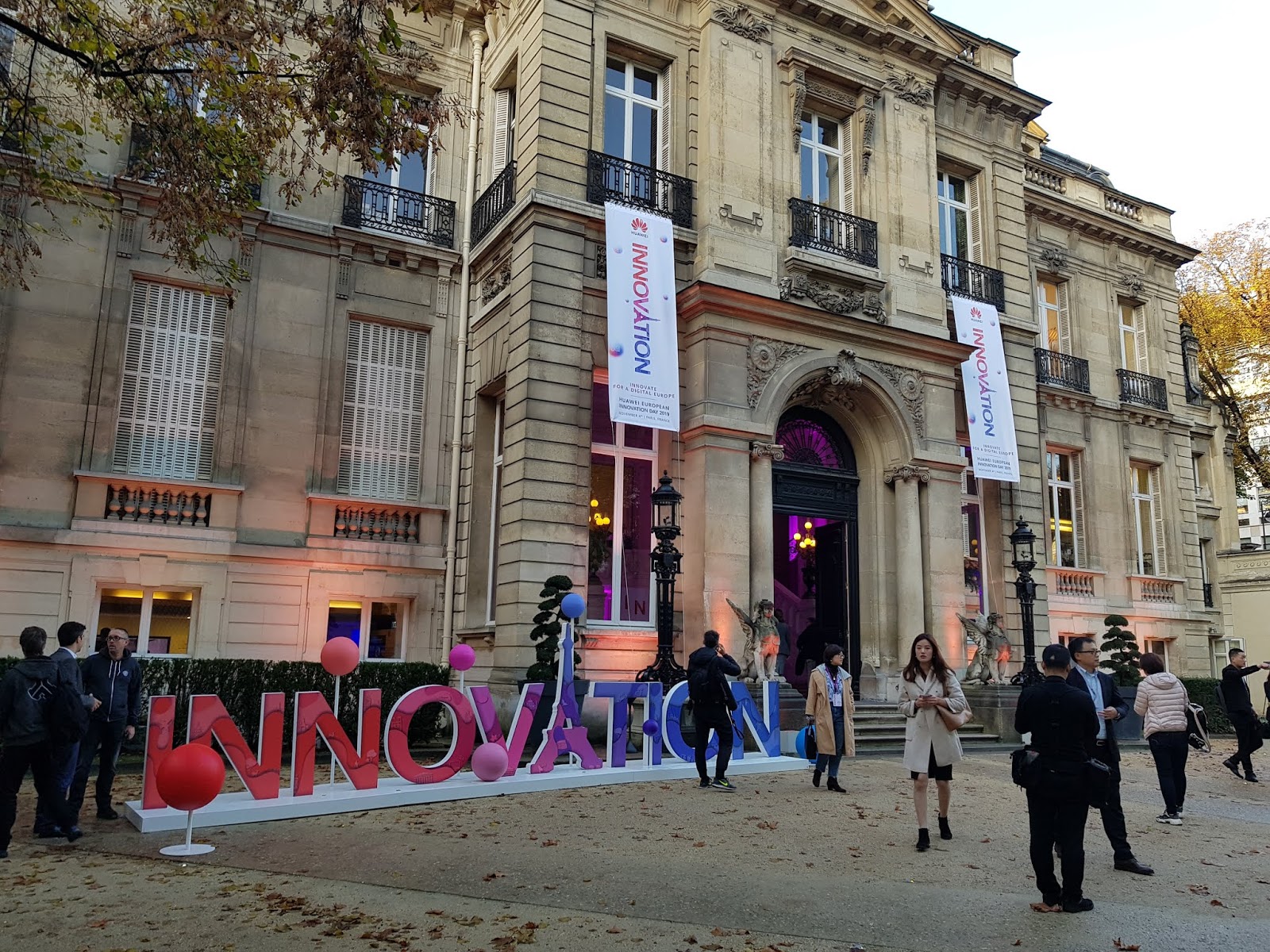
Photo by Steve Wheeler - Entrance to the Hotel Salomon de Rothschild
Last week you would have discovered me in the cellar of a French palace - the stylish Hotel Salomon de Rothschild, not a stone's throw from the Arc de Triomphe in Paris. The grand old building was transformed into a hi-tech conference venue for European Innovation Day. In a stark contrast spanning three centuries, technologically futuristic images and large screen technologies were projected onto, and embedded within, the fabric of the 230 year-old building. Steeped in history yet bristling with technology, this melding seemed for all the world like a metaphor for education.

And yet this transformation was tastefully executed, with the two eras joining seamlessly to provide a fabulous, evocative venue for the conference. And in this way, the Huawei sponsored one-day event showcased a spectacular array of possibilities and probabilities for all our digital futures.

Frankly, the speaker line-up was something of a curate's egg - good in parts. For the jaded assembly of tech hacks, it was often 'yep, heard that before.' Journalists are not easily impressed, tech writers less so. But some speakers stood out above the rest.

Photo by Steve Wheeler - Merouane Debbah speaking at #HCE2019
I paid close interest to the presentation by Mérouane Debbah, a researcher, tech entrepreneur and professor at Centrale Supélec who presented a far-sighted and futuristic, if somewhat techno-romantic view of the world.

Debbah joined Huawei in 2014 where he founded the Huawei Mathematical and Algorithmic Sciences Laboratory in Paris. It focuses its work on mathematical sciences applied to wireless, optical and networking communications. Today the lab has 100 researchers and has made a major contribution to our understanding of the fundamentals of 5G technologies. The centre also explores new and innovative uses of Artificial Intelligence for telecommunications.

In an articulate and accessible style, Debbah spoke of the technologies that will transform our lives in the near future. He explained the potential of developing AI trends such as deep learning and artificial neural networks, and painted a bright technological future for all sectors of society.

Photo by Steve Wheeler - European Innovation Day
New and emerging technologies such as holoportation which can give users the ability to 'jump' into someone else's reality, are ways we will connect with each other in the near future. They have the potential to enhance and amplify our actions and our collaborations across distance.

Smartphones with advanced sensing and sampling capabilities, for example air pollution levels, x-ray penetration of solid substances, infra red vision and aspects of the quantified self (blood pressure, temperature, heart rate) are also on the horizon, or already here. Their use, for example in the teaching of science, will add new dimensions and possibilities.

Other emerging technologies such as DNA based digital storage (which is capable of subverting Moore's Law) will expand our capability to store and retrieve huge amounts of data very quickly.

But none of these technologies will reach its full potential without the communications infrastructure to make it work optimally, and Debbah believes this is 5G (and eventually 5G+ and 6G). This was all fascinating to listen to, but for me the most significant contribution he made during the day is when he predicted these technologies will not only convey information, but also meaning. Truly, this is something all of us will require in the coming decade.

Related post: Digitally connecting the future

Creative Commons License
Information, innovation and meaning by Steve Wheeler was written in Plymouth, England and is licensed under a Creative Commons Attribution-NonCommercial-ShareAlike 3.0 Unported License.


November 12, 2019

Digitally connecting the future

Photo by Steve Wheeler
I joined the press pack in Paris last week to attend two events sponsored by electronics giant Huawei. The first was European Innovation Day, an event held at the elegant Hotel Salomon de Rothschild building that showcased innovative uses of digital technology in education, health, industry and culture. I report on that event in this post.

But first, here's a report on #HCE2019 - otherwise known as Huawei Eco-connect Europe - a mega event held in the Paris Palais de Congres. HCE2019 was attended by around 2000 delegates drawn from a wide spectrum of European society. Many of the sessions focused on the immense task of digitally connecting society, and I was pleased to see that the key emphasis of the conference was on people rather than technology.

One session that epitomised this emphasis was a panel discussion moderated by Jennifer Schenker, editor-in-chief of The Innovator. It featured four CEOs who explored the cultural and human aspects of digital transformation. Transforming organisations and practices is never easy, but the panellists offered some interesting perspectives on how it might be achievable in a time of volatility in the industrial world.

Isabelle Kocher, CEO of the French utility company Engie, argued that digital transformation is not a project or goal, but an never-ending journey. She said: "If you hear a CEO say 'Digital transformation is now complete' the company is in trouble. Transformation is an ongoing, never ending process."

President of Huawei's Enterprise Business Group for Western Europe Ernest Zhang wished to identify the constraints to transformation in organisations and thought that lack of knowledge about technology is one of the biggest barriers to digital transformation in organisations. Structure, traditional IT systems and existing culture are all a part of the problem, he suggested.

Jean Stephane Arcis, CEO of HR and recruitment company Talentsoft focused on the customers, and argued that "the holy grail of today's business (retail sector) is to create mass personalisation of everything. It's transformation of the business model."

Finally, Nicolas Petrovic, CEO of Siemens SAS focused on the learning and development imperative as an important component of strategic transformation. He said that the new challenges of business is to ensure that all employees engage in continuous learning. Companies need to support collaboration across the workforce and break down the silos of isolation, he warned.

Next time: Information, innovation and meaning

Creative Commons License
Digitally connecting the future by Steve Wheeler was written in Plymouth, England and is licensed under a Creative Commons Attribution-NonCommercial-ShareAlike 3.0 Unported License.


November 11, 2019

#TwistedTropes 11. Plato's empty cave

Photo by Devon van Rensburg on unsplash
Plato was a Greek philosopher who had a splendidly long beard. He was the hipster of philosophers (what? - Editor). He spent a lot of his time thinking, which led to some strange ideas, all of which were in Greek.

"Why don't you go out and get yourself a proper job?" his parents would often ask (also in Greek), but Plato studiously ignored them and continued to spend his time pontificating, wandering around in olive groves, and drinking Retsina. And wrestling. He also did some wrestling. Mostly he wrestled with his thoughts, but now and again he also enjoyed two falls or a submission (Please take this seriously - Editor).

Today, philosophers talk about Plato's cave. Plato didn't really own a cave (he couldn't afford the ground rent) but was in fact an allegory (which is less expensive). If he had owned a cave, he would probably have chained people inside it, facing the wall with a fire behind them, the sadist (surely not? - Editor). The fire wouldn't be there to keep them warm, because Greece is pretty much a furnace for most of the year, but Plato would make sure it was there to create flickering shadows on the wall the chained people were forced to gaze at. It was real people and animals passing by behind the prisoners that created the shadows, but the prisoners didn't know this. They were forced to face the front, a bit like today's students.

If this strange torture wasn't enough, Plato also imagined one of these poor deluded souls being released into the world, and seeing it as it actually is. It is a huge shock for the poor sap, who is so conditioned to sitting in chains in the cave watching shadows of his version of reality flickering on the walls, that he rejects reality in favour of his lived experience. Worse, if he returns to the cave and tells his former cave-mates, they wouldn't believe him, and would probably think he had a screw loose. Releasing him potentially causes more harm than keeping him where he is, safe and sound in his deluded little spot inside the cave.

What we don't know can't hurt us, it's said. In a sense that may be true, but what about when we are confronted with a reality we cannot or will not accept? What if we learn something that runs completely counter to our beliefs or perceptions? What if we return to the cave and it's empty? Such a culture shock, such cognitive dissonance is what nightmares are made of. It's also the basis of great learning. When students leave the artificiality of the traditional classroom and enter the real world, they quickly discover that everything is joined up, rather than being presented in discreet subject sessions. All the stuff they learnt in school is connected out there in the real world. It probably takes a lot of time for some to adjust to this new reality. This is where their real education begins.

Plato's cave therefore makes a lot of sense in an education context. So although Plato was probably a sadist, he was also a clever old stick. And a clever sadist is definitely someone we should all be wary of (This is poor writing and I'm not convinced it resolves anything. See me after class - Editor).

Next time: Aladdin's miserly lamp

Previous posts in the #TwistedTropes series
1. Pavlov's drooling dog
2. Chekhov's smoking gun
3. Occam's bloody razor
4. Schrödinger’s undead cat
5. Pandora's closed box
6. Frankenstein's well-meaning monster
7. Thor's lost hammer
8. Noah's character ark
9. Hobson's multiple choice
10. Fibonacci's annoying sequence

Creative Commons License
Plato's empty cave by Steve Wheeler was written in Plymouth, England and is licensed under a Creative Commons Attribution-NonCommercial-ShareAlike 3.0 Unported License.


November 09, 2019

#TwistedTropes 12. Dante's lukewarm inferno

Photo by Maxim Tajer on unsplash
The Inferno is the first part of Dante Alighieri's 14th-century poem called the Divine Comedy. It tells the story of Dante's imaginary journey through Hell which is depicted as nine concentric circles of torment located within the Earth. It represents the journey of the soul toward God, with the Inferno describing the recognition and rejection of sin.

Dante didn't pull any punches in his writing. There is no fire brigade in Hell. But there are some appalling scenes, reminiscent of the mad scramble to reach the boarding gate before everyone else when your flight is called on a budget airline. There are so many bodies and so much carnage, even the Midsomer Murders wouldn't be able to compete.

The most chilling effect though, is the sign over the gates of Hell: 'Abandon hope, all ye that enter here'. It's the same feeling some students get when they enter a classroom. They know it won't go well for them. They have probably struggled to complete their homework (or not done it at all - the biggest sin), because they probably can't see the relevance or worth of study. They don't want to be there, but they are compelled. Their chains are the obligation to attend, and the threat of failure if they don't. They look for any chance of escape. Hell for them is being compared to the bright kids in the class, and the poor expectations that are placed upon them by certain teachers. They are like the inhabitants of Dante's inferno - not sure why they are there, but they are convinced they've done something very wrong. 

As Dante descends ever deeper into the depths of the inferno, he sees that the torment increases in relation to the magnitude of the sins committed. But there is no escape from the inferno, but some students do 'escape' from school. They are often excluded from education because of their misdemeanours. True, it takes a lot to be thrown into outer darkness where there is weeping and wailing and gnashing of teeth, but some students welcome it. It means a release from the torture of sitting for hours in a classroom, dressed in an uncomfortable uniform, having to jump through all the hoops of fire just to survive the day. For some, even though they feel the heat, school is a lukewarm experience at best, that in the end damages their perception of learning and taints their entire life. 

It doesn't have to be like this. Children shouldn't be forced to travel through hell just to achieve their qualifications. Those who are excluded from school may be rare exceptions, but how many have traumatic situations going on in their lives that can only be expressed through their challenging behaviour? We often discuss the mental health needs of teachers, but how often do we recognise the mental hell that some children might be enduring? If we did, and made better provision, we might just transform their hell into paradise.


November 07, 2019

#TwistedTropes 13. Sod's unlucky law

Photo by Marcin Wichary on Flickr
Anything that can go wrong, will go wrong.

This is Murphy's law but in a major plot twist, it's now also known as Sod's law - named after the poor unlucky sod who always seems to be the victim of fate (this is a British invention - Editor). If you believe in Sod's law, you end up either very philosophical about life, or very paranoid. It probably makes no difference, because you'll be just as unlucky either way. Let me set the scene:

You oversleep, which makes you late for a very important meeting, but you can't find your car keys. You frantically search everywhere, and bang your head painfully on a cupboard door. When you do eventually find your keys, you run for the car, trip over your kid's scooter, fall headlong into the gutter, and your keys fall down the drain. At that precise moment, it starts raining, but your coat is locked inside the house. Your house keys are on the same keyring as your car keys - down the drain. As you stand there, you see your alternative transport - the only bus into town - go by. It drives through a huge puddle which splashes all over you and now, not only have you missed the bus, but you're soaked through to the skin. You eventually arrive into work, very late and very wet, and learn that the meeting was cancelled. That's Sod's law.

But how did Sod's (and Murphy's) law originate?

Astronaut John Glenn believes it comes from the story of Murphy - a character in U. S. Navy educational cartoons (are there such things? - Editor). Murphy was an incompetent mechanic, who always screwed up, no matter what the job was - so Murphy’s Law epitomises everything that could go possibly wrong, and usually does. Sod's law is the same, but somehow worse - the bad luck is not of your doing. It just happens to you, there's nothing you can do about it, and you believe that fate is mocking you. The positive side of this is that you know things can go wrong, so you anticipate this and you protect yourself.

That's why teachers plan. There is plan A and then, if they are wise, teachers have a plan B, and sometimes a plan C as well. You can never be certain whether your first plan is going to succeed, because - Sod's law. In my own experience, I was always aware that my digital resource use could be scuppered instantly if there was a power cut or a technical failure. I always planned an alternative.

My wife, a teacher of English and Media in secondary education, once presented a task to her students that involved them watching a certain TV programme and then writing a review. Two of the girls (twins) came up to her after the lesson and told her they couldn't do the task, because their parents banned TV in their house. My wife, ever the resourceful teacher, had to think of a plan B - an alternative task for them to do. It only goes to show that the best laid plans of mice and men.... that's why teachers plan.

Next time: 12. Dante's lukewarm inferno

Previous posts in the #TwistedTropes series
1. Pavlov's drooling dog
2. Chekhov's smoking gun
3. Occam's bloody razor
4. Schrödinger’s undead cat
5. Pandora's closed box
6. Frankenstein's well-meaning monster
7. Thor's lost hammer
8. Noah's character ark
9. Hobson's multiple choice
10. Fibonacci's annoying sequence
11. Plato's empty cave
12. Dante's lukewarm inferno

Creative Commons License
Sod's unlucky law by Steve Wheeler was written in Maribor, Slovenia and is licensed under a Creative Commons Attribution-NonCommercial-ShareAlike 3.0 Unported License.


November 06, 2019

It's not worth the bisque

Photo by Steve Wheeler
Sat in a fish restaurant tonight, I noticed this tank full of lobsters beside my table. I couldnt miss it really. Throughout my entire meal, two of the lobsters continuously and aggressively fought and barged for supremacy. They never stopped. But the contest was futile. All they managed to achieve was some churned up sand, water and plenty of bubbles. If you look closely at the photo, their claws are taped together so they can't do any physical harm to each other.

It got me thinking about the similarity between the lobsters acting like mobsters, and the sniping and name calling that we witness between certain teachers on Twitter. What is achieved? Certainly a lot of churn. But what else? Hurt feelings and anger, and in the worst cases, alienation and despair.

Ultimately, we all share the same confined space - education, and we all have the same aim - to survive (and try to make a difference if we can). In the meantime, instead of fighting, why can't we get along with each other, act kindly and disagree politely? It wouldn't take a lot to shelve the aggression and the 'I'm right, and they're wrong so I can be rude to a complete stranger' attitude, and we'd all be a lot happier as we strive toward the same excellence in teaching, and supporting our students as they learn.

So let's stop the aggression, and see this for what it is. After all, you're not going to be in that tank forever, are you?

NB: No lobsters were harmed during the writing of this blog, and I certainly didn't eat any of them. It wasn't worth the bisque....

Creative Commons License
It's not worth the bisque by Steve Wheeler was written in Maribor, Slovenia and is licensed under a Creative Commons Attribution-NonCommercial-ShareAlike 3.0 Unported License.


November 04, 2019

#TwistedTropes 10. Fibonacci's annoying sequence

Photo from Wikimedia Commons
For the record, I was never any good at maths at school. I didn't need to be, because the only thing I risked was my grades, and I didn't think any of it counted. My teachers would write: 'Must try harder' on my annual report. What they should have written was 'he doesn't try at all.' I didn't think I would ever be in a situation where I would need maths, so I let a lot of it pass me by. I was wrong.

I hadn't realised that I would be living a life where maths would be needed - nay essential - for shopping, paying bills, checking my bank balance and being employed - to name just a few. Still, once I got away from the basic arithmetic needed to run my life and my home, it always got just a bit esoteric. Algebra and simultaneous equations were never a strong point for me, so if someone started talking to me about Fermat's last theorum, or the Mandelbrot set, or the Fibonacci numbers, it would leave me cold. It didn't compute.

Then someone told me (or I may have read it) that Fibonacci's sequence is actually reflected in nature and represents the building blocks of snail shells, pine cones, flowers and the spirals of the galaxy, I began to get interested. I began to understand the golden ratio. I saw the mathematical light. I figured it out (oh good grief, enough of the puns already - Editor).

It's funny, isn't it, that when subjects like maths were taught in my school years, they seemed so boring. This was because I was never able to connect them to anything I was really interested in. But this is different. Suddenly, sequences of numbers have a meaning in my world....

But the Fibonacci sequence is still annoying. It's annoying because it's a sequence and it's easy to follow and understand. Firstly, it starts with a 1, and then follows with another 1. Then it gets a little easier to follow, because what you do next is add the two numbers together to get the next number. So 1+1 = 2. Then 1+2 = 3, and 2+3 = 5, and 3+5 = 8 .... and the same formula is repeated again and again ad infinitum (probably the only Latin you know - Editor) and a pattern emerges. So ipso facto, the sequence continues and forms an increasingly growing spiral when it's mapped mathematically. This is per se quite remarkable because much of nature ut supra, seems to follow this sequence (OK, enough - stop showing off - Editor).

The entire universe seems to be based on mathematics. And that's what's so annoying about the Fibonacci sequence. It reminds me that I was so wrong at school for disregarding maths as irrelevant, when in fact it is present in just about every aspect of my life and in the world around me. I'm also annoyed that my teachers never bothered to tell me any of this, because if they had, I would have been hooked for life, right there and then. And that about sums it up.

Next time: 11. Sod's unlucky law

Previous posts in the #TwistedTropes series
1. Pavlov's drooling dog
2. Chekhov's smoking gun
3. Occam's bloody razor
4. Schrödinger’s undead cat
5. Pandora's closed box
6. Frankenstein's well-meaning monster
7. Thor's lost hammer
8. Noah's character ark
9. Hobson's multiple choice

Creative Commons License
Fibonacci's annoying sequence by Steve Wheeler was written in Paris, France and is licensed under a Creative Commons Attribution-NonCommercial-ShareAlike 3.0 Unported License.

November 01, 2019

#TwistedTropes 9. Hobson's multiple choice

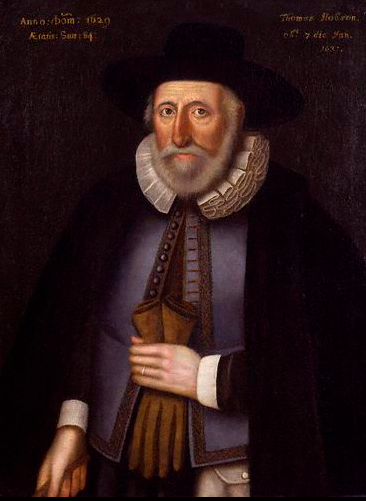
Thomas 'Happy' Hobson via Wikimedia Commons
Automobile manufacturer Henry Ford once promised his customers: 'You can have any colour you like as long as it's black'. He sounds like he would be a bundle of laughs to visit. There'd be a voice from the kitchen: 'If I had eggs, I could make you eggs and ham, if I had ham...'

Maybe Ford was as miserable as the man pictured on this page - Thomas Hobson. Hobson was a livery stable owner, and he owned at least 40 horses. Anyone wanting to hire a horse had to take the one in the stall nearest to the stable door, or none at all. It was 'take that horse or you can walk'. It was literally Hobson's choice, and it was probably the only fun he ever had. He must have been very rich though, because he had his portrait painted. That usually cost an arm and a leg. Or two arms, as Venus de Milo once found out.

Hobson isn't looking happy at all in the picture, because unlike a selfie, which takes a second to capture, a portrait painter required you to sit without moving for at least a month, and maybe also a long weekend, with no chance to visit the little boy's room (surely this can't be true - Editor). No wonder Hobson was mean to his customers. I'm not sure what Ford's excuse would have been.

But what if there had been several choices? What if there were hundreds of choices? What if there were so many choices that the customer was left totally bewildered, and couldn't ever decide? Restaurants are like this, says caustic chef Gordon 'expletive' Ramsay. If a restaurant has too many choices on its menu, he says, don't eat there. The food can't be that good. Alternatively, a restaurant with just a few choices on the menu should be better, because the chef only has a few things to focus on. So I won't be visiting Subway anytime soon.

In schools, teachers present all sorts of subjects to students. Often too many. I remember having to make choices when I was at school. Talk about a genderised curriculum! I could choose between French, German and Latin. I had to choose between Art and Music, but I couldn't do both. So I said screw that, and did both anyway, but I had to bunk off from other lessons because of the stupid timetable. I could only study two sciences, out of physics, biology and chemistry. The girls could only choose one. I didn't much fancy any of them to be honest .... the subjects, not the girls.

Today, the curriculum is crammed even fuller with stuff students are forced to learn, 'just in case' they need it later on. What could we drop to make some space? Back when dinosaurs roamed the earth (surely not - Editor) we had something called the Trivium, which was just three subjects - grammar, logic and rhetoric. I wonder what would happen if we went back to a Hobson's choice of curriculum, where children focused only on maths, language and science, and everything else was optional? Would this be an unmitigated disaster?

Is the curriculum too wide, or too narrow? What three subjects would you keep in your Trivium? Your views are welcomed in the comments box below. Here's your opportunity: take it or leave it.

Next time: 10. Fibonacci's annoying sequence

Previous posts in the #TwistedTropes series
1. Pavlov's drooling dog
2. Chekhov's smoking gun
3. Occam's bloody razor
4. Schrödinger’s undead cat
5. Pandora's closed box
6. Frankenstein's well-meaning monster
7. Thor's lost hammer
8. Noah's character ark

Creative Commons License
Hobson's multiple choice by Steve Wheeler was written in Plymouth, England and is licensed under a Creative Commons Attribution-NonCommercial-ShareAlike 3.0 Unported License.


October 30, 2019

#TwistedTropes 8. Noah's character ark

Image from Public Domain Pictures
Noah was a strong character. He was also resilient. He had to be, because he suffered endless ridicule, and hate mail, and trolling on social media (only the first part is actually true - Editor). You see, Noah was told by God to build a large boat, in a place that was a long way away from the sea.

Even worse, when the people asked him what the hell he thought he was doing, he told them there was going to be a very large flood. They had a right to laugh at him. They had never seen rain, and there was no sign of any on the way. On the TV, the weather presenters were predicting another century of drought (also totally untrue - Editor). The people thought he had gone mad, invented ROFLing right there and then, and laughed their heads off at crazy old Noah.

But regardless of all the mocking, Noah persisted, and continued calmly to build his large boat. After a while the people got bored with mocking him, and went back to minding their business. Basically they sent him to Coventry (before Coventry existed? - Editor). Noah must have felt pretty bad about all this snubbing, but he stuck to his guns (guns didn't exist yet either - Editor). He was faithful to his word and after a long, long time, his life's project was finally completed.  The large boat was ready. Now for the next phase, said Noah. It was to gather animals together in pairs and get them on board the large boat. At this point even his family decided he was a basket case.

Again, the people raised their eyebrows, called him an idiot, and wondered why Noah was trying to organise a zoo on a boat. (zoos .... oh, never mind - Editor). It must have been chaos trying to gather every species together - think of the noise and the smell - but this doesn't account for other logistics, like animal welfare, transport, food and water, and of course, disposal of all the manure. None of these factors are mentioned in the Bible, not even in the footnotes. But what is mentioned is that the story ends well for Noah and his family, and also all of the animals. They were saved from the flood and lived happily ever after, and Noah even planted his own vineyard and got absolutely bladdered (what? - Editor). There's a bad ending for all the other people, who stood mocking and laughing. They all took an early bath.

It all just goes to show. If you have a project, a dream, or a vision - keep going with it, no matter what everyone else says. They may mock you, try to persuade you to stop, try to undermine you, or block you. But it's not their dream. It's yours. Be resilient, because against the odds, you can succeed, if you really put your mind to it. Building your resilience is a big part of growth and change and it strengthens character, so don't you dare give up.
“Do not judge me by my success, judge me by how many times I fell down and got back up again.” - Nelson Mandela
Next time: 9. Hobson's multiple choice

Previous posts in the #TwistedTropes series
1. Pavlov's drooling dog
2. Chekhov's smoking gun
3. Occam's bloody razor
4. Schrödinger’s undead cat
5. Pandora's closed box
6. Frankenstein's well-meaning monster
7. Thor's lost hammer

Creative Commons License
Noah's character ark by Steve Wheeler was written in Plymouth, England and is licensed under a Creative Commons Attribution-NonCommercial-ShareAlike 3.0 Unported License.


October 29, 2019

#TwistedTropes 7. Thor's lost hammer

Thor has a smashing time at the wedding:
Image from Wikimedia Commons
In Norse mythology, Mjölnir is the name of the hammer used by Thor, the god of thunder. Recently, actor Chris Hemsworth has become synonymous with Thor, but I can assure you, the two are not the same. For a kick-off, Chris Hemsworth has never worn a bridal gown (um, what are you smoking? - Editor). Bear with me....

Mjölnir gave power to Thor, because according to Norse mythology it was the most powerful weapon ever seen on this planet, capable of levelling mountains. It could be used both as an offensive and a defensive weapon. It could send out blasts of mystical energy, control electromagnetic forces, change matter at the molecular level, make fruit smoothies, and even generate powerful shockwaves that captured a planet’s gravitational force. It could also destroy undead creatures such as vampires, zombies, lawyers and politicians (look, just shoot me - Editor). This means that Thor was invincible, as long as he had the hammer in his possession.

As fate would have it, Thor's hammer was stolen. While he slept. Thor couldn't get a replacement on Amazon, and he had no insurance, so he had to retrieve Mjölnir from the thief himself. But this was easier said than done. It's discovered that Thor's hammer has been stolen by the giant Thrym, and is now buried miles under the ground.

Thrym has thrown his toys out of the pram because Thor won't let him marry the beautiful goddess Freya. He's stolen the hammer to teach Thor a lesson and force him to give him Freya as his bride. So Thor hatches a cunning plan to disguise himself as Freya, and wearing a bride's dress, he presents himself to Thrym (er.... where are you going with this? - Editor). He knows that at the marriage ceremony, Thrym will call for the hammer to make the union sacred.

At the wedding feast before the ceremony, Thor, still dressed as a woman, single-handedly eats eight large salmon and an entire ox, drinks several barrels of mead, and polishes off all the desserts for good measure. Thrym, not the sharpest tool in the box, is a little suspicious about this, but is told it's because 'Freya' is so love-sick she hasn't been able to eat for a week. Like a fool, he believes the story and relaxes. Later, during the wedding ceremony, the hammer is laid on Thor's lap, and he then uses it to kill the giant Thrym and all the other wedding guests too, and that probably included the vicar and the organist (wait, what? - Editor).

The moral of the story? If all you use is a hammer, everything looks like a nail. Lose the hammer and you have to look around for other tools to use. Like your guile and imagination. And possibly a bridal gown.

Next time: 8. Noah's character ark

Previous posts in the #TwistedTropes series
1. Pavlov's drooling dog
2. Chekhov's smoking gun
3. Occam's bloody razor
4. Schrödinger’s undead cat
5. Pandora's closed box
6. Frankenstein's well-meaning monster

Creative Commons License
Thor's lost hammer by Steve Wheeler was written in Plymouth, England and is licensed under a Creative Commons Attribution-NonCommercial-ShareAlike 3.0 Unported License.


October 28, 2019

#TwistedTropes 6. Frankenstein's well-meaning monster

Photo from Wikimedia Commons
What's that coming over the hill? Is it a monster? I'll get to that in a moment....

But first, forget the bolts in the neck and the cold, hooded eyes. The scarred, cadaverous monster portrayed by Boris Karloff in the movie Frankenstein (1931) is actually a cruel misrepresentation.

Granted, in 'Frankenstein', Hollywood created a ripping gothic yarn that capitalised on the horror factor, and yes, the photo from the film is iconic (probably Karloff's greatest moment), but it's hardly faithful to the original texts.

Writing in 1818 author Mary Shelley described the 'Monster' in completely different terms:

"His limbs were in proportion, and I had selected his features as beautiful. Beautiful! Great God! His yellow skin scarcely covered the work of muscles and arteries beneath; his hair was of a lustrous black, and flowing; his teeth of a pearly whiteness...."

The 'Monster' is quite a creation. In a time when cloning and genetic engineering were unknown, Dr Victor Frankenstein has used spare body parts to create an incredibly beautiful, intelligent and agile being. The Creature is sensitive and emotional, and all he wants is to love and be loved. Why he was portrayed in the movies as the 'monster' seems quite baffling, but it probably all boils down to xenophobia. Or perhaps, in Dr Frankenstein's case, we could put it down to jealousy....

You see, Frankenstein's Monster is a metaphor for social isolation, alienation and fear of those who are different. Frankenstein, his creator rejects him, calling him a vile insect, abhorred monster, fiend and wretched devil. Any one of those insults would have been enough to turn the Creature away and indeed they do. It flees from Frankenstein, and is discovered in a small village where it observes the local peasants, learns to speak, and assimilates their culture. After a series of betrayals, identity crises and damaging social encounters, the Creature turns on its creator, assumes the role of monster, and destroys much of what Frankenstein values and loves. A right punch-up ensues. It's an epic gothic tragedy.

But there's another metaphor, and it relates to education. In school, the attitude of teachers can influence a child's cognitive and social development. Children crave to be valued, encouraged and accepted. If they are not, or they perceive that they are not, they may become withdrawn, or they may rebel, becoming 'monsters' as they disrupt lessons, bully other children or embark on a pathway of destruction. The self-fulfilling prophecy researched by Rosenthal and Jacobson is a warning all teachers need to understand and heed. Label a child disruptive or lazy, and they will live up to those expectations. Tell them they have huge potential; that you believe in them; that they can succeed in their work, and they are likely to make those their goals for the rest of their lives.

What's that coming over the hill? Is it a monster? No, it's our poor expectations of certain students.

Next time: 7. Thor's lost hammer

Previous posts in the #TwistedTropes series
1. Pavlov's drooling dog
2. Chekhov's smoking gun
3. Occam's bloody razor
4. Schrödinger’s undead cat
5. Pandora's closed box

Creative Commons License
Frankenstein's well-meaning monster by Steve Wheeler was written in Plymouth, England and is licensed under a Creative Commons Attribution-NonCommercial-ShareAlike 3.0 Unported License.

October 26, 2019

#TwistedTropes 5. Pandora's closed box

Image from Wikimedia Commons
Have you heard of Pandora's box? Sure you have. Anyway, it wasn't a box, it was a jar, but I'll use 'box' here because it sounds more familiar.

And that's a moot point, because Pandora was a myth. And if she had been male, she would have been a mythter (Enough! Not only is that sexist, it's also a crap joke - Editor).

Oh, I could stop here and no-one would care. But I'm carrying on. There's a point to be made. In the Greek myth, Pandora is warned by Prometheus (a mythter, ha ha - Editor) not to open the 'box', but she does it anyway, because she's curious. Also, she's not going to be pushed about by a convicted arsonist. As Pandora opens the box, sickness, death and a host of other unspecified nasties are released to reek their havoc on an unsuspecting world. She closes the box quickly, but it's too late. The last thing to sneak out of the box is hope. The deed has been done. Once you've fired the bullet, there's no going back.

As with so many Greek myths, Pandora's box is a metaphor*; it's a cautionary tale; it's a warning - that seemingly innocent acts can sometimes backfire, with catastrophic consequences. Pandora, don't open that box! Eve, don't eat that fruit! Billy, don't be a hero! (That's a really crap song - Editor).

But it cuts both ways. Curiosity may have killed the cat, but it also led to all of the inventions and discoveries that are commonplace today. In education curiosity can be knocked out of children, because they are told what they can't do, and are often limited by the opinions of others.

Opening the box - or simply thinking outside of it occasionally - may not be such a bad thing at all. There are times when our mistakes cause disasters, and times when they don't. If we fail to open the boxes laid before us, we will never know what's inside them. And there is always hope - which can be trapped, unless we unleash it. If the box stays closed, we'll never know what might come out. And if it's opened, it may give us hope.

*even the word 'metaphor' has Greek origins

Next time: 6. Frankenstein's well-meaning monster

Previous posts in the #TwistedTropes series
1. Pavlov's drooling dog
2. Chekhov's smoking gun
3. Occam's bloody razor
4. Schrödinger’s undead cat

Creative Commons License
Pandora's closed box by Steve Wheeler was written in Plymouth, England and is licensed under a Creative Commons Attribution-NonCommercial-ShareAlike 3.0 Unported License.


October 25, 2019

#TwistedTropes 4. Schrödinger’s undead cat

Photo by Eberhard Grossgasteiger on unsplash
Schrödinger was a bit of an egghead. Not many people understood his theories. He came up with a weird idea in the 1930s that we're still trying to figure out today. You see, there's something in physics called quantum indeterminacy (put quantum in front of anything, and people will think you're a genius). Quantum indeterminacy describes that moment when you don't know where a particle is, until you can observe it. But once you observe it, you can't really be sure of how fast it's travelling. So you're stuffed. You're going around in circles, because it's the Catch-22 of physics. Which reminds me - where are my car keys?

Schrödinger needed to explain his complex idea simply so that even simple folk like you and I could understand it. So he suggested that if you locked a cat in a box with something that might kill it (a radioactive atom, or a burger from a well known fast-food brand), no-one would know if the cat was dead or alive until the box was opened again. So, the cat was (in a sense) both "dead and alive" while the box was locked.

This is absolute nonsense of course, because the cat would know, and anyway it's not possible to be dead and alive at the same time unless you're Dracula.

And what did Erwin Schrödinger have against cats anyway? They can be arrogant little @$%!s at the best of times, but they don't deserve to be locked inside boxes with only poisonous substances to keep them company. But before you phone the animal protection people, we have to remember that this was just a thought experiment (although I still think he secretly hated cats).

There is also indeterminacy in education. Often, teachers don't know whether a child has learnt something or not - unless they observe them either saying it, doing it or writing it. We call this assessment. But let me put this out there - how much do teachers really need to know about a child's progress? Sometimes children learn things that don't need to be assessed. Sometimes children learn things that can't be observed or measured. Sometimes children learn things that haven't been taught. How can you see something if you don't know where to look, or what you're looking for? The teacher may never know the child has learnt something, but the child knows. And sometimes, that may be all that matters.

So what are you going to do about it? Lock the child up in a box? Or in other words, regularly test them to the point they begin to hate and fear school because of all the stress it causes them? Testing is a bit like uprooting a plant every other week to check on how much it has grown. The quantum indeterminacy of education is that you can either regularly test children, or you can stand back and let them grow. We need to think outside the box. Assessment can be done without stress, because there are many alternatives to testing - and there's more than one way to skin a cat.

If you get my drift.

Next time: 5. Pandora's closed box

Previous posts in the #TwistedTropes series
1. Pavlov's drooling dog
2. Chekhov's smoking gun
3. Occam's bloody razor

Creative Commons License
Schrödinger’s undead cat by Steve Wheeler was written in Plymouth, England and is licensed under a Creative Commons Attribution-NonCommercial-ShareAlike 3.0 Unported License.


<< Back Next >>