Log on:
Powered by Elgg

Feed detail

May 24, 2012

Net worth of the iPad

Much interest was shown in yesterday's post iPad or iFad? It focused on whether schools should provide iPads for all their students. In the UK several schools are already doing this, and all have received great criticism from pressure groups who claim that it is an expensive gimmick. All down through the history of technology, as each new tool is introduced, there are those who will resist and complain, usually without any real evidence to justify their complaints. The main objection against one iPad per child projects is that there is little evidence to show that the new devices actually improve learning gain. The schools counter this argument by saying that with projects in their infancy it does take time to set up research and gather data, interpret it and discover whether an affect is in evidence.

The discussion on iPad or iFad was very interesting and thought provoking and I would like to express my thanks to all those who participated. The gist of the discussion centred not so much on the technology (and rightly so) but more on the pedagogy. You can follow it for yourself here, but generally, those participating agreed that if a new technology such as the iPad is introduced into the classroom it will only be effective if the the teaching and learning changes to harness the power of that technology. Too often we have seen new technologies placed into the classroom, and then used in exactly the same way as the old technology they are meant to replace. This video shows what not to do with an iPad:


One school I featured in yesterday's post was Mounts Bay Academy, near Penzance, Cornwall. Mounts Bay is one of the secondary schools in the UK that has adopted one iPad per child, and at the cost of over half a million pounds, has been the target for a lot of flak from groups such as the Tax Payers Alliance. Sara Davey, head teacher of Mounts Bay was yesterday interviewed on BBC radio, and reported an initial set of results from their school-wide iPad project as follows:

In a recent student survey 90% of Mounts Bay students agreed that iPads were very useful for their learning, especially in Science, English, Religious Education and History.  They reported that they made personal learning gains by working faster and getting more done. The students found the iPads very useful for their research and homework and they liked the fact that it is inclusive with a personal device for every student. Teachers observed that there were gains in Literacy learning, with communication now excellent between staff and students and improving greatly with between the school and parents.  There is a report on the website of a visit by teachers from nearby schools Penrice and Callington yesterday with comments, and an iPad showcase section. Data collected by the school indicate that Year 11 achievement looked very promising this year with a possible 10% increase in students gaining 5 GCSEs (including English and Mathematics).

As Sara Davey herself warns, these results cannot and should not be solely attributed to the introduction of the iPads. Yet it is significant that students have reported that they revise earlier because they are more interested in studying using the iPads than they are using text books.

Image courtesy of Fotocommunity
Creative Commons License
Net worth of the iPad by Steve Wheeler is licensed under a Creative Commons Attribution 3.0 Unported License.
Based on a work at steve-wheeler.blogspot.com.


May 23, 2012

iPad or iFad?

In 2002 I was so enthused by the idea that a school could provide one desktop computer for every child, that I launched a research programme to study one of the first schools in the UK to achieve that goal for each of its 41 Year 6 pupils. We placed a research assistant in a classroom for several hours each week, over an entire term at Broadclyst Community Primary School, near Exeter in Devon, to observe and record what happened. The results were later published in the Journal of Computer Assisted Learning, and the 1:1 ratio certainly made a difference to learning engagement, but not necessarily to learning gain. Our major findings were that the 1:1 ratio of laptop provision encouraged greater creativity from the children, and improved their levels of engagement and enthusiasm across subjects.

Now, ten years on, more and more schools are finding the resources to offer their students a laptop each, and some schools are trail blazing by providing iPads for each of their learners. One such school, Cedars School of Excellence, in Greenock, Scotland has discovered that providing an iPad for each of its children has many benefits. Fraser Speirs, the teacher primarily responsible for the roll-out almost two years ago, argues that what attracts children to using the iPad to learn is its portability, accessibility and intuitive touch screen interface. The touch screen enables users, teachers and students, to get very quickly to the heart of learning by using natural gestures, without having to spend time discovering which key to press, how to navigate around, or start up a particular software tool. The school treats the iPads as 'everyday' rather than special, because when students leave school and enter the world of work, technology will surround them. Speirs claims that the iPads facilitate learning that is 'more flexible, engaging and interesting.' He says that it is too early in the project to report if the iPads have made a significant difference on achievement. You can read more about the Cedar School iPad project on Fraser's blog.

Another school taking the plunge into 1:1 iPad provision is Mounts Bay Academy, a secondary school near Penzance in Cornwall. Headteacher Sara Davey is a visionary who wants to transform learning in the school and facilitate world class learning. She is not short of critics, many of whom claim the scheme, costing just over £300 for each of its 900 students, is little more than a costly gimmick. She counters these criticisms by arguing that in the long term, iPads will be more cost effective than purchasing expensive books which go out of date. It will also be an improvement on the ICT suite, which takes up valuable space and resources and can only be used by small groups of students at a time. She sees learning on the move for all as preferable, because each child can take their iPad into lessons, use them across the curriculum, and take them home to continue their learning seamlessly.  Similarly to Speirs, Davey argues that the iPads will improve student engagement and make learning more interesting. Again, this project is at an early stage and time will tell whether there is a direct impact on the quality of learning.

What are your views about one iPad for every child? Is it innovative and far-sighted, or just another gimmick with little evidence to justify the cost?

NB: You can read more on the debate about whether every student should have an iPad here.

Image source

Creative Commons License
iPad or iFad? by Steve Wheeler is licensed under a Creative Commons Attribution 3.0 Unported License.
Based on a work at steve-wheeler.blogspot.com.


May 16, 2012

The enemy within

For many years, e-safety education in schools has focused on raising children's awareness of the 'stranger danger'. Campaigns dwelt on the dangers of talking to strangers, and since the age of the internet and mobile phones, the focus has been on warning children against sharing their photos or personal information with people they don't know. There has also been an emphasis on stamping out cyberbullying - the use of technology to invade a child's privacy, threaten, cajole or otherwise exert power over them. The use of videos in the so-called 'happy slapping' incidents in the UK was one of the first high profile incidences of cyberbullying, but as I have written in previous posts such as Textual Harassment, it can be much more insidious than that.

Now a new report written by a team of academics from the Institute of Education, London School of Ecoconomics, and King's College London, has thrown new light onto problems of cyberbullying. Entitled A qualitative study of children, young people and sexting, the report suggests that the biggest threat to e-safety comes from within. Professor Rosalind Gill, one of the authors of the report, said that whilst we have been concentrating on protecting children from contact with strangers online, we are losing sight of a new trend - peer pressure. "Our report suggests that the focus needs to shift to include the much more complicated issue of peer-to-peer communication and the difficulties and isolation young people experience in negotiating this," she said (source: BBC News).  The report shows that the worrying trend of 'sexting' - the sending and receiving of sexually explicit messages and images via mobile devices - seems to be something that children in school accept as a part of their daily life. Even more disturbingly the report features interviews with children as young as 8 years old who have been pressured by their classmates and others they know to take and send 'special images' of themselves. The executive summary offers seven key results from the study. 1) Threat comes mainly from peers 2) Sexting is often coercive 3) Girls are most adversely affected 4) Technology amplifies the problem 5) Sexting reveals wider sexual problems 6) Ever younger children affected 7) Sexting practices are culturally specific. 

The report summary also points out that the study, conducted in partnership with the NSPCC, was a small scale study with only 35 participants, and that caution is needed before any generalisations are made to larger populations of school children.

Image by Freefoto

Creative Commons License
The enemy within by Steve Wheeler is licensed under a Creative Commons Attribution 3.0 Unported License.
Based on a work at steve-wheeler.blogspot.com.


May 15, 2012

The fame monster

Do we really need measures of online reputation? Can our worth be measured by the amount of Twitter followers we have or by how many +1s we receive on Google+?

Klout, Peerindex and other social reputation measuring sites are constantly bombarding web users with statistics about their 'true reach', 'amplification' and 'influence'. It all sounds very grand. And yet what is the actual value of these metrics? What does it mean that I currently have a Klout score of 60? This number is calculated among other things, on an analysis of my recent web activity on Twitter, Facebook and Google+ over the last 90 days. But just how accurate is it? And what happens to all the other web activities I participate in on sites such as Flickr, LinkedIn, Youtube and Slideshare? On Peerindex my influence score is only 51, so Peerindex must be measuring different activities to Klout, or has a different scale. I have to ask - is a single figure adequate to describe all of the complex interplay and relationships we have on the internet? Some commentators such as Brian Solis don't think so and point out that Klout scores simply measure the capacity to influence, and cannot represent true influence.

My Klout score of 60 is based on my number of retweets (3.4 k), mentions (3 k), followers (12 k) and those I am following (1.5 k), as well as how many comments I have received (220), how many likes I have received (623) and how many wall posts (17) on Facebook. Just how accurate these are is not in question. What I am yet to be convinced about is what the figure actually means. Does it mean that I am an influential individual online, or does it simply mean that I tend to spend a lot of time posting stuff up onto Twitter and Facebook? To be honest with you, I'm not that fussed about Klout scores, and 'reputation' isn't that important to me either. Those who are connected to me tend to stay connected because we have an online affinity, and are interested in the same stuff. I send people links, people send me links, and we all read, and we all learn, together. That's the bottom line for social networks. It's about mutual support and sharing, it's about reciprocating with help when it's needed.

And yet in some corners of the web world, reputation seems to be very important indeed. Wired magazine is running an article (issue 06.12) on the power shift that is currently happening in the world of entertainment. Although most traditional modes of advertising are still hanging on for dear life, it seems that social media endorsement by celebrities is becoming the next big thing. Lady Gaga has a larger digital footprint than any individual on the planet, and the metrics are staggering: She currently has nearly 51 million Facebook fans, 21 million Twitter followers, and her Youtube video channel has to date received over 2.3 billion views. Cashing in on this huge fame monster is not going to simple, but if anyone can turn social media into big bucks, Lady Gaga will. But she won't be the only one.

The BBC News website suggests that gaining a significant score on your reputation may result in you receiving reward from certain manufacturers who wish their products to be endorsed by high profile individuals on the web. You don't have to be a celebrity, but it helps. Actor Charlie Sheen may have a poor reputation in one sense, but because he is famous he has lots of Twitter followers (nearly 7 million and countring). This means some companies are prepared to pay him a small fortune for a few well placed endorsement tweets.  He has so far been paid over 50,000 US dollars for mercenary tweeting, whilst Kim Kardashian has received $10,000 and Snoop Dogg has already earned $8,000. These sums may be small beer if you are already earning millions from a TV or recording contract, but it's not bad for a few seconds of work each week on Twitter. These celebrities are invited to endorse products not only because of the size of their celebrity fan base, but also on the basis of their huge follower numbers on Twitter (the two tend to correlate). The advertising companies recognise that because stars are famous and have lots of followers, many fans are going to read the celebrity tweets, and many will also amplify the messages by retweeting them to their own followers. If you are a celebrity and you want to earn a living from social media, then it appears that social media influence, reach and reputation do count.

If on the other hand, all you want to do is your job, and to help you to do it, you network online with your colleagues around the world, does reputation really matter all that much? I choose to follow people on Twitter on the basis of their biography as well as occasionally checking out who else follows them. I may also visit their website to see whether what they are talking about interests me. But it's not that exact a science. I normally follow people on Twitter purely because they look interesting or are tweeting interesting things. Why do you follow people on Twitter? Is reputation to you?

Image source

Creative Commons License
The fame monster by Steve Wheeler is licensed under a Creative Commons Attribution 3.0 Unported License.
Based on a work at steve-wheeler.blogspot.com.


May 10, 2012

Trying to stop the tide

Sir Michael Wilshaw, the UK government's Chief Inspector of Schools and head of Ofsted (Office for Standards in Education, Children's Services and Skills) has courted controversy from the moment he first stepped into the job. Although he himself has previously served as a Head teacher, he seems strangely unsympathetic to the plight of the teaching profession and has today dismissed claims that teaching is a stressful profession by simply telling teachers to 'roll up their sleeves and get on with it'. Fair enough. Teachers go into the profession with open eyes, and know more or less what they are getting in to. It's not an easy job but it can be very rewarding too.... if you have good leadership, and the appropriate resourcing. The problem is, schools in the UK are under the cosh. Ofsted is one of the worst nightmares a teacher can have. Wilshaw's storm troopers can inspect any school at any time, with little or no warning, and the outcome can be punitive, causing even more stress for a profession that is already in crisis. Ofsted's inspection model is biased toward deficit, tasked to seek out problems and weaknesses, with less emphasis on strength and achievement than there should be. Most teachers will tell you they dread the very thought of an Ofsted visit, and that it is one of the most stressful things they have ever experienced.

Wilshaw is not an easy man to like. Making public remarks such as 'teachers don't know what stress is' is certainly not going to endear Sir Michael to the body of professionals he is tasked with regulating. Now he is courting further controversy. And he has also been heard on live TV today calling for a ban on mobile phones in schools. For those who missed it, here is the full transcript of his Sky Television News interview at lunchtime today:

Interviewer: Mobile phones have become ubiquitous and schools are no exception. But now schools will be penalised if they fail to tackle the low level disruption that comes when pupils are texting, taking calls or updating their Facebook status in lessons. It’s being proposed by Sir Michal Wilshaw, the Chief Inspector of Schools and he joins me now live from Brighton. Sir Michael, thank you for being with us. Some schools are already tackling this. Why does Ofsted need to get involved?

Sir Michael: Well, Osted is going to be commenting in its inspections on the quality of provision in the school, looking at the culture of the school, looking at behaviour, to see whether in fact the culture of the school and the behaviour of the students is promoting good teach and good learning.  And what we’re saying is that it’s up to schools, it’s up to headteachers, it’s up to governors to make decisions on mobile phones and texts and so on and so forth. But it’s really really important that when inspectors walk into a class they see children being attentive, focused on their learning, making progress and achieving good outcomes.

Interviewer: Is there never a place for a mobile phone in a classroom? Can it not be used as a calculator, as a homework diary for example by a pupil, is there never a positive?

Sir Michael: Well as I say, it’s really up to the leaders of our schools to make decisions on this. Certainly when I was a head in East London, I made a very clear and unequivocal decision that I didn’t want mobile phones brought into school - they cause too many problems, youngsters were bullied in school through text bullying, .... often when they left to go home they were picked upon by others and their mobile phones taken away. So we made a very simple rule that we didn’t want mobile phones in the school. If the youngsters wanted to phone home or use a phone in an emergency, they could use the school phone.

Interviewer: Isn’t this adding just more pressure to the teachers who say they are already stretched to their limits. How do they police this? How do they go about it?

Sir Michael: Well the greater pressure, in my experience as a Head, is on teachers who try and teach and lessons are disrupted by mobile phones going off, or children trying to text each other in the class. Certainly the staff in schools I worked in welcomed this sort of blanket decision to ban mobile phones. Teachers want to focus on what’s really important – which is teaching well, making sure the children learn and are making progress. They don’t want lessons interrupted. It’s really up to the leaders of our schools, Head teachers and governors and senior staff in our schools to make this decision. If they want to carry on with mobile phones and giving pupils permission to do that, that’s fine as long as they don’t disrupt lessons.

Interviewer: Does it say something about teaching itself though, because if the pupils were engaged, they were feeling a part of that lesson, they were concentrating, they wouldn’t be a texting or updating their Facebook status?

Sir Michael: And that’s absolutely fine. And then the Head can make a decision on that. If it’s not an issue in schools and it’s not interfering in education and in lessons then the Head can make the right decision for that institution. I’m simply saying that I think low level disruption in classes, and in schools is a bigger problem than the punch-up in the playground actually. So it needs to be cut out. Low level disruption needs to be addressed by teacher and Head teachers and if mobile technology is getting in the way of that then it needs to be sorted out.

Interviewer: Since you’ve come into the role as Chief Inspector of Schools you’ve made a number of announcements and a number of proposals to try and improve standards in schools. Not all of them have been welcomed, you’ve found yourself in conflict with teachers and Head teachers. As a former Head teacher yourself, do you understand where they’re coming from?

Sir Michael: Well I want, and good Head teachers want, good schools. I want all children to go to a good school. Parents want their children to go to a good school. Children want to go to good schools. That’s the intention behind the reforms I’m introducing, to say that ‘satisfactory’ isn’t good enough, that the only acceptable provision is ‘good’ – and those schools that aren’t ‘good’ need to work towards that. That might take time to do that, but we’ll be backing and supporting the good Head, the ambitious Head, who wants to get to a ‘good’ state as soon as possible. So that is a central focus of our reforms.

Interviewer: Sir Michael, you’ve given a speech today, you’ve talked about teachers complaining about the job being too stressful, not enough support from parents, disruptive pupils, do you think teachers have got it too good, they’ve had it too good for too long?

Sir Michael: I think the great majority of teachers that I have worked with, over many many years, over forty years - are very hard working professionals who want to do the best by children, that’s been my experience. And we want to support those teachers, but we also want Heads to make sure they assess teachers, that they performance manage properly, and they reward good teachers. As I say, the great majority of staff need to be praised and rewarded - but do something about those teachers who aren’t teaching well. And so on and so forth. So, we need to make sure that performance management in our schools is robust and we need to make sure that Head teachers are ambitious for their school.

Interviewer: Sir Michael Wilshaw, live with us from Brighton, thank you.

It's very easy to see where Wilshaw is missing the point, and doing so either through lack of knowledge about the potential of mobile phones in learning, or through simple blind prejudice. He gives himself away by falling back onto the old authoritarian mantra of 'mobile phones are disruptive', and suggests that all kids want to do is update their Facebook status or text their friends during lessons. He fails to see that such tools are actually a huge part of youth culture, a means to create links to knowledge, social networks and ultimately - learning, when used appropriately. The mobile phone is purely disruptive, and as such it must be banned, removed from the classroom once and for all, and given no reprieve.

There are deeper issues at stake. Notice the interviewer's question about lack of engagement, and his response - to dance around the question, and instead, answer the question he wanted to answer.  Another intelligent question from the interviewer was whether mobile phones can be harnessed for good use in the classroom. Once again, Wilshaw skirts the question, and instead places the decision making onto the shoulders of individual school leaders. It seems that Head teachers are still in control of their own schools, but deep beneath, there is the underlying threat from Ofsted that if inspectors witness what they consider to be 'disruption' in classes they observe, then there will be punitive measures imposed. Ofsted can put a school into 'special measures' or lower its quality assessment status, usually as a result of determining that it does not measure up to the agreed standards. But is this the thin end of the wedge? How are already hard pressed teachers going to impose these rules? asked the interviewer. Surely they are already under enough pressure? Wilshaw's response was to suggest that there are far greater pressures, and that mobile phones are the root cause of those pressures. OK, so tell that to the male teacher who tries to retrieve a mobile phone that a female student has secreted on her person. Tell that to the teacher who receives threats of legal representation from parents who believe that she has broken or lost their child's mobile phone while it was being confiscated. How many schools are insured for that eventuality?

The fact is, many schools are already harnessing the creative potential of mobile phones to inspire and engage students, both inside and outside the classroom. It's also a fact that in schools where mobile phones are banned, many students continue to use them, and often for disruptive purposes. Where schools do allow mobiles as a part of their daily learning activities, the devices come out into the open, are no longer illicit, and can then be better controlled and used purposefully as a part of lessons. Which ever way we examine this issue, mobile phones are now a ubiquitous part in society, and are already playing a huge role in the culture of modern living. Simply attempting to ban them from a place young people regularly gather is an impossible task. Schools should instead consider ways that mobile devices can be used to enhance and enrich learning, for in so doing, we prepare our children for the future, instead of rooting them in the practices of the past.

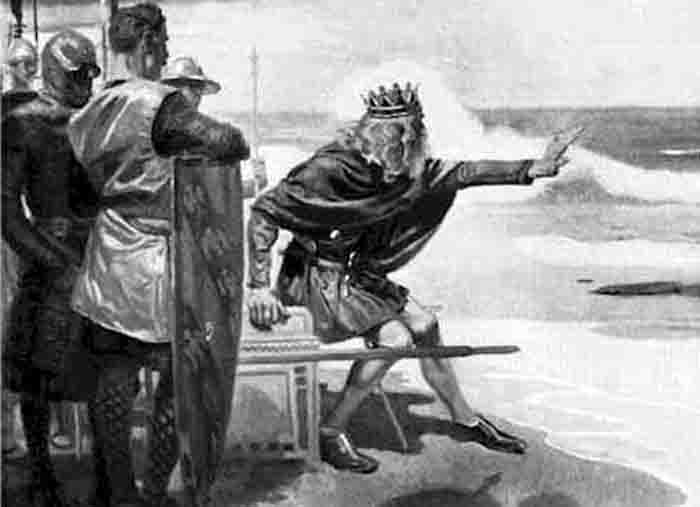
The bring your own device (BYOD) movement in particular is gaining ground in education, so to attempt to stem the tide of mobile phones is schools is to emulate the megalomania of King Canute. Should Michael Wishaw (and that other Michael, Wilshaw's boss in the Department for Education) not also consider that when mobile phones are used correctly and responsibly by the 'ambitious teachers' they so value, learning can be taken to a whole new level of engagement and inspiration? Personally, I don't think that possibility will ever cross their minds. Not when they continue to see mobile phones as a threat.

It's probably not too late to point out that when that asteroid hit our planet all those millions of years ago, it failed to completely wipe out all the dinosaurs.

Image source

Creative Commons License
Trying to stop the tide by Steve Wheeler is licensed under a Creative Commons Attribution 3.0 Unported License.
Based on a work at steve-wheeler.blogspot.com.


May 08, 2012

Making your mark

I have been inside some unique learning spaces recently. I see it as a part of my job. It's what I like to do. I explore new ideas and then report on them. The Immersive Vision Theatre on the Plymouth University campus is one example of a unique learning space. It's a converted planetarium, and what is unique about it is the way it has been refurbished into an experimental area where users can have 3D immersion experiences without any eye wear. The Theatre uses expensive Blade Network technology to provide the massive rendering power needed to create realistic and real-time visual effects. The surround-sound and the fish-eye projectors together combine to create an exciting, fascinating and at times disorienting visual panorama which totally immerses you in the experience. Experiments are being done into stress and perceptual effects to ascertain exactly how this new space can be applied in learning contexts.

Less high tech, but just as impressive for me, are the spaces I have seen in 'chill out' rooms both at the University of Queensland and just up the road at our own local University College of Marjons. The walls and doors and many other surfaces in these rooms are made of material that can be written on. Similar to whiteboard surfaces, these spaces can be used by students for creating mind-maps, flowcharts, diagrams, brainstorming lists - in fact just about anything that helps them to learn. The students love it, because they can then capture their images with a mobile phone for later use. It's a simple, cost effective idea that to my surprise has not been taken up by other institutions on a grander scale (unless you know differently).

The same concept is appearing in schools, according to Stephen Heppell. In his Pinterest collection of Good Tested Ideas, he features a school that has adopted the idea of writing surfaces for its student desktops. Back in the days when I was at school, we had wooden desktops, and I remember writing my name (and several other things too) onto my desktop in ink. Some went further and carved their names into the desks. We often got into trouble. Children seem to have an innate need to make their mark, to tag, to create graffiti - and often schools are fighting a losing battle trying to stop them from making their mark somewhere in the school - on their desks, the walls, the doors or windows. What better way to capture that energy and channel it creatively than to provide children with wipeable surfaces they can use to help them with their learning. Let us know if your school, college or university is doing similar things. Creative surfaces will mean that 'making your mark' will take on an entirely new meaning.

Image by Stephen Heppell

Creative Commons License
Making your mark by Steve Wheeler is licensed under a Creative Commons Attribution 3.0 Unported License.
Based on a work at steve-wheeler.blogspot.com.


May 07, 2012

More fabulous learning spaces

The space in which a child learns is important. If a school gets it wrong, learning can be constrained or even completely stifled. I remember the dire environment that was provided for me as a kid in one particular school. The room had bare floorboards, and the desks were fixed to the floor. The classroom echoed with every footstep, and there was no central heating. All we had was one fireplace which was never lit, due to 'health and safety' issues. The toilets were in a block across the playground, and we avoided going there because they were exposed to the elements. We therefore made sure we didn't drink at all during the school day, so we wouldn't need to find our way across to the toilet block. We were often cold and thirsty, because the environment dictated it. It didn't lead to very good learning outcomes. Recent research has shown that drinking water regularly actually improves concentration and focus. It's often the simple things that improve the learning environment, and as Stephen Heppell says, better school toilets = better results.

Last year I wrote about  some fabulous learning spaces I had seen while visiting schools in New Zealand. I wrote about the idea of knocking down walls and joining three classrooms together to provide more circulating space for students. At Albany Senior High School in Auckland, three classes are conducted next to each other, with students given the freedom to move between the classes as they wish. Last week I heard Stephen Heppell talk about another version of this, which he called 'Super Classes' where three classes join together for one lesson, and the three teachers team teach. The lead teacher (or narrator) is responsible for conducting the session, whilst teacher 2 (the 'breakdown engineer') offers the intervention when students are struggling, and teacher 3 provides differentiated intervention for those learners who require it. Conducting classes in this way drives the session forward with fewer stops and starts. Teachers can focus on their individual roles and in so doing maintain the impetus of the lesson without being sidetracked to respond to the needs of individual learners.

In Australia, Stephen Harris, principal of the Sydney Centre for Innovations in Learning has devised a range of metaphors that describe different kinds of activities that can take place in shared learning spaces.  Such space and activity juxtapositions rely extensively on the teacher's willingness to be flexible and adaptable to change and responsive to needs as they arise, but also tap into the huge potential of young people's innate ability to be agile and adept at using new technologies. Schools are often designed by architects and designers who may have spent little time in school since their childhood days. Getting those who actually use the school every week - the students - to design them in conjunction with their teachers seems to be a much better strategy and might lead to creative learning spaces.

It's clear that learning spaces are a vitally important component of the school to get right. If we don't provide the best possible spaces that are conducive to learning, we are letting the children down. It's not just what we provide in schools that make a difference, but how we provide it.

Photo source unknown

Creative Commons License
More fabulous learning spaces by Steve Wheeler is licensed under a Creative Commons Attribution 3.0 Unported License.
Based on a work at steve-wheeler.blogspot.com.


May 06, 2012

Steps reunion

How often do you see teachers giving up their precious weekends to spend time learning more about their work? Not often, because most teachers spend what little free time they have marking, preparing lesson plans and generally trying to catch their breath. And yet this weekend I was very privileged to take part in a weekend away with teachers from Saltash.net Community School at the Engage and Inspire staff development event in Bedruthan Steps Hotel, near Newquay.  The hotel plays host to the event every year, and I recall with fondness being invited last year by Dan Roberts (aka @chickensaltash) to keynote the event alongside the likes of  Sugata Mitra. Well, Dan Roberts has moved on to warmer climes, but the campaign to aspire to better pedagogy continues. Saltash.net is a remarkable school and quite unique in the ways it harnesses technology to engage and inspire. That is one reason why Microsoft has decided to sponsor the Bedruthan Steps event time after time. This year at the Steps the invited speakers included Stephen Heppell and Steve Bunce, both of whom challenged their audiences to reach further using technology to inspire and engage learners. And what an inspirational weekend it turned out to be.

Stephen Heppell, in his inimitable way showed his audience a range of innovative new ways to engage learners in school, including shoeless education, olfactory schools, sound scapes, mirror walls and 100 faces.  Stephen talked about how mood lighting can psychologically influence learning. Provide red lighting in the morning, and it wakes students up, whilst blue lighting after lunch has a calming influence. Just changing the positioning of chairs can have a positive influence on how the students respond, he said, while converting tabletops to whiteboard drawing surfaces can raise the levels of creativity in the room. Many of Stephen's ideas don't rely heavily on technology, and we were warned that technology on its own does not solve problems, but he did suggest that where technology is involved, everything goes exponential, especially the quality of learning. Many of Stephen Heppell's tried and tested ideas have been shown to transform the learning experience in a variety of different cultural contexts in countries around the world.

A session led by James Edwards (Saltash School) and Ray Chambers (Lodge Park School, Corby) exposed the many ways in which games based learning can be harnessed in secondary education. The session became a dynamic workshop where teachers were given the opportunity to try for themselves some of the non-touch, natural gesture driven tools powered by the X-Box 360 Kinect.

The session by Steve Bunce was focused on challenge and mission, and involved the teachers splitting up into several teams as they tackled all the activities they were given to complete. One mission involved the teams trying to recreate and capture a famous movie scene and a scene from history using modelling clay, tiny figurines and anything else they could get their hands on. Links to several stop-go motion movies and digital images soon began to appear on the #saltash12 twitter stream as teachers shared their fun. Another task was to create a 1-1 scale map of a beauty spot somewhere within the spectacular surroundings of the cliffside hotel grounds. Many of the missions and tasks were taken from the Mission Explore collection of learning resources.

It was great to see teachers leaving the event enthused and inspired, armed with innovative new ideas to try out to see how far they could go in enhancing and enriching their students' learning experiences. I don't think there was a single teacher who regretted going the extra mile and spending their weekend learning a little more about how to be an inspirational teacher. Thank you Saltash.net for inviting me to share your experience this weekend.

Photos by Steve Wheeler

Creative Commons License
Steps reunion by Steve Wheeler is licensed under a Creative Commons Attribution 3.0 Unported License.
Based on a work at steve-wheeler.blogspot.com.


May 03, 2012

10Q: David White

David White is Honourary Director General at the European Commission, and is a passionate believer in lifelong learning. Ahead of his keynote speech at this year’s EDEN conference, to be held in Porto, I asked him some questions about his life, his passions and what he believes about technology supported education. Here is the interview in ten questions...


SW: Please can you tell readers and EDEN delegates a little about yourself, your passions, your interests and perhaps one or two things you are not so keen on? 
DW: I am a husband, a father and a grandfather who grew up very happily in a relatively minor province on the outer margins of Europe and who has loved living and working in the multi-cultural environment at the heart of the EU.
Alfred Marshall described economics as the study of people in the general business of life. That is the sort of economics I like. I am not greatly impressed with mathematical models. But the general business of life lets me thrill to music and literature, be drawn to elegant engineering like steam engines and architecture, to the excitement of business, and the challenges of politics, to the history that helps us understand why the world is as it is and the political visions of how it might be. These are all reflections of the extraordinary riches and diversity of people interacting with one another.
We have the good fortune to live in a world that is full of beauty and of interest. The best fun is sharing our experience of them. When we talk about the things that are beautiful and about which we feel excited, they grow bigger.
The best education has something to do with sharing our excitement about the business of life.
SW: You have worked for a considerable part of your career in various roles within the European Commission. What important lessons have you learnt during this time? 
DW: Working for the European Commission has made me into a passionate European.
Two experiences show why.
First, when we were preparing for enlargement towards the central and eastern European countries, and while there were still many problems for the central and eastern Europeans countries as they tried to adapt to a radically new situation, I toured the capitals. In the course of these meetings, I met a lot of young officials. We had very different life experiences: I lived in a western economy with a privileged material standard, freedom to choose my own life pattern; they had been brought up in a totalitarian state with all sorts of constraints on their freedom, both material and other. Yet I found that we shared culture, approach and principles. Many of them I would gladly have welcomed into my staff team. Some of them later did join me and I was not disappointed! Europeans have so much in common: far more than we are generally ready to believe.
Second, in negotiations with third countries, I have been enormously impressed by our collective capacity for creativity. We are generally much better at finding creative ways through than others. The reason has something to do with confronting diversity. We may have much in common, but we also have different ways of seeing issues: and that is one of the keys to creativity. Often in Europe we find it difficult to implement our good ideas. We have to learn to do better at that.
I also learned a lot about people. Perhaps I would have learned that anywhere. But in the European Commission, we were working in a multi-cultural, multi-language environment. Not everyone likes that. People tell stories about national caricatures. You know the sort of thing: noisy Italians and silent Finns. Some of the caricatures are less complementary than that. At one level, these caricatures are often true. French people are keen on the vision: Brits are more pragmatic – or are they just muddled? Germans tend to be rather more structured than the Irish. But at another level, these caricatures are entirely false. Everyone is an individual, demanding to be treated with respect, to be listened to and to be understood. When you are prepared to make the effort to do that, you find that the caricatures fade and the riches of the individuals shines through. There are no good and bad nationalities: there are only people, who challenge you to relate to them. If you are prepared to rise to that challenge, it is amazing what you find. Europe is full of talented, attractive and creative people.
Europe has an immensely rich shared heritage. Alone, we are bit players in the world. Together, we have so much to contribute, so much to gain.
SW: According to your LinkedIn profile, your current role is Honorary Director General of the European Commission. What does this entail and how do you manage the role? 
DW: I am so impressed to find someone who reads LinkedIn profiles! It is a great job. They pay me nothing: and I do nothing for them in return. It is only a vanity title, like being an emeritus professor. But I cling to it, because it reminds me that I enjoyed a long and wonderful career in the European Commission, where I met great people and shared stacks of experience. And did a lot of work, some of which may even have been useful. The honour was entirely mine.
SW: You are currently a postgraduate student and researcher at KU Leuven. What are you studying at present, and how does this inform your role as HDG at the EU? 
DW: The Commission gave me a sabbatical year in Florence at the end of my career. Largely by accident, but to my enormous benefit, I spent time studying the hermeneutic philosophy of Paul Ricoeur. Ricoeur knows a lot about creativity and innovation. He helped me understand more about what I had been doing in the Commission. Ricoeur talks about the way that figurative language yields a surplus of information: about the way we use narrative to reconfigure the world; and about the way relationship changes us and the world.
Creativity and innovation have something to do with business and policy and politics. Even with education.
Retirement from the European Commission gave me space to do more. I combined what I learned from Ricoeur with the Commission’s slogans about life-long learning and it led me on rather naturally to studies in theology.
Theology probably does not spring to everyone’s mind as their dream of a relaxed retirement. But it is about life and its meaning, our place in the world, and our relationships. It holds a rich store of learning and understanding.
Have you ever asked yourself whether there might be some management lessons to be learned from the New Testament? Possibly not. But the man who founded Christianity had no university degree and never wrote a book: yet two thousand years on a third of the world claim to follow him. Do you know of any companies that can claim such longevity or successful market development? When it comes to using narrative to reconfigure human experience, or to using metaphor to help people grasp things that are otherwise beyond their experience, he is the master. And most people would agree that he was a people person.
Needless to say, my mind keeps harking back to my 36 years experience of European policy making. Has the one anything to say to the other?
SW: Your academic career is quite illustrious, with time spent studying at Queens University Belfast and the University of Manchester. What is your ethos on lifelong learning?
DW: Having been director for lifelong learning, you can imagine that I view myself with some interest: I am a sort of guinea pig for principles that I have advocated.
It is wonderful to study in a field of which I previously knew little. It can be challenging. Can you imagine learning koine Greek and having your homework corrected in blue pencil by a woman who is not half your age?... Or trying to register for exams using the university’s e-learning software?..
Above all it is FUN. I am among a very international set of students. They have different backgrounds and attitudes to mine, I have experience that younger students lack. So we have scope for exchange.
SW: Your forthcoming keynote presentation at the EDEN conference is keenly anticipated. What key messages will delegates take home from your speech? 
DW: I can only know about the messages I hope to deliver. What delegates take home is not entirely within my power to determine. Things that are good and true, I hope. And something that they had not thought of before.
SW: What impact do you think technology has had on lifelong learning across Europe in the last two decades? 
DW: I have lost count of the number of friends who have followed distance learning courses.
Yet neither I nor my teachers seem able to master the e-learning instruments that are available to us. We just about manage to use e-mail for document transfer.
Clearly new technology has had enormous influence. And it has a long way to go.
SW: In the age of digital media, distance education, mobile learning and open educational resources, what do you think the future will hold for traditional educational institutions? 
DW: Education is relational.
I have yet to meet anything in the humanities that quite matches the encounter between the gifted teacher and the interested student: the philosophy lecture in which the student experiences the professor’s thinking process; or the teacher whose theatrical performance captures the student with the excitement of understanding as it unfolds.
One of the dangers of our present structures is that they tend to undervalue the gifted teacher. Provided we can correct this, there will always be a role for the traditional teaching institution.
But there is so much scope for new approaches to add value. E-learning is much more than electronic document distribution. Language learning begs for interactive handbooks. It is gradually getting there. Like in any other marketplace, teaching institutions that stand still will lose out to those that are innovative.
SW: In your opinion, what are the most significant barriers or constraints to good learning in the 21st Century, and how might they be overcome? 
DW: Obstacles: motivation; guidance; cost; time.
How might they be overcome? Encouragement and affirmation. And investment in new teaching materials that are conceived for e-learning.
SW: What do you hope personally, and professionally to achieve over the next 5 years? 
DW: Professionally? Life has given me some experience of the European project and of the economics and public administration that go with it, as well as of business and education, theology and philosophy; and in working with people. What excites me is the interfaces between these fields. One of the issues that arises in the interfaces is our values. They figured large in public discussion of some aspects of the banking crisis. We confront them every time we deal with people. In our post-modern culture, the only values that we accept are those that we find for ourselves. Yet an economic or political space without values is scary. Maybe we can equip people to develop values of their own?
I am currently involved in a project to set up voluntary extra-curricular education around some of those interfaces, targeted on EU officials.
If it is to be voluntary, it has to be fun.
If people are going to give time to it, it must deliver learning outcomes that they regard as worthwhile.
If it is to be accessible to EU officials, who work long hours and travel, any live teaching must be backed up by e-learning. But it must remain relational.
Personally? To enjoy being a grandfather.  

Image source


Creative Commons License
10Q: David White by Steve Wheeler is licensed under a Creative Commons Attribution 3.0 Unported License.
Based on a work at steve-wheeler.blogspot.com.


Technoliteracy

In a speech I gave yesterday to the University of Chester's final year teacher trainees, I touched on the concept of multi-literacy. This was in response to a question from a student about the potential dumbing down of language through SMS texting. She was concerned that txting was encouraging bad spelling which might adversely affect students' academic work. Referred to variously as 'squeeze text', txting, vernacular orthography or unregimented writing (Shortis, 2009), this kind of unorthodox spelling first emerged as a result of the 160 character limit on any single text message. The result is abbreviated spellings, emoticons and phonological representations of orthodox spellings, many of which have become a part of txting culture. The question thrown at me was about the potential problem of squeeze txt spellings appearing in assessed essays and other formal documents. I can see how it could become a problem. Students in my own programmes occasionally make phonological spelling errors. 'I could of...' is a regular mistake I see in the essays I mark. People are beginning to spell as they speak. But is this a problem, if they know what contexts to use these unorthodox spellings within and which to avoid? In 2008 David Crystal related the story of a young student who wrote an entire essay in squeeze text. One of the extracts went something like this:

My smmr hols wr CWOT. B4, we used 2go 2 NY 2C my bro, his GF + thr 3 :-@ kids FTF. ILNY, it's a gr8 plc.

Crystal notes that the complete essay was never tracked down, leading to a fair assumption that the entire story was merely a hoax, and possibly an attempt to sensationalise the issue for the popular press. Regardless of its accuracy or provenance, the press had a field day, and a storm of protests ensued. Crystal, an acknowledged world expert on language was less impressed, and suggested that regardless of the strange appearance (or morphology) or the words, they never the less followed orthodox grammatical structure. He  wryly suggested that for sheer creativity, he would have awarded the student 10 out of 10, but for appropriateness, 0 out of 10.

Crystal and other make the point that language is evolving and new words are appearing all the time in the English language (in all its many forms worldwide), because language is organic and the culture it emerges from is constantly adapting to change, as are the meanings of some words. Is the controversy of squeeze text really as serious an issue as people are making it out to be? Or is there more than a hint of hyperbole and hysteria about the 'dumbing down' of the English language?

My view is that today's students are able to adapt to all the various media they use to communicate. In being habituated into a particular medium, the user assimilates the culture of that particular tool and begins to communicate appropriately within it. In many ways this is akin to living and working in a foreign country, where to survive and not stand out like a sore thumb, one learns to adopt the practices and social mores of the host country in parallel to learning the new language. This transcends skill and becomes a literacy. My theory is that students generally know the difference between communicating in SMS and writing a formal essay, and will usually follow the rules.

How many media do today's students use in regular communication? SMS, telephone voice, e-mail, Facebook, Twitter, written language... the list is quite long, and they certainly use more modes of communication than those that were available to me when I went to university. It therefore follows that they need to learn more forms of literacy than I had to when I was in full time study. For Shortis (2009) the term technoliteracy is used to describe how adept a user is in communicating through any given device. For example, SMS texting requires a specific kind of technoliteracy, where the user has to be familiar with a number of features and affordances, including the capabilities (and error issues) of predictive text mode, the 160 character limitation per single text, and the multi function feature of the standard keys on the keypad. They will also need to be aware of the many regularly used abbreviations, some of which transgress into other modes such as Facebook and e-mail. My 85 year old father recently started using Facebook and soon sent a message including the phrase LOL. To most people using SMS or Facebook LOL stands for Laughing Out Loud. To him, it meant Lots Of Love. Heaven knows what he thinks WTF stands for... Welcome To Facebook perhaps? Whichever stance you adopt in the Gr8 Db8 - one thing is clear. We all need a good dose of technoliteracy.

References

Crystal, D. (2008) Txting: The gr8 db8. Oxford: Oxford University Press.
Shortis, T. (2009) Revoicing Txt. In S. Wheeler (Ed.) Connected Minds, Emerging Cultures: Cybercultures in Online Learning. Charlotte, NC: Information Age.

Creative Commons License
Technoliteracy by Steve Wheeler is licensed under a Creative Commons Attribution 3.0 Unported License.
Based on a work at steve-wheeler.blogspot.com.


April 29, 2012

Blogging with Freire

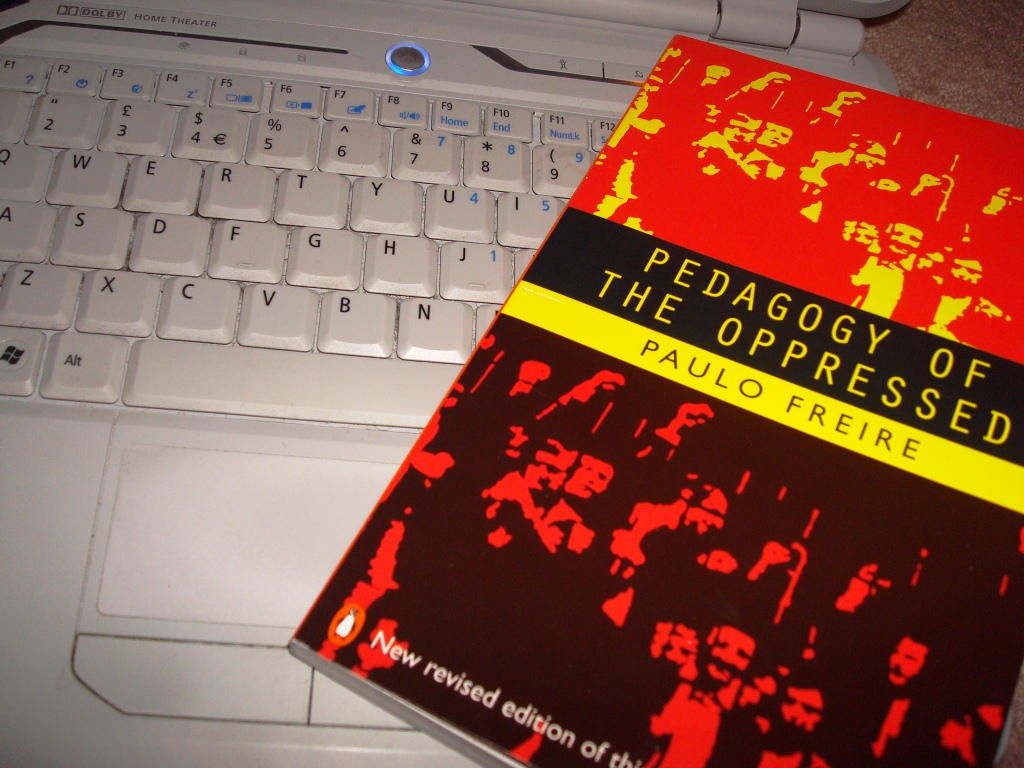
Well .... not exactly. Paulo Freire - that great Brazilian educational thinker - died in 1997, just as the World Wide Web was emerging in the Western world. So Freire didn't actually live to see the power and potential of social media, or the impact blogging would have on education. But what would he have said about blogs if he had been witness to the participatory web in all its present glory? Here is my interpretation of some of his ideas, drawn from his most celebrated book 'Pedagogy of the Oppressed', and presented in six key points as they might apply to the art of educational blogging.

1) Respond to reader comments with humility. Freire wrote: "...dialogue cannot exist without humility. Dialogue, as the encounter of those addressed to the common task of learning... is broken if the parties (or one of them) lack humility. How can I dialogue if I always project ignorance onto others and never perceive my own?" (p. 71). This is not just a message for educational bloggers. It is a message for teachers everywhere. How can we stand there in a self proclaimed position of enlightenment, and view our students (or audience) as being in a state of ignorance? This is hubris of the first order. And yet that is what happens in many classrooms across the world every day, because that is often how teachers are trained. It is also acknowledged that many teachers teach in the same way they themselves were taught. In a blogging context, it is easy to be offended when an adverse comment is received on your blog. You may be tempted to respond aggressively, to 'put the other person right'. Often though, good learning occurs when we consider the views of others. Even if we don't agree with the views of other people, it is good to consider them, to evaluate their meaning and contemplate alternative perspectives. Dialogue is what blogging is really about.

2) Don't be afraid to speak out. Freire counsels: "Washing one's hands of the conflict between the powerful and the powerless means to side with the powerful, not to be neutral." It's clear that there is a lot of inequality in the world, and some of this exists within the world of education. Schools are not perfect, and there is no education system in the world that has it completely correct. There is no better place for speaking out against injustice, or exposing inequalities than a popular blog site. It's better than owning a newspaper. People will read what you have to say if you have something interesting to speak about. So use your blog to speak out on behalf of those who can't speak out for themselves.

3) Use blogs to circumvent regulated learning. Students who blog quickly realise that they can explore knowledge for themselves. They can become independent learners. Freire was critical of the banking approach to education, where teachers regulate learning: "The teacher's task is to organise a process which already occurs spontaneously, to 'fill' the students by making deposits of information which he or she considers constitutes true knowledge" (p. 57). When a learner starts to blog, they start to think for themselves. They have to consider an audience of more than one (teacher and essay writing) and they are required to be masters of their own journey. In another sense, blogging can subvert traditional education in another way. The dialogue that can ensue from blogging is often more valuable than the act of writing on the blog. Quadblogging and the 100 Word Challenge are just two of the school based blogging projects that are making a real difference for learners by providing them with a guaranteed audience every time they blog.

4) Read other people's blogs and make comments. The act of seeking out alternative perspectives and views in itself will sharpen the reader's thinking and cause them to question received knowledge. Freire says: "... it is indispensable to analyse the contents of newspaper editorials following any given event. 'Why do different newspapers have such different interpretations of the same fact?' This practice helps develop a sense of criticism, so that people will react to newspapers or new broadcasts not as passive objects of the 'communiques' directed at them, but rather as consciousnesses seeking to be free" (p. 103). Alongside newspapers and news broadcasts we can add blog commentaries. Blogs are places where people can express their opinions and offer their interpretations, and these are the new street corners where individuals have their conversations. Engaging with knowledge in this way will liberate the mind and help develop critical thought.

5) Use blogging to support thinking. Often, abstract thoughts remain abstract unless they are externalised in some concrete form. Traditionally, writing has been used as a means to crystallise thinking, because as Daniel Chandler says "In the act of writing, we are written." Freire writes that "In all the stages of decoding, people exteriorise their view of the world" (p 87) which implies that in order to understand our personal reality, we need to first bring our thoughts out into the open. Blogs are public facing tools that enable their owners to externalise their thinking in a way that is open for scrutiny. In the act of public writing, we expose our ideas and begin to understand our own thoughts more clearly.

6) Use blogging as reflection. Reflection is an important part of learning, and is a skill that must be developed if it is to lead to successful outcomes. Reflection is also the key to personal liberation. Friere argues that: "Attempting to liberate the oppressed without their reflective participation in the act of liberation is to treat them as objects which must be saved from a burning building" (p 47). Reflection means active participation in learning, and blogging is a very powerful tool to support this process.

Reference
Freire, P. (1970) Pedagogy of the Oppressed. London: Penguin.

Photo by Steve Wheeler

Creative Commons License
Blogging with Freire by Steve Wheeler is licensed under a Creative Commons Attribution 3.0 Unported License.
Based on a work at steve-wheeler.blogspot.com.


April 28, 2012

Cultural hegemony and disruption

The Italian political theorist Antonio Gramsci is best known for his theory of cultural hegemony. In a Gramscian sense, hegemony describes the power exercised by the ruling class over the population in order to maintain control of the means of production. Cultural hegemony is imposed as political doctrine largely through the state education system, but also via other means including print media and broadcasting. Sometimes referred to as 'brainwashing' hegemony is actually more complex and is an insidious way to indoctrinate the masses into a 'false consciousness' where each person believes they have ultimate control of their own destiny. In doing this, the elite impose a view that 'that's just the way it is', but as musician Bruce Hornsby once exhorted, 'Don't you believe it.'

Whilst Gramsci used hegemony to refer specifically to the inculcation of political doctrine into society, I believe the theory can be applied in a much wider sense, and that we are witnessing a challenge to the dominant societal discourses through disruptive technology. I emphasise here the power of participatory media to promote democracy and to a strengthening of the influence of the voice of the people. The current exponential adoption of social media has huge implications for the system of education, itself a key component of cultural hegemony.

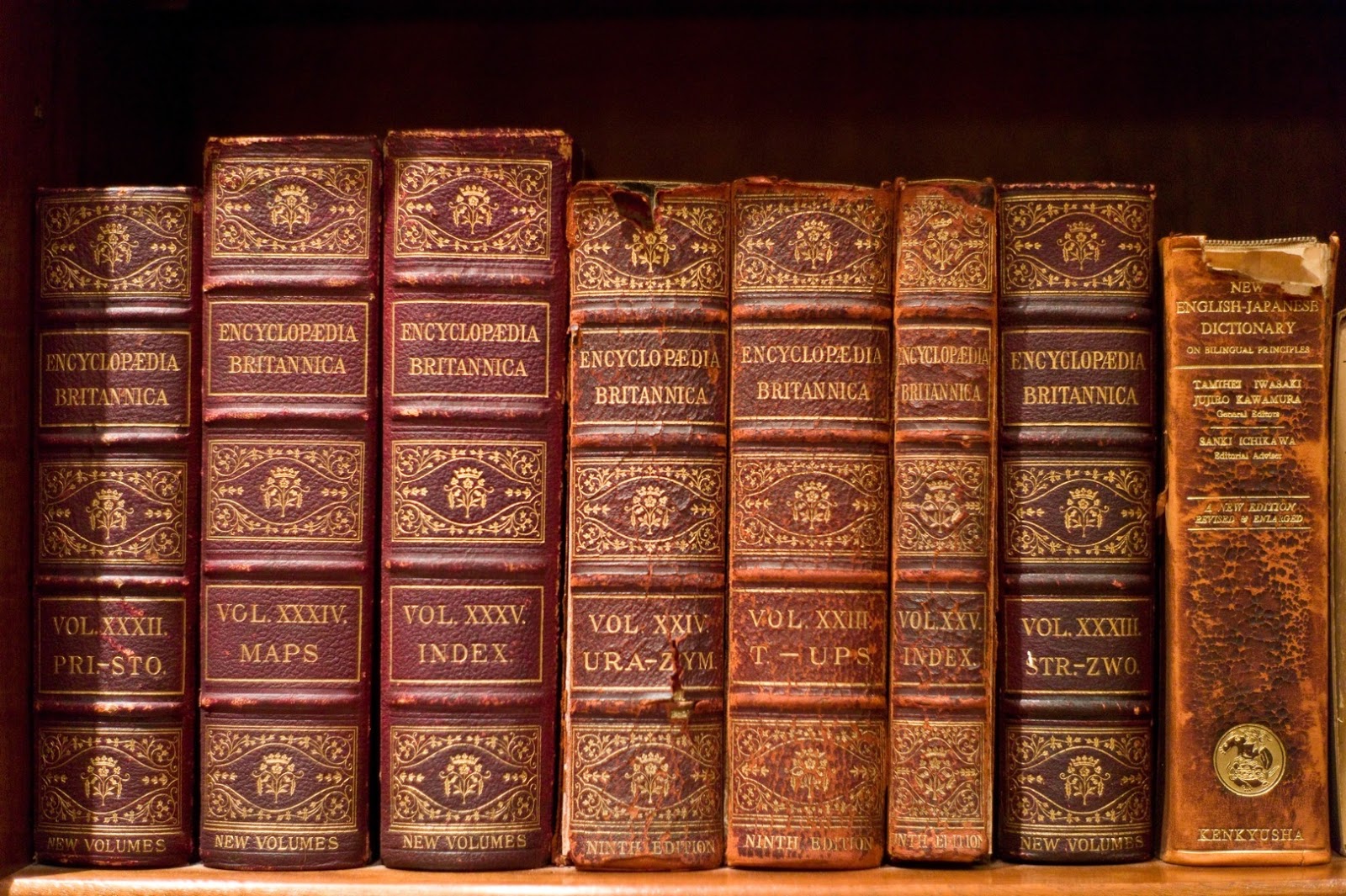
How does social media disrupt cultural hegemony? Across the connected world we are witnessing a tangible subversion of long standing dominance. Social media for example has achieved a remarkable success in eroding the power of previously elite media channels. One example is the encyclopaedia, long cherished as one of society's most important knowledge repositories. For years the multiple volumes of Encyclopaedia Britannica have graced the shelves of libraries worldwide. They are expensive, regularly in need of updating and replacing, and take up a great deal of physical space.

Enter Wikipedia - the online social encyclopedia to which everyone has a stake in. In an extraordinarily short period of time, Wikipedia has taken up pole position as the world's knowledge repository. It is now the first port of call for many, supplanting Britannica and other previously popular reference books. And when all factors are analysed, this should be no surprise. Wikipedia is popular because it can be accessed from anywhere using a web enabled mobile phone.

More importantly it is also popular because it is democratic, and breaks the hegemony imposed by commercial publishers. Anyone can start off a new page, or quickly add content to more than 14 million existing pages (and that is just the English language pages). In response, Britannica has recently announced that it will no longer publish in paper format, but will now be exclusively digital. It's probably already too late. Wikipedia has challenged the hegemony and is now the new killer application. Other killer apps are also challenging the hegemony imposed by previously dominant channels.

Other commercial companies are also falling foul of disruptive technology. Previously dominant multi-national corporations such as the photography giant Kodak have discovered that failing to respond quickly enough to societal changes can be very costly. The market position of Kodak was once thought to be unassailable. Not anymore. Kodak failed to adapt quickly enough to the rise in popularity of digital photography, filed for bankruptcy and now finds itself in a very unstable financial position from which it may fail to recover. Mail companies are also discovering that e-mail and the cloud (and the capability to send large documents and images instantaneously for very little cost) have undermined what had previously been a very secure monopoly in the physical delivery of letters and parcels. What was the Royal Mail's response to the drop in physical delivery? They raised their prices. Nicolas Negroponte's prediction of a transition from atoms to bits has been realised, is disruptive in the extreme, and it is only just beginning.

Blogging and open access journals are becoming the first choice of publishing for many academics and scholars. Many are turning away from the closed journals regardless of the status they currently enjoy, because open access journals and blogs gain a larger audience for their writing, and publishing is quicker. How long will it be before these media disrupt the hegemony the large publishing houses such as Elsevier, Springer and Wiley currently impose upon the academic world?

Blogging is not yet considered a real threat to the closed publishing world, but this may change as it gains more momentum and as respected academics begin to exploit its power of reach. Blogging is not generally subject to editorial control, so individuals are at liberty to write what they choose. The peer review process occurs when readers comment and enter into dialogue with the author. Then learning happens as ideas are challenged, arguments ensue and synthesis is achieved. Blogging is a new form of educational democracy. 

Newspapers too are struggling to survive as they cope with competition from the online journals and magazines that are gradually usurping their readership. It doesn't stop there. YouTube and other video sharing sites have gained a significant purchase in the broadcasting world, and are in the process of displacing some of the previously prominent media channels. All mainstream TV channels have now adopted Facebook and Twitter to capture views and news from citizen journalists from news hot spots around the world, just to keep ahead of the opposition. The dominant movie and music industries are also threatened by the likes of YouTube and Vimeo, and there have been several recent high profile law suits over breaches of copyright. Copyright law itself is also under scrutiny as a result of the influence social media have gained. The copyleft movement (which includes Creative Commons licencing) is challenging the dominant discourse of copyright and the contentious notion of ownership.


Civil liberty is under threat in any society where there is excessive surveillance. But even here, ordinary people are being empowered through the use of personal technology. The internet meme featuring the cop who in an unprovoked act, casually pepper-sprayed peaceful Occupy protesters is an example of surveillance being used against the dominant class. The police in this sense are a state apparatus. They are traditionally the owners of surveillance technology. Yet on this occasion, the cop - one Lieutenant John Pike (pictured) - was captured forever in an act of brutality by cameras owned by ordinary people, and subsequently suffered the consequence of becoming an infamous and universally parodied figure on the internet. Numerous versions of his act, some very humorous, can be found under the Lt Pike meme. Some would argue that this was the best form of retribution. Once again, democratic use of social media and personal devices exposed what was really happening during the Occupy movement.

Governments can also be disrupted. One of the most remarkable series of events to date this century has been the political activism that has occurred as a result of widespread social media use. Videos and blogs emerging from Tunisia alerted the world to what was happening, whilst the use of social networking mobilised the entire country to rise up against its oppressive government. Ultimately, the government fell and the people regained their lost democracy. Similar events caught on across the Arab world, in Egypt and Libya and elsewhere as ordinary people began to challenge their dictatorial governments. At the time of writing, this struggle against the dominant class continues.

Social media, the participatory web, and mobile communications have already radically changed the face of the connected world. Cultural hegemony has been disrupted as a result of the democratic use of technology, but we must be careful not to assume that the hegemony imposed by the dominant classes will disappear. It will not. New killer applications merely disrupt older previously dominant applications. The elite class then move in and gain control of the new tools, ultimately exploiting them, and imposing their power through these new channels of influence. In this sense Marx was correct. This is an ongoing cycle - a class struggle between the ruling elite and the rest of society to gain control of the tools that will ultimately influence our entire culture. Cultural hegemony and the killer application are locked together forever in a dance of death. To survive we will need to avoid complacency.

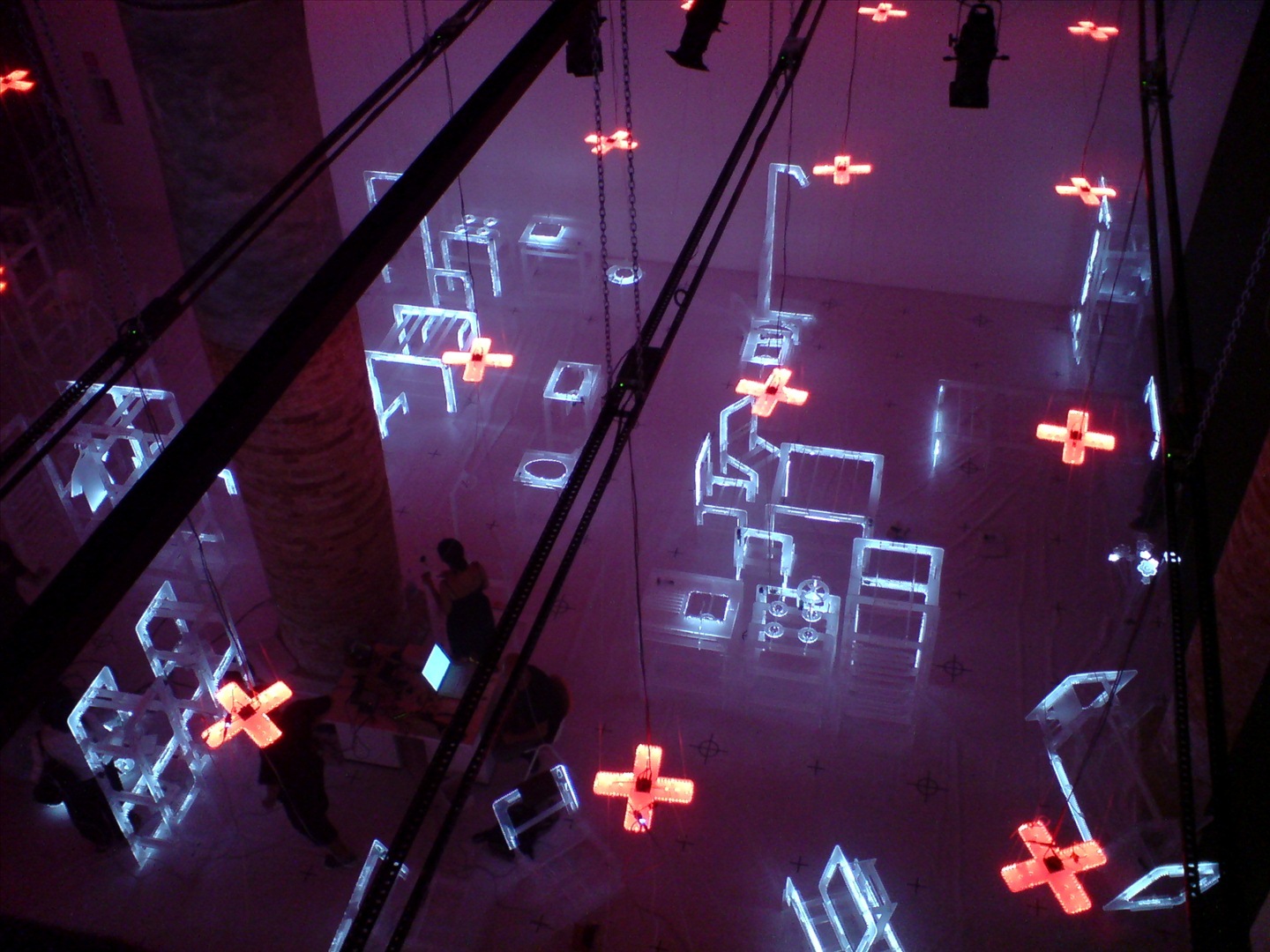
Hyperhabitat image source
Britannica image by Fotopedia
Lt Pike image by Louise Macabitus

Creative Commons License
Cultural hegemony and disruption by Steve Wheeler is licensed under a Creative Commons Attribution 3.0 Unported License.
Based on a work at steve-wheeler.blogspot.com.


April 26, 2012

Lies, damned lies and the Internet

Increasingly, students need to acquire the important skill of critical thinking. Content is growing exponentially on the web, and students are exposed to increasing amounts of erroneous material, misleading, biased or opinionated accounts and false research. During the last week I have been thinking about how teachers can address this issue. One of the new digital literacies students need to acquire is the ability to distinguish the good from the bad content. How do we instill these critical skills in our learners? In his recent Pelecon keynote, Alec Couros showed some examples of how history has been airbrushed. He cited Henry Jenkins: "In hunting culture, children play with bows and arrows. In an information society, they play with information". Couros gave several examples, but the most impressive was the following example of information manipulation. This picture of Jack Ruby shooting Lee Harvey Oswald is iconic for a certain generation, but for those who are younger and know little about the political history of the United States of America can easily be fooled.

This second version of the Oswald assassination photo has been skillfully manipulated to represent an entirely different meaning to that of the original image. The political message that accompanies the altered image is clearly satirical, but never the less resonates with the views of a large proportion of American citizens and others around the globe - that Lee Harvey Oswald did not act alone in assassinating President John F. Kennedy, but was a part of a larger conspiracy. Whether or not this JFK assassination theory is true or even partially true, it remains one of the most trenchant conspiracy theories of modern history, and was even portrayed in an Oliver Stone movie. A whole host of websites have grown up around it, to sustain the argument further. The Internet is peppered with other similar conspiracy websites, some for example claiming that US astronauts never set foot on the moon, that the Apollo moon missions were a hoax and the entire mission was instead filmed on a movie set. Despite a number of expert rebuttals, this conspiracy theory persists. The alleged murder of Diana, Princess of Wales in Paris in 1997; Elvis Presley faked his own death, and is still alive; Area 51, a crashed UFO in Roswell, and an Alien/US Government conspiracy; The existence of the Illuminati; a Freemason led conspiracy to instigate a new World Order; and a whole host of other so called 'lunatic fringe' conspiracy theories are propagated through internet websites. Many are attracted to read such content because these alternative explanations appeal to the more fanciful corners of our imaginations. But some websites, such as those offering alternative medical advice, can be extremely dangerous.

What is today's student to make of all this? Deliberately misleading websites are only the tip of the iceberg when it comes to bad content on the web. Let's take this a little further. How do students discern the difference between a website that hosts good, empirical, well established content, and one that doesn't? And how do they detect when a website is not based on established fact, but is merely a collection of opinions and conjectures? This is a more subtle distinction than determining if a conspiracy theory actually has any real credibility. Students are often left floating adrift in a sea of content, with the onerous task of deciding what is good content and what is not. The ultimate test is to decide what to include and what to leave out of their assessments to actually gain a good grade.

I regularly ask my own students to challenge what is being said in the classroom. I advise them to question everything they hear, read or see, to help develop their critical thinking abilities, to practice defending or attacking a theory, to exercise their evaluative skills. I read recently of one professor who deliberately lied once each lesson, and challenged his students to detect the lie. As the lies became more subtle, the students began to struggle to detect the falsehood, until eventually they were at the point where they were deeply scrutinising everything that was presented in the lesson, and going beyond the content to make sure they had discovered the lie. They had to discuss extensively to put themselves in a position where they knew what was correct and what was incorrect. The web is a very fertile place to learn, but we all need to develop our critical awareness of what content is good and what is to be avoided.

Image source

Creative Commons License
Lies, damned lies and the Internet by Steve Wheeler is licensed under a Creative Commons Attribution 3.0 Unported License.
Based on a work at steve-wheeler.blogspot.com.


April 24, 2012

Yesterday in Parliament

Yesterday I spent a fascinating few hours in Parliament (which currently on its website for some reason has a picture of Russell Brand). I got to see quite a lot of the Palace of Westminster, including some place most people never get to see, all courtesy of Denise Hudson-Lawson, who just happens to be a big wheel at Westminster. Of which more later. I had been invited to give the inaugural presentation at Parliament's Innovation Forum, and after lunch I spoke to a group of around 80 civil servants on the subject of 'Harnessing the power of social media'. I will blog later about the content of my talk and will share my slideshow in due course. It was interesting to talk over lunch with ICT Strategy Change Manager Joanna Jones and her colleague James about digital technology and to learn more about how the Houses of Commons and House of Lords are using social media in their political and governmental work. One of the best things I have seen so far this week is a group blog set up by a few of the peers called Lords of the Blog. Check it out and you will find it witty, bold and informative, and not something most people would expect from a group of people who have the reputation for being 'stuffy' and a bit 'past it'.  Twitter too is being used by a number of Members in both Houses, most notably Tom Watson MP (75,00 followers) and Lord John Prescott (128,000 followers), Foreign Secretary William Hague MP (80,000 followers) and perhaps infamously Diane Abbott MP (37,000 followers) who made an unfortunate comment on Twitter that provoked disciplinary action from her leader. Another MP to fall foul of Twitter errors was recently re-elected member George Galloway MP (71,000 followers) who confused his own new constituency Bradford with another completely different northern town Blackburn.

Just about every member of Parliament and many of the Peers have a personal/professional website, probably maintained by their staff, but never the less, affording them with a digital presence on the web. Although many realise the power of social media to broadcast and amplify their messages and views, it is evident that along with Abbott and Galloway, some are occasionally a little naive and unguarded in their off the cuff tweets. It gets them into trouble, because there is always someone watching the Tweet stream. It is a very real issue, and one I addressed in my Innovation Forum presentation. Another burning digital issue is the validity of the online petitions the government has instigated - another project that is managed by the team that invited me to speak at the innovation forum. The rules state that anyone can start an e-petition on any subject, and if and when that e-petition receives support from 100,000 or more unique signatures, it is passed to the Backbench Business Committee for further consideration, with the possibility to be debated in the Commons. Just how many get to the stage of being publicly debated by our lawmakers is still to be discovered, but every e-petition that receives 100,000 signature receives an official response. Democracy in action? We will need to wait to see just how effective e-petitions are in giving ordinary people a voice.

My day at Parliament was concluded by a personal tour around the Palace of Westminster, including a visit to Westminster Hall, a place steeped in history and over 900 years old. This grand hall is the very place where King Charles I was tried and convicted for treason and sentenced to death, and also the place where deceased British monarchs are laid in state. It is also famous for recently hosting a speech by U.S. President Barack Obama. I also got to see the Members' lobby and St Stephen's Hall, and a brief visit to the famous terrace restaurant where views over the river Thames, and the London Eye can be had under the shadow of St Stephens Tower, which houses Big Ben. It was a memorable day, and well worth the hours of train travel there and back.

Images by Steve Wheeler

Creative Commons License
Yesterday in Parliament by Steve Wheeler is licensed under a Creative Commons Attribution 3.0 Unported License.
Based on a work at steve-wheeler.blogspot.com.


April 20, 2012

The Pelecon (brief)

It's all over for another year, but I really believe that this year's Plymouth Enhanced Learning Conference fully lived up to its theme - create, connect, collaborate. Many blogs, videos, photos, tweets (at the time of writing almost 20,000 in less than 3 full days - here's the complete archive) and other content has been created throughout over the course of the conference. In brief, here are a few of the artefacts created: The Instagram collection of photos itself is richly representative of the event from start to finish. The Pelecon Flickr collection curated by Jason Truscott is even more detailed, as is the Pelecon Photo Stream. My colleague Oliver Quinlan did an amazing - nay Herculean - job, liveblogging every one of our invited speakers, and then posting them very quickly onto the web complete with many of the important links to video and other content each speaker presented. The failure confessional attracted a few delegates to spill the beans of their failures, and what could be learnt from them. All too often we celebrate success at conferences, but forget that we can also learn a lot from what went wrong. You can see some of the 'confessions' on the Pelecon YouTube channel.

More than 200 delegates throughout the three days enjoyed presentations that were fast moving, varied and challenging, and plenty of time and space for networking. As usual, Pelecon has proved to be a great place for making new friends and consolidating old friendships, sharing ideas, discovering new tools and technologies, and generally increasing the digital footprint of the technology enhanced learning community. Matt Lingard and his colleagues are crowd sourcing reviews from delegates for a special ALT Newsletter report. Others too, will be busy writing their blogs as they reflect on three extraordinary days. Search for the #pelc12 hashtag and you will find them.

I made the joke in my introduction that although most people think Pelecon is an international e-learning conference, for me it is actually an excuse to have a three day party with all my friends. And yet, in a strange way, it is actually true. It felt more like a party, a celebration - than it did a conference, because everyone was having such a great time, in excellent company, in a fabulous location, exploring, learning and discovering together. For me, from my perspective as organiser, Pelecon has been the best conference in the series. We are already planning next year's event, where we will aim to do even better. The eight Plymouth Enhanced Learning Conference - Pelecon 13 will take place between 10-12 April 2013. We hope you will be able to come and join us.

Image by Jason Truscott

Creative Commons License
The Pelecon (brief) by Steve Wheeler is licensed under a Creative Commons Attribution 3.0 Unported License.
Based on a work at steve-wheeler.blogspot.com.


April 17, 2012

Opening Pandora's box

Once upon a time, teachers used to close the door behind them, and then begin their lessons. To all intents and purposes, what went on inside the classroom stayed inside the classroom. Then along came technology. New technologies have the potential to undermine the 'sanctity of the classroom' as they open up what is said and done for the world to see. It is not unusual in my classrooms to see students using technology to record and share my content and their interactions with anyone who is interested.

It started off in sedate style a few years ago, when several students began to ask if they could audio record my lectures and seminars to play back later. Next came the introduction of the lecture capture tools, video and audio as well as the ability to synchronise these in sequence with slides. Soon students were tweeting the highlights and soundbites of lectures, and now they are liveblogging entire sessions from start to finish. Those of us who frequently present at conferences also expose ourselves to live video streaming for hidden audiences worldwide. Many lecturers object to this 'technology enhanced exhibitionism', and in some cases ban capture tools from their lecture halls. Others are ambivalent. A few, myself included actively encourage the recording, sharing and broadcasting of our lectures.

What are the benefits and dangers associated with the use of these tools? On the positive side, students are able to revisit lectures in their own time, and in their own place. They can also view lectures even though they may have missed attending due to illness or for other reasons. For social media savvy lecturers, lecture capture is a means for disseminating good ideas and best practice farther afield. Sharing slides or lecture casting opens up the classroom and affords an entirely new audience out there beyond the boundaries of the classroom, one that can be exponentially larger than the original tutor group. Many social media tools also enable discussion beyond the original event. All of these can be seen as positive spin offs of lecture capture.

Yet some might ask whether this is opening up a Pandora's box of trouble? Are we going a tool too far? On the less positive side some lecturers are uneasy about exposing their ideas and content to an outside audience. Some simply feel uncomfortable about having every word they say, every mannerism, every hesitation recorded for posterity. Others may feel the intellectual property of their content is being compromised. Still others may believe that they will be exposed to criticism they do not deserve. One objection to live blogging is that students may misinterpret what has been said, or misrepresent ideas, thereby compromising the integrity and academic standing of the lecturer. Did he really say that? Was that really his intention? Many of these objections are understandable, and for less confident lecturers in particular, may be enough to cause them to ban the use of lecture capture technology of any kind in their class room.

My view is that the benefits of these tools far outweigh the risks. I'm very comfortable with being recorded, live streamed, tweeted and even live blogged if it will improve students' chances and enrich their learning. But what do you think?

Image bu Fotopedia

Creative Commons License
Opening Pandora's box by Steve Wheeler is licensed under a Creative Commons Attribution 3.0 Unported License.
Based on a work at steve-wheeler.blogspot.com.


April 16, 2012

Creative learning spaces

For me, one of the highlights of the Estonian Elearning Conference in Tallinn was listening to Stephen Harris, principal of the Sydney Centre for Innovations in Learning. SCIL is an Australian secondary school that practices teaching and learning within open spaces, where student autonomy and personalisation of learning are top priorities. Under Stephen's leadership, the school enables BYOMD - bring your own multiple devices, which means that students can learn in a number of different spaces and places around the school, using their own familiar tools. Stephen spoke about the metaphors for creative space that are used to contextualise learning:

The Camp Fire: This is a social learning space where students face each other, and in doing so gain an expectation that each should contribute something to the discussion and activities.

The Cave: This is a personal learning space where students can be on their own. Personal learning spaces enable them to reflect on their learning, and create their own learning pathways.

The Sandpit: Sandpits are places where young people can try out new ideas and experiment without fear of failure. They can take risks and ask the 'what if' questions, in a psychologically safe environment.

The Watering Hole: Informal spaces where students can gather spontaneously, either inside or outside the school. Children can meet at the foot of a stairwell or under a tree to discuss anything, whether it is school related or not.

The Mountain Top: Here young people can share their work and ideas. They can publish or broadcast them in a public performance space, or use blogs, podcasts, videos and other technology tools to share their content with their peers and the world. 

Stephen reported that enabling these kinds of activities inside the school, children gained a sense of autonomy they would otherwise not have, and as a result, they also gained ownership over their learning and a new sense of responsibility. The incidences of behaviour problems deminished to manageable proportions. 

Image by Steve Wheeler

Creative Commons License
Creative learning spaces by Steve Wheeler is licensed under a Creative Commons Attribution 3.0 Unported License.
Based on a work at steve-wheeler.blogspot.com.


April 15, 2012

Have the wheels come off?


A recent article written by Audrey Watters carries the emotive headline The Failure of One Laptop Per Child (OLPC), and there has been some heated response. In the article, which is actually balanced and measured, Watters comments on recent media reports that the One Laptop Per Child (OLPC) Project inspired by Nicolas Negroponte does not increase test scores. She goes on to discuss the implications of this supposed failure with a nod toward the anti-Edtech brigade, whom we assume are saying 'told you so', and also in the context of other technology projects which have had reasonable success. On such project mentioned is Sugata Mitra's Hole in the Wall project (HITW), where computers are placed in villages and deprived areas for children to use with no evident teacher support. A comparison between the two projects is quite helpful.

When compared to Negroponte's OLPC project there are clearly some differences. Although both Negroponte and Mitra believe fervently in a 'minimally invasive education' where children are allowed to explore for themselves, OLPC is conducted largely on a 1-1 computer to child ratio. Ostensibly, this sounds sensible, and with personalised learning high on the political agenda, OLPC has been welcomed with open arms by many governments worldwide, particularly those with widespread poverty. In a real sense, OLPC has been a very real attempt at bridging the socio-economic divide. OLPC does exactly what it says on the tin - it provides one highly resilient laptop computer for each learner.

In the HITW project on the other hand, computers are almost always used by small groups of children, who together work through their exploration, negotiate their meaning and solve problems collaboratively. Perhaps this is the first important difference we need to contend with. Are children better learners when they learn on their own, or when they learn with their peers? Swiss psychologist and child development theorist Jean Piaget would have agreed with the OLPC project. The child is a solo scientist, in Piaget's terms, and this makes discovery learning a most valid approach. Learning on your own, according to Piaget was just as valid as going to school to learn communally. Russian constructivist psychologist Lev Vygotsky would have disagreed with this position, and would probably have pointed to HITW as the most effective way to learn, because in his terms, children acquire their skills through conversation, the use of language and collaborative learning - or in his terms, through the asymmetric relationships that exist within the zone of proximal development.

Notwithstanding this kind of theoretical posturing, a second point to consider is that the HITW project situates computers in communal spaces where they cannot be moved. Does this in some way also situate what is learnt, so that those gathered around it gain something extra that they would not gain from the OLPC's fairly mobile device that can be used in multiple contexts? OLPC and HITW are different, but one is not necessarily any more effective or powerful than the other.

Thirdly, and possibly most importantly, we need to consider the tests used. Are we simply to accept that the tests used by a variety of authorities to measure OLPC children's learning gain are accurate, or appropriate? Are they actually measuring what we should be measuring? As highlighted by several of the comments on the Audrey Watters blog, many are rightly sceptical. Can we (and should we) actually measure the sheer joy of discovering something new? Are we not ignoring the excitement generated by new experiences? Can we quantify how powerful this is as it generates motivation and the impetus to go on and learn more, both inside and outside of the classroom? Can we really accurately capture the many sensory experiences children enjoy when they are learning, and reduce these to a single grade or mark of overall achievement? Finally - is the measure used to gauge the contribution OLPC has made toward learning really necessary? Surely these are immeasurable, and the only reason anyone would attempt to do so, is because there is a hidden political agenda that emerges as  a measure of peformativity (i.e. school league tables). It seems a shame that much funding for innovative education projects relies on centralised government money.  One Laptop Per Child is a Herculean effort at liberating and democratising learning. It should be praised not buried.

Image by Steve Wheeler

Creative Commons License
Have the wheels come off? by Steve Wheeler is licensed under a Creative Commons Attribution 3.0 Unported License.
Based on a work at steve-wheeler.blogspot.com.


April 12, 2012

10Q: Leigh Graves Wolf

Leigh Graves Wolf, who is one of the Pelecon invited spotlight speakers next week, is Program Director for the Master’s in Educational Technology program at MSU. Leigh started her career in 1997 as a network administrator and technology coordinator at the International Academy in Bloomfield Hills. While at the International Academy she ran the desktop publishing club and assisted the faculty with integrating a relatively new technology “the Internet” into their classes. In 1999 she moved to Detroit Country Day Junior School where she taught elementary keyboarding and also assisted the staff with integrating various technologies into their curriculum. In 2000 she moved to the Upper School to coordinate the one-to-one laptop initiative and assist faculty with laptop integration. She also taught a laptop skills course, multimedia design and the International Baccalaureate course Information Technology in a Global Society.

While working at Detroit Country Day, Leigh completed her master’s degree (mostly online) at MSU in Digital Media, Art, and Technology. Most recently, Leigh has worked as an instructional technologist for Oakland Community College and an academic technology specialist for the Eli Broad College of Business at MSU. In these positions, she assisted faculty with designing and teaching online courses. Throughout her career, Leigh has presented at several national conferences and often runs professional development sessions for faculty and staff on new and emerging technologies. Here, ahead of her speech at Pelecon, she answers ten questions about her life and career:

How did you start out on your career in education? 
Funny story.....I actually started out as a disc jockey. My undergraduate degree is in radio and television production. The media industry is pretty difficult to tap into if you're not willing to move around a lot and the thought of jumping around the states was a bit intimidating to 21-year-old me. While still pondering my career in radio, I took a position with a local high school as a network administrator. While my primary responsibility was pulling cables, setting up desktops and administering servers, the school/students/faculty (and I) recognized my desktop publishing, communication and design skills could come in handy for teaching staff and students. So my role morphed to including not only "techy" reponsibilities but into what we now know as an ICT facilitator or coordinator. This was wayyyy back in 1997, the web, as we nows know it was just a baby. And that is how it all began.

What do you think is the most important aspect of education? 
Community - of all sorts face to face, virtual, or hybrid. As the saying goes, "it takes a village" - not only to raise a child, but to continue personal and professional growth through the lifespan.

What three things would you change in education if you had the chance? 
Time constraints on skill set achievement, teacher perception and pay (change it to higher of course) and removing the ties of learning away from physical and traditional spaces.

Who has been the biggest inspiration in your life? 
Jim Henson. When I was young, it was my dream to work for Jim Henson. I was enchanted by the Muppets, Sesame Street, Fraggle Rock – the whole lot. I wasn't just into passively watching the screen, something made me want to learn and understand what was happening behind the scenes. I wanted to make that magic happen. I have had a lot of role models and influencers in my life and while I never had the opportunity to met him, Jim Henson had a tremendous impact on my life (as he has had on countless others.) I credit him with igniting my desire to pursue radio and television production. While my career has morphed into the awesome position I have now, Jim Henson's spirit still stays with me. I hang a picture of him with Kermit in office as a constant reminder of how we never truly know how deep and wide our influences run.

What will be in your spotlight presentation at Pelecon next week?
It will be pretty exciting. I'm going to engage the audience in the first massively multi-player quickfire challenge. The specifics are secret - that's the point!

Where would you like to be in 5 years time?
Hopefully back in Plymouth presenting at the 12th annual PELeCON! I really love what I do and hope to continue to grow and change along with the field.

What do you consider to be the biggest barrier to good learning? 
Fear of failure. I think it's what bothers me most.

Can you tell us a little about how you use social media and technology in your work? 
I sure can - if you have 30 minutes you can watch this video which explains how I (in my program coordinator role) use social media:


What is the achievement you are most proud of? 
I am very proud of our Master of Arts in Educational Technology program at Michigan State University and more importantly of our students and alumni. We have created a global network of educators who support each other and their peers - our network inspires me each and every day.

What links would you like to share? 
If you want to know more about me, you can visit my site - Leigh Graves Wolf - I have all of my "social streams" feeding there, so you can see what I'm reading (and often eating as food photography is a side interest of mine.) A little known secret is that when I'm frustrated, I go to CakeWrecks - the site makes me giggle.
Creative Commons License
10Q: Leigh Graves Wolf by Steve Wheeler is licensed under a Creative Commons Attribution 3.0 Unported License.
Based on a work at steve-wheeler.blogspot.com.


April 11, 2012

Community really is the curriculum

I'm in Tallinn, one of the most beautiful of the old Hanseatic cities dotted along the Baltic coast. It is the capital of Estonia, a small country with a population of around 1.3 million, 400,000 of whom live in Tallinn. In Estonia, runs the publicity, free wifi access is a human right, and it certainly seems to be true. No matter where I have been today throughout the city, I have been able to get free access to the internet on my iPod Touch. It's such a refreshing change from the pinch penny airports and city centres I usually frequent. Estonia is also famous as the home of Skype, which although now a Microsoft acquisition, was funded by Tallinn boy Niklas Zennström. Skype still operates out of Tartu, Estonia's second largest city in the south of the country. What a fitting place then, to hold an e-Learning Conference.

And that's why I'm here. I'm in Tallinn to give the opening keynote for the Estonian e-Learning Conference which takes place over 3 days in the city. I spent a great afternoon meeting with Sebastian Fiedler who just happened to be paying a fleeting visit to Tallinn, and emailed me for a meet up. This all happened because of Facebook and Twitter - tools the e-learning community uses with exceptional effect across the globe to keep in touch and share ideas. We had a great time over a few drinks discussing many of the burning issues surrounding digital media and learning, and we both left having learnt something new from each other. Later this evening I enjoyed the company of Stephen Downes and Allison Littlejohn, who have also been invited to keynote the Tallinn Conference. Again we all learnt a lot from each other in conversation around the dinner table.

On the walk back to the hotel I got into a conversation with Stephen and inevitably the talk turned to open access publishing, a subject that is close to both our hearts. I don't publish much in conventional journals anymore, and neither admitted Stephen, does he. He actually made a profound comment about this. The e-Learning community is very small, and those of us in it tend to cross paths frequently he pointed out. Perhaps that's why, he said that many of us don't need to publish that much anymore. Most of our ideas come out in conversation, whether face to face or online. And that I guess, pretty much sums it up. Community really is the curriculum these days.

I'm looking forward to the next two days here in Estonia. There are some interesting papers in the programme. Some of these will be live streamed, so if you want to watch those presentations over the next two days, go to the Estonian eLearning Conference website for further details.

Image by Steve Wheeler

Creative Commons License
Community really is the curriculum by Steve Wheeler is licensed under a Creative Commons Attribution 3.0 Unported License.
Based on a work at steve-wheeler.blogspot.com.


April 09, 2012

Get it in glass

What is the best way to merge web with world? Let me put it another way - how can I integrate my online experiences using social media platforms, with what I do out in the real world? For a while, Augmented Reality (AR) has been promised as the next big thing in enhanced technological living.

Many of us have seen the MIT Sixth Sense wearable projection AR demonstration by Pranav Mistry and Patti Maes, and marvelled. Some of us may even have theorised on the potential impact such systems might have on learning.

What about the aesthetics? Wouldn't it be great to 'wear' your computer, and have it project your content over the top of real world objects? And what about the pragmatics? Wouldn't it be wonderful to have access to as much information you want about any object or person you encounter, at anytime, and in anyplace? Those fantasizing about the prospect of owning an AR wearable may soon experience it for real, in an affordable, mass produced version. Google's Project Glass aims to develop a wearable glasses version of an AR system that links your vision and voice directly to all your social media and web based activities, in real time, and against your real world. Below is a video that demonstrates some of the proposed capabilities for users.


Project Glass will do this by projecting visual information over the top of your normal vision, in a see-through heads up display using a glass visor. This is something the military have been able to do for some time, as a means of enhancing information for helicopter and jet aircraft pilots. The military can afford these expensive AR tools. Up until now, the general public have been unable to gain access due to cost.

That all looks like it is about to change if Google can release a version of its Project Glass AR system that is a) affordable b) aesthetically pleasing so that enough people will invest in a set and c) reliable enough to work in the most challenging conditions (e.g. adverse weather conditions and proofed against idiots). There will be plenty of objections from those who want to keep their online lives distinctly separate from their real lives. Health and safety gnomes will also no doubt warn of the dangers of walking in front of a bus while focusing on your heads up display. There will probably be caveats about eye strain and damage from the non-ionising radiation the AR glasses might be suspected of emitting. Regardless of the objections and warnings such a system might provoke, once Google releases its AR glasses to the public, it may signal the slow but inevitable demise of handheld devices such as the mobile phone, and perhaps even the iPad and other handheld computing.

Image source

Creative Commons License
Get it in glass by Steve Wheeler is licensed under a Creative Commons Attribution 3.0 Unported License.
Based on a work at steve-wheeler.blogspot.com.


April 08, 2012

Interactions of the fourth kind

Interaction. For many teachers, it has become the keystone of contemporary education. Many studies into the importance of interaction in education have been conducted. We all have different definitions of what interaction involves, but most of us agree - it's an important component of learning. According to theorist Michael G. Moore, there are three types of interaction. In an editorial piece in the American Journal of Distance Education in 1989 Moore outlined his three levels. The first, learner-teacher, is the most likely kind of interaction to be found in traditional classroom settings, but with the age of social media and other forms of digitally mediated communication, interaction can now be just as rich an experience when conducted at a distance.

The second type of interaction, according to Moore, is the learner-learner kind. Generally, this kind of interaction can be seen in the informal conversations that take place outside the classroom, in the common room, at the pub, waiting for the bus home. And yet, in formal learning settings,  learner-learner interaction can be used as a valuable pedagogical technique to encourage free thinking, deeper engagement with the topic, debate and discursive activities, collaborative learning and much more.

Moore's third kind of interaction is learner-content. This is probably the least formal of the interactions in terms of its place in the classroom. Although some learner-content interaction can be observed, with the momentum now toward more discussion, project work and collaborative learning within the classroom, student-content interaction is more likely to occur outside the classroom, at home, at work, on journeys. 

In 1994, Hillman, Willis and Gunawardena suggested a fourth kind of interaction - student-interface. In the digital age, this is the first point of contact between students and all other kinds of interaction. Students now interact more or less continually with their peers, their tutors. The article called for "design strategies that facilitate students' acquisition of the skills needed to participate effectively in the electronic classroom". Hillman et al hit the nail on the head 18 years ago, as new computer systems emerged. Even more than ever, in the age of new handheld devices, wearable computing and natural gesture technology, we need even more effort put into understanding how learners interact with their tools and technologies.

How for example, might students learn differently using touch surfaces such as the iPad, when compared to non-touch devices such as the X-Box 360 Kinect? There is discussion about the advantages of game playing using haptic perception (sense of resistance and tactile feedback) devices such as the Nintendo Wii handset over powerful gestural but non-touch controlled interfaces. What about the several human senses that are brought into play when such tools are used? What can we learn about ourselves and our environments when proprioception (the relative position of our limbs and body in relation to each other) and equilibrioception (the sense of body movement, balance and acceleration) are called into use? For a long time we have focused on the main senses (audio and visual, and to a lesser extent kinaesthetic) at the expense of the many other human senses, but with new technologies increasingly available for learning, it is now time to study the effects of the fourth kind of interaction in greater detail.

Image by Alvaro Canivell

References

Hillman, D.C.A., Willis, D.J. and Gunawardena, C. N. (1994) Learner interface interaction in distance education: An extension of contemporary models and strategies for practitioners. The American Journal of Distance Education, 8 (2), 30-42.

Moore, M. G. (1989) Editorial: Three types of interaction. The American Journal of Distance Education, 3 (2), 1-6.

Creative Commons License
Interactions of the fourth kind by Steve Wheeler is licensed under a Creative Commons Attribution 3.0 Unported License.
Based on a work at steve-wheeler.blogspot.com.


March 31, 2012

Libraries without walls

I recently wrote about how libraries are adapting to the digital age. The traditional library is viewed by many as a place for stacks of books to gather dust, and where stern librarians in tweed jackets tell you to keep quiet. Libraries are shaking off this image, and embracing new technologies and approaches to support learning in the 21st Century.

In Library 2.0 I outlined some of the changes that are taking place in libraries as they align their services toward technological developments such as the digitisation of content, social media and the widespread use of mobile devices. To extend this discussion, I recently sat down for a conversation with some of my colleagues in Plymouth University's library and resources centre to ascertain their views on how libraries are changing in the digital age.

I firstly wanted to find out what the contemporary library had to offer today's 'tech savvy students'. The answer was four-fold - libraries provide content, services, spaces and skills. My library colleagues then proceeded to elaborate on these four key areas of provision.

Content

Content has been the mainstay of libraries throughout the ages, whether in paper form or in the form of other media. However, the nature of this content is changing radically. One of the first questions I asked our library staff related to some news that had broken the previous day, when Encyclopedia Britanica announced that after 224 years in print it was finally going exclusively digital. This came on the back of reports late in 2011 that the online store Amazon was now selling more Kindle and e-book versions than paper based. Was this a trend that was a threat to the library? The library staff told me they actually welcomed these developments, pointing out that digital content could more easily be updated when errors were discovered. It is better, I was told, to have up to date digital Britanica, than out of date text books on the shelves. Britannica has admitted that it has more content in its database than would comfortably fit into a print set, so digitisation is a prudent step forward. The conversation around online encyclopedias inevitably led us to discuss Wikipedia and its relevance in academic study. Wikipedia is good as a starting point, but students need to be aware that there is more in-depth knowledge available elsewhere in journals and books.

Services

Many libraries are now exploiting the power of social media to expand their reach, beyond the traditional walls of the institution. Although still in its infancy, Twitter, Facebook and other social networking tools can be strategically employed to issue alerts and news updates, whilst SMS text can be sent to individual users to remind them that their loans are about to become overdue, or that a new service has been introduced. Students want personalised SMS alerts, direct to their mobile devices - 'push' for personalised content, 'pull' for everything else as and when they require it. However, this can be expensive for the average campus library to implement. Libraries now need to make services available at any time and any place, because students and academics are increasingly mobile.

Many libraries are also offering services which reach out to the local community, providing them with opportunities they would not be able to access anywhere else.

Spaces

Users of libraries need to be aware that the model of management of the physical space is changing. Learning is now much more social, and students tend to gravitate to areas that are conducive to study in groups. The on campus library is in a strategic place to offer such social spaces and specialist services.

As a study space, the Plymouth University library is a busier physical space than it has ever been, despite the reduction of physical content on shelves. The library encourages flexible learning spaces where furniture and other items can be moved around to suit the needs of students. Many of the traditional constraints are being relaxed, and the library space is becoming more agile. It is clear that Plymouth University students are looking for spaces where there are few (or no) distractions, and the library is able to offer these environments. Whether it is quiet study space or group space for collaborative project work, today's academic libraries have to respond in a flexible manner. As is the case with most university libraries in the UK, every part of the Plymouth University library is wireless enabled and students can bring their own devices to support their learning. The library space is a haven in the midst of a bustling campus that supports over 30,000 students. It is a dedicated space for independent study, and students will not be ejected to make way for a lecture, but can stay as long as they wish.

Skills

One of the key development areas of learning in the 21st Century is the ability to use technology to support study in a variety of modes. Often referred to as digital literacies, the ability to harness the power of new technology to enhance, extend and enrich learning is becoming a key graduate attribute. Libraries are in a unique position to offer students training in digital literacy, whether it be searching for academic content, systematic retrieval of library resources, or simple making the very best use of what is available.

The web is 'the wild west' of learning, I was told, and students need to have savvy to survive it. Students need to know the provenance of content - who wrote it and in what context. What students need to discover is how to drill deeper and triangulate content in a wider knowledge context. Sourcing content for reference purposes is more involved than Google searching.

Consumption of content on the web is not the only area for skills development. Students need to be aware that they leave a digital footprint wherever they go in online space. This digital trail What they say, do and search, may do them out of an interview in later life. Another skill is media literacy - the ability to creatively use a wide variety of formats of content, including gaming, video, text and images - is a new literacy students and researchers need to learn. Learners have to be confident in how they collaborate with others and how they collate and apply content in academic contexts.

The future

What will the future hold for the library? Libraries will become increasingly disaggregated from the publishing world, and will become highly specialised in serving their academic community. They will continue to extend services beyond their walls to serve students everywhere, ragardless of geographical location. It is also clear that libraries will continue to develop their digital collections, and increase their connections to share this content. The future of the academic library will be to act as the intermediary and enabler that connects learners and knowledge.

Image by Steve Wheeler

Creative Commons License
Libraries without walls by Steve Wheeler is licensed under a Creative Commons Attribution 3.0 Unported License.
Based on a work at steve-wheeler.blogspot.com.


March 29, 2012

Classroom without walls

I've written before about the idea of the classroom without walls. Today, with the sun shining down on the UK's warmest March in recorded history, my students and I sat in a classroom without walls - literally. We went outside and held our final teaching session of the term in the warm sun. The students enjoyed it, and frankly, so did I. It has been a very long time since I last conducted a lesson outside in the open air. I know this is not what I normally mean when I talk about classrooms without walls. Normally I'm alluding to the idea that with technology to mediate our communication, we can extend our traditional classroom boundaries to encompass learners across the globe. Through the use of webinars, videoconferencing, podcasting and even blogging, we can become global educators, and the tyranny of distance is overcome.

But today was the real deal. It was refreshing to just step away from all the artificial lighting, technology and classroom furniture and simply sit out on the grass, in the open air, learning from each other. It got me wondering what we actually do when we sit in a classroom, enclosed by four walls and with the door firmly closed. It tends to shut down learning, so that the world outside cannot witness what is happening in the room. Why do we shut the doors when we teach? Possibly to eliminate distractions, but there are so many distractions still in the room.

Today, in the warm sunshine, with nothing but blue sky above us, and with no power sockets, interactive whiteboards or computers in sight, the group listened intently, engaged completely, and spent two full hours focused on the task of putting together a research report. Often they are hunched over their computers, tapping away trying to make notes, or passing messages to each other on Facebook or Twitter. Today, all they had was a pad and pen to scribble their notes. Makes me wonder how learning could be transformed if we had warmer weather, and the outdoor learning movement had more influence than it currently enjoys.


Creative Commons License
Classrooms without walls by Steve Wheeler is licensed under a Creative Commons Attribution 3.0 Unported License.
Based on a work at steve-wheeler.blogspot.com.


March 26, 2012

What the flip?

Everywhere I look I'm seeing 'Flip teaching' or 'Flipped classroom'. There's a lot of hype about this 'flipping' idea and it's getting me flipping irritated. What does flipping actually involve? Does anyone know, or is the term being misused or misrepresented? Even Aaron Sams, a highly visible proponent of the flipped movement admits that the term is ambiguous. This morning, the May issue of Wired Magazine landed on my doormat, and what did I see inside? An article entitled 'University just flipped'. Well, dip me in mayonnaise. Perhaps I'm mistaken, but when you get down to the fundamentals, isn't flipping the classroom a load of old hat? Haven't we been doing it for years?

What 'flipping the classroom' boils down to it seems, is the creation of online content including videos that offsets the need for students to physically attend class. There are several vaunted examples of this. The Khan Academy videos have been hailed as a departure from 'boring old lectures', and I suppose the same could be said for the TED series of videos. Don't get me wrong, video has its place in education. I enjoy watching videos and I am often inspired by great speakers, and some of the video talks from Khan and TED are truly inspirational. But by any stretch of the imagination, just watching a video cannot be seen as a viable substitute for good learning, and should not be used to replace campus based education just for the sake of it. I used to jump all over lecturers who, when they had nothing better to speak about, decided to 'put on a video.' It made no sense then to simply cop out and fill time by showing a video, when a well considered discussion session on a thorny topic was much better at getting the synapses sparking.

Another objection to the flipped classroom is the digital divide. What happens to all those students who cannot afford or access the technology they need to participate in this kind of learning? And what about students who suffer from visual impairment? Have these been considered in the flipped classroom equation?

Do we seriously think that we can replace teaching with a video? Shouldn't we instead be concentrating on replacing bad lecturers? Far too often institutions buy into the latest shiny idea without enough thought about what the implications are for the student. With increased student tuition fees looming, more and more students are going to demand better quality tuition, more engaging lectures and richer learning experiences. If they don't get them, we can expect to see litigation, institutional black listing and plenty of students voting with their feet. Asking them to stay at home, watch a video and then do an assignment based on their own independent study isn't going to cut it.

According to the Wired magazine article, 'flipped teaching is essentially a type of tutoring. The difference is that new digital tools enable teachers to coach large classes: one-on-one tutoring, scaled by the web.' Oh yeah? Sounds like the old style distance education to me. What is not explained in Wired, is how on earth a tutor can conduct one-on-one tutorials (using any conceivable web tool yet created) to provide quality support for upwards of 160,000 students (this is the figure cited as the number of students enrolled on the 2011 Stanford University AI course run by Peter Norvig and Sebastian Thrun).

More important for discussion than economies of scale, is the quality of learning experienced by the learners in this so called 'flipped' learning environment. The most fundamental criticism of the flipped classroom model (argues the Innovative Educator website), is that it is based on the old instructional model of education - which we all know is no longer appropriate nor relevant in this digital age. All we are doing, under the guise of new technology is perpetuating previous errors on a grand scale.

Wired does report that to cope with such a massive programme as the Stanford course, online assignments were 'auto-graded'. This prompts serious questions about what exactly students are learning, and at what level of depth they are learning it. Exactly what is the added value of the 'Flipped Classroom' besides the fact that students don't need to leave their home town? It's quite telling that when 160,000 students enrolled on the Stanford programme, Thrun and Norvig decided to set up their own for-profit online college, which they called Udacity. It figures. There is obviously big bucks in the idea. No wonder they are so enthusiastic about the flipped classroom.

So besides making lots of money out of the idea, and having an article about you featuring in Wired magazine, what is the flipped classroom good for? What are we actually achieving by flipping the classroom? If it is, as Seth Godin suggests, to avoid the turgid ramblings of out of date professors, then I welcome the change. If on the other hand, all we are doing is giving distance education another name, then what is the point?

One very useful piece of information in the Wired article is the mention of the British Open University and their work around using online learning platforms such as Moodle to support their distance learners. Bearing in mind that these thousands of learners already exist, and it is expedient that they receive high quality resources and support from their remote tutors whilst studying at home and/or at work. Niall Sclater who is Director of Online Learning at the OU, is quoted as saying that students should be able to do an entire degree on an Android phone or iPhone (other brands are available). Niall is correct, but the OU has been supporting distance learners for a lot longer than Khan or Udacity, and it knows how to do it effectively. One of the first things anyone who contemplates offering technology supported learning needs to consider is that delivering resources to remote learners is only half the equation. You also need to support them. A lot.

I want to propose an alternative form of flipped classroom. If we are in the business of turning things on their heads, let's do it properly. Sending students off to watch a video doesn't cut it. To my mind, flipping the classroom is a lot less complicated than it is portrayed. We don't need to use hi-tech solutions to help us flip the classroom. If we want higher quality learning experiences, we simply flip traditional roles. Flipping learning for me means teachers becoming learners and students becoming teachers. I have already elaborated on this in a previous blog post. If teachers assume the role of a learner, and accept that they are not the fonts of all knowledge, but are there to facilitate learning instead of instructing, positive change in education would happen. Similarly, if we ask students to become teachers, and we encourage them to independently create their own content, share and present their work - either in the classroom, or on the web - we place them in a position where they must take responsibility to learn and develop their understanding of their subject. This is active, participatory learning. Students can aspire to become specialists in their chosen field, because in order to be able to teach, you first need to become intimate with your subject. We learn by teaching. Now that's flipping good.

Image by Sneebly

Creative Commons License
What the flip? by Steve Wheeler is licensed under a Creative Commons Attribution 3.0 Unported License.
Based on a work at steve-wheeler.blogspot.com.


<< Back Next >>