Log on:
Powered by Elgg

Feed detail

September 07, 2011

Food for thought

Gather round everyone, it's Day 2 of the ALT-C 2011 Conference in Leeds. I'm meeting lots of folk today and doing a number of interviews, while trying to fit in as many of the paper and panel sessions as possible without keeling over. Sadly, my laptop Keith and I are on our own now. My faithful iPod Iggy passed away last night, and is now in a much better place (at the bottom of my case).


Yesterday was also a busy day, with plenty of food for thought, including two (yes two) sessions featuring the ubiquitous Richard Hall. The first session was a panel presentation where Frances Bell, Josie Fraser, Helen Keegan (both wearing bright red dresses), and Richard (sadly not in a red dress but wearing instead the obligatory learning technologist check shirt) held forth on the paradox of openness, covering issues of authenticity, misappropriation and identity in digital environments. It was cut and thrust all the way, and the packed room responded with questions, comments and ... er, more questions about what we should really be doing and saying online.


The second session was an interesting rehash of the infamous VLE is Dead symposium we conducted a couple of years ago at ALT-C 2009 in Manchester. This time, Richard and his colleagues discussed whether the VLE should be rebirthed. Again, as is usually the case when institutional tools are discussed, the audience was polarised and a healthy discussion ensued. It was all food for thought indeed.

Creative Commons License
Food for thought by Steve Wheeler is licensed under a Creative Commons Attribution-NonCommercial-ShareAlike 3.0 Unported License.


September 06, 2011

Broadband is a human right

The 2011 ALT-C Conference is being held at the University of Leeds on a campus that is as convoluted as the maze of arguments and discussions we are enjoying. This year's event is co-chaired by John Cook and Sugata Mitra, and the programme and as always, is packed with far too many choices, you are bound to miss something you would really like to see. Too much choice is not the only problem we have to face. Just trying to navigate your way around the Leeds campus to find the rooms can be difficult, and there is a lot of walking around outside, up and down many steps and slopes.  The intermittent rain showers don't help either, but as they keep telling me - it's grim up north. Finding your choice of sessions then, certainly requires stamina and tenacity. And we will need these in equal measure throughout the conference, because all of the sessions I have attended so far have sought to go beyond the run-of-the-mill conference papers of old, to challenge preconceptions, problematise old knowledge and generally rattle a few cages along the way.... of which more in later posts from ALT-C 2011.

Miguel Brechner's keynote this morning focused on the CEIBAL one-laptop-per-child project in the schools of Uruguay. Uruguay is only a small South American country, about the size of Wales, and with a small population, and in the past it has not been particularly well known for its educational achievements. But today the spotlight was well and truly on Uruguay. In a gently humourous style, and laced with football analogies (he delighted in reminded his audience that Uruguay had once beaten Brazil to win the Soccer World Cup), Miguel Brechner demonstrated how giving a free laptop to each child has liberated them to learn in their own way and in their own time. Children now really want to go to school he said, and are upset if they miss even a day. He showed how the education landscape has been changed in Uruguay, and how social equality is being achieved among the youth of his country. Clearly very passionate about his cause, Brechner argued that not only is access to broadband absolutely essential for education, in today's connected world, it should also be considered a human right. While many of us had heard these mantras before, given that Negroponte's vision has been in existence for well over a decade, we were all nevertheless impressed by the manner in which this project had been implemented, in humility, with a great sense of purpose and with an eye on the future for Uruguay's youth. 


In some ways, OLPC could be said to run counter to the ideals of Sugata Mitra's Hole in the Wall Project. OLPC is very focused on solo learning, where each child uses his laptop in his own way, and is more or less autonomous, against the Hole in the Wall project where learners work together around a social space which involves a single computer. The minimally invasive education of Mitra's work, when measured against the individualised and personalised learning approach of OLPC leaves a lot of questions open. What is the best way for children to learn? With a communal technology that forces social contact, or with individual technologies where social contact is optional? This has indeed been the subject of discussion throughout the day during the breaks. It would be good to get Sugata Mitra (who is here on Thursday) and Miguel Brechner together to debate this, to hear their respective arguments.

Creative Commons License
Broadband is a human right by Steve Wheeler is licensed under a Creative Commons Attribution-NonCommercial-ShareAlike 3.0 Unported License.


September 03, 2011

Cut price education?

There is a discussion kicking off right now over on the TES pages. It's about the front page story covering the announcement that some colleges are planning to offer 'cut price' qualifications that rely on a combination of podcasting, online learning and remote self study. If you can manage to manoeuvre your way past the journalese and read between the lines, you might just surmise that this decision has been made due to budget cuts and economic expediencies, rather than as a decision to enhance the quality of the experience. Call me a fool, but I would rather offer no courses at all, than put my name to a course that is inferior due to cost cutting. But let's put the quality issue aside for one moment and consider the economics of this plan. 


Do the leaders of these colleges really believe that shifting learning activities completely over to online distance learning mode will actually cut teacher time and save money? From my own professional experience, I would very strongly suggest that when online learning (in any of its forms) is conducted appropriately, teacher workload actually increases rather than decreases. Adrian Prandle, education policy advisor at the teaching union ATL gets it right when he says: 'Developments such as podcast learning should be in addition to time with lecturers, not instead of it. What is important with projects like this is that they have input from those in the classroom at every stage.' We live in tough times, but whichever way this 'project' is viewed, it is simply false economy.

Just how was the decision to offer 'cut price education' arrived at? Are the managers of these programmes so naïve they cannot see that teachers will need to be on call to answer endless queries and address never ending concerns from remote students? Are the managers of the colleges so lazy, so complacent that they have failed to check the online learning and distance education research literature? It is bordering on the myopic if managers think they will be reducing the costs of education by hiving learning off into a distance delivered, online experience. Forget the many, many hidden costs for a moment and consider this: It is an established statistic that 30%-50% will be the expected attrition rate for the majority of distance education programmes, worldwide. Will colleges who wish to cut the costs of their programmes stomach such a dropout statistic? I think not.

Image by Steve Wheeler


Creative Commons License
Cut price education? by Steve Wheeler is licensed under a Creative Commons Attribution-NonCommercial-ShareAlike 3.0 Unported License.


September 02, 2011

I think, therefore I blog

There seems to be a growing divide between teachers who share their content, and teachers who don't. In a previous blog post, I gave seven reasons why teachers should blog. It was subsequently expanded to 10 good reasons by the contributions from readers - which is actually an eleventh reason why teachers should blog - you get back such great comments, suggestions, arguments and advice, it would be crazy not to share your content. I followed that post up with another highlighting some of the reasons teachers don't blog. Again, there were interesting comments from those who read but don't write, offering further reasons why teachers don't share their content. 


Blogging for me has many clear benefits for professionals. Putting your ideas 'out there' as a public performance can be risky, but also very rewarding. The comments alone are worth the risk, but even if no-one else reads or comments on your blog, you still get the chance to clarify your thoughts in your own mind, and as you write, they become even clearer.

Perhaps the prime practical reason teachers don't share their content is time pressure. Most teachers are passionate about education, but can't stand the idea of even more work added to their load. For some, blogging and other content generation is just extra work. But let's be frank - all teachers create content on a regular basis including lesson plans, assessment tools, learning and teaching resources and new ideas for plenaries, starters or revision. It would be another small step, with very little extra effort, to share these resources through some social media tool. This leads on to another objection - many teachers feel they don't have the skills or the confidence to share their ideas and content once they have them.

The seemingly impenetrable jungle of social media tools, the strange and quirky names, the alien concepts of content sharing are all quite daunting to the average teacher. Again, in reality, many social media tools are quick and easy to use, and don't cost anything in terms of hard cash. If you like using post-its and getting kids to comment during lessons, then Padlet (previously Wallwisher) is the ideal tool. If you wish to find out who else is bookmarking the same websites as you, then Delicious or Diigo would fit the bill. Want to keep an archive of all your note-taking? Evernote is a great tool for that purpose. For sheer crazy visual inventiveness, try Blabberize - you'll laugh your socks off. There are many blogging platforms available - the one you are currently reading this on is Blogger, but TumblrWordpress and Typepad are just as simple to use. 


There are so many tools for so many teacherly jobs, making life easier and more organised, so that you can get on with the daily task of shaping young minds. You have plenty of thoughts and ideas that would benefit the rest of the education community. So why don't you share them?

Image source


Creative Commons License
I think, therefore I blog by Steve Wheeler was written in Plymouth, England and is licensed under a Creative Commons Attribution-NonCommercial-ShareAlike 3.0 Unported License. NB: This post in a previous version was first published in 2011.


September 01, 2011

Creative learning

I took some risks today during a workshop I gave at Plymouth University. The workshop was all about creativity and how we can tap into imagination in learning contexts. I tried out several things I had not attempted before in workshops, but that was the idea - often, creativity requires some kind of risk. 


The Your Idea, Our Health event was a health related conference, so there were lots of delegates of the nursing and midwifery persuasion in attendance. My session was a two part session, with a Devon cream tea intervening, and incredibly, almost everyone came back for part 2 - so I guess I was doing something right and the risks were paying off. I revisited the concepts I wrote about in my last blogpost, including the idea that creativity takes a lot of time before any eureka moment is achieved. The workshop was lively with plenty of activity and discussion, and participants were encouraged to write on the paper tablecloths, circulating every so often so that others could read each others' comments, questions, ideas and graffiti. Below is the slideshow, with a few annotations for clarity (...and to my workshop participants - yes, I did write this post in about 5 minutes)


Creative Commons License
Creative learning by Steve Wheeler is licensed under a Creative Commons Attribution-NonCommercial-ShareAlike 3.0 Unported License.


August 30, 2011

Ingenuity, creativity and time

Creativity is such an elusive thing. For some, waiting for inspiration is a familiar past-time. It's more than just staring at a blank page, or waiting for that tune to arrive out of thin air. If the muse has deserted you, it can be quite a time of anguish, particularly if your living depends upon being creative. At that moment there is simply nothing you can do. Creativity, said Margaret Boden, is the ability to come up with new ideas that are surprising yet intelligible, and also valuable in some way. Creativity is what many of us yearn for, in the classroom, in our homes, in our lives. It's a problem when it appears to be in short supply. Sometimes, it seems, the answer is to just give it time.

When Thomas Edison (allegedly!) came up with the idea of the light bulb (the archetypical symbol of genius and creativity) he didn't do so in an instant. It took him some time, through periods of trial and error, and many shades of failure and near success, before the idea had incubated enough to crystallise in an intelligible form, and then, as if by magic - the idea was finally born. Tim Berners-Lee's wonderful, revolutionary idea of the World Wide Web actually took more than ten years to reach full realisation. The psychologist Graham Wallas suggested that there is a gestation period - an incubation process that leads to transformation - and the creative transformation that brings imagination alive on paper, or on tape, or on canvas, or in the laboratory, is where the genius resides. Watch the video below, a TED talk given by the writer Elizabeth Gilbert, who explains where our concept of genius and creativity comes from.


In his book Where good ideas come from Steven Johnson supports this argument, seeing recurring patterns that foster creativity and innovation. He recognises what he calls the 'slow hunch' which he describes as a long period of evolution of an idea, before it matures to become accessible and useful. Creativity is almost never instant. It takes time. But it sometimes takes on this guise, when apparently from nowhere, a musician or poet can conjure up a haunting melody or a killer line. No, creativity takes practice, and this is why, when we see creativity in the classroom, it is almost always the product of a long period of immersion in study, and an intimate familiarity with the subject. Musicians and poets take time to master their crafts, and then the tunes and words visit them. Give your learners time to practice their art, their thinking, their craft, and you will be providing them with the tools to become creative in their own right.

Image source


Creative Commons License
Ingenuity, creativity and time by Steve Wheeler is licensed under a Creative Commons Attribution-NonCommercial-ShareAlike 3.0 Unported License.


August 29, 2011

Writer's block?

Anyone who writes regularly will tell you this: There are times when you struggle to write something worthwhile ... or even anything at all. Call it writer's block, call it the white page syndrome (or white screen in the age of the word processor), call it whatever you wish - there are times when the words won't come, and there is very little you can do about it. At such times, I tend to either write rubbish and then ditch it (boy, you should read some of my rejects - you'd laugh yourself sick), or more likely, walk away from the page/screen and go and do something else instead.

Blog posting is a very immediate kind of writing, so you need to make sure you have done it correctly. Once you have clicked the Publish button, your ideas are out there for the whole world to read. It's publish and be damned. Lawrence Lessig said about blogging that it is 'the most important form of unchoreographed public discourse that we have.' Counter this with Katie Hafner's wry parodic comment 'never have so many people written so much to be read by so few' and you will see that there are ups and downs to blogging (the patron saint of ups and downs is St Francis of a Seesaw). No matter how good your blog post is, no matter how incisive, devastatingly witty or profound your points are, if there is no audience for your writing, you may as well be whistling in the wind. Just how you drive people to your blog though, is beyond the scope of this particular post (phew, escaped from that one).

So how do you start off writing a blog post, and avoid the writer's block syndrome? More importantly, how do you write something that is worthwhile writing? My advice is to just start writing. Write about something you know about, have an opinion on, or feel passionately about. You can also be controversial. Draw on evidence that supports your viewpoint, but also find those who argue against and include those too, for some balance. Use language that is accessible and easy to understand. But don't compromise on your own writing voice, which is often the one tool you can wield with devastating effect in any writing genre. Most importantly, try to engage your reader. Address them personally. That's something that makes you want to keep reading, isn't it?

There are all sorts of bells and whistles you can put into a blog post, but I have elaborated on several of my own ideas already so I won't bore you again. Ultimately, you should write blog posts because you want to share your ideas and receive comments and feedback from your readership. When done correctly, blogging is not just writing - it's a conversation. As always I welcome your comments on this post.


Image by Daniel Gies

Creative Commons License
Writer's block? by Steve Wheeler is licensed under a Creative Commons Attribution-NonCommercial-ShareAlike 3.0 Unported License.


August 27, 2011

Who put the 'ass' in assessment?

This week's eAssessment Scotland Conference was an interesting and thought provoking event. Hosted by the University of Dundee, the conference attracted almost 300 delegates from all over the UK, and farther afield and as could be expected, saw a number of papers presented on all aspects of technology enhanced learning and assessment. These included presentations on the use of blogs, peer collaboration, mobile assessment, serious games, Google forms, Mahara and other e-portfolio applications, audio feedback and personal learning environments.

I was very pleased to have been invited to give the opening keynote, which I entitled: Assessment in the Digital Age: Fair Measures? The slideshow is below:


I started off with some horseplay on accents and language (I do an impressive Shetland accent, but my French accent sounds more like Inspector Clouseau gargling). Although we had a good laugh, there was a serious point to the funny accents. I made a remark that is still crystallising in my own mind, that accents tend to divide people - they are not only an indication of where we may have spent our time growing up, they are also a cultural marker and a statement of our identity. As such, there can be problems of comprehension and confusion if the accent is strong. On the subject of assessment, might it be fair to claim that the accent used by those who are assessing may be confusing or alienating to those who are being assessed? I can't recall how many times I sat down for an exam and turned the paper over, only to be confronted with what seemed to me like a foreign language. Throughout the day, both Donald Clark (another eAS11 keynote) and I showed some hilarious examples of misinterpreted exam answers. The responses given to the answers may have seemed funny, but in fact they were generally correct. The point we both made was that the students weren't wrong, the exam questions were wrong. They were either impenetrable, ambiguous, or simply poorly worded.

I have just reviewed a new book for the Times Higher Ed. It's called Now You See It, and is authored by a well known American academic and brain behaviour scientist called Cathy N. Davidson. In it, she recounts a story of a time she sat a multiple choice question paper. She got very low marks, because she spent most of the time on the reverse of the answer sheet correcting all the errors and ambiguities in the questions. She pointed out that some of the questions could not be answered because none of the options were correct. Surely she should have been given very high marks for demonstrating her creativity and intelligence? No, she didn't answer the questions, and therefore scored a low grade. There were no points for critical thinking or creative solutions. The only reward you can receive in this system is if you play by the rules and regurgitate the facts that were drilled into you.

One of the conclusions of the eAssessment Scotland conference, which very few people argued against, was that examination authorities really need to get their act together if they are to continue to administer exams that shape the future of young people. It's an absolute disgrace and entirely unforgivable when exam boards such as AQA, OCR and Edexcel cannot find the expertise within their organisations to create examination papers that are error free. Let's face it, that's all they are meant to do. Yes, we struggle with understanding people when they have strong accents, but it's more than a struggle when children are penalised because it's impossible to answer exam questions.


Creative Commons License
Who put the 'ass' in assessment? by Steve Wheeler is licensed under a Creative Commons Attribution-NonCommercial-ShareAlike 3.0 Unported License.


August 24, 2011

Amplified

Below is an interview I did for the EU funded Links-Up Expert Testimonial video series on Web 2.0 and e-Learning, in the bright sunshine of Dublin, during the EDEN Conference. Halfway through, watch out for my Roy Orbison impersonation. I talk about amplified content, sharing and collaborating online, and personal learning networks. I also discuss disruptive technologies, risk taking, learner control and the changing landscape of learning.


Creative Commons License
Amplified by Steve Wheeler is licensed under a Creative Commons Attribution-NonCommercial-ShareAlike 3.0 Unported License.


August 23, 2011

Uncertainty principles

In the lead up to eAssessment Scotland where I will be speaking later this week, I offer some thoughts on assessment. There are some things you just can't assess. One is creativity. Another is character. Yet another is how tenacious or resilient a student is - do they persist in their learning despite the odds? Attempting to measure such things actually makes a nonsense of assessment. It's a bit like over-analysing a joke. What makes a joke funny? Is there a formula involved? Look at it too closely and it's no longer funny. It begins to disappear in front of you as you stare at it.

In 1927 Werner Heisenberg proposed a theory of quantum mechanics that became known as the Uncertainty Principle. In essence says Heisenberg, you can measure the position of a particle, or you can measure the future momentum of the particle. What you can't do is measure both at the same time. The more precisely one property is measured, (say the Wikipedia article) the less precisely the other can be controlled, determined, or known. Applying this outside of particle physics could be problematic, but let's try (because we're all made up of particles).

So you want to assess creativity? What are you actually trying to measure? A child's natural imagination? The creative outputs that are a result of that imagination? The value of their creativity in relation to that of the rest of the group? Against your own creativity? Against the standardised norms of the creative expectations of the entire society perhaps? Oh dear. You can identify that a child is talented in a particular area and their art is easy on the eye. They are good at painting. They have a propensity to be able to play a musical instrument pleasingly. Can you attach a value to it though? So what about Pablo Picasso? Or Karlheinz Stockhausen? Picasso wasn't particularly pleasing on the eye, Stockhausen was not easy to listen to. Although not everyone agrees with that last statement - even if they don't understand the art of the music - few would dare to suggest that Picasso and Stockhausen lacked creativity. Creativity is a very subjective thing, so should we attempt to assess it?

If you try to measure the current state - the effects of creativity on your emotions, the atmosphere, the ambiance of the experience, you will not discover where the creativity is leading - the message, the genre (sometimes) the theme. What are we doing with assessment of learning in our schools? Are we measuring the worth of the learning, or (as is inevitably the case) the worth of the individual? If we do the latter, we are betraying the trust of the child, because they will own that grade for the rest of their lives, citing it on every CV and job application form they complete. Is this fair? Is it fair that the grades they are awarded do not reflect their personality, their creativity, their tenacity, their resilience, their uniqueness? Standardised Testing and end of term examinations are absolutely unfit for this purpose. They are great for testing the recall skills of students, but useless in finding out more meaningful information about the knowledge and skills of the individual.  And yet we measure children's worth in exactly this way. Unfortunately, in this society that is what seems to count the most. Unless we value creativity, character and resilience (and resist measuring them), we will only create uncertainty in the minds of the young people who are in our charge.

"The person who scored well on an SAT will not necessarily be the best doctor or the best lawyer or the best businessman. These tests do not measure character, leadership, creativity, perseverance." - William J. Wilson


Creative Commons License
Uncertainty principles by Steve Wheeler is licensed under a Creative Commons Attribution-NonCommercial-ShareAlike 3.0 Unported License.


August 22, 2011

Three golden moments

There are moments in time that shape who you are and who you become. They say that your school years are the best years of your lives, but for many people, school was something to be endured rather than enjoyed. In past blog posts I have related bad experiences of school and have questioned the relevance of current school practices to real world needs. Education is not the same as school. Sometimes schooling can get in the way of learning, but on this occasion I want to remember three golden moments that were instrumental in making me who I am today.

In July, 1969, I was 12 years old and living in the remote Shetland Islands, off the north coast of Scotland. I recall waking up very early in the morning, sneaking downstairs, and watching the live television coverage of the first moon landing. I remember watching the very grainy black and white images of the Apollo 11 astronauts Neil Armstrong and Edwin Aldrin as they took their first tentative steps on the lunar surface, and thinking how incredible it was that man was actually on the moon. It was the spirit of adventure and discovery that really fueled my imagination and from then on I made models, collected artefacts and avidly studied space exploration. It was the first time in my life that I focused my attention and energy into learning a body of knowledge.

In 1972, during my time living in Beek, near Maastricht, Holland, I went on a school trip to Eindhoven, for a visit to the Evoluon - the Philips electronic giant's building constructed in the shape of a flying saucer. The Evoluon (now a major conference venue) was a science and technology museum with a difference. There were live demonstrations of scientific principles and new technologies. Here was where I first saw video conferencing, and robotic technology. This visit turned me on to thinking about the future and the role technology was going to play in all our lives. This moment was a turning point for me in terms of the awareness I suddenly had about what technology could do to transform our experiences, our relationships, our lives.

In 1973 while I was in my final year at AFCENT International School, in Brussum, Holland, I faced a bit of a dilemma. At the time, the curriculum was very gender biased. Girls were not allowed to take more than one science subject, but could study both art and music. Boys could do as many science subjects as they wished, but were only allowed to choose either music or art. I wanted to do both, but was limited to art, which was my strongest subject. So I began to subvert the rules. I spoke to the American music teacher, Larry Domingue, who was a liberal, progressive teacher. I asked him if he minded whether I could sit in the back of his lessons as an extra student. He smiled, and said I would be very welcome. I missed a whole year of PE - Physical Education - to do this, and was marked absent on every single occasion. The teachers knew what was going on, but because of my passion for music, turned a blind eye. I found that I could sometimes bend and subvert the rules and I learnt to create my own personalised pathway through my final year in school, something that has stood me in good stead throughout my professional life.    

These three golden moments in time have instilled within me a spirit of discovery, a sense of wonder, and the agency to make my own way in life, even if it means breaking the rules occasionally. What are your golden moments in time?

Image by NASA


Creative Commons License
Three golden moments by Steve Wheeler is licensed under a Creative Commons Attribution-NonCommercial-ShareAlike 3.0 Unported License.


August 21, 2011

Out of Africa

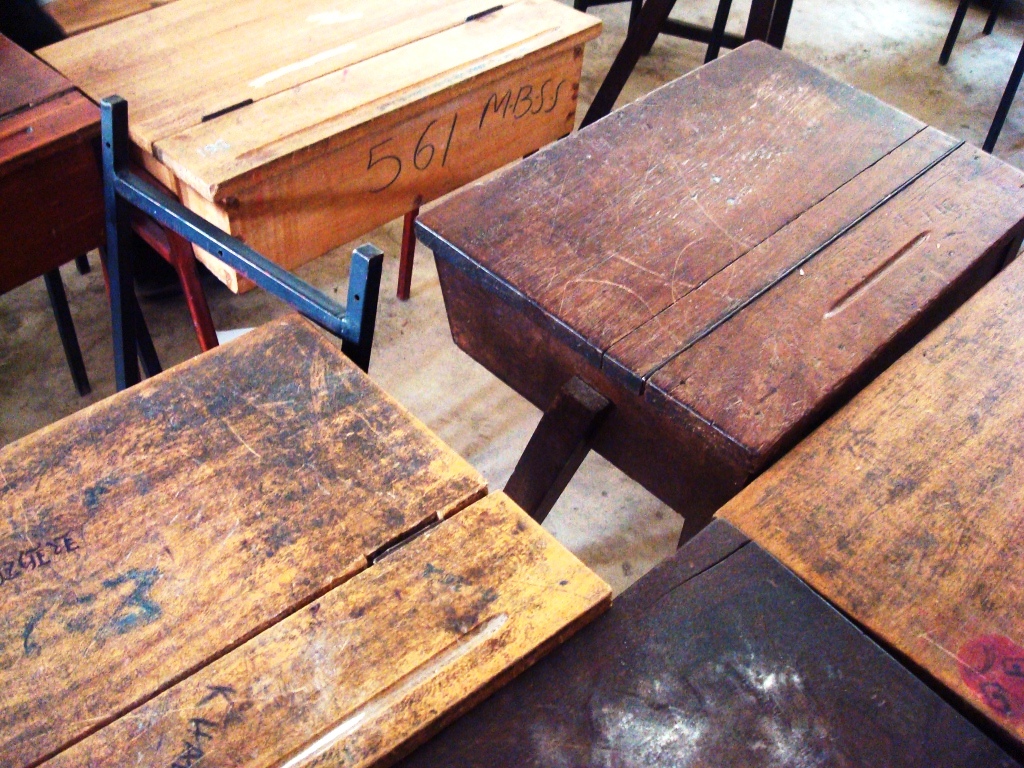
Many long days have passed since my last blog post, but I have been busy on another continent. I have just returned from a week working out in Kenya, where I spoke at a conference and visited several primary and secondary schools. It was my first visit to Kenya, and most of my time was spent in the coastal town of Mombasa. I had fascinating conversations with many of those living in Mombasa, and spent time with some of the school children who were very proud to show us around their schools. Schools in Africa are quite different to those we are familiar with in Western and industrialised countries around the world. Many struggle to develop and use what little resources they have, but everywhere you go, you see pride in the school and enthusiasm for learning in equal measure. Besides meeting some wonderful people in and outside of the conference, I saw some excellent projects, two of which I would like to tell you about.

The first is a project from the Kenya Institute of Education called Elimika (Elimi means education) which seeks to develop and disseminate good digital content for learning. In the past year or so, KIE has developed digital content (text, video, audio and games) in 12 subjects including languages, humanities, mathematics, the sciences and technology. This is collated from the experience of many teachers across Kenya who are invited to come together for 'boot camps' where they develop and refine the content in small teams. It is then piloted among small groups of existing school children before being refined further, and then delivered in CD format to schools across Eastern Africa. This may sound a little backward to western minds, but for East Africa, this is quite an innovation, particularly for schools that may have only one or two computers, and without internet access.

The second project relates to food shortages in East Africa, a topic looming large in the minds of us all as we see the tragedy unfolding in Somalia, and the sad refugee situation in North East Kenya at present. The Makini School Project is based on Sack Gardening - also known as 'vertical farming', where sacks and other small containers are used for growing food crops when available space is limited. This is a very important technique in places where drought is prevalent. The initial research for the project was carried out in Nairobi's slum areas by local primary school children. They discovered that sack gardening not only preserves soil and prevents runoff, but that healthier crops can be grown through intercropping - a variety of different plants growing together that complement each other.

These and many other innovative projects give hope to the people of Kenya during difficult times. The enthusiasm and sheer joy of living I discovered among the children and the teachers in the schools of Mombasa are truly inspirational. Their community spirit, and their ethos that your worth is based not so much on what you possess, but on how much you can share with others (the Swahili word for sharing is Ubuntu), certainly sends a clear message to the youth of the better off societies in the world.


Creative Commons License
Out of Africa by Steve Wheeler is licensed under a Creative Commons Attribution-NonCommercial-ShareAlike 3.0 Unported License.


August 11, 2011

End of the screen age?

Since the earliest days of television and the subsequent introduction of personal computers, the visual display unit (we now commonly refer to them as 'screens') has been an integral part of the user experience. Families who previously gathered around the hearth to share their day's experiences moved their orientation (and their living room furniture) to face 'the box'. As technology has improved, and high definition television broadcasts and multi-channel satellite and cable TV have become increasingly available, we begin to see many more screens throughout the home, and a subsequent 'social atomization' of family viewing habits (For more on this concept read Future Shock by Alvin Toffler). If we add personal computer and laptop screens into the mix, we observe homes and workplaces that are replete with visual displays that can be shared or used individually for a multitude of different purposes.

As a multi-tasking society says Nick Shackleton-Jones, we spend a lot of our time looking alternately down at our laptop or iPad screens and then up at the television,  Wouldn't it be sensible, he asks, to integrate the two into one? There is some sense in what he says. The next move though, he suggests, will not be to have one single device which you can put down and lose, or damage by dropping and breaking (how many iPhones have been sent to the great beyond in this way?), but a technology that can project the images onto some sort of heads up display. This might be in the form of a visor, or a pair of spectacles which you can still see through into the real world. Some people might recoil at this idea, claiming that it is either hazardous (while watching a Lady Gaga video you could walk into a lampost) or even dehumanising. In his prescient book Natural Born Cyborgs, Andy Clark argued that such increasingly intimate relationships with technology are a natural progression in the evolution of humankind, and that we adapt very quickly to new ways of using technology. This includes intimate contact with devices that are quite invasive, in for example, cochlear implants, plastic prostheses and organs, and cardiac pacemakers. It is already a common sight to see people wearing ear buds or blue-tooth ear pieces. How much of a step would it be to see widespread use of in-view visor displays.


In-view vision, whether in visor, heads-up, or projector form, would have the capability to lock into and exploit the full potential of applications such as augmented and mixed reality, where the onboard processor can generate and superimpose information about objects or people to give the viewer instant information about what or who they are looking at. This would be an important step forward for augmented reality tools, which currently rely largely on mobile phone cameras to function. A look at the TED video of Patti Maes and Pranav Mistry's Sixth Sense wearable technology may give you a sense of how this can be achieved and the positive (and possibly negative) effects that may emerge with this ambient approach to interaction with the environment.

If we went down this road, and began to replace static desk and wall mounted screens with handheld and in-vision systems, what might the impact be on our social lives? Would our perceptions of reality be changed? Would the dynamics of families and small communities alter as a result? If so, would these changes be positive or negative? Would personal in-vision technologies isolate many individuals from their communities? Will we see the end of the screen age in our lifetimes? You are invited to add your comments and views below.

Image by Jonathan O'Donnell


Creative Commons License
End of the screen age? by Steve Wheeler is licensed under a Creative Commons Attribution-NonCommercial-ShareAlike 3.0 Unported License.


August 09, 2011

The future is not here ... yet

I seem to be spending a lot of time lately travelling around talking about 'the future'. Does this make me a futurologist or some kind of prophet? No - I'm just one more person who wants to know what might influence my professional life and my students' learning over the next year or two. We are all interested in the future, more or less. But trying to predict the future is not something I would recommend, because no-one really knows what tomorrow will bring. If we did, most of us probably wouldn't dare stepping outside our homes. Well, here's me in an interview with a German Human Resources magazine, in the run up to a keynote speech I'm giving in Cologne, Germany in September. I speculate on what I see happening around me now, and how the trends might evolve in the coming months....

You have been working in learning technology for over 35 years. Does the evolution of learning still hold surprises for you?

Oh yes. It never ever ceases to amaze me. Every day I am surprised because new things are coming to me and I discover new technologies or I learn about new software. The important thing for me has always been to find out what is coming next, because I want to be prepared, not just to know about it myself, but also to tell other people what is ‘just around the corner’ and how you can use it.

What has been the biggest surprise in the last years?

The biggest surprise for me so far has been social media: it is the biggest thing in the last ten years to hit the world of learning technology. Everybody can connect with everybody else now anywhere in the world. You can literally tap into any community of practice that you are interested in and find people who are very clever and knowledgeable and get almost instant answers from them.

Do you see this change as some kind of revolution in learning?

I go along with the opinion that it always has been an evolution but not a revolution. We are all building on to the previous work of other people as in the expression “standing on the shoulders of giants”. The first technology for me was always language. And since those days we have learned to turn communication into other forms – first the telegraph, then the telephone, radio and television, mobile phones and then the internet – they are all versions of language and ways of sharing our ideas with each other.

You already mentioned social media as one of the most important technologies that have changed learning. Which other technologies are there, that have had a similar impact?

Probably one of the biggest innovations has been the mobile phone. The ability to talk or send texts to anybody in the world – that was important. But with smart mobile phones there are so many new applications available now. Together with social media those two innovations are transforming the way we work and learn.

You predict in your blog that the future of learning apart from being social and mobile will be open. Can you illustrate this prediction?

Open learning and open scholarship are important to me because to be open is to be honest – and there are still too many people hiding behind walls, saying things that they don’t mean or can’t prove. For me, knowledge is like love: You can give it away as much as you like but you still get to keep it. Why should we charge people for information that they really need to survive? Brian Lamb, who is a Canadian academic and a friend of mine, recently said: “With this economic crisis that we are in now and the global problems that we are experiencing it seems perverse and wrong to hoard the knowledge and only give it to people who can pay for it”. So therefore openness in all its forms has to be the way forward. Open learning is also a second chance for people who have failed in school to get a qualification later in life, which is exactly what I did: I left school with nothing and I went to the UK Open University when I was in my thirties and got my first degree.

There are also other things like open access to knowledge, which more and more journals are providing for free, and there is open scholarship: As open scholars, I and others like me share our knowledge and our concepts for free: all of my blog posts are free and so are my slideshows, photos and videos.

And do you get a response from the people who read your content?

Oh yes. And I can also learn from them. Open scholarship means that as an academic I open myself up to criticism. People can actually point out to me what I may have missed out on or what mistakes I may have made. In effect, open learning in all of its forms becomes a reciprocal arrangement: it’s a mutual giving and receiving – all for free.

Do you think that learners already use those new technologies with all their possibilities?

Yes, it’s becoming a huge movement in the world. You see, social media is a leveler: everybody has an equal voice to say what they believe and to argue and discuss with each other. You send your thoughts around the world and people respond very quickly. I had conversations this morning with people in Australia, in New Zealand, Canada, all over Europe, and Malaysia. This would never have been possible without the internet and social media services like Twitter and Facebook.

Will learners need new skills to use these new technologies?

I think “skills” is probably not the correct word to use, I prefer to call them literacies. Literacies are skills, but they are more than that, because literacy means the ability to engage with your culture more deeply. Students – and teachers as well – will need to learn a lot of new literacies as these technologies become more pervasive in society. They will need for instance what is called “transliteracy”, which is the ability to present yourself and your ideas across multiple platforms and to switch very quickly between them without losing quality of content. The new literacies are also going to involve skills like the ability to be wise to the fact that not all content on the internet is correct, accurate or up to date.

What do these developments mean for trainers and how do they adapt to these changes?

Some trainers find it hard to keep up because they think it is too fast and too complicated for them to understand. But any teacher or trainer can exploit the power and the potential of these technologies. Most of them are free and easy to use and there is a definite pedagogy underpinning the use of these technologies. They just have to be aware that there are privacy and identity issues, issues of safety and content management. I urge every teacher and trainer to try these technologies out in a safe environment to see how they work and what they can do for their learners.

Can we apply this also to corporate learning: Do companies use these technologies and how?

Oh yes. I can give you an example: Just recently I was speaking at a conference in London. 450 people attended from all the major companies, from banks, manufacturing companies, the police, the military and government departments. Many of these 450 people were doing something new with technology and wanted to hear all about the latest digital media and technologies. I think that it is a growing trend that corporate trainers are tapping into the power of these media.

And do companies support the use of these technologies by their employees?

Well, corporate barriers are a problem – for instance when the management says you are not allowed to use Facebook because it’s against the company policy. I say to them, if you ban Facebook, you are losing one of the biggest opportunities to gain social credibility and social traction that you are going to have: the power of social media to connect people professionally as well as personally. The ability to tap into a professional network is one of the most valuable things that any employee can have. So do not turn your backs on social media in the workplace. Rather than block it, facilitate it in a way that it becomes a benefit to both your employees and your company.

You once said that learning transcends the boundaries of the classroom. Do you see problems when professionals, for example specialists in a certain field, connect with others from different companies?

Companies obviously want to protect their secrets, they have to – to a certain extent – because if they don’t, their rivals will come in and steal their ideas and capitalise on them. But there are ways of sharing information, there are also ways of marketing where messages become viral, enabling you to exploit the power and potential of social media, to sell your ideas to people. You see, all of my content is licensed under creative commons, which means that it can be shared and repurposed under the same license with which I have licensed it. Sometimes people translate my blog posts into other languages, and this way I get a huge audience which I would otherwise not have had. This is what companies have to see: They may wish to protect some things, but they may also wish to open up their ideas to sharing, to gain more credibility, more effective marketing and more efficient promotion of their ideas and products.

Do you think that people need rules for the use of social media in the company?

I don’t think that rules work anymore. Governments have tried to impose rules, they have tried to block Wikileaks for instance and failed notoriously, because the internet is far too big for one government or one organization to control. Many companies will have rules, but if they find that these rules are actually causing them damage, they will have to revise them and make them more flexible.

In Germany HR professionals have to face the demographic change. Are the new learning technologies just a new way to learn for digital natives or also for older people?

I don’t believe that younger people are more adept in using technology just because they were born after 1980 and I don’t want to categorize people this way. In my view, it is all about context rather than about age. What matters is what uses you see for the technology and then there is a willingness to learn to use it. These technologies are for everybody to use, demographics such as age don’t really matter that much.

How far are all these changes we talked about international phenomena?

In one sense there are huge differentials between how people use technology to learn to connect with each other, to communicate, to do commerce or business. If you go to Singapore, there is a population of people who are very much immersed in technologies, because it is one of the most wired – or wireless – countries in the world. You can’t compare that to Gambia in Western Africa, a very small nation where they don’t even have electricity for most of their country. But in other ways everybody is in the same boat, because everybody wants to learn, everyone wants to have a good life. The needs, aspirations and hopes are the same, but our opportunities are not the same. The future is unevenly distributed, which means that the future is not here yet.

Interview by Bettina Wallbrecht and Stefanie Hornung


Image source

Creative Commons License
The future is not here ... yet by Steve Wheeler is licensed under a Creative Commons Attribution-NonCommercial-ShareAlike 3.0 Unported License.


August 07, 2011

Product or process?

Picture the scene. You walk into the reception area of your local primary school and you see the wonderful displays of artwork created by the children. There are paintings and drawings, and there are mobiles and models made from cardboard, silver paper and other materials, all resplendent in their vibrant colours. It is a bright celebration of learning and it showcases the creative talents of the children. Or does it? What about the children who are not as good at expressing themselves through painting or sculpture? Where are their pieces of artwork?

Sophie's painting of a cow is excellent and it takes pride of place in the centre of the display. But what you don't see is all the learning, thinking and the skills development that went into the mix leading up to Sophie's production of such a wonderful piece of art. What you don't see is the learning process, all the mistakes and corrections. All the learning. What you don't see is all of Sophie's previous rubbish cow paintings. Perhaps they should be on display as well? They would certainly demonstrate to anyone observing that this little girl has come a long way in the last few weeks, and has developed greater skills than she had before.

When did we ever get the idea that children's work must be perfect before it can be displayed, and that some kids' work is not good enough? I visit a lot of schools as a part of my role as a teacher educator, and it always strikes me when I enter a school reception area, that only the best children's paintings, photos and other artwork are on display. To see the less perfect ones you need to go into the classrooms, or into the kids art portfolios. Why is that? We are not running a production line, and we don't need quality control. Why shouldn't the kids express themselves in their own ways? If you are a teacher stand back and watch - you will find that they have extraordinary imagination, and their creative work doesn't have to be perfect to be good. They can express themselves creatively in more ways than you can ever imagine. All you have to do it create the conditions in which it can happen. Do so, and they will astound you.

Unfortunately, the practice of only allowing the display of perfect art work is symptomatic of a deeper underlying problem in many state funded schools. It is the age old question of product versus process, and it influences the delivery of the curriculum. It also dictates how assessment is conducted. If we are only interested in production of knowledge, then we will apply summative forms of assessment - exams and essays designed to test what students have remembered. If on the other hand we are more interested in the process of learning, we will design assessment methods that feed forward as well as back, showing students what they have done well and what they need to improve upon in their next pieces of work. Standardised testing does not prepare learners for the real world, nor does it provide teachers with anything more than a snapshot of where the student is at that point in time. On the other hand, process based assessment represents a long term plan, which supports learning over a period of time, a lot more effective than simply taking superficial and ultimately, meaningless measurements.

"We are now living in an age where the recipe is more important than the cake". - Charles Leadbetter

Image by Dietmut Teijgeman-Hansen


Creative Commons License
Product or process? by Steve Wheeler is licensed under a Creative Commons Attribution-NonCommercial-ShareAlike 3.0 Unported License.


August 06, 2011

No more funnels

There has been a lot of discussion recently about the personalisation of education. The sticking point is that most education is publicly funded, the state has a major stake in how it's conducted, and therefore dictates what should be taught in schools. Because of lack of space, time and resources (you will always have this problem when the state intervenes) there is little latitude for personalised approaches and creativity is stifled. Every child gets the same content, and every child is tested in the same, standardised way. The result: children become disenfranchised and demotivated, teachers are exhausted and demoralised, schools are positioned unfairly in league tables, and governments measure success not through human achievement or creativity, but through cold, hard statistics. This is universal education, and if one size does not fit all ... tough. Shame no-one has told the powers that be that universal education is unachievable.

Ivan Illich railed against this mindset way back in 1970 in his anarchical, visionary critique of the school system. In Deschooling Society, Illich called for personal learning through informal learning networks, and rejected the funnelling approach of mass, unidirectional, instructivist education systems. More recently, powerful modern day visionaries such as Stephen Heppell and Sir Ken Robinson are saying the same thing. They ask how we can sustain a factory model of education 'production', where children are 'batch processed' according to their age groups. It's obvious to any teacher or parent that children develop at different rates, and all have different talents and interests. I suppose we have Jean Piaget and his fellow 'stage theory' psychologists to thank for that kind of constrained thinking.

In their current configuration, says Robinson, most schools kill creativity. The picture above was taken in 1909. If those students could jump into a time machine and be transported a century or so forward to 2011, what would they be amazed by? Jumbo jets, motorways? Satellites and HD television? The internet, medical science? Mobile phones and credit cards? They wouldn't recognise any of those. One thing they would almost certainly recognise though, would be the school classroom. It has been largely bypassed by the last century of progress, because institutions are very hard to change.

Heppell points out that creativity could be encouraged and personal learning achieved through the use of handheld technologies such as mobile phones. When they use these tools, he says, children are in their element. When they walk into the classroom, they are told to switch off all devices, and in doing so, the school switches off the child too. Gaming consoles could also be used to personalise learning, engaging children in playful learning, something which Heppell strongly advocates. But ultimately, teachers have a vast array of personal learning resources at their disposal thanks to the social web. Students must choose their own personal tools - if they have tools imposed upon them there is little scope for personalisation. Schools are now beginning to incorporate some social media into their lessons and even allowing children to use mobile and handheld technologies during lessons. It's starting, but it's slow progress. If students are shown a range of tools and then allowed to choose which ones they would like to use, if they are allowed to create their own personal webs and choose their own connections, we might begin to see some very personal learning taking place in our schools.


Creative Commons Licence
No more funnels by Steve Wheeler is licensed under a Creative Commons Attribution-NonCommercial-ShareAlike 3.0 Unported License.


August 04, 2011

Getting the bloggers to write

One of the perennial problems teachers face, especially in early years education, is trying to get children to write. The main problem is that children are expected to write in a vacuum, for an audience of one (the teacher). There is often very little incentive in this exercise for kids, who would probably rather be doing other things with their time like playing on their Nintendo. But several schools are beginning to address this 'won't write' problem by making it entertaining and productive through the use of social media. In an article entitled Could blogging be the key to raising a generation of great writers? Liz Dwyer argues for creating audiences online for children to write for:

'"I don't like to write." That's the refrain teachers have heard for a generation when they ask students why they're struggling to complete a short, three-paragraph essay. Thankfully, more and more educators are using two things kids love, technology and social media, to change that. By encouraging students to write on their own blogs, savvy teachers are helping kids take their writing out of the classroom vacuum, and cultivate a broader audience.'

Liz is right of course. Children raise their game when they know they are being watched, so why should it be any different with writing? David Mitchell, Acting Head Teacher at Bolton's Heathfield Primary School is a great advocate of blogging as a means to develop children's writing skills. He reveals that some children are proactive
in setting up their own blogs when they realise they can write for a large audience and actually receive feedback. Many of the children at Heathfield have become avid bloggers, and the results of this are clear for all to see. According to David, some children within the school have raised their literacy attainment scores by two full levels. Blogging is gaining ground, and it's not that hard to set up for a group of children in your own school. Some teachers reading this might ask the question: What about internet safety and child protection? Well, I could answer here and now, but I won't. Instead, I'll let Liz Dwyer answer:

'Concerns about online privacy have historically made teachers wary of allowing students to blog, but the rise of platforms built specifically for students has made blogging safer for kids of all ages. Plus, in our networked 21st century world, more teachers are already taking precautions by talking about internet safety, telling kids not to reveal their home addresses or engage in online bullying. Let's hope more teachers embrace the medium and let their students get some real-world writing experience.'


Image by WallMic


Creative Commons License
Getting the bloggers to write by Steve Wheeler is licensed under a Creative Commons Attribution-NonCommercial-ShareAlike 3.0 Unported License.


August 03, 2011

Parrot fashion

There is a story of a woman who wanted a talking bird so she went to the pet shop bought a parrot. After a few weeks, she returned to the pet shop and complained to the owner that the parrot wasn't talking. 'Does he have a mirror?' asked the shop owner, 'parrots love mirrors. They see themselves and start up a conversation'. So the woman bought a mirror and the next day she was back again. The bird still wasn't talking. 'How about a ladder?' suggested the shop owner, 'parrots love climbing up and down ladders. A happy parrot is more likely to talk.' She bought a ladder. Next day she was back again, because the parrot still wasn't talking. 'Does the parrot have a swing?' asked the shop owner. 'If not, that might be the problem. He will relax if he swings, and then he'll start talking'. The woman sighed, bought the swing and left the shop. The next day she walked into the shop and she looked very upset. 'The parrot died' she reported. The shop owner was shocked. 'Did the parrot say anything... anything at all?' he asked. 'Yes,' said the woman 'right before he died he asked me if they sold any food down at the pet shop.'

The point to this story is that you can spend your life looking into mirrors, worrying about your appearance; You can focus on ladders to try to advance your career; and you can try as many swings as you like to try to entertain yourself. But if you starve yourself of a social life, your relationships will die, and your life experience will be the poorer for it. We live in an increasingly connected world, which is profoundly influencing education. And social media are the enablers. Yet many teachers and students see social networking tools as frivolous entertainment or ego massage. They can be much more than that, and if they are developed appropriately, they can be valuable tools for education.

How many students and teachers are missing out on a broader social experience, because they have disengaged with social media? How many students have a narrower view of learning because they have no professional learning network to call upon? And how many teachers are failing to develop themselves professionally because they think Twitter and other social networking tools are a waste of time? It's true that Twitter can make you feel a little like a parrot talking to itself in a mirror if you don't give it enough time to develop connections and reach the critical mass necessary to become a useful PLN. But if you invest time and effort developing a network of critical friends and knowledgeable experts, it will pay you back a hundredfold.

In a previous blogpost I argued that Twitter is not about content, it is all about connections. There is more to learning than simply taking in knowledge, and more to a course than its content. Connections are important, because they lead to richer social contexts. The ability to connect into and engage with global communities of practice is unprecedented. The conversations to be enjoyed and insights to be gained on Twitter are immense, and their value is immeasurable. Developing your professional learning network is time consuming, but what is the alternative?

Well, I suppose you could always learn parrot fashion.

Main story by Bob Gass. Image source by Riza Nugraha


Creative Commons License
Parrot fashion by Steve Wheeler is licensed under a Creative Commons Attribution-NonCommercial-ShareAlike 3.0 Unported License.


August 01, 2011

Seven billion teachers

Everyone on Earth is a teacher. We all have the ability to help others to learn. This is exactly what Vygotsky had in mind when he proposed his famous Zone of Proximal Development (ZPD) theory. Children (and adults too) can learn more broadly, deeply and extensively if they have a knowledgeable person by their side, than they can on their own. In our society, we often think of that knowledgeable other person as a professional educator, a tutor, lecturer or classroom teacher. But it need not be. Not everyone is cut out to be a professional educator, but anyone can teach and most of us do exactly that, just about every day. The artistry of a good educator though is to continually engage students in learning, to inspire them to persist in their studies and to transfer their own personal passion to that student's learning. The art of education is to draw out the very best from learners, to encourage them to excel at what interests them, and to instill this within them so they continue to do so for the rest of their time on this planet. The very, very best teachers can do all these things, and usually instinctively.

We learn in a multitude of ways, some within formal settings, others less formally. How did you learn to tie your shoelaces? Most people would remember a friend, or a parent showing them how it was done. Then it was practice, practice, practice, until you could do it without thinking. Your first language was acquired naturally before you ever went to school. You learnt informally, listening to your family members speak and then engaging with them as you built your vocabulary. One of the great, unchanging roles of a parent is to be an informal teacher of their children, and older siblings also take a hand. Children today learn a lot of social rules and mores through informal play, long before they ever see a school playground.

If there is any difference at all between formal and informal learning, it is where that learning is heading. What is the study for? In formal learning contexts, learning is usually aimed toward obtaining some kind of qualification, an accreditation of a skill or knowledge. In informal contexts, it's simply about living. Going to school or college can be a real effort, day in, day out. Formalised learning can be a chore, but it need not be. This is where the skilled teacher can make learning engaging and fun, and motivate students to arrive each day anticipating something special. It takes passion, dedication, drive, tenacity and self-belief to become a professional educator. That's the difference between education and teaching, and it is why, although there are 7 billion teachers in the world, only a select few ever go on to become skilled educators.

Image by Momento Mori


Creative Commons Licence
Seven billion teachers by Steve Wheeler is licensed under a Creative Commons Attribution-NonCommercial-ShareAlike 3.0 Unported License.


July 29, 2011

Shaping the future

Welcome to the future? Whenever we consider the future, it is always elusive, and always just around the corner. It is never quite here. We live in the present. All the time. All each of us have is our memories of the past, and a future that is imaginary. Until something happens, we really don't know what the future will bring, and anyone who says they know what the future holds is either a liar or deluded. Forget the soothsayers, the horoscope writers, the clairvoyants and the crystal ball gazers. Their prophecies of the future are nothing more than bland, generalised predictions which can be interpreted in many ways. If they get it wrong, it is difficult for anyone to prove anything. We just don't know what will happen next. That's probably a good thing.

William Gibson once famously remarked: 'The future is here - it's just not very evenly distributed.' This is a well used quote, but what did he mean by this? Some would suspect this is a reference to the digital divide, the haves and have nots in our society. For me it is more profound than that. It is that some see a different future to others, and there are many interpretations of exactly what the future holds. Some view it with trepidations, seeing only problems, while others see the future as a never ending set of opportunities to exploit.

How much can we shape our own futures? As a community, how much can we invest into our present to secure a better future for ourselves and our children? The answer is obvious - the more we invest in the present, the more we will reap in the future. But we cannot control everything. There are randomly variable events. George Orwell once said 'He who controls the past controls the future. He who controls the present controls the past'.
 This is why the media - television, newspapers, radio, internet, gaming - have so much influence over public perceptions. For slightly different reasons it is also why teachers can wield such power in the classroom. We know what technologies we can use to create excellent learning opportunities for the students in our care. We also know from research what the pitfalls and caveats are. We know for example, that technology used for technology's sake is usually a mistake. We also know that learners engage better when they have tools to use they feel comfortable with and enjoy using. The balance decision is ours to make. What we don't know much about (but we can guess) is what technologies are just around the corner, waiting to invade the classroom. What we certainly don't know is what effects new technology will have on learning, on our professional practice, on our daily lives. We can watch the trends, but who would have thought for example, that mobile phones, a tool developed for business and leisure, could be applied so effectively in teaching and learning? Conversely, who would have predicted the consternation and controversy mobile phones would cause in many, many school contexts? 

The subject of my closing keynote at this weekend's free to attend Reform Symposium online global conference will be 'The Future of Learning'. Here's the link to the Elluminate Room we will be using. I will draw on over 30 years of my own research and experience in the learning technology field to attempt to unravel this conundrum. I will discuss the trends in technology evolution and trace the social movements that have led us to this point in the history of education. I'm going to examine a number of ideas including personal learning environments, social media, open scholarship, resistance to change, content curation, augmented reality and the semantic web. In doing so, I hope to inspire and also challenge teachers to reflect on their practices, uses of technology, and instill hope for the future. The future is ours to own. 


The last word on this subject goes to President Barack Obama who declared: 'We did not come to fear the future. We came here to shape it'. 


Image source by 'Back of the Napkin'

Creative Commons Licence
Shaping the future by Steve Wheeler is licensed under a Creative Commons Attribution-NonCommercial-ShareAlike 3.0 Unported License.


July 27, 2011

Reusable cooking objects

Recently a lot of emphasis has been placed on sustainability. Sustainable this, sustainable that. Here at the University of Plymouth we had a CETL - a Centre of Excellence in Teaching and Learning - dedicated to Sustainable Futures. We have also seen a movement toward 'reusable learning objects' (For many teachers, sustainable education might simply be about actually keeping students interested for a full hour). I guess it's not simply about being 'green' or environmentally conscious. It's also about minimising effort of the creation of learning resources, and adapting existing content into new contexts or for new groups of learners. It's about sharing. It's about common sense. I just don't know why we had to invent a name for it.

I was fascinated last year, while walking around the huge sprawling open market of Serekunda in the Gambia, to see a huge 'cottage industry' dedicated to recycling old aluminium, tin and other metals into really useful objects. The picture above shows some of the products of this labour - salvaged aluminium from old cars, refrigerators, cola cans and other household goods that have lost their inherent value. We walked into one of the market stalls, and out through the back into a yard which resembled Dante's inferno. Everywhere we looked there were smelting furnaces, and all around in the smoke, people were melting down metal and remoulding it into useful cooking utensils. The picture below shows a guy fabricating a cooking pot. Got me thinking about education.


How much content do we actually waste, and how often do we 'reinvent the wheel'? I remember a few years ago having 14 cohorts of students, all studying the same content. I simply set up a wiki and populated it with a set of learning activities. I then replicated the wiki 13 times more and let it loose. The result was that the students were each contained in their own little groups, studying the same materials but enjoying small group conversations that were unique and relevant to their own cohort. It didn't take long to do once the first wiki had been established, and in a sense, I re-used the same content over a dozen times. It should only be a small step from there to reusing other people's content. But it's actually a huge step, because many teachers want to protect their own intellectual property and are not willing to share their ideas or content with others. The Creative Commons movement is going some way to challenging this mindset, and we are also seeing the rise of open scholarship, where teachers and academics are willing not only share their content, but also to open themselves up to constructive criticism from their peers on the web. I share all my slideshows and papers on Slideshare for free, and only ask for acknowledgement. (Go on, click on the link and help yourself. You know you want to).

After witnessing the collective actions and sharing culture that exist among the poor people of the Gambia and realising that they are compelled to take this approach simply to survive, I am even more determined to share my own content and encourage others to do the same. Seeing how the people of Gambia use everything and throw nothing away makes me very conscious about our own wasteful consumer society and how selfish I can be with my own 'property'. Reusable learning objects....It makes a lot of sense to me now.


Click here for more pictures of Gambia.

Creative Commons Licence
Reusable cooking objects by Steve Wheeler is licensed under a Creative Commons Attribution-NonCommercial-ShareAlike 3.0 Unported License.


July 26, 2011

Around the world in three days

The Reform Club is the London gentleman's club to which Victorian adventurer Phileas Fogg returns after his fictional epic, and highly entertaining journey around the world in 80 days. Jules Verne's hero made it back in time and against all odds, to claim his reward of £20,000. The Reform Club is still there, and ironically, it hasn't changed all that much since the days of Jules Verne. But reform is here and there are some changes being made in the world of education.

This week, the Reform Symposium will take us around the world again, three times in three days as it launches its third global conference. The expected 8,000 participants will be located around the world across all 24 time zones, enabling the conference to be virtually non-stop between Friday 29 - Sunday 31 July. That in itself is quite an awesome concept. Billed as a worldwide e-conference, and boasting a schedule of more than 75 presentations, invited panels and 12 keynotes, the Reform Symposium promises to be an event of huge significance for the education world. One teacher on Twitter said today that they looked forward to learning some new things while still in their pyjamas (I won't mention their name...)

Lots of tweeps are sporting the REFORM logo around the edges of their profile pics and David Wees has created a Twitter list of all the organisers and presenters for the symposium, all adding to the building excitement. The great line up of keynote speakers for RSCON3 includes Alec Couros, Steve Hargadon, Paula White, George Couros, Chuck Sandy, Jo Hart, Pamela Burnard, Steven AndersonJohn Davitt, Terry Freedman and Phil Hart. I am delighted to have been invited to give the closing keynote address on Sunday at 2200 hours (British Summer Time). You can work out your own timezone for any presentation throughout the three days simply by going to the Reform Symposium site and using the excellent timezone tool. Some of my audience may well be in a state of undress, but I will be wearing my best suit and tie (as the pigs land for refuelling) to present from the confines of my home office, using my faithful laptop Nigel, and my Elluminate headset.

Expect the Twitter stream to go crazy, as this week the Reform Symposium takes us around the world in 3 days. See you online!

Image by EraPhernalia


Creative Commons License
Around the world in three days by Steve Wheeler is licensed under a Creative Commons Attribution-NonCommercial-ShareAlike 3.0 Unported License.


July 25, 2011

Three things all teachers need

Last night I took part in a 3-way Skype podcast recording for TeacherCast.net, which was hosted by Jeff Bradbury, who is based in Philadelphia, USA. My co-panellist was Mark Greentree, who was speaking from Sydney, Australia. One of the scheduled questions which we never got around to addressing was: What should a parent expect from a teacher in the 21st Century? This is actually quite an interesting question and if we had had time to answer it, I would have said something along these lines:

The question acknowledges the direct interest parents have over their children's education, and reminds teachers of the need to keep parents informed of their children's progress. As a parent of three children who have now all left school (where has the time gone?), I know that I was always interested in what my kids had been getting up to in school, and what they had learnt. But I was also interested in the methods the teachers had employed to help my kids learn. That may have been because I am a teacher educator myself, and I have a professional interest. How many other parents who are non-educators actually think about the methods and tools teachers are using? Also, beyond the fact that the teachers of their children are qualified educators and have been police-checked, how much do parents want to know about teachers or the methods they use? What should parents expect of teachers in the 21st Century?

Apart from the surge in technology use, and the new skills teachers need to adopt, implement and harness new digital media and tools (a subject for another blogpost), I would argue that little has changed in our expectations of good educators. In this post I'm not going to dwell on digital skills. Instead I'm going to focus on three essential things teachers need to practice, and without which children would be poorer.

The first thing parents should expect from teachers is their ability to inspire children to learn. This is vitally important. Yes, it helps that teachers are experts in their own subject areas, and it yes, it is important that teachers are organised and can maintain some kind of discipline in the classroom, but I would like to argue that the ability to inspire is more important that all of these. All teachers should aspire to be an inspirational catalyst for learning. Enthusiasm for learning, a passion for their subject and the ability to get kids excited about something new is vitally important in the shaping of young minds. You can't teach enthusiasm or passion, but it can certainly be infectious.

Another allied skill we should expect from teachers is an ability to understand the child's perspective. Good teachers have the ability to place themselves in the position of the child, and ask themselves, how would I have felt in that situation? This is the basis of good pedagogy, and was referred to by Jean Piaget as 'decentering'. Many of us, as we grow older, tend to forget the experiences we had when we were in school. Intuitive teachers understand what kids experience and know how to maximise those experiences. They know how to tap into the sense of wonder a child has when she sees something new for the first time. They recignise the importance of the need to touch or taste, to directly feel and relish a new experience and the desire to question, to experiment and to ask 'what if...?' These are manifestations of childhood all teachers should remember. Good teachers recognise that children need this kind of experimental space to learn.

Parents should also expect teachers to give creative freedom to children. Although teachers are hard pressed for time, the very best know the importance of play and can create playful learning spaces. Children have great imagination, but until it is given the opportunity to be expressed outwardly, it is difficult to share or celebrate. The best teachers do not always insist on the 'right answer' or the correct way to do something. They don't dismiss children who offer outlandish ideas or alternative suggestions. Sure, children needs some facts and rules, but they also need to be able to question those facts and find out what happens if someone does break those rules. Children should be free to make mistakes without fear of punishment, and should be able to express themselves creatively and explore their world in safety.

There are many other things we should expect from good teachers and I invite readers of this blog to post additional values and skills below in the comments box. And how can technology help teachers to create such environments? Well, that's the topic for a later blogpost...

Image by Yago Veith


Creative Commons License
Three things all teachers need by Steve Wheeler is licensed under a Creative Commons Attribution-NonCommercial-ShareAlike 3.0 Unported License.


July 20, 2011

The great collective

When there is live TV coverage of an event do you watch the entire broadcast or just the highlights? The answer of course will depend on a number of factors, including how interested you are in the event, and how much time you have available to you. It's exactly the same with content on the web. Earlier this month I wrote about the 'tsunami of content' online that threatens to swamp us all. Just about everyone using the web today is creating content on a daily basis. How do we find the gold dust content amidst all the dross and trivia that exists on the internet?

Search engines have their place, and of course, we tend to use them a lot. Some of the more intelligent search engines are morphing into answer engines, computing your question against highly structured data (see for example Wolfram Alpha), and providing focused information. Often, for busy professionals, even this is not enough. Then there is problem of how to organise your content when you actually find it. Many are using tools such as Delicious.com or Diigo.com to tag, store and share their favourite content. These tools are also excellent and well used, but are they enough to cope with the vast quantity of content we want to keep? Wouldn't it be nice to have up to date, regular content, all presented in one place?

Enter the digital curation tools. There is a very special breed of web users out there that we call 'the curators.' In a sense, curators are a little like their counterparts in museums, because they tend to trade in very specialised, focused content. Anyone can be a digital curator. As a part of the great collective, curators choose a topic they are interested in, and then search and display dynamic content related to this topic, using one or more digital curation tools. They are collectors of the virtual and ephemeral and they have some great tools. Scoop.it is a very useful and attractive curation tool, enabling summaries and snapshots of related content from blogs, media sharing sites and other social media to be displayed, usually in two columns. Check out my own Scoop.it site Future School. Storify is another style of curation tool, enabling the curator to search for specific content from social media sites that can be sequenced into a blog style story. The curator can add their own text, and embed the final product into their blog. This short video explains how it's done. A third curation tool is Pearltrees, which works as a kind of connective network of content, which can be shared, repurposed and linked in a number of ways across social media platforms. The Pearltrees Teams group function also enables users to collaborate to create shared curated collections of content. Here's the video demonstrating how Pearltrees works. All three tools allow conversations and further sharing, and all three are very attractive as a means of making sense of the vast amount of content there is on the web. There are of course many other tools being developed that can also perform similar tasks of consolidating and accumulating content, and offering it in a digest form to busy professionals. The great collective it seems, are becoming the great collectors.

Image by Dieter Drescher


Creative Commons License
The great collective by Steve Wheeler is licensed under a Creative Commons Attribution-NonCommercial-ShareAlike 3.0 Unported License.


July 19, 2011

Breaking down fences

Seth Godin's blog is always good value, but his post today is quite profound. He writes about his avid reading of the entire collection of one library's science fiction stock during his high school days and concludes that "Expertise is a posture as much as it is a volume of knowledge". Expertise does not come easily. It takes hard work and a lot of tenacity to become expert at anything, whether it is sport, music, art or and other realm of knowledge or skill. Godin urges us to 'go deep' and to read everything we can on our chosen subject, and on the surface, this seems a no brainer. We read for a degree. Reading is what it takes to master a topic.

I tell all potential PhD candidates I meet the same thing. If they wish to complete a research degree, they must become an expert in a very narrow domain, and through their research they should contribute something unique to that field. In order to do that, they need to explore their field thoroughly. It means reading a lot. It means reflecting on your own practice, and thinking critically about your field. It means finding where the edge of that field is, and sometimes - if you're bold enough - even breaking a few fences down to venture beyond into uncharted territory.

It doesn't just apply to PhD candidates. Anyone who is a professional should try to be the best they can be. What about your own professional practice? How do you find the edge of your field of knowledge and expertise? What do you read and where do you find the edgy stuff?


Although journal articles and books are a great source of knowledge, many articles go quickly out of date, and were probably in most cases already out of date by the time they were published, due to ponderous editorial and review processes, and a general back-log of articles that wait in a queue to be published. It's the same for just about every closed pay-per-view journal. Open access journals are better - they are generally more up to date, and are of course free to read. Many can be found online and usually, as soon as an article is accepted, it is quickly published. Better still, if you wish to approach the very very edge of your field, search for blogs written by the leaders in the field. You can gain access to the latest thoughts and ideas posted onto the web direct from the mind of the author. You can't get much more immediate than that. You may receive more understanding and wisdom from a just-written-blog by a reputable researcher or leading thinker than you will ploughing through several dozen paper based journal articles. You need to find your own pathway. Any way you do it, go deep, search for the edge of your field and then break down a few fences.

Image by Lionel Grove


Creative Commons License
Breaking down fences by Steve Wheeler is licensed under a Creative Commons Attribution-NonCommercial-ShareAlike 3.0 Unported License.


<< Back Next >>