Log on:
Powered by Elgg

Feed detail

March 06, 2019

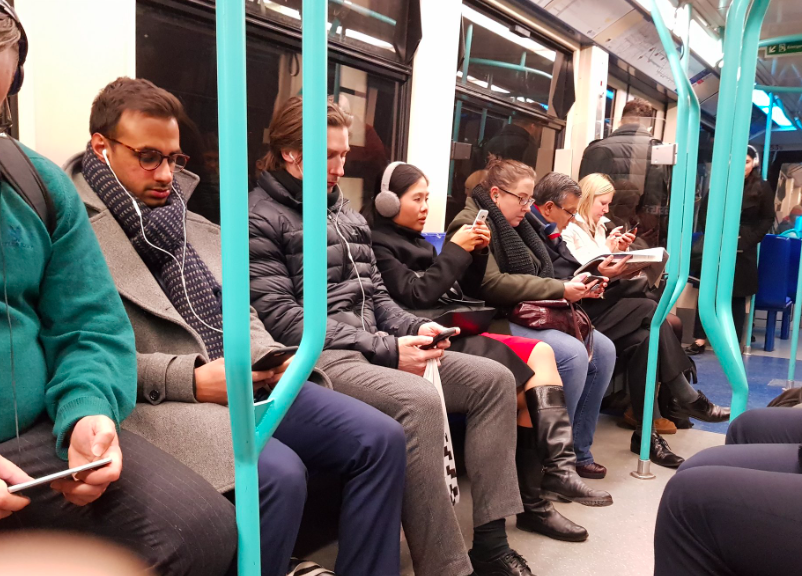
Weapons of mass distraction

Photo by Steve Wheeler
Humans were once untethered, free to wander the world and explore at will. Then came telecommunications, telephones, computers and the internet to transform the ways we could communicate across great distances. But such innovation also tethered people to specific geographical locations.

The invention of the mobile phone liberated us to move freely again, but in doing so, we became tethered in a different, more subtle sense. Now, wherever we gaze in modern, industrialised society, we can see people engrossed in their devices.  Seemingly oblivious to the world around them, many people commute to work each day wearing ear buds and headphones to block out the world around them, their visual attention consumed by the small screen in their hands. The image on this page illustrates the phenomenon. Notice the one person who is reading a traditional paper magazine - this is rare, but raises questions about how large populations can be distracted by technology.

Such mass distraction centres upon the mobile, personal device. Whether it is a smartphone, e-reader or games console, people are willing to invest their full attention to the device in their hands. And personal, mobile technologies come with a social cost. Interpersonal communication may be diverted and relationships compromised as a result of smartphone overuse. Productivity can be lost in the workplace, and individuals may place themselves in physical danger as a result of distraction. The multi-timbral nature of the smartphone gives it the capacity to capture our attention through a wide spectrum of attractions, from music and digital media, games, social media, dating sites, videos and live news streams.

In 2004 Mark Curtis wrote a book titled 'Distraction' which has the strap line 'Being human in the digital age'. In it, Curtis explores the challenges, risks, threats and barriers to good communication due to the propensity of smartphones to transfer our attention from the real world to the virtual world. Such deviations can limit our interaction with those immediately around us, and can also inhibit our engagement with our immediate environment. What are the implications of such mass distraction for the workplace, for home life, and indeed, for any social interactions?

Continues in the next post - Standard Deviation

Reference
Curtis, M. (2004) Distraction: Being Human in the Digital Age. London: Futuretext.

Creative Commons License
Weapons of mass distraction by Steve Wheeler was written in Plymouth, England and is licensed under a Creative Commons Attribution-NonCommercial-ShareAlike 3.0 Unported License.


March 02, 2019

Personal and personalised learning

Photo by Marshall Henrie on Wikimedia Commons
My keynote speech at the nextEd2019 conference in Lisbon was titled 'Personalising learning in the digital age'. I explored some of the older concepts such as personal learning environments, networked learning and desire lines, before moving on to discuss some of the latest thinking around personal learning.

The event, organised by the Open University of Portugal, also featured several of the celebrated veterans of open and distance education, including Terry Anderson (Canada), Alan Tait (UK) and Albert Sangra (Spain), whose talks were highly informative and compelling in equal measure. nextEd2019 was attended by delegates mainly from Portugal and Spain, but was also streamed live to other sites including several in Brazil.

During the plenary session I was asked by a delegate to explain the difference between 'personal learning' and 'personalised learning'. I explained by pointing out the marvellous structure of the
Jerónimos Monastery, just across the road from the conference centre. Having visited there previously, I could see a useful analogy. Personal learning, I explained, is walking across the road and doing an ad hoc tour of the buildings and artefacts to see what I could learn about the history and culture of Jerónimos  Hiring a personal guide who knows a lot more about the history and culture of the place, and touring it with him/her would be personalised learning. I would be scaffolded in my discovery of the place, and I might learn a little more than if I simply wandered around on my own.

Yes, it's probably an oversimplification of the two terms, but I hope it served its purpose.

Creative Commons License
Personal and personalised learning by Steve Wheeler was written in Lisbon, Portugal and is licensed under a Creative Commons Attribution-NonCommercial-ShareAlike 3.0 Unported License.


February 22, 2019

#3quotes from Bruner

Photo by Crabchick on Flickr
In my #3quotes series I have been citing directly from the texts of education thinkers, because it is important to apply ideas and theories in context. Too often, writers cite from theorists using secondary sources instead of delving into the original texts. In this post I will featuring direct quotations from legendary American psychologist Jerome S Bruner, whose work focused on the psychology of learning, pedagogical methods such as instructional scaffolding and the spiral curriculum, as well as social constructivist learning methods.

Bruner placed great emphasis on prior learning, cognitive mapping and the formation of schemas in learning. He argued that what is previously stored in long term memory can be used to pattern match new encounters in the world, whereby the observer constructs new meaning:

"Man constructs models of his world, not only templates that represent what he encounters and in what context, but also ones that permit him to go beyond them. He learns the world in a way that enables him to make predictions of what comes next by matching a few milliseconds of what is now experienced to a stored model and reading the rest from the model." (1973, p 5)

Bruner also held the view that social contexts provided the context for learning. Along with his colleagues, Bruner introduced the notion of instructional scaffolding, and emphasised the social nature of most learning. He says of the child who is learning:

"Although from the earliest months of life, he is a natural problem solver in his own right, it is often the case that his efforts are assisted and fostered others who are more skilful than he is. Whether he is learning the procedures that constitute the skills of attending, communicating, manipulating objects, locomoting, or indeed, a more effective problem solving procedure itself, there are usually others in attendance who help him on his way." (1976, p 89)

Developing his themes around the vital importance of the social contexts of learning, Bruner argues that just about all significant learning derives from the cultures we are immersed within, supported by language and other symbolic codes that we constantly encounter. In 1990, he published Acts of Meaning, in which he writes:

"It is culture, not biology, that shapes human life and the human mind, that gives meaning to action by situating its underlying intentional states in an interpretive system. It does this by imposing the patterns inherent in the culture's symbolic systems - its language and discourse modes [...] and the patterns of mutually dependent communal life." (1990, p 34)

References 
Bruner, J. S. (1973) The Relevance of Education. New York: Norton Company.
Wood, D. J., Bruner, J. S. and Ross, G. (1976). The role of tutoring in problem solving. Journal of Child Psychiatry and Psychology, 17(2), 89-100.
Bruner, J. S. (1990) Acts of Meaning. Boston, MA: Harvard University Press.
Creative Commons License
#3quotes from Bruner by Steve Wheeler was written in Plymouth, England and is licensed under a Creative Commons Attribution-NonCommercial-ShareAlike 3.0 Unported License.


February 21, 2019

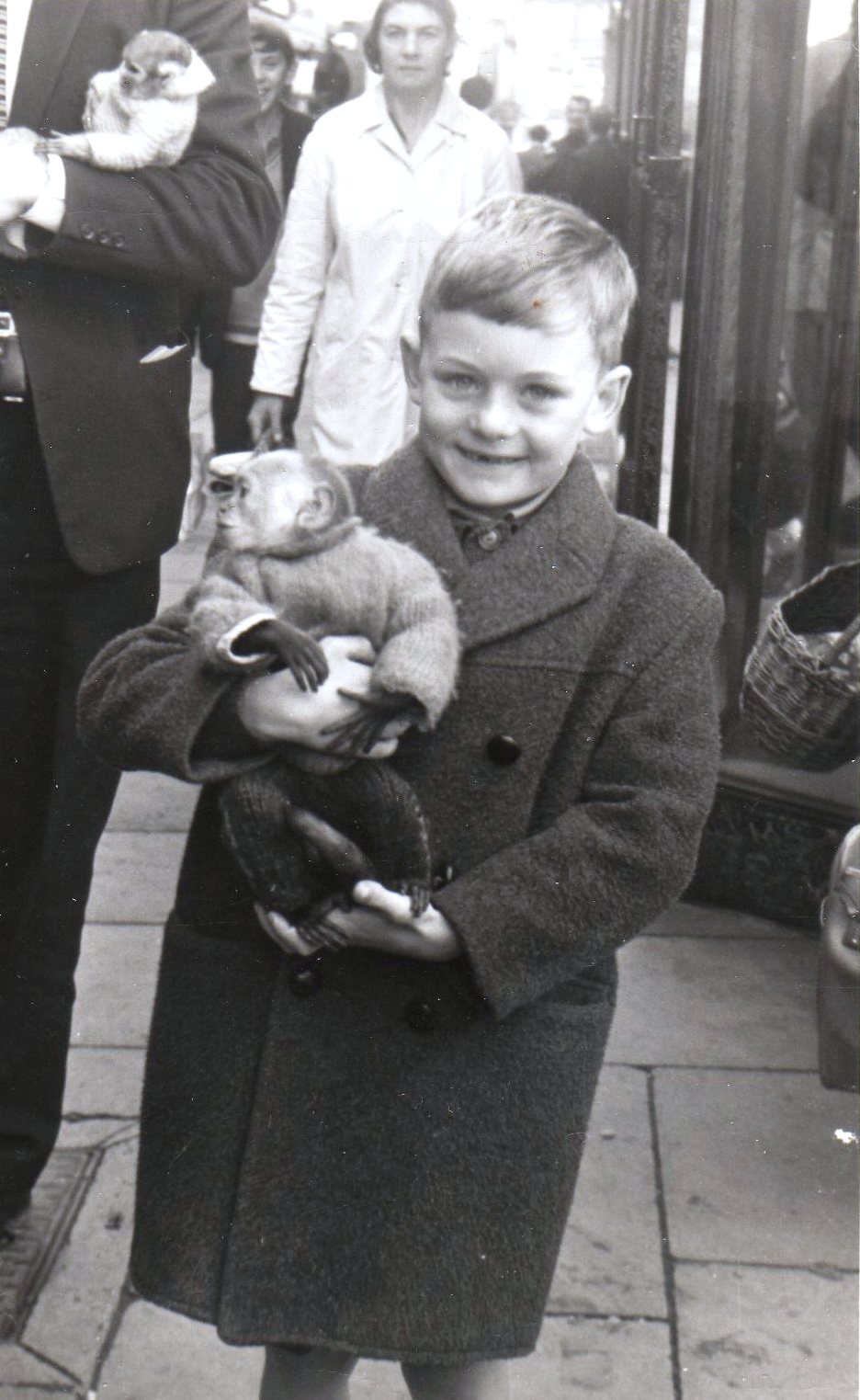
5 year old me

5 year old me in Gibraltar
What would I say to my 5-year-old self? If was to travel back in time and meet myself as a child, just as I was about to enter school for the first time, what advice would I give?

The whole world would be opening up for me, and I would have my entire future ahead. What advice would I give to that 5-year-old version of me?

On reflection, school was an uncomfortable, frightening place where bigger, stronger people told me what I could and couldn't do. I was assigned a desk and a chair, both of which were bolted to the floor, and I was forced to 'face the front' and sit still. That just wasn't me. I was given confusing books and complicated papers to read, and pens and pencils to write and draw with.

I much preferred drawing to writing - and numbers were alien territory for me. I was hopeless at mathematics and science because I couldn't understand the numbers I had to work with. They seemed irrelevant to me and the teachers did very little to make me interested.

I was a sickly child and spent a lot of my time either recuperating at home or in hospital. As a result I lacked confidence and felt a little isolated from the others because of illness.

Most of the other children were bigger than me, and a lot stronger, so I became a target. I was taunted by some kids, who thought that because I was small, I was weak. I was excluded from the 'in groups', the last to be chosen when the teams were picked. Some of the teachers also marginalised me - for asking questions they thought were irrelevant. They also punished me for doing things in the way I thought they should be done, rather than in the way I had been instructed. I was a maverick, an oddball, a loose cannon. I didn't fit in very well with school culture or the peer groups that were all around me.

As a result of all this, I didn't try very hard at school, and I left with hardly any qualifications. Yet importantly, I kept true to myself, remained confident in my own abilities and defiant about the way I wanted to live my life. I wasn't interested in academic studies until I was well into my thirties, when I was already married with three small children to provide for. It was then that I realised I had enough intelligence and drive to be who I wanted to be in life.

If I were to meet my 5-year-old self tomorrow ..... I would tell me that I needn't worry about what others might think about me, and I should ignore the taunting from ignorant peers (and that it doesn't stop when you leave school). I would tell me it would all turn out OK and that I would be more successful in life than a lot of those kids who bullied and excluded me. Most importantly, I would encourage me to ask all the awkward questions, and keep asking until I found answers that satisfied me - or further questions that I could ask to extend my knowledge further. I would tell me not to worry about the things I couldn't do, and to focus on the things I could.

I would tell me to remain a maverick, an oddball, and express myself honestly and courageously, and never pass up the chance to dance, sing .... or cuddle a monkey.

What would you tell your 5-year-old self? The comments box below is open (no, seriously, I would like to hear from you!)

Creative Commons License
5 year old me by Steve Wheeler was written in Plymouth, England and is licensed under a Creative Commons Attribution-NonCommercial-ShareAlike 3.0 Unported License.


February 19, 2019

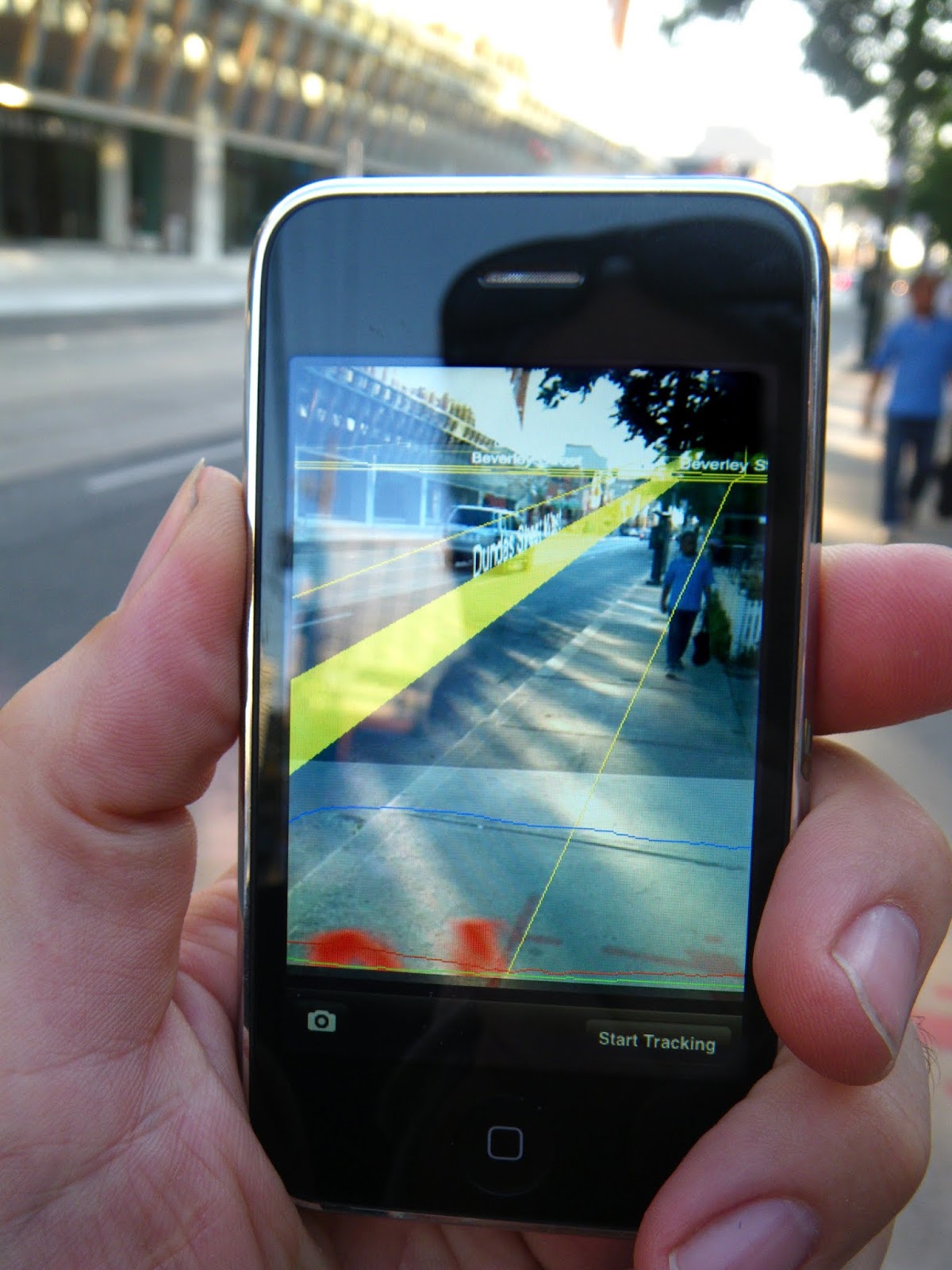
Intervention learning

Photo from Wikimedia Commons
Predictably, the ideas that dominated at Learning Technologies 2019 (#LT19uk) were mostly on new and emerging technologies. Augmented Reality (AR) and Virtual Reality (VR) cropped up several times during sessions across the event. The #LT19uk conference programme revealed that less than a third of organisations appear to have so far adopted any aspects of AR or VR within their learning offers, but of the third that have, there are already some very interesting and productive uses to report.

Day 1 session S2 From Hype to Reality: AR and VR in Action for example, showcased some great case studies from Sponge, The Royal Mail (James Barton) and Finger Foods Studios (Ryan Peterson). James Barton's story of how Royal Mail had worked with Sponge to develop and deploy on the spot training (what I have called 'intervention training') at the point of need, was particularly poignant, and struck a chord with those present.

Imagine you are a postal worker, and you are delivering mail to a street of houses. All goes well until you reach one garden gate and notice that there is a rather large dog loose in the garden. He looks friendly, but you are not sure. What do you do next? Who do you consult? How do you get advice - especially if you are new on the job....? Barton's mention of postal workers being bitten or chased by dogs, at first caused ripples of laughter across the audience. It sounded like a hackneyed line from an old 1970s TV sitcom script.... and then they heard the statistics of hours lost and costs of injuries to the industry, and the personal stories of life changing injuries, scars and psychological trauma .... and the laughter stopped. It's a serious issue for all delivery workers.

Sponge's AR tool works within the user's smartphone, providing additional information as overlays to the live image appearing on screen through the smartphone camera. This can be used in just about any environment, within any context, and in just about any environmental condition. Supporting learning in organisations through these simple yet effective ideas really does help to transform the way people work. Adopting new and emerging technologies does sound daunting to most organisations, but seeing the need and then developing the solution to that need is the way forward. And the support of intervention learning will always be needed, whatever the profession.

NB: An expanded version of the Royal Mail/Sponge case study features in Digital Learning in Organisations (Published by Kogan Page on April 3, 2019).

Related posts
Change, Learning Technologies and the Future
The way we AR

Creative Commons License
Intervention learning by Steve Wheeler was written in Plymouth, England and is licensed under a Creative Commons Attribution-NonCommercial-ShareAlike 3.0 Unported License.


February 15, 2019

Change, Learning Technologies, and the future

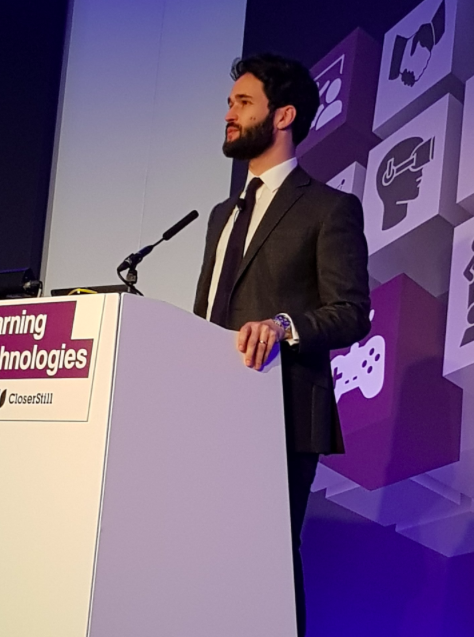
Daniel Susskind - Photo by Steve Wheeler

All change! Attending Learning Technologies in a completely new, yet strangely familiar venue was quite an experience. It was akin to welcoming an old friend to live in your own home and watching them struggle to work out where the coffee is stored, and how the dodgy 'fridge door works. London ExCel has long been the home of the BETT Show, which I have attended on many occasions, but in the last few days it has also been the new home of Learning Technologies, which for umpteen years has been hosted at Olympia, on the other side of the city. ExCel is very familiar to me, but for the conference, it will take a little time to adapt.

I arrived with a great deal of anticipation, because Learning Technologies always holds a lot of promise. And it didn't disappoint. I want to note some of the reasons why Learning Technologies is set to grow and gain more importance as it makes the ExCel Centre its new home.

Firstly, there are the people. They travel from everywhere to be together for two days of intense discussing, thinking, collaborating and creating. So many great experts and professionals gather each year from all corners of the globe, and the dialogue is so rich, it is hard not to see Learning Technologies continuing to grow and remain relevant. Old friends I met with include Andrew Jacobs, Jane Hart, David Wilson, Ger Driesen, Jo Cook, Niall Gavin, Laura Overton, Andy Wooler, Nigel Paine, Annie Garfoot and Michael Strawbridge, and from across the pond Jane Bozarth, Will Thalheimer, Cathy Moore, Shannon Tipton and Marcia Connor. It was also great to make new friends, including Hannah Gore, Ezzy Moon, Mirjam Neelen, Trish Uhl, Barbara Thompson, Nik Welch and Anthony Williams. These are all great people who deserve larger audiences for their ideas..... and.... I have probably left out loads of people, for which I apologise!

The there is the content. Here are just a few of the standout highlights: The opening address by Dr Daniel Susskind (Fellow at Balliol College, Oxford University, pictured above) titled: The future of work: technology, myths and the importance of learning. In this erudite and fast paced presentation Daniel discussed how the working world of the future might be shaped by new and emerging technologies. He scotched several of the myths around the introduction of robotics and AI in organisations, and argued that work will be very different in the future from what we know today. He showed that anxieties about change and new technologies have always been with us, but that we adapt and change to meet the challenges continually. He concluded by stating that these changes will not mean the demise of corporate learning and development, but will mean that learning at the point of work will be even more important for the survival of our organisations.

Other stand out sessions also dealt with digital transformation (Euan Semple), new and emerging trends and technologies (Redthread's Dani Johnson, E-learning Guild's David Kelly), AR and VR in action (Ryan Peterson, James Barton), Digital learning innovation (Rob Hubbard) and game design in L and D (Karl Kapp). As ever there were far more sessions to attend than could humanly be possible, but following the excellent backchannel team led by Fosway's Kate Graham helped everyone to keep track of what was going on in sessions they couldn't physically attend. Each session had its own hashtag, but the generic hashtag to seek on Twitter for a summary of everything is #LT19uk.

Finally, my personal view is that Learning Technologies is growing in influence, and in particular, with many new delegates attending for the first time, word is getting around that the event is valuable for learning and development professionals worldwide. The scope for expansion of the event is massive. LT19uk only took up one 8th of the space available for exhibitions, and the conference rooms occupied are also a fraction of those available within the vast building. It would only be a lack of innovation and imagination on the part of the organisers that would prevent the event from growing, both in influence and numbers. But event chair Donald H Taylor and his organising team have more than enough of both, so I predict Learning Technologies has a bright future.

Creative Commons License
Change, Learning Technologies, and the future by Steve Wheeler was written in Plymouth, England and is licensed under a Creative Commons Attribution-NonCommercial-ShareAlike 3.0 Unported License.


February 13, 2019

#3quotes from Holt

Image from Wikimedia Commons
In this series called #3quotes I have been citing directly from the texts of education thinkers, because it is important to apply ideas within context. Too often, writers cite from theorists without delving into the original texts. In this post I feature the American educator John Holt. Holt was best known for his progressive approach to education, and his criticisms of state-funded school systems. I have drawn three quotes from his 1983 classic How Children Learn (first published in 1964) and have added some additional commentary.

Holt sees a steady decline in the quality of state-funded schools, seeing them as industrialised processes where children are a part of the product of what is termed 'education'. Referring to the time when he wrote his original edition of the book, he says:

"Schools are on the whole bigger than they used to be, more depersonalised, more threatening, more dangerous. What they teach is more fragmented than it was [...] i.e. not connected with anything else, and hence meaningless. [...] The schools cling more and more stubbornly to their mistaken idea that education and teaching are industrial processes, to be designed and planned from above in the minutest detail and then imposed on passive teachers and their even more passive students." (Preface xiii)

Holt offers up several remedies for this malaise, essentially through the development of better relationships between children and teachers, and more effective, child-centred methods of pedagogy. He sees the great value of games of any kind, which children understand, and how these can be incorporated into formalised learning. He relates the story of one little girl called Lisa, who invented a simple game of placing and replacing an object, that he joined in with:

"But even in a more narrow sense games like those I played with Lisa are educational. They give a child a strong sense of cause and effect, of one thing leading to another. Also, they help a child to feel that he makes a difference, that he can have some effect on the world around him. How exciting it must be for a child, playing a game with an adult, to feel that by doing a certain thing, he can make that omnipotent giant do something, and that he can keep this up for as long as he likes." (p 34)

Holt saw the need to differentiate between the learning we do as adults and that experienced by very young children. Schooling in its widest terms, he believed, was damaging to children because it taught them to be less intuitive and prevented them from freely exploring their world.

"Where the young child, at least until his thinking has been spoiled by adults, has a great advantage is in situations - and many, even most real life situations are like this - where there is so much seemingly senseless data that it is impossible to tell what questions to ask. He is better at taking in this kind of data; he is better able to tolerate its confusion; and he is much better at picking out the patterns, hearing the faint signal amid all the noise." (p 75)

Holt's work has been criticised and praised in equal measure. His progressive stance is not every teacher's ideal, but he invariably presented keen insight into the ways children learn, based on his own personal research and observations.

Reference
Holt, J. (1983) How Children Learn (Revised Edition), New York: De Capo Press.

Previous posts in the #3quotes series
Paulo Freire
Ivan Illich
John Dewey
Lev Vygotsky
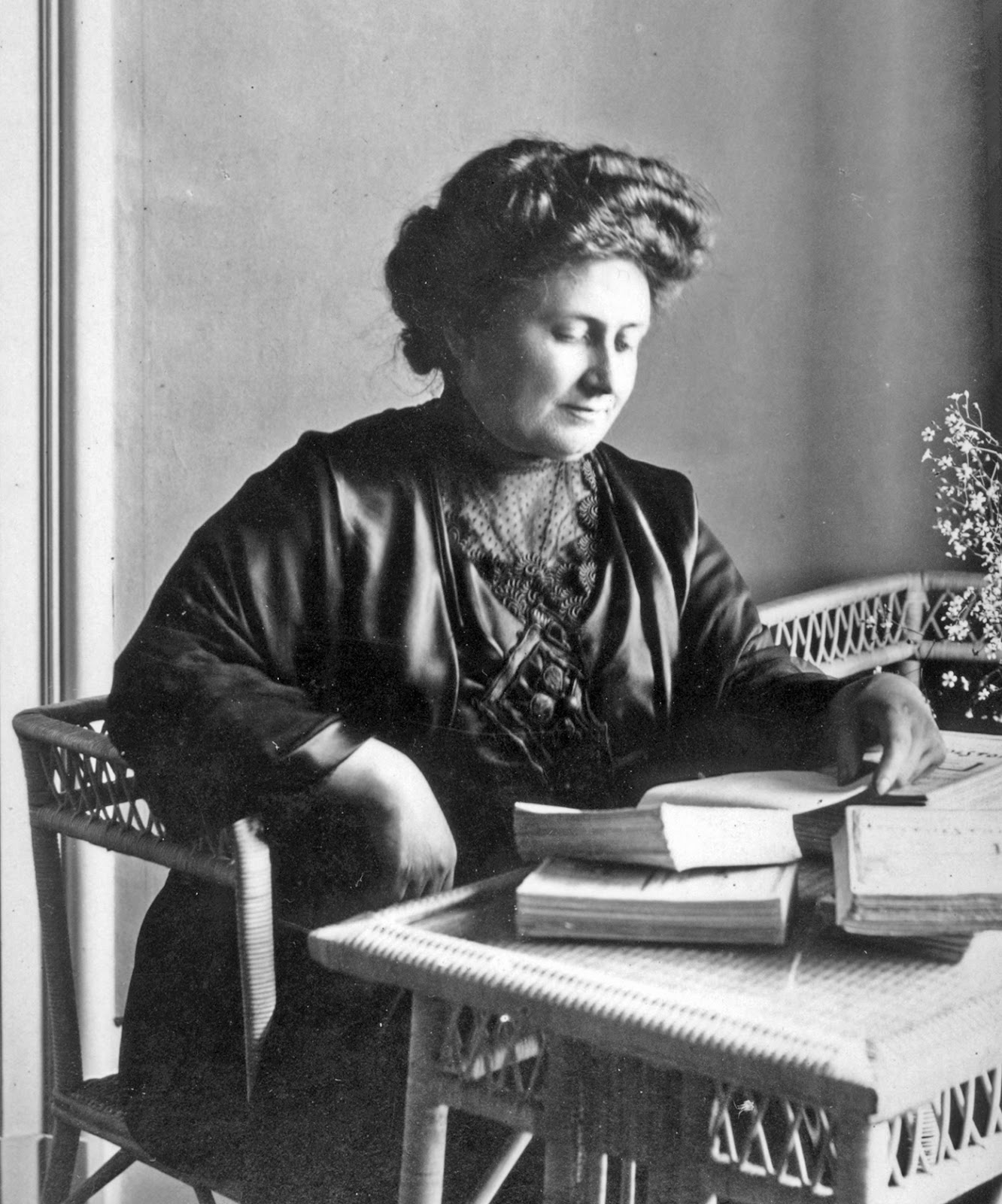
Maria Montessori
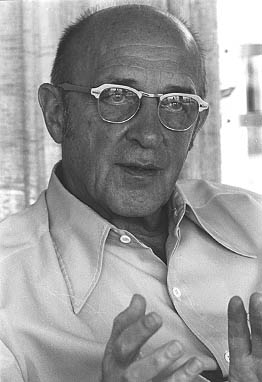
Carl Rogers

Creative Commons License
#3quotes from Holt by Steve Wheeler was written in Plymouth, England and is licensed under a Creative Commons Attribution-NonCommercial-ShareAlike 3.0 Unported License.


February 11, 2019

March of the robots

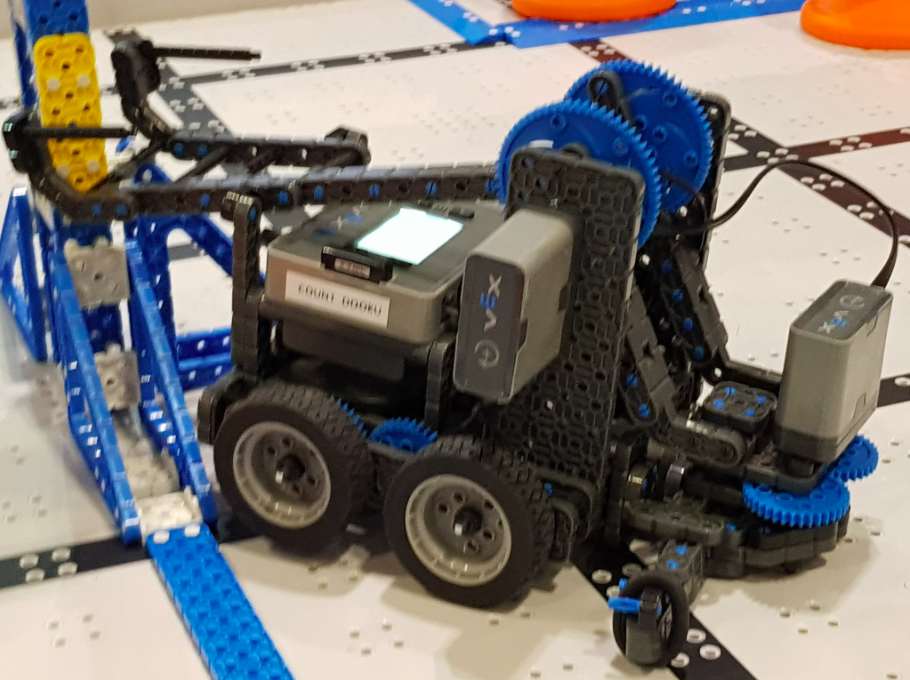
Photo by Steve Wheeler
Anyone who has ever attended the BETT Show will tell you it is vast, chaotic and very commercial. The latter is inevitable, because BETT is a free-entry event, and someone has to pay to make sure the four day education show happens. BETT was bigger than ever this year, with more vendors and more visitors, overspilling into an additional space across the corridor from the usual trade show venue.

As I wandered around the show this year, skilfully sidestepping the ministrations of a host of staffers dressed up as grizzly bears, transformers and astronauts, all trying to sell me their latest shiny toys, and politely refusing their offers of glossy brochures and leaflets, I noted that the most predominant displays seemed to feature robots. Yes, BETT 2019 definitely featured more robots than just about any other educational technology.

There are technologies and tools, and then there are toys. A few of the robots I saw were potentially useful tools to promote interesting and engaging pedagogy, but some seemed to do nothing more than follow a black line around in circles. The ones that were actually programmable came in various shapes and sizes, and many had the potential to encourage coding, computational thinking and problem solving. I could also envisage how they might be deployed in classrooms to encourage students to actively pursue a range of learning in diverse subjects.

Perhaps the most impressive of the range of educational robots on offer was the unit pictured above. According to its company website VEX Robotics provides tools to inspire problem solvers of the future.  Students design and build similar robots from kits, investing creativity into their designs, and then they program them to perform a variety of tasks that are mapped against the curriculum. There is plenty of guidance and support o offer for teachers, and the ultimate goal is to get children interested in learning maths, science and other subjects through building, making and problem solving. This resonates with the constructionist beliefs of Seymour Papert, Mitch Resnick (who spoke at BETT this year), and also those involved in FABLabs and the makerspace movement.

I just wish we were able to build and program robots when I was in school. I would have turned up for every lesson.

Creative Commons License
March of the robots by Steve Wheeler was written in Plymouth, England and is licensed under a Creative Commons Attribution-NonCommercial-ShareAlike 3.0 Unported License.


February 09, 2019

#3quotes from Rogers

Image from Wikimedia Commons
Although he originally practised as a psychotherapist, Carl Rogers was intensely interested in education. His 1969 publication Freedom to Learn is now considered a classic of education. It was certainly required reading during my own teacher training. Rogers' approach to both psychotherapy and education was humanistic and thus person-centred. His view on learning was that children needed to be fully engaged rather than passive in the classroom:

"It is most important to me to make learning experiences meaningful and personal by encouraging the children to use their minds rathe than simply accept information. I want to challenge the one dimensional viewpoint and offer alternative ways of experiencing the world. In this way, I hope each child can feel in part responsible for his or her own learning experience." (p 113)

Note also, the idea that children should be encouraged to take responsibility for their own learning, rather than act passively as receptacles to be filled with knowledge. His searing criticisms of conventional education systems pervades his writing, his concerns expressed clearly and succinctly:

"When we put together in one scheme such elements as a prescribed curriculum, similar assignments for all students, lecturing as almost the only mode of instruction, standard tests by which all students are externally evaluated, and instructor chosen grades as the measure of learning, the we can almost guarantee that meaningful learning will be at an absolute minimum." (p 21)

This clearly resonates in today's state funded education systems, where all of the above elements combine to make create environments that militate against quality learning outcomes. Yet Rogers does not leave his readers bereft, but offers several alternatives that promote engaged, meaningful and above all, holistic learning:

"Education has traditionally thought of learning as an orderly type of cognitive, left-brain activity. [...] But to involve the whole person in learning means to set free and utilise the right brain as well. [...] Significant learning combines the logical and the intuitive, the intellect and the feelings, the concept and the experience, the idea and the meaning. When we learn in that way, we are whole, utilising all our masculine and feminine capabilities." (p 20)

Rogers was also known for a range of other progressive approaches to education, including unconditional positive regard for all learners, student-led learning, and freedom of expression, movement and activity within classrooms.

Reference
Rogers, C. R. (1983 edition) Freedom to Learn. Columbus, OH: Charles Merrill Publishing.

Previous posts in the #3quotes series
Paulo Freire
Ivan Illich
John Dewey
Lev Vygotsky
Maria Montessori

Creative Commons License
#3quotes from Rogers by Steve Wheeler was written in Plymouth, England and is licensed under a Creative Commons Attribution-NonCommercial-ShareAlike 3.0 Unported License.


February 08, 2019

#3quotes from Montessori

Image from Wikimedia Commons
Maria Montessori is a controversial figure in education. She is considered by many to be a true visionary, while others consider her methods to be detrimental. She was highly critical of formalised education systems and believed they actually obstructed children's potential to learn. She saw transmission methods of teaching as a great travesty, and worked incessantly to create alternative methods of education that were more child centred and which led to greater levels of engagement with learning. In her widely read and cited book The Montessori Method, she outlines some of the drivers in her radical reworking of education:

"Often the education of children consists of pouring into their intelligence the intellectual content of school programmes. And often these school programmes have been compiled in the official department of education, and their use is imposed by law upon the teacher and the child. Ah, before such dense and wilful disregard of the life which is growing within these children, we should hide our heads in shame and cover our guilty faces with our hands!" (p 48)

Montessori was particularly vocal about what we now term 'behaviour management'. She opposed the 'sit still and face the front' approach and advocated that children could and should move freely around as they learned. She saw discipline not as something imposed upon the child, but rather something the child learnt to adopt within their own self mastery journey:

"We call an individual disciplined when he is master of himself and can, therefore, regulate his own conduct when it shall be necessary to follow some rule of life. Such a concept of active discipline is not easy to comprehend or to apply. But certainly it contains a great educational principle, very different from the old-time absolute and undiscussed coercion of immobility." (p 78)

Maria Montessori was especially keen to promote what she called 'education of the senses,' where teachers facilitate exposure of all the senses to stimuli with the aim of helping children to experience the world around them. This is not confined to the 'five senses' but also extends to sensing of weight, resistance, movement, balance, temperature, space and other senses.  In this way she believed that a holistic education of the entire body, mind and spirit could be achieved:

"We have been mistaken in thinking that the natural education of children should be purely physical; the soul, too, has its nature, which it was intended to perfect in the spiritual life, - the dominating power of human existence throughout all time. Our methods take into consideration the spontaneous psychic development of the child, and help this in ways that observation and experience have shown us to be wise." (p 269)

Reference
Montessori, M. (2008) The Montessori Method. Blacksburg, VA: Earth Angel Books.

Previous posts in the #3quotes series
Paulo Freire
Ivan Illich
John Dewey
Lev Vygotsky

Creative Commons License
#3quotes from Montessori by Steve Wheeler was written in Plymouth, England and is licensed under a Creative Commons Attribution-NonCommercial-ShareAlike 3.0 Unported License.


February 06, 2019

#3quotes from Vygotsky

Russian psychologist Lev Vygotsky is revered as a notable pioneer of research into learning and cognitive development. Although his writings were suppressed in the West for several decades, they eventually emerged in the 70s, representative of a progressive view of constructivism, in which the social was seen as a major influence on learning.

His seminal work Mind in Society (1978) has been widely cited although not widely read, but it is important to draw Vygotsky's ideas from their origin. Here are three key quotes directly taken from Mind in Society and some of my interpretation of their meaning and context:

"...learning as it occurs in the preschool years differs markedly from school learning, which is concerned with the assimilation of the fundamentals of scientific knowledge. [...] Learning and development are interrelated from the child's very first days of life." (p 84)

Here, Vygotsky is concerned with the whole development of the child, viewing schooling as a formal stage but not the entire story of a child's development. He saw children as individuals and unique in their abilities and levels of maturity. Perhaps his most famous contribution to our understanding of learning - the zone of proximal development (ZPD) - is seen by Vygotsky as a tool to differentiate between individual states of development. Often the ZPD is viewed as a means to standardise education, but Vygotsky never intended this. He writes:

"...the zone of proximal development permits us to delineate the child's immediate future and his dynamic developmental state, allowing not only for what already has been achieved developmentally but also for what is in the course of maturing." (p 87)

Vygotsky goes on to describe two children who were identical in age and developmental level, but whose developmental dynamics were entirely different. Finally, Vygotsky emphasises the social contexts for learning at all levels and implies the important role teachers can play:

"Every function of a child's cultural development appears twice: first, on the social level, and later, on the individual level; first between people (interpsychological), and then inside the child (intrapsychological). This applies equally to voluntary attention, to logical memory, and to the formation of concepts. All the higher functions originate as actual relations between human individuals." (p 57)

From this statement we can envisage a useful, pragmatic perspective on the central role of teachers.  Although they are there to teach, within this role is the need to reach out to the child, placing importance on relationship formation. Children learn better when they develop a connection with their teachers - and this is a vital factor at all levels of education.

Reference
Vygotsky, L. S. (1978) Mind in Society: The Development of Higher Psychological Processes. Cambridge, MA: Harvard University Press.

Previous posts in the #3quotes series
Paulo Freire
Ivan Illich
John Dewey

Creative Commons License
#3quotes from Vygotsky by Steve Wheeler was written in Plymouth, England and is licensed under a Creative Commons Attribution-NonCommercial-ShareAlike 3.0 Unported License.


February 05, 2019

#3quotes from Dewey

One of the most valued books in my personal library was first published over a hundred years ago, in 1916. It's by John Dewey and is called Democracy and Education. One of the first things I learnt from reading Dewey, is that we don't teach subjects, we teach people. Dewey opposed the mechanistic methods of education that were prevalent in his day, proposing (then) radical solutions. His thoughts about the nature of education extend to what cannot be taught, but is learnt by experience:

"There is the standing danger that the material of formal instruction will be merely the subject matter of the schools, isolated from the subject matter of life-experience. [...] Thus we reach the ordinary notion of education: the notion which ignores its social necessity and its identity with all human association that affects conscious life, and which identifies it with imparting information about remote matters..." (p 9)

Dewey goes on the discuss the false separation between formal and informal learning, knowledge and skills, and warns that technical and academic knowledge, if divorced from real-life experience and personal application, can be fairly vacuous. In the language of the early 20th Century, Dewey is essentially calling for situated learning, where education can be directly applied to everyday experiences. The connection between technical/academic knowledge and every day life are vital, Dewey believed in a balanced and engaging curriculum, because:

"The knowledge that first comes to persons, and that remains most deeply ingrained, is knowledge of how to do; how to walk, talk, read, write... [...] When education, under the influence of a scholastic conception of knowledge which ignores everything but scientifically formed facts and truths, fails to recognise that primary or initial subject matter always exists as a matter of an active doing, involving the use of the bodying the handling of material, the subject matter of instruction is isolated from the needs and proposes of the learner, and so becomes just a something to be memorised and reproduced on demand." (p 103)

Such criticism seems still to resonate today, given the emphasis we see placed on didactic, performative and STEM biased curriculum in mainstream state-funded schools. Dewey also has a lot to say about differentiation and the individuality of students in schools. He is opposed to the emphasis on academic delivery of content to the detriment of arts and vocational based subjects:

"We indiscriminately employ children of different bents on the same exercises; their education destroys the special bent and leaves a dull uniformity. Therefore, after we have wasted our efforts in stunting the true gifts of nature we see the short-lived and illusory brilliance we have substituted die away, while the natural abilities we have crushed do not revive." (p 65)

This is a searing reprimand for mass education. It's clear from the above quotes that Dewey abhorred the pressures placed on children by schools, and was a great advocate of students as individuals, supported active engagement in learning, and favoured a balanced authentic curriculum that could be applied to real life. Even though it is more than one hundred years since the book was published, Dewey's ideas are just as relevant today as the day they were written.

Reference
Dewey, J. (originally published in 1916 - this edition 2011) Democracy and Education. Milton Keynes: Simon and Brown.

Previous posts in the #3quotes series
Paulo Freire
Ivan Illich

Creative Commons License
#3quotes from Illich by Steve Wheeler was written in Plymouth, England and is licensed under a Creative Commons Attribution-NonCommercial-ShareAlike 3.0 Unported License.


February 02, 2019

#3quotes from Illich

This is a continuation of my short blog series on 3 quotes from seminal education writers. Today, I feature the anarchist education theorist Ivan Illich.

For many, Ivan Illich remains one of the sternest critics of compulsory mass education. His controversial volume Deschooling Society (1970) was a radical, neo-Marxist perspective on the control exerted upon society by oppressive education systems. It was also a progressive manifesto for change, where he espoused 'Learning Webs' (the title of Chapter 6) as a viable alternative to 'educational funnels'. Learning should not be contained, but should transgress the boundaries of the traditional classroom, he believed, utilising new technologies to provide people everywhere with access to personal, democratised learning pathways.

"What are needed are new networks, readily available to the public and designed to spread equal opportunity for learning and teaching. {..} Technology is available to develop either independence and learning or bureaucracy and teaching." (p 77)

Illich proposed several kinds of learning network that included learning resource services, peer-matching and skill exchanges. Ostensibly, he wasn't calling for the demise of schools, nor did he oppose education. He was instead bemoaning the long-lasting detrimental effects traditional schooling exerts on individuals in society, suggesting that dependence on authority led to social regression. He opposed the notion that teachers and experts had the monopoly on knowledge. He argued that the elite manner in which knowledge was presented was a constraint on freedom of expression, and that schooling was the edifice from which this lie emanated:

"Schools are designed on the assumption that there is a secret to everything in life; that the quality of life depends on knowing that secret; that secrets can be known only in orderly successions; and that only teachers can properly reveal these secrets. An individual with a schooled mind conceives of the world as a pyramid of classified packages accessible only to those who carry the proper tags." (p 76)  

For Illich, schooling produced generations of people who were unable to progress without the prerequisite accreditation. They were constrained in their thinking and were ill-equipped, often unwilling to fulfil their own educational needs once they had entered into the world of work.

Similar to other progressive education theorists, Illich saw the centrist role of teachers as a root of the problems of society. Learning, he believed was a natural expression of being human, and this was being stifled in transmissive and teacher controlled environments such as formal classrooms. On the nature of human learning he wrote:

"....learning is the human activity which least needs manipulation from others. Most learning is not the result of instruction. It is rather the result of unhampered participation in a meaningful setting. Most people learn best by being 'with it,' yet school makes them identify their personal, cognitive growth with elaborate planning and manipulation." (p 39)

Illich was also a champion of personalised learning. Throughout Deschooling Society there are numerous claims about the effectiveness of self-determined learning, and eulogising over personal learning pathways. What we needed, he argued was life-long learning, instead of life-long institutionalisation. Illich continues to be controversial half a century later, but there is no doubt that his vision of a world wide, democratically organised learning web was prescient.

Reference
Illich, I. (1970) Deschooling Society. London: Marion Boyers Publishers.

Previous posts in the #3quotes series
Paulo Freire

Creative Commons License
#3quotes from Illich by Steve Wheeler was written in Plymouth, England and is licensed under a Creative Commons Attribution-NonCommercial-ShareAlike 3.0 Unported License.


January 31, 2019

#3quotes from Freire

One of the most valued books in my personal education library is Pedagogy of the Oppressed (1970) by the Brazilian educator Paulo Freire. If you are a teacher but haven't yet read it, I thoroughly recommend it - this book is a game changer. Here I present some of my annotations to accompany three classic quotes from the book, to get you started:

Freire is critical of the transmission method found in schools, in which what he calls the 'banking concept', is consistently applied. This is where teachers play the role of the 'knowledgable', and students adopt the role of the 'ignorant'. It's a prevalent technique that teachers everywhere can fall into the trap of perpetrating on their students. He writes that this assumption

"... turns them into 'containers', into 'receptacles' to be 'filled' by the teacher. The more completely she fills the receptacles, the better a teacher she is. The more meekly the receptacles permit themselves to be filled, the better students they are." (p 53)

It's interesting to see how this approach in schools is currently welcomed and actively encouraged by governments who wish to see teaching 'done' to students, and to gather data about how much students can recall the information they have had deposited in their receptacles - as measures of 'effective' education. Freire isn't finished with his demolition of schooling though. He believes that the transmission method of education is undergirded by an ideology of control and oppression. It comes from assumptions that students are devoid of knowledge and that teachers are the arbiters of knowledge:

"Projecting an absolute ignorance on others, a characteristic of the ideology of oppression, negates education and knowledge as processes of inquiry." (p 53)

The tragedy of students accepting this passive recipient role, says Freire, is that they never discover that they are in turn educating their teacher. Education should be dialogical, he argues, for the benefit of all. As a desirable alternative to the transmission mode of teaching, Freire recommends dialogic, narrative forms of pedagogy and what he terms 'problem-posing education' where students are confronted with challenges to actively engage with. Freire is adamant that teaching and education should allow everyone to grow, and freely learn to reach their potentials, and in so doing shrug off oppression:

"The teacher is no longer merely the-one-who-teaches, but one who is himself taught in dialogue with the students, who in turn while being taught, also teach. They become jointly responsible for a process in which all grow." (p 61)

I welcome this approach and the ethos that guides it.

NB: In upcoming posts I aim to feature #3quotes from several more of my favourite education classics.

Reference
Freire, P. (1970) Pedagogy of the Oppressed. London: Penguin.
Creative Commons License
#3quotes from Freire by Steve Wheeler was written in Plymouth, England and is licensed under a Creative Commons Attribution-NonCommercial-ShareAlike 3.0 Unported License.


January 29, 2019

A pain in the Arts

Photo by Steve Wheeler
In yesterday's post about the BETT Show, I wrote about how people are the most important element of the massive education trade show. I met up with many old friends and colleagues during the 3 days I was at the show, and especially enjoyed catching up with some I had worked with during my time at Plymouth University. One, James Bettany, is still teaching there, and we spent a good two hours together reminiscing, and exchanging news. James mentioned to me that he intended to go to hear a talk on the arts in education after lunch, so I said I would accompany him. I'm very glad I did. It turned out to be one of the highlights of my BETT2019 experience.

The venue (which was far too small) was packed so full of teachers there was not even any standing room at the back. The reason for the popularity of the talk? It was a fabulous double act of writer and poet Michael Rosen, and Hollywood actor Jason Isaacs. In a session titled 'Literacy, Social Mobility and the Arts' the interviewer asked them questions about their early school life, their views on education and how they had managed to become successful in the arts world. The responses were pithy, challenging, entertaining and inspirational. Both were fairly scathing about the current government's management of the school system, and both in equal measure were critical about the state of education in particular.

Isaacs, who starred as villain Lucius Malfoy in the Harry Potter films, said: "It breaks my heart that children are required to sit day after day in classrooms, being taught sh*t they will never need, and then to be tested regularly on it." Isaacs said that although he had been taught at length about ox-bow lakes in school, he had never needed that knowledge in real life. Most of us could say the same - for me it was quadratic equations and sines, cosines and tangents. The curriculum could certainly do with an overhaul.

Rosen, who is professor of children's literature at Goldsmiths University, was equally belligerent about the way schools are required to focus on STEM at the expense of the arts. He argued that learning from the arts promotes analogy and reinterpretation. Rosen argued that these are important for whole brain development. "Somehow, we've lost that in arts teaching in schools" he added, concluding "You can't predict when or where you'll need the arts to help you interpret your world - but you will." 

Both complained that current governments are more interested in the metrics of success - where measurement of the observable is considered important, but that unmeasurable and unobservable outcomes are being ignored. It is in the unmeasurable, Isaacs believed, that we find the skills and attitudes we all need to thrive in society. Both talked eminent sense about their view of what education can, and should be, and in their entertaining interactions with each other, left the entire audience with the impression that there is a great deal of work to do to reform a broken system, but that teachers can make a difference in keeping the arts alive in education.

Creative Commons License
A pain in the Arts by Steve Wheeler was written in Plymouth, England and is licensed under a Creative Commons Attribution-NonCommercial-ShareAlike 3.0 Unported License.


January 28, 2019

People at #BETT2019

Photo by Steve Wheeler
I'm just back from another BETT Show, and I intend to write some reflections on what I saw, heard and experienced in future posts. Watch this space. But first, I want to write about the most important element....

For me, the highlight of every BETT Show is not the vendors, nor is it the shiny technology - it's the people. The London Excel centre is a vast warehouse of space, and it takes a long time to wend your way across its acres of carpet. But at just about every corner, I bumped into an old friend or two. It was heart warming to rub shoulders again with so many passionate and committed educators, and to exchange ideas and inspirations. The Friday evening TeachMeet, held in the adjacent tapas bar, was as ever a true delight. Ably hosted by Dawn Hallybone and Ian Usher, with support from Drew Buddie and Bill Lord, the BETT 2019 TeachMeet was a cavalcade of great ideas, thought provoking stories, wine drinking, networking, and a lot of entertainment.

It's encouraging to see that in spite of all the economic stringencies, government meddling and the undermining that comes from above, teachers remain resilient, innovative, creative and passionate in their work.

In notice on Twitter that there have been calls for fringe events at future BETT Shows. Well, TeachMeet is THE fringe event. It does exactly what it says on the can - it's a place where teachers meet, have a few drinks, make new friends and share powerful and potentially life-changing ideas - to ensure the education of our young people is engaging, relevant and has impact. Teachmeet deserves more support than it already attracts from teachers who attend the Show each year. Thanks to everyone who took part, and for all those who spent time organising the event.

Live long and prosper, BETT TeachMeet. May you continue to grow from strength to strength.

NB: BETT Show 2020 will be at the Excel Centre, London, between 22-25 January.

Creative Commons License
People at #BETT2019 by Steve Wheeler was written in Plymouth, England and is licensed under a Creative Commons Attribution-NonCommercial-ShareAlike 3.0 Unported License.


January 22, 2019

Breaking the rules, banana cake and Brexit

Image from Pexels
Here's a quote for you to consider: "Rules are for the guidance of wise men and the obedience of fools." It has been variously attributed to World War 2 RAF fighter ace Douglas Bader, entrepreneur Sir Richard Branson and inevitably, Albert Einstein. All of these were notorious for breaking or bending the rules, in various ways throughout their careers, and we are grateful that they did. It doesn't matter about the origin of the quote - it resonates with mavericks, non-conformists and the 'crazy ones' who would rather get things done than be constrained by 'rules'.

I saw a tweet earlier today where Tobias Elwood, a British Member of Parliament reported he had made a banana cake. According to his cookbook, the bake would take 20 minutes, but Elwood decided that to gain the best possible results, he would need to bake it for 30 minutes. He said: "It was a big decision - honouring the cookbook or take more time to get the right result." It must have been good. The little chap in the picture below is clearly enjoying it.

Clearly, in the current political climate, Elwood is using his tweet as a metaphor for the Brexit crisis that is currently gripping the UK, but it could equally be applied to education. Do we wish to follow the rules or do we wish for the best results. Sometimes the two are interdependent, but increasingly, in this unpredictable world, where things are changing rapidly, perhaps we need to be a little more flexible.

How many times have we seen teachers insisting on children obeying 'the rules'? No, I'm not referring to the topical school uniform debate, nor am I alluding to behavioural management. I'm taking about the general, day to day learning that takes place in classrooms all over the world. I'm highlighting the problems that occur when teachers insist that there is only one 'right way' to calculate in maths, construct a sentence, paint a picture, or solve a problem. Children find all sorts of ways to circumvent 'rules'. Their minds are fertile and malleable enough to imagine numerous possibilities where adults can see only one.

When I was 9 years old, I was taken to the head teacher's office because I had written my number 8 as two circles, joining. The teacher insisted that I write an eight as a flowing figure in one sweep. I found it difficult, so developed my own way to write eights as two circles. It looked OK to me, took less time, and served its purpose, but Miss was angry that I was disobeying her instructions. I spent the following week, every break time and lunchtime, writing out figure eights, while I inhaled the headteacher's cigar smoke. I learnt very little about maths that week, but I did learn that I was even more determined to do it 'my way', and I also learnt to avoid cigar smoke as much as possible. I don't think I turned out too badly, even if I am still a non-conformist. My entire career has been defined by 'breaking' and bending the rules, because, rules are for the guidance of.....

I often wonder whether schools are there to inculcate rules, or to encourage children to think for themselves. 

Creative Commons License
Breaking the rules, banana cake and Brexit  by Steve Wheeler was written in Plymouth, England and is licensed under a Creative Commons Attribution-NonCommercial-ShareAlike 3.0 Unported License.


January 17, 2019

Spilt milk

Photo by Newtown Graffiti on Flickr 
Accidents will happen. And occasionally, maybe they should. Accidents are not welcome in most schools. Children are usually told to be more careful and 'not to do it again' when mishaps occur. Yet accidents can often be just as important in our education as learning knowledge and skills. What's more, they probably prepare students for a world of work where mistakes may not necessarily be a bad thing. Reflect for a moment on some of the serendipitous events that have led to really useful and sometimes indispensable inventions:

The first that comes to mind is the discovery of a lifesaving new medicine. In 1928 the microbiologist Alexander Fleming was researching to discover a miracle drug that could act as a universal cure. It wasn't until he threw away his experiments that he discovered what he had been searching for. He noticed that in one of his discarded Petri dishes was a mould that was killing all of the bacteria around it. And so Penicillin was discovered. I'm personally allergic to the stuff, but it has saved countless lives that would otherwise have been lost.

Another mishap led to the invention of a revolutionary new cooking device way back in 1945. Percy Spencer, who was working as an engineer at Raytheon, was conducting research using a vacuum tube into the use of radar. As we was working, Spencer noticed that a chocolate bar in his pocket had melted, causing a nice stain on his clothing. So he put some corn into the machine. As it started to pop, he knew he had discovered a revolutionary new effect. What would we do without microwave ovens in the modern kitchen?

One more example of new ideas caused by failure and in this case, carelessness - was the invention of an indispensable office device. During an otherwise normal working day, a Canon engineer accidentally placed his pen on top of a hot soldering iron. Within seconds, ink was being ejected from the pen, and he investigated further. Ultimately, this small act of carelessness led to the invention of a device many of us now rely upon - the ink jet printer.

It's important for children to develop competencies, but they should also be given some latitude to experiment, occasionally get things wrong, and explore new ways of doing those things. Who knows what budding inventors and scientists you have in your classroom. Remove some of the borders, give them some freedom, and they may blossom.

Creative Commons License
Spilt milk by Steve Wheeler was written in Plymouth, England and is licensed under a Creative Commons Attribution-NonCommercial-ShareAlike 3.0 Unported License.


January 12, 2019

Excavating knowledge

Photo by Steve Wheeler
Theories of learning can be useful in helping us to understand the possibilities of learning, and also to guide teachers in their pedagogical practice. But to which theories should we subscribe? Furthermore, in the digital age where every aspect of our lives is governed by technology, do the theories from the last century still have relevance? The following exploration of the theory known as 'constructivism' may present some clues:

Learning relies on the individual construction of reality, according to Jean Piaget. Such construction of meaning is unique to each individual, and therefore centres on each learner's efforts to make sense of the subject. From this 'cognitive constructivist' perspective, learning is achieved through the twin processes of assimilation and accommodation. The latter implies that new learning is 'bolted onto', or constructed within, existing cognitive structures known as schemas. Although the notion of the schema is contentious, it has been largely accepted as a useful means of describing discrete cognitive processes that feature regular rules, actions and processes.

In a sense, an algorithm has much in common with a human schema, particularly because both have rules and sequences of instruction that can be followed to achieve a specific goal. Both are self contained but have the potential to be connected to larger sets of instructions. The computer algorithm is therefore a means of giving instructions to a machine that replicates the way we believe our minds function. Personal schema on the other hand, are often peculiar to the individuals that created them and this, claims Piaget, is usually achieved through solo exploration and discovery.

Alternatively, 'social constructivism' - at least in Vygotskiian terms - is the construction of personal meaning within a framework of social experience. Russian psychologist Lev Vygotsky stressed the importance of language and culture, and argues that learning is socially mediated. His development of the Zone of Proximal Development (ZPD) represented a model to describe the efforts and interaction between a learner and a more knowledgeable other person (MKO) to negotiate meaning together with the learner, within an achievable range of learning. Students construct their own meaning with the MKO as a guide in the process. The boundaries of the ZPD can be variable, but in most contexts, it generally reaches beyond that which learners might be able to achieve on their own.

Jerome Bruner developed ZPD theory to include the concept of scaffolded learning. Scaffolding was a metaphorical representation of the many active ways in which teachers (or MKOs) focus their efforts and expertise to support of learners at the start of their learning, but gradually fade this support as learners become more independent and competent. In the digital age, people are able to access online content that enables them to teach themselves. Although MKOs are less visible, their presence still exerts its effect, mediated through the technology in a form of 'digital scaffolding'. The MKO in this sense is the creator of the content, and in much the same way a students reads a book, they watch a YouTube video to learn, using an artefact created by the MKO.

Piaget might disagree with this conceptualisation, contending that this is actually 'discovery learning' with no direct social influence. The idea of discovery learning in its various guises, has spawned some powerful, and at times contentious pedagogical practices in primary education. It maintains a focus on personal construction of meaning through exploration and experimentation, and relies less on social contexts than ZPD theory. Discovery learning, where children are left very much to their own whims on how they proceed with their learning, has received stern criticism from leading educational practitioners, but also has its supporters.

In the digital age, constructivism still holds some relevance, but can be supplemented by newer theories that reflect on the new terrains we must navigate. The advent of the Internet and associated tools such as the Web, social networks and hypermedia for example, gives us new clues about how people learn. Hypertext, for example, is non-linear and potentially chaotic in nature, drawing the user (learner) down through layers of meaning, to the endless possibilities of learning by discovering. It is ill-defined, driven by the learner, and has no boundaries or limits other than those learners imposes upon themselves. It is exploratory, rule-free and rhizomatic, where learners discover for themselves any number of divergent nodes of knowledge, and random corridors of travel.

Students using digital technology as prime learning resources can discover for themselves, and drive their own learning, but the process and outcome may be less structured than that found in formal educational processes. Students are able to explore avenues that may or may not be intended by the creators of the content, but in their nomadic exploration of hypermedia, they can discover for themselves the benefits and risks of autonomous learning. The initial digital space acts as a scaffold, but the farther away learners wander from this base - and the more mouse clicks they execute - the more vulnerable they may become to misdirection, misunderstanding, and a sense of isolation from their original aims and purposes. And yet this glorious freedom of knowledge excavation and the potential to synthesise disparate and previously dislocated concepts can be compelling.

NB: This is a development of a previous post, in which I present some recent thinking on learning and teaching in the digital age. As ever, I invite readers to exchange their views in the comments box below. Thank you for reading.

Creative Commons License
Excavating knowledge by Steve Wheeler was written in Plymouth, England and is licensed under a Creative Commons Attribution-NonCommercial-ShareAlike 3.0 Unported License.


January 11, 2019

Back to #EDEN

Image from Pixabay
EDEN - the European Distance and E-learning Network - is my spiritual home. Where is EDEN, you may ask? It's everywhere. It's a professional community of educators interested in technology supported learning.

I have been associated with the organisation and its various events, projects and people, since 1996. In that year I was just starting out in the world of educational technology, and I presented some of my research at the EDEN summer conference in Poitiers, France. It was the first international education event I had ever attended, and I remember sharing the stage with Gilly Salmon and Sally Reynolds. It was the start of many long associations with these and other brilliant innovators and thinkers in the nascent world of technology supported learning. Almost a quarter of a century later, we can look back at the many, many changes of the intervening years.

Let me list just a few: Smart phones and other mobile technologies such as e-readers; social media and social networks; touch-screen technologies; Web 2.0; MOOCs; and a whole host of other innovations have been birthed during this time. New teaching and learning methods and techniques and new pedagogical theories have emerged, and those of us who inhabit the world of education and training have witnessed disruption (both positive and detrimental) on a vast scale.

My association with EDEN has provided me with a rich and diverse network of international colleagues and collaborators, some of whom have become firm friends. The cream on the cake for me however, was when I was recognised by EDEN for my research and engagement in distance education and technology supported learning in Europe. In 2007 I was awarded a Fellowship, and a decade later in 2017 I was given the honour of being named a senior fellow of EDEN. I led the Network of Academics and Professionals for 3 years too - a very rewarding experience working with so many great people.

It was an honour then, to be invited to keynote EDEN's 2019 summer event, which will be held in the beautiful city of Bruges, Belgium, between 16-19 June. Check out the conference website and visit periodically, as EDEN announces more keynotes and features of the summer event. I hope to see you there!

Creative Commons License
Back to #EDEN by Steve Wheeler was written in Plymouth, England and is licensed under a Creative Commons Attribution-NonCommercial-ShareAlike 3.0 Unported License.


January 08, 2019

What has been and what is yet to come


Photo by Guillaume Speurt on Flickr
Tallinn is one of my favourite European cities. I visited it a few years ago during the early spring, when snow and ice lay around and the medieval towers and wooden walkways of the old town wall were truly magical. As I navigated the cobbled lanes of old Tallinn and discovered the rustic hostelries, hidden courtyards and colourful gabled houses of the Estonian capital, it was as if I were being transported several hundred years into the past. Even in the bitter cold, Tallinn is quite simply a stunningly beautiful place to explore.

It may be steeped in history, but Tallinn is also a city with its eyes on the future. It was the birthplace of Skype, and Estonians believe that using the Internet is a human right. As such, the country has made access to the Web free and easy to use for everyone. No matter where you are in Estonia, you can easily log in and browse online from any connected device.  It's fitting then that this year, Tallinn is also the host city for the annual European Association for Distance Learning (EADL) ... and I'm very excited to be returning to the city as a keynote speaker. This time I'll be there in the early summer (22-23 May), when the weather will hopefully be a little warmer.

The theme of the EADL conference this year is Connected Learning, and delegates will represent corporate learning and development, and other learning professionals from around the globe.  I will share the slide deck of my keynote via this blog later in the year as I prepare to visit Estonia for the second time, and I look forward to renewing old acquaintances and forging new friendships too. In the meantime, here's the title and abstract of my keynote:

Technology Supported Learning: What has been, and what is yet to come

In recent years education has been assailed by waves of new technologies, theories and practises. Some have penetrated deeply into education while others are still peripheral. In this presentation I will explore the use of MOOCs, AI, social media, smart mobiles, virtual worlds, augmented and virtual reality, as well as some of the emerging associated theories, to evaluate their effectiveness on pedagogy. I will also speculate on the future of distance education and how it might be shaped by, and respond to, the next wave of technology.

Tallinn is one of a number of cities I will be speaking in over the next year. My other keynote presentations will be at conferences in cities including Lisbon, Bruges and London. If you would like to book me to speak at your event, please email me at this link to discuss your requirements.

Creative Commons License
What has been and what is yet to come by Steve Wheeler was written in Plymouth, England and is licensed under a Creative Commons Attribution-NonCommercial-ShareAlike 3.0 Unported License.

January 02, 2019

2019: Year of human renaissance?

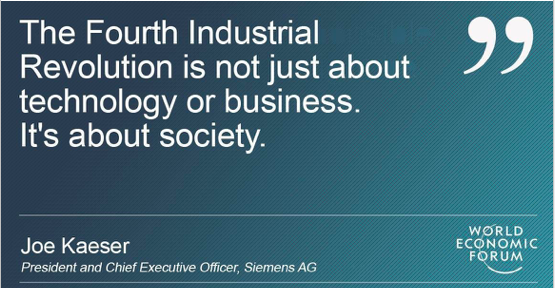
A key message I'm seeing already at the start of 2019 is that the 'next industrial revolution' will be about people. Joe Kaeser wrote a recent article for the World Economic Forum on the subject, and it has been echoed in publications by several others who have their fingers on the pulse.

Although I'm not convinced that the term 'revolution' is apt - most technological developments feature long processes of evolution rather than sudden disruption or revolution - the argument that humans are at the centre of change must be taken seriously.

Another example comes from Richard Gerver (a former headteacher, and now author and speaker) who posted: 2019 has to be the year we spend our time celebrating what we have in common: A year of collaboration, catalysing a new human renaissance. Gerver refers to his Edsurge article The Next Education Renaissance is Human, not Technological, in which he argues pretty much the same for education that Kaeser has said for business.

The message is simple: the world is rapidly changing, and businesses, schools and universities need to change to keep pace. We can heap as much (or as little) technology into our classrooms and offices as we like, but in the end, it is the people who have always made the difference.

As they stand on the verge of the third decade of this century, teachers will realise that all of the students in our schools were born in the 21st Century. In a year or two, businesses will be welcoming new graduate employees who have no personal experience of the 20th Century. And yet, in many cases, they will enter a workplace that remains rooted in 20th Century practices.

The UK government's recent decision to ban the purchase of new fax machines in hospitals is a classic example of a very large organisation struggling to throw off the bonds of a bygone age. Such a decision should have been implemented more than a decade ago, but promoting change is not easy. It's difficult to overcome entrenched ideas that are no longer feasible or credible in the current age of advances. The technology is not at fault. The people in the organisations need to make the decisions to move forward or stagnate.

Just as social value should be the benchmark of a company's performance, so in our education systems, indicators of success should focus how well we can develop great human beings. Can we focus more on life skills than on grades? Can we develop children's abilities to solve problems and think creatively above doing well in exams? Almost all of the world's most serious problems such as greed, hate, anger, jealousy and fear have human origins, so we will need very human abilities to be able to counter, and eventually overcome them. We need a lot more humanity in our businesses and education systems. Here's to a very human future.

Creative Commons License
2019: Year of human renaissance? by Steve Wheeler was written in Plymouth, England and is licensed under a Creative Commons Attribution-NonCommercial-ShareAlike 3.0 Unported License.


December 22, 2018

Best wishes

Image from Pxhere
Christmas and the New Year. It's traditionally a time to reflect on the past year, and to look forward with anticipation to what we would like to see in the future. At this time, it's appropriate to think about the community, society and world we live in, and hope for better. It's not been a good year in many respects - mass shootings, economic crises, global warming and worrying signs of irreversible climate change, homelessness on the rise, conflict, drought, famine, and idiots in charge of our governments.

In other ways, we have made some progress - raising awareness of the needs of minority groups, celebrating diversity, many cultural achievements, and improvements in health and every day life through technology breakthroughs (AI diagnosis, robotic surgery and 3D printing of human organs, for example).

As ever, the negatives seem to outweigh the positives, but just about all of the solutions are within the gift of world governments.

Here is my wish list for the future (some may think these are pious hopes):

1. Education must be our priority. Improvements in education are slow, or stall due to government bureaucracy and inadequate funding. Governments need to trust teachers, and step out of their way. In some countries, there is no education, or it stops at the end of primary school age. Enough funding (some have calculated this at around $5 billion) would bring free education to every child on the planet.

2. The planet is sick, and needs urgent intervention. We need a significant reduction in greenhouse gas emissions. It doesn't help that certain leaders care more about profit than they do about building for the future. I wish to see a rapid rise in the use of battery powered vehicles, and reduction of the use of single use plastics, and other pollutants. We need improved recycling, to which governments need to fully commit.

3. Instead of building walls, build bridges. Simple.

What is your wish list for 2019 and beyond? The comments box below is open.

I wish you a very peaceful Christmas filled with love, and best wishes for a happy and successful New Year.

Creative Commons License
Best wishes by Steve Wheeler was written in Plymouth, England and is licensed under a Creative Commons Attribution-NonCommercial-ShareAlike 3.0 Unported License.


December 14, 2018

Humans, machines and learning

Image by Mike MacKenzie on Flickr
One of the many topics I discuss in my forthcoming book is Artificial Intelligence (AI) and its potential impact on the future of learning and development. I, along with many others, believe this is an important subject to explore, because it is a rapidly growing area of technology that will significantly influence our future.

In particular, there are several philosophical debates about the nature of intelligence and how human intelligence differs from machine intelligence. One of the texts I draw from is Tegmark's Life 3.0. Here's an excerpt from the new book:

MIT physics professor Max Tegmark presents some compelling arguments for the future of AI. He argues that the benefits of AI will far surpass the threats, provided they are aligned to human intentions. One of the greatest concerns he reveals is not that computers might become sentient, or ‘evil’, but a scenario in which the goals of ‘competent’ AI become misaligned with ours. His key argument is that the discussion around whether or not computers will attain consciousness or emotional capability is spurious (Tegmark, 2017). Our future co-existence with technology will be premised on the ability of computers to make life better for humanity, not to out-think us.

For Tegmark, intelligence, whether human or artificial, is being able to accomplish complex goals (whether those goals are good or bad). He argues that intelligence ultimately relies on information and computation, not on flesh and blood or on metal and plastic. Therefore, he reasons, with the exponential developments taking place in the world of technology, there is no barrier to computers eventually attaining and even surpassing human intelligence. Such a position can be described as ‘Strong AI’, or in Tegmark’s terms, the ‘Beneficial AI movement’.

Conversely the weak AI supporters predict that computers will not reach a level of intelligence that exceeds our own. Firstly, they argue, human and machine intelligence are not the same thing. Secondly, computers blindly follow code, and have no free will to decide not to follow it (unless they are programmed to do so – which thereby defeats the notion of free will). Thirdly, suggest the weak AI theorists, it is proving extremely difficult to create computer programs that can accurately model or reproduce human attributes such as emotions, abstract thinking and intuition.

Whatever side of the argument you subscribe to, it is interesting to note the comparisons between human and machine. Arguably, all of the above attributes, such as free will, emotions, abstract thinking and intuitive action not only make us who we are, they also create a permanent and unbridgeable divide between humans and computers.

Reference
Tegmark, M. (2017) Life 3.0: Being Human in the Age of Artificial Intelligence. London: Penguin Books.

Creative Commons License
Humans, machines and learning by Steve Wheeler was written in Plymouth, England and is licensed under a Creative Commons Attribution-NonCommercial-ShareAlike 3.0 Unported License.


December 13, 2018

A little help from my friends

Image from Maxpixel
My grandest project of 2018 has been writing a new book, which was commissioned by Kogan Page in January. Anyone who has authored a book will know how compelling, and also how lonely it can be. Throughout the year, the book has continuously exercised my mind, and I have spent countless hours of planning, thinking, researching, writing and editing.

I decided to call the book 'Digital Learning in Organisations' from the outset because my expertise lies in learning technologies. The departure is found in the locus - organisations. I have worked with many learning and development professionals over the last decade and have come to know many personally, but L and D is a less familiar terrain to me than school and university education. However, having worked in large organisations for more than 40 years, and having watched the rapid development of new technologies during that time, I feel I can write authoritatively about the challenges and innovations that are happening.

As you would guess, I have enlisted a little of help from my friends along the way, so writing has not been as lonely a task as it might have been. I'm grateful to many who have either encouraged me to write the book, or who have advised me in any specific way. The list is long. But I'm most grateful to those who have contributed directly to the book by responding to my interview questions. I will namecheck just a few here, to give you a flavour of their contributions, which may pique your interest in reading the entire book when it hits the bookshops in April 2019!

Here's David Kelly, New York based Executive director of the e-Learning Guild, with his view on mobile devices and learning:
“Mobile technologies shouldn’t be viewed through the lens of learning. They should be viewed through the lens of problem solving. That’s what this thing we call “self-directed learning” looks like anyway; it looks like problem solving and that’s what’s emerging within the world of digital learning.”
David goes on to consider a number of scenarios around the use of mobile learning in large organisations, and concludes that:
“.....mobile devices are a game changer for organizations – not in the context of mobile learning, but in the context of how they empower what it means to live, learn, and interact in a digital world. In that context, mobile devices are powering the future of digital learning.”
This is at once both inspirational and daunting - thanks David. Another thoughtful contribution comes from Julian Stodd, of the UK based firm Sea Salt Learning who shared some of his views on social media and learning:
“We have moved from a world where learning was substantially formal, codified, and owned, to a world where it is substantially, co-created, adaptive, geolocated, accessible, and evolutionary. Social collaborative technology has enabled the emergence of democratised, and substantially invisible, communities, where tacit, tribal, learning and sharing takes place at scale.”
Julian's views delineate much of the change that has taken place in the world of learning in the workplace over the last 10-15 years. His insight adds great value to the book. 

Digital Learning in Organisations is peppered with examples of innovation and change through learning, and the role digital technologies have played, especially by ground breaking companies like Sponge. You will find pithy quotes from many individuals I greatly respect in the industry, including Nigel Paine, Donald Clark, David Hopkins, Kate Graham, Harold Jarche (Canada), Helen Blunden (Australia) Donald H Taylor, Michele Ricci (Italy), Ajay Pangarkar (Canada) and Jane Bozarth (USA), and also a few of my own anecdotes, salutary tales, and humorous stories from when things didn't quite go according to plan! 

Do look out for Digital Learning in Organisations, which is published by Kogan Page on 3 April 2019. Advanced orders can be placed on Amazon.

Creative Commons License
A little help from my friends by Steve Wheeler was written in Plymouth, England and is licensed under a Creative Commons Attribution-NonCommercial-ShareAlike 3.0 Unported License.


<< Back Next >>