Log on:
Powered by Elgg

Feed detail

November 21, 2016

The next generation...

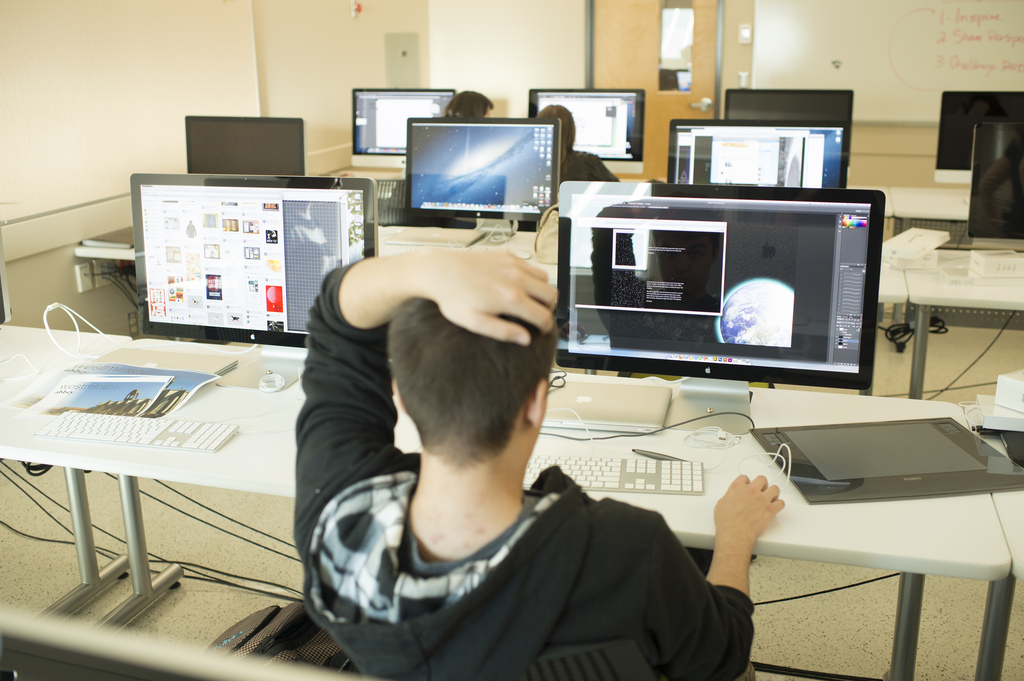
My current cohort of computing and ICT specialists during a seminar
A new breed of teachers is emerging. This next generation of educators are just as determined to make a difference as previous generations of teachers. The difference with this generation of educators though, is that they have a huge array of new technologies and tools, and they know how to use them. I know, it's a generalisation, but many of this new breed of educators are excellent at using technology to create new and exciting environments and opportunities for learning, and they are just as capable of creating great opportunities without those technologies. The secret to their future success will rely on their belief in relevant pedagogies that place their students at the centre of the learning process. This has not always been the case, and there remains widespread practice in schools around the world where students are considered to be 'products' or at best, passive participants, in the educational process. The next generation of teachers are also more willing to share their ideas with their peers - and again, the technology they have available allows them to do this freely.

Some of our recent graduates, now qualified teachers
Let me introduce you to one of my former students - Neil Jarrett. Neil is now a primary teacher at an international school in Thailand. He was one of my computing and ICT specialists, and he was always excited about discovering ways technology could be used to enrich and enliven students' experiences. He is also keen on sharing his ideas and expertise within the professional community. Neil's most recent article for the Times Education Supplement outlines some great ideas for how teachers can embed new technology into any of their lessons. In another previous article for Teach Primary magazine Neil outlined some of the ways teachers can improve their assessment methods by using technology. These are very readable articles that clearly highlight some of the practical uses of technology to not only improve learning for students, but also to alleviate time and pressure issues for teachers.

Each year, as I see my latest crop of trainee teachers qualify and enter into qualified teacher status, I'm gratified for all the hard work we put into developing them as professionals. I'm also excited and optimistic for what is to come, because in the hands of enthusiastic and passionate teachers like Neil Jarrett, the future of education looks very bright indeed.

Photo by Steve Wheeler

Creative Commons License
The next generation by Steve Wheeler was written in Plymouth, England and is licensed under a Creative Commons Attribution-NonCommercial-ShareAlike 3.0 Unported License.


November 18, 2016

Schoolboy errors

Did you make mistakes when you were in school? I certainly did. In fact all of my classmates also did. Often we were scolded for our errors and sometimes we were even 'punished' for getting something wrong. One of my classmates was rapped across the wrist with a ruler because he was writing with his left hand (he was left handed).

I remember being told off by my teacher for writing out the number eight wrongly in my exercise book. Instead of writing it as a smooth flowing figure of eight as I had been shown, I wrote two conjoining circles. What disobedience!

For this deviant behaviour I was made to sit in the head teacher's office during break time writing out the number eight time after time 'as it should be written'.

One of the barriers to creativity in education is where teachers insists on one answer or one way of doing something. Another is a prevailing atmosphere in some classrooms of fear of failure. These and several other related barriers to creativity were discussed during a keynote session which featured Finnish education expert Pasi Sahlberg, British author Richard Gerver and myself, in Seoul at the Global Leaders Forum. We had been invited to speak on creativity in education.

There was consensus between us. We all agreed that failure was an important component of creativity, and should be built upon rather than dissuaded. Too often, students are fearful of making mistakes, which limits their willingness to experiment, explore and take risks. We talked about gaming, where users are always trying to exceed their own previous scores, and learn to perfect their skills through constant iteration and failure. Richard talked about encouraging students to 'colour outside the lines' while Pasi remarked on the powerful incentive of 'doing better next time'. We discussed assessment methods and concluded that in most countries these are too restrictive, and often assess superficial levels of knowledge.

Our conclusion was that 'school boy' errors are inevitable, and that mistakes and failure should be turned to the advantage of the student rather than becoming a dark cloud that hangs over an academic record. I'm glad I failed at school in some areas, because, although it was painful at the time, I have learnt many life lessons - not least that success is often hard earned, and we should never give up. One final thought - students don't fail. They just discover new and better ways of doing things. For me, the acronym FAIL will always mean 'First Attempts In Learning'.

Photo from Flickr

Creative Commons License
Schoolboy errors by Steve Wheeler was written in Seoul, Korea and is licensed under a Creative Commons Attribution-NonCommercial-ShareAlike 3.0 Unported License.


November 07, 2016

Just for me learning

I took part in a very interesting panel discussion with several other keynote speakers during the Adult Learning Symposium last week, in Singapore.

The theme of the conference was 'Future of Work, Future of Learning', which sent a clear message to delegates that the two are inseparable. One of the questions from our audience, largely made up of learning and development professionals, was about how we could optimise learning in organisations. One of the panellists answered by saying that 'Just in Time' and 'Just Enough' learning should be possible and sustainable for workplace learning in most companies. I completely agreed with him, but added that we could go farther, and that 'Just for Me' learning is now also achievable, through a number of emerging trends in learning and development.

One trend is BYOD - bring your own device, which is happening in workplaces across the globe. Employers support their staff as they bring their personal devices such as smartphones and tablets into the workplace, enabling a technical infrastructure that scales to the screens being used. Clearly there are security and privacy issues to be addressed, but another trend is that learning is now becoming more untethered and we are witnessing a decline in the use of training rooms. Employers are discovering that productivity and effectiveness can be increased if learners stay in their workplace or remain mobile as they learn, rather than requiring them to travel to, and spend time in a 'training place.' Digital delivery of content can personalise learning, enabling learners to work at their own pace, and in a place and at a time that suits them. The final trend is the personal learning environment, which is made up of the learner's own tools and technologies, their personal learning network, and any other content, events and experiences that help them to learn what is needed to be successful in their work.

We have come a long way since the 'Just in Case' curriculum. Now employees can be kept up to date and knowledgeable, and their skills developed personally, through the appropriate application of networked technologies. 'Just for Me' learning will epitomise the next decade of learning and development.

Photo courtesy of the Adult Learning Symposium

Creative Commons License
Just for me learning by Steve Wheeler was written in Plymouth, England and is licensed under a Creative Commons Attribution-NonCommercial-ShareAlike 3.0 Unported License.


October 29, 2016

Philosophy, pedagogy and practice

Following on from my recent post on innovative teaching, here is another question from teachers about the use of ICT in schools, and the underlying pedagogies:

Is learning in an ICT-based environment characterised by a unique pedagogy - for example by a student centred pedagogy while the teacher serves as a guide who mediates learning using a variety of technological tools?

This is an interesting question, because there are several possible answers. Teachers generally work in their classrooms (or elsewhere) as professional educators - people who are responsible for optimising learning so that all of their students attain the highest levels of knowledge, understanding and skills. How a teacher goes about this professional practice depends on a number of factors. One of the key factors underpinning their practice is their belief in what constitutes good teaching. Personal philosophy on education is developed over a period of time, as teachers develop their professional identities. Most teachers would claim that their particular brand of pedagogy places the student at the centre of the learning experience. Most teachers would also disagree somewhere as to what exactly is the best possible pedagogy. This is because not only do our professional opinions differ, so do our personal experiences as teachers. Arguments about pedagogy tend to stem from varying professional identities. Furthermore, the environment in which we practice education varies widely, across cultures, across cities, even across a single school. Our pedagogical approach may also be constrained by restrictions such as institutional rules, lack of resources or time and other factors beyond our control. Finally, and most importantly, the way each teacher approaches the practice of education is dictated by the individual and corporate needs of the students.

Therefore, some teachers adopt a largely traditional approach to education, where content and knowledge are central and where the teacher is the arbiter of that knowledge. Others at the opposite end of the pedagogical spectrum subscribe to a progressive approach where students take responsibility for their learning, and where the teacher acts as a guide or facilitator. There are proponents of both these approaches, and some that vehemently defend one position or another. Generally however, most teachers will oscillate between positions, doing what they can within their constraints, and making decisions about their pedagogical approaches based on the needs, conditions and environments in which they are positioned. It follows that teachers who incorporate technology into their lessons can adopt any number of approaches. Some use the technology as a presentational aid to deliver instruction to their students, while others employ the same technologies as resources students can use for themselves. A classic case of this is the Interactive Whiteboard (IWB) which some teachers use solely as a teaching tool for presentation, while others allow students to use the IWB as a learning resource. As with any extremes of the spectrum, there are many teachers who manage both approaches.

The short answer to the question therefore, is that there appears to be no particular pedagogical approach that naturally occurs when teachers embed technology into their lessons. All tools are neutral, and can be used for several purposes. What generally shapes our professional practice is not the absence or presence of technology, it is our personal philosophy.

Photo from Pixabay

Creative Commons License
Philosophy, pedagogy and practice by Steve Wheeler was written in Plymouth, England and is licensed under a Creative Commons Attribution-NonCommercial-ShareAlike 3.0 Unported License.


October 25, 2016

The future of universities #EDENchat

Universities have never been under so much pressure. The unfavourable global economic climate has impacted as severely on our higher education institutions as it has in every other sector of society. Years of financial turbulence have prompted cuts, cuts and more cuts. Adverse media coverage coupled with hostile political pressures have put many of our universities in jeopardy. Rises in student tuition fees have placed universities in danger of closure in South Africa, United States, and elsewhere. Many are wondering what the future holds for higher education, and with so many graduates unemployed, who can blame them?

The next #EDENchat will discuss whether and how universities can innovate and change to survive in this century. Are traditional universities anachronistic in the digital age? Do students still need to attend campus, or can they learn at a distance? Is the predominant style of teaching at universities still the lecture, or are other methods coming to prominence? What role will research play in the future of universities? Are the newer, mega-universities better placed to cope with global changes, and will they threaten the traditional campus based universities? What will universities need to do to survive and thrive in the coming years?

Join us tomorrow on Twitter at 1900 BST (2000 CET) for a lively discussion on the future of the university.

Photo courtesy of Brunel University on Flickr

Creative Commons License
The future of universities #EDENchat by Steve Wheeler was written in Plymouth, England and is licensed under a Creative Commons Attribution-NonCommercial-ShareAlike 3.0 Unported License.


October 24, 2016

What is innovative teaching?

I've fielded a lot of questions recently, during panels discussions and presentations about technology supported learning. Over the next few posts, I want to elaborate on some of these. Here's the first:

What factors determine innovative teaching, with or without technology? 

This is not too a difficult question to address, because innovative teaching is good whether or not technology is used. A bad teacher does not suddenly become a good teacher just because technology is included into the mix. Nor does a good teacher need to always use technology to maintain their effectiveness. But before we discuss this question any further, we should define 'innovative teaching.' What is it, and how do we know a good, innovative teacher when we see one?

For me, innovative teaching is often invisible, and the teacher is very much peripheral, to the most important factor - the student and their learning. Good teachers instinctively know when to intervene and most importantly, when to get out of the way. Teaching is not so focused on instruction today (and nor should it ever have been), but is increasingly about facilitation, and considers the student holistically. Innovative teaching focuses on creating conducive environments within which good learning can occur. Innovative teachers are excellent at supporting students, and are also adept at creating engaging content and new experiences. A good teacher observes and measures progress without causing any stress to the learner or interruption to learning.

Innovative teachers are instinctive about student challenges such as lack of understanding, loss of focus, low engagement or demotivation. They strive to find new ways to keep students on task, motivate them to do their best, and encourage them to succeed. Innovative teaching is where good teachers are inventive and creative - where they continue to discover and devise new methods and content to ensure that students always get the best learning experiences. But consider that invention and innovation are not the same. Invention requires a creative individual, whereas innovation requires a courageous community (see for example Rogers' Diffusion of Innovation Theory, 2003). Therefore, innovative teachers also need courage to embed their new methods and content, especially if it runs counter to the culture they work within.

Innovative teaching can be achieved without technology, although I would argue that it is often harder to be innovative without some access to technology. Some of the most innovative teaching I have witnessed has come about because of the powerful combination of an effective teacher and appropriate use of technology. In such situations, teaching and technology combine to support good learning. The technology is usually embedded into the curriculum and lesson to the extent that it is either invisible (transparent) or inconsequential. The learning takes centre stage, and the technology is made to be mundane. The technology performs its necessary function, but is not central to the process. Innovative teachers are innovative not because they use technology, but because they understand the needs of learners, and can create effective environments (with or without technology) that maximise the opportunities for students to succeed.

Reference
Rogers, E. (2003) Diffusion of Innovations: Fifth Edition. London: Simon and Schuster.

Image: ‘The Boyhood of Raleigh’ by Sir John Everett Millais

Creative Commons License
Innovative teaching by Steve Wheeler was written in Plymouth, England and is licensed under a Creative Commons Attribution-NonCommercial-ShareAlike 3.0 Unported License.


October 14, 2016

Making sense of digital


I learn a lot from discussions on social media channels such as Twitter. Some might be aware that I established a chat for the European Distance and E-Learning Network (EDEN) a couple of years ago, which is dedicated to discussions around technology supported learning in all sectors of education, learning and development. Known as #EDENchat, it has hosted over 30 one-hour discussions, and the entire list (and archives) can be found Storified on this website.

Our most recent #EDENchat focused on digital competencies and digital literacies, and the conversation was dynamic and fast moving. I have already written extensively about digital literacies and have presented several keynotes at international conferences where it features heavily. Everyone in education it seems, is interested in what teachers and students need to acquire, to make sense of our digital world and to use digital tools effectively.

One of the key questions I posed on #EDENchat was to determine the difference between digital competencies and digital literacies. A number of thoughtful responses came back, but the general consensus was that literacy is about understanding, while competency leads to a mastery of that understanding (thanks to Alastair Creelman for that response). This was further simplified by Simon Lancaster who remarked: Digital literacy is about knowing how to do it and competency is about doing it well.

The follow up question was 'what digital competencies/literacies do you consider essential for university students? The responses came in thick and fast, including collaborative competence (probably a blog post in itself), identity management, self presentation, and navigating digital sources, filtering, selecting and assessing content for accuracy and veracity (thanks to Kandy Woodfield). Digital reputation management was also discussed as well as critical reading and curation of content (via Sue Beckingham).

Perhaps the best part of the discussion arose when I asked whether there was a specific 'best time' for digital literacies to be taught. Many responses said the same thing: If a child is using technology, they need to know how to manage their presence online, for safety and security reasons, as well as to make sense of the digital world. Conclusion: The best time to begin teaching digital literacies is when the child begins to use technology.

#EDENchat continues with a discussion around the future of universities, at 1900 UK time, on October 26th. The full schedule of #EDENchats is here.

Related posts
What digital literacies?
3 things you should know about digital literacies
Digital literacies in the age of remix

Photo by Steve Wheeler

Creative Commons License
Making sense of digital by Steve Wheeler was written in Plymouth, England and is licensed under a Creative Commons Attribution-NonCommercial-ShareAlike 3.0 Unported License.


October 10, 2016

Join our global #EDENchat

We enjoyed a great first #EDENchat of the season during the EDEN Research Workshop when my colleague Antonella Poce hosted the Twitter session last week. It's an amazing thing to be able to chat with people across the globe about issues and challenges that affect us all as teachers in the digital age.

The archive of that chat can be found here on Storify along with 25 other previous chats. We aim to continue the momentum and have planned several follow up chats as can be seen in the schedule below, including one in the next few days. We've recruited some new hosts too, including Sue Beckingham and Francesco Agrusti, and there is still room for a few more chats before the end of the year. Contact me if you're interested in hosting and have a technology supported education theme you would like to propose for #EDENchat. Either way, if you would like to join in our global chat, simply be there on Twitter on these dates and times:

12 October (1900 BST/2000 CET) Digital competencies/literacies for education (Steve Wheeler)
26 October (1900 GMT/2000 CET) The future of universities (Steve Wheeler)
9 November (1900 GMT/2000 CET) Social media and informal learning (Francesco Agrusti)
30 November (1900 GMT/2000 CET) Innovations in teaching (Antonella Poce)
25 January (1900 GMT/2000 CET) Blurring boundaries: Impact on effective learning spaces (Sue Beckingham)

In addition, we also have some live EDEN webinars planned. We will announce these soon.

Photo on Pixabay

Creative Commons License
Join our global #EDENchat by Steve Wheeler was written in Plymouth, England and is licensed under a Creative Commons Attribution-NonCommercial-ShareAlike 3.0 Unported License.


October 06, 2016

Celebrate a teacher

World Teachers Day is the day we celebrate those dedicated professionals who spend their time inspiring children and shaping future generations. Frankly, we should celebrate our teachers every day. Every time you read or write, remember how you learnt and who helped you.

I qualified as a teacher back in 1990, and realise now that it is the best profession I could possibly have entered. Teachers make the difference. We all remember teachers from our formative years. Mostly we remember our great teachers, the ones who made the most impact on us - and sometimes the ones we would really like to forget.

Today I would like to celebrate two excellent teachers who inspired me, and helped shape me into the person I am today.

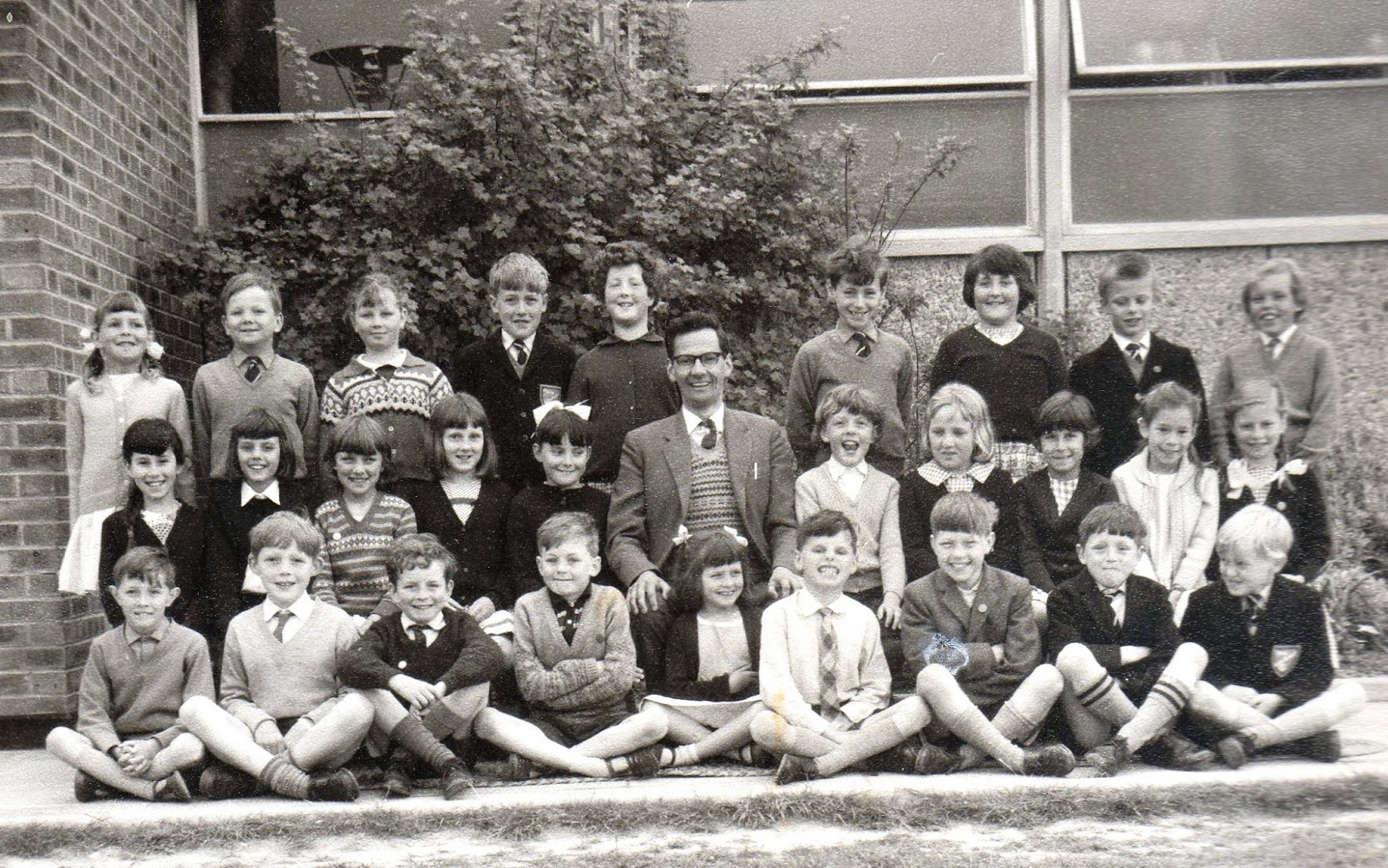
The first was Mr Handel (pictured above - I'm immediately in front of his right hand), a primary school teacher who took me under his wing when I was struggling to make sense of school. He encouraged me, and spent a significant amount of his time supporting me as I came to terms with learning. He was always calm and spoke softly to everyone. Mr Handel was also a scout leader, and encouraged me and others to pursue learning outside and beyond the classroom. I will not forget the tremendous efforts he put into making his teaching accessible to all, and the empathy he showed to every one of his students.

The second was Mr Domagne, an American educator who was my music and drama teacher in my last two years at school. Larry, as he wanted us all to call him, was a gifted musician and actor, who put on plays and musicals, and ran the school choir. He turned a blind eye when I sometimes appeared at the back of his lessons, although we both knew I should have been elsewhere. Larry was always passionate and excited about his subject, and this transferred to all those students who fell under his spell. He taught me that it was OK to explore, fail and learn from that failure.

Do you have any teachers from your past you would like to celebrate? What did they do that inspired you, or challenged you? I'm looking forward to reading your comments below.

Photo courtesy of Cherhill Primary School

Creative Commons License
World Teachers Day by Steve Wheeler was written in Plymouth, England and is licensed under a Creative Commons Attribution-NonCommercial-ShareAlike 3.0 Unported License.


September 30, 2016

Is technology killing the art of conversation?

I spend a lot of my time on public transport, and one of my favourite pastimes is eavesdropping on other people's conversations. It not only passes the time, but I also learn new things from listening in, even if the conversations are sometimes ill-informed.

Earlier this week, as I travelled into work by bus, I overheard an elderly gentleman conversing with three young people. He had watched the two young men as they gazed into their smart phones, and then said to the young woman: "Can I ask why you haven't got your phone out?' She replied: 'I was hoping for a conversation with these two...'

His response was a light-hearted discussion with them which concluded with the statement: 'The art of conversation is dead.' The exchange then descended into: 'There's too much technology around' and, 'I don't know what the world is coming to...' and I switched off at that point. But it led me to think - is the art of conversation dead? Sherry Turkle seems to think it's in trouble. In Alone Together (2011) Turkle implies that technology is distracting us from social interaction, and is ruining conversation: 'The relentless connection leads to a new solitude'. Others believe similarly. Jaron Lanier (2011) believes that interactive technologies are 'deadening personal interaction.' There are various similar views in recent publications.

An alternative perspective to this is that conversation isn't actually dying at all - rather, it's evolving into something, new, something different.

The images above show that different media have the capability to distract people from the 'real world' around them. We often see people on public transport and elsewhere, with their heads buried in their technology. But prior to mobile devices, we also used to see many people with their heads buried in books, magazines and newspapers. Yet mobile phones and other interactive, connected devices have an advantage over traditional media. With a connected device you can hold a conversation with someone who is not in the same geographical location. Therefore, conversation can still occur, but it is now enhanced by the technology.

Lankshear and Knobel talk about new and emerging media literacies (2006) that do not replace traditional literacies such as speaking and listening, but extend and enhance them. This is echoed by Kress (2009) who holds that new technologies are encouraging new forms of literacy and communication. My own research shows similarly that digital literacies allow us to extend our communication repertoire, enabling us to interact powerfully in new digital environments (Wheeler, 2015). Holding a Skype conversation requires new skills that go beyond face to face conversations. You may be aware for example of the reduced social cues that are caused by the limitation of interaction that is mediated by a camera and phone connection over the Internet. There may be latency (delay) due to the distances involved, and there may be limitations to the sound and visual elements of the Skype call. The same applies to any distance conversation (but we are already used to some of these effects because of a century or more of telephone use).

Conversation is changing, but that doesn't mean it's dying. As we come to terms with using our tools and learn more about what it means to carry them around with us, so we discover new ways of communicating. Conversation can now take place in many modes. It is important to realise that, yes, although people can be distracted by their devices, they are still able to hold conversations. So, back to the bus: The three young people were in fact holding a conversation. They were watching YouTube videos, and I head them discussing these before the retired gentleman intervened. As new technology emerges into the public domain and becomes more popular, we need to prepare ourselves for even more new ways of communicating. The art of conversation is not dead. It's very much alive and is diversifying in many new directions.

References
Kress, G. (2009) Literacy in the New Media Age. London: Routledge.
Lanier, J. (2011) You are not a Gadget: A Manifesto. London: Penguin.
Lankshear, C. and Knobel, M. (2006) New Literacies: Everyday practices and classroom learning (Second Edition). Maidenhead: Open University Press.
Turkle, S. (2011) Alone Together: Why we expect more from technology and less from each other. New York: Basic Books.
Wheeler, S. (2015) Learning with 'e's: Education theory and practice in the digital age. Carmarthen: Crown House.

Photo source

Creative Commons License
Is technology killing the art of conversation? by Steve Wheeler was written in Plymouth, England and is licensed under a Creative Commons Attribution-NonCommercial-ShareAlike 3.0 Unported License.


September 27, 2016

Lingua Tweeta and other ideas

I spend a lot of my time thinking through issues and challenges around technology supported learning. I try to come up with new ways to use technology that take learning into another place, or into new directions. Eventually I try some of these ideas out with my students. Often I share those ideas and outcomes on this blog. It's gratifying when people listen to these ideas, try them out and then come back to tell me how well they have worked.

When I get some positive feedback it encourages me to work harder to think of more new ideas, methods and strategies for using technology in education.

That's what we should be doing as professional educators - we should not stand still, but should always be seeking new ways we can engage our students and improve education.

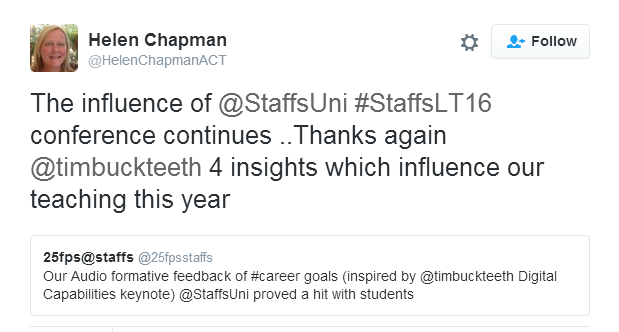
Yesterday I saw a tweet from Helen Chapman, Associate Dean at Staffordshire University who had attended a keynote speech I gave for their Learning and Teaching conference earlier this year. I spoke about using audio feedback for formative assessment in higher education, and challenged them to try it out.

I recall once being approached by a teaching in South Africa who was keen to tell me that my SILVER standard model for web site evaluation really worked in her classrooms, and was enriching the learning of her students.

More recently, one of my former students Neil Jarrett, who is now a very successful teacher in an international school in Thailand, had tried out an idea about writeable tables he had found on my blog, and was really excited about the responses from his students, whom he described as more collaborative and creative.

I wrote a blog post in 2009 during the emergence of Twitter as a tool for teaching in formal settings. It was entitled Teaching with Twitter which proved to be one of my most popular posts with over 60,000 view to date. I described 10 ways Twitter could possibly be used to support and extend learning. One of the ideas was called 'Lingua Tweeta' - my way of describing how teachers might use Twitter as a language learning tool. Teachers could tweet a sentence (or a question) in a foreign language, and students would respond in the same language, or could translate the sentence into English. I know that many teachers reblogged the ideas, in many languages around the world. A quick Google search of 'Lingua Tweeta' confirms this. But I wonder if anyone actually used the idea and what results they saw? If you, or someone you know, has used this idea, I would be very happy to hear from you in the comments box below.

Photo by Steve Wheeler

Creative Commons License
Lingua Tweeta and other ideas by Steve Wheeler was written in Plymouth, England and is licensed under a Creative Commons Attribution-NonCommercial-ShareAlike 3.0 Unported License.

September 24, 2016

Making Spectacles of ourselves

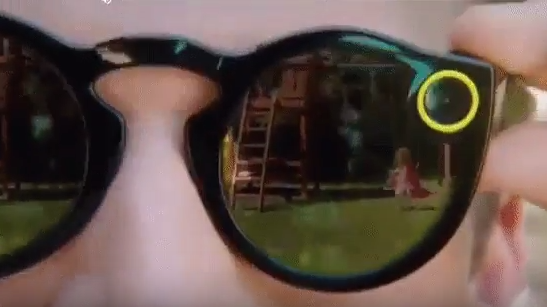
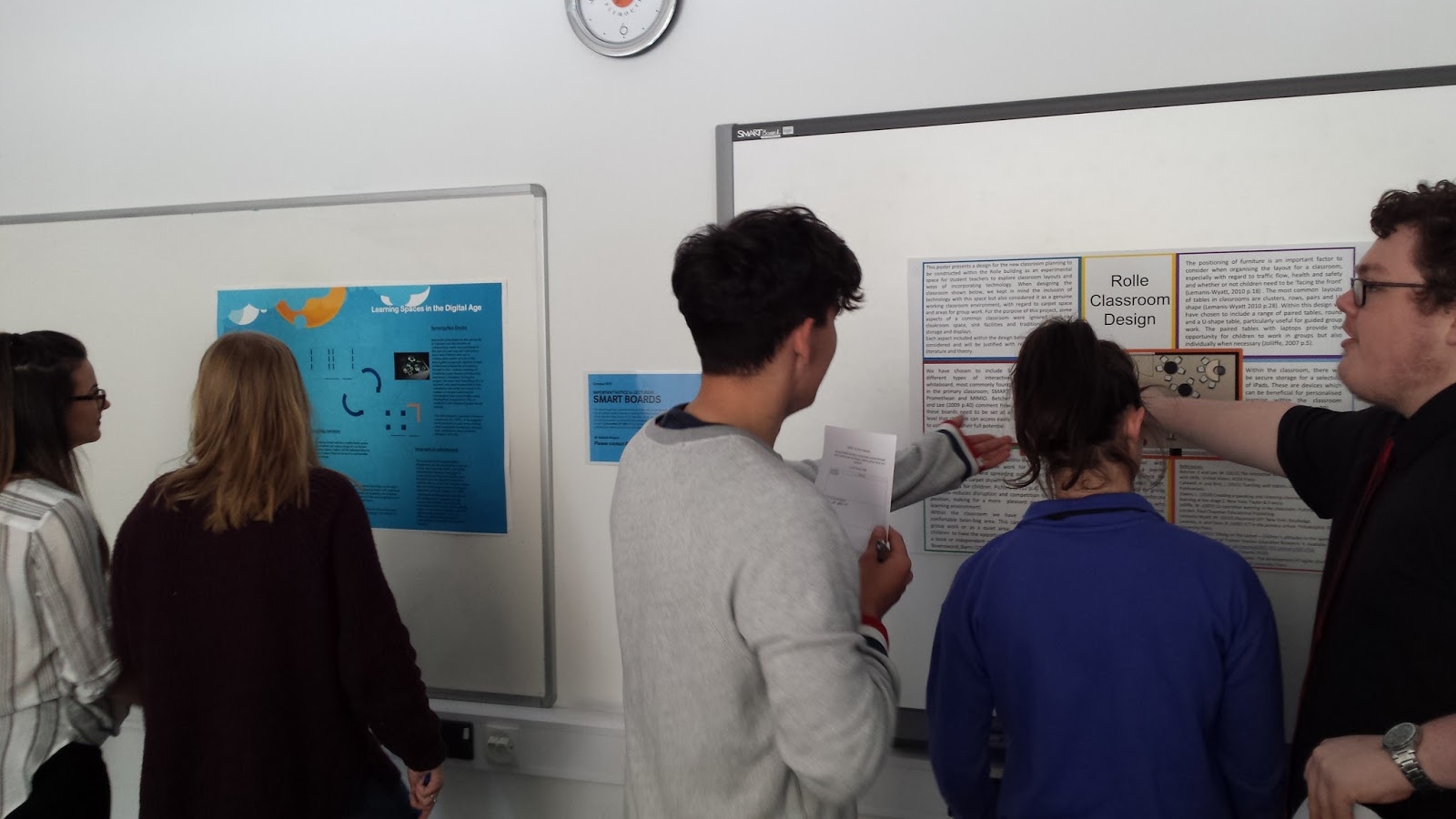
The popular social media company Snapchat (soon to be renamed simply 'Snap') has released news of a product which might just revolutionise the wearable technology industry. Snapchat's Spectacles are stylish sunglasses that have a built in camera that is capable of recording and sharing to the web up to 10 seconds of video from the wearer's eye level perspective. Remember Google Glass? Well, it failed largely because of two factors - it looked ridiculous on the wearer, and it cost a lot of money, even in its development stage. It was never brought to market. Snapchat's young CEO Evan Spiegel has ensured that Spectacles avoid both those issues. They look cool to wear, the camera is unobtrusive and one could expect a sizeable percentage of Snapchat's millions of users to purchase into it, because it will retail at around £100 ($130) - less than a tenth of the price of the Glass development version.

Time will tell whether Spectacles will be popular enough with users that it becomes a global phenomenon. But there is already speculation about how it might be used in a number of professional areas, including education. As with any other wearable technology that captures and shares images and video, there are issues around privacy and misuse. These will need to be addressed, certainly. But balancing up the social concerns against the benefits of such a device, there are also possibilities for the improvement of personal safety and security. In releasing Spectacles, Spiegel* seems to be offering up a social mirror with which we can gaze at ourselves and our world around us. As he related in a Wall Street Journal interview this week after a walk through the woods: '....when I got the footage back and watched it, I could see my own memory, through my own eyes. It was unbelievable.' Yes, having an experience is one thing - having an experience of the experience that you can revisit time and again, and sharing it with those around us from 'our own eyes', is indeed something else entirely.

*Spiegel is German for mirror

Still from promotional video on YouTube

Creative Commons License
Making Spectacles of ourselves by Steve Wheeler was written in Plymouth, England and is licensed under a Creative Commons Attribution-NonCommercial-ShareAlike 3.0 Unported License.


September 20, 2016

Racing robots and learning

These images show what we got up to with our first year education students on their first full afternoon of specialist study in computing and ICT.

In small groups they were asked to design and construct a Lego robot, and then program it to race around a circuit, with a prize for the winners! This is not as easy as it sounds. There are a myriad of problems to solve. What features do racing robots need, to achieve success and win the race? Do aerodynamics in the design make any difference? Do larger wheels have more speed that smaller ones? Do 3 wheels offer better manoeuvrability that 4 wheels? How do you program your robot to turn corners, and is there any way to stop it from veering into walls, or worse - into the other robots?

Some of these are engineering problems, while others are mathematical (some students discovered they needed to measure the entire circuit so they could calculate where the 90 degree turns should be programmed into the routine). The students were only given 90 minutes to create, program and test their robots, and quickly discovered that time was also an issue. The teams had to work closely and creatively to complete the task.

It's clear that collaborative learning can be powerful, because it draws on the knowledge and skills of the entire team, but it is even more effective when there is a challenge to be met. Challenge based learning, coupled with learning through making is more powerful still, and can be adapted and applied across any age group of learners.

Challenge based learning is an effective pedagogy that can be useful when teaching just about any subject, not least because of the wide range of transferable skills that can be encouraged. Many schools already use such approaches across the curriculum. Here are just a few of the transferable skills we recognise (feel free to add more):
  • Team work
  • Planning
  • Decision making
  • Critical thinking
  • Resource management
  • Creativity and design
  • Problem solving
  • Hypothesis testing
  • Time management
  • Computational thinking
Photos by Steve Wheeler

Creative Commons License
Racing robots and learning by Steve Wheeler was written in Plymouth, England and is licensed under a Creative Commons Attribution-NonCommercial-ShareAlike 3.0 Unported License.


September 19, 2016

Our digital future 4: Pervasive computing

A few years ago I presented a keynote for the Reform Symposium. Now, for those who are unfamiliar with the Reform Symposium, let me explain: It's a 72 hour live web based symposium that follows the sun.

Participants can join in and leave at any time, as the rolling programme of keynotes, discussions, panels and seminars/workshops plays out in real time on screen. It has been called PD in your PJs, because many participants watch from their beds in the late evenings or small hours.

It was a distinct honour to be invited to keynote, and I spoke on one of my favourite (and probably most dangerous) of topics - the future of education. In my slides (which as I write have topped 110,000 views on SlideShare) I mention the four trends that have been recognised in educational technology in the last 30 years.


In the 1980s, we saw the rise in popularity of multi-media, which revolutionised content both inside the classroom and beyond it. In the 1990s we witnessed the rise of the Internet and the rapid proliferation of web based content. By the turn of the century, we saw the introduction of affordable, and extremely portable mobile phones, which evolved into smart phones - small, powerful computers that are multi-functional. It could be said that where multimedia brought the world into the classroom, so smart mobiles took the classroom back into the world.

So what next? On the horizon, and already with us to an extent - is pervasive computing.

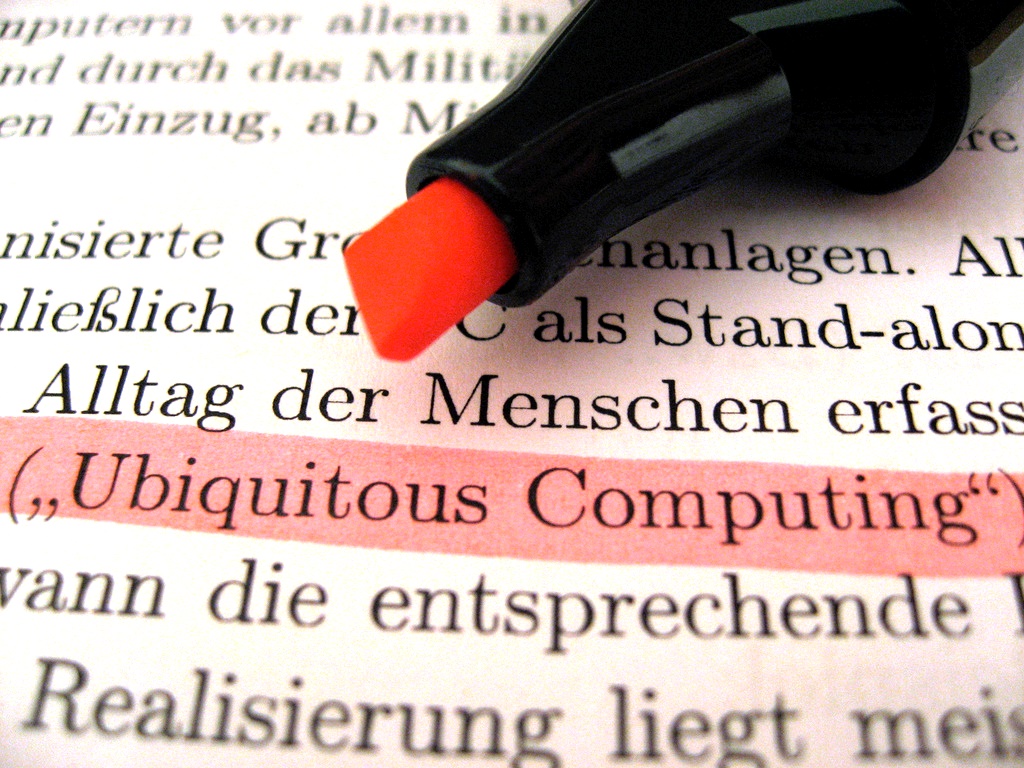
What exactly is pervasive computing? Some household appliances are already designed with embedded microcomputers. Fridges, washing machines, microwaves and even vacuum cleaners have small computers that control their use. But most are not yet connected to the Web. It will come. Because of the growing power of networks and telecommunication systems, and the ever decreasing size of digital technology, we can now embed small (micro) computers into just about any object in common use, and they will communicate with each other, and with your personal technology. Ricght now, you can tell Siri to put your 2pm appointment back an hour if you're running late. In the future you will be able to ask Siri to mow your lawn, wash your car, or lower the temperature in your living room - from wherever you might be in the world. Pervasive technology is constantly connected, always available and ubiquitous. There are endless examples of pervasive computing online, and a quick search will unearth some great ideas that have already been put into practice.

But how might pervasive computing be used in education? Consider a school visit to a museum. All of the children have a personal smart device. All of the museum exhibits have information embedded within them. When the smart phone is produced and is lined up with the Radio Frequency Identity (RFID) sensor in the exhibit, information starts to flow from the exhibit to the child's smart device. The longer the child stands holding up the device, the more information will be sent. The system is context aware. Some museums already use RFID technology to tag and GPS locate valuable exhibits for security purposes and the technology has proved quite effective.

We could also track students on a campus more easily using pervasive computing. Attendance in lectures and seminars, number of visits to the library, hours spent in study groups, all of these activities can be logged and archived automatically - if we really want to travel down that corridor of surveillance. New and emerging embedded systems such as iBeacon might perform this kind of activity tracking, but might also be used to enhance communications across campus, and within communities of practice.

Pervasive computing is already being deployed in business, entertainment and sport. It is only a matter of time before we begin to see embedded, ubiquitous computing introduced to education.

Previous posts in this series
Our digital future 1: Gazing down the corridor
Our digital future 2: Smart clothing
Our digital future 3: Semantic Web

Photo by Phillip on Flickr

Creative Commons License
Our digital future 4: Pervasive computing by Steve Wheeler was written in Plymouth, England and is licensed under a Creative Commons Attribution-NonCommercial-ShareAlike 3.0 Unported License.


September 14, 2016

Working space as learning space

Graham Attwell over at Pontydysgu (Bridge to Learning) has challenged me to take five pictures that depict my working space as a learning space. For me, my working space has always been my learning space (well, ever since I became involved in education anyway). This is because I consider myself to be a professional learner. I get paid to teach and research at Plymouth University, but this all comes about through my own personal learning. Also, I do a lot of my work from home, because, although I have wonderful colleagues who are an absolute pleasure to work with, we have a shared space for 5 desks in my office, and it's not always easy to concentrate when there are several of us in the same space, all holding different conversations.

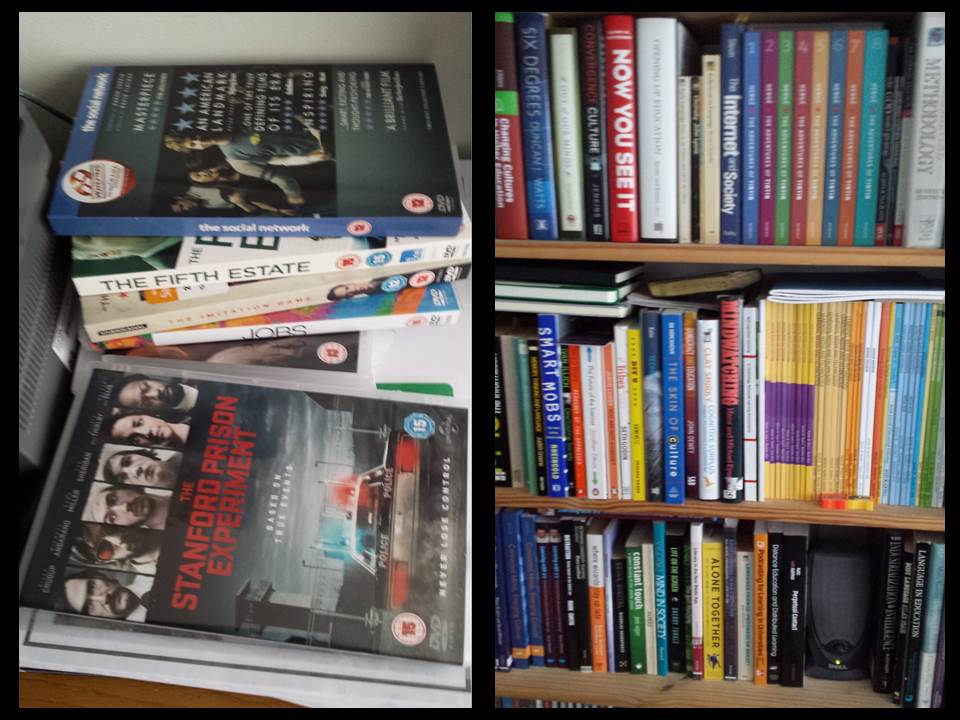
So I work a lot from my home office, which was once my garage. It's important that I have all my resources to hand, including DVDs, maps, books, laptops, communication tools (note the Hub) and other technologies. The DVDs in this image are relevant for teaching and learning - for example, the Stanford Prison Experiment movie is particularly useful when I'm teaching a session on human behaviour and perception for my second year psychology module. Check out the books on my shelves - I have 4 bookcases around the house, all of which take up an entire wall of the rooms, and all of which I made myself. I still keep a lot of paper based resources ... because I can. I also prefer reading from books to reading from digital sources - it's a little easier on my eyes.

You can also see some of the lanyards and badges from conferences I have keynoted over the last couple of years, and other keepsakes that make me feel as relaxed and at home as I can be while I'm working (the aboriginal art was a gift from my good friend Joyce Seitzinger (@catspyjamasnz) and the painting is one of my own. I do a lot of my writing and research from the desk in the image and it's also important that I have a comfortable sofa close at hand, especially when I'm reading. The plants keep me company (as does my little dog, who was at her hairdressers when these photos were being taken).

Also in this sofa image you can see one of my many laptops - this one has no name, because it has no soul - it's a Chromebook. Also not in the photos is my Samsung Galaxy Android phone, because I was using it to take the photos. Finally, you'll note that I use a paper based diary as a supplement to my digital calendar. I believe in belt and braces - if one doesn't work, the other one invariably will - and I'm usually on a tight schedule. It's a very pleasant working and learning environment and it has my personal stamp on it - which is very important. It's my creative space, and creative spaces are idiosyncratic, unique to the individual, and places where learning can happen in many different ways, through many different tools and channels. For me, my working space and my learning space are one and the same.

Photos by Steve Wheeler

Creative Commons License
Working space as learning space by Steve Wheeler was written in Plymouth, England and is licensed under a Creative Commons Attribution-NonCommercial-ShareAlike 3.0 Unported License.


September 13, 2016

The EDEN Interviews: Leslie Wilson

There are very few people better placed to provide an overarching view of how universities across Europe are adapting to the digital economy than Leslie Wilson. She is Secretary General of the European Universities Association, and was a keynote speaker at the EDEN 25th Anniversary Conference in Budapest.

During the conference we sat down to discuss her work. I wanted to find out her views on a host of digital learning strategies, including the digitisation of content, open academic publishing and the integration of technology into higher education. What needs to be done next to ensure a successful future for technology supported learning? What do undergraduates need in a richly technological age? What will be the future of academic publishing? How effective are digital repositories? These and other questions feature in the interview.


Photo by University of the Fraser Valley on Flickr

Previous EDEN Interviews
Tony Bates, Sir John Daniel, Michael G. Moore (Budapest 2016)
Jim Groom (Barcelona 2015)
Martin Weller (Barcelona 2015)
Audrey Watters (Barcelona 2015)
Antonio Teixeira (Barcelona 2015)
Martin de Laat (Barcelona 2015)
Sugata Mitra (Oslo 2013)
Michael G. Moore (Oslo 2013)
June Breivik (Oslo 2013)
Steve Wheeler (Dublin 2011)
Graham Attwell (Dublin 2011)
Ingeborg Bo (Dublin 2011)

Creative Commons License
The EDEN Interviews: Leslie Wilson by Steve Wheeler was written in Plymouth, England and is licensed under a Creative Commons Attribution-NonCommercial-ShareAlike 3.0 Unported License.

September 12, 2016

The EDEN Interviews: Bates, Daniel and Moore

In 1997 I was invited to Ankara, Turkey to participate in a week long conference - the Second International Symposium on Distance Education. The entire concept of distance education was quite new to me at the time, as was travelling to other countries to hear different perspectives. You could say I was still very new to the idea of distance education, even though I had been working in technology supported education for almost 2 decades, and had also obtained my first degree from the British Open University. I knew the basics, but the deeper theoretical and practical knowledge eluded me. I was also unfamiliar with many of the international speakers I met at the event. Three of the founding fathers of distance education, Tony Bates, Sir John Daniel (at the time Vice Chancellor of the Open University) and Michael G Moore were speaking, and over that week in Ankara, I got to know each personally and learnt much from them.

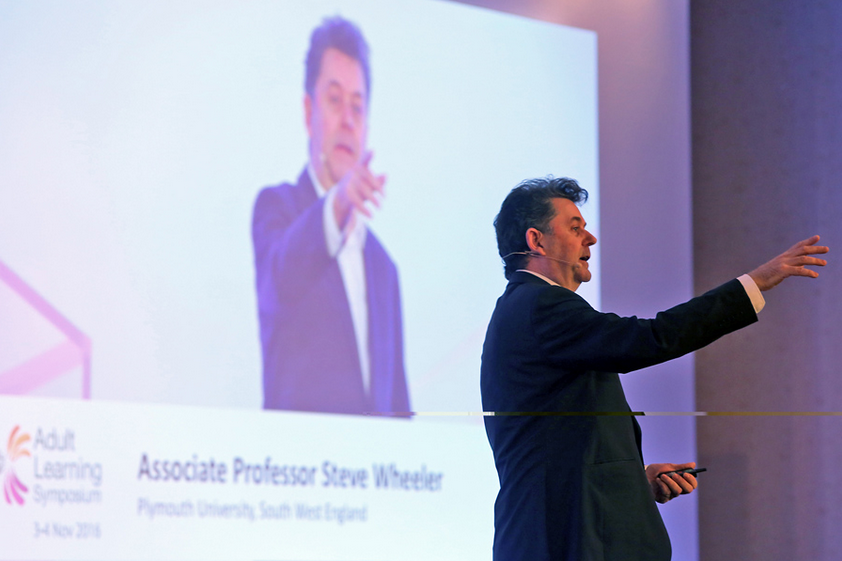
Recently, during the celebration of the 25th anniversary of the European Distance and E-Learning Network (EDEN) this year in Budapest, Hungary, I had the privilege to meet all three again. I thought it was too good an opportunity to pass up, so I invited each of them to sit together and join me in a conversation about the foundations of distance education, its theories and practices, and their personal views on its history. Below is the video of this wonderful opportunity to learn from the three wise men of distance education. Please share the link with as many as you wish - there are some gold nuggets of wisdom in this interview!


Photo by Larisa Koshkina on Public Domain Pictures

Previous EDEN Interviews
Jim Groom (Barcelona 2015)
Martin Weller (Barcelona 2015)
Audrey Watters (Barcelona 2015)
Antonio Teixeira (Barcelona 2015)
Martin de Laat (Barcelona 2015)
Sugata Mitra (Oslo 2013)
Michael G. Moore (Oslo 2013)
June Breivik (Oslo 2013)
Steve Wheeler (Dublin 2011)
Graham Attwell (Dublin 2011)
Ingeborg Bo (Dublin 2011)

Creative Commons License
The EDEN Interviews: Bates, Daniel and Moore by Steve Wheeler was written in Plymouth, England and is licensed under a Creative Commons Attribution-NonCommercial-ShareAlike 3.0 Unported License.


August 30, 2016

Our digital future 3: Semantic Web

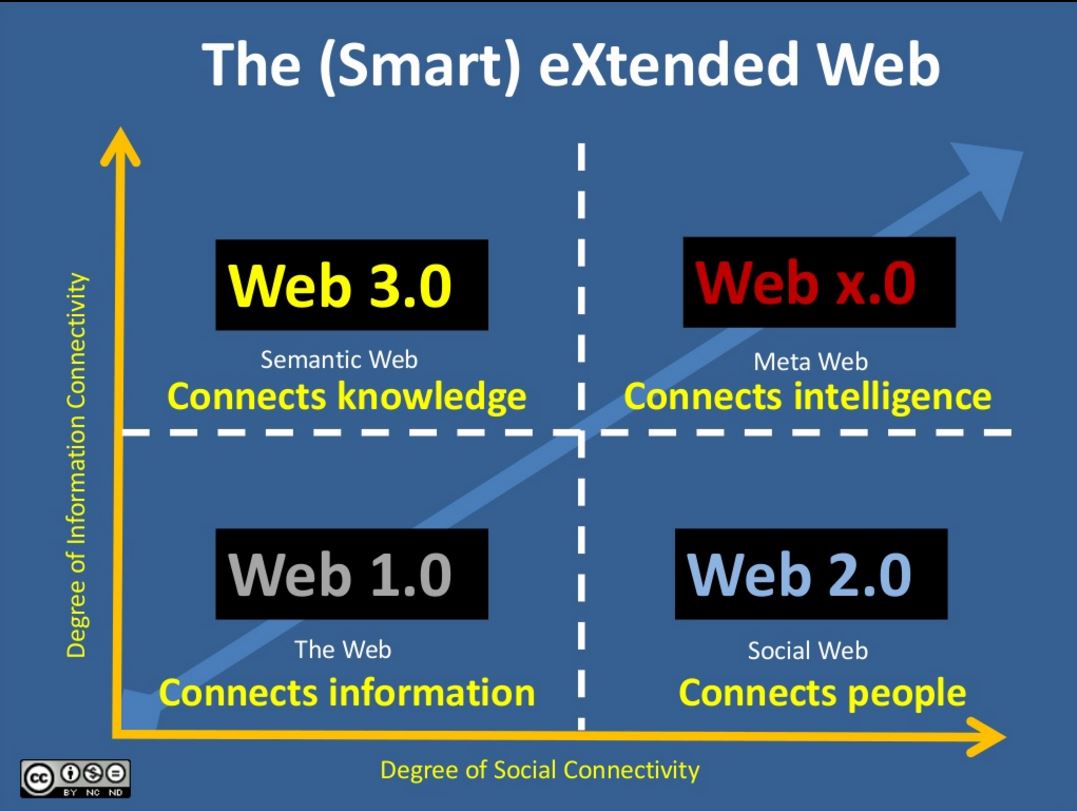
Smart eXtended Web - adapted from the work of Nova Spivak
Certainly, distinctions between versions of the Web are artificial. A decade ago, when Tim O'Reilly wrote about 'Web 2.0' and others intoned effusively about the 'Social Web' or the 'Read/Write Web', they were remarking about emerging features of a vast and ever expanding technological infrastructure, rather than any physical compartmentalisation. As the Web grew, and people discovered more ways to develop its capabilities, they naturally built into it their human essence - sociability and the need to connect with people, rather than simply with information. The Web evolved to embrace digital repositories of text, images and sound that could be discussed, added to, edited, shared and repurposed. In effect, Web 2.0 became the digital totem around which humanity gathered to share their stories.

If we were to continue to apply versioning to the Web as it evolves, we might talk next about Web 3.0 - or the Semantic Web - a version that connects not only information and people, but also knowledge and ultimately, intelligence. In its current trajectory of development, the Web is advancing on both social and information axis, as  depicted by the map above. e-Learning 3.0 (if there is such a beast) would feature several developments beyond what is currently practised.

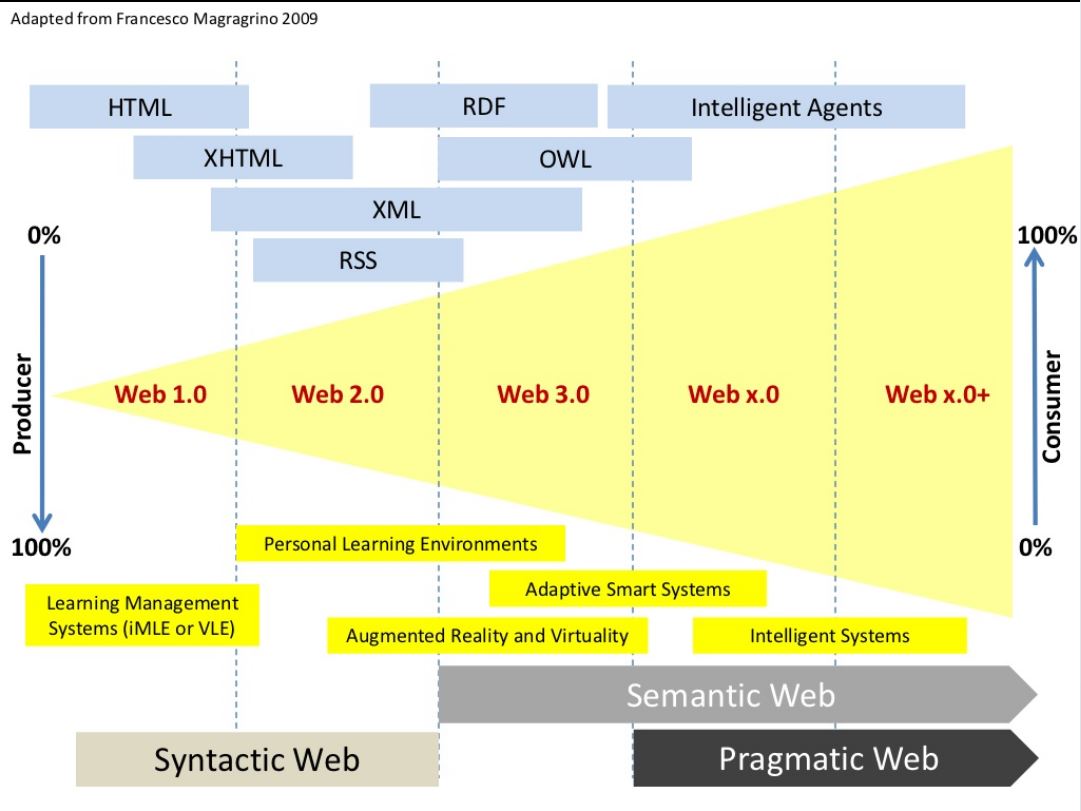
Adapted from the work of Francesco Magragrino
I'm predicting that these would include new forms of distributed computing which would extend further the current capabilities of smart mobiles and other ambient forms of computing. At the social/technology interface, smart tools would combine with collaborative intelligent filtering and recommender systems (based on big data from your previous online behaviour) to create personalised pathways for learners within any infrastructure, and 3D visualisation and interaction would become a common aspect of human computer interfaces.

The Semantic Web would extend beyond the current Web into every aspect of our lives within a richly connected environment, where pervasive technology make the virtual and physical combine and where Web meets world. Touch and non-touch (voice and gesture activated) surfaces would ultimately replace keyboards and mice, and connected computational capability would be more or less woven into the fabric of our clothing and environment. Although this commentary is speculative, much is already in development and in some cases is already available for use.

Previous posts in this series
1: Gazing down the corridor
2: Smart clothing

Graphics by Steve Wheeler

Creative Commons License
Our digital future 3: Semantic Web by Steve Wheeler was written in Plymouth, England and is licensed under a Creative Commons Attribution-NonCommercial-ShareAlike 3.0 Unported License.

August 23, 2016

Our Digital Future 2: Smart clothing

We can't accurately predict what will happen in the future, but we expect it will be different to anything we have already experienced. One recent disruptive innovation is mobile technology. It's astounding to think that only in recent years have we had the capability to create connected technology that can be carried with us, anywhere we go. Wearable connected technologies are now common place.

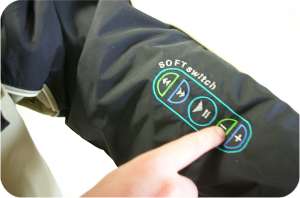
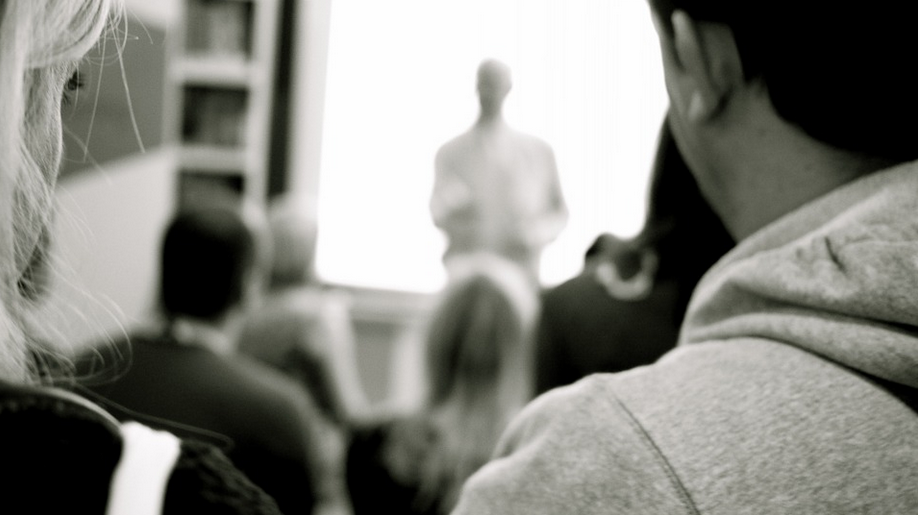
In the not too distant future, wearable technology will extend beyond gadgets. Gadgets such as the Fitbit help users to track their calorie intake, monitor heart rate and capture several other key biometrics. These somewhat clunky devices are worn on the wrist like a watch. They are quite conspicuous and can sometimes get in the way of everyday activities. How much freedom would they provide if such devices were instead embedded in the fabric of our clothing? A camera in your shirt button? Vibrating jewellery that signals a text received? Responsive fabric that lights up in the dark? Shoes that interact directly with the surface you walk upon?

Breakthroughs in clothing design and fabric technology development have already brought us the first connected garments. Clothing that connects to the Internet means that wherever you go, you take your computer technology with you. Smart clothing is an extension of wearable devices - which up until now have belonged almost exclusively to the well-being/health sector.

The Internet of Things, when it arrives (and some would claim it is already here) will introduce a new global digital infrastructure that features, among other things, ubiquitous sensors. Sensors in clothing is a natural extension of that idea. What you wear will interact with your environment and with others around you. Conductive thread, e-textiles, LEDs and other fabric developments mean that our clothing in the future would be able to communicate directly with the Internet, and would respond to a number of internal and external prompts. The video below discusses smart clothing - fashion and functionality. Whether we would like to wear clothing that changes colour to signal our emotions to the world is another matter.


More importantly, how will educators exploit the potential of these new garments? How will schools and universities leverage the potential of smart clothing? I predict this will be slow in coming, because education systems are notoriously conservative. Administrators will be cautious about 'privacy issues', and misuse and will express concerns about security of data. Cautionary tales will be reported in the media. Parents will protest and schools will ban. Maverick educators will take a different approach. Here and there, the lone rangers among our ranks will take risks to explore the potential of smart clothing and other wearable devices. Positive deviants will experiment to see how they might use smart clothing and other wearables to enhance learning experiences.

As I said at the start of this article, we can't accurately predict our future, but it will be different from anything we have previously experienced.

Photo from Health Informatics Wikispace

Previous posts in this series
Our Digital Future 1: Gazing down the corridor

Creative Commons License
Our Digital Future 2: Smart clothing by Steve Wheeler was written in Plymouth, England and is licensed under a Creative Commons Attribution-NonCommercial-ShareAlike 3.0 Unported License.


August 16, 2016

Our Digital Future 1: Gazing down the corridor

The future? It's a little like looking down a long, meandering corridor. A corridor of time where the end is indistinct, and where the lights are flickering on and off erratically. I think I once stayed in a hotel just like that. It is unclear, far from determined, and fraught with surprises and turns, with dim areas of doubt and uncertainty. The future is a slippery thing that cannot be held in the hand. In short, it can't be accurately predicted.

The media bombards us with ideas about how the world will change in the future. It's all technology driven. From robots with personalities and artificial intelligence, to 750 mph trains and exotically powered space vehicles that will take us to the planets; new food technologies and farming methods (floating farms?) that will solve our famine crises; designer drugs, immortality and even head transplants! Crazy perhaps? Well, it's been said that if you can think it, you can create it. That of course, is part of the problem about predicting the future. Many technologies are possible, but not all technologies are expedient. Furthermore, although many technologies could be useful, not all technologies are practical or usable.

Sometimes, a new technology comes along, and we are not ready for it. Remember the Sinclair C5 electric car? Or more recently, Google Glass? Both failed, largely because they were ahead of their time, and raised a number of technical, social, legal, moral, ethical and health challenges that hadn't been previously considered. Now, nearly 4 decades later, we have electric cars, and very soon we will see the proliferation of autonomous cars. These inventions, claim their supporters, will change our future, making road travel safer and more environmentally friendly. The same will apply to wearable vision technologies. They will be retooled to meet the needs of society, with all previously discovered limitations taken into account. We hope.

And that is exactly the approach we should be taking in educational technology. The future for our schools, colleges and universities is just as indeterminate. It will also be driven largely by new technologies. And here, the unstoppable force of new technology will collide with the immovable object of traditionalism. It will be a battleground. The victors will be those who adapt to new trends and technologies, and exploit the affordances and opportunities of the future to provide the best possible learning experiences for their students. In this blog series on 'Our Digital Future' I plan to explore new and predicted technologies and discuss their possible practical impact on the future of education.

Photo from Pixabay

Creative Commons License
Our Digital Future 1: Gazing down the corridor by Steve Wheeler was written in Plymouth, England and is licensed under a Creative Commons Attribution-NonCommercial-ShareAlike 3.0 Unported License.


August 10, 2016

I live and work in the future, but I come home at weekends

As can be seen in previous posts on this blog, I have worked for just over 40 years in educational technology and have been witness to many astounding developments, including the introduction of personal computers, the Web and smart phones. All of these are now embedded into everyday use and have been applied to enhance and enrich learning experiences. My home institution, Plymouth University recently did an interview with me to mark this anniversary, and it appears in the summer edition of our in house magazine, Connect. It might sound like I live in the past, having spent two thirds of my life looking back on the development and history of educational technology, but I have an eye always on future developments. As I remark in my interview, 'I live and work in the future, but I come home at weekends.'

The full interview can be found at this link. Here's an excerpt:

Steve’s particular field of expertise is around the use of technology in education, starting out with those early computers and now moving to the fields of social media and smartphones. It has been the subject of a number of research collaborations over the years, and is something he lectures upon to students on a range of Education courses within the University.

“Technology in schools has to be done properly, and that has always been something I try to convey to my students,” Steve says. “I encourage them to question everything they find out, by having an open mind but a critical eye. And I challenge them to think about the issues schools and universities need to solve, and then to identify how technology might be part of the solution. Used properly, there is no doubt that it can be an amazing platform and something that should be embraced rather than feared.”

Photo by Lloyd Russell and courtesy of Plymouth University

Creative Commons License
I live and work in the future, but I come home at weekends by Steve Wheeler was written in Plymouth, England and is licensed under a Creative Commons Attribution-NonCommercial-ShareAlike 3.0 Unported License.


August 06, 2016

What we think about technology

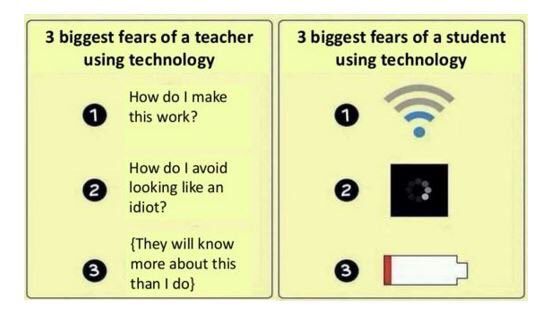
There has been a lot of interest in this graphic thanks to Dr Justin Tarte who recently shared it on Twitter. Justin is very influential on social media, and when he tweets something, it is usually shared again multiple times. There have been several comments and queries about the graphic, so I thought I would elaborate on its origins and my current thinking on its application.

Any graphic is useful if it's simple, and depicts a truth, or a perception, or a question about reality. I discovered the original graphic (right hand side) of students' fears somewhere on the web - but to my shame, I can't locate the originator of the image. It resonated with my own experience as a teacher educator, so I used it in some of my presentations. If anyone reading this knows the name of originator, I'd be grateful, so I can credit them fully. I then developed the original graphic into a teacher version (left hand side) using text derived from numerous conversations with colleagues over the last decade. It acts as a prequel to the student version, and a point for discussion.

Some have remarked that as teachers they identify more with the student perspective. That's because the two views are interchangeable. In conversations with my own student educators recently, something else emerged. I asked them whether this was a true representation of their perceptions of using technology. They agreed that when they were in my teaching sessions, they did indeed worry about the right hand side issues. However, when they were in their own classrooms, teaching their own students, they concerned themselves more with the left hand issues. This is a revealing narrative about how teachers and students view their use technology. It's about context. How you are using technology will shape what you think about it, and also the concerns you will have. Some have also remarked that there are other fears. Yes, I know there are. No graphic about perception is ever complete. Others are welcome to develop this graphic into expanded versions if they wish. Thanks for the interest, and I hope the discussions continue.

Creative Commons License
What we think about technology by Steve Wheeler was written in Plymouth, England and is licensed under a Creative Commons Attribution-NonCommercial-ShareAlike 3.0 Unported License.


August 03, 2016

Turning dreams into reality

Teachers have one of the hardest jobs in society. It's not just the long hours, or the endless struggles with challenging behaviour. Entertaining the flights of fancy and seemingly ludicrous ideas of children day in, day out, can make one quite a cynic. When children are asked what they want to do when they leave school, some have no idea. Others have several ideas, and one or two have their sights firmly fixed on a specific goal. It is not the job of teachers to ridicule or laugh at these hopes and aspirations. Some teachers think they have seen and heard it all. Most do not voice their thoughts out loud, but if they do, it can be damaging to young hearts and minds. Some who read this blog may recall my own experiences in school, and the long term damage that was caused when certain teachers ridiculed me. Teachers have a significant responsibility to nurture children's aspirations and instil within them a desire to succeed, and a determination to achieve their aspirations. School should provide the first steps to turning dreams into reality.

Sir Bradley Wiggins (pictured) is one of the most successful British Olympians. At the time of writing he has won four Olympic gold medals and is also a Tour de France winner. He says he always knew what he wanted to do - to become a champion cyclist. His teacher recalls how she dealt with him while he was in her class. She recalls:

"I had absolutely no idea about what Bradley did outside of school. All of us teaching Year 11 sat around to mark the GCSE course work and somebody passed me this folder and said, have a laugh at this one. See what Bradley's written! So I opened it up and read a piece that he'd written, about his future and where he saw himself in ten years time. He'd written in it that he was going to win a gold medal at the Olympics, and he was going to win the Tour de France, and I'm sorry to say, we just laughed." 

To her credit, his teacher admits that she was so very wrong. "I feel so ashamed of myself that we sat there and laughed at his ambitions.  When I heard about his success I'm sure I blushed at the memory of sitting there and laughing at what he'd said."

Bradley Wiggins reflects on his time at school by saying "Things like that you never forget. You never forget someone trying to put your dreams down."  Fortunately, such episodes in his life spurred him on to achieve the success for which he dreamed. He has gone on to inspire an entire new generation of cyclists and aspiring Olympians. Never laugh at the dreams of children. You may be embarrassed if you do.

Photo by Nicola on Wikimedia Commons

Creative Commons License
Turning dreams into reality by Steve Wheeler was written in Plymouth, England and is licensed under a Creative Commons Attribution-NonCommercial-ShareAlike 3.0 Unported License.


August 02, 2016

Papert - in his own words

Seymour Papert passed away this week aged 88. His efforts to reform education through advancing social-constructivist theory will be perhaps one of his most important legacies. Papert has been widely acknowledged for developing the theory of constructionism. He saw learning as an active process that involved not only social interaction, but also constructing artefacts. Learning by making became an important component of learning in the digital age, and has been used as an explanation of the rise in user generated content.

He also encouraged meta-cognition as an important pedagogical method. In his own words: "You cannot think about thinking, without thinking about thinking about something." That 'something' was clearly the object that could be created through thinking about thinking, about problems, about knowledge.

His work around the early computer programming language LOGO was also ground breaking - introducing an entire generation of learners to the idea that coding could cause direct action with objects and space. The ability to command a floor robot to do one's bidding added a new level of engagement to maths and science lessons. Seymour Papert understood that fundamentally, people learn because they are interested - and that engagement with a problem, construction of an object or exploration of a space was essential for deeper forms of learning.

He was a stern critic of instructional and didactic forms of education, and was a champion of student centred learning, active engagement and creativity. These ideas will continue to inspire generations of educators to come, and his influence will not be dimmed by his passing. In memory of Seymour, here are some of the most significant (and inspirational) quotes from his illustrious career as a thought leader, developmental theorist and influential pedagogue:

On video games: "Every maker of video games knows something that the makers of curriculum don't seem to understand. You'll never see a video game being advertised as being easy. Kids who do not like school will tell you it's not because it's too hard. It's because it's boring."

On student centred learning: "I am convinced that the best learning takes place when the learner takes charge."

On the role of teachers: "The role of the teacher is to create the conditions for invention rather than provide ready made knowledge."

On transferable skills: "We need to produce people who know how to act when they are faced with situations for which they were not specifically prepared."

On the purpose of education: "The principal goal of education in schools should be creating men and women who are capable of doing new things, not simply repeating what other generations have done."

Photo from Wikimedia Commons

Creative Commons License
Papert - in his own words by Steve Wheeler was written in Plymouth, England and is licensed under a Creative Commons Attribution-NonCommercial-ShareAlike 3.0 Unported License.

August 01, 2016

It's complicated

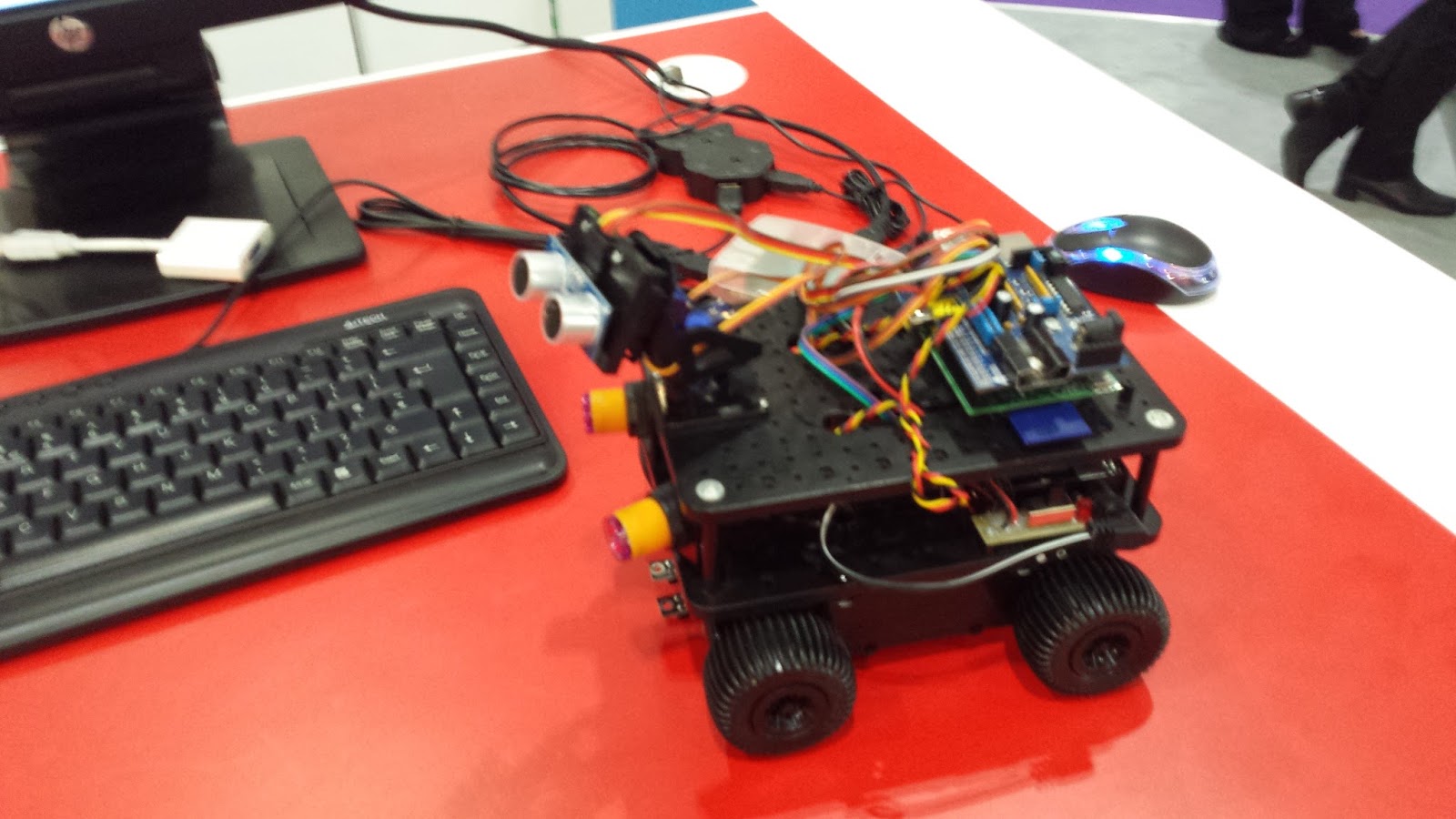
During my recent tour of Australia, I spent a day working with University of Southern Queensland staff on the Toowoomba campus. While I was there I did several presentations and workshops, and also recorded an interview 'on the sofa' with Director of Learning Facilities, Associate Professor Mike Sankey. We discussed the evolution of social media in higher education and also how institutional virtual learning environments (learning management systems) are being developed to cope with new demands of new learners. In higher education we are dealing with an entirely new generation of learners who arrive with several personal digital tools, and expectations that may differ from the intentions of the institution. How do we reconcile these differences?

During the discussion we touched on several key issues that influence this, including digital pedagogy, personal devices, games based learning, interaction and immediacy in online environments, augmented reality, and the use of e-portfolios. We concluded by discussing the merits of personalised learning environments and how to promote change and innovation in traditional education contexts. It's not easy integrating technology into education. It's complicated. A number of factors need to be considered, including the motivations and needs of our students. I think this discussion highlights many of these factors and reveals some of the complexities of technology supported learning in higher education. Here's the video:


Photo by Steve Wheeler

Creative Commons License
It's complicated by Steve Wheeler was written in Plymouth, England and is licensed under a Creative Commons Attribution-NonCommercial-ShareAlike 3.0 Unported License.


<< Back Next >>