


Log on:
Powered by Elgg

Feed detail

July 06, 2015

Reflecting on your practice

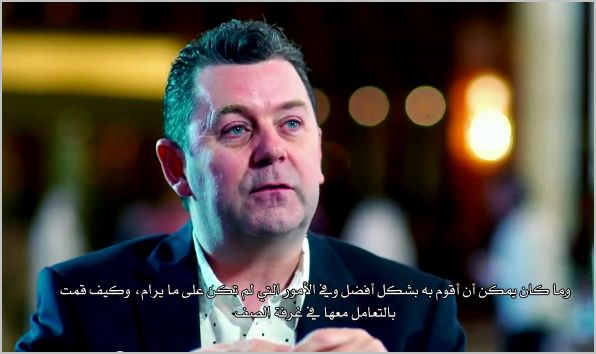
A few months ago I was invited to do an interview for a Saudi Television company. I was in Riyadh, Saudi Arabia to keynote a conference on technology enhanced learning, but for the interview I ended up talking about reflective practice and pedagogy. One of the key points I made was that reflection on practice is important for every teacher to adopt, because thinking critically about what has occurred while you are teaching, and considering ways to improve your decision making skills are essential elements of any form of your professional practice.

Something that is less easy to achieve is reflection in practice. When you are in the thick of it, it is often important to consider what is happening and perhaps change tack, if what you are doing isn't working as well as you expected. This might mean changing your method, introducing a different activity or resources, or actually scrapping your lesson plan and doing something completely different. It's not easy when you are focused on what you are doing, but it is worthwhile never the less. I pointed out that reflection on and in practice are often catalysts to do some action research. I also discussed the idea that blogging and other technology tools can support teachers as they attempt to reflect on their practice.

I hope you find this video interview useful - it also includes subtitles in Arabic for anyone who requires them.


Photo courtesy of King Abdullah bin Abdulaziz Public Education Development Project

Creative Commons License
Reflecting on your practice by Steve Wheeler was written in Plymouth, England and is licensed under a Creative Commons Attribution-NonCommercial-ShareAlike 3.0 Unported License.


July 05, 2015

True pedagogy

Pedagogy is not about directing children. Nor is it, in Brennan's terms 'concerned with the work or art of being a teacher.' Those are mere glimpses of the reality, and only a part of a larger equation. In its absolute form, pedagogy is not just about teaching. It does not simply concern itself with the 'delivery' of education or content. In the truest sense, teaching is just one element of pedagogy and not the entire story. Pedagogy focuses on the learner and what they are capable of achieving. Previously I wrote about the origins of the word pedagogy, and how it can be appropriated into current practice. Pedagogy is about leading learners to the place of education. What does this mean for teachers today?

Pedagogy certainly doesn't require us to drip feed students with content and it is far removed from the harmful and relentless testing of children in schools. Much of the content you and I learnt, and were tested on in school was often lost from our memories days, or even hours after the exam. It is the deeper learning, formed through personal interest, experimentation and reflection, that remains. Pedagogy, when practised appropriately, is about creating environments in which students can learn for themselves, and pursue their curiosity. Pedagogy is about ensuring that students are motivated to succeed in their learning, and it is about providing them with the best possible tools, resources and contexts in which this can be realised.

Teachers have an important role to play in the pedagogical process, but they are often just the ignition point. Inspirational teachers are catalysts for lifelong learning, but they cannot do the learning for their students. Think back - which teachers inspired you to learn, and does their influence still inspire you today? And yet it was you who did the learning. It was you who made the effort to learn and to develop the skills and competencies you now own.

Pedagogy in the purest form describes the leading of students to a place where they can learn. In today's digital age, that learning can be any time, any place, and at a pace that suits each individual. Students already carry the tools to be able to do this. Banning these tools from the classroom has a similar effect to removing an artist's paint and brushes. A wiser decision would be for schools to explore safe, appropriate and effective use of mobile personal technologies to maximise learning. True pedagogy would recognise the opportunities that exist and exploit them. As teachers, we need to appreciate the diversity of learning opportunities that now afford themselves, and adapt our practices accordingly. That will mean standing back and letting students discover for themselves, monitoring their progress, and intervening when necessary.

Reference
Brennan, R. (2003) 'One size does not fit all': The pedagogy of online delivery of VET in Australia. In H. Guthrie (Ed.) Online Learning Research Readings. Leabrook: NCVER.

Photo by Kecia85 on Flickr

Creative Commons License
True pedagogy by Steve Wheeler was written in Plymouth, England and is licensed under a Creative Commons Attribution-NonCommercial-ShareAlike 3.0 Unported License.


July 04, 2015

Never give in!

It is said that Robert the Bruce once sat in a cave watching a spider as it attempted to spin its web. While in exile and hiding after a defeat at the hands of the English, he was inspired by the small arachnid as it tried time and time again, and never gave up. Whether Robert the Bruce was actually inspired by watching a spider spinning its web I know not.  But I can see how such a spectacle could be turned into inspiration.

Inspiration to try again comes from many sources. The great wartime leader Sir Winston Churchill gave a famous speech when Britain was at one of the lowest ebbs in its history, when it seemed that a Nazi invasion was imminent. His speech had echoes of the stirring speech in Shakespeare's Henry V before the battle of Agincourt. One of Churchill's inspirational lines was:

“Never give in. Never give in. Never, never, never, never — in nothing, great or small, large or petty— never give in, except to convictions of honour and good sense. Never yield to force. Never yield to the apparently overwhelming might of the enemy.”

Churchill was nothing if not inspiring. His rhetoric spurred on countless members of the armed forces and civilians to fight against all odds and never give up. That was one of the key reasons why, against overwhelming odds, the British managed to defeat a better equipped, more powerful foe.

Seeing the unseeded players doing battle with the elite tennis stars this week at Wimbledon was a real lesson in perseverance for anyone who watched. They had nothing to lose, and in some cases, actually triumphed. Dustin Brown (a lowly 102 in the world professional rankings) defeated Rafael Nadal, winner of 14 grand slam titles. Yesterday at Wimbledon, Britain's Heather Watson (ranked 109 in the world) came within two points of defeating world number one Serena Williams. You can bet she will come back stronger next time, knowing that she can go toe to toe with the very best in the world and not be embarrassed. No matter how hard or deep the failure, we should never stop thinking about tomorrow.


No matter what anyone tells you, failure is not the end. It is just the start of finding better ways to do something well, as long as you don't give in. We all experience disappointment in our lives. It is how we deal with that disappointment that tells the world about our character. I personally believe that my own failures and disappointments have made me a better teacher. I can empathise with my students when they don't do as well as they had wished, and I can point out to them that it is not the end when they fail. It is simply another opportunity to reflect on their performance and discover what they have to do next time to improve or succeed. Victory after a series of defeats is much sweeter.

If you are fighting a bear, you don't quit when you are tired. You quit when the bear is tired.

Photo by Tom Burke on Wikimedia Commons

Creative Commons License
Never give in! by Steve Wheeler was written in Plymouth, England and is licensed under a Creative Commons Attribution-NonCommercial-ShareAlike 3.0 Unported License. NB: This post in a previous version was first published in 2011.


June 26, 2015

Discursive or recursive? The fractal nature of education

I presented a keynote at the Curriculum Enhancement Day for Portsmouth Business School recently, and chose this bright coloured image as one of my opening slides. It is as beautiful as it is intriguing, and it's known as the Mandelbrot Set. I didn't choose it solely for its visual impact, although as you can see, it certainly is quite a stunning image, and there are many variations. I chose it because I wanted to use it to make a point about what education is, and what education can become. You see, the image represents a mathematical formula that is recursive. In other words, as you zoom in to the image, which represents data points of a mathematical calculation, it continually reproduces itself towards infinity. Mathematicians will understand the explanation below from Wikipedia, but the rest of us might struggle:

The Mandelbrot set is the set of complex numbers 'c' for which the sequence (c, c² + c, (c²+c)² + c, ((c²+c)²+c)² + c, (((c²+c)²+c)²+c)² + c, ...) does not approach infinity. The set is closely related to Julia sets (which include similarly complex shapes) and is named after the mathematician Benoit Mandelbrot, who studied and popularized it. Mandelbrot set images are made by sampling complex numbers and determining for each whether the result tends towards infinity when a particular mathematical operation is iterated on it. Treating the real and imaginary parts of each number as image coordinates, pixels are coloured according to how rapidly the sequence diverges, if at all.

Follow that? Me neither. The rest of us simply admire its visual appeal or marvel at its fractal properties and how it is never ending. The point I wanted to make at the conference was that much of our education systems are fractal in nature. Education is delivered recursively, where students are required to reproduce knowledge that is already known. It's a safe approach to education, and learning can be easily measured. Those that become teachers continue this tradition, teaching their own students the same knowledge, in more or less the same style they were themselves taught. Assessment of learning also has fractal features. Standardised testing is based on reproducing knowledge. Final examination success is premised on the student's ability to reiterate what has already been taught in lessons. There is no room for exploration or creativity in summative assessment.

My point was that when education is conducted in fractal mode, it does not obtain its full potential and students are disadvantaged. I asked my audience to consider the difference between recursive and discursive education approaches. In recursive education, we see reproduction of knowledge, and we see students learning content towards a product - memorising facts and then reproducing them for the examiner. In discursive education, students are allowed to digress from the pathway, investigate new and untravelled pathways, and discover for themselves. Instruction is minimised, learning takes centre stage in the process. This kind of learning can be found in project work, problem based learning and personal research and many other progressive approaches.

My question for my audience was this: How can we as educators provide discursive opportunities for our students? What would it take for us to leave the safe and mundane world of product based, recursive education behind and adopt new pedagogies that promote self discovery, digression from prescribed pathways and learning by a process of serendipity? It would be a major risk for many institutions, and there would be some personal cost. But if we don't try, how will we make any progress? This is an initial foray into this area for me and I would interested in your views on these ideas. As ever, I am open to discussion and revision, because I'm wholly committed to discursive enquiry.

Image from Wikimedia Commons

Creative Commons License
Discursive or recursive? The fractal nature of education by Steve Wheeler was written in Plymouth, England and is licensed under a Creative Commons Attribution-NonCommercial-ShareAlike 3.0 Unported License.


June 22, 2015

Travel, tracking and Twitter

International travel may sound glamorous - but it soon wears thin. I once arrived in Cologne without my luggage (it's a long story). I was in Germany to keynote a large business conference, and I flew through Amsterdam with KLM. So I arrived at Schipol Airport and was whisked away by bus to pass through the obligatory security and passport control checks, before then dashing back across the airport concourse to catch my onward connecting flight to Cologne. There was very little time to get across the airport due to a delay in the previous flight, but gasping and with my heart pounding, I made it to the gate with minutes to spare. When I arrived on board my connecting flight, it quickly dawned on me that I was back on board the same plane. The cabin crew were the same, and the aircraft was in the same place I had left it. What a shame they couldn't have just let me stay on board the plane, I thought, instead of rushing me gasping and sweating across a huge international airport and creating all the stress of airport security and passport control.

Jobsworths.

As I buckled up again, something began to nag at me. What if KLM had removed my suitcase and it was still in baggage handling? What if we left without it? Nooo - surely not? KLM are a big commercial operator, I reassured myself. They would have a handle on my baggage wouldn't they? (see what I did there?) Eventually I arrived in Cologne and stood by the baggage carousel waiting to claim my suitcase. I began to worry. Where was my suitcase? In fact I started to aggonise about my baggage - I was baggonising (well, someone has to invent a new word for this phenomenon). Everyone else on the flight had taken their bags and were on their way to their hotels in taxis by the time I gave up and walked over to the KLM service desk. I had arrived but my suitcase was still in Amsterdam. In it were my shoes, suit, shirts, shaving kit, toothbrush...

Not a problem, said KLM. We can get your bags to you tomorrow afternoon, on the next available flight. Direct to your hotel room. Actually, that is a problem for me, I pointed out. My keynote speech is tomorrow morning, and I'm standing here in jeans, trainers and a t-shirt. What am I supposed to do now? The KLM service staff were not as helpful as the label on their desk boasted. I left the airport, got into a taxi and checked into my hotel, quietly fuming to myself about the incompetence of a national carrier.

I took out my mobile phone and vented my anger by tweeting what had happened. I named and shamed KLM for losing my bags. Within the hour, KLM were on Twitter, responding to my tweet. They told me they were sorry, but a 'technical issue' at Amsterdam had prevented them from loading my bag into my plane. In other words, they shouldn't have removed it in the first place, knowing that I was on the passenger list. KLM suggested I go out and purchase what I needed, and promised me that they would refund me for any expenses I incurred. Result.

So I went out that evening and purchased a new shirt, shoes, underwear, socks, shaving kit and toothbrush. I then submitted my receipts. True to their word, KLM refunded my expenses within the month. My faith in the company was restored. I have flown with them several more times since, but now I always carry my luggage on board with me. Twitter is quite a powerful communication tool, but don't just take it from me.

An article on the BBC News site also shows why it pays to complain on Twitter. Where once the only recourse was to write or phone a company, it is now possible to get very quick responses from large companies. The argument the article makes is that companies a very aware of the power of social media to spread content virally. The last thing they want is for someone to complain about their service or product and for this to quickly escalate beyond control, without them replying or even being aware that they are being discussed publicly. Damage to reputation and brand can have long lasting and extremely detrimental effects on business. Known as 'sentiment tracking', or 'opinion mining', many of the larger businesses now monitor social media channels for mentions of their company name. Twitter is seen by many as a valid indicator of public emotional and political temperature. In the event of an adverse or negative comment, social media managers intervene, and attempt to put things right or ameliorate the situation as quickly as possible. It's good business and makes a lot of sense to invest in social media intervention. It's a useful way for them to have dialogue with their clients, and to develop better customer relations.

In higher education, our customers are our students. Universities must find better ways to respond to student needs, and can do a lot worse than paying closer attention to the social media strategies of the big companies.

Photo by Usuario Barcex on Wikimedia Commons

Creative Commons License
Travel, tracking and Twitter  by Steve Wheeler was written in Plymouth, England and is licensed under a Creative Commons Attribution-NonCommercial-ShareAlike 3.0 Unported License.


New and emerging technologies

I was interviewed recently by the team from Sponge UK in the beautiful gardens of Drake's Place, at Plymouth University. The video below is the result of that interview, in which I answer questions such as: what emerging technology trends have the greatest potential for learning? What tips you you have for people wanting to invest in emerging technology? and should we be waiting until our learners adopt new technology or should we be leading the way as learning providers?

As you might expect, smart mobile technologies, personal learning environments and social learning feature prominently. I also take a gaze into the near future of technology supported learning with some comments on augmented reality, the semantic web and the rise in bring your own device strategies in the workplace.


Video and image courtesy of Sponge UK

Creative Commons License
New and emerging technologies by Steve Wheeler was written in Plymouth, England and is licensed under a Creative Commons Attribution-NonCommercial-ShareAlike 3.0 Unported License.


June 20, 2015

The next steps

All good things come to an end.

This term I say farewell to not one, but two groups of my student teachers. It has been quite a journey for all of us.

The third year B.Ed (Hons) education students are leaving, and so are our fourth year students - the last cohort of an older 4 year programme. In September I will see them all together one last time when they return to the university to receive their degree awards in a ceremony on Plymouth Hoe. Most, if not all of them, will be in their new teaching jobs by then, doing their very best to positively impact the lives of the children in their respective schools.

Each will have a number of secret weapons to use in their new careers. The excellent training they have received at Plymouth Institute of Education will carry them through just about any situation they find themselves in. They will be able to integrate and embed technology into any subject. Most importantly, they will be able to think critically and strategically about the problems they encounter and will be able to arrive at novel solutions. They will be champions for change and innovation, and I know that every one of them will achieve significance in their new careers.

Reflecting back on their time at university is made easier because of the blogs and other digital artefacts they have left in their trail. The final posts by some of my students say it all. This post by Tyla Elworthy (who achieved a first class degree) is her own reflection on her journey. Another by Megan Douglas traces the trials and triumphs of her four years studying to be a teacher on our digital literacy specialist pathway. Both of these students, and many of their peers took part in extra-curricular activities such as organising Teachmeets, running the University's student led Education Society, and speaking at events beyond the walls of the university. We have made the latter a tradition now, because the benefits are beyond measure. Four of our first years now speak each year in the Learn Live arena at London's BETT show. Tyla and three others from her year group - Aaron Fisher, Alice Evans and Alex Druce - were 'dropped in the deep end' during their second term at the BETT Show in 2013 - I was there to witness their success as they enthralled the audience with their energy and enthusiasm. Watch out for next year's presentations!

Hannah Shelton's blog is a great documentation of her time spent on teaching experience in the Czech Republic (we also run several opportunities each year for our students in Denmark, Finland, the USA and Chile) and reflections on her experiences as a student educator.  Chris Nesbitt's blog is a wonderful example of how students can gain a deeper understanding of theory by writing about it online in front of a potentially worldwide audience of readers. The same can be said for Lloyd Chilcott's blog which is replete with great interpretations of pedagogical theory. There are several others, too numerous to mention in this small space. Each has developed their own web presence and digital brand as they have progressed through their studies. I hope these new teachers continue to blog about their experiences, knowledge and practice as they progress through their careers.

I'm very proud of all my graduands - they will all go on to achieve a lot in their careers, and the legacy will not die. Others are already following in their footsteps - each striving to be the best they can possibly be as educators. Each intent on creating the best possible learning environments for primary school children. I will miss them all, but in the final analysis, my own small input into their development as teachers will now be amplified through their own efforts to provide children with the best possible start in life. I wish each and every one of them the success they have worked hard for, and give them these last few words of advice:

Always be true to yourself. Never stop learning or wanting to learn. Be the best you can possibly be, because the children will watch you closely and will copy you. They will look up to you, so never look down on them. Go out and educate the world!

Photo by Ian Britton on Free Foto

Creative Commons License
Sun, Sangria and Spanish flies by Steve Wheeler was written in Plymouth, England and is licensed under a Creative Commons Attribution-NonCommercial-ShareAlike 3.0 Unported License.


June 15, 2015

Sun, Sangria and Spanish flies

It was a lot of fun to be in Barcelona at the same time as Doug Belshaw, Martin Weller, Audrey Watters and several other members of my PLN. We were there for two different, overlapping conferences and it was too good a chance to miss. So, one evening as the sun was setting, a whole bunch of us ended up  down a side street in a tapas bar enjoying the culinary delights of the Catalan capital.

After a few glasses of sangria we began regaling each other with our stories. At one point someone asked us all to say what was the worst job we'd ever had. When it came to my turn, I thought back to my late teens and the summer holiday I had spent earning a little extra cash to see me through my college course.

I had managed to get a holiday job working in a large canning factory, and learnt a lot about how canned and bottled goods were produced. I remember watching as lemonade was bottled. I was quite surprised. After an hour of bottling the most expensive brand of lemonade, a bell sounded and the production team switched labels and started bottling a budget version. It was the same lemonade, just different shaped bottles and different labels. And a very different price.

One morning I was tasked, without any training and with minimal instructions, to work on the marmalade production line. My job was to take the huge cans of orange pulp that had arrived from Spain, lift them onto an automatic can opener, press a button that took the top off, and then dump the contents into a large vat on wheels. When about 20 cans had been dumped into the vat, it was wheeled off, and another took its place. Then the process began again. It was mind numbingly boring... until the moment I lifted a relatively light can up onto the can opening machine.

I thought it was rather strange that it was not as heavy as the others, but because no-one had told me any differently, I carried on. I pressed the button on the can opener and the machine deftly removed the top ... and then .... shock horror! Several thousand flies swarmed out in a huge black cloud and began angrily buzzing around the factory. It was an event of biblical proportions. Within seconds panic had spread. Grown men and women were running screaming from the building. It was absolute mayhem.

The management were forced to shut down the factory for a full 24 hours so it could be completely disinfected. We were all sent home on full pay. The incident of the Spanish flies cost the factory owners a full day of production and I was never asked to work on that part of the production process again. No-one ever blamed me for the debacle, because I had received no training on the job.

The moral of this story? Derek Bok was right. If you think training is expensive, try ignorance.

Photo by Christopher Lynn on Flickr

Creative Commons License
Sun, Sangria and Spanish flies by Steve Wheeler was written in Plymouth, England and is licensed under a Creative Commons Attribution-NonCommercial-ShareAlike 3.0 Unported License.


June 13, 2015

In our own image

In this week's edition of Time Magazine, an article entitled One Small Step traces the recent development of humanoid robots. Written by Lev Grossman, the article questions why we have such an obsession with human shaped machines. Exactly what is behind this anthropomorphic desire to design robots that move and look like their makers? We can see a purpose for self driving cars, robot manufacturing and even robot vacuum machines for the home. But robots that actually walk and behave like us? This sounds like the narcissism depicted in the welter of Hollywood feature films that have been released in recent years, such as Chappie, I, Robot and Ex Machina.

Each carries its own coded warning about what happens when we try to create machines in our own image, and each poses fundamental questions about the inevitable problems of relationships, ethical dilemmas and the threat to humankind. Add Artificial Intelligence into the mix and the possibilities become frightening. The creation may inevitably wish to emulate, or even usurp, its creator. This is a trope that has been with us for almost as long as we have been telling stories. From the malevolent Frankenstein's Creature to the more benign Pinocchio, and the sentient Star Trek character Data, we see a recurring narrative in which the created being yearns to become more human.  It shapes the discourse surrounding our technological future, and lurks in the background of theories such as the technological singularity.

So why the need to design machines that are human shaped? The answer given by the scientists who design humanoid robots is that the human being is the perfect form. The human body has exceptional mobility in comparison to most other animals, and can negotiate just about any terrain it encounters. But this also becomes the downfall when we try to create robots that emulate human movement. It is extremely difficult to achieve, not least because the robot has to carry its own power source with it, a problem that can profoundly influence its design. It is not uncommon to see humanoid robots trundling around wearing huge backpacks.

Furthermore, what we take for granted - walking, balancing, sitting down and standing up - is extremely difficult to program into the frame of a humanoid robot. It requires a sophisticated arrangement of servo motors and hydraulic systems for movement, and also needs to sense where it is in relation to the objects and environment around it. Building a human machine is a very hard proposition.

The teams that attempted to meet the challenges of the DARPA Robotics Challenge discovered this time and time again. Designing a robot that can walk or manipulate doorhandles is a frustrating process that takes months of programming, trials and tests and ultimately, a return yet again to the drawing board to iron out more prosaic faults that threaten to ruin the entire enterprise.


This video of robots falling over while attempting to complete minor tasks such as getting out of a car or walking up stairs is hilarious. It seems a long way off before we can begin to worry about humanoid machines taking over the world. But the video should also make us think - what happens if and when scientists eventually crack the problems? When we do have machines that can walk and talk and also have an inbuilt intelligence, what happens next?

Image by Richard Greenhill and Marie De Ryck on Wikimedia Commons

Creative Commons License
In our own image by Steve Wheeler was written in Plymouth, England and is licensed under a Creative Commons Attribution-NonCommercial-ShareAlike 3.0 Unported License.


Unfix your mind

Why is it that we find it difficult to step outside out mindsets? It seems very difficult to change a pattern of thinking once it has been established. We seem rooted in the thinking of the age in which we exist, and this constrains our creativity. This was why Voltaire declared that

'Every man is a creature of the age in which he lives and few are able to raise themselves above the ideas of the time'.

We need creative thinkers. We need people in our society who can break free from the constraints of 'the ideas of the time', and 'think outside the box'. Research in cognitive science reveals to us a great deal about the problem of constrained thinking. In one experiment in problem solving, psychologists showed the image below:

The problem was how to connect all nine dots with just 4 straight lines. The rules of the problem were that the four lines had to be continuous, with no lifting of the pencil from the page. Most participants couldn't complete the problem in the time allocated.

Those who were unsuccessful saw a box. They constrained their thinking and could not see beyond the boundaries they had imposed upon their own thinking. The successful ones thought outside the box and saw other possibilities. The solution below shows how the problem can be solved if you break out and think beyond self-imposed constraints.


The problem of self-imposed constraints is otherwise known as functional fixedness and occurs in various contexts every day. We travel to work by the same route, and we have a specific routine for every task we do during the day. We rarely think about ways to do things differently, because we are risk averse, or simply comfortable in our routines. Creative thinking demands some risk taking. Creativity is not born out of being comfortable. It requires different patterns of thought that are outside routine, and beyond the regular. Creative solutions often emerge when we think ... 'there must be a better way to do this' ... and then examine the problem from all the possible angles. The solution to the nine dots problem above seems difficult to find at first glance but once it has been revealed, it is very obvious. There are many other similar problems we face in our daily lives, but often our fixedness prevents us from finding the solution. 

So here's a problem for you to solve, to practice developing your creative skills: 

A man enters a field with an unopened package - and dies. What was in the unopened package? 

Write your answers in the comments section below.

Graphics from Wikimedia Commons
Image from Allan Ajifo on Wikimedia Commons

Creative Commons License
Unfix your mind by Steve Wheeler was written in Plymouth, England and is licensed under a Creative Commons Attribution-NonCommercial-ShareAlike 3.0 Unported License.


June 11, 2015

Open all hours #EDEN15

Martin Weller's keynote presentation at EDEN 2015 Conference was entitled 'The battle for open.'  A professor of educational technology at the British Open University, he has been an advocate of openness in education for many years, but he expresses doubts over the outcome of the battle. His latest book, also entitled 'The battle for open' carries the strapline 'how openness has won and why it doesn't feel like a victory'. The synopsis reads:

With the success of open access publishing, Massive open online courses (MOOCs) and open education practices, the open approach to education has moved from the periphery to the mainstream. This marks a moment of victory for the open education movement, but at the same time the real battle for the direction of openness begins. As with the green movement, openness now has a market value and is subject to new tensions, such as venture capitalists funding MOOC companies. This is a crucial time for determining the future direction of open education. In this volume, Martin Weller examines four key areas that have been central to the developments within open education: open access, MOOCs, open education resources and open scholarship. Exploring the tensions within these key arenas, he argues that ownership over the future direction of openness is significant to all those with an interest in education.

Clearly, the tensions he identifies require some analysis. In a previous interview I conducted with him, Weller emphasised the idea that openness is a philosophy that can pervade all educational practice. Throughout his keynote presentation in Barcelona, Weller built on this, regularly reminded delegates that openness has been victorious, and we have reached a certain point in the history of education where openness is now mainstream. However, he said, there is a time of tension, where this doesn't yet feel like a victory, and we are now deciding the direction of openness.

His main premise is that we need to be able to define, and understand, the implications of openness in education. What are the core principles of openness? he asked. There is also a battle for narrative raging, where the victor will write the history of openness, he said, continuing the metaphor. Early efforts at openness, including the British Open University, were about removing barriers to study - this university became known as the 'university of the second chance'. The open source movement emerged, with an emphasis on efficiency, and on the rights to use and modify software and tools. Finally, the emergence of Web 2.0 created and encouraged a culture of content sharing. Different elements of this history will resonate with different people he said, so that one definition of openness is problematic.

He traced a brief history of Openness: It starts with a belief in openness that is for the public good - leading to democratisation of knowledge. Then there is resistance to this, because it is unworkable, and low quality. Openness then becomes mainstream, is adapted and adopted by the big companies.

We are now at the stage where at least 50% of academics have published in open access journals (Stats from Wiley), an there is a growth in Open Educational Resources including OER Commons, with many universities now providing free content. There is a rise in open textbooks, where publishing is on demand and open licencing is available. There is a rise in the impact of these research outputs, with open access journals gaining ground in the impact indices. There is the provision of open stats, and data sets are posted online so that anyone can use these data for further research.

Weller talked about the hybrid publications swindle, where publishers charge authors to publish their work and then charge subscribers to read the content - a cynical, 'double dipping' strategy for making money out of the efforts of academics. Weller asked whether the idea of education being broken is now being monetised by the big edu-businesses and Silicon Valley entrepreneurs. The dominant narrative now is that MOOCs are the technological solution and education is ripe for disruption. The demise of the university has been heralded by people such as Sebastian Thrun, but this is largely a spurious claim, said Weller. This narrative creates a false dichotomy where you are either 'open' or 'closed'. This is unhelpful he argued, because it forces people into extremes of thinking about the web and education in general.

Ultimately, said Weller, the concept of openness allows us to be more creative and to take more risks. Openness is about to move into the mainstream, said Weller, but this is not inevitable. He warned that there is always resistance even once victory has been achieved, and where old frameworks and ways of thinking take a long time to die out. Change happens very slowly, and then come very quickly.

Several of Martin Weller's slidesets are available for free download here.

Photo by Steve Wheeler

Creative Commons License
Open all hours #EDEN15 by Steve Wheeler was written in Barcelona, Spain and is licensed under a Creative Commons Attribution-NonCommercial-ShareAlike 3.0 Unported License.


Good morning Barcelona!! Jim Groom at #EDEN15

Among other things, Jim Groom is Director of the Division of Teaching and Learning Technologies and adjunct professor at the University of Mary Washington, USA. I say among other things, because Groom is known more readily for several activities that outshine his day job. He is nicknamed the 'Reverend' (oh the irony), and is a purveyor of American pop culture, experimental educational technology and out-of-left-field philosophy.

Groom's popular and anarchic blog Bavatuesdays is a regular port of call for all those seeking this kind of eclectic and irreverent mashup of concepts, thoughts and opinions. Groom is also responsible for coining the term 'EDUPUNK', a nod to the remixing and do-it-yourself culture that has emerged in recent years in education as a refection of the 1970s punk music scene. He has set up a number of alternative learning experiences, but most notably, his MOOC on digital storytelling, more commonly known as ds106, has had tremendous impact on what we now consider to be possible with global, networked learning.

Listening to Jim Groom speak is a lot of fun. His 'formal' introduction for the event went a little like this:

“Reverend” Jim “The Bava” Groom, alias “Snake Pliskin” is a charlatan and a fraud, a self-confessed “used car salesman” clawing his way into the glamour of the education technology keynote circuit via the efforts of his oppressed minions at the University of Mary Washington’s DTLT and beyond. The monster behind educational time-sink ds106 and still recovering from his bid for hipster stardom with “Edupunk”, Jim spends his days using his dwindling credibility to sell cheap webhosting to gullible undergraduates and getting banned from YouTube for gross piracy. (Dave Kernohan). 

Not a good start. His keynote speech at EDEN 2015 started in an anarchic, Robin Williams style 'Good morning Barcelona!!' shout.

Groom made several key points around the process of 'uneducation' (a term he borrowed from Brian Lamb) where he talked about 'descent into the maelstrom' - an account of effects of modern networked communication on professional practice. He asked the question 'how do we build an architecture that allows us to aggregate content from across the web and coalesce it in a centralised hub for learners?' Spontaneous network connections, incorporating social media into physical spaces, the use of digital repositories such as Wikipedia, all seemed radical several years ago. Tracing the history of online open learning, Groom talked about MOOCs emerging in 2008, which were about syndication, open networks, and about self organising communities building new practice for the web. He spoke on EDUPUNK and the arrival of 'do-it-yourself' learning where technology brought power to the individual. Education is about the exchange of ideas, and is not about technology, it is about people, he declared.

EDUPUNK was not about dismantling the education system, he said, but about reorganising the space, and about vitalising learning. In 2010, during a class Groom taught at Mary Washington University, Groom began to think about the work on MOOCs and how it could be harnessed to support his students' learning. He created ds106 - digital storytelling where each student would have their own web presence, create their own space, interrogate the web and build their own digital footprint. It was EDUPUNK remixed, but without the inconvenient metaphor. The international community of learning took to this with relish, with creative processes such as Grant Potter's self organised internet radio space, conveniently named ds106 Radio. Over 500 people's blogs were aggregated onto the central ds106 website, and the creativity was supported further. It was an open creative space for everyone within the community.


He featured a bizarre YouTube video of himself as 'Dr Oblivion' introducing ds106.


Jim Groom eventually replaced Dr Oblivian (who went missing) and led the course himself, and this identity sway provoked some creativity from the students, who created spoof videos and posted them on the web, including one entitled ds107. However, all of this identity play wasn't just fun for fun sake. There is a serious underpinning philosophy, where students gain a personal space on the web which they can control, and which is the antithesis of the institutional VLE/LMS. This, said Groom, is the essence of digital literacy. Students were given an innovation tool kit within their own domain, so that when they leave the university, they take it with them to us as they will.

Groom's concern is that users of the web reclaim their content and identity, where they can take back control of their domain, publishing online and syndicating everywhere. It becomes a new virtual infrastructure for learning, communicating and creating. It returns to the EDUPUNK ethos where instead of resisting the chaos, we engage with it, opening up a pedagogy of uncertainty, in a do-it-yourself style education.

Cue applause.

Photo by Steve Wheeler

Creative Commons License
Good morning Barcelona!! Jim Groom #EDEN15 by Steve Wheeler was written in Barcelona, Spain and is licensed under a Creative Commons Attribution-NonCommercial-ShareAlike 3.0 Unported License.


June 10, 2015

Networking the future #EDEN15

Audrey Watters and Maarten de Laat at EDEN
Maarten de Laat's keynote speech at EDEN 2015 contained all of the ingredients for thoughtful and reflective consideration of how we now teach and how students now learn in an increasingly networked society. A professor at the Dutch Open University, Maarten de Laat researches into networked learning and the use of digital media in education. He is particularly interested in knowledge creation and applies many of his findings in teacher development.

de Laat started his presentation with a humorous video about 'new learning' in which a Star Wars style conversations between a Jedi master and his young padwan explores the nature of knowledge and learning. The video showed how we overcomplicate education through complex language and not really delivering what we promise. Is education aligned to provide the new forms of learning our next generation of students expect to learn? Teachers need active networks of learning to make the leap to new forms of learning. They have to be open, responsive to change and in dialogue with fellow experts to keep pace with the new trends and technologies as they emerge.


He aligns his research in networks with open practices, arguing that collaboration is paramount as a means of understanding wider and more holistic knowledge. Solving problems together is increasingly a theme of networked learning said de Laat, but how can formal organisations deal with this new demand? How can they set up and maintain new and more informal spaces where this kind of learning can be nurtured and supported. Can traditional organisations stand back and allow students to be more autonomous and to network in informal ways to supplement their learning in authentic ways?

Traditionally, teams and groups think they own their knowledge, but increasingly we see that the knowledge generated is owned by the wider community, because the digital technology that provides the physical networks makes this possible, he said. He moved on to the idea of Open Practices, where participants log in with their own social media profile and this enables the network to identify the individual and then find others within the same geographical location who have similar interests, skill sets and proclivities. It's a kind of digital matchmaker that is being developed. de Laat showed The Crowd where a similar scenario can be achieved, where teachers can connect together through a common platform, and match their activities through key questions. Networks not only provide connections to peers, they are also energising and provide opportunities to work spontaneously, a big consideration in business learning and corporate training for example. Networks also make knowledge flow, provide easier access to a variety of relevant sources and develop friendships and communities relationships.

There is also a downside though, he warned, because networks can be volatile, are often invisible and difficult to discover, ad have an informal nature which does not always align to company or institutional policies. These can be referred to as 'wicked problems', and rely on individual accountability as well as centralised management and control - quite a dichotomy.  Networked learning though has more positive aspects, and de Laat and his team are developing a number of research programmes that will help networks to become more visible, and attempt to measure how they can add value to learning in the digital age. Networked learning should not be seen as a new project said de Laat, but an extension of what already exists, and it should be conducted transparently, and with better visualisation capability. Also, networks that are separate can be brought together, with specific indexing techniques, user analytics and topic clouds, methods that are elaborated on in de Laat's work such as this publication on networked learning.

The future is connected, the future is networked. Networked learning in open practices is all about openness, transparency, mobility and value.

Photo by Steve Wheeler

Creative Commons License
Networking the future #EDEN15 by Steve Wheeler was written in Barcelona, Spain and is licensed under a Creative Commons Attribution-NonCommercial-ShareAlike 3.0 Unported License.


Still, Watters runs deep #EDEN15

Audrey Watters and Maarten de Laat
Education writer and journalist Audrey Watters describes herself as a recovering academic, serial dropout and rabble rouser - her blog also carries the epithet 'trouble maker'. Her involvement in the Hack Education movement derives from her dissatisfaction with current school regimes and her outspoken criticism of traditional education practices has led to her championing alternative education movements such as the flipped classroom, MOOCs and open courseware - and of course, the use of digital learning technologies.

It was therefore with great anticipation that delegates at the 2015 EDEN Conference in Barcelona, gathered to hear her speak. But was she preaching to the converted? Watters certainly modelled the themes of the EDEN Conference - the challenges of expanded learning scenarios. In her speech entitled 'Learning Networks, not Teaching Machines', she talked about the the century old efforts to modernise education and attempts to integrate technology, and then discussed the ideology around networks and learning.

Villemard, c 1910
She used a quote from David Golumbia: 'The network map is not the politcal territory' which traced the word 'network' back to the introduction of the railroads in America, the word now relates to the way people connect and communicate using digital media. Educational technology is not new, she said, but we must avoid purposeful reinterpretation of history. One of the first institutions that was networked was the university, which was the first subscriber to the Internet. She is concerned about embracing globalisation if it actually means the Googlisation of humanity. She showed the famous slide of education 2000, painted by the French artist Villmard, and used it to erroneous interpretation of what technology can achieve. It confirms our beliefs and worst fears that the future of education will be mechanised, and about content delivery, where knowledge is something that must be 'put into' students heads, and reminds us that with each subsequent innovation, we maintain the more traditional, but increasingly irrelevant vestiges of education. More images by Villmard were used to represent content primacy, at the expense of true pedagogy.

Villemard, c 1910
And yet, the students in Villmard's image are actually networked. They are connected by wires to the grinder that dispenses knowledge. They are not isolated from each other in the way the viewer of Edison's film projector is. They are still the recipients of knowledge rather than the transmitters we now know them to be. The web is not distributed evenly, said Watters, and there are many injustices found within it.  We must think about building our technology on the old networks - they don't go away, they are vestiges that remain. We are building our new learning networks on pre-existing and emerging monopolies. This is the political dimension we often conveniently ignore. The control of the network matters. we have to pay attention to the networks - the physical infrastructure and not just the metaphor of the network. Who controls the data? she asked, as this is a question that will increasingly impact upon networked education. Despite the promises we hear that the internet is going to democratise knowledge and learning, we should know that in reality the networks are controlled by massive commercial interest, she warned.

We still think about broadcasting content to people in mass education contexts, Watters complained. This is technological imperialism, she said, and a radical change in pedagogical ideology is required before we will see any true changes in education. When we invoke learning network today, it is naive to think it is not influenced by commercialism. She even went was far as to predict that the web as we now know it will likely be replaced by something else. There is a battle over who controls the network, she said, and educators need to make sure that we build networks in which equity and justice can thrive and be nurtured.

This was a very thoughtful and challenging keynote presentation. She may have left academia behind, but still, Watters runs deep.

Audrey's original notes can be found at this site.

Photo by Steve Wheeler

Creative Commons License
Still, Watters runs deep #EDEN15 by Steve Wheeler was written in Barcelona, Spain and is licensed under a Creative Commons Attribution-NonCommercial-ShareAlike 3.0 Unported License.


June 09, 2015

#EDEN15 BCN

Barcelona - the home of Gaudi
This year's EDEN annual summer conference kicks off in beautiful Barcelona later today with a welcome event and the awarding of several EDEN Fellowships. EDEN2015 promises to be an unforgettable event for anyone involved in digital education. Over the next three days, delegates will listen to keynote speeches from a number of thought leaders in the field of technology supported learning, including Pro-Vice Chancellor of the British Open University Belinda Tynan, Maverick US educator Jim Groom, one of the leading lights of the Open University of Catalonia, Professor Albert Sangra, and veteran distance educator Alan Tait. We will also hear from the OU's Professor Martin Weller (his latest book The Battle for Open is available to download online) and journalist Audrey Watters. What can we say about EDEN that has not already been said. Now in its 24th year, the event grows from strength to strength, with two annual events every year, an individual membership of over 1200 worldwide practitioners in all sectors of education and training, and a well-oiled mechanism in support.

This year we continue with a high profile social media coverage, including a dedicated Twitter channel (follow @edenconference on Twitter and also the #EDEN15 hashtag) and liveblogging from the plenary sessions. I also have several keynote interviews scheduled throughout the next few days which will be posted onto the EDEN YouTube channel post-production. The EDEN Network of Academics and Professional (NAP) will also be hosting several #EDENChat sessions live on Twitter from the conference. Do join in any way you can, so you don't miss out on the excellent dialogue we will be having around MOOCs, Open Educational Resources, learning analytics, mobile learning, personal learning environments, social media in education and a whole host of related subjects too numerous to mention.

Photo from Pixabay

Creative Commons License
#EDEN15 BCN by Steve Wheeler was written in Barcelona, Spain and is licensed under a Creative Commons Attribution-NonCommercial-ShareAlike 3.0 Unported License.


June 04, 2015

Roving reporters #EduTECHAU

One of the many, many highlights for me of my time at EduTech Australia this year in Brisbane, was an interview I did with some of Pearson's sponsored students roving reporters. Still in high school, they were everywhere, investigating the sights and sounds, and grabbing a few minutes with keynote speakers and delegates to see what they could learn. It is a fabulous idea that other conferences should adopt. My two intrepid reporters, Ryan and Sohan (Sohan sat behind the camera) asked me about my views on the current education system, and how I saw learning changing in the future. They had done their homework and knew exactly what questions to ask me.

Clearly there was a lot I was able to say to these young journalists, including sharing my beliefs about how important student centred learning is, the new and emerging roles of teachers as co-learners and the role technology is playing in shaping their lives and their futures. Ryan's final question was one that made me stop and think - what would I have wished my younger self to have known?

I thought back over my own time in school, which wasn't always a happy time, and I remember the fear of ridicule that constantly hung over me. Back in the wonderful 1980s, Adam Ant, one of the new romantic pop stars of the time sang a song in which there was a line 'ridicule is nothing to be scared of.' And yet, when you are young, it is very much something to fear. You want to belong, you have a deep need to be liked and to fit into your peer group. This didn't always happen, and there were times when I felt isolated from the rest of the group. So I answered with: 'Always be true to yourself, and stand by your principles, no matter what...' I explained to them that when you are younger this can be difficult. Your integrity comes under attack when you are pressurised into conforming with the rest of the group, asked to run with the pack. Sometimes it takes a great deal of personal strength not to comply, especially when you are uncomfortable with what the group is planning to do. Many of my friends took drugs as school, or went out in the evenings to create havoc. I spent most of my time resisting this, and stood out like a sore thumb.

So I said - always be true to yourself, and stand by your principles. It's something that, as you grow older, you come to develop as a part of your daily life. I then turned the tables on my two young interrogators, and asked them some questions. I asked them what they would like to see happening in school. They told me that there were two important things that teachers should support. The first was more collaboration in learning, where students could work together to discover new things and consolidate their learning. They also emphasised a need for more learning through making. They enthused over makerspaces and the idea of learning through problem solving. These boys will go far. They already have an understanding beyond their years about what really helps us to learn. The video of the interview(s) will be available on this blog and elsewhere when Pearson's post-production team have wielded their magic.

Photo by W Finch on Wikimedia Commons

Creative Commons License
Roving reporters #EduTECHAU by Steve Wheeler was written in Brisbane, Australia and is licensed under a Creative Commons Attribution-NonCommercial-ShareAlike 3.0 Unported License.


June 02, 2015

Assessment, but not as we know it... #EduTechAU

Eric Mazur's keynote presentation at the opening session of EduTech Australia was predictable, but welcome none the less. He spoke on the purposes of assessment and exposed the roots of the examination regime that many of us in schools, colleges and universities are oh so familiar with. Harvard physics professor Eric Mazur is well known for his rejection of traditional educational models, so his attack on assessment was anticipated by many of the large audience of several thousand educators, who nodded sagely, but probably won't be able to do much to change things. What do we assess for? he asked. For Mazur, assessment today is simply to give grades, for as he pointed out, students don't study to learn, they study to earn their grade. What is in a number? How can something as complex as learning be reduced to a single figure? Why doesn't assessment provide more to the learner than a grade? Because it was established at a time when knowledge was the main currency for education, and where employers demanded knowledgeable workers. That has changed now, and the new, transferrable skills employers demand go beyond the recounting of facts, but the education system has lagged behind, he argued.


Mazur then moved on to the subject of testing and cheating, declaring that it is not the student that is the problem, it is the assessment regime we impose that causes the issues. Testing exerts huge pressures on students, who are expected to perform flawlessly in high stakes examinations, which they endure in isolation. No wonder there is cheating, he argued, but we should not blame the students. Children who learn to tie their shoe laces, or feed themselves with a fork don't cheat, he pointed out. And neither do students who own their learning, and who see specific, daily purposes for it. Why can't assessment be made more relevant to the new requirements of learning in an age where students need to be problem solvers, inventive and creative. Assessment destroys creativity he declared, and again his audience of educators nodded sagely.

With the advent of wearable technology, he mused, will students soon be required to sit their tests naked? It was a throw away remark, and the audience laughed politely, but the underlying thought was quite serious. Should students now be allowed to enter the exam room with devices? (This is a question I also recently posed on this blog) After all, should we be testing their knowledge of facts, or should we be testing their ability to use these facts in particular contexts, such as problem solving and critical analysis of daily activities? Our grading and testing practices, said Mazur, are incompatible with creativity.

Generally, although Mazur's presentation was predictable, it was also a useful set up for three days of dialogue around the future of learning in all sectors - primary, secondary, tertiary, vocational and corporate learning are all represented at this event. EduTech Australia is a large event, probably the largest of its kind in the whole of Australasia. This Brisbane based conference would be a nightmare for traditional educators, but is a strong affirmation for those of the more progressive persuasion.

Photo by Steve Wheeler

Creative Commons License
Assessment, but not as we know it... #EduTechAU by Steve Wheeler was written in Brisbane, Australia and is licensed under a Creative Commons Attribution-NonCommercial-ShareAlike 3.0 Unported License.


May 28, 2015

Devil in the detail

So psychologist Guy Claxton believes that erasers are an instrument of the devil. I can understand why he thinks so. After all, erasers (or to use a term that Americans titter over - rubbers), cover up a multitude of sins. Children can quite easily work their way through a problem, erasing their mistakes as they go, and end up with a seemingly perfect piece of work. Claxton believes that erasers 'create a culture of shame about error' and believes it promotes dishonesty. OK, so this very much sounds like a storm in a teacup and a seemingly trivial battle to fight when there are much more important areas of concern to engage with in education. And yet, some would argue that Claxton has made an important point. Students can, and should, learn through their errors, and sometimes, showing a full working of a problem complete with errors, has a certain pedagogical power. Should errors be covered up? Students should sometimes be given permission to fail, because in so doing they learn how to do something better the next time. I wrote about this some months ago when I bemoaned the fact that only children's perfect pieces of art are seen on display in school reception areas. Little Sarah's picture looks wonderful, but you don't get to see the five previous, crap attempts she made to paint that beautiful swan. The school celebrates the product of her learning, but conveniently hides the messy process.

But if we start banning erasers from schools, what then do we do with computers? Will we need to remove the delete and backspace keys on all the keyboards in the ICT Suite? Do we need to deprive students of the provisionality that all wordprocessors offer? There would be Hell to pay if we did. After all, the ability to continually iterate versions of text or image is part of the creative process. Even better if each version can be preserved to be shown as a process of discovery or creativity that is equally valued alongside the finished product.

Clearly it is nonsense to ban any technology, even simple tools such as erasers, just because they seem to pose some threat to authentic learning. The product is important but so is the process, so why can't both be celebrated equally, and the technologies that brought our students to the point of success not acknowledged? Erasers, just like pencils, computers, whiteboards, sugar paper and pinboards, all have a role to play in the education of our students. The best teachers know that each resource should be used wisely for specific purposes, and none should be overused. There are often simple solutions to the complex problems academics raise. So for now, let's not ban the eraser, but if you insist, perhaps you should ask your students to work their problems through in indelible ink? The devil is in the detail.

Photo by Alex Morfin on Wikimedia Commons

Creative Commons License
Devil in the detail by Steve Wheeler was written in Liberec, Czech Republic and is licensed under a Creative Commons Attribution-NonCommercial-ShareAlike 3.0 Unported License.


May 25, 2015

Meet Learner 2.0

I presented a keynote speech in Brisbane for EduTech Australia where the theme for my talk was 'Meet Learner 2.0'. I wanted my audience of mainly higher education teachers to think about the cohort of students that is now coming through the doors of universities. Generally they are young people who have no memory of the last century (the one we were all brought up and educated in), and have been immersed in technology their entire lives. They are younger than the Internet and mobile phones, and they don't recall a time when there was no Google or Facebook. They are residents in the digital age and they carry their connection with them wherever they go. This results in a number of repercussions for education.

We are witnessing a shift in education that is likely to be profound. It is a shift in the roles of teachers and learners, and it is one that will alter the relationships we are familiar with. The shift is occurring in the responsibility that learners are adopting to learn for themselves. Teachers have long been advised to become 'guides on the side' so that learners can take responsibility. From Socrates through to Dewey, far sighted and progressive philosophers and theorists have consistently argued that students learn better when they lead their own discovery. But very few educators ever took up this challenge, preferring instead to remain 'in control' of the process of education, the expert sage taking centre stage. The advent of digital technology challenges this traditional model of education.

A recent post on the Edutopia site contained the following passage:

When a student asked how something was done, we'd play dumb and say, "I don't know. We should probably look it up." The student would look it up, ask another question, and we'd say, "Hmmm. That's interesting. How can we find that out?" Again, the student would go to the book. After enough of those sessions, our students stopped bothering to ask us for the answers -- they already knew all the behaviors that would lead to understanding.

Although this instance is clearly taken from a school context, the same principle applies to all education. If the student has the means to discover for himself, why give him the answer? Hands off teaching does promote metacognition (knowing about knowing). Discovering for yourself tends to deepen the learning experience, and motivates students to go that extra mile, to find out for themselves what the answer is to that question that has been nagging at them. It cultivates curiosity, and curiosity always leads to further questions... and the cycle starts again.

The general behaviours identified by John K. Waters in an article in Education Trends in 2011 seem to be gathering pace, and spawning offshoots: 'New learners' are more self directed, and they are better equipped to capture information with their digital tools. They tend to be more reliant on the feedback from their peers, and they are more inclined to collaborate with each other. In short, they are networked learners. Most significantly, they are more oriented to becoming the nodes of their own production. This means that they produce significantly more content related to their learning than previous generations. The mobile phone in their pocket ensures that this happens, constantly. Because they generate more content and learn from it, they are better placed to drive their own learning. The teacher, acting as a co-learner or co-investigator can scaffold this learning, and acts as a guide rather than an instructor. Working with Learner 2.0 will be quite a challenge for many teachers, particularly those who are ingrained in the old methods of education. But Learner 2.0 is already in your institution, and the opportunities far outweigh the threats.

Photo by JISC

Creative Commons License
Meet Learner 2.0 by Steve Wheeler was written in Liberec, Czech Republic and is licensed under a Creative Commons Attribution-NonCommercial-ShareAlike 3.0 Unported License.


May 20, 2015

#EDENchat Up close and personal

I have written a lot about Personal Learning Environments in the past, especially when they were emerging as a concept, and sounded quite new. There were posts about the Anatomy of PLEs, their functionality, their role as a counterpoint to the institutional Learning Management System, and also their relationship to MOOCs and Connectivism. I attended the first ever Personal Learning Environments conference in Barcelona, about 5 years ago, and spent three glorious days in the sun, learning with others about the merits and challenges of the PLE and how it would 'revolutionise' learning. We were all excited about the potential of PLEs, especially their subversive nature and their inherent informality. PLEs could be created by anyone, using just about any tool or technology, and we later expanded the idea to embrace other elements such as real experiences and people (Personal Learning Networks). Several peer reviewed journal articles (and a special issue in Interactive Learning Environments) also appeared, and countless blog posts were published. Fittingly, the history of the PLE was written through personal experience and experimentation.

Looking back on all of this frenetic activity, we can now see that PLEs, whatever they have evolved into, have become so much a part of the fabric of everyday learning, that they have all but disappeared, at least in terms of our perception of them. People tend rarely to refer to them now. Personal devices and the free and widespread access to social media have amplified the concept of PLEs to the point that they have become ubiquitous, and therefore run of the mill. What is your experience of using PLEs in your own learning? How can the concept be applied to wider issues in education?

The #EDENchat on May 20th explored these questions and many others, and there was free ranging discussion which was challenging, thought provoking and enlightening. The archive for this and all other #EDENchats can be found as Storified records on the EDEN NAP website.

Photo by Jourixia on Deviant Art

Creative Commons License
Up close and personal by Steve Wheeler was written in Preston, England and is licensed under a Creative Commons Attribution-NonCommercial-ShareAlike 3.0 Unported License.


May 14, 2015

#GBL - the suspension of reality

"Oh, the places you'll go! There is fun to be done! There are points to be scored. There are games to be won!" - Theodor Geisel (Dr Seuss)

Games based learning is a hot subject right now. Listening to James Paul Gee and Nichola Whitton speaking about video games has me thinking about the impact of games on education. How for example, can we justify the inclusion of computer games in school lessons and what benefits might they accrue for learners? How can games be integrated into the education, and in what ways might learning from games be assessed?

Gee's work focuses on the processes of learning through games playing, and highlights the active control gamers can exert, as well as other benefits including meta-level thinking, identity manipulation and discovering knowledge about oneself. For me, by far the most powerful principle Gee has identified is the psychological moratorium (PM) - an adaptation of a concept originally proposed by psychoanalyst Erik Erikson. For Gee, the PM represents the capability of a game to suspend reality, so that the gamer can go where they wish, be whomever they want to be, and perpetrate acts for which there is no lasting consequence. Putting aside the less desirable outcomes of this principle for one moment, we can see that the suspension of reality can encourage students to take greater risks, pose themselves problems that would otherwise be unrealistic, and explore terrains and ideas that would be virtually inconceivable outside of a video game.

Nichola Whitton's work overlaps considerably with the principles Gee identifies. She presents a 'magic circle' within which all kinds of scenarios are possible within games based learning. With video games, students can make believe and be someone else, through the avatar affordances of the technology. The game psychologically transports them to other places. They are able to take risks and experiment, and learn through failure, strengthening their skills and knowledge continually. They can make any number of choices, all of which have different consequences. Trying to beat one's own previous best score is an addictive aspect of many video games, and keeps the learner engaged. This leads not only to self testing but also embraces ipsative forms of assessment, where students measure their performance against their own previous achievements.

There are other elements of gaming such as the social connections and competition features of games that make playing so appealing. We have also to consider some of the subversive elements of games based learning, such as hacking and modding that appeal to so many gamers.

All of these are very powerful motivators. They are an important part of youth culture and teachers can no longer ignore computer games or believe they are irrelevant to education. They are staring us in the face and won't go away. Our challenge now is to discover how we can fully harness the power of these kinds of engagement and the potential for new forms of assessment in formalised settings. Each of these possibilities make learning through games playing highly motivational, but beyond this, they also enable learners to explore new ideas, reflect deeply in their actions, and ultimately, they are fun.

Photo by Sherif Salama on Flickr

Creative Commons License
#GBL - the suspension of reality by Steve Wheeler was written in Plymouth, England and is licensed under a Creative Commons Attribution-NonCommercial-ShareAlike 3.0 Unported License.


May 13, 2015

When will my (3D) prints appear?

With 3D printers, we are able to address problems we have never solved before. In the medical and engineering professions, we are seeing real advances in understanding because of the affordances of additive manufacturing. Doctors can 3D print a heart or other organ to see exactly what they need to do to treat a disease. Engineers can get to the crux of the problem by 3D printing a structure or part of a machine to find new solutions. Architects, designers, food technologists and also the military, are discovering the benefits of creating 3D versions of reality. But what about the teaching profession? How can teachers harness the potential of 3D printing? What are the barriers to adoption of this new technology? Is there an emerging 3D pedagogy?

In conversation with teachers I have learnt that one of the biggest problems of 3D printing is the speed with which the machine renders an object. Some teachers have pointed out that in a lesson of less than an hour, not much can be achieved when the machine is sat there chugging away, laboriously printing an artefact layer by layer, one or two microns every few seconds. Speeds will increase as the technology develops, possibly to the same level as the Star Trek replicator (Earl Grey, hot!), but until that time, how will the 3D printer fare in the standard school classroom?

In Twitter conversations yesterday, we discussed the speed of 3D printing. My view is that there is something of a fascination with the slow burn layer by layer building of an artefact. When 3D printer technology eventually attains the speed of the Star Trek replicator, where objects appear instantly, will this effect be lost? Although teachers argue for a quicker rendering of 3D objects to maximise lesson time, isn't there a good counter argument that watching an object slowly materialise inside the printer an opportunity for students to think and reflect on their concept, and appraise their work. Slow learning has some merits and is growing into a significant aspect of pedagogy. There is also a sense of achievement, when students finally get to hold the object they designed, scanned and 'made themselves'. I suggested that perhaps a speed regulator should then be built into the design of future 3D printers. When I spoke to the Ultimaker team yesterday, they told me that regulators were already fitted into current machines. I'm glad we're thinking along the same lines!

Photo by Jonathan Juursema on Wikimedia Commons

Creative Commons License
When will my prints appear? by Steve Wheeler was written in Preston, England and is licensed under a Creative Commons Attribution-NonCommercial-ShareAlike 3.0 Unported License.

May 12, 2015

3D Pedagogy

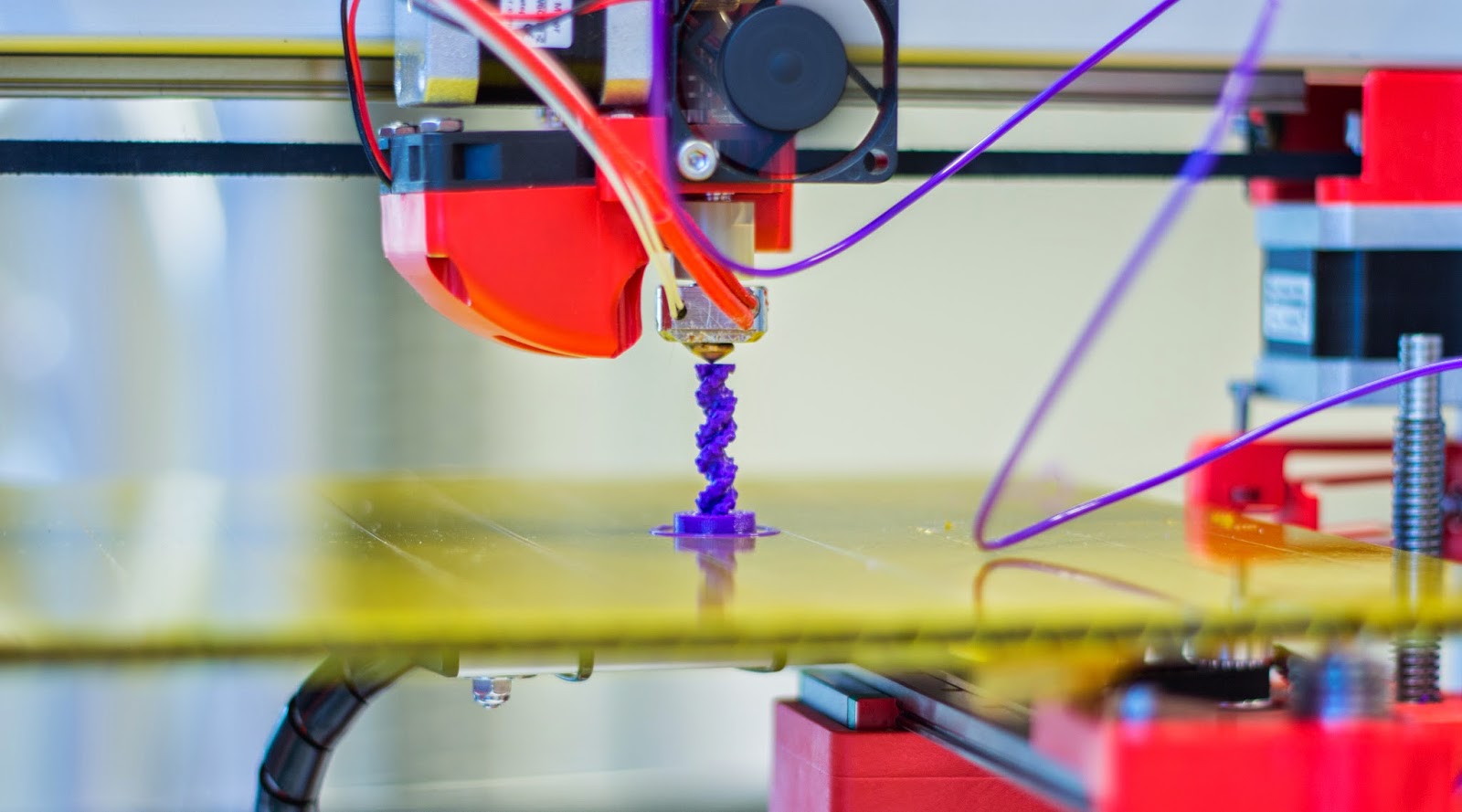
I recently wrote a blogpost entitled 'Maker Pedagogy' where I outlined some of the emerging educational benefits of learning through making. The rise in popularity of FabLabs (Fabrication laboratories) and Makerspaces has highlighted the positive aspects of learning through the process of designing, fixing, mending, problem solving, using tools, repurposing and creating new objects. The advent of 3D Printing (also known as additive manufacturing) has brought maker pedagogy opportunities to schools and other educational institutions in a fairly affordable manner. Many teachers may still baulk at considering using such tools in the classroom, just as many did when iPads and other seemingly exotic technologies were introduced. Yet, the only real barrier once the cost has been met, is how teachers will actually use such technology to support, enhance, enrich or otherwise extend learning. Although still in its infancy, it is already clear that 3D printing is having an impact on the motivation and engagement of students.

Today I heard one story of a disaffected student that was particularly heart warming. Connor was seen by his teachers as a low achiever, a boy who was simply disengaged from learning. Then one day he saw a 3D printer being demonstrated in his classroom during a technology lesson. He went home that evening feeling quite excited. That night as he lay on his bed, he saw that the handle on his bedroom door had been broken. He took the handle in to school the next day, and asked his teacher to help him 3D print a replacement. This minor success spurred him on to do better in school. He became increasingly more engaged, because he now realised that every subject - not just technology - might also offer him ideas that he could take and use anywhere, outside the school walls.

So how will 3D printing contribute to the development of pedagogy? Will it have an impact on lessons? What will it do to inspire students to learn? If you are using 3D printers in lessons, or know of anyone who is, please let us know how you are incorporating this technology into your teaching, what you see as its benefits, and what you think are the limitations. Please also let us know how you think it is impacting upon students' learning, and whether it is influencing your own professional practice in any way. Thank you!

(NB: The story of Connor comes courtesy of Paul Croft, director of Create Education).

Photo by Steve Wheeler

Creative Commons License
3D pedagogy by Steve Wheeler was written in Glasgow, Scotland and is licensed under a Creative Commons Attribution-NonCommercial-ShareAlike 3.0 Unported License.


May 07, 2015

Opening up #learning: Forms and formats

Following on from my previous post, I was asked what was the difference between new forms of learning and new formats of learning. With so many technology tools, channels and services available to us, it's an easy question to answer. To address the question however, we initially need to put the question of dialogue with teachers and peers to one side and focus solely on content.

Where once all that was available as a portable medium was the text book, students would need to spend time reading in a more or less linear fashion to follow the thinking of the author. With the advent of educational television in the middle of the last century, students were offered the affordances of audio commentary and visual cueing. This brought together two of the most potent human senses of sight and sound, and later, as programmed texts became available to accompany television, we exploited what psychologist Allan Paivio described as the dual cognitive facilities of imagen (visual) and logogen (speech and writing) processing. The introduction of video tape enabled the further facility of pausing, rewinding and fast forwarding content, as well as the capability to store it for use at any convenient time. This was one of the first occasions when technology began to open up non-linear forms of content consumption. But it was still consumption of content, and had advanced learning very little from the time where only text books were available.

The arrival of multi-media introduced the affordance of non-linear content presentation, where students could study the knowledge contained within the media in any sequence, or iteration. Multi-media also brought with it the earliest forms of interaction with content beyond the multiple choice questions and remedial loops of computer assisted learning. Students could interrogate the content and could also influence the direction, pace and focus of content through early games based systems.

The arrival of the Internet, and subsequently the Web brought interactive content to the desk top, and the introduction and rapid adoption of mobile technologies allowed students to access content any time, and just about any place. All of the above developments represent formats of knowledge - the manner and context in which content is presented to the learner, and what they are able to do with that knowledge. The forms of knowledge are made possible by the formats, but are essentially driven by the learner.

The forms of knowledge now available are numerous and are made possible by the many different technologies and technological affordances. Knowledge can be negotiated using open repository systems such as wikis, blogs and discussion forums. Knowledge can be represented in many forms on the web including through still or moving image sequences, text and spoken words, music, and of course through hypertext. Indeed it is the latter that has generated the most diverse and serendipitous forms of learning on the web, and aligns neatly to rhizomatic learning theory. It can be unpredictable, chaotic, but essentially purposeful, as learners navigate their way across the digital terrain, discovering for themselves. These are embryonic thoughts and are open to discussion, and comments as ever are very welcome.

Photo by Age Bosma on Wikimedia Commons

Creative Commons License
Opening up #learning: new forms of knowledge by Steve Wheeler was written in Amsterdam, Holland is licensed under a Creative Commons Attribution-NonCommercial-ShareAlike 3.0 Unported License.


May 03, 2015

Opening up #learning: new forms of knowledge

Opening up learning means creating opportunities for learners that were previously unattainable. Technology can do this. For those who are housebound for example, and cannot visit a library or classroom, the Web provides a storehouse of endless opportunities to learn just about any topic. The social web opens up channels to connect with other people around the world, either experts or fellow students.

But opening up learning comes with a price. Those whose livelihoods or reputations are built upon traditional forms of educational provision will suddenly find themselves redundant or sidelined.

One area under threat is the publishing industry. In the last decade, there has been a significant decline in paper based publications, and an upsurge in e-books and other forms of digital representation of knowledge. Publishers remain in business, but to be successful they now have to adapt to the new and trenchant demands of the digital economy.

In 2012, for the first time, the number of e-books sold over Amazon surpassed paper based books. The affordances of technology are many, but one of the key ones for those who work in education is the capability of the tools to represent knowledge and learning in so many new and engaging ways. Technology is opening up this kind of learning dramatically. Students or scholars who blog regularly will tell you that it clarifies their thinking, and when they decide to press the publish button, a waiting audience of readers will comment and challenge their thinking further.

Knowledge is now available in many different forms and formats, some of which are openly accessible and editable. The exponential growth of online repositories of knowledge (Wikipedia), media (Wikimedia Commons - the source of the image above), images (Flickr, Instagram) and video (YouTube, Vimeo) would not have been so dramatic if there was less demand. Yet people of all ages now avidly consume and create content on a regular basis, and the availability of social networking services such as Twitter and Facebook amplify these activities further. Arguably the most important aspect of this phenomena, however, is not the amount of content that is available, but the richness of the context within which it is available. The affordances of connecting, sharing, sorting, filtering and commenting on content are by far the most powerful attributes of the social web, and will continue to be so for the foreseeable future.

Photo by Tomomarusan on Wikimedia Commons

Creative Commons License
Opening up #learning: new forms of knowledge by Steve Wheeler was written in Plymouth, England is licensed under a Creative Commons Attribution-NonCommercial-ShareAlike 3.0 Unported License.


<< Back Next >>