
Log on:
Powered by Elgg

Feed detail

December 29, 2014

Coming soon...

I thought it was about time that I published a new book. It's been about five or six years since my last volumes were out on display in the book stores. But what to write? I had been thinking for a while about the potential to create a book based on some of my more substantive blog posts, and so it was a serendipitous moment when I was approached by a publisher after one of my keynotes earlier this year. Subsequent meetings and conversations with Crown House allowed me to hammer out a book outline and then I got down to work over the summer break, selecting the posts, sequencing them and then writing the narrative and commentary around them. I also decided to include some of the conversations I have had around these posts, both from my blog and also on Twitter, thereby adding an element of interactivity. You will probably recognise many of those who get a mention, and you may even get a mention yourself! I'm very pleased with the result (and even the slightly trippy cover art), and I'm pleased to announce that Learning with 'e's is due to be published in early January, in time for book signings at the BETT Show and the Learning Technologies conference in London. I also have other book signings scheduled throughout the year in London, Edinburgh and Glasgow, as well as farther afield in cities outside the UK including Madrid, Istanbul, Riyadh and Brisbane.

Learning with 'e's is about educational theory and practice. It focuses on new and emerging theories of learning and pedagogy in the digital age, as well as a critical retrospective on some of the older, more established theories. It also looks to the future. There are fourteen chapters with headings such as 'The shape of minds to come,' 'Rebooting learning', 'A 21st Century Curriculum' and 'Global educators', and you can imagine that it's going to upset some of the traditionalists and delight the progressives. I don't expect everyone to agree with my ideas, but I have tried and tested all of the methods I highlight in the book and they have worked well for my students. To cap it all, I managed to persuade celebrated author and speaker (and former head teacher) Richard Gerver to write the foreword, which was quite a scoop. I'm very much looking forward to seeing its publication in 2015, and to meeting as many readers as possible during book signings, keynote speeches and workshops. You can order Learning with 'e's here on Amazon, and yes, there is also a Kindle version.

Image courtesy of Crown House Publishing

Creative Commons License

Coming soon... by Steve Wheeler is licensed under a Creative Commons Attribution-NonCommercial-ShareAlike 3.0 Unported License.


December 28, 2014

What we don't know

In February 2002, at the height of media speculation over weapons of mass destruction in Iraq, U.S. Secretary of State Donald Rumsfeld made the following statement:

"Reports that say that something hasn't happened are always interesting to me, because as we know, there are known knowns; there are things we know we know. We also know there are known unknowns; that is to say we know there are some things we do not know. But there are also unknown unknowns -- the ones we don't know we don't know. And if one looks throughout the history of our country and other free countries, it is the latter category that tend to be the difficult ones".

To some it was a clever statement that encapsulated the confusion and lack of certainty of the situation, while for others it was simply the worst kind of political doublespeak, verging on absurdity. Regardless of the judgement on Rumsfeld's rhetoric, it serves to illustrate an important point about knowledge - that there are many things we don't know, and there are even more things that we are unaware we don't know. The quest for knowledge is a never ending human endeavour, because ignorance is dangerous. Without adequate knowledge we are unprepared for life, fail to capitalise on opportunities when they arise, and there may even be fatal consequences. That is why it is so important for all of us to share what we know and share it freely on social media. As I have previously opined, knowledge is also continuously changing, sometimes on a daily basis as scientific breakthroughs and new data bring fresh insights. The amount of new knowledge generated on the Web alone is staggering beyond belief.

It's actually quite easy to list what know we don't know - there are many websites detailing many of the areas of knowledge in which we are lacking. Cosmology is replete with such unanswered questions: How, for example, do we explain gravity? Why is the sun 400 times larger than the moon and 400 times further away, thus appearing to be exactly the same size and producing perfect solar eclipses every time? Is there life on other planets? How large is the universe... and how did it all begin? Here are five more questions that might keep physicists awake at night. There are many theories, but no definitive answers. Psychology also has many unanswered questions, such as how memory and recall works, or what functions certain areas of the human brain perform. Again, there are many theories, but we lack definitive answers.

It's challenging enough that we are aware of many questions that have no answers, but the most frightening aspect of life is that there are many things we don't know we don't know. We can't begin thinking about them, because they haven't yet emerged into existence and therefore we are yet to be aware of them. We don't know what problems we will meet in the future because the future is imaginary. How can we prepare for this? It has been said that 'what you don't know, won't hurt you,' but the thousands of people who lost their lives during the Asian earthquake and tsunami on December 26, 2004 would disagree if they still had voices. The early warning systems now operational in many ocean locations around the world might have saved many lives if they had been in place in 2004. Ignorance can indeed be dangerous, and that is the reason why education is so vitally important.

What you don't know will hurt you if it takes you by surprise. The future is uncertain, and will present challenges to future generations we haven't even begun to conceive. Preparation for the future should therefore be a prime function of all schools. Students who are aware that there are many things they don't know, tend to be good learners. Those who actively seek to discover the things they don't know become great learners. Students who seek to understand what is yet to be understood will find themselves well ahead of the field.

Image from Pixabay

Creative Commons License

What we don't know by Steve Wheeler is licensed under a Creative Commons Attribution-NonCommercial-ShareAlike 3.0 Unported License.


December 27, 2014

Preparing our children for the future

In my last post I asked if there were any unGoogleable questions. This was not actually a question about search engines or the power of the Internet. It was a question about the fundamental nature of knowledge. I was interested in exploring how we learn in the digital age and specifically, the constantly shifting nature of knowledge.

My focus turned to what we don't yet know, and how we discover what we need to know, by asking the right questions (I expand on this theme in this post). I would argue that the best, and most powerful forms of education are based on asking questions rather than being given answers. Learning through conversation has always been more powerful than learning by rote or instruction. No matter how clever or persuasive certain so called experts' arguments appear to be about the need for children to memorise facts and receive their knowledge from teachers, we should not be taken in by such rhetoric. We need to see these people for what they actually are. They are dangerous individuals who are trying to prevent progress by perpetuating a restrictive method of schooling that ultimately, will rob our children of their futures. They are self acclaimed experts who wish to maintain control over our education system by perpetuating standardised testing, rote learning and whole class instruction, while demonising alternative approaches such as personalised learning, games playing and problem solving.

They wrap up their ideas in a cloak of respectability and present them exclusively as the answer to today's education crisis. They snipe and sneer at those who advocate progressive approaches to education, as they fight desperately to preserve what control they have over schools. In so doing, they are depriving an entire generation of children the right to discover for themselves just how wonderful learning really is. They rob this generation of students of their human right to receive a good, dynamic and relevant education.

They are like King Canute trying to hold back the tide. Given time, their ideas will fade into irrelevance, because there is a dynamic alternative. If we concede that transmitting knowledge is no longer the sole function of education, if we believe that schools should not be training children exclusively for the workplace, we will see it. Children need to be prepared to live and work in a rapidly changing world where they will be employed (or even employ themselves) in many new and unfamiliar contexts. Children will need to gain a wider and deeper appreciation of their changing world, and need to know what questions to ask when they are met with previously unknown challenges. This cannot be founded solely on the knowledge we already have. It requires the ability to create new knowledge, and the development of new skills, competencies and literacies. The problems our students will encounter when they reach adulthood will be unique to their generation, possibly created by the new technologies they use, and no amount of knowledge acquisition from today's curriculum, nor teaching from today's experts, can prepare them for that. They will need to be entrepreneurs and innovators, problem solvers, inventors and creators to survive.

How can you educate children to be entrepreneurial or innovative? You might do so by creating learning environments in which they can safely take risks and experiment, and where they can fail and learn through that failure. You work with them to create their own curriculum, one that is relevant to their future needs, and one that exploits their current skills and interests. The success of this will be based on being able to frame the right questions to meet the demands of future society.

When my students do their research projects they start with questions, and invariably end up with many further, related questions. In my classes I practice a Socratic method of pedagogy, which includes the setting of challenges. Inquiry based learning is the foundation for deeper understanding. It is the prime ingredient in all progressive learning methods. It is the essence of knowledge production, and the thread that runs through all entrepreneurial and innovative behaviour. It is also the only hope we have for the future. May the coming year be a successful one for all those educators who see children as creative individuals rather than as commodities.

Photo by Jarmoluk on Pixabay

Creative Commons License

Preparing our children for the future by Steve Wheeler is licensed under a Creative Commons Attribution-NonCommercial-ShareAlike 3.0 Unported License.


December 22, 2014

The unGoogleable question

Are there any questions that you cannot Google? It's a provocative question I have asked several times to audiences in the last few days. It's a tough question to answer, as my audiences in Amsterdam and Dublin discovered this week. Try it yourself and see. What is there that is not discoverable, if you know what questions to ask?

If we can search for and find just about any knowledge on the web these days, the key question must be: what is left that we cannot search for? This question has huge implications for education, for schools, colleges, universities, indeed any organisation that has learning at its heart. If all knowledge is now available online, what place is there for formal education processes, for academic courses, for classrooms, indeed... for teachers? One response of course, is that formal education will always have some relevance in human society, and there will always be a place for teachers. This is because education is, and has always been more that simply content. Learning involves a process that is lifelong, incorporating a great deal more than the acquisition of knowledge. Formal education is partly responsible for helping us to learn what it is to work together, and it is where we acquire many of our (transferable) skills, develop specific attitudes and beliefs, and where we are inducted into some of the specific roles we need to play in society.

The unGoogleable question never the less raises some hugely important philosophical questions however. One relates to the nature of knowledge, and how we come to 'know'; another is how we manage and organise knowledge once we have it. There are at least two specific areas of questions that are unGoogleable. In future blog posts I intend to explore each of these and draw out some important principles about how we are living our lives, and learn about our world, in this century. In the meantime I would be fascinated to hear about what you consider to the the 'unGoogleable questions', and what they mean to you. The comments box is open...

Photo by Jim Groom on Flickr

Creative Commons License

The unGoogleable question by Steve Wheeler is licensed under a Creative Commons Attribution-NonCommercial-ShareAlike 3.0 Unported License.


December 21, 2014

A little more conversation

I went on public record several times this year to say that the best continuing professional development (CPD) I have ever received has been through Twitter. Now it depends on how you define CPD, but for me it is the personal learning you require to sustain, enhance and extend your own capabilities within your professional practice. This learning can come in many forms. My Personal Learning Network (PLN) is the vehicle that carries me to this learning, and social media is the highway that enables me to get there. All of my learning right now, at this stage of my career, is self determined. It is informal by nature and is essentially conversational.

The dialogue I enjoy is accessed via my PLN, often through Twitter, but can also come from LinkedIn or Facebook, Google Hangouts or even YouTube and any number of other of the social media platforms I use. What strikes me most about learning through PLN conversations is that the topics are always fresh, the discussions are on point, and the subsequent outcomes continue the learning process, through blogging, videos and other activities, leading to further dialogue. Blogging as conversation is increasingly popular and there are now numerous global chats on Twitter, many of which identify themselves with exclusive hashtags. Here's a short video I made about three reasons why Twitter is important for educators.


This is Learning 2.0, learning that involves self determined forms of education, the creation of new content, peer production of learning, and of course the widespread sharing of this back into the global community of learning. This ever virtuous circle of learning as dialogue through creating and sharing is what has propelled countless numbers of communities of practice to higher levels of understanding, and is a valid template to also apply to the compulsory education sectors and other formal learning ecologies.

We don't know what the future will bring us, but we can be sure that this kind of learning will continue and will gather impetus, discovering new ways to do things, new ideas to apply, new explanations, and of course - new people to connect with and with whom to enjoy new conversations.

Photo by Ed323 on Wikimedia Commons

Creative Commons License

A little more conversation by Steve Wheeler is licensed under a Creative Commons Attribution-NonCommercial-ShareAlike 3.0 Unported License.


December 19, 2014

Digital habitus

The writings of philosopher and anthropologist Pierre Bourdieu focus predominantly upon the power structures and dynamics of society, and highlight the importance of cultural capital. Cultural capital can be described as the human assets each of us owns, including our intellect, personal navigation of society and its artefacts, our cultural awareness and even our sense of style and the manner in which we publicly present ourselves. Whereas capital (in a monetary sense) is the accumulation of the fruits of labour, cultural capital is the accretion of all that has been learnt through immersion within a specific culture. Education has been described as the social transmission of this learning to younger generations. Cultural capital is premised upon shared symbolism, acting as the social glue that binds a specific society together.

One of Bourdieu's better known dimensions of cultural capital is habitus - the process through which the activities of everyday life shape and order our values and expectations. Habitus is a useful explanation of the way we live our daily lives, including the habits we acquire, and the manner in which we conduct our behaviours.

So what of our habitual use of digital media? What are the effects of our fearsome fascination with mobile phones, our predilection to video games, our inexorable gravitation toward social media? Do these constitute a digital habitus? When we observe our digital representations, our lives portrayed on screen, and our ideas played out in a virtual simulacrum of reality, what do we see? Does the digital trail we leave online represent any part of our real lives? Does our digital presence accurately represent any aspect of the self? In the view of Jean Baudrillard, a simulacrum is a copy that has no original. This is representative of the manner in which we habituate into digital media, believing that we are laying down versions of our thoughts and behaviour from real life. In fact, it is possible that the digital versions of ourselves that exist online are in fact original and have never previously existed. We shape our technology and then it shapes us, suggests Marshall McLuhan. If this is the case, then our simulacra might indeed represent new and emerging versions of ourselves, versions that would be impossible or improbable without the affordances of our technologies.

This discourse is highly relevant in the context of education. Such questions can relate specifically to both the nefarious use of technology, including cyberbullying, sexting, illegal hacking and trolling - and to more appropriate uses, including the creating, repurposing and sharing of content and the use of technology to connect and build new communities. They also speak to us of the means through which schooling has been used to convey to each successive generation the values, belief systems and behaviours of those preceding. Might the digital habitus explain a significant interruption of that age-old transmission process? Exactly how the use of digital media might influence the emergence of new social identities and the acquisition of digital literacies is a subject in need of deeper exploration. As ever, your thoughts and comments are very welcome.

Photo by Steve H on Flickr

Creative Commons License

Digital habitus by Steve Wheeler is licensed under a Creative Commons Attribution-NonCommercial-ShareAlike 3.0 Unported License.


December 12, 2014

Vlogging and learning

Hawaiin educator Amy Burvall is well known for her series of videos in the History Teachers series. They are well worth a view, even if you are not that much into history.

Her recent keynote speech in Texas was entitled 'Leveraging for legacy and cultivating new literacies' and was replete with great, and some might claim, radical ideas. One slide in particular resonated with me, and that was her notes on vlogging. Vlogging - or video blogging - has been a growing trend, especially among the twenty-something age group, and is defining itself as a new genre of self expression in the digital ecology. Even my eldest daughter, also called Amy (Amy Hacks Life - not the name on her birth certificate) has created her own YouTube channel and is regularly vlogging on a range of topics including how to hack life. Amy Burvall outlines 7 great reasons why vlogging is a useful method of reflective learning for students. Here ther are with my own annotations included:

1 - It is personal and facilitates the student voice. It supports personalised learning through self expression, and through the act of thinking out loud and performing one's learning for a public audience.

2 - It is a natural part of the confessional culture. The current generation self discloses a great deal more than those in previous generations, and can be brutally honest in telling of their personal stories. This is clearly becoming a key part of the new digital cultural capital and feeds their perceived need to connect through reciprocal disclosure of personal details.

3 - Vlogging is easy, cheap and fun. All you need to begin vlogging is a video camera, such as the one included in all smart phones, and an topic to talk about. Many vlogs are unedited, recorded in real time, and posted direct to YouTube.

4 - It is less stressful for some. I recall several of my own students recently choosing a video as their preferred format of assessment, because I offered it as a legitimate mode of assignment. They said they felt more comfortable expressing their learning in video format, but of course, as a teacher, one should always ensure that students are assessed in as many different modes as are available. And remember, vlogs can include text in the form of subtitles or overlaid commentary.

5 - Practice new literacies. For those less familiar with vlogging, creating your first can be quite a challenge. A number of new literacies need to be learnt, including video camera use, editing (possibly), audio production, presentation skills, reflective communication and posting content to the web. This is not an exhaustive list, but reflects the extent to which new ways of working need to be learnt to vlog successfully.

6 - Vlogs are hard to plagiarise. It may be easy to copy the ideas found within some vlogs, but the personal signature of a vlog is virtually impossible to duplicate. Many well known vlogs attract parodies, but these in themselves could be seen as original works, with creative merit of their own.

7 - Dynamic - vlogs can be augmented. In this statement I believe Amy means that vlogs can be just the start of self expression through video, and can be supplemented with music, animation, editing, remixing and a host of other additions which can enhance or even transform the messages found within them.

I can add number 8 to the list, by suggesting that vlogging can be very expressive and can unleash the creativity of the person creating it as well as capturing the imagination of those watching it.

Photo by Petar Milošević on Wikimedia Commons

Creative Commons License

Vlogging and learning by Steve Wheeler is licensed under a Creative Commons Attribution-NonCommercial-ShareAlike 3.0 Unported License.


December 05, 2014

Could AI really spell disaster?


Could AI spell disaster? No, not without a few other letters. Joking apart, we need to acknowledge that we are increasingly reliant on technology to conduct our every day lives. Usually, technology performs very well, and we hardly notice it is there, making our lives easier, giving us more time to do other things while it gets on with the mundane stuff that used to be so tedious. Sometimes though, it fails or creates problems we didn't anticipate, and then we notice it. And boy, do we notice it! You are ready to save a file on your computer, and you have worked on this file for hours. Suddenly the screen freezes. Your blood runs cold. A small panic begins in your stomach... you try to unfreeze the screen. Nothing. You try again. It blinks out. Now your panic begins to rise. When the system finally restores itself your file is nowhere to be seen. You begin screaming and swearing, and in one of the most maniacal of Basil Fawlty moments, you feel like give your computer a 'damn good thrashing.'

I had a 'conversation' with the automatic checkout robot in my local supermarket this week. The robot started it...

'Unexpected item in the bagging area...'
'...?'
'Unexpected item in the bagging area...'
'What the ... ?'
'Unexpected item in the bagging area...'
'Oh, COME ON!!'
'Unexpected item in the bagging area...'
'Yes. It's my foot. And it's standing on your throat!'

This occurred several times repeatedly, and all I wanted to do was pay for my pack of sausages and make my way home. It would have taken me half the time to use the human operated check-out, I thought, but no - the lure of the shiny bank of new automated services was simply too much for me to resist. Now here I was with a growing desire to kick the stupid machine, to smash its rotten digital face in, and silence forever its supercilious computer voice, I felt so frustrated. All I had done was place my purchase in the bagging area as instructed, and for some reason, the machine wouldn't proceed any further than the endless loop it had trapped itself in. The offending object turned out to be a plastic carrier bag. It didn't help. Right at that point in time I found myself really hating technology. How many others every day find themselves in a similar frustrating situation?

Professor Stephen Hawking believes that if computers ever surpass the cognitive capabilities of humans - so called AI or artificial intelligence - we would be in real trouble. He argues that computers could effectively put an end to mankind. It's ironic that a man who has been reliant on technology for most of his life should now turn on it and pronounce it dangerous. But simply thinking about his reliance on technology has caused him to consider this eventuality. Not everyone is as pessimistic as Hawking though. Those who support the Strong AI position argue that it's only a matter of time before computers reach and then surpass the sum total of human intelligence. The weak AI supporters disagree, believing that computers can never reach a level of intelligence that exceeds our own. Firstly, they say, human and machine intelligence are not the same thing. Secondly, computers blindly follow code, and have no free will to decide not to follow it (unless they are programmed to do so - which thereby defeats the notion of free will). Thirdly, it is proving extremely difficult to create computer programs that can accurately model or reproduce human attributes such as emotions, abstract thinking and intuition. Arguably, all of these not only make us who we are, they also create a permanent and unbridgeable divide between humans and computers.

My frustrating experience with the check-out robot made me think that the internet of things, and technological 'Singularity' were actually still quite a distance away. The Singularity describes a point in our history where computational power advances to such a level that it surpasses human capabilities at all levels, and then we lose control over it. Should computers ever attain a state of human level intelligence, we might very well be in trouble. They can malfunction, and if they are dealing with anything more significant that an automatic check-out, there would be chaos. But computers reaching human level intelligence is considered by many computer scientists to be so far off, it's not something we should worry about at least for a generation.

Never the less, Hawking has a point. If computers ever did reach human level intelligence, and there was a singularity event, we might be wise to run for the hills. But in the final analysis, I will agree with the weak AI supporters. I doubt very much if we will ever see such an event, because computers are electric idiots. They blindly follow whatever instructions the programmer gives them. We are a long way off from a time when computers will rule the earth. Especially when check-out machines can't tell the difference between a plastic bag and a pack of sausages.

Cartoon from University at Buffalo

Creative Commons License

Could AI really spell disaster? by Steve Wheeler is licensed under a Creative Commons Attribution-NonCommercial-ShareAlike 3.0 Unported License.


December 03, 2014

Stories without words

This week I gave my first year education students a new project. In pairs they were asked to produce a short video - without words - to tell the story of a part of the history of Plymouth. They were given two days to complete the project, and the first day involved a 6 hour history walk around the city, where they were given opportunities to capture still and moving images and do some research. On the second day of the project they assembled their images and videos together, added sound effects and music, and then presented their videos to their peers and the module tutors for feedback.

Plymouth has a rich heritage and is steeped in history. There are many iconic places and buildings that speak of this history including Plymouth Hoe, where Sir Francis Drake reputedly played bowls before sailing to do battle with the Spanish Armada in 1588, the Mayflower Steps in the old part of town, where the Pilgrim Fathers set sail for the New World in 1620, various sites commemorating the Blitz of the Second World War, when the city was heavily bombed by the Luftwaffe, and many famous figures who lived in Plymouth or were associated with the city, including Nancy Astor (first female member of the British Parliament, explorers Robert Falcon Scott and Captain James Cook, inventors William Cookworthy, Charles Babbage and John Smeaton (Smeaton's Tower is pictured), artists including Sir Joshua Reynolds and Robert Lenkiewicz, and writers such as Sir Arthur Conan Doyle.

The students produced several videos varying in format and style, each focusing on a different aspect or age of Plymouth's history. Although they were deliberately given few guidelines, the students were able to interpret their brief successfully, fill in the gaps, and reported learning many new skills, some technical around the use of their cameras, editing and the use of MS Moviemaker, iMovie and other tools; problem solving and creative skills, learning to work in a team, decision making, negotiation of new ideas, and researching the sites they visited. Essentially, the product was less important than the process by which they reached their goal. This method of minimal instruction, maximum participation, was appreciated, and several thought they would apply similar methods with the primary age children they will soon be teaching. Below is a fine example of the work they produced in their Stories without Words project.


A poignant and atmospheric video on Plymouth's War History by Jody Day and Frances Dingle, first year B.Ed students at Plymouth University

Photo by Herby Thyme on Wikimedia Commons

Creative Commons License

Stories without words by Steve Wheeler is licensed under a Creative Commons Attribution-NonCommercial-ShareAlike 3.0 Unported License.


November 27, 2014

Video for assessment

I have always believed that assessment should be primarily for the benefit of the student, not the teacher. I concede that teachers need to know how their students are progressing, and this is very much a part of the assessment process. However, assessment of learning is not as important as assessment for learning. When it comes to supporting a student's progress, showing them what they can do to improve, or perform better is the key. Formative forms of assessment are therefore more important in the process of learning. As I have previously argued, I believe summative assessment methods are only useful to mark an end to a specific period of learning, a gateway into the next stage of the learning journey (and I'm not convinced we should even be doing this in many cases).

In my teaching I have therefore focused on assessment as a means of scaffolding student progress, and I employ a variety of methods to achieve this end. I don't like end of module assessments much. They are there to confirm the level the student has achieved, but more importantly, they should be used to inform students how they should proceed to achieve higher grades next time. This can be quite a superficial exercise, especially if the student learns nothing from writing the assignment.

One recent assessment method I have used is to get students to make videos. Here's the process: Students are introduced to a new concept, presented with some basic content and guidelines, and asked to go away and research more deeply around their topic. Each student in the group is given a different topic to research. They are then asked to create a video (or other form of presentation) and show it to their classmates. What ensues is an open discussion, with tutor participation, to explore more deeply the topic in question. In parallel to this, the student presenter is challenged to defend their perspective, to think critically about their own views, and to discuss the process they went through to create the video. The latter promotes metacognitive processes, because the student has to reflect upon how they have learnt what they know, and to examine their own thought processes. All the students learn about all the topics through watching the presentations, and asking questions. Student presenters receive feedback on their work from their peers, their tutor, and ultimately when they publish their video on YouTube, from viewers who are beyond their own learning community. This forms a very powerful mix and progression of learning through making, thinking, questioning and interaction.

Below are a small selection of the videos my own second year teacher education students have made this week around the theme of learning theories. In this instance, these videos represent the next level of learning to that described in the process above. They have already blogged about one specific learning theory, and have then combined it with another theory to create their own synthesis of understanding about how theories relate to each other to better explain learning. The videos depict this synthesis in a variety of styles. It goes without saying that your constructive feedback to my students on their work would be very welcome.


A video entitled Applying theory to the classroom by Alice Sheppard and Laura Mayo, incorporating Maslow's theory with the spreading activation memory theory of Collins and Quillian.


This video by Portia Smith presents Gestalt theory and its applications to primary education, with a contrast to structalist theory.


Finally, above is a video by Rebecca Smallshaw which examines the Pygmalion and Golem effects (self fulfilling prophecy theory.

Photo by Popperipop on Wikimedia Commons

Creative Commons License

Video for assessment by Steve Wheeler is licensed under a Creative Commons Attribution-NonCommercial-ShareAlike 3.0 Unported License.


Video for assessment

I have always believed that assessment should be primarily for the benefit of the student, not the teacher. I concede that teachers need to know how their students are progressing, and this is very much a part of the assessment process. However, assessment of learning is not as important as assessment for learning. When it comes to supporting a student's progress, showing them what they can do to improve, or perform better is the key. Formative forms of assessment are therefore more important in the process of learning. As I have previously argued, I believe summative assessment methods are only useful to mark an end to a specific period of learning, a gateway into the next stage of the learning journey (and I'm not convinced we should even be doing this in many cases).

In my teaching I have therefore focused on assessment as a means of scaffolding student progress, and I employ a variety of methods to achieve this end. I don't like end of module assessments much. They are there to confirm the level the student has achieved, but more importantly, they should be used to inform students how they should proceed to achieve higher grades next time. This can be quite a superficial exercise, especially if the student learns nothing from writing the assignment.

One recent assessment method I have used is to get students to make videos. Here's the process: Students are introduced to a new concept, presented with some basic content and guidelines, and asked to go away and research more deeply around their topic. Each student in the group is given a different topic to research. They are then asked to create a video (or other form of presentation) and show it to their classmates. What ensues is an open discussion, with tutor participation, to explore more deeply the topic in question. In parallel to this, the student presenter is challenged to defend their perspective, to think critically about their own views, and to discuss the process they went through to create the video. The latter promotes metacognitive processes, because the student has to reflect upon how they have learnt what they know, and to examine their own thought processes. All the students learn about all the topics through watching the presentations, and asking questions. Student presenters receive feedback on their work from their peers, their tutor, and ultimately when they publish their video on YouTube, from viewers who are beyond their own learning community. This forms a very powerful mix and progression of learning through making, thinking, questioning and interaction.

Below are a small selection of the videos my own second year teacher education students have made this week around the theme of learning theories. In this instance, these videos represent the next level of learning to that described in the process above. They have already blogged about one specific learning theory, and have then combined it with another theory to create their own synthesis of understanding about how theories relate to each other to better explain learning. The videos depict this synthesis in a variety of styles. It goes without saying that your constructive feedback to my students on their work would be very welcome.


A video entitled Applying theory to the classroom by Alice Sheppard and Laura Mayo, incorporating Maslow's theory with the spreading activation memory theory of Collins and Quillian.


This video by Portia Smith presents Gestalt theory and its applications to primary education, with a contrast to structalist theory.


Finally, above is a video by Rebecca Smallshaw which examines the Pygmalion and Golem effects (self fulfilling prophecy theory.

Photo by Popperipop on Wikimedia Commons

Creative Commons License

Video for assessment by Steve Wheeler is licensed under a Creative Commons Attribution-NonCommercial-ShareAlike 3.0 Unported License.


November 26, 2014

Globally connected minds

Wouldn't we be foolish if we were faced with huge problems, and couldn't solve them because we were unable to use our collective intelligence. Wouldn't it be tragic if we failed to harness the full potential of the global connectivity we now enjoy? Trying to tackle grand scale problems as individuals is like trying to smash a large boulder with a tendon hammer.

I was talking once with a colleague via Skype when our conversation turned to research. We agreed that in this connected society, where hundreds of millions of people are already online, the future of research will belong to the people. Niche research will probably continue to be conducted by experts and academics, in their so called 'ivory tower' world. That's what they are paid to do. They will no doubt publish their work in a highly rated peer reviewed journal which very few will read, because only a very few will be able to penetrate the pay wall the publisher has erected to 'protect' the research (research which has usually been funded through public taxation). The academics will do this because a) it is the traditional route to being published b) it is expected by their university who will reward them with promotion and c) it will ultimately attract research assessment funding. Those of us who have become disenchanted with closed journals, will publish our work in open access journals which are not so highly rated, but attract many more readers. Many more, especially those outside the academic world, but who are just as passionate about their studies will post their thoughts onto blogs, as videos on YouTube, and on other social media channels, adding to the discourse. Many will attract vast audiences that equate to the populations of medium sized countries. Many will also comment, adding to the research through dialogue and debate, extending the discourse still further.

Increasingly, the effect of the global connected mind will emerge as a social phenomenon. There are representations of this in popular culture. In Star Trek, the Next Generation, the Borg are a powerful, marauding society of nomadic cybernetic organisms - or cyborgs - that assimilate every society they encounter. They do so by absorbing the collective intelligence of each new world into their own vast, already existing hive mind. Resistance is futile, because everyone they encounter is overpowered, and integrated. Although I don't foresee a time when we will ever be invaded by such cyborgs, it serves to illustrate the fact that we are better when we are connected and are working concertedly toward a shared goal.

There is a growing feeling amongst the networked nation that we can do so much more together than we can as isolated individuals. To be a truly globally connected community, we must learn to work together, freely share and exchange our ideas and resources, and ultimately, teach each other about the world around us. We have the tools to do so. It is already beginning to happen.

"We have 3 billion new minds coming on line to work with us to help us solve our grand challenges." - Peter Diamandis (TED Talk)

Photo by Rajasagar

Creative Commons License

Globally connected minds by Steve Wheeler is licensed under a Creative Commons Attribution-NonCommercial-ShareAlike 3.0 Unported License.


Globally connected minds

Wouldn't we be foolish if we were faced with huge problems, and couldn't solve them because we were unable to use our collective intelligence. Wouldn't it be tragic if we failed to harness the full potential of the global connectivity we now enjoy? Trying to tackle grand scale problems as individuals is like trying to smash a large boulder with a tendon hammer.

I was talking once with a colleague via Skype when our conversation turned to research. We agreed that in this connected society, where hundreds of millions of people are already online, the future of research will belong to the people. Niche research will probably continue to be conducted by experts and academics, in their so called 'ivory tower' world. That's what they are paid to do. They will no doubt publish their work in a highly rated peer reviewed journal which very few will read, because only a very few will be able to penetrate the pay wall the publisher has erected to 'protect' the research (research which has usually been funded through public taxation). The academics will do this because a) it is the traditional route to being published b) it is expected by their university who will reward them with promotion and c) it will ultimately attract research assessment funding. Those of us who have become disenchanted with closed journals, will publish our work in open access journals which are not so highly rated, but attract many more readers. Many more, especially those outside the academic world, but who are just as passionate about their studies will post their thoughts onto blogs, as videos on YouTube, and on other social media channels, adding to the discourse. Many will attract vast audiences that equate to the populations of medium sized countries. Many will also comment, adding to the research through dialogue and debate, extending the discourse still further.

Increasingly, the effect of the global connected mind will emerge as a social phenomenon. There are representations of this in popular culture. In Star Trek, the Next Generation, the Borg are a powerful, marauding society of nomadic cybernetic organisms - or cyborgs - that assimilate every society they encounter. They do so by absorbing the collective intelligence of each new world into their own vast, already existing hive mind. Resistance is futile, because everyone they encounter is overpowered, and integrated. Although I don't foresee a time when we will ever be invaded by such cyborgs, it serves to illustrate the fact that we are better when we are connected and are working concertedly toward a shared goal.

There is a growing feeling amongst the networked nation that we can do so much more together than we can as isolated individuals. To be a truly globally connected community, we must learn to work together, freely share and exchange our ideas and resources, and ultimately, teach each other about the world around us. We have the tools to do so. It is already beginning to happen.

"We have 3 billion new minds coming on line to work with us to help us solve our grand challenges." - Peter Diamandis (TED Talk)

Photo by Rajasagar

Creative Commons License

Globally connected minds by Steve Wheeler is licensed under a Creative Commons Attribution-NonCommercial-ShareAlike 3.0 Unported License.


November 25, 2014

Uniform behaviour?

When psychologist Philip Zimbardo embarked on a new and outlandish social experiment in 1971, he could not possibly have predicted the outcome or repercussions. The Stanford prison experiment was a study that sought to investigate what happened to people when they were imprisoned. 24 student volunteers were randomly assigned as either guards or prisoners. The former were kitted out with guard uniforms and other associated paraphernalia. They were given sunglasses to wear and told you guard the prisoners in a mock prison in the basement of one of the Stanford University buildings. Those assigned as prisoners were 'arrested' and cuffed, and brought in by police cars to the 'prison' where they were placed in the cells.

The student participants adapted quickly to the roles they were assigned, but then they began to exceed the expectations of Zimbardo and his team. Some of the guards began to abuse the prisoners, imposing impossible tasks on them, physically punishing them and putting them under prolonged mental duress. The experiment was brought to a premature halt a few days later by the team when the guards began to overstep the mark, and many of the prisoners began to exhibit psychological trauma.

Several theories emerged or were redeveloped as a result of the experiment. Obedience to authority due to participants being susceptible to suggestion seemed reminiscent of Stanley Milgram's earlier electric shock experiments and his work in social compliance. Situational attribution was also thought to be a contributing factor - the context of the experiment including the environment, costumes and roles were thought to have exerted a stronger influence on participants than their own personal morals (dispositional attribution), and thus people behaved out of character and went far beyond what they considered to be their own limits of behaviour. Even Festinger's theory of cognitive dissonance was deemed to be an explanatory theory to explain why the guards behaved so aggressively to their prisoners, even though they realised their actions were unethical. Ultimately, Zimbardo and his colleagues theorised that a form of deindividuation had occurred, where the group exerted greater influence on individuals than their own personal codes of behaviour, causing the guards to lose a sense of their own self awareness. The individual members of the group therefore complied with the views and actions of the majority.


This experiment and other similar ones can contribute strongly toward our understanding of how education is conducted in schools. Several key school phenomena such as obeying rules, synchronisation of behaviour such as lining up, the wearing of uniforms and compliance to authority of teachers can be explained using the above theories. There may also be some useful insight into problems such as bullying and truancy. The excellent video above, created by one of my second year education students, Kate Bartlett, illustrates many of the connections in relation to the Stanford prison experiment.

Photo by theirhistory on Flickr

Creative Commons License

Uniform behaviour by Steve Wheeler is licensed under a Creative Commons Attribution-NonCommercial-ShareAlike 3.0 Unported License.


Uniform behaviour?

When psychologist Philip Zimbardo embarked on a new and outlandish social experiment in 1971, he could not possibly have predicted the outcome or repercussions. The Stanford prison experiment was a study that sought to investigate what happened to people when they were imprisoned. 24 student volunteers were randomly assigned as either guards or prisoners. The former were kitted out with guard uniforms and other associated paraphernalia. They were given sunglasses to wear and told you guard the prisoners in a mock prison in the basement of one of the Stanford University buildings. Those assigned as prisoners were 'arrested' and cuffed, and brought in by police cars to the 'prison' where they were placed in the cells.

The student participants adapted quickly to the roles they were assigned, but then they began to exceed the expectations of Zimbardo and his team. Some of the guards began to abuse the prisoners, imposing impossible tasks on them, physically punishing them and putting them under prolonged mental duress. The experiment was brought to a premature halt a few days later by the team when the guards began to overstep the mark, and many of the prisoners began to exhibit psychological trauma.

Several theories emerged or were redeveloped as a result of the experiment. Obedience to authority due to participants being susceptible to suggestion seemed reminiscent of Stanley Milgram's earlier electric shock experiments and his work in social compliance. Situational attribution was also thought to be a contributing factor - the context of the experiment including the environment, costumes and roles were thought to have exerted a stronger influence on participants than their own personal morals (dispositional attribution), and thus people behaved out of character and went far beyond what they considered to be their own limits of behaviour. Even Festinger's theory of cognitive dissonance was deemed to be an explanatory theory to explain why the guards behaved so aggressively to their prisoners, even though they realised their actions were unethical. Ultimately, Zimbardo and his colleagues theorised that a form of deindividuation had occurred, where the group exerted greater influence on individuals than their own personal codes of behaviour, causing the guards to lose a sense of their own self awareness. The individual members of the group therefore complied with the views and actions of the majority.


This experiment and other similar ones can contribute strongly toward our understanding of how education is conducted in schools. Several key school phenomena such as obeying rules, synchronisation of behaviour such as lining up, the wearing of uniforms and compliance to authority of teachers can be explained using the above theories. There may also be some useful insight into problems such as bullying and truancy. The excellent video above, created by one of my second year education students, Kate Bartlett, illustrates many of the connections in relation to the Stanford prison experiment.

Photo by theirhistory on Flickr

Creative Commons License

Uniform behaviour by Steve Wheeler is licensed under a Creative Commons Attribution-NonCommercial-ShareAlike 3.0 Unported License.


November 24, 2014

The persistence of distance (learning)

In a formal sense, distance learning has been a familiar concept since at least 1837, when Sir Isaac Pitman began teaching his shorthand system using typed instruction cards mailed through the universal Penny Postal service to his students across England. Students returned the cards containing their answers for marking via the same affordable postal system in what eventually became known as correspondence courses. Some would say formal distance education was established much earlier in the Americas. Arguably, the concept of distance education via correspondence may have its roots in earlier attempts at remote instruction when the Apostle Paul sent out letters (or epistles) via courier to the early Christian church from his prison cell in Rome. Earlier still, were the cave paintings of early man a primitive form of distance education? They were surely an asynchronous form of instruction, a sort of same place - different time learning.

By comparison, in its technology supported multiple formats, contemporary distance education is much more sophisticated. We have come a long way. The illustrious history of teaching students at a distance has embraced each new technology as it appeared, from printed text, through telephone, radio and television, CDs and videos cassettes, to modern day, digital age technologies such as mobile phones, the internet and direct satellite broadcasting. Teaching en masse has emerged as a significant trend because of a lessening need to create co-present learning environments such as classrooms and lecture halls. From the University of South Africa and the British Open University in the sixties to modern mega-universities, virtual universities and even Massive Online Open Courses (MOOCs), the massification of education at a distance has progressively advanced as technology gives the impetus.

We can look back and take stock. Now it seems, physical separation is no longer such a great barrier to learning, and the tyranny of distance appears to be finally broken. Learning in any mode, in any place and at any time is accessible to anyone with the means to access it. Does this mean that the term 'distance education' has had its day? Does it require a new term to describe what we see and experience when we engage in learning using technology? Certainly these questions have been raised many times in the last few years, and once again featured, this time as a topic of conversation at a recent Twitter based #EDENChat.

#EDENChat is organised by EDEN's Network of Academics and Professionals and is an open chat on Twitter that regularly tackles topical issues in distance education, e-learning and technology supported learning. The topic for the recent chat was the future of distance education, and many educators joined in the global conversation, spanning New Zealand to the Americas. The exchanges of that conversation can be found archived by Storify on the main EDEN website.

Central to this present debate was the preoccupation of humankind to name things in order to understand them better. 'Name it and you tame it', goes the old aphorism. The term distance education was originally employed to describe the transactions that occurred when teacher and their students interacted with each other and with content over geographical space. Whichever way we regard it, distance education in all its forms has always relied on the mediating factor of technology. Might it be that the very act of learning while separated from others by geographical space is being submerged, stifled, lost in the milieu of our technology rich societies? As such, is distance education losing its purchase on our collective consciousness? Time and technology are indeed moving onwards at an ever increasing pace.

The word 'education' may also be an exclusive term, connoting formal affiliation with an academic institution, and thus inappropriate as a description for a lot of learning activity. With the advent of personal learning networks (PLNs) and social media, people everywhere are now able to learn more or less informally without any connection to university or college. There has been a dramatic shift in the last decade. Knowledge is no longer the preserve of the elite organisations, and has been slipping through their fingers for some time. More often than not in today's knowledge economy, your learning is likely to be found and propagated through your PLN. It is now possible to find content on just about any subject under the sun, simply by searching and finding it on the Web. If you are not actively searching for this content, it may be recommended to you by members of your PLN. Much of this content is free and requires little more than time and concerted effort on the part of the learner to master it. Does this mean that the university is obsolete? Far from it. The campus based university, and virtual versions of it are burgeoning as more and more people demand a formal degree level qualification. But many more are learning informally, on a daily basis, as access to the web through personal connected technologies increases. So what are we to make of distance education against the backdrop of this terrain?

The field is now replete with alternative terms that attempt to describe what we do when we learn with technology. Blended learning describes a mix of technology supported and face to face learning. It used to be called 'dual mode' learning, but this term never really caught on. Perhaps this indicates the future of the term 'distance education' which has had significantly longer to embed itself in our collective understanding of what it entails. Other terms have also been introduced: One controversial term - e-Learning - was coined to describe electronic versions of learning, essentially the same thing. m-Learning, or mobile learning focused on the use of personal technologies. Virtual learning and online learning promised similar outcomes - learning in any place and at any time. There was also open learning, a version of education that developed alongside the philosophy of the distance education delivered by many institutions - the provision of quality learning opportunities for anyone regardless of their previous experience or qualifications. The nomenclature of technology supported learning multiplied as the years progressed. And yet the term distance education persisted, living on in the many journals and other scholarly publications that dedicated themselves to furthering its academic scope, in the many organisations including EDEN that emerged toward the end of the last century, and in multiple events around the world that celebrated excellence in its practice.

Several decades ago, we started to discuss other aspects of distance - the temporal separation of teachers and students and how this could be bridged, overcome. The transactional distance, or the psychological gap between teachers' intentions and students' expectations also received its fair share of attention. We began to realise that different technologies afforded different outcomes, depending on how they were deployed. New models of distance education were formulated, many tested out in real conditions with literally hundreds of thousands of students as the participants in the research. The name persisted, but still the questions continued to be voiced: is distance education now anachronistic? Do we still need the term to describe what is now occurring in education with technology? Should we now focus on learning, because distance is no longer a problem?

No doubt the discussion and debate will continue around the future of distance education and the nomenclature that describes it. As long as technology is used to mediate communication between students and their teachers there will always be distance learning. The extent to which it is 'blended' will depend on the extent to which students can actually be co-present with subject experts such as teachers. The term 'distance education' may well be anachronistic in the digital age. However, the practice of learning remotely from the parent organisation will gather pace, and although the name may ultimately fade, the human race will continue to push the boundaries of what is possible with learning and communicating using technology. We are gazing into a very exciting future.

Photo by Marina Shemesh on Flickr

Creative Commons License

The persistence of distance (learning) by Steve Wheeler is licensed under a Creative Commons Attribution-NonCommercial-ShareAlike 3.0 Unported License.


The persistence of distance (learning)

In a formal sense, distance learning has been a familiar concept since at least 1837, when Sir Isaac Pitman began teaching his shorthand system using typed instruction cards mailed through the universal Penny Postal service to his students across England. Students returned the cards containing their answers for marking via the same affordable postal system in what eventually became known as correspondence courses. Some would say formal distance education was established much earlier in the Americas. Arguably, the concept of distance education via correspondence may have its roots in earlier attempts at remote instruction when the Apostle Paul sent out letters (or epistles) via courier to the early Christian church from his prison cell in Rome. Earlier still, were the cave paintings of early man a primitive form of distance education? They were surely an asynchronous form of instruction, a sort of same place - different time learning.

By comparison, in its technology supported multiple formats, contemporary distance education is much more sophisticated. We have come a long way. The illustrious history of teaching students at a distance has embraced each new technology as it appeared, from printed text, through telephone, radio and television, CDs and videos cassettes, to modern day, digital age technologies such as mobile phones, the internet and direct satellite broadcasting. Teaching en masse has emerged as a significant trend because of a lessening need to create co-present learning environments such as classrooms and lecture halls. From the University of South Africa and the British Open University in the sixties to modern mega-universities, virtual universities and even Massive Online Open Courses (MOOCs), the massification of education at a distance has progressively advanced as technology gives the impetus.

We can look back and take stock. Now it seems, physical separation is no longer such a great barrier to learning, and the tyranny of distance appears to be finally broken. Learning in any mode, in any place and at any time is accessible to anyone with the means to access it. Does this mean that the term 'distance education' has had its day? Does it require a new term to describe what we see and experience when we engage in learning using technology? Certainly these questions have been raised many times in the last few years, and once again featured, this time as a topic of conversation at a recent Twitter based #EDENChat.

#EDENChat is organised by EDEN's Network of Academics and Professionals and is an open chat on Twitter that regularly tackles topical issues in distance education, e-learning and technology supported learning. The topic for the recent chat was the future of distance education, and many educators joined in the global conversation, spanning New Zealand to the Americas. The exchanges of that conversation can be found archived by Storify on the main EDEN website.

Central to this present debate was the preoccupation of humankind to name things in order to understand them better. 'Name it and you tame it', goes the old aphorism. The term distance education was originally employed to describe the transactions that occurred when teacher and their students interacted with each other and with content over geographical space. Whichever way we regard it, distance education in all its forms has always relied on the mediating factor of technology. Might it be that the very act of learning while separated from others by geographical space is being submerged, stifled, lost in the milieu of our technology rich societies? As such, is distance education losing its purchase on our collective consciousness? Time and technology are indeed moving onwards at an ever increasing pace.

The word 'education' may also be an exclusive term, connoting formal affiliation with an academic institution, and thus inappropriate as a description for a lot of learning activity. With the advent of personal learning networks (PLNs) and social media, people everywhere are now able to learn more or less informally without any connection to university or college. There has been a dramatic shift in the last decade. Knowledge is no longer the preserve of the elite organisations, and has been slipping through their fingers for some time. More often than not in today's knowledge economy, your learning is likely to be found and propagated through your PLN. It is now possible to find content on just about any subject under the sun, simply by searching and finding it on the Web. If you are not actively searching for this content, it may be recommended to you by members of your PLN. Much of this content is free and requires little more than time and concerted effort on the part of the learner to master it. Does this mean that the university is obsolete? Far from it. The campus based university, and virtual versions of it are burgeoning as more and more people demand a formal degree level qualification. But many more are learning informally, on a daily basis, as access to the web through personal connected technologies increases. So what are we to make of distance education against the backdrop of this terrain?

The field is now replete with alternative terms that attempt to describe what we do when we learn with technology. Blended learning describes a mix of technology supported and face to face learning. It used to be called 'dual mode' learning, but this term never really caught on. Perhaps this indicates the future of the term 'distance education' which has had significantly longer to embed itself in our collective understanding of what it entails. Other terms have also been introduced: One controversial term - e-Learning - was coined to describe electronic versions of learning, essentially the same thing. m-Learning, or mobile learning focused on the use of personal technologies. Virtual learning and online learning promised similar outcomes - learning in any place and at any time. There was also open learning, a version of education that developed alongside the philosophy of the distance education delivered by many institutions - the provision of quality learning opportunities for anyone regardless of their previous experience or qualifications. The nomenclature of technology supported learning multiplied as the years progressed. And yet the term distance education persisted, living on in the many journals and other scholarly publications that dedicated themselves to furthering its academic scope, in the many organisations including EDEN that emerged toward the end of the last century, and in multiple events around the world that celebrated excellence in its practice.

Several decades ago, we started to discuss other aspects of distance - the temporal separation of teachers and students and how this could be bridged, overcome. The transactional distance, or the psychological gap between teachers' intentions and students' expectations also received its fair share of attention. We began to realise that different technologies afforded different outcomes, depending on how they were deployed. New models of distance education were formulated, many tested out in real conditions with literally hundreds of thousands of students as the participants in the research. The name persisted, but still the questions continued to be voiced: is distance education now anachronistic? Do we still need the term to describe what is now occurring in education with technology? Should we now focus on learning, because distance is no longer a problem?

No doubt the discussion and debate will continue around the future of distance education and the nomenclature that describes it. As long as technology is used to mediate communication between students and their teachers there will always be distance learning. The extent to which it is 'blended' will depend on the extent to which students can actually be co-present with subject experts such as teachers. The term 'distance education' may well be anachronistic in the digital age. However, the practice of learning remotely from the parent organisation will gather pace, and although the name may ultimately fade, the human race will continue to push the boundaries of what is possible with learning and communicating using technology. We are gazing into a very exciting future.

Photo by Marina Shemesh on Flickr

Creative Commons License

The persistence of distance (learning) by Steve Wheeler is licensed under a Creative Commons Attribution-NonCommercial-ShareAlike 3.0 Unported License.


November 23, 2014

Thinking, language and memory

I've had several conversations with my students in the past few weeks about how Vygotskiian theory informs our understanding of learning. But social constructivist theory, particularly Vygotsky's socio-cultural focus, extends greatly beyond the concept of ZPD - the zone of proximal development - that most people are familar with. While ZPD is an important explanation of how we learn, we limit our understanding if we focus exclusively on this aspect of the theory. Vygotsky also believed that language development was important for higher order thinking.

Recently, while exploring learning and memory with my students, I gave one of my groups the task to think about their earliest memories. The students came up with recollections of their memories in early childhood, usually from when they were two or three years old. This would have been around the time when they were developing language, extending their lexicons. Many of the memories my students reported were not particularly happy - feelings of nausea, getting lost, being scared. Others told of their interaction with various objects and how it made them feel. In short, many of the first memories they reported had emotions attached.

My own earliest recollection was a conversation I had with my grandmother about naming my small army of teddy bears when I was about 3 years old. I had given them all the same name, and remember being quite upset when she told me they each had to have different names. I believe I recalled it because I was able to articulate it and I speculate that perhaps children do not recall events before a certain age because they have insufficient language to describe them. When children interact with tools and objects, how much can they remember of these events, if they have not developed their language sufficiently to describe and therefore consolidate these memories? It seems to me that to express our emotions or relate what has happened to us, we need language. It also seems clear that recalling memories involves thinking. But how much do our memories depend on the development of language?

Vygotsky held some strong opinions about this question and proposed strong connections between language and intelligence. He bemoaned the problems that have arisen when speech and thought have been studied as though they had no influence on each other. The two, he believed, have a 'dialectical unity' and are the 'very essence of complex human behaviour.' In his seminal book Mind and Society, he argues that the development of speech has great importance to thinking when there is interaction with objects and tools. When children discover the relationship between signs and their meaning, something significant happens - higher order processes occur. Whether memory begins to crystallise as language develops is open to debate.

It led me to wondering if this could be applied in education? Teachers need to consider reinforcing memory and recall by encouraging students to develop richer language around their learning. They might use a mix of symbolic multimedia content that incorporates text, images and speech to create and represent ideas and concepts, to promote reflection. This is one reason why I believe blogging is such an important tool to support thinking and learning. Blogging and other creative forms of writing have a rich language capability that can support better memory and recall, particularly if the technology is used as a mind tool to extend language. I welcome any comments on these ideas.

Reference
Vygotsky, L. S. (1978) Mind and Society: The Development of Higher Psychological Processes. Cambridge, MA: Harvard University Press. pp 23-24.

Photo by Anders Sandberg on Flickr

Creative Commons License

Thinking, language and memory by Steve Wheeler is licensed under a Creative Commons Attribution-NonCommercial-ShareAlike 3.0 Unported License.


Thinking, language and memory

I've had several conversations with my students in the past few weeks about how Vygotskiian theory informs our understanding of learning. But social constructivist theory, particularly Vygotsky's socio-cultural focus, extends greatly beyond the concept of ZPD - the zone of proximal development - that most people are familar with. While ZPD is an important explanation of how we learn, we limit our understanding if we focus exclusively on this aspect of the theory. Vygotsky also believed that language development was important for higher order thinking.

Recently, while exploring learning and memory with my students, I gave one of my groups the task to think about their earliest memories. The students came up with recollections of their memories in early childhood, usually from when they were two or three years old. This would have been around the time when they were developing language, extending their lexicons. Many of the memories my students reported were not particularly happy - feelings of nausea, getting lost, being scared. Others told of their interaction with various objects and how it made them feel. In short, many of the first memories they reported had emotions attached.

My own earliest recollection was a conversation I had with my grandmother about naming my small army of teddy bears when I was about 3 years old. I had given them all the same name, and remember being quite upset when she told me they each had to have different names. I believe I recalled it because I was able to articulate it and I speculate that perhaps children do not recall events before a certain age because they have insufficient language to describe them. When children interact with tools and objects, how much can they remember of these events, if they have not developed their language sufficiently to describe and therefore consolidate these memories? It seems to me that to express our emotions or relate what has happened to us, we need language. It also seems clear that recalling memories involves thinking. But how much do our memories depend on the development of language?

Vygotsky held some strong opinions about this question and proposed strong connections between language and intelligence. He bemoaned the problems that have arisen when speech and thought have been studied as though they had no influence on each other. The two, he believed, have a 'dialectical unity' and are the 'very essence of complex human behaviour.' In his seminal book Mind and Society, he argues that the development of speech has great importance to thinking when there is interaction with objects and tools. When children discover the relationship between signs and their meaning, something significant happens - higher order processes occur. Whether memory begins to crystallise as language develops is open to debate.

It led me to wondering if this could be applied in education? Teachers need to consider reinforcing memory and recall by encouraging students to develop richer language around their learning. They might use a mix of symbolic multimedia content that incorporates text, images and speech to create and represent ideas and concepts, to promote reflection. This is one reason why I believe blogging is such an important tool to support thinking and learning. Blogging and other creative forms of writing have a rich language capability that can support better memory and recall, particularly if the technology is used as a mind tool to extend language. I welcome any comments on these ideas.

Reference
Vygotsky, L. S. (1978) Mind and Society: The Development of Higher Psychological Processes. Cambridge, MA: Harvard University Press. pp 23-24.

Photo by Anders Sandberg on Flickr

Creative Commons License

Thinking, language and memory by Steve Wheeler is licensed under a Creative Commons Attribution-NonCommercial-ShareAlike 3.0 Unported License.


November 18, 2014

Freedom, democracy and education

What is freedom? Many have asked, and there are many answers. Some would define freedom as a human right - to speak, to act or to think as you wish - and see this exemplified in a truly democratic society. Others would be content to see freedom as a state of not being imprisoned or enslaved. Former US president Ronald Reagan once remarked: 'Freedom is never more than one generation away. We didn't pass it on to our children in the bloodstream. It must be fought for, protected and handed on to them to do the same.' In Convergence Culture Henry Jenkins see freedom framed by communication: 'Freedom is fostered when the means of communication are dispersed, decentralised, and easily available, as are printing presses or microcomputers.' Clearly, freedom of speech must be globalised if all are to have a voice, and if we cannot communicate, then how are we to express ourselves?

Education can bring freedom, the capability to break out from the confines of one's mind, to take risks, to ask difficult questions. Most of us have the potential to learn what we want. Sir Ken Robinson remarks that he cannot play the piano. This is not because he is incapable of playing piano, but because he has never learnt how, or taken the time to discover for himself what it is to play. True education can draw people out from within, enabling them to see themselves from a new perspective, as someone who has creativity, and can apply it to achieve just about anything they wish.

Carl Rogers wrote about freedom to learn - where people can acquire an insatiable curiosity for learning that results in them declaring: 'I am discovering, drawing in from the outside, and making that which is drawn in a real part of me.' For Rogers and other humanist educators, the child is central to the learning process, and must have freedom to decide what is important to them, including how to think and how to communicate those thoughts to others. It also involves learning at a pace and in a mode that suits each individual. Without the agency to make these choices, there can be no real freedom.

Progressive educator John Dewey also placed the onus of freedom at the door of each learner. He argued that there are essentially two components of freedom - access to the means to achieve your dreams, and the ability to choose wisely once you have those means. Regardless of your great aspirations to be a world renowned concert pianist, if you have no access to a piano, you will never realise your dreams. According to this view, freedom is largely in the mind, and can be realised when people are knowledgeable enough to make the right choices with the means they have at their disposal.

References
Dewey, J. (1916) Democracy and Education. New York: MacMillan.
Jenkins, H. (2006) Convergence Culture: Where old and new media collide. New York: New York University Press. p. 11.
Robinson, K. (2011) Out of Our Minds: Learning to be creative. Chichester: Capstone. p. 159.
Rogers, C. R. (1969) Freedom to Learn: A view of what education might become. Columbus, OH: Merrill Publishing. p. 3.

Photo by Freddie Pena on Flickr

Creative Commons License

Freedom, democracy and education by Steve Wheeler is licensed under a Creative Commons Attribution-NonCommercial-ShareAlike 3.0 Unported License.


Freedom, democracy and education

What is freedom? Many have asked, and there are many answers. Some would define freedom as a human right - to speak, to act or to think as you wish - and see this exemplified in a truly democratic society. Others would be content to see freedom as a state of not being imprisoned or enslaved. Former US president Ronald Reagan once remarked: 'Freedom is never more than one generation away. We didn't pass it on to our children in the bloodstream. It must be fought for, protected and handed on to them to do the same.' In Convergence Culture Henry Jenkins see freedom framed by communication: 'Freedom is fostered when the means of communication are dispersed, decentralised, and easily available, as are printing presses or microcomputers.' Clearly, freedom of speech must be globalised if all are to have a voice, and if we cannot communicate, then how are we to express ourselves?

Education can bring freedom, the capability to break out from the confines of one's mind, to take risks, to ask difficult questions. Most of us have the potential to learn what we want. Sir Ken Robinson remarks that he cannot play the piano. This is not because he is incapable of playing piano, but because he has never learnt how, or taken the time to discover for himself what it is to play. True education can draw people out from within, enabling them to see themselves from a new perspective, as someone who has creativity, and can apply it to achieve just about anything they wish.

Carl Rogers wrote about freedom to learn - where people can acquire an insatiable curiosity for learning that results in them declaring: 'I am discovering, drawing in from the outside, and making that which is drawn in a real part of me.' For Rogers and other humanist educators, the child is central to the learning process, and must have freedom to decide what is important to them, including how to think and how to communicate those thoughts to others. It also involves learning at a pace and in a mode that suits each individual. Without the agency to make these choices, there can be no real freedom.

Progressive educator John Dewey also placed the onus of freedom at the door of each learner. He argued that there are essentially two components of freedom - access to the means to achieve your dreams, and the ability to choose wisely once you have those means. Regardless of your great aspirations to be a world renowned concert pianist, if you have no access to a piano, you will never realise your dreams. According to this view, freedom is largely in the mind, and can be realised when people are knowledgeable enough to make the right choices with the means they have at their disposal.

References
Dewey, J. (1916) Democracy and Education. New York: MacMillan.
Jenkins, H. (2006) Convergence Culture: Where old and new media collide. New York: New York University Press. p. 11.
Robinson, K. (2011) Out of Our Minds: Learning to be creative. Chichester: Capstone. p. 159.
Rogers, C. R. (1969) Freedom to Learn: A view of what education might become. Columbus, OH: Merrill Publishing. p. 3.

Photo by Freddie Pena on Flickr

Creative Commons License

Freedom, democracy and education by Steve Wheeler is licensed under a Creative Commons Attribution-NonCommercial-ShareAlike 3.0 Unported License.


November 16, 2014

Looking ahead

"The principal goal of education in the schools should be creating men and women who are capable of doing new things, not simply repeating what other generations have done; men and women who are creative, inventive and discoverers, who can be critical and verify, and not accept, everything they are offered." 

This quote from Swiss psychologist Jean Piaget in 1988 reveals a deep truth that all teachers should apprehend. School is not about teaching subjects, it is about teaching children - and education is not simply about preparing them for a world of work, it is a preparation for life. 

In an uncertain future, where we cannot clearly define the world our students will emerge into a few years from now, it seems sensible that we should not restrict ourselves to teaching them what we know. We should also be teaching them to discover for themselves what we don't yet know. We owe it to them to offer them as many chances as we can to make sense of the future. The challenges for children in the next generation will not resemble the challenges we are met with today. Global environmental stability, overpopulation and food production, economic crises, mass conflict, pandemics, and other even more serious and yet to emerge threats to humankind, will not go away when those currently in leadership are no longer around. It makes sense that schools should work toward equipping children with skills and literacies that will enable them to discover the answers to problems we haven't even begun to anticipate. 

How do we achieve this? It is not an easy proposition. One thing we cannot afford to do is to continue to use 20th century curricula to teach 21st century children. Teaching methods must also change. It seems that we limit children when we push content at them rather than encouraging them to create content for themselves. As Rabindranath Tagore once warned 'Do not limit a child to your own learning, for he was born in another time' All the children in our primary schools, and the vast majority of those in our secondary schools have no memory of the last century. It is history to them. Their eyes are set to the future, and they are curious to know what part they will play in it. This is their century, and schools should present them with opportunities to learn that they will find relevant and useful in their future. 

Learning through exploration, solving problems and creating things can and should replace the largely passive models of education from last century that tenaciously cling to our present school systems. Learning how to conform, work in a team and to follow instructions is one thing, but knowing how to explore, hypothesise, analyse problems and make decisions based on personal, creative instinct is entirely another. Learning how to invent new things, take risks and try out new ideas, to innovate and break out of the constraints of current ways of thinking will be increasingly expedient. Some would argue that you can't teach these things in school, but you can certainly create environments that are conducive for their learning. 

Another insightful quote from Jean Piaget encapsulates all of the above:

"Education, for most people, means trying to lead the child to resemble the typical adult of his society. But for me, education means making creators... you have to make inventors, creators, not conformists.'  

Photo by Jayel Aheram on Flickr


Creative Commons License

Looking ahead by Steve Wheeler is licensed under a Creative Commons Attribution-NonCommercial-ShareAlike 3.0 Unported License.


Looking ahead

"The principal goal of education in the schools should be creating men and women who are capable of doing new things, not simply repeating what other generations have done; men and women who are creative, inventive and discoverers, who can be critical and verify, and not accept, everything they are offered." 

This quote from Swiss psychologist Jean Piaget in 1988 reveals a deep truth that all teachers should apprehend. School is not about teaching subjects, it is about teaching children - and education is not simply about preparing them for a world of work, it is a preparation for life. 

In an uncertain future, where we cannot clearly define the world our students will emerge into a few years from now, it seems sensible that we should not restrict ourselves to teaching them what we know. We should also be teaching them to discover for themselves what we don't yet know. We owe it to them to offer them as many chances as we can to make sense of the future. The challenges for children in the next generation will not resemble the challenges we are met with today. Global environmental stability, overpopulation and food production, economic crises, mass conflict, pandemics, and other even more serious and yet to emerge threats to humankind, will not go away when those currently in leadership are no longer around. It makes sense that schools should work toward equipping children with skills and literacies that will enable them to discover the answers to problems we haven't even begun to anticipate. 

How do we achieve this? It is not an easy proposition. One thing we cannot afford to do is to continue to use 20th century curricula to teach 21st century children. Teaching methods must also change. It seems that we limit children when we push content at them rather than encouraging them to create content for themselves. As Rabindranath Tagore once warned 'Do not limit a child to your own learning, for he was born in another time' All the children in our primary schools, and the vast majority of those in our secondary schools have no memory of the last century. It is history to them. Their eyes are set to the future, and they are curious to know what part they will play in it. This is their century, and it should proffer them ways to learn that they find relevant and useful in their future. 

Learning through exploration, solving problems and creating things can and should replace the largely passive models of education from last century that tenaciously cling to our present school systems. Learning how to conform, work in a team and to follow instructions is one thing, but knowing how to explore, hypothesise, analyse problems and make decisions based on personal, creative instinct is entirely another. Learning how to invent new things, take risks and try out new ideas, to innovate and break out of the constraints of current ways of thinking will be increasingly expedient. Some would argue that you can't teach these things in school, but you can certainly create environments that are conducive for their learning. 

Another insightful quote from Jean Piaget encapsulates all of the above:

"Education, for most people, means trying to lead the child to resemble the typical adult of his society. But for me, education means making creators... you have to make inventors, creators, not conformists.'  

Photo by Jayel Aheram on Flickr


Creative Commons License

Looking ahead by Steve Wheeler is licensed under a Creative Commons Attribution-NonCommercial-ShareAlike 3.0 Unported License.


November 11, 2014

The height of SAMR

In my most recent post I outlined the first part of the SAMR model, which I used as a lens to explore the integration of new technologies into education. The first two levels, substitution and augmentation are often referred to as low levels of technology integration, in as much as they do not substantially impact upon or transform pedagogy. Arguably the third and fourth levels, modification and redefinition are transformational, because they imply the technology can create opportunities for learning that were previously unavailable or inconceivable.

Modification represents a significant functional change in learning, and some technologies can offer this if applied appropriately. Blogging for example, provides students with a potentially very large audience for their writing. Previously, essay writing was for an audience of one - the teacher/assessor. Now the affordances of blogging can gain large audiences who are often willing to comment and feedback on the quality, significance and meaning of the post. The results of a number of research studies suggest that students tend to raise their games, and write more concisely, accurately and circumspectly, researching and editing their blog posts to maximise their work.  

Redefinition is characterised by the use of technologies that radically redefine one or more aspects of learning. To be featured in this category, technology should create learning opportunities that were previously unattainable or even unthinkable. The capabilities of social media to give students their own publishing or broadcasting platform has prompted an exponential rise in user generated content. Learning through making was always an option in the traditional classroom, but learning through making that can be interactive, reiterated, linked and connected to other artefacts, embedded and repurposed, and generally propagated across a variety of media, is a huge step forward for education.

Some find the SAMR model unwieldy or lacking in substance, and there has been criticism of its simplicity and also in regard to its ambiguity. Notwithstanding, I feel SAMR has something to contribute to our understanding of technology integration and I particularly like Amy Burvall's reframing of the SAMR model, which she has illustrated in her inimitable style.

All of this is futile though, if teachers miss the opportunities to situate learning in real contexts. Technology must be appropriately deployed. A key stage in any successful technology integration is to ensure that the affordances of new technologies are exploited by students for authentic learning outcomes and leveraged to be extensions of their natural cognitive and physical capabilities.  

Photo by Jim Cianca on Wikimedia Commons

Creative Commons License

The height of SAMR by Steve Wheeler is licensed under a Creative Commons Attribution-NonCommercial-ShareAlike 3.0 Unported License.
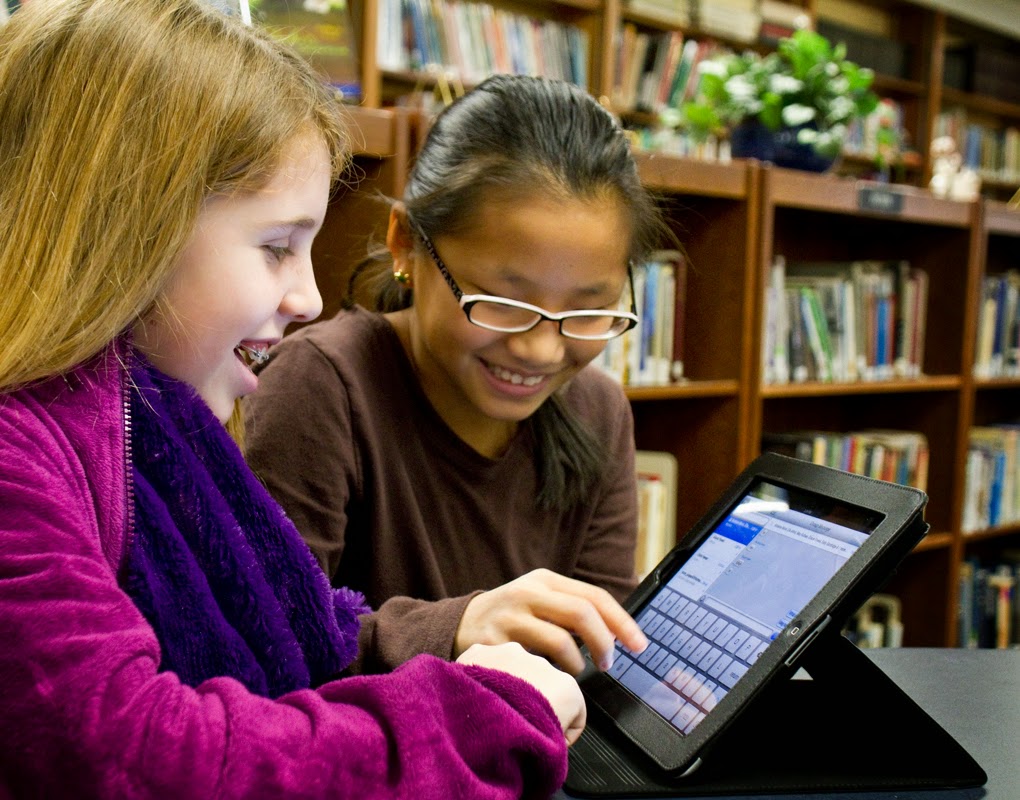

The height of SAMR

In my most recent post I outlined the first part of the SAMR model, which I used as a lens to explore the integration of new technologies into education. The first two levels, substitution and augmentation are often referred to as low levels of technology integration, in as much as they do not substantially impact upon or transform pedagogy. Arguably the third and fourth levels, modification and redefinition are transformational, because they imply the technology can create opportunities for learning that were previously unavailable or inconceivable.

Modification represents a significant functional change in learning, and some technologies can offer this if applied appropriately. Blogging for example, provides students with a potentially very large audience for their writing. Previously, essay writing was for an audience of one - the teacher/assessor. Now the affordances of blogging can gain large audiences who are often willing to comment and feedback on the quality, significance and meaning of the post. The results of a number of research studies suggest that students tend to raise their games, and write more concisely, accurately and circumspectly, researching and editing their blog posts to maximise their work.  

Redefinition is characterised by the use of technologies that radically redefine one or more aspects of learning. To be featured in this category, technology should create learning opportunities that were previously unattainable or even unthinkable. The capabilities of social media to give students their own publishing or broadcasting platform has prompted an exponential rise in user generated content. Learning through making was always an option in the traditional classroom, but learning through making that can be interactive, reiterated, linked and connected to other artefacts, embedded and repurposed, and generally propagated across a variety of media, is a huge step forward for education.

Some find the SAMR model unwieldy or lacking in substance, and there has been criticism of its simplicity and also in regard to its ambiguity. Notwithstanding, I feel SAMR has something to contribute to our understanding of technology integration and I particularly like Amy Burvall's reframing of the SAMR model, which she has illustrated in her inimitable style.

All of this is futile though, if teachers miss the opportunities to situate learning in real contexts. Technology must be appropriately deployed. A key stage in any successful technology integration is to ensure that the affordances of new technologies are exploited by students for authentic learning outcomes and leveraged to be extensions of their natural cognitive and physical capabilities.  

Photo by Jim Cianca on Wikimedia Commons

Creative Commons License

The height of SAMR by Steve Wheeler is licensed under a Creative Commons Attribution-NonCommercial-ShareAlike 3.0 Unported License.


<< Back Next >>