Log on:
Powered by Elgg

Feed detail

April 27, 2020

Lockdown learning

Photo source: Pexels
Social distancing. Stay at home. Lockdown. These are phrases that will be forever synonymous with the year 2020 - the year of the virus. And what about resilience?

We are only a third of the way through this terrible year, and there will be more pain to come. But we are a resilient people. Humanity doesn't just lay down and submit. We fight back. When we are going through Hell, we keep going. And that's a tribute not only to essential front-line staff such as health professionals, utility workers and emergency personnel. It's also a shout out to the teachers, the school staff, nursery workers and others who look after and educate our young people, week in, week out, whatever else is going on in the world.

For education people, learning doesn't stop even though all around, social life, commerce, business, mortgage payments, air travel and other common practices have ground to a halt. No, learning continues, and so does the need to provide great educational environments within which children can continue to develop their knowledge and skills. Schools all over the world have remained open (even though they are officially 'closed'), to provide care and support for the children of essential workers, and also to continue to offer students everywhere remote learning opportunities. Some of the stories of how teachers have achieved and sustained this are herculean, and others will emerge when the dust finally settles.  The pandemic has compelled educators to teach at a distance in many instances, and the scramble to find solutions has been frenetic. But some have been doing this for many years, have a lot of experience in distance education, and can point to standard tools that will enable this to be done effectively. We have become a technology mediated society and education is at the forefront of the efforts to connect and continue.

I wrote a post called Pandemic Pedagogy about some of the first resources that had been created during the early days of the pandemic. They are mainly high quality, focused and sought after resources, but there is still (and never will be) a substitute for empathetic, knowledgeable teaching input. And so teachers have been sat in front of their laptops teaching via Zoom, Skype, Teams and Hangouts, and a whole host of other video link tools. It's not easy. In fact, in some instances, it's almost impossible to engage every student, everywhere, at the same time. A bit like a traditional classroom really. But more so. Teachers have begun to discover that behaviour management issues are magnified when you're at a distance from your students. Communication challenges are amplified when all you are relying on is your home wifi bandwidth and a 3 year old laptop.

But survive we will, and in years to some we'll look back on the 'year of the virus', and say - yes, it was a terrible time, but we got through it, and now we know a lot more about ourselves and our limitations, we have learnt to be more resilient, and we can get through anything. I salute educators everywhere. Technology will not replace you. You will always be needed.

Creative Commons License
Lockdown learning by Steve Wheeler was written in Plymouth, England and is licensed under a Creative Commons Attribution-NonCommercial-ShareAlike 3.0 Unported License.


Lockdown learning

Photo source: Pexels
Social distancing. Stay at home. Lockdown. These are phrases that will be forever synonymous with the year 2020 - the year of the virus. And what about resilience?

We are only a third of the way through this terrible year, and there will be more pain to come. But we are a resilient people. Humanity doesn't just lay down and submit. We fight back. When we are going through Hell, we keep going. And that's a tribute not only to essential front-line staff such as health professionals, utility workers and emergency personnel. It's also a shout out to the teachers, the school staff, nursery workers and others who look after and educate our young people, week in, week out, whatever else is going on in the world.

For education people, learning doesn't stop even though all around, social life, commerce, business, mortgage payments, air travel and other common practices have ground to a halt. No, learning continues, and so does the need to provide great educational environments within which children can continue to develop their knowledge and skills. Schools all over the world have remained open (even though they are officially 'closed'), to provide care and support for the children of essential workers, and also to continue to offer students everywhere remote learning opportunities. Some of the stories of how teachers have achieved and sustained this are herculean, and others will emerge when the dust finally settles.  The pandemic has compelled educators to teach at a distance in many instances, and the scramble to find solutions has been frenetic. But some have been doing this for many years, have a lot of experience in distance education, and can point to standard tools that will enable this to be done effectively. We have become a technology mediated society and education is at the forefront of the efforts to connect and continue.

I wrote a post called Pandemic Pedagogy about some of the first resources that had been created during the early days of the pandemic. They are mainly high quality, focused and sought after resources, but there is still (and never will be) a substitute for empathetic, knowledgeable teaching input. And so teachers have been sat in front of their laptops teaching via Zoom, Skype, Teams and Hangouts, and a whole host of other video link tools. It's not easy. In fact, in some instances, it's almost impossible to engage every student, everywhere, at the same time. A bit like a traditional classroom really. But more so. Teachers have begun to discover that behaviour management issues are magnified when you're at a distance from your students. Communication challenges are amplified when all you are relying on is your home wifi bandwidth and a 3 year old laptop.

But survive we will, and in years to some we'll look back on the 'year of the virus', and say - yes, it was a terrible time, but we got through it, and now we know a lot more about ourselves and our limitations, we have learnt to be more resilient, and we can get through anything. I salute educators everywhere. Technology will not replace you. You will always be needed.

Creative Commons License
Lockdown learning by Steve Wheeler was written in Plymouth, England and is licensed under a Creative Commons Attribution-NonCommercial-ShareAlike 3.0 Unported License.


April 23, 2020

Your digital identity

Image credit: Tim Green on Flickr
Human identity is a fascinating concept - it's how you distinguish between yourself and others, and it's a central aspect of your unique personality. It's who you are, and how you represent yourself to others. It's also quite a complex part of being human, because identity can shift depending on context, interactions, social influence and a host of other variables. When we immerse ourselves in the digital world, and we mediate our communication through technology, it becomes more complex still. Educators need to understand this when they teach online.

Digital identity is the main focus of module number 5 of my free series about Digital Learning - and we explore some of the emerging properties and practices of digital life, including selfies and the need to manage our online impression, personal branding, digital interactions, selfies, the murky world of fake identities and a whole host of other issues, challenges and ideas. What's more, they are placed into the context of online learning, digital pedagogy, social and psychological theory and teaching in the technology enabled world of the virtual classroom. It's just the ticket for teachers who have recently been compelled to adopt technology supported learning. It's the new normal and will be for a while, so if you would like to know more about your own 'digital' identity, as well as the way your students represent themselves in the digital world, then this free course is for you.

Here's the link to the module. I wrote it with you especially in mind. It will take less than an hour for you to complete, and you don't pay a penny. You'd be mad to miss out.

You're welcome.

Other modules in the series
1: Personal Learning Environments
2: Digital Literacies
3: Supporting Online Learners
4: Integrating Technology

Creative Commons License
Digital identity by Steve Wheeler was written in Plymouth, England and is licensed under a Creative Commons Attribution-NonCommercial-ShareAlike 3.0 Unported License.


Your digital identity

Image credit: Tim Green on Flickr
Human identity is a fascinating concept - it's how you distinguish between yourself and others, and it's a central aspect of your unique personality. It's who you are, and how you represent yourself to others. It's also quite a complex part of being human, because identity can shift depending on context, interactions, social influence and a host of other variables. When we immerse ourselves in the digital world, and we mediate our communication through technology, it becomes more complex still. Educators need to understand this when they teach online.

Digital identity is the main focus of module number 5 of my free series about Digital Learning - and we explore some of the emerging properties and practices of digital life, including selfies and the need to manage our online impression, personal branding, digital interactions, selfies, the murky world of fake identities and a whole host of other issues, challenges and ideas. What's more, they are placed into the context of online learning, digital pedagogy, social and psychological theory and teaching in the technology enabled world of the virtual classroom. It's just the ticket for teachers who have recently been compelled to adopt technology supported learning. It's the new normal and will be for a while, so if you would like to know more about your own 'digital' identity, as well as the way your students represent themselves in the digital world, then this free course is for you.

Here's the link to the module. I wrote it with you especially in mind. It will take less than an hour for you to complete, and you don't pay a penny. You'd be mad to miss out.

You're welcome.

Other modules in the series
1: Personal Learning Environments
2: Digital Literacies
3: Supporting Online Learners
4: Integrating Technology

Creative Commons License
Digital identity by Steve Wheeler was written in Plymouth, England and is licensed under a Creative Commons Attribution-NonCommercial-ShareAlike 3.0 Unported License.


Your digital identity

Image credit: Tim Green on Flickr
Human identity is a fascinating concept - it's how you distinguish between yourself and others, and it's a central aspect of your unique personality. It's who you are, and how you represent yourself to others. It's also quite a complex part of being human, because identity can shift depending on context, interactions, social influence and a host of other variables. When we immerse ourselves in the digital world, and we mediate our communication through technology, it becomes more complex still. Educators need to understand this when they teach online.

Digital identity is the main focus of module number 5 of my free series about Digital Learning - and we explore some of the emerging properties and practices of digital life, including selfies and the need to manage our online impression, personal branding, digital interactions, selfies, the murky world of fake identities and a whole host of other issues, challenges and ideas. What's more, they are placed into the context of online learning, digital pedagogy, social and psychological theory and teaching in the technology enabled world of the virtual classroom. It's just the ticket for teachers who have recently been compelled to adopt technology supported learning. It's the new normal and will be for a while, so if you would like to know more about your own 'digital' identity, as well as the way your students represent themselves in the digital world, then this free course is for you.

Here's the link to the module. I wrote it with you especially in mind. It will take less than an hour for you to complete, and you don't pay a penny. You'd be mad to miss out.

You're welcome.

Other modules in the series
1: Personal Learning Environments
2: Digital Literacies
3: Supporting Online Learners
4: Integrating Technology

Creative Commons License
Digital identity by Steve Wheeler was written in Plymouth, England and is licensed under a Creative Commons Attribution-NonCommercial-ShareAlike 3.0 Unported License.


April 16, 2020

Integrating technology

Image from pxfuel
I'm pleased to announce the launch of module number 4 in my Digital Learning series on the new ZilLearn platform. It's a free, self contained online unit and takes less than an hour to complete.

Several people have already completed the first three modules and have posted favourable comments, so I guess I'm doing something right!

I designed the series with teachers in mind, especially those who have been compelled by the recent crisis to migrate all of their teaching to online and technology supported education. It can't be easy to suddenly have to change tack and teach from a distance, especially if all you've ever known is a classroom. But there are plenty of ways to adapt, and plenty of choices in how to translate your practice across to a digital environment.

So, whether you're supporting and tutoring students using a video conference tool, or developing content and activities for online learning - these modules are for you!

Here's the link to Module 4: It's called Integrating Technology

Here are the links to previous modules in the series:
Module 1: Personal Learning Environments
Module 2: Digital Literacies
Module 3: Supporting Online Learners

There are plenty more to come over the next few weeks! Please share with anyone you think may be interested, and do take a look yourself! I'm also, as ever, open to receiving constructive feedback on these modules. Please use the comments box below.

Stay safe, be well, and keep your distance!

Creative Commons License
Integrating technology by Steve Wheeler was written in Plymouth, England and is licensed under a Creative Commons Attribution-NonCommercial-ShareAlike 3.0 Unported License.


Integrating technology

Image from pxfuel
I'm pleased to announce the launch of module number 4 in my Digital Learning series on the new ZilLearn platform. It's a free, self contained online unit and takes less than an hour to complete.

Several people have already completed the first three modules and have posted favourable comments, so I guess I'm doing something right!

I designed the series with teachers in mind, especially those who have been compelled by the recent crisis to migrate all of their teaching to online and technology supported education. It can't be easy to suddenly have to change tack and teach from a distance, especially if all you've ever known is a classroom. But there are plenty of ways to adapt, and plenty of choices in how to translate your practice across to a digital environment.

So, whether you're supporting and tutoring students using a video conference tool, or developing content and activities for online learning - these modules are for you!

Here's the link to Module 4: It's called Integrating Technology

Here are the links to previous modules in the series:
Module 1: Personal Learning Environments
Module 2: Digital Literacies
Module 3: Supporting Online Learners

There are plenty more to come over the next few weeks! Please share with anyone you think may be interested, and do take a look yourself! I'm also, as ever, open to receiving constructive feedback on these modules. Please use the comments box below.

Stay safe, be well, and keep your distance!

Creative Commons License
Integrating technology by Steve Wheeler was written in Plymouth, England and is licensed under a Creative Commons Attribution-NonCommercial-ShareAlike 3.0 Unported License.


April 13, 2020

Supporting online learners

Photo by Steve Wheeler
I have just published a third module in my series on digital learning for the ZilLearn platform. This course, as with the others, is completely free to take - and is especially written with teachers in mind.

It's called Supporting Online Learners and the link is here. If you're new to online teaching, or are revisiting it, do consider spending an hour of your time to browse through the ideas in this module.

The course covers a range of themes around online learning support, and applies several well known theories to explain what is often required in digital learning environments. These include Lave and Wenger's Communities of Practice, Bruner's Instructional Scaffolding, Moore and Kearsley's Four Types of Interaction model, Festinger's Social Comparison Theory, and Moore's Transactional Distance Theory, among others.

I also offer advice from several years of experience in supporting online learners on undergraduate and post-graduate programmes. There is a quiz and a range of activities. The module is not intended as a set of guidelines, or prescriptive 'this is how you do it' instructions, but rather is a collection of ideas and theories that teachers might find useful if they are entering into the world of online teaching, possibly for the first time.

Other available modules in the series:
Digital Literacies
Personal Learning Environments

As ever, I'm open for feedback about the module - and you are invited to post your thoughts below in the comments box on this blog. Keep safe, keep well and stay at home!

Creative Commons License
Supporting Online Learners by Steve Wheeler was written in Plymouth, England and is licensed under a Creative Commons Attribution-NonCommercial-ShareAlike 3.0 Unported License.


Supporting online learners

Photo by Steve Wheeler
I have just published a third module in my series on digital learning for the ZilLearn platform. This course, as with the others, is completely free to take - and is especially written with teachers in mind.

It's called Supporting Online Learners and the link is here. If you're new to online teaching, or are revisiting it, do consider spending an hour of your time to browse through the ideas in this module.

The course covers a range of themes around online learning support, and applies several well known theories to explain what is often required in digital learning environments. These include Lave and Wenger's Communities of Practice, Bruner's Instructional Scaffolding, Moore and Kearsley's Four Types of Interaction model, Festinger's Social Comparison Theory, and Moore's Transactional Distance Theory, among others.

I also offer advice from several years of experience in supporting online learners on undergraduate and post-graduate programmes. There is a quiz and a range of activities. The module is not intended as a set of guidelines, or prescriptive 'this is how you do it' instructions, but rather is a collection of ideas and theories that teachers might find useful if they are entering into the world of online teaching, possibly for the first time.

Other available modules in the series:
Digital Literacies
Personal Learning Environments

As ever, I'm open for feedback about the module - and you are invited to post your thoughts below in the comments box on this blog. Keep safe, keep well and stay at home!

Creative Commons License
Supporting Online Learners by Steve Wheeler was written in Plymouth, England and is licensed under a Creative Commons Attribution-NonCommercial-ShareAlike 3.0 Unported License.


February 08, 2020

Exploring medical technologies

Image from Torange
A lesser known fact about my career is that I have worked intermittently in medical science for quite several decades. One of my earliest jobs back in the 1980s was managing the educational technology and learning resources for several nurse education centres across the South West of England. During this time I also worked closely with several leading NHS surgeons and physicians as they developed new techniques and explored new technologies. I was involved for example in documenting the early trials of laser surgery, Lithotripsy and Transurethral resection of prostate surgery, ultrasonic surgical aspirators and initial research into skin cloning (tissue culture) for burns victims in UK hospitals. I was also responsible for implementing computer based education for nurses and midwives in 1984, and experimented with satellite video teleconferencing for nurse training in 1989. It was fascinating exploring these new technologies, and we all learnt a lot in those pioneering years.

Later, as an education academic I collaborated with several medical scientists to write position papers in a range of technology applications in bioscience and medicine. Indeed, my top three all-time cited academic publications are:

Wikis, blogs and podcasts: A new generation of web-based tools for virtual collaborative clinical practice and education (2006)

The emerging Web 2.0 social software: An enabling suite of sociable technologies in health and health-care education (2007)

How smartphones are changing the face of mobile and participatory healthcare: An overview, with example from eCAALYX (2011)

Each of the above papers has so far received more than 1000 academic citations, and each was co-written with Maged Boulos and other medical academics. Maged is a prolific researcher and writer, and it was a privilege to collaborate with him on some of the most seminal medical technology papers of the last two decades.

Our collaboration started after I received an email out of the blue from him back in late 2005. He told me he had just arrived to take up a post at Plymouth University direct from his previous university in Egypt, and wanted to know if I would be interested in working with him on some research. He had read some of my previous papers, and was interested in seeing if we could take our ideas forward in the emerging area of social media and medical education. The rest, as they say, is history. We published eight papers in total, and each in its own way informed us of where we should focus next on our exploration of social media, smartphones and other allied technology. We made certain that every one of our jointly authored papers was published in high-profile open access journals, and this helped to ensure wide availability of our work to the medical and education communities.

Creative Commons License
Exploring medical technologies by Steve Wheeler was written in Plymouth, England and is licensed under a Creative Commons Attribution-NonCommercial-ShareAlike 3.0 Unported License.


February 05, 2020

Chance encounters

Don't put that ring on Dermot!
We've all done it. Bumped into someone in an unfamiliar place, and that someone has lived a parallel life, or turns out to be personally significant in some way. I was reminded of this earlier today by Mark Anderson on Twitter, and decided the best way to relate the following story is to blog it (where I have more space).

I was on a lecture tour of New Zealand in 2011, and was thoroughly enjoying my time travelling around the beautiful North Island, speaking at events in Auckland, Hamilton, Rotorua, Whangarei, and of course, the capital city, Wellington.

I had two bookings at two separate events in Wellington, one on a Friday, and another on the following Monday. And so the Saturday was spent wandering around the city, in and out of museums (Te Papa is a must), and taking in the views along the sea front. It was wonderful weather, the sun was shining down, and even the infamous Wellington winds were nothing more than a gentle breeze. I was at a loose end on Sunday, so I wandered down to the centre of the town and spotted a tour advert. It was the Lord of the Rings location tour which was took all day, and included a visit to the Weta Workshop at Miramar Studios. I didn't need any convincing - I booked my ticket and was soon on the minibus, heading out to Mount Victoria.

We picked up several more tourists as we stopped by hotels along the way, and the very last person to board was a young man who sat down across the aisle from me. 'Hi' he said, smiling and in a rich Irish accent said, 'I'm Dermot Donnelly'. I introduced myself and then asked him what he was doing so far away from home. He said he was a post-doctoral researcher spending a year working at Victoria University. We got talking about why I was in New Zealand, our academic work, and then I asked him what he'd studied during his PhD. He told me he studied chemistry education with an emphasis in learning technology. He had done work on the use of social media. He looked at me again, and said 'What did you say your name was?'

Dermot and me recreating the Frodo Tree scene
It turned out that Dermot had studied my work, especially the work I'd recently published on wikis and education. We talked all day, as we walked around the Lord of the Rings movie locations, and probably focused more on what we had in common than we did on the tour. The following week he travelled up from Wellington to Hamilton to hear me speak at the University of Waikato. He brought his colleague with him, and we continued the conversation where we'd left off.

We've stayed in touch since, and Dermot Donnelly is now working as an Assistant Professor in education at Fresno State University in the USA. Follow him here on Twitter.

A year later while I was speaking at another event in Cyprus, two of Dermot's former PhD student colleagues approached me and introduced themselves. He had told them the story of our chance meeting, and told them to seek me out. The story goes on and on.

They also knew two of my current Irish colleagues and told me some more interesting origins stories. Those chance encounters eh? You never know who you're going to meet, or where it will happen.... and it's often only in hindsight that you'll see how much you have impacted on each other's lives.

Photos by Dermot Donnelly-Hermosillo

Creative Commons License
Chance encounters by Steve Wheeler was written in Plymouth, England and is licensed under a Creative Commons Attribution-NonCommercial-ShareAlike 3.0 Unported License.


January 29, 2020

Creative processes

Photo by Steve Wheeler
More often than not, one thing leads to another. Particularly where creativity is concerned, I have learnt that one small event, thought or action can trigger several more, and you never know where the sequence will take you. In the words of that great philosopher Diana Ross, I'm in the middle of a chain reaction*.

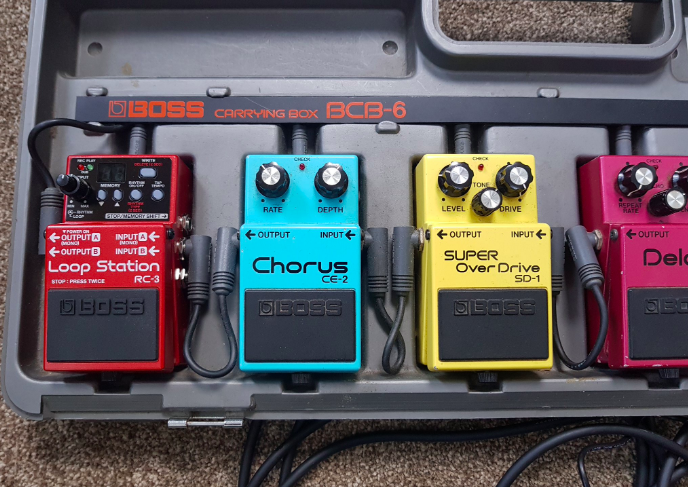
Last week I purchased a loop pedal. It's a Boss RC-3 Loop Station, similar to the one made famous by Ed Sheeran during his live shows (Yes, I know Sheeran uses a more sophisticated set up, but the idea is the same). For those unfamiliar with the world of music, I can connect my Fender Stratocaster guitar through the pedal into the amplifier, and when I tap the pedal, it begins recording and overlaying whatever I play into it, until I tap it again. In a few brief minutes I'm sounding like an entire orchestra of guitars. It's quite an amazing effect and opens up plenty of creative opportunities.

So I tried out my new pedal and within a short time, managed to get to grips with how it works. It was great fun. I then started playing some of my old compositions, and it occurred to me that perhaps I should capture the words of these old songs. I put my guitar down and opened up my laptop, and in a few minutes was busily remembering and writing down the lyrics of the songs I had written so many years ago.

As I saved the documents, other words began coming into my head. So I opened up some more Word documents and wrote down the ideas. Creativity is innate within each of us - often though, it isn't expressed until a trigger event sets it going. It started off with me purchasing a new piece of music technology. And now I'm writing a blog post about my experience ... and the creative process continues....

* Yeah, I know it was a song written by the fabulous Gibb brothers. Don't shoot me. 

Creative Commons License
Creative processes by Steve Wheeler was written in Plymouth, England and is licensed under a Creative Commons Attribution-NonCommercial-ShareAlike 3.0 Unported License.


January 27, 2020

Python's got legs!

Photo by Steve Wheeler
No, this is not some new discovery about the evolutionary development of snakes - nor is it a reptile dysfunction. I'm referring to 2Simple Software's new offering Python In Pieces which was launched last week at the BETT Show in London.

If you're a computing teacher your ears will prick up at this. Actually, if you're a teacher who's interested in anything to do with critical thinking, creativity or logical reasoning you should definitely be interested. Python In Pieces is quite simply one of the best pieces of educational software I've encountered over the last decade, and I don't say that lightly. It's a versatile suite of tools to support the teaching of computational thinking through the use of the programming language Python.

If you're familiar with Purple Mash, you'll notice some similarities. For example, instead of the 2Do assignments, teachers set 'tasks' that students can attempt. The software is visually appealing, provides introductory 'walk through' videos for most of the tasks, and also offers worked examples of many of its capabilities.

At each stage, students can check the viability of their coding by clicking on a self-checking tool 'Assess Your Performance' icon. But unlike Purple Mash, which is aimed at the Primary education sector, Python In Pieces is designed for children at Key Stage 3 (students aged between 11-14 years). Having explored some of its features on the 2Simple stand during the BETT Show, I feel it could also be appropriate for some of the more able children in Year 6 classrooms. Encouraging these to learn it so they can work as digital champions to lead their classmates to similar outcomes, might circumvent some of the anxiety some teachers experience when they are faced with coding and computing. In other words - let the children lead!

Either teacher led or learner led, Python In Pieces can lead the learner steadily through a series of simple but gradually more complex tasks to support their understanding of loops, variables, multipliers and how to debug code. The cartoons and graphics provide visual stimuli to show students the effects of their coding efforts.

Photo by Steve Wheeler
The feature that most impressed me within the Python In Pieces architecture is its dual column split screen, one containing blocks similar to programs such as Scratch, and the other hosting the raw Python code (see the image above). As a student edits the contents of on column, so the other echoes the changes in real time.

This combination shows children cause and effect, and also enables them to code using either raw code or blocks - or both, simultaneously. The pupil differentiation that is made possible using this approach is clear to see, and is exactly what its originator, Pam Jones, intended. As she explained the origins of Python In Pieces, she told me that the name reflects the software's ability to allow students to work incrementally, piecing together how to code by seeing how the parts fit (or don't fit) together. It's a gradual process that takes the learner on a journey from simple to complex skills, enabling them to generate their own ideas and express their creativity as they proceed. In psychology, this is known as 'Gestalt' - visually identifying patterns and interpreting how parts can come together to form a whole, and in so doing, appreciate and understand the entire picture. It's the way we learn just about all of our everyday skills.

My overall evaluation: Coding will become increasingly important in schools, thanks in part to software such as Python In Pieces. Any software that is simple but visually attractive enough to enthral teachers and students alike is going to be a success. Python definitely has legs.

Acknowledgement: My thanks to 2Simple's Lucy Runham who inadvertently came up with the title for this post during our conversation. 

Creative Commons License
Python's got legs! by Steve Wheeler was written in London, England and is licensed under a Creative Commons Attribution-NonCommercial-ShareAlike 3.0 Unported License.


January 23, 2020

What teachers need


Photo by Steve Wheeler
This is the third and final post in the series on RM Integris Management Information System. In previous posts we have explored the features of the system and how students can individually benefit from the tools. In this post, we examine how teachers can benefit.

Teachers are very busy and they require information quickly. They need to be able to see the whole picture, and they are often required to act as a team. One of the problems schools encounter is contradicting data sets, where one teacher has access to a version of records that is current, while a colleague is viewing data that is out of date. The opportunity to act on time sensitive data can also be missed if it is not immediately available to all staff. Because of the cloud-based architecture of Integris, RM say such problems have been largely eliminated. Information is distributed to the entire teacher community regardless of their location. This is a real boon for John Watkin, Head Teacher at Tower Hamlets Pupil Referral Unit, whose staff operations are spread across five different sites in inner city London. He reports that his system is
"...intuitive, as well as more user friendly than our previous Management Information System. As a multi-sited facility, a centralised way of collating data is a must and because RM Integris is web-based, whether I'm at any of the five sites or at home, I can be confident that all staff are looking at the same data." 
Schools are only able to act based on the information available. When teachers are able to access the most up to date information wherever they are, they can intervene and make decisions that have immediate impact. This is echoed by Assistant Head Teacher Mat Downs, from Highcliffe School in Dorset, who said:
"Real anytime and anywhere access has always been a requirement for us and previously we did this via complicated systems to allow staff into the school's network from home to get something as simple as a class list. But with Integris staff are able to do this from anywhere they have an internet connection."    
As the context of education becomes more flexible and less location specific, where students learn at any time and in any place, so the data generated by these activities needs to be rationalised, centralised and applied consistently. Teachers too are less localised, often working and teaching in places that extend beyond traditional classroom boundaries. Whether on a field trip, school visit, visiting other schools, or simply working from home, it seems that RM Integris could prove to be a highly valuable centralised resource, offering access to all the data required to inform professional judgement and make informed decisions. Teachers can analyse, interpret and apply data quickly and easily to meet individual student needs using RM's Hello Data visualisation tool.

Recent research carried out by C3 Education and RM Education with a sample of 575 teachers across England revealed that technology effectiveness was uppermost in teacher perception (Connor, 2019). When asked which technology they thought might have the most impact on their effectiveness, 64 per cent selected school management information systems. However, the same teachers thought that technology to support formative and summative assessment was the most important (84 per cent). RM's Integris platform clearly performs these roles in combination.

Anyone wishing to learn more about Integris and RM Education's other products can visit their website at this link.

Reference
Connor, R. (2019) RM Effectiveness Review. Hertfordshire: C3 Education.

Previous posts in this series
MIS en place
What students need

This post is sponsored by RM Education

Creative Commons License
What teachers need by Steve Wheeler was written in Plymouth, England and is licensed under a Creative Commons Attribution-NonCommercial-ShareAlike 3.0 Unported License.


January 22, 2020

#TwistedTropes 32. Goliath's enormous weapon

Image from Flickr
It was a stand-off - you couldn't call it a Mexican stand-off, because Mexico hadn't been invented yet, but it was an impasse nevertheless. On one side of the valley stood the Philistine Army, and facing them on the opposite bank were the Israelites. They were lifelong enemies, and hadn't spoken to each other for years, apart from the occasional insult. Nobody was going to move, because if they blinked, it was all over. The winner would take all.

Goliath was the champion of the Philistines. He was a very big guy, with a big mouth and an enormous weapon to match (Careful now, this is a family channel - Editor). You can find the entire story in the first book of Samuel, chapter 17 (Yes, he wrote two books - Editor). Goliath, clad in heavy armour and holding his large sword in his hand, would stand in the valley once every day and taunt the Israelites to have a punch up. 'Send someone down to fight me' he would yell, 'and I'll send him back in pieces.'

Strangely, this didn't appeal to the Israelites. Everyone took one look at the size of Goliath and his incredible weapon, realised they had something else to do, and went off to dig some more latrines. A little shepherd boy called David came by with some sandwiches for his older brothers, saw Goliath, and said 'he doesn't look very big. I reckon I could take him.' His brothers and the rest of the Israelites were horrified. They pointed out to David that Goliath only looked 'small' because he was a long way away, and standing in a dip in the ground. Goliath was actually well over nine feet tall in his socks, and had been too tall for any of the fairground rides since he was four years old (Fairground rides? What do you think this is? Disneyland? - Editor). But David walked out to meet the giant anyway, with just a slingshot and five stones that he'd collected from the brook.

Goliath looked down at the tiny shepherd boy, and was a bit insulted at first. But then he saw how absurd the scene was, and he laughed and laughed. In fact it was so funny he laughed his head off. Literally. 

Ironically, Goliath's own sword was the huge weapon that ultimately killed him. People think he was stoned (Wait, what? - Editor) but the stone the shepherd boy David sling-shotted at him only stunned him. Recorded on his death certificate was a sudden reduction in height caused by collision with an extremely sharp object. Tiny David somehow managed to lift up Goliath's huge sword and used it to separate Goliath's head from the rest of his body.

The bigger they are, the harder they fall, thought David, as he turned and faced the Philistines to hold up Goliath's head. You see, it wasn't the size of David that was important, nor was it that he looked woefully under-equipped. No, it was the fact that he was confident in his own ability, and also that he believed he had God on his side. And so it proved to be. The one-round bout between a huge giant and a small boy became a metaphor for winning against all odds. The Philistines ran away, and the Israelites took their lands. David went on to become king of Israel and Goliath became bird food.

So how does this story inform our learning? (I was wondering when you'd get around to this - Editor). Firstly, David must have learnt his slingshot skills somewhere, and the Bible tells us that over a period of a few years, he had done so by using his sling to defend his flocks against attacks from bears and wolves. This is otherwise known as learning transfer - learning on the job, related directly to the job. Good eh? Also, David wasn't fazed by a Philistine giant, no matter what size he was. David was more agile and flexible, floating like a butterfly and stinging like a bee. And that's exactly what he did. His weapon was long range, and he didn't have to get up close and in harm's way to do his opponent a lot of damage. No matter what the size and power of your 'weapons', if you can't use them effectively, you needn't bother. The same applies to our technologies and educational methods.

What can we learn from the story of David and Goliath? If you have enough confidence, you can do almost anything. If you are facing a challenge, remember, nothing is impossible. And, we should all be aware that if you live by the sword, you'll die by it. And that's about the size of it.

Next time: 33: Bloom's bonkers taxonomy

Previous posts in the #TwistedTropes series (Don't read them all at once).
1. Pavlov's drooling dog
2. Chekhov's smoking gun
3. Occam's bloody razor
4. Schrödinger’s undead cat
5. Pandora's closed box
6. Frankenstein's well-meaning monster
7. Thor's lost hammer
8. Noah's character ark
9. Hobson's multiple choice
10. Fibonacci's annoying sequence
11. Plato's empty cave
12. Dante's lukewarm inferno
13. Sod's unlucky law
14. Aladdin's miserly lamp
15. Batman's tangled cape
16. Cupid's bent arrow
17. Fermat's dodgy last theorem
18. Moore's obsolete law
19. Lucifer's idiotic fall
20. Adam's poisoned apple
21. Hadrian's busted wall
22. Montezuma's terrible revenge
23. Dale's shameful cone
24. Maslow's awkward hierarchy
25. Schindler's shopping list
26. Whistler's angry mother
27. Washington's wooden teeth
28. Noah's necessary whale
29. Santa's marginalised reindeer
30. Halley's boring comet
31. Custer's coal stand

Creative Commons License
Goliath's enormous weapon by Steve Wheeler was written in Plymouth, England and is licensed under a Creative Commons Attribution-NonCommercial-ShareAlike 3.0 Unported License.


January 16, 2020

What students need


Photo by Lucélia Ribeiro on Flickr
This is the second of three posts on school Management Information Systems (MIS). Part one can be found at this link in which several features of the RM Integris MIS are outlined. 

Children need a great deal of support throughout their learning journey. School is a complex and confusing environment to negotiate, and they need all the help they can get. Arguably one of children's most important needs is to know how well they are doing (Gardner, 2012) and this is where assessment for learning can play a key role. Although grades matter, more important still is the feedback students receive on their work and performance, and the interventions that teachers can make to support those they see struggling.

Schools also need relevant information about how well their students are progressing. Being able to access complete and up-to-date records of individual students is vital, especially within large cohorts. It's easy to become lost in a crowd, and in the past spotting individual students who are in trouble, and providing personal intervention, has been a challenge for schools (Blatchford et al, 2002).

Cross-curricular support is also important - if a student is struggling in one subject area, this may simply indicate their need to be supported more in learning around that subject. If a student is struggling in several subject areas however, this may be an indication of an underlying systemic or social problem, requiring more extensive pastoral support.

There is a solution to all of these challenges.

School Management Information Systems are able to alert form tutors, special needs co-ordinators and other specialist teachers within schools when an individual issue arises. One MIS which was created by RM Education, enables teachers to see at a glance, not only a student's current performance, but their past progress and potential trajectory. The tools hosted by RM Integris are clearly configured and easy to use.

Three key features that Integris offers for students are:
  • RM Intelligence: This tool enables data visualisation across the whole student body as well as views of individual students. This is useful for both a personal as well as a holistic view.
  • Intervention groups: This is used to monitor specific groups of students that may need extra attention or intervention around behaviour attendance or performance.
  • Safeguarding: Information on each student's home life can be added to their profiles, and specific permissions added so that content can only be viewed by staff members that need access.
Paul Bowlas, Head Teacher at Holy Trinity Church of England Junior School, in Ripon said:
"We were looking for a solution that provided all the information in one place and we found that the way Integris allows you to search and view pupils, particularly the summary page, did just that. We wanted a system that we could populate with our current assessment plans and would link into the contextual details used across the school, so we could at any point, really easily and very quickly, see what was happening with any pupil." 
Students require a lot of support, but this can only come from the dedicated professionals within the school. Without effective tools, teachers' efforts will be limited, and often these limitations can arise from a lack of confidence in new technology. However, there is evidence that teachers are beginning to come to terms with integrated systems that are easy to use and offer scaleable functionality across every activity within the daily life of a school.

References
Blatchford, P. et al (2002) Relationships between class size and teaching. American Educational Research Journal, 39 (1), 101-132.
Gardner, J. (Ed: 2012) Assessment and Learning (2nd Edition), London: Sage.

Next time: What teachers need

NB: This post is sponsored by RM Education

Creative Commons License
What students need by Steve Wheeler was written in Plymouth, England and is licensed under a Creative Commons Attribution-NonCommercial-ShareAlike 3.0 Unported License.


January 08, 2020

MIS en place


Photo by Helloquence on unsplash
This is the first post in a new series about School Management Information Systems.

Have you ever wondered how information and communication technology (ICT) can be effectively deployed in schools? Well, unless you're a member of the senior management team, or an ICT specialist teacher, the odds are is you probably haven't. Those who exercise their minds over ICT in schools usually do so for one of two reasons - the first is that schools need to implement a set of tools that integrate seamlessly into classrooms to support effective pedagogy; The second is less about the classroom and more about how to manage the large amounts of data a school can generate in any given period. This article focuses on the latter.

Managing information for education can be a thorny problem. Schools use many digital services and constantly generate huge amounts of data. These include communication tools, attendance records, assessment information, parent and guardian contact details, school inspection files, human resources information such as staff pay and superannuation, sickness and leave records, free school meal registers, safeguarding records, teaching resources and lesson plans, agency contacts and cover records, budget and finance records, minutes of meetings, statistical reporting - the list goes on. All of these data need to be stored somewhere secure, and instantly recalled or communicated when required. Often data is stored in separate areas, and can be difficult to access when needed.

Overarching these elements is the legal requirement for schools to comply with GDPR regulations in the sharing, reporting and transparency of data management. It's a daunting task for any Information Technology team to implement and maintain. Any errors or disruptions in service can cause chaos.

Fortunately, various solutions are available on the market - they all come under the banner of Management Information Systems (MIS). The latest MIS platforms feature modular and scalable systems, and are increasingly cloud based with user friendly interfaces. Popular MIS platforms include iSAMS, Arbor, Go4 Schools and RM Education. The MIS featured in this post is Integris, designed by RM Education.

The first thing you notice when you use a technology is the user interface. Many ICT tools and technologies tend to be somewhat difficult to use, often due to poor design. Education professionals are busy people and need to be able to use systems with minimum fuss and delay. The design of the interface of Integris is simple, and easy to use. As with most software providers RM offers training for schools, but a lot of the functionality is intuitive through quick links and other useful shortcuts. Migration from other platforms is also reported to be fairly easy.

Jackie Mulock, Business Manager at Marner Primary School, London said:
"The move from our own system to RM Integris was seamless and happened virtually overnight, thanks to the support of RM Education and our local authority. The excellent training was also customised to our individual needs."
One of the most important aspects of Integris is its capability to create personalised spaces. Individual profile pages can be created for each and every student in the school, and these can be used to track learning progress, grades, behaviour incidents, attendance and a host of other contextual data related to the individual.

Paul Bowlas, Head Teacher at Holy Trinity Church of England Junior School, in Ripon said:
"We were looking for a solution that provided all the information in one place and we found that the way Integris allows you to search and view pupils, particularly the summary page, did just that. We wanted a system that we could populate with our current assessment plans and would link into the contextual details used across the school, so we could at any point, really easily and very quickly, see what was happening with any pupil." 
Although much of this is useful mainly for administrative purposes, there are several elements that can be applied directly to the support of the individual. There will be more on this in the next post in this series where we explore student summary pages on Integris, and the benefits for teaching and learning.

Next time: What students need

NB: The French phrase mise en place can be translated as 'putting everything into place.' This post is sponsored by RM Education

Creative Commons License
MIS en place by Steve Wheeler was written in Plymouth, England and is licensed under a Creative Commons Attribution-NonCommercial-ShareAlike 3.0 Unported License.


#TwistedTropes 31. Custer's coal stand

Photo from Wikimedia Commons
George Armstrong Custer was a jack the lad. He was unconventional, rebelling against authority throughout his life. He grew his hair out, letting it flow in long golden locks, and modelled clothing for several designer labels (This is a bit far fetched - Editor) which led to his nickname 'Ringlets'. He also earned several other nicknames, only a few of which can be used on this blog. If he'd been born a hundred years later, Custer might have been smoking pot as he dropped napalm on the Viet Cong. You see, although he was a non-conformist, 'Rambo' Custer was also war-like - he liked fighting and encouraged others to work out their differences using fists, cudgels and laser guided missiles (There, you've gone over the top and ruined it again - Editor).

'Ringlets' Custer may have been known as the calvary officer who lost the disastrous Battle of The Little Bighorn (For the U.S. Calvary, yes - but it was a victory for Native Americans - Editor), but before that he was a successful military leader during the American Civil War. In fact he distinguished himself in a series of famous battles, including the Battle of Gettysburg, Antietam and the First Bull Run (Clearly not in that sequence - Editor), and would have been a very handy friend to have during the January sales. He wouldn't have cared, making a bee-line for the bargains, using his elbows and knees to savagely slashing his way through the crowd with his cavalry sabre. 'Bargain' Custer was a winner and in everything he did he made sure he was always at the top (Including brutalist shopping, hmmm - editor).

I suppose he had to come a cropper somewhere, because you can't win all the time, and his nemesis was Little Bighorn, when he went a step too far. But more of that in a moment...

First, to help pay his way through college, 'Hardass' Custer was enterprising, making a lot of pocket money by selling coal that had 'fallen off the back of a lorry' (You should check your facts on this - Editor). It makes me wonder what life skills he learnt by setting up his coal stand. He would certainly have learnt all about how to acquire the necessary raw materials for retail, and also how to spot a potential customer. He also developed a brashness and confidence in his ability to wheel and deal.

If he had survived the American Indian Wars, 'Blondie' Custer's planned to go into business as a coal trader, but this was not to be. He certainly didn't learn much during his education. In fact he wasn't at all disciplined, preferring to drive a horse and carriage through the academy rules, often offending his superiors. On more than one occasion he was demoted or stopped from progressing through the ranks because of his 'lack of sound judgement'. And yet he was a brilliant military commander.

'Babyface' Custer remains the youngest ever general in the history of the U.S. Army, having been promoted at the age of just 12 years (I think you'll find it was 23 years - Editor). Perhaps his meteoric success is why he didn't listen to advice when he rode along the Little Bighorn river, leading his entire brigade to death. When there are more enemies than you have bullets, the better part of valour is discretion, or at least a diversion to a motel for the night. But Custer had such confidence in his own ability that he rode his troops in anyway, and they paid dearly for his hubris.

There are several things to think about: Firstly, you don't have to be good at everything. You can be rebellious and get away with it, provided you're talented. Becoming excellent in one thing can make you stand out from the crowd, but don't become so cocksure of your own abilities that you don't listen to good advice. There will always be times when you can take advice without losing face. And you can never have enough nicknames.

Next time: 32: Goliath's stolen sword

Previous posts in the #TwistedTropes series (Don't read them all at once).
1. Pavlov's drooling dog
2. Chekhov's smoking gun
3. Occam's bloody razor
4. Schrödinger’s undead cat
5. Pandora's closed box
6. Frankenstein's well-meaning monster
7. Thor's lost hammer
8. Noah's character ark
9. Hobson's multiple choice
10. Fibonacci's annoying sequence
11. Plato's empty cave
12. Dante's lukewarm inferno
13. Sod's unlucky law
14. Aladdin's miserly lamp
15. Batman's tangled cape
16. Cupid's bent arrow
17. Fermat's dodgy last theorem
18. Moore's obsolete law
19. Lucifer's idiotic fall
20. Adam's poisoned apple
21. Hadrian's busted wall
22. Montezuma's terrible revenge
23. Dale's shameful cone
24. Maslow's awkward hierarchy
25. Schindler's shopping list
26. Whistler's angry mother
27. Washington's wooden teeth
28. Noah's necessary whale
29. Santa's marginalised reindeer
30. Halley's boring comet

Creative Commons License
Custer's coal stand by Steve Wheeler was written in Plymouth, England and is licensed under a Creative Commons Attribution-NonCommercial-ShareAlike 3.0 Unported License.


January 01, 2020

#TwistedTropes 30. Halley's boring comet

Image from NASA Universe on Flickr
Comets are generally quite spectacular. It's quite thrilling, but also quite rare to gaze up into the night sky and see a comet tail in the sky. Some comets are more thrilling than others, but there's one that is so boring I very nearly didn't complete this blog post, falling asleep twice during its writing (It was three times, I counted - Editor).

The boring comet was discovered by Edmond Halley, a beauty contest organiser who wore nice wigs, during a heavenly bodies talent show in 1705 (Check the facts on this - Editor). Even he didn't realise at the time just how boring his comet would become.

Halley's comet is boring because it's extremely predictable. It makes a comeback, regular as clockwork every 75 years, just like Cliff Richard, and we all know exactly what to expect (From both - Editor). But why does it keep coming back? Is it because it has a fatal attraction to our sun? Has it taken a fancy to our solar system? Is it enamoured with Jupiter's moons or Saturn (should have put a ring on it), or does it just have a desire to brighten up our skies? What happens to Halley's comet for the rest of the 75 years? Does it go on holiday like Santa Claus? What would happen if Halley's comet sneaked back early to surprise us, or ... if it never came back again? That would certainly be more interesting.

Actually, all of these questions are boring, because the comet is akin to certain lessons in school and university, where the teachers/lecturers annually repeat themselves word for word, or worse, simply read out the text from their boring slides. That's not teaching, it's torture. Some teachers dispatch the same content year in, year out, almost as though they can't be bothered to update and research their content (almost as though? - Editor). Knowledge is always changing, evolving, but the lessons stay the same. No wonder so many students struggle to motivate themselves.

Halley's comet will visit us again, boring as socks on Christmas day, in June 2061 (You got 24 pairs - Editor). It's already been booked into the astronomical calendar, drinks and deckchairs ordered. When it does make this next comeback, will it notice any significant changes to our education system? I doubt it very much.

Next time: 31: Custer's coal stand

Previous posts in the #TwistedTropes series (Don't read them all at once. Pace yourself).
1. Pavlov's drooling dog
2. Chekhov's smoking gun
3. Occam's bloody razor
4. Schrödinger’s undead cat
5. Pandora's closed box
6. Frankenstein's well-meaning monster
7. Thor's lost hammer
8. Noah's character ark
9. Hobson's multiple choice
10. Fibonacci's annoying sequence
11. Plato's empty cave
12. Dante's lukewarm inferno
13. Sod's unlucky law
14. Aladdin's miserly lamp
15. Batman's tangled cape
16. Cupid's bent arrow
17. Fermat's dodgy last theorem
18. Moore's obsolete law
19. Lucifer's idiotic fall
20. Adam's poisoned apple
21. Hadrian's busted wall
22. Montezuma's terrible revenge
23. Dale's shameful cone
24. Maslow's awkward hierarchy
25. Schindler's shopping list
26. Whistler's angry mother
27. Washington's wooden teeth
28. Noah's necessary whale
29. Santa's marginalised reindeer

Creative Commons License
Halley's boring comet by Steve Wheeler was written in Plymouth, England and is licensed under a Creative Commons Attribution-NonCommercial-ShareAlike 3.0 Unported License.


December 28, 2019

Barry Trotter and the virtual world

Tragically, trainee chat room Wizard Barry Trotter has become addicted to social media. His avatar, a disturbingly thin blonde woman with a strange twisted smile, has begun to dominate his life. His irritating little friend Nobby (himself a reformed Internet addict), takes it upon himself to help Barry to quit… 

We join their conversation in Barry's bedroom - the place where all geek-hood begins.


BARRY: You don’t understand Nobby. I've got to keep going back. I don't belong here in RL. I belong in your world – in Facebook and Instagram. It's the only place I've got... friends.
NOBBY: Friends who don't even text Barry Trotter?
BARRY: Well, I expect they've been.. hang on, how do you know my friends haven't been texting me?
With a sad, guilty expression, Nobby produces Barry’s SIM Card.
NOBBY: Barry Trotter mustn't be angry with Nobby -- Nobby hoped if Barry Trotter thought his friends had forgotten him... Barry Trotter might not want to go back online, sir...
BARRY: Give me that. Now!


Nobby frowns sadly, then runs out the bedroom door. Barry desperately chases Nobby, dashing headlong down the stairs and into the kitchen. As Barry races in, he finds Nobby standing on the bench top, waving his arms. Barry’s personal computer floats into the living room, hovering 8 foot above the stone floor. 


BARRY: (Horrified) Nobby... Please... No...
NOBBY: Barry Trotter must say he's never going back online.
BARRY: I can't. Social Media is my home.
NOBBY: (With a tragic expression) Then Nobby must do it, sir. For Barry Trotter's own good.


Nobby snaps his fingers. The computer plummets to the floor, and smashes, sending shards of glass and pieces of metal and plastic flying.

In a fit of rage and grief, Barry turns Nobby into a toad.

Creative Commons License
Barry Trotter and the virtual world by Steve Wheeler was written at Dogwart's School, Somerset and is licensed under a Creative Commons Attribution-NonCommercial-ShareAlike 3.0 Unported License.


December 22, 2019

#TwistedTrope 29. Santa's marginalised reindeer

Image by Chris Duglosz on Flickr
Father Christmas has built his reputation on geniality. He is seen as a sage old man who is quite magical and extremely generous. But there's a darker side to Santa Claus. He can also be vindictive, because he keeps a naughty list as well as a nice list. This is insidiously divisive - it is segregation based on behaviour. Imagine if teachers did this in schools? (er.... - Editor)

If you're on the naughty list - and I suspect you are, if you read this blog regularly - then your goose is cooked. You have already been excluded from the right to have fun by an ageing white male oligarch who feels entitled to discriminate against people based on illicit surveillance of their behaviour across an entire calendar year. Then he 'punishes' that behaviour at the end of each year by deliberately failing to deliver on his contractual obligation. Clearly his behaviour is both paternalistic and oppressive (You're joking, right? - Editor). But it gets worse. Creepily, he knows when children are sleeping and when they are awake, and can break into people's homes with alacrity. He's been getting away with it for years.

Santa's track record on the biased treatment of clientele extends to those who are less able to defend themselves, including quadrupeds such as the Boreal Woodland Caribou known as rangifer tarandus. Rudolf, the reindeer who was slightly different to all the other reindeer, was excluded from Santa's A-team. His omission, based solely on his facial appearance, caused all the other reindeer to despise and victimise Rudolf. They indulged in verbal abuse and ridicule, and Rudolf was consistently excluded from their leisure activities. It's a testament to the character of the young reindeer that he didn't take legal action (This is satire, yes? - Editor).

Such systematic abuse goes to show that if an influential leader publicly expresses dislike of minority groupings, the general population believes it has a licence to also do some hating. It was only one Christmas Eve, when Santa was about to embark on a transglobal flight, and was informed by air traffic control of deteriorating atmospheric visibility, that he decided, purely for health and safety reasons to press the ethnic minority member of his team into service. But some might argue this was merely a cynical, tokenistic compliance with diversity and inclusion policies (Good grief, you're serious about this, aren't you? - Editor).

This is why I'm calling for a universal boycott of laying out mince pies and brandy on Christmas Eve (What?? - Editor). Santa has done nothing to deserve them, and should be sanctioned by his clients. Continuing to leave treats out for him simply serves to legitimise his bigoted treatment of children and systematic abuse of animals. But please, do continue to leave a carrot or two out for the reindeer. Such exploited animals deserve some recompense for all their hard work especially as they're engaged in forced labour with no remuneration in (Stop there. This is like standing in front of a blast furnace. Your anger is incandescent. Any chance you might lighten up a little for Christmas? You know - peace and goodwill to all....? - Editor).

Hmm. OK. Merry Christmas everyone - remember the reason for the season, and try to treat each other kindly.

Next time: 30: Halley's Boring Comet

Previous posts in the #TwistedTropes series (Take it easy now - not all at once...)
1. Pavlov's drooling dog
2. Chekhov's smoking gun
3. Occam's bloody razor
4. Schrödinger’s undead cat
5. Pandora's closed box
6. Frankenstein's well-meaning monster
7. Thor's lost hammer
8. Noah's character ark
9. Hobson's multiple choice
10. Fibonacci's annoying sequence
11. Plato's empty cave
12. Dante's lukewarm inferno
13. Sod's unlucky law
14. Aladdin's miserly lamp
15. Batman's tangled cape
16. Cupid's bent arrow
17. Fermat's dodgy last theorem
18. Moore's obsolete law
19. Lucifer's idiotic fall
20. Adam's poisoned apple
21. Hadrian's busted wall
22. Montezuma's terrible revenge
23. Dale's shameful cone
24. Maslow's awkward hierarchy
25. Schindler's shopping list
26. Whistler's angry mother
27. Washington's wooden teeth
28. Noah's necessary whale

Creative Commons License
Santa's marginalised reindeer by Steve Wheeler was written at the North Pole and is licensed under a Creative Commons Attribution-NonCommercial-ShareAlike 3.0 Unported License.


December 14, 2019

#TwistedTropes 28. Jonah's necessary whale

Photo by Andrew Bain on unsplash
It wasn't long after the prophet Jonah was thrown overboard into stormy seas that he was swallowed by a great fish. Popular belief is that it was a whale, but that would be ridiculous. It's virtually impossible for a whale of any size to swallow a man, and for him to survive inside it's stomach for up to three days. But I bet there are plenty of fish out there in the depths of the oceans that might be large enough to take on the job. Imagine the job description: Well-known employer seeks large fish for short-term contract to cover for maternity leave. Must be willing to swallow a full grown man, and vomit him out after three days. No other qualifications required. Training and emetics will be provided.

But whatever swallowed Jonah, it was quite necessary. Because if Jonah hadn't asked the sailors to throw him over the side, they might all have drowned in a shipwreck. Jonah knew something. He had been told by his boss (God) that he had to go to the city of Ninevah on a PR trip. He was to tell the citizens that what they were doing was wrong and that they had to mend their ways or they would suffer an extinction level event. It was the ancient equivalent to climate change warnings, but without the social media.

Jonah didn't want to go to Ninevah, because he knew what would happen. He would tell the people to mend their ways, they would listen to him and do so, and then he would look like an absolute mug, because the destruction wouldn't come. So he decided to go in exactly the opposite direction. He ran away, boarding a ship to anywhere that wasn't Ninevah.

Now his ship was in the middle of a massive storm miles from any coastline, and the it was about to sink. Jonah, being a prophet, knew exactly what was happening. He'd dealt with God before, and knew He wouldn't give up until Jonah turned around and went back. That's where the big fish came in. Did I say it wasn't a whale? (yep, you made that abundantly clear - Editor). Anyway, after the fish had swallowed Jonah, and he'd had some time to marinade his thoughts, the big fish chucked him up three days later onto the beach, and he walked to Ninevah.

I imagine that the three days inside the belly of the fish did little for his personal fragrance and appearance. Anyone questioning this might be told that he couldn't help it because it was the way he was brought up (not funny - Editor). Anyone who caught the fish after this would have made no money, because there was no prophet in it (That is even worse - Editor).

But here's the moral of the story. If you have a job to do, do it well and do it with all your heart. It's no good running away from your responsibilities, even if you think the outcome might not be very positive. Take pride in what you do, and don't worry about what others may think of you. Remember that running away might get you into deep water, and ultimately, you won't be covered in glory.

Next time: 29: Santa's marginalised reindeer

Previous posts in the #TwistedTropes series
1. Pavlov's drooling dog
2. Chekhov's smoking gun
3. Occam's bloody razor
4. Schrödinger’s undead cat
5. Pandora's closed box
6. Frankenstein's well-meaning monster
7. Thor's lost hammer
8. Noah's character ark
9. Hobson's multiple choice
10. Fibonacci's annoying sequence
11. Plato's empty cave
12. Dante's lukewarm inferno
13. Sod's unlucky law
14. Aladdin's miserly lamp
15. Batman's tangled cape
16. Cupid's bent arrow
17. Fermat's dodgy last theorem
18. Moore's obsolete law
19. Lucifer's idiotic fall
20. Adam's poisoned apple
21. Hadrian's busted wall
22. Montezuma's terrible revenge
23. Dale's shameful cone
24. Maslow's awkward hierarchy
25. Schindler's shopping list
26. Whistler's angry mother
27. Washington's wooden teeth

Creative Commons License
Jonah's necessary whale by Steve Wheeler was written in Ninevah, Assyria and is licensed under a Creative Commons Attribution-NonCommercial-ShareAlike 3.0 Unported License.


December 11, 2019

#TwistedTropes 27. Washington's wooden teeth

I don't know where this image came from. Bite me.
Here's something to get your teeth into: It's well known that the first president of the United States of America had a mouthful of rotten teeth. It's also common knowledge that he wore false teeth. What is less well known is that George Washington had several different sets of dentures, each made from various kinds of materials.

Surprisingly, these included gold, brass and human teeth, and bizarrely, one set made from hippopotamus ivory (What? Where did this information come from? - Editor). The dentures he wore had so many hinges and bolts in them they must have been painful to wear.

Look at the pictures of him, and especially his face on the one dollar bill, and you'll see that his mouth is distorted, and his lips are bulging outwards in a pout. The dentures filled his mouth out so much that the poor bloke was often in a lot of discomfort, looking like he had a mouthful of marbles. No wonder he always looked so down in the mouth. There is a rumour that it wasn't his dentures that were the problem, but that he regularly injected his lips with collagen, but this can't be true. Collagen wasn't invented until the 20th Century (Check your facts - collagen wasn't invented - it's is a natural protein in every human body - Editor).

But - and here's the biggest surprise - George Washington never owned a set of wooden teeth. Just think about it. It would have been absurdly uncomfortable, and the splinters would have been unbearable. Imagine using wooden dentures to chew steak, or crack nuts. You'd end up with a lot more fibre in your diet than you intended. The fake news about Washington's wooden gnashers was widely accepted as the truth because it persisted in school textbooks until well into the 20th Century, before someone with a bit of integrity finally removed it.

It only goes to show that knowledge is only as good as its source, and that it depends entirely upon the gatekeepers of knowledge as to what actually gets into textbooks. The same could be said for school curricula. It makes you wonder what other inaccurate, incomplete or misleading information might still lurking be around inside the covers of school textbooks?

The final bit of information is perhaps the strangest - his favourite set of dinner manglers was made predominantly from dog teeth. The original canine teeth. It was the first time in history that a human had used dog's teeth in dentures, but it quickly became fashionable. The president's set had set a precedent (This will need to be fact-checked - Editor).

Next time: 28: Jonah's necessary whale

Previous posts in the #TwistedTropes series
1. Pavlov's drooling dog
2. Chekhov's smoking gun
3. Occam's bloody razor
4. Schrödinger’s undead cat
5. Pandora's closed box
6. Frankenstein's well-meaning monster
7. Thor's lost hammer
8. Noah's character ark
9. Hobson's multiple choice
10. Fibonacci's annoying sequence
11. Plato's empty cave
12. Dante's lukewarm inferno
13. Sod's unlucky law
14. Aladdin's miserly lamp
15. Batman's tangled cape
16. Cupid's bent arrow
17. Fermat's dodgy last theorem
18. Moore's obsolete law
19. Lucifer's idiotic fall
20. Adam's poisoned apple
21. Hadrian's busted wall
22. Montezuma's terrible revenge
23. Dale's shameful cone
24. Maslow's awkward hierarchy
25. Schindler's shopping list
26. Whistler's angry mother

Creative Commons License
Washington's wooden teeth by Steve Wheeler was written in Fullmouth, England and is licensed under a Creative Commons Attribution-NonCommercial-ShareAlike 3.0 Unported License.


December 10, 2019

#TwistedTropes 26. Whistler's angry mother

Image from Wikimedia Commons
When James Whistler painted his mother, she didn't look too pleased. In fact she looked proper hacked off, like as if any minute she was going to turn around and snarl obscenities at him and tell him exactly where he could stick his paintbrushes (steady on now - Editor).

Maybe she had a migraine coming on when he asked her to pose for him. Perhaps she was expected at her Pilates class and he was making her very late. Or maybe she was simply in a bad mood. Any of these would explain why she isn't smiling, her jaw is set, and she is sitting facing stubbornly away from him as he paints.

But there are alternative explanations. Maybe she is watching a particularly bad soap on the telly, but I doubt if they even had TV in those days (er, correct - Editor). I wonder if she was given some bad news. Possibly, Whistler had told her that he wasn't moving out like he said he was going to, and that she still had to cook for him and wash his socks and underpants. Or maybe she was just fed up with his incessant whistling. I know it would drive me bonkers (Whistler was his name, not his proclivity - Editor). Whatever is going on, it looks like it's a big inconvenience to her.

Having a famous painter for a son in those days was a bit like having a son who is a famous rapper or football player today. Whistler probably never stopped bragging about all the paintings he'd sold, his appearances on TV chat shows or the fancy parties he had been invited to (one of these is completely wrong - Editor). By contrast, his poor mother probably never ever got out of the house, except from her Pilates class, so she was probably cheesed off with him most of the time. Your kids can really do your head in.

Notice that not only is she looking angry, she's also clutching a lace handkerchief, so she might have been crying, or more likely wiping up some of Whistler's paint stains. So while her famous painter son was swanning around Paris drinking himself under the table with the likes of Claude Monet, Edgar Degas and Edouard Manet, she was at home making sure his shirts were pressed.

It's not easy living with creative types, and you never know what to expect sharing your life with an artist. I bet Whistler's mother could tell you a story or two about her famous son. You can learn a lot from looking at a painting, can't you?

Next time: 27: Washington's wooden teeth

Previous posts in the #TwistedTropes series
1. Pavlov's drooling dog
2. Chekhov's smoking gun
3. Occam's bloody razor
4. Schrödinger’s undead cat
5. Pandora's closed box
6. Frankenstein's well-meaning monster
7. Thor's lost hammer
8. Noah's character ark
9. Hobson's multiple choice
10. Fibonacci's annoying sequence
11. Plato's empty cave
12. Dante's lukewarm inferno
13. Sod's unlucky law
14. Aladdin's miserly lamp
15. Batman's tangled cape
16. Cupid's bent arrow
17. Fermat's dodgy last theorem
18. Moore's obsolete law
19. Lucifer's idiotic fall
20. Adam's poisoned apple
21. Hadrian's busted wall
22. Montezuma's terrible revenge
23. Dale's shameful cone
24. Maslow's awkward hierarchy
25. Schindler's shopping list

Creative Commons License
Whistler's angry mother by Steve Wheeler was written in Plymouth, England and is licensed under a Creative Commons Attribution-NonCommercial-ShareAlike 3.0 Unported License.


December 09, 2019

#TwistedTropes 25. Schindler's shopping list

Image from Wikimedia Commons
Oskar Schindler was an industrialist, playboy and philanthropist during the Nazi occupation of Europe. Schindler's 'list' refers to his quiet defiance of Hitler's murderous regime when he saved several hundred of his Jewish employees from the Nazi death camps. Thomas Keneally's 1982 book Schindler's Ark tells the story of his high risk strategies to save his workers from the Nazis.

When Hollywood film director Steven Spielberg acquired the film rights, he was forced to use the more anodyne title Schindler's List. This was because the Ark suffix had already been claimed by Noah, or more likely, by his publicist. At first Spielberg didn't really want to make the film, and offered it to several other directors, and also to a taxi driver by mistake, but eventually he agreed to direct the movie when he realised that one Oskar could be multiplied into several more. At the time, Hollywood couldn't get enough of Nazis running about in jackboots and any film that featured them tended to be a big hit. These included Spielberg's earlier movie Raiders of the Lost Ark (1981 - confusingly not the same ark as Noah's ark), Das Boot (1981 - a story about a lost jackboot) and ultimately the brutally violent the Sound of Music which featured a volatile mix of Nazis and nuns (1965) (there are misleading statements here that need to be corrected - Editor).

Schindler didn't really create a list, nor did he build an ark, mainly because he was too busy running his enamelware factory and raking in the money. If Schindler had created a real list - an alternative one to the one we all know he didn't create - what would be contained within that list? Would it be a list of all his Swiss bank accounts? Or a list of the number of time he restrained himself from hitting Gestapo officials when they called around for a drink? Or later in life, a list of all the book and film deals he was offered?

I think it would be a shopping list, because Oskar had plenty of money to splash about, owning a large factory (and also a huge advance from MGM studios for a film of his life that was never made, that he spent pretty quickly). You could imagine him nipping off down to his local Tesco Express (more likely to be Lidl or Aldi - Editor) to get his Drambuie, Camembert and a couple of baguettes, along with a copy of Völkischer Beobachter, to keep up appearances as a loyal Nazi party member.

You see, Oskar Schindler was a real anomaly. Although he was a fully paid up, card carrying member of the Nazi Party, which was responsible for the wholesale slaughter of millions of innocent people, he was also considered by the Jewish people to be righteous among the nations and several gave him financial aid after the war when he became bankrupt, possible due to a shopping list too far. Although Schindler was in the Party, he was not of the Party. He wasn't really a party person at all, not even at Christmas time. Schindler was actually a positive deviant. He was an oxymoron - a Nazi who was also a philanthropist (I suspect he wasn't a Nazi at all - Editor).

Schindler did things differently to all those around him, and would be considered a deviant if he had been caught out, but he deviated in a positive way. Some might call him a 'mole' but he didn't infiltrate the Nazi Party. He worked his way from the inside out to protect his workers from the fascists.

We can all learn a lot from Oskar Schindler, not least about standing up to the mob, swimming against the tide, and making great shopping lists. In spite of his many faults, he still tried to do some good in the midst of an appalling situation. I want to be a good positive deviant a little like Schindler. I want to make a positive difference in any organisation I work within, because it's the right thing to do. In fact, it's on my bucket list.

Next time: 26: Whistler's angry mother

Previous posts in the #TwistedTropes series
1. Pavlov's drooling dog
2. Chekhov's smoking gun
3. Occam's bloody razor
4. Schrödinger’s undead cat
5. Pandora's closed box
6. Frankenstein's well-meaning monster
7. Thor's lost hammer
8. Noah's character ark
9. Hobson's multiple choice
10. Fibonacci's annoying sequence
11. Plato's empty cave
12. Dante's lukewarm inferno
13. Sod's unlucky law
14. Aladdin's miserly lamp
15. Batman's tangled cape
16. Cupid's bent arrow
17. Fermat's dodgy last theorem
18. Moore's obsolete law
19. Lucifer's idiotic fall
20. Adam's poisoned apple
21. Hadrian's busted wall
22. Montezuma's terrible revenge
23. Dale's shameful cone
24. Maslow's awkward hierarchy

Creative Commons License
Schindler's shopping list by Steve Wheeler was written in Plymouth, England and is licensed under a Creative Commons Attribution-NonCommercial-ShareAlike 3.0 Unported License.


<< Back Next >>