Log on:
Powered by Elgg

Feed detail

February 11, 2014

A safer Internet?

Hardly a day goes by without some tragic story about sexting, cyber-stalking, paedophile grooming or cyber-bullying hitting the news. As more and more children use mobile phones and access the Web, so the incidents rise proportionately. We wish it were not so. We would all love to see a free and open Web that everyone could use without any fear of abuse, bullying or blackmail. But with every new tool and technology comes a danger from a small but determined section of society who wish to bend their use, to exploit and to abuse for their own selfish purposes. No matter how hard we tried, we would never be able to completely eliminate nefarious use of the Web, but there are ways we can at least ameliorate the risk by protecting the younger members of our society from these dangers.

The statistics are shocking. According to a recent BBC survey of 3500 parents and children, only 8% of parents thought their children had seen something upsetting on the Internet. However, 15% of their children reported seeing something upsetting on their smart phones.  Only 41% used safeguarding or filtering software when using the Internet. By the age of 11 many children have already posted up their own YouTube videos, and may have set up fake accounts on sites that require them to be at least 13 years old. By the age of 13, some have tried sexting, and many are regularly using services such as Snapchat, Skype and Instagram. Many parents don't understand the capabilities of these sites.

Today is Safer Internet Day (#SID2014), when we celebrate good and appropriate uses of the Web, and share good advice on how to protect vulnerable users from those out there who would seek to harm them. There are two ways we can intervene. The first is technical, and this can be a challenge for some parents, especially those who know very little about how to use computers and mobile phones. There are websites that can help parents to understand the risks and dangers children can be exposed to. The EU sponsored Safer Internet Programme site for example, raises parents' awareness of the dangers of the Internet and offers advice on intervention they can take if they are concerned. Parents can, for example, enter the type and model of smartphone their children use, and the website will show them the controls and tools that are available to use on that particular handset, and how to turn off cameras or block certain sites. Another useful site is the Child Exploitation and Online Protection Centre (CEOP), which offers a similar service of advice and support. The BBC's Webwise site also has some great resources on Internet safety.

Putting a block on your teenager's phone though, is no guarantee of safety, because at least 38% of 11-16 year-old children in the survey claimed they knew how to remove parental blocks and reactivate functions.

A second and possibly more successful way to ensure better and safer use is to apply social intervention. Parents are encouraged to talk more to their children about their use of technology, and discuss with them the risks and potential dangers. Finding out what sites children visit online, who they talk with and what they talk about is useful information to help parents decide how to manage access to the Web. Schools too are playing their part in educating children into safer and more responsible use of technology. But parents and teachers - all of us - still  need to know more about the ways we can protect our children from the dangers that lurk on the Internet and show them how they can enjoy the Web in safety.

Photo by Joel Bombardier

Creative Commons License
A safer Internet? by Steve Wheeler is licensed under a Creative Commons Attribution-NonCommercial-ShareAlike 3.0 Unported License.

The survival of Higher Education (5): Recommendations

This is the fifth and final part of my short series of posts on the future of higher education.

In my previous post I discussed the ways technology might help to promote the survival of universities in a time of financial upheaval and disruptive culture.

In this post, I discuss change management and outline some of my recommendations for the adoption of new practices and technologies.

Recommendations

Ultimately, to ensure that technologies are successfully adopted, institutions need to demonstrate that each is relevant and can be used effectively to support, enhance and extend learning beyond what is currently possible. The value added potential of new technologies becomes the unique selling point, including its capability to change or challenge current provision. Change however, comes with a price, usually in human cost. Many teachers are reluctant to embrace new technology because they may perceive it as undermining their authority, it may challenge roles they are comfortable within, or require them to invest time and effort into learning how to do something new. Many are unhappy about change and some will actively resist. Often such resentment or distrust of new technologies can be transmitted to students, particularly those who are more mature. Universities therefore need to find ‘champions’ – early adopters of the new technologies who are also respected opinion leaders within the academic community.

Changes often come from the grassroots upwards, but without support and nourishment from the top, many seemingly useful changes fade and die. Managers and leaders need to listen to the views of their staff (and also their students), and commit their institutions wholeheartedly to new innovations that are pragmatic, to ensure that they are spending money on technology that fits into the every day teaching and learning activities of the organisation. Such decisions need to be informed by empirical research that is generalisable.

Institutions will need to secure adequate funding so that new technology is sustainable. Too often organisations buy into new technology but fail to budget for ongoing support such as training, upgrades, repairs and maintenance. Professional development should be offered that is realistic and authentic so that teachers can situate their new skills within everyday practice. Finally, institutions will need to offer better opportunities and incentives for teachers to encourage the use of new technologies that are relevant across entire curricula. Sometimes curricula may need to change to accommodate shifts in practice, and there should be latitude to embed new technologies into everyday practice.

Conclusion

The advent of new and emerging technologies such as interactive touch surface devices, mobile and wireless technologies and the social web, afford teachers with unprecedented opportunities to try out new pedagogies which would previously have been difficult or impossible. Teachers may see new technologies either as opportunities or as threats. Whatever their views, the teachers who are most likely to be successful will be those who embed new technologies into their courses, and who adopt a role that us supportive of flexible and mobile learning. Technology will not replace teachers, but teachers who adopt new technologies will probably replace those who don't. Younger students who entered higher education in 2008 were the first students who had grown up in a world in which connection to the internet had always been there. They expected to have fast and seamless access to digital resources, social networking and mobile learning opportunities. Students today have even greater expectations, and if this kind of provision is not forthcoming or is discouraged, they will go somewhere where it is available.

It is up to the institution, through clear leadership, strong support of innovation and the adoption of a culture of blame-free experimentation, to ensure that new ways of using technology are discovered and that technology becomes embedded into the fabric of education programmes. Only then will we begin to see the social web being used to its fullest capacity – as a liberating tool to enable students to learn anywhere, at any time, and in a style and at a pace that suits their individual needs and preferences.

Previous posts in this series:

The survival of Higher Education (1): Changing Roles
The survival of Higher Education (2): Changing Times
The survival of Higher Education (3): The Social Web
The survival of Higher Education (4): 5 Key Objectives

Photo by Felix Burton on Wikimedia Commons

Creative Commons License
The survival of Higher Education (5): Recommendations by Steve Wheeler is licensed under a Creative Commons Attribution-NonCommercial-ShareAlike 3.0 Unported License.

February 10, 2014

The survival of Higher Education (4): 5 key objectives

This is a continuation of my short series on the future of higher education, and builds on yesterday's blog post on why Social Web tools are useful to support student learning. We start with the question...

...how will technology help to shape the future of Higher Education? 

It is increasingly apparent that learning technology and digital communication will play a key role in the shaping of future higher education. For digital technologies to become as successful in education as ‘paper and pencil’, I believe that five key objectives will need to be achieved:

1. Technology will need to become more ‘transparent’ (Wheeler, 2005). That is, technology will need to become so embedded into the day to day experiences of teachers and students that it becomes common place, and even mundane. The novelty value and opacity of technologies often prevent users from ‘seeing through them’, beyond the shiny toy with the buttons and lights, to a tool that is useful because it does something previous tools could not do (John and Wheeler, 2008).

2. Universities must offer better and more sustainable support to academics. Often teachers are pushed into situations where they need to cope with new ideas and new technologies without clear guidance. In such situations, teachers will often struggle and fail with technology, or they will resist to the point of rejection. Very few will actually succeed without help. Appropriate professional development, support services and dialogue with experts will invariably overcome many of these issues (John and Wheeler, 2008).

3. Teachers need to see the relevance and application of new technologies. For teachers to adopt new technologies, they must first see the applications and understand the benefits (as well as the limitations) of the tool. If a tool adds nothing new to the teaching and learning equation it will be perceived as irrelevant and will be rejected (cf. Norman, 1990).

4. Many teachers will need to gain greater confidence in the use of new and emerging technologies. This will mean that they will need to be continually adaptive and responsive to change as it happens. This relates back to training, which brings familiarity, but teachers also need to see beyond the technology, using it as an extension and enhancement of their own cognitive capabilities, or ‘mind technology’. They will also need to see that technology can be contextualised into real and authentic teaching situations. And they will need to be willing to change their own practice occasionally.

5. More research is needed into what can be done and what cannot be done with new and emerging technologies. How else will we know whether or not something works, who it works best with, and under what conditions it becomes less successful? We can find out through trial and error, or more preferably, we can discover through thorough and systematic research in which new technologies are tested out in authentic situations. 


References

John, P. D. and Wheeler, S. (2008). The Digital Classroom: Harnessing the Power of Technology for Learning and Teaching. London: Routledge. 
Norman, D. (1990). The Design of Everyday Things. London: The MIT Press. 
Wheeler, S. (2005). Transforming Primary ICT. Exeter: Learning Matters.

Photo by Felix Burton on Wikimedia Commons

Creative Commons License
The survival of Higher Education (4): 5 key objectives by Steve Wheeler is licensed under a Creative Commons Attribution-NonCommercial-ShareAlike 3.0 Unported License.


February 09, 2014

The survival of higher education (3): The Social Web

This is a continuation from yesterday's blog post on changing times and the survival of higher education. Below are four reasons why the Social Web and associated media are changing higher education. Although this is not the entire story, I believe we will need to adopt these and other new technology mediated approaches widely if we wish to secure the future of higher education. This is because...

...the Social Web connects people together 

At Plymouth University, we very quickly began to explore the ways Social Web tools could support our students. Around 2007 we started using blogs to support several of our student teacher groups that were geographically dispersed across the South of England. These were mostly mature and part-time students who held substantive posts in training agencies, colleges and universities, and in community adult education centres, the military, National Health Service, the police force and the prison service. Some were itinerant because of the nature of their jobs. Military students for example may be serving overseas, or in submarines. Some did not have the opportunity to meet face-to-face with their peer group and sometimes suffered from prolonged lack of tutor contact. For the majority, their busy lifestyles did not allow them to enjoy more than brief contact with their fellow students on more than a once weekly basis because travel into a teaching centre can be time consuming, expensive and tiring. Here social media were used to connect people, enabling them to collaborate together in project work, small group learning and online discussions. The MentorBlog project for example, employed the use of two-person blogs to connect students with their professional mentors, who may never have had the opportunity to meet face to face (Wheeler and Lambert-Heggs, 2008). Using two-person blogs, students were encouraged to regularly write their reflections on professional practice directly to their blog. Their mentor was able to read the student’s posting and then comment directly to the blog with their own observations, guidance and support (Wheeler and Lambert-Heggs, 2010).

The Social Web promotes collaboration 

Collaborative forms of learning are becoming increasingly popular methods of adult education, because they involve all students in the process of learning. Social software is based heavily on participation, and this is apparent in a number of features including social tagging, voting, versioning, hyperlinking and searching, as well as discussion and commenting. The power of this kind of social media is that it includes all in the process of creating group based collections of knowledge, and artefacts that are of specific interest to the learning community.  

One of the most popular activities on our wiki based learning programmes was called ‘goldmining’. In this activity, each of the students took individual responsibility to seek out, evaluate and then post useful websites and online learning resources that were deemed indispensable to the group. These were posted up onto the
group wiki, and a short summary attached by the ‘gold miner’ to explain what it contained and why it would be useful. Students were encouraged to explore each others’ gold dust resources and attach their own comments on how useful they found them. Attached discussion groups supported more in depth and
informal discussion about the activity. It is doubtful whether such a useful and comprehensive collection of online resources complete with evaluative commentary, could have been assembled any other way, or in such an organised manner.

The Social Web challenges current provision

There is a sense from many younger students that the institutional managed learning environments are not popular tools, because they fail in comparison to the more colourful, flexible and accessible social networking tools that are available for free on the internet. Further, students enjoy personalising their online spaces, a task that is not particularly easy or positively discouraged within institutional systems. This is particularly evident on a cursory inspection of any social web space, whether it be Facebook, Snapchat or any other popular free space. Students ‘pimp’ their pages, adding colour and textures, favourite images, links to their favourite websites, including mashups to video sharing sites such as YouTube and photo sites such as Flickr. This was often impossible or forbidden on university and college sites, where a corporate branding and image uniformity was enforced and surveillance imposed.

If they wished to change this kind of restrictive provision and depose the ‘tyranny of the institutional VLE’, universities would need to undergo a radical shift in policy. VLEs (virtual learning environments) are used to provide a ‘walled garden’ around expensive and copyrighted resources, as well as the imposition of control over access, tracking and assessment of student learning. The problem now for many education institutions is to try to strike a balance between maintaining the element of control, whilst enabling students to personalise their own learning environments and tailor them to their own preferences and learning styles. Wikis and blogs to a certain extent can achieve this objective, but there can be constraints and disadvantages to this approach, not least a resistance from students themselves who may not wish for these tools to be imposed upon them.

The Social Web creates new and enhanced learning experiences 

In the last few years my colleagues and I have created several new learning activities that can be used by students in shared online spaces. We have designed the activities so that they offer students experiences or access to resources that would be impossible or difficult to offer through conventional means. Activities are not mandatory, but can supplement and enhance traditional, classroom based provision. One project known as the WikiLit project is offered as a means for students to gather together evidence of core skills in and around literacy and numeracy learning (Wheeler et al, 2008).  Students generally disliked doing the activities on the wiki, although several actually liked the concept of the wiki and could see how it could be used with their own students. The biggest problem they identified was a lack of time, and most agreed that the wiki activities actually made more work for them. Students were resentful that they had to access materials online, and several issues were raised including lack of familiarity, lack of access and lack of understanding about what was required of them. A major conclusion from the WikiLit study is that although the wiki is a useful tool to bring distributed students together for collaborative learning, the subject matter and the manner in which it was delivered occluded the positive aspects for this group of students. Future provision should be less rigidly subject specific and more open for students to bring their own content to the space. Moreover, students and staff should be given better induction and training in the use of the tool, so that the potential is better exploited.

Continues tomorrow...

References
Wheeler, S., Yeomans, P. and Wheeler, D. (2008). The Good, the Bad and the Wiki: Evaluating Student Generated Content as a Collaborative Learning Tool. British Journal of Educational Technology, 39(6), 987-995.
Wheeler, S. and Lambert-Heggs, W. (2008). MentorBlog: Connecting Students and their Mentors using Social Software. In S. Wheeler (Ed.) Digital Learning: Repurposing Education. Proceedings of the Third Plymouth e-Learning Conference, University of Plymouth, 4 April 2008.
Wheeler, S. and Lambert-Heggs, W. (2010). Connecting Distance Learners and Their Mentors Using Blogs: The MentorBlog Project. Quarterly Review of Distance Education 10 (4), 3-17.

Photo by Felix Burton on Wikimedia Commons

Creative Commons License
The survival of higher education (3): The Social Web by Steve Wheeler is licensed under a Creative Commons Attribution-NonCommercial-ShareAlike 3.0 Unported License.

February 08, 2014

The survival of higher education (2): Changing times

This is a continuation from yesterday's post on changing roles, disruptive innovation and the survival of higher education.

Changing Times

It is now time to take stock. My two keynotes were conceived, written and presented over a decade ago in 2000, at a time when the Web was still in its infancy. I was certainly speaking for a time before the advent of what is now referred to as Web 2.0 or the ‘social web’. In this paper, having revisited my previous speeches I'm going to try to gaze once more into the near future in an attempt to determine what education might look like in the light of the technological developments that comprise Web 2.0. I will attempt to contextualise these changes at the level of both organisation and individual, to provide a picture of how universities and teachers might manage their business in the coming decade. Once again, I will do so based upon my knowledge and experience gained from a career in which research has been central to my work. As my starting point I want to examine the phenomenon that is Web 2.0 and provide some examples of current pedagogical practice using the Social Web. I will then speculate on the current changes in practice that might emerge, both for the institution and the teacher. Finally, I will suggest that there are five key objectives to achieve if universities are to achieve success in the use of learning technologies in the future.

The Changing Web (2.0) 

So what exactly is Web 2.0? This is a contested label for new and emergent properties that are found on the Web. It is a complex network of dynamic resources that we all acknowledge is constantly changing to adapt to the growing demand for entertainment, communication and access to knowledge. Debate centres upon whether the emerging social applications constitute a sea change or revolution in the Web (cf. van Dijk, 2002) or simply another phase in its relentless progress. Personally, I find myself in agreement with Brian Winston (2003), preferring to view social applications as a facet of gradual evolution rather than symptoms of sudden revolution. Essentially, the Web has become more social. As with most other technology innovations, Web 2.0 applications have grown out of the need for people to connect together, share experiences and knowledge, enhance their experiences and open up new possibilities in learning. The Social Web is comprised of software that enables people to both read from, and write onto web spaces. It is literally the ‘architecture of participation’ (O'Reilly, 2004; Barsky and Purdon, 2006) and demands active engagement as a natural facet of its character (Kamel Boulos and Wheeler, 2007).

Web 2.0 tools include popular applications such as blogs, wikis and podcasting; social networking sites such as Facebook; photo and video sharing services such as Flickr and YouTube; social tagging, aggregation and curation of content; the use of Twitter to connect with, and create massive personal learning networks; and concepts such as the folksonomy, Darwikianism and the wisdom of crowds (Kamel Boulos, Maramba and Wheeler, 2006). Finally, we cannot afford to ignore the growing influence of mobile phones and apps as a disruptive force and the capability they have of enabling any time, any place learning.

A Social Web that supports learning 

Staff at the University of Plymouth have been using Web 2.0 (social web) tools in teacher education for the several years and have attempted to qualify their use in a number of areas of learner support including shared online spaces (Wheeler et al, 2008) and blogs (Wheeler and Lambert-Heggs, 2008). The essential premise underpinning the use of any Social Web application is that over a period of time it genuinely becomes self-supporting, and that the students will enjoy the freedom to produce their own content and study pathways. The problem with this is that students may not always be as accurate or fastidious in their content generation as they could be, and may need guidance on the pathway they choose to take. However, there is evidence that students begin to support each other when they share the same online space and have mutual goals to achieve. One of the most popular and easy to use tools in the wiki – a shared website which anyone can edit.

We quickly discovered that wikis are so open as to cause problems if some form of scaffolding or structure is not created for students. We therefore designed a number of activities for the wiki. One of the first learning activities was to generate a set of rules about acceptable and unacceptable behaviour online. Students proposed and discussed their rules, which included the banning of offensive language and racist comments. Known as ‘wikiquette’ (wiki etiquette), this popular activity was subscribed to by all of the groups, and the result was a consensus of rules over which the entire group had ownership. There is no evidence that any of the rules were ever broken, but if any wikiquette rules had been transgressed, it would have been likely that the rest of the group would have taken action to sanction the perpetrator.

Tomorrow: Part 3: The Social Web

References

Barsky, E. and Purdon, M. (2006). Introducing Web 2.0: Social networking and social bookmarking for health librarians. Journal of the Canadian Health Libraries Association 27, 65-67.
Kamel Boulos, M. N., Maramba, I. and Wheeler, S. (2006). Wikis, blogs and podcasts: a new generation of Web-based tools for virtual collaborative clinical practice and education. BMC Medical Education 6, 41.
O'Reilly, T. (2004). What is Web 2.0. O'Reilly Media. Retrieved 7 February, 2014.
van Dijk, J. (2002). The Network Society. London: Sage.
Wheeler, S., Yeomans, P. and Wheeler, D. (2008). The good, the bad and the wiki: Evaluating student generated content as a collaborative learning tool, British Journal of Educational Technology, 39(6), 987-995.
Wheeler, S. and Lambert-Heggs, W. (2008) Connecting distance learners and their mentors using blogs: The MentorBlog Project, Quarterly Review of Distance Education, 10(4), 3-17.
Winston, B. (2003). Media Technology and Society: A History: From the Telegraph to the Internet. London: Routledge.

Photo by Felix Burton on Wikimedia Commons

Creative Commons License
The survival of higher education (2): Changing times by Steve Wheeler is licensed under a Creative Commons Attribution-NonCommercial-ShareAlike 3.0 Unported License.


February 07, 2014

The survival of higher education (1): Changing roles

My last blog post focused on the disruptive forces that are currently assailing businesses and the public sector. I argued that there are two kinds of disruption. The first, undesirable form of disruption stops us from getting to where we wish to be. The second kind of disruption enables our journey to a better place. So what will be the future of higher education, and how will it survive against this hostile backdrop? Will it embrace disruption, or will it resist? A few years ago I wrote a reflective essay to address that very question, based on two invited keynote speeches I gave in Norway and the Czech Republic, in May 2000. Here, presented in a series of short excerpts over the next few days, is a revised and updated version of my paper.

A Tale of Two Keynotes

We live in tumultuous times where change is constant and disruptive and where technologies are increasingly pervasive throughout society. Such change and disruption has been in the background of my thinking about learning technology for the past decade. In May 2000, I was invited to present two keynote speeches about the role technology would play in the future of higher education.

The first keynote was presented to the European Universities Continuing Education Network (EUCEN) at the University of Bergen, Norway and was entitled ‘The Traditional University is Dead – Long live the Distributed University!’ (Wheeler, 2000a). In my speech I outlined the economic and organisational problems faced by universities in a time of radical technological changes, and economic stringency in which traditional catchment areas and boundaries were being eroded. I argued that in order to survive the economic and societal challenges, universities would need to revise their approaches to education provision. I urged universities to develop new strategies that were based upon digital technologies to widen access, increase quality and generally subscribe to the idea that students need no longer attend traditional lectures to achieve quality learning outcomes (Wheeler, 2004). I also pointed out the need for universities to create their own niche markets of unique or signature courses, and that universities would need to co-operate together in order to survive the economic turmoil and to make sense of the strictures and limitations economic turmoil and to make sense of the strictures and limitations that would be imposed due to governmental pressures.

My main recommendation however, was one grounded in the technology mediated learning approach. I argued that due to advances in information and communication technologies (ICTs) that traditional student catchment areas would begin to disappear or become less obvious (the death of distance) and recommended that universities turn their attention to blended and distance methods to broaden and extend their reach (the distributed model). I advised my audience that a number of new technologies were becoming increasingly available, easier to use and more economically viable to purchase into. I pointed out that one of the key technologies for the future would be the World Wide Web (I was of course unaware at the time just how vital it would become) and that managed (virtual) learning environments would become a useful means of organising and supporting online learning for large groups of distributed learners. I took a risk and argued that universities that could not or would not rise to these challenges would either cease to exist, or become subsumed into larger universities who could respond to the challenge.

In this speech I was deliberately provocative, and was rewarded by a passionate response from the delegates. Many were convinced that I was correct, whilst many more were equally convinced that I was wrong. It prompted much debate and led to a number of publications which presented my thinking to a wider audience (Wheeler, 2000b; 2001).

Changing Roles

Later that same month, I presented a second keynote speech at a Teachers’ Conference held at the University of West Bohemia, Plzen, in the Czech Republic. In that presentation I focused on the role of the teacher and how it was changing as a result of technological drivers, such as the introduction of new ICTs as well as political, societal and organisational demands (Wheeler, 2001; 2000b). I drew upon my experience working in British and American schools to describe some of the new technologies and media methods that were emerging, and outlined their applications in teaching and learning. I argued that new information and communication technologies offered teachers an unprecedented chance to enhance and extend their practice. I went on to suggest that teachers needed to modify their classroom management, curriculum design, resources development, assessment and evaluation methods and communication techniques, if they were to remain effective and responsive practitioners. Again, this was a somewhat contentious speech, particularly as many teachers are traditionally minded, conservative in their approach, pressed for time and notoriously resistant to change.

My first keynote dealt with the changes institutions needed to make to survive in the new knowledge economy; my second keynote argued for changes at the level of the individual practitioner. In hindsight, neither argument was too wide of the mark. Across Europe and other western industrialised nations, most universities now have their own corporate e-learning strategies, and most manage their own virtual learning environments (McConnell, 2006).

Furthermore, many teachers have now adapted their everyday practice to incorporate digital technologies into the classroom and to extend learning beyond the traditional boundaries of the institute (Bach et al, 2007). Distance education is high on the agenda of most higher education institutes and a great deal of effort and time has been invested into staff development to ensure that teachers are up to date and aware of how to teach remotely using new technologies. Teachers have now started to harness the power of technology and the Web and personal networked devices within their working practice, for organisational, communicative and pedagogical purposes (John and Wheeler, 2008).

It is not only the role of the teacher that has changed. The embedding of digital technology into the fabric of everyday study has also changed the way students learn (Colllis and Moonen, 2002) and is more in keeping with what younger people expect (Veen and Vrakking, 2006). Now students can assume more responsibility for their own learning and design their own study trajectories. They are able to learn while on the move using personal devices, and are able to access a vast storehouse of knowledge through ubiquitous access to the Web. Communication is also an easier prospect with texting, instant messaging and shared learning spaces becoming ever more common place. In many ways, and for most students, it would be hard to conceive of a way of learning and working that was devoid of the Web, e-mail or mobile phones.

Other posts in this series:

Part 2: Changing times
Part 3: The Social Web
Part 4: Five key objectives
Part 5: Recommendations

References 

Bach, S., Haynes, P. and Lewis-Smith, J. (2007). Online Learning and Teaching in Higher Education. Maidenhead: Open University Press.
Collis, B. and Moonen, J. (2002). Flexible Learning in a Digital World: Experiences and Expectations. London: Kogan Page.
John, P. D. and Wheeler, S. (2008). The Digital Classroom: Harnessing the Power of Technology for Learning and Teaching. London: Routledge.
McConnell, D. (2006). E-Learning Groups and Communities. Maidenhead: Open University Press.
Veen, W. and Vrakking, B. (2006). Homo Zappiens: Growing Up in a Digital Age. London: Network Continuum.
Wheeler, S. (2000a). The Traditional University is Dead! Long Live the Distributed University! Keynote presentation for the European Universities Continuing Education Network (EUCEN) Annual Conference, University of Bergen, Norway. May 4-7.
Wheeler, S. (2000b). The Role of the Teacher in the use of ICT. Keynote presentation for the Czech Teachers’ Conference, University of Western Bohemia, Plzen, Czech Republic. May 20.
Wheeler, S. (2001). Information and Communication Technology and the Changing Role of the Teacher. Journal of Educational Media 26(1), 7-18.
Wheeler, S. (2004). Five Smooth Stones: Fighting for the Survival of Higher Education. Distance Learning 1(3), 11-17.

Photo by Felix Burton on Wikimedia Commons

Creative Commons License
The survival of higher education (1): Changing roles by Steve Wheeler is licensed under a Creative Commons Attribution-NonCommercial-ShareAlike 3.0 Unported License.


February 06, 2014

Disruption!

There are two kinds of disruption. There is the disruption that stops you doing things, and there is the disruption that enables you to get somewhere new. The first is the kind of disruption that throws your day, your routine, your schedule, out of the window. This is the kind of disruption that causes you stress and anxiety, loss of earnings, and wastes your time. This is the kind of disruption we all experienced yesterday in London when the Underground staff went on strike. Anyone who was caught up in it will tell you that nobody could find a 'for hire' taxi cab for love nor money, the buses were stacked full to overflowing (some would say dangerously so) and people were actually seen scuffling (what fisticuffs?) for the few available Boris bikes that remained in the racks. Many resorted to walking to work, and the streets became a milling, grumbling, but somehow resolute throng of Londoners and visitors, who somehow, against all the odds, battled it through the gridlocked traffic and crowded pavements and eventually made it to their destination.

The same scene was replayed in reverse that evening, where we were all caught up in the same frustrating gridlock of traffic and pedestrians, all trying to make our way home. Many businesses and individuals (including me) lost a lot of earnings and time, and some probably suffered adverse health effects.  It was incredibly stressful. I am just very, very thankful that I don't have to experience this kind of disruption on a daily basis. I'll take the idyllic rural life of the Westcountry any time - even with its violent winter storms, flooding, crumbling sea walls, and cancelled rail services.

There is another kind of disruption. It is a good kind of disruption, an enabling kind, although those who find themselves caught up in it might not agree with that sentiment. Disruptive innovation - the introduction of new ideas or technologies - that change forever the way we do something, can and often is, a good thing. It is good because it takes stagnating businesses and organisations out of their slough of despond, and propels them into a new and more vibrant world where things are done differently. This is a real challenge for many businesses, but in order to survive, disruption of this kind is not only desirable, it is often essential. Take the case of Kodak, a once indomitable giant of the photographic industry, now a sad, washed up husk of its former self. Kodak failed to move with the times, failed to innovate, and did not adapt to the new digital trends. Its managers thought Kodak could survive on its old, tried and tested business model, but this was a false hope. The same can be said for many other former household names, now either no longer trading, or on the verge of expiring. In the UK we have seen the sudden, sad demise of many familiar highstreet names such as Woolworth, Blockbuster, Clinton Cards, Jessops. These and similar organisations have either fail to diversify, adapt to adverse climates or globalise their operations. They didn't see the killer application that was lurking in the wings, waiting to decapitate them.

Innovation is unfeeling. It waits for no individual, and respects no organisation. It relentlessly flows ahead, washing those away who oppose it, dragging the remainder into its strong undertow. Those who manage to surface and reach the crest of its wave find themselves as industry leaders. They are the ones, who in a Darwinian feat of self engineering and reinvention, have harnessed the power of the disruption, adapted to new and challenging environments, and have survived, as the fittest of their corporate species.

Harvard Professor of business Clayton Christensen has a great deal to say about disruptive innovation and how to survive and even thrive as a business through hard times. He warns that sometimes companies innovate too quickly, and end up trying to ship products that nobody is interested in. The Sinclair C5 electric car was a classic example of over specification. It failed to sell because we simply weren't ready for it. (The fact that it was also launched to the press during a particularly awful spell of cold weather also did little to endear it to our hack brigade). Businesses continues to peddle such overspecified sustaining innovations, usually because managers believe this is why they have succeeded in the past. This is a high stakes game. Retailing high cost products to meet the demands of the most affluent customers may not be enough to sustain a business. Businesses that do this inadvertently make way for disruptive innovation at the lower end of the market, says Christensen. An innovation that is disruptive allows a entirely new population of consumers at the bottom of a market to afford a product that previously only the richer population could afford. This is why Amazon has succeeded where many other large retailers have failed. Amazon has tapped into the zeitgeist of the digital age, making all its products available online, delivered directly to your door, whatever the weather. Other companies are also thriving, and in doing so, are putting the traditional companies, who have failed to change, in the shade.

But what of the world of learning? Disruptive innovations are already appearing in education. Arguably, concepts such as the flipped classroom, mobile learning and Massive Open Online Courses, have a disruptive capability that is beginning to challenge the traditional universities and colleges. Perhaps it is the age old irresistible force meeting the immovable object. Time will tell, but already we are witnessing the demise of many of the smaller more vulnerable universities, who are falling by the wayside, because they have failed to innovate correctly. So as the waves of disruption crash with increasing force upon the shores of our experience, will we see our sea defences crumbling? Or will we adapt quickly, and go with the flow?

Tube Strike photo by CP Grey

Creative Commons License
Disruption! by Steve Wheeler is licensed under a Creative Commons Attribution-NonCommercial-ShareAlike 3.0 Unported License.


February 04, 2014

Any colour you like: Learner autonomy and choice

'You can have any colour you like, as long as it's black' - Henry Ford

Some of the best work American author Daniel Pink has done has been around intrinsic motivation. In his book Drive: The Surprising Truth About What Motivates Us, Pink argues that the strongest urges to do anything significant come from within. The secret to motivational success lies in autonomy, and our desire to be self directed. The Venn diagram (below) illustrates what Pink believes to be the three prime motivators or drives that cause us to try out new things, attempt to surpass our previous achievements, and succeed in life. Autonomy figures strongly, as does our desire for mastery. However, at the top of the diagram is something we all need to be able to do anything successfully - a purpose. In course design this is often stated as an aim, or an objective, or even in some quarters, a goal. But this is not the full picture. Often, a stated objective might be better represented as a process. Purpose has no end. It is an ongoing proposition that learners aspire toward. This is why it is inextricably entwined with autonomy and mastery.

Autonomy, in the strictest sense of the word, can be defined as an individuals capability to make rational and uncoerced decisions. In the wider educational sense, autonomy has connotations of choice, including decisions about what one learns, where one learns it, and at what pace it is learnt. For too long, state funded educational systems have been removing this autonomy. Now that is all about to change. The advent of personal technologies (tablets, smart phones, games consoles, e-readers) and social media (social networks, discussion sites, media sharing platforms) coupled with emergent trends such as flipped classrooms and Massive Open Online Courses, are at the vanguard of a social movement that will provide anyone, anywhere, regardless of their condition, with access to quality learning experiences.

Autonomy is often misconstrued. I asked some of my students recently whether they were truly autonomous. I asked some whether they had chosen their own lunchtime meals. Of course, they responded. But that is autonomy only at one level. Their choices were almost certainly restricted to what was available in the refrigerator or cupboard, or what was left on sale in the local shop. The same applies to the clothing we wear, our technology, and just about everything else we possess. Our choices, even though we make them, are often constrained, unless we have the resources (purchasing power) to demand personally designed or created goods. Choosing courses at college or university has a semblance of autonomy, but traditionally, this has never really been the case. There is choice at a superficial level, but to use a culinary metaphor, choice is only from what is on the menu, and there are often only limited ingredients available. Now, with the new technology wave, all that is about to change. If the current trends continue, we can expect to see personalised learning finally realised, and any time, any place learning becoming a reality for millions.

Photo by Scribe
Graphic by Steve Wheeler, adapted from Pink (2009)

Creative Commons License
It's your choice: Learner autonomy and choice by Steve Wheeler is licensed under a Creative Commons Attribution-NonCommercial-ShareAlike 3.0 Unported License.


A day in the life: The quantified self

Much has been written recently about personalised learning. Many educators agree that one size does not fit all and that student centred learning is what we should all aspire to. It will be of great interest then, for anyone who subscribes to the notion of personal learning, that the latest Higher Education version of the Horizon Report lists 'The quantified self' as a trend we can expect to see adopted in the next 4-5 years.

What is the 'quantified self'? The Horizon report describes it as 'the phenomenon of consumers being able to closely track their daily activities through the use of technology. The emergence of wearable devices ... such as watches, wristbands and necklaces that are designed to automatically collect data that are helping people to manage their fitness, sleep cycles, and eating habits.' 

Essentially, the quantified self is all about personal metrics in the form of bio-data and other information we generate each day. These data are gathered via wearable devices (or other technologies nearby) and provide the individual with a 'big picture' of their daily routines, health state and other information they will find personally useful. The Horizon team predict that a widespread adoption of these technologies - in the context of higher education - is no more than 4-5 years away. It is not hard to see that other wearable devices, such as spectacles and headbands might also appear in the mix, as we move toward a time where personalised data are as valuable to us as our bank accounts.

The report goes on to develop this theme, providing a brief list of universities that have recently implemented small scale versions of personalised data gathering. The use of life-logging technologies is one emerging aspect of the quantified self. Another is the beta-testing of Google Glass. In medicine, accelerometers are already in use to monitor the health conditions of at risk patients. Such tools are capable of recording any and every second of our day, presenting it later as a comprehensible summary of our lives. Questions are raised though, around issues of privacy and safety. What if the data fell into the wrong hands, or more likely - what if people indiscriminately share their intimate, personal data on social media sites, as they already do with images and other personal information? Will this not make them vulnerable to as yet undetermined threats? What if such big data were to be used unscrupulously as a part of surveillance campaign? Will we need additional legislation to protect us? Clearly there are several concerns that have yet to be addressed around this emerging concept.

The Horizon team are speculative about exactly how 'the quantified self' might materialise in authentic academic contexts. They simply don't know, and admit as much: 'Educators at the moment can only hypothesize about a new era of the academic quantified self, but interest is strong and growing.'  It may only be a short time though, before we discover new ways to measure learning through 'big data' acquisition tools, and then apply them to improve pedagogy. There are already indications about how data logging our environment could promote better learning. Is it now time to quantify ourselves? What are your views?

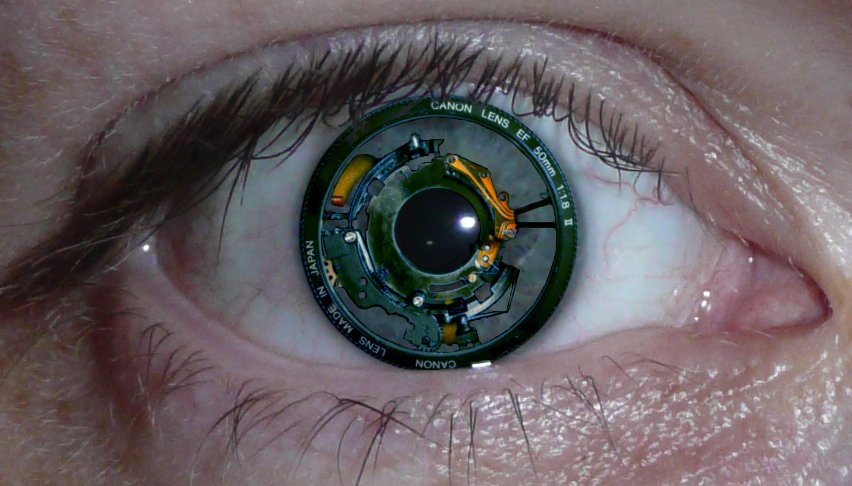
Cyborg eye image by Vern Hart
Google Glass image by Loic Le Meur

Creative Commons License
A day in the life: The quantified self by Steve Wheeler is licensed under a Creative Commons Attribution-NonCommercial-ShareAlike 3.0 Unported License.


February 02, 2014

Altered perceptions

It's not every day you see the witty and urbane Donald H Taylor, chair of the Learning and Skills Group, looking like a member of Daft Punk. But that's exactly where the Day 2 keynote session of Learning Technologies ended up. Don had no-one to blame but himself for his blushes, mind. The keynote had ended and we were into question time when Don pointed to the hard hat and headphone contraption on the spare seat and asked what it was for. Our keynote speaker, Professor Beau Lotto, said he had only intended to use it if he had time. Don's curiosity got the better of him, and he said there was time, and so Beau used it... on Don. The idea behind the contraption was to show that perception could be manipulated. By adjusting the headphone pipes, he fooled Don into thinking he was hearing noises from one direction, when in fact the reverse was true.

The entire keynote presentation was a little like that. Confusing and intriguing. None of us really knew what was coming next from Professor Lotto, and as he talked, much of what we thought we knew, we began to doubt. Through a series of optical illusions and challenges, Lotto demonstrated that our eyes and brains can be fooled. Visual perception is everything, he declared, and it is made up completely from the light that falls on our retinas. We use not only light but also colour, to perceive our environment around us and extract enough information from it to act decisively. Perception is grounded in our experience, he says, because our brains take meaningless information from the real world and make meaning out of it. This is filtered by our perception, which means that we never see everything that is actually there, we only see what was useful to us in the past. Everything, all of our experience, says Lotto, begins with individual perception. But there lies the problem. If we are only ever behaving according to our perception of previous experiences, he asked, how can we ever learn to behave differently? Participating in science, he believes, changes our perceptions by challenging our beliefs, previous experiences and expectations.

Beau Lotto has been working in schools, getting children involved in research into learning through science experiments. He presented this work alongside one of the school children, Amy O'Toole (one of the youngest published scientists in the world - big up to Blackawton Primary School in Devon!), in a recent TED talk on children as scientists. The bottom line here is that science is for everyone, and there's nothing wrong with starting a scientific puublication with the words 'Once upon a time...' Here's the video below:


Lotto went on to discuss learning through uncertainty. All learning begins with questions, which arise from uncertainty. The only way we can ever do anything new, is to step into uncertainty, and ask questions - this is the basis of science. It is also the basis of play - and learning through play is a very powerful activity. It is intrinsically motivating, because it celebrates uncertainty (if you don't know who's going to win, it's exciting), it's open to all possibilities, and it helps us to become more adaptable to change. Games are just like scientific experiments, and we can change our perceptions, learning from both. The benefits of this for educational practice are undeniable. Small questions can lead to big discoveries.

Photo by Nick Shackleton-Jones

Creative Commons License
Altered perceptions by Steve Wheeler is licensed under a Creative Commons Attribution-NonCommercial-ShareAlike 3.0 Unported License.


January 29, 2014

Inventing the future

Scene from Fritz Lang's Metropolis
Brian Solis describes himself as a digital anthropologist. He is actually much more than that. Although quiet, and small in stature, he's something of a giant when it comes to explaining how our lives are shaped and disrupted in the digital age. He's a futurist, sociologist and author and he commands your attention. His book WTF (What's the Future?) of Business, looks inviting, and is on my must-read list.

Perhaps it was jet-lag and travel weariness that kept Brian fairly quiet over dinner on the eve of Learning Technologies. I noticed that he listened far more than he spoke. Brian Solis is not demonstrative. If anything, he appears quite modest. He doesn't tend to boast over his many achievements. Instead, he simply states it as he sees it. He made his apologies and left dinner early in the evening to get back to his hotel; he then appeared on stage the next morning to present his opening keynote, transformed, vocal, a little larger than life. It was as though a switch had been thrown.

Solis began his keynote energetically, engaging cleverly with his audience of almost 600 delegates from the world of learning, inviting us to share in his fascinating digital musings. He dwelt on organisational use of technology, and presented us with some challenges. He suggested that the future will either happen to us or because of us. In other words, it is up to us to shape our own futures, but our own inability to push forwards is often what holds us back. He argued that technology is a part of the solution but can also be a part of the problem, and unfortunately technology in organisations is usually imposed on us from above. There is no employee ownership, and that is often why technology becomes a problem within organisations, he explained.

Solis also spent time exploring the use of technology in education. He showed some statistics that reflect teacher attitudes to technology and our knowledge management in the digital age. His slide showing that more than 3 our of every 4 teachers see the Web as a great opportunity rather than a threat, and that it is not fostering bad habits and lazy learning, was positive and encouraging.

Brian Solis drew on the seminal work of Clayton Christensen, whose model of technology adoption is widely applied in industry. Disruptive innovation, the seemingly uncomfortable process that arises when new technology or ideas are introduced into a conservative environment, is generally unwelcome to many in the business world. We like certainty and abhor change. Yet disruptive innovation is actually an opportunity for creativity and problem solving in organisations, says Solis. When applied correctly, new innovations don't just disrupt the way a company works, they also open up new markets, and change forever the way business is conducted, usually for the best. He listed a number of disruptive innovations that arose out of a need to improve things, including Uber (a disruptive application that manages urban travel), Airbnb (already transforming the travel and holiday industry), Twitter (now not only a social network but also a tool to reflect the pulse of society), Instagram, which has changed the way we take pictures and perceive images, and Bitcoin, which although currently volatile, has immense potential to disrupt worldwide currencies.

We need design thinking if we want to innovate and take control of our futures, was the final message. Innovation, Solis explained, all starts with simple questions. Why do we do things this way? Why can't I do it this way instead? Why doesn't this exist yet? Why isn't this something we do today? These are all elements of design thinking, he added, and these questions can be simplified into four essential tenets:
  1. Empathy (the why)  
  2. Context (the connected world in which we build)
  3. Creativity (in the approach to solving problems)
  4. and Rationality (the logic of testing the rationale and feasibility behind the things we have created).
I can see why Brian Solis believes that the next ten years will happen because of our intervention. As Theodore Hook once said: 'The best way to predict the future is to invent it.'

Metropolis image source
Brian Solis image by Steve Wheeler

Creative Commons License
Inventing the future by Steve Wheeler is licensed under a Creative Commons Attribution-NonCommercial-ShareAlike 3.0 Unported License.


I, cyborg

Slightly self conscious wearing Glass
Are we headed for a cyborg future? I'm not sure, but I tried Google Glass for the first time last night and I was conscious that I was looking like a cyborg. Once you get over the initial self consciousness, it's quite a lot of fun trying it out. That's one of the benefits of having dinner with David Kelly, Learning and Development Consultant, and owner of one of the infamous Google beta testing devices. He had to purchase it from the megalithic company, and now explores its potential use in learning contexts. Basically, he's doing their research for them and paying for the privilege. You can read his work here on his Google Glass blog.

Putting on Glass for the first time, there is no discernible difference to donning a pair of standard spectacles. They feel similar, and there is no perceived weightiness on the right side, where the arm is thicker. This arm contains a touch pad, trigger and all the essential electronics that make it what it is. Obviously, unlike standard spectacles, there is no glass to look through - just a small heads up device above your right eye. It was a minor surprise to see it light up, and a small illuminated square appear in my peripheral vision. You need to gaze upwards, straight at it, to see it clearly. The screen is adjustable to your eye focus. It is not as obtrusive as I expected it to be.

I quickly learnt for myself that touching the side of the right arm of Glass, the touch screen becomes multifunctional, invoking a variety of menu choices in your view screen. It was easy, once I understood that in the 'take a picture' menu, I could simply blink my right eye, and it would capture a picture of my field of vision. Next it displayed the image and asked me whether I wanted to delete the image I have captured with my eye blink. A quick tap, and it's gone. It captures short videos too, and can also overlay information about the world around you straight into your vision, giving an augmented sense of reality. With a little practice, I could appreciate that it would be unobtrusive to the wearer and less hazardous to wear than many might claim.

I didn't spend enough time wearing Glass to personally discover much more about it, but Dave is a mine of useful information and is generous with his advice. During his presentation at Learning Technologies in London this week, he talked his audience through a host of social, psychological and organisational issues. On usability, he was quite clear: The distraction comes not from the device wearer themselves, he said, but from all those who spot them wearing Glass, and approach them to ask questions, request a try out, or in some unfortunate cases, to hurl abuse. There is a stigma for Glass wearers at the moment, because according to Kelly, they are still a huge novelty. But, he predicts, they will become much more common place in the next few years, as they become more available, more streamlined and cheaper to purchase. His demonstration of additional shades rescued his Glass wearable from a slightly odd protuberance on the head to a more conventional pair of sunglasses. The optical device faded into the background.

Clearly there are ethical and moral issues for wearers of Glass to consider - it is hugely disruptive. Is it acceptable to walk into a public toilet while wearing one for example? Would that be a threat to privacy? What about those who have already fallen foul of the law by either being arrested for wearing Glass while driving, or being forcibly ejected from movie theatres? Google Glass has huge potential in the learning and development arena. All of us, if we are honest, could see practical applications that would enable us to enhance and extend learning. But the future of Google Glass will depend on how readily society is able to accept wearable technologies.

Picture courtesy of David Kelly

Creative Commons License
I, cyborg by Steve Wheeler is licensed under a Creative Commons Attribution-NonCommercial-ShareAlike 3.0 Unported License.


January 27, 2014

Memory full

In a recent blogpost entitled Memories are made of this I wrote about how human memory works in different modalities, principally through auditory and visual coding. The emphasis of the Working Memory model, and also Dual Coding Theory is that memories are strengthened when both auditory and visual stimuli are presented to the learner in an optimal combination. I suggested that the addition of text is useful if it doesn't impinge upon and overload WM, which is limited in its capacity. This is quite a simplification, and requires elaboration, so here is the second post in my blog series on learning and memory.

The work of John Sweller and Nillie Lavie on Cognitive Load Theory and Capacity Theory (based on studies by Shalom Fisch) is useful to help us understand how to optimise digital design environments such as the layout of virtual learning environments or online discussion groups. What exactly can Cognitive Load Theory do to help us to optimise students' memories?

To understand Cognitive Load Theory, we first need to revisit Working Memory (WM). Recall that WM is the dual modality temporary (conscious) memory that enables us to attend to and code content, and also to recall content previously stored in Long Term Memory. Lavie discovered that the more stimuli on offer, and the subsequent load placed on WM, the more selective attention performance will be hindered. In other words, there is only so much load WM can take. Mindful of this phenomenon, Sweller recommended that content designers should limit the amount of cognitive load in digital learning environments by strategically presenting worked examples and problem solving exercises.

Another principle is for designers to provide learners with the most appropriate media for every possible component of learning content. For example, to describe a circle in text form would take up a lot more cognitive processing than a picture, and the student would take longer to apprehend the meaning of the words. Seeing a diagram of a circle reduces the cognitive load (thinking effort) and enables the student to learn easier and faster.

The placement and juxtaposition of content on screen is also an important design consideration. The more closely together 'related content' can be presented on screen, the quicker should be the capability of the learner to understand it and remember it later. This is actually a Gestalt principle referred to as the Proximal Law.

How does Capacity Theory apply in digital learning environments? In any educational media presentation, WM (remember it is limited) competes for space to process and code the content. It has to differentiate between educational content and narrative content found in say, a YouTube video. Capacity Theory holds that the more closely aligned the two types of content are, the greater will be the chance that the student will learn more deeply. Thus the distance between narrative and educational content should be reduced as much as possible to promote better learning. This echoes the findings of the Cognitive Load Theory experiments and also mirrors the Gestalt law of proximity.

This is but a brief and superficial look at these theories. If you wish to read further, there are some excellent resources available here and here.

Photo by Rutger Middendorp

Creative Commons License
Memory full by Steve Wheeler is licensed under a Creative Commons Attribution-NonCommercial-ShareAlike 3.0 Unported License.


January 25, 2014

Big Data: Learning vectors and velocities

The most interesting session I attended at Bett 2014 was to hear Stephen Heppell speak in the main arena. Stephen was on top form as usual, and in his avuncular style managed to engage 800 or so delegates effortlessly for 30 minutes. He showcased some of his latest ideas for educational innovation using technology, under the banner of 'Big Data'. Much of his talk, thankfully, has less to do with Big Data, and more to do with how kids can use their devices to capture the data and use it to better understand the world around them.

Heppell showed a dynamic shipping radar map of the English Channel which tracked every sea vessel. Yachting is one of his passions, so it was inevitable that a marine illustration would creep into his presentation somewhere. He showed that you can interrogate the map by locating any vessel, click on it, and discover where it is heading, where it has come from, and what its relative progress is according to its speed, vector and environment. He argued that if we can do this for large vessels such as shipping, why can't we do a similar thing to track student progress. His point was that we plan highly complex systems such as school curricula, and place high stakes on the progress of students, and yet we know so very little about exactly how they do progress. Technology, he suggested could provide the answers through Big Data.

Student work on data logging light and sound levels
I caught up with Stephen and spent some time discussing these ideas with him on his stand at Bett. One of the Big Data projects he showed me involved children using free downloadable light and sound metre apps to measure their environment around them. He showed how this approach to data logging can enable them to understand the impact of loud sounds and different light levels not only on a school environment, but critically, how it affects their own personal learning experience. An extension of this approach saw students working feverishly to log data about their entire ecosystem, including their own motivation levels, facial expressions and body orientations to create maps of how engaged an entire school of students is at any given time. Such applications of big data (in this context a more appropriate label would be learning analytics) are clearly relevant for learning in a technology rich environment. The more information teachers have (possibly displayed as light arrays at the back of a classroom) about their groups of students, the argument goes, the better they will be able to plan, predict and provide for learning needs across a cohort. We need more information about the vectors and velocities of learning.

Some might baulk at this approach and argue that it's more Big Brother than Big Data, but if we don't try we don't know. Personally, I applaud Stephen Heppell's pioneering approach to the application of learning technology in new and innovative ways. It is refreshing, challenging and potentially ground breaking stuff.

Photos by Steve Wheeler

Creative Commons License
Big Data: Learning vectors and velocities by Steve Wheeler is licensed under a Creative Commons Attribution-NonCommercial-ShareAlike 3.0 Unported License.


January 24, 2014

Bett interview

The main arena wall is turned into a giant whiteboard at Bett 2014
While speaking at the Higher Education Summit at the BETT Show this week, one of my students who was participating in my session drew my attention to an interview with me in the conference brochure. It took me a little by surprise, because frankly, I had forgotten I had done it. I had to read it through to remember what I had said, and actually, it captures quite well where I am right now. So here it is, shared with you on my blog.

What is your background in the industry?
I started out working in education in 1975. I have spent my entire career specialising in educational technology, firstly in teacher education, then a spell of 15 years working in the NHS in nurse education. In 1998 I returned to teacher education, and I'm now working at Plymouth University where I am an Associate Professor specialising in learning technology. I have also worked on research projects in the UK and the USA, experiences that have given me a greater appreciation of the wider issues that impact upon education.

What gets you out of bed in the morning?
I don't actually need to work any more. I have no mortgage and no debts, and all my children are independent. I choose to continue working because what I do now gives me a real buzz. I continue to work at Plymouth University because I am a lifelong learner, and my local university is absolutely the best place to be to continue learning exciting things about my passion - education. I learn from my colleagues, and I also learn a lot from my students - which is a surprise to them! One of the most exciting areas of my research right now is personal technology - it is fast moving, ever changing, and is a big part of the future of education. I will give up work when I get bored, but I can't see that happening for a while yet.

How are your students' expectations changing?
My students are expecting more activity and less passivity in the formal learning setting, and rightly so. A lot of my 'lectures' now are based around discussion, question and answer, and student led activities that include personal research, blogging, video making, and other user generated content. They don't expect to be 'spoon fed' and they certainly don't get that from me.

What has changed most throughout your career? 
Technology has changed how I work. I am now a global educator with teaching opportunities around the world. When I'm not travelling somewhere to speak or teach, I am at home or in the office webcasting, blogging, making videos and tweeting out content, having conversations with peers and generally engaging with the international community of learning professionals in real time. None of this was possible for me even a decade ago.

What is the biggest challenge you face in your role?
To keep pace with all of the trends and emerging technologies. It's impossible. But I don't need to worry too much because I store my knowledge with my friends.

What was the last piece of technology your university invested in?
Several systems that have not been particularly successful. I don't believe the future of university learning will be contained within 'systems', but predict that smart personal technologies are going to be the future.

Have you seen any exciting technological innovations recently?
I'm excited by some of the new personal technologies that are emerging. The Google Glass and other Augmented Reality wearables look interesting but inherently dangerous. Touch screen tablets are still fascinating to me, but with new gestural computing tools on the horizon, we may not be touching computers to operate them for much longer. I want my own ultra-thin roll-up large LCD TV screen for home movie viewing!

What would make your life easier?
An extra 2 or 3 hours in each day please. Oh, and for someone to hurry up and invent teleportation.

What has been your career highlight?
Being on the keynote speaking circuit and meeting and making friends with many of the luminaries of the technology world, including Steve Wozniak, Conrad Wolfram, Nic Negroponte and Sugata Mitra. I have learnt an incredible amount from them.

What are you most looking forward to at Bett 2014?
Meeting new friends and renewing old acquaintances. Not getting lost in the vastness of the ExCel Centre.

Can you tell us what you will be talking about at Bett?
I'm going to be talking about how I have implemented some of my new techniques for engaging students in learning through a range of social media and personal technologies. I want to highlight the importance of collaboration, problem solving, interaction and critical thinking as transferable skills for the future. I also want to argue that digital literacies are becoming the new cultural capital not only for our industry but for our entire generation.

Photo by Steve Wheeler

Creative Commons License
Bett interview by Steve Wheeler is licensed under a Creative Commons Attribution-NonCommercial-ShareAlike 3.0 Unported License.


January 22, 2014

Learners promoting change

Recently I blogged two posts about Student Voices and how learners are bringing their own technology into the classroom to enhance and extend their learning experiences. They use Twitter backchannels and hashtags to track the conversation around their learning, and also connect with others beyond the classroom walls to continue discussions around the content they are learning. They collaborate more, and create their own content on blogs and videos, and are generally becoming the 'nodes of their own production.' The videos accompanying these posts also reveal student concerns over traditional methods of teaching and learning, and a significant shift toward more autonomous, proactive and collaborative learning approaches. Education is changing, and it appears that many of the important changes are being instigated by the students themselves.

Below is the third short video that features in my BETT Show Higher Education Summit presentation. It features some of my second year students talking about innovation and change in Higher Education. I asked the students to tell me what they thought they could personally do to influence how universities work. Some students set up their own learner group Facebook pages, so that they can communicate to each other more easily and regularly on course related issues. Facebook is a more familiar place for students to engage in a forum, and they find it easier and more convenient to use than the institutional systems such as university VLEs or e-mail.


Creative Commons License
Learners promoting change by Steve Wheeler is licensed under a Creative Commons Attribution-NonCommercial-ShareAlike 3.0 Unported License.


January 21, 2014

Backchannels, hashtags and learning

As a part of my BETT Show presentation, I featured some of my students on video talking about their use of technology. I wanted to capture the student voice on learning in Higher Education. One of the questions I asked my students was: 'How have you used technology to enhance your learning?' The short video below features Tyla Elworthy, Alex Druce and Aaron Fisher, who are training to be teachers and in the second year of their degree programmes at Plymouth University.

Their responses to my question revealed a number of areas that teacher could focus on to improve learning environments. One important point they make, is how useful the introduction of a Twitter backchannel and hashtags can be to help students to track course related content and conversations. Blogging and social networking platforms help them to extend their thinking and also enable them to participate more deeply if they have dyslexia.


Photo by Steve Wheeler

Creative Commons License
Backchannels, hashtags and learning by Steve Wheeler is licensed under a Creative Commons Attribution-NonCommercial-ShareAlike 3.0 Unported License.


January 20, 2014

Student voices

My presentation at the 2014 BETT Show is a little different from my normal presentations. It features several significant contributions from my students on video and also live on stage. I can only say so much myself about what goes on in the learning environments I work within. After a while, because it comes from me, it tends to sound like hyperbole, and I'm sure some of my audience leave with a 'so what?' response. I wanted to add another dimension at BETT this year. What better way then to emphasise the amazing things I witness every day while I'm teaching, than to get the students to say it themselves?

So, in preparation for my BETT Show talk, I asked some of my second year education students to take part by helping me to make a video. The short excerpt embedded in this blog post features three - Alex Druce, Tyla Elworthy and Aaron Fisher - who articulate far better than I ever could exactly why they bring their own technology into the classroom, and how they use it to enhance and enrich their learning experiences. They talk about student autonomy, and the need to collaborate and to be able to question their teachers. They also emphasise the importance of interaction during lessons, with each other, with their tutors and also with additional content. Alex, Tyla and Aaron highlight the need to extend their experiences beyond the wall of the classroom, connecting and creating, as they make sense of the content and its context within their professional practice. More videos of my students talking about how they have helped to change learning at university will follow in future blog posts.


Photo by Pedro Ribiero Simoes on Wikimedia Commons

Creative Commons License
Student voices by Steve Wheeler is licensed under a Creative Commons Attribution-NonCommercial-ShareAlike 3.0 Unported License.


January 16, 2014

Memories are made of this

Memory is very important. It is the basis of all human thought and learning. Without it, we would find ourselves in a world that is perpetually new and unfamiliar. Teachers everywhere make it their business to try to understand how memory works so that they can optimise learning for their students. Without at least a rudimentary understanding of how human memory works, teachers can make errors and students can become disadvantaged.

Over the years, many psychologists have investigated the nature of memory, and have formulated a number of theories about its functionality, scope and challenges. In my next few blog posts I intend to highlight some of the more important theories of human memory and offer some critical commentary on how they have influenced the design of learning experiences. We start off with some useful ideas around proposed cognitive architectures - how we image human memory is organised.

Dual Coding Model
Canadian cognitive psychologist Allan Paivio will probably be remember most for his work on Dual Coding Theory. Paivio's main argument is that we represent our learning through both verbal codes (logogens) and visual codes (imagens).  In other words, if you want to remember something, the best way to do so is to make sure you code it as both a verbal and a visual memory. Abstract words that have no pictorial analogue, says Paivio, are often harder to recall than words that you can associate with images. Consciously code (or make meaningful) words and images together, and this way, according to the theory, retrieval from memory will be easier.

This theory is similar in its architecture to that proposed by British psychologist Alan Baddeley. With his colleagues Baddeley proposed a version of Short Term Memory (STM) called working memory (WM). Baddeley argued that WM (our conscious dynamic memory) was composed of a Central Executive control component and two separate slave sub-components called the visual spatial sketchpad and the phonological loop. According to Baddeley, the visual spatial sketchpad can only hold one image at a time, whilst the phonological loop can hold up to seven (plus or minus one) auditory items simultaneously. The latter is time based, so has limitations if for example you wish to remember a large sequence of numbers. Working Memory is dynamic, ever changing, and relies on coding if content is to enter into Long Term Memory where it is stored for later retrieval. It has been proposed that unlike WM, LTM can store an infinite amount of memories - a theory that we will probably never be able to test.

Working Memory Model
Both Paivio and Baddeley saw the importance of identifying different kinds of memory and how they can be represented within cognition. Both also stressed that these different modalities of dynamic memory should be allowed to work together to strengthen long term, retrievable memory.

Learning in the WM needs to be coded consciously (made meaningful) for it to become a stronger more permanent memory, and learning can be strengthened further if both types of coding (visual and auditory) work in concert. This idea is exemplified in the classic 'show and tell' form of learning. If students strongly associate words and images together, then later a recurrence of either should activate the other.

Clearly, my commentary here is just a simplified version of the two models. Other components have since been added and models extended as research has progressed. There are also problems with these models of memory. For example, other sensory modalities have not been considered. What about tactile memory, or taste? Or perhaps our strongest and most evocative memory of all - olfactory memory? These modalities tend to be ignore in most memory models, but patently, they represent a large proportion of what we can recall about our personal experiences.

How can Paivio's and Baddeley's theories be applied in education? This link outlines Paivio's thinking around the application of his dual coding theory to teaching and learning. We already know that in the design of digital learning materials, both audio and visual content can be combined to reinforce learning. Video and film are prime examples of learning experiences that have impact because they combine audio and visual content. The addition of text can be helpful, but we need to be aware that overwhelming students with too much content presented in different modalities can also be counterproductive. More research is needed to discover what are the most effective combinations of text, audio and visual materials, and whether these vary according to individual learning needs and expectations, time of day, orientation of task, size of screen, colours, juxtaposition of items, and so on. We also know that WM has a limited capacity, and can be overloaded if not enough space is available to code effectively. In my next post I will examine cognitive load theory and its importance in the design of digital learning content.

Photo by Todd Martin
Graphics by Steve Wheeler

Creative Commons License
Memories are made of this by Steve Wheeler is licensed under a Creative Commons Attribution-NonCommercial-ShareAlike 3.0 Unported License.


January 15, 2014

How will we learn tomorrow?

I had a very interesting year in 2013. My work was varied, travelling was extensive, and I met and talked with a lot of very interesting people. In May 2013, between keynote presentations in Ljubljana, Las Vegas and Doha, I found myself sitting in front of cameras in a West London hotel, giving an interview to a French TV crew. They asked me to respond to several questions as a part of a series on the future of learning, including: How will we learn tomorrow? How will distance education evolve? and What will be the impact on people and companies?

One of the best questions I fielded was 'How have learning methods evolved over the past 10 years? It was great to answer, because I have tracked the learning technology trends over the last decade, and have come to the conclusion that mobile (smart) phones and social media, in combination, have provided the world with the most dynamic, social and personal connections we could possibly wish for. It's also easier to talk about the past than the future, because if you've done your homework, you stand a far better chance of being right! The ways education, learning and development will harness these tools over the next few years will establish for some time how deeply they will reach into organisations, and how effectively we will develop our learning methods for some years to come.  We are living in interesting times, and there are many rich opportunities for us to grasp, if we have the courage and convictions. Here, below, is the final edited version of my TV interview. I hope you find it thought provoking and informative.


Creative Commons License
Open views on learning by Steve Wheeler is licensed under a Creative Commons Attribution-NonCommercial-ShareAlike 3.0 Unported License.
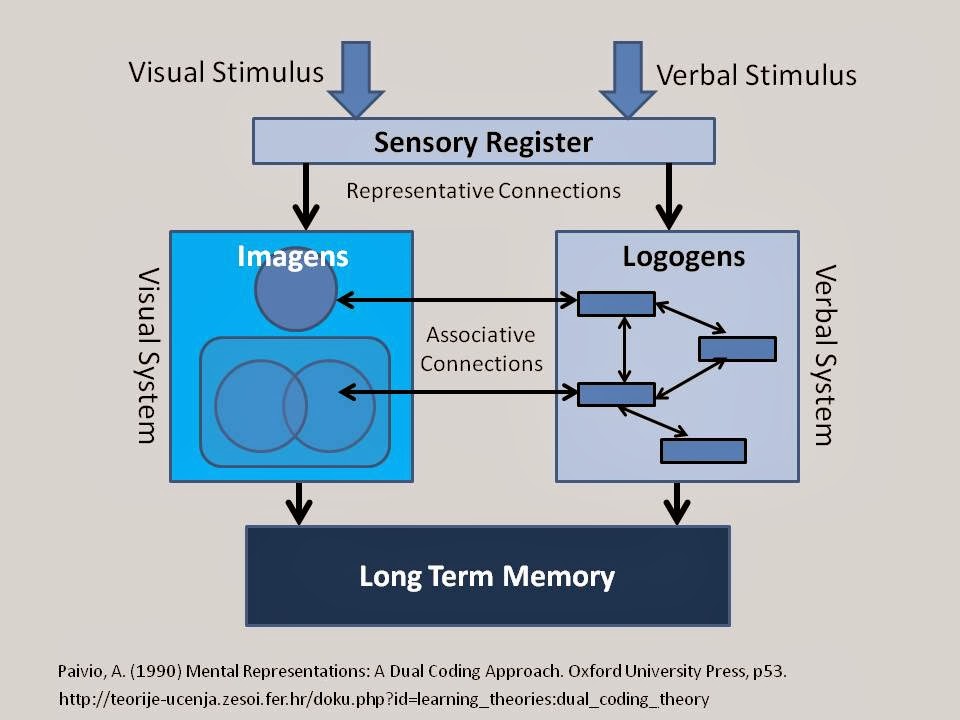

January 13, 2014

Bend your brain

Don't crack up
Bend your brain
See both sides
Throw off your mental chains...

The lyrics above are from the chorus of the 1980s synth-pop classic New Song by British musician Howard Jones. OK, so the chorus is followed by the somewhat less meaningful 'Ooh ooh ooh', but for a pop song, the lyrics are actually philosophically insightful. Jones hasn't only written a catchy riff and a great hook line. He also seems to be berating the fact that much of our society is blindly following the trends, closing our eyes to reality, and accepting what the media and popular culture feed us, without questioning. He is challenging us to wake up, and see what is being done to us. Why for example, do MacDonalds and KFC only show thin people in their TV adverts? Why does the voice over for all of the major movie trailers almost always have to be a male - and a 'deep, baritone with dramatic tonal qualities' one at that? Why do the tabloid newspapers always use gut wrenchingly bad puns in their headlines? Because they know they can get away with it, and it shifts more units, and makes them more money, that's why. No one questions it. It is what it is.


I have sometimes witnessed the same mentality when students come through the doors of the university and into my classroom for the first time. They sit down, open up their laptops or notebooks, and sit there wide eyed, waiting to be told what to do next. They expect to be spoon fed, and I swear they give the impression that they are completely open to being told exactly 'what to think'. And yet, because they have been conditioned into being told what to do at school, and have been continually fed a diet of idealistic images and lifestyles from the likes of Bella, Hello, GQ and Nuts magazines, they have already decided that this is what the world really looks like. They have a preconceived idea about what education is about too. They couldn't be more wrong. It is only when their lecturers point out to them that they are expected to think independently, to accept nothing at face value, and to question everything, that they begin to wake up from their slumbers. It is really driven home later in their course, when they realise that they will only earn themselves higher grades for their assignments when they actually articulate this kind of thinking in their essays and projects. I can appreciate the sentiments behind Karl Marx's thesis of class consciousness. It is only, he argued, when the workers begin to wake up and realise that they are being exploited and controlled, that a true revolution can begin. But we are not calling for a revolution here - simply for students to learn how to 'bend their brains'.

The music video to accompanying New Song shows Howard Jones (and that strange little mime artist who always accompanied him everywhere) breaking out of the drudgery of factory life, escaping from the rat race on the London Underground, and finally - quite fittingly - liberating an entire class of school children (and their teacher) from a traditional classroom, and out into the open air. A good education, when properly applied is just like that - helping us to throw off our mental chains and to begin questioning the world around us. Critical thinking and an inquiring mind are all we really need. That's the only way we will ever see the world for what it really is.

Creative Commons License
Bend your brain by Steve Wheeler is licensed under a Creative Commons Attribution-NonCommercial-ShareAlike 3.0 Unported License.


January 12, 2014

Living with Aspergers

My students were inspired and entertained in equal measure by our closing keynote speaker at Plymouth University this week. The conference was organised for my second year student teachers, and focused upon special educational needs and inclusive education. Our closing keynote speaker was Dean Beadle, a 24 year old journalist who speaks on the subject of 'Living with Aspergers'. Diagnosed very early in his school life with Aspergers Syndrome, Dean struggled with a variety of challenging social issues and behaviours, and retold many humourous and at times emotional stories about how he gradually learnt to cope with his condition.

Many of his stories struck chords of recognition with his audience, and all went away inspired and enthused by his speech. As I escorted Dean back to the train station later, he told me that he had been very nervous about speaking in front of a group of student teachers. He was anxious, he told me, because he was more used to speaking in front of groups of much older people, and was worried that a group his own age might not be as receptive to his message. He needn't have worried. He rocked his audience of just over 200 students, with his courageous and brutally honest narrative, and left them wanting more. For those who missed the event, and for those who do want more, here is a YouTube video of Dean at the top of his game:


Creative Commons License
Living with Aspergers by Steve Wheeler is licensed under a Creative Commons Attribution-NonCommercial-ShareAlike 3.0 Unported License.


January 10, 2014

Changing perceptions

When my son was still quite young, he was diagnosed with semantic pragmatic disorder, on the autistic spectrum. It took many years before he was able to express himself effectively, and he would become extremely agitated when he couldn't make himself understood. If this happened in the school, many of the teachers were understanding, and intervention was usually taken sensitively to ensure he didn't hurt himself or other children, and that disruption and emotional upset was minimised for the entire class. The other children got used to him, and over time, he learnt to control his impulses, and to express himself more clearly and effectively. While some teachers were absolute stars, others were less than understanding, even though they were aware of my son's statement of educational needs, and there were occasions when his behaviour was very poorly managed. This, I believe, was possibly down to the fact that the teachers concerned didn't fully understand or appreciate his difficulties. We fought many long battles with his school over this lack of understanding. Similar scenarios still play out regularly in schools around the world, where SEN children are placed into mainstream education, but teachers are ill prepared to understand and effectively manage their behaviour.

At Plymouth Institute of Education's SEN and Inclusion conference for student teachers today, I asked how we could get teachers who had no personal experience of autistic spectrum disorder to better understand what ASD children and their parents go through. My thesis was that if certain teachers can experience for themselves what it is like to have a child who is on the autistic spectrum, then they might be a more sympathetic and offer more reasonable solutions. The answer may be to implement some sort of CPD around experiential learning. Not just learning by doing or making, but learning by 'being'. Might this alter teachers' perceptions?

Situated learning - learning within the context in which the knowledge or skills will later be applied - is a very powerful approach. But I wish to go beyond situated contexts, where learning is not just about doing, but by actually being immersed in the position to experience for yourself what you need to learn, effectively through altering your perceptions.

There are still many things that are impossible to learn solely through reading books, or by being told or shown.  How for example, could you convey to someone what it's really like to be blind? How would you get someone to experience what it's really like to suffer from schizophrenia? Just telling them would not be enough. Giving them a book to read on what it's like would come nowhere near to enabling them to really, fully understand all of the issues. This is where experiential forms of learning can be used.

I worked in nurse education between 1981-1995, and got to see some good learning through altered perception. Some of our student psychiatric nurses came into regular contact with patients suffering from schizophrenia. All they witnessed was the bizarre behaviour. This was disturbing for them. They couldn't get to see what was going on inside the heads of their patients, so it was extremely difficult for them to understand them, or appreciate the complex issues and experiences these patients had to deal with. How could we prepare our students to cope with such situations?

Some of my colleagues devised a method for allowing our student nurses to 'experience' schizophrenia at a personal level. They devised a system where one student would sit in a room talking to another student, in an interview situation. A small earpiece was worn by the first student. During the interview (unheard by the second student) our tutors, seated behind a one-way mirror, would whisper absurd, bizarre ideas - auditory hallucinations - creating 'voices in the head' of the first student. I tried this myself several times, and ended up either giggling uncontrollably or inadvertently repeating some of the weird comments I was hearing through my earpiece. The person I was attempting to hold a conversation with would look bemused and uncomfortable. All they could see was the strange behaviour. The situation was then reversed, so that students got to experience both perspectives. This form of experiential learning was very powerful and effective in preparing student nurses to interact with schizophrenic patients. It gave them a different perspective that they could never have gained through reading books, watching videos, or being told about. Their learning was deeper, because it was personalised and situated.

We set up similar experiential learning situations for our general nurses. Some were blindfolded and led around by their peers for long periods. They were fed food without knowing what it was, and taken to parts of the hospital without any idea of where they were headed. Others were strapped into wheelchairs and pushed around for hours, to experience what it would be like to be totally dependent on someone else. Experiences this altered perception where they were suddenly helpless and unable to make decisions for themselves really gave them a sense of empathy for high dependency patients who would eventually be in their care.

Being at the SEN and Inclusion event today got me thinking - how might we leverage these principles for teachers who will encounter SEN children and their families? If you know of any experiential learning methods being used to support this kind of learning, please let me know in the comments box below.

Photo by Steve Wheeler

Creative Commons License
Changing perceptions by Steve Wheeler is licensed under a Creative Commons Attribution-NonCommercial-ShareAlike 3.0 Unported License.


January 07, 2014

Breaking down the silos

I have written previously about the artificial divide between school subjects. Yes, there are practical reasons for teaching art separately to science, or maths in a different room to music. And yet, the separation of the subjects seems increasingly anachronistic in our diverse, post modern, hyper-connected society. If school is where we prepare children to be independent, knowledgeable and reflective individuals, then we may well be doing them a disservice by perpetuating the silo mentality prevalent in state funded education. Life simply isn't about compartmentalisation any more. The working day often passes in a blur of recognisable, but highly connected and blended ideas, activities and objects.

The art (design) and science that went into creating your iPhone for example, is well documented. Photography is art and science combined. The mathematical principles you learnt in school are no longer recognisable as such - because they are often applied differently and in the context of other influences, in a multitude of different ways during an average week. It is no surprise then, that a movement is growing to incorporate discrete subjects together in schools. The very act of combining disparate subjects from the curriculum, proponents claim, helps children to understand the world in entirely new ways and opens their eyes to new possibilities.

An article in the January 3rd 2014 edition of the Times Educational Supplement expresses exactly the sentiments above. Entitled: 'Sparks fly when art and science interact', the article reports on what happened when one school decided to organise a festival where scientists and artists could dialogue. The author, Hugh Jones reveals how this cross-curricular celebration of two apparently unrelated disciplines actually found much common ground. 'Life is rich in the variety of ways in which we interpret, communicate, argue and predict,' Jones writes, 'and we wanted to encourage our students to have a broad vision of these skills.'

During the festival, students were asked to answer questions such as 'what is the right space for art and science to collide?' and did many activities including making video recordings of artists and scientists discussing their work. 'The event really broadened how artists thought of science and how scientists thought of art' Jones says, 'and hopefully, the lesson that the two disciplines can work together will be a lasting one.'

There are several approaches to de-compartmentalisation of the curriculum. At Albany Senior High School in Auckland, New Zealand, I witnessed a group of students in the same learning space, wandering between three seemingly unrelated classes as 3 teachers ran their lessons. Students were able to choose at what point they entered and left each session, and how they interpreted their understanding not only of the lesson content, but how the three subjects related to each other.

Another approach is practised by the teachers at Skipton Girls School in Yorkshire, England. Skipton is a designated engineering academy, and students at the school regularly learn through the combined delivery of two or more subjects. One small group proudly showed me their project which combined Physics and Music. They were very proud of the work they had done around the analysis of audio waveforms, frequencies and sound synthesis to create their own songs. When I asked one student why it was so important to combine subjects, she replied 'It helps me to understand the world better.'

What are your views on cross-curricular teaching? Should we make a concerted effort to break down the subject silos, or should we maintain the status quo?

Image by Mike Licht

Creative Commons License
Breaking down the silos by Steve Wheeler is licensed under a Creative Commons Attribution-NonCommercial-ShareAlike 3.0 Unported License.


January 03, 2014

My ethos for teaching

The first time I saw my water colour paintings on display in an exhibition I experienced a real sense of pride and excitement. I walked into the gallery, and there they were - with my name on them for all to see. I felt similar pride the first time I heard one of my own studio recordings being played on radio. The excitement was repeated the first time I heard one of my compositions being performed (with full orchestration) by another artist on record. Later, I was delighted to hear yet another of my compositions being played as a background theme for a television programme. It was only a local TV information update, but it was replayed many times that year and the royalty cheques I received from PRS were very nice indeed. I think I bored everyone silly when my first book was published. I talked of little else for an entire week.

I felt this pride and excitement, because my own ideas and creativity, which I had worked so hard on, and had poured my heart and soul into, were now out there in the open, being appreciated by others. I had shared my mind for others to experience. I discovered though, that this was just the start - and that involving others in my creative ideas could be even more rewarding.

In the late 1980s, I took over the running of a youth group and formed a dance and drama group. One of the highlights of my youth leadership was when my group performed a dance routine that I had choreographed. It was incredibly rewarding to sit at the back of the hall, and watch as my young people excelled themselves in their dance routine, with the music, lighting and performance space all combining to showcase their talents.

It was around that time that something significant happened in my life. It dawned on me that I wanted to be a teacher. I had discovered a taste for developing excellence in the learning and performance of others. I had come to a realisation that creativity is not something you individually own. It is also something you share with others so that it can also support their own individual journeys. When the crowd applauded and cheered my young dance group, I experienced a different kind of pride and excitement than that which I had achieved with my own expressions of creativity. It was more fulfilling. I felt the reflected glory of others and what they had achieved, through their interpretation of my creative ideas, and through my efforts working with them. This for me, even today, is one of the most rewarding aspects of being a teacher. It is to watch as my own learners succeed - to reach out and achieve their dreams, and to be who they really wish to be. How will you share your creativity this year to facilitate learning for others?

Photo by Laffy4k

Creative Commons License
My ethos for teaching by Steve Wheeler is licensed under a Creative Commons Attribution-NonCommercial-ShareAlike 3.0 Unported License.


<< Back Next >>