Log on:
Powered by Elgg

Clara O'Shea :: Blog

September 15, 2011

My interests include 3D/CGI modelling (useful backgound for my interests in using Virtual Worlds), and graphic art.  I very much like team projects and collaborative working, and have loved working in teams scattered across the globe on my projects and in my recreational interests.  I hope to share some of these interests with you, and frankly to get an excuse to show some of the resulting artworks, through these blog entries.

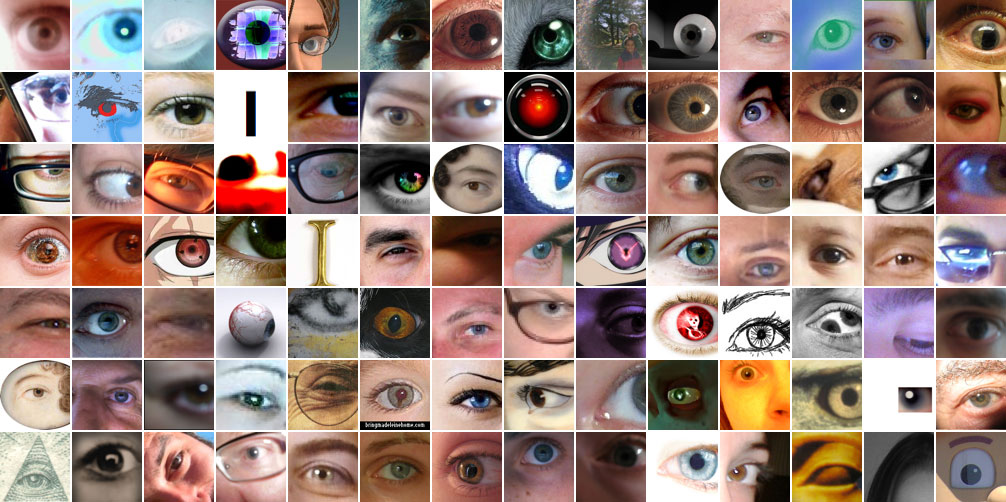
In 2008 there was a number of web-based collective artworks created and shows at the Smithsonian American Art Museum's Luce Foundation Center.  One called "ghosts of a chance " invited people to submit representations of eyes... photos, drawings, graphical concepts, etc.  They were composed together and displayed in the final artwork... "All Eyes"...

All Eyes

Click on image for the full picture. See if you can find the one I submitted.

Keywords: Collective Art, Eyes, IDEL11

Posted by Austin Tate | 0 comment(s)

One of my reseaerch interests is in the creation of "intelligent" meeting spaces for interaction between people and systems.  The programme is called the "I-Room".  More details are at: http://openvce.net/iroom

Let Ai Austin take you on a short tour of an I-Room through this YouTube video...

Posted by Austin Tate | 0 comment(s)

A couple of years back we rigged up a Moodle VLE server (http://moodle.org) and set up some "courses" to support collaborative meetings especially to allow for file resource interchange and sharing, and for questionnaire's and feedback during meetings.  We connected the web site to a meeting space in Second Life (http://secdondlife.com) using the Sloodle set (http://sloodle.org). The server still runs at http://openvce.net/moodle

I am interested again in Moodle 2 and recent work on a much richer in world linkup using the SLoodle kit which can now support rich shared media in Second Life, and important for the future, the open source OpenSimulator (http://opensimulator.org).  We want to tie the questionnaire and shared resource handling more closely to intelligent systems for meeting room support - in our I-Room work (http://openvce.net/iroom).

I plan to use this blog to document progress, trials and tribulations as we go along in the hope others might find it useful.

The first thing was how messy all the information was on what the most recent versions of SLoodle were available and for which versions of Moodle.  As a lot of people still use Moodle 1.9.x rather than the more recent Moodle 2.x.  As usual a short e-mail to one of the core users in such a helpful community got me on the right path.  But even then download links were stale, out of date copies had been archived and their link blogged rather than the original material, etc.  So job number 1 was to start a web page with the up to date information as I found it... trying to show original URLs but also providing convenient URLs (in some cases to locally stored resources).  That page is at http://openvce.net/sloodle and will evolve as things change or corrections are needed.

So to our main openvce.net web and database servers... the requirements for Moodle 2.1 means that a later version of PHP is needed than our computing support team are happy to have running due to security.  This will be fixed, but not in an immediate time frame.  So we use our usual backup experimental arrangement using one of the AIAI servers on which we have XAMPP to provide a convenient and simply managed Apache web server, MySQL database server, PHP and Perl scripting. 

I am an optimist, so I unpack Moodle 2.x install it in the right place in the web server and just start the install script in a web browser.  Ah well.  Not so fast Austin.  It complains the PHP version on XAMPP is JUST one sub release too old. Pity.

A close down of all services, an uninstall of the services, a reboot, a big safe backup of the web area, data base and some local files on the experimental machine, archive and an hour later I can try again. I put on the new version of XAMPP, reinstate the data base and web areas, put back the new Moodle area, etc.  And kick it all back into life.  A BIG PHP not running error in the browser stops me short.  Half an hour of fiddling, no joy. Something in XAMPP upgrade has gone wrong.

Luckily I can roll back.  ALWAYS CREATE A BACKUP BEFORE YOUR UPGRADE.  Half an hour later and I am back to where I started with a slightly too old XAMPP and no Moodle 2.x.  To be tried again another day.  Watch for the next install meet.

Ah well, that's where the weekend went.  I did still manage to see the Italian Grand Prix run at Monza on TV though, and was pleased Jenson Button came through to 2nd.

Keywords: IDEL11, Moodle, SLoodle

Posted by Austin Tate | 0 comment(s)

September 14, 2011

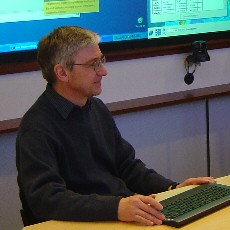
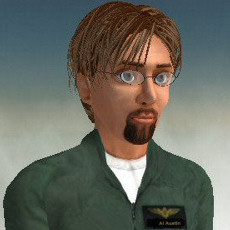
Let me introduce myself.. Austin Tate ... and my virtual worlds avatar... Ai Austin

Austin Tate  Ai Austin

Taking MSc modules for Semester 1 of 2011: "Introduction to Digital Environments for Learning", "e-Learning and Digital Cultures" and "Understanding Learning in On-line Environments".

Keywords: IDEL11, Introduction

Posted by Austin Tate | 0 comment(s)

September 13, 2011

http://www.eusci.org.uk/podcasts/eusci-podcast-extra-conversation-ai-researchers

At the 2011 the Edinburgh International Film Festival, one of the events was a screening of the 1984 scifi classic The Terminator. The event was followed by a discussion with two real-life AI researchers from the University of Edinburgh School of Informatics. We managed to catch the two scientists before the event and talk to them about the past and future of AI, its perception in the media, and whether we should worry about the Robot Apocalypse.

Listen to our conversation with:

  • Austin Tate, Professor of Knowledge-Based Systems
  • Sethu Vijayakumar, Professor of Robotics


Keywords: AI, EdFilmFest, EIFF, IDEL, Robots, Terminator

Posted by Austin Tate | 0 comment(s)

September 09, 2011

I have been in touch with the education system in my country for all of my life. Both of my parents have worked for over 30 years as teachers and teachnig assistants and I first taught English at an elementary school at the age of 20. Yes, I did get hired to one of downtown Prague's primaries  for about 350 EUR a month. Then, it was a good start for a student in Prague. However, some of my colleagues were not much better off and had already finished their studies and wanted to start families. I have never understood how these people survived in one of the most expensive cities in Europe. Well, they did it somehow.

And that is how the schools do it - somehow. It is no surprise to me that the schools I work with are underfinanced. To see the numbers, however, always makes one more conscious about the real state of the matter. No government in the last 20 years has been able to give education a real priority status. 

You can read the full report on the level of school funding in Czechia HERE.

 Even in the given circumstances I stay optimistic and believe in change. Would you like an LMS installation?

Keywords: Czech, education, finance, funding, government

Posted by Lukas Palecek | 1 comment(s)

September 07, 2011

To all the Second Life educator-users, especially those interested in language teaching. Visit one of the most exciting in-world conferences! More info at the Second Life Languages 2011. Looking forward to meeting you there!

Keywords: conference, language, Life, online, Second, sl, teaching

Posted by Lukas Palecek | 0 comment(s)

April 22, 2011

The ownership issue is a very complex one, depending on individual circumstances. It is probably easiest to assume that, since a given piece of work has been created by me solely, I myself should be its rightful owner. Period. Why, therefore, Intellectual Property studies thrive across universities? Clearly, there is more to that than just the above logic.

My opinion

My personal belief is that ownership rights of the content of PLEs and any work created during the study period should belong to the author him/herself. Such work, after all, is most frequently a result of unslept nights and hours spent in libraries/in front of a computer, desk, etc. To my astonishment, that was not the case with my former Polish alma mater, where the ownership to all my assignments, including a 20,000-word thesis belonged to the university.

Why is it so important?

That is a debatable matter. Mainly, because people are afraid that someone else is going to steal, copy or use the result of our effort, subsequently providing him/her with money, fame, recognition, success we would have gained otherwise. Petty reasons, all in all, but they can also be self-contentment with achievement or willingness to help others.

Who, if not us?

In learning environments the ownership of intellectual property may belong to the author, as well as a fellow student while collaborating, the supervisor, and research staff.

How is it determined?

A number of factors may intervene, namely: the given country’s law, the school’s policies, the external platform’s regulations, and principles of the given discipline.

Implications

The very fact that we know some external body is the rightful owner of our work may have a very adverse effect on our work. Simply out of fear of being intellectually robbed the quality of our performance may suffer greatly. We will simply not be willing to fully engage in the production process, knowing that we will not be adequately praised for our hard work. The content of the work is also likely to be less personal.


Many more details regarding this interesting topic can be found below:


Keywords: IDEL11

Posted by Peter Nowak | 0 comment(s)

The article opposes the statement that the technology should follow the learning and teaching objectives.


The main argument of the text is that cyberspace allows for a different from traditional structure. The tree-shaped organisation of traditional knowledge (from biology to linguistics) allows for one way of learning – following an ordered sequence of what elements of knowledge are to be learnt one after another. The tree stems from a root, from which we can proceed via branches to growths. This leaves a learner with a duly pre-arranged sequence of learning, with little space for individual experimenting, moving to certain parts of knowledge more interesting to the particular learner.

According to Cousin, cyberspace compares well to the structure of rhizome. With all elements connected to any other ones, all parts of a given knowledge can be accessed at any given time, adjusting the learning sequence to one’s personal interests and requirements.  Learning becomes custom-made, bespoke, personal, thus interesting and engaging. That seems to be advantageous for the learners, since the pace, difficulty level, and personal interest are factors that can greatly affect one’s learning progress.

There are certain drawbacks of such personalised online learning, however. Those mentioned by Cousin include e.g. high negotiability and reliability of learning sources and available materials. With near-endless resources the obvious problem is where to start reading. Sieving the right from the wrong creates learners who engage in the never-ending search for information, merely ‘surfing’ on the surface of knowledge, rather than reaching deep into it and acquiring it.

Moreover, the power of the internet lies in its social structure, in the WEB 2.0 participatory creation, interoperability, and cooperation. High individualism focuses excessively on taking and using rather than collaborating in creation, thus reducing the role of social networking sites, blogs, wikis, video sharing sites, hosted services, web applications, mashups and folksonomies, all such useful in the cyberspace learning.

Such ‘cherry-picking’ learning style, characteristic of the Net-Generation, may highly diminish the role of an in-depth research, too. Students may be satisfied with snaps of information that may be available quickly, with little critical thinking.

All this does not change the fact that the contemporary learning style is and will continue to change as the technology available constantly develops. I do agree with Cousin on that technologies are not instruments of our identities, they are its constitutive elements which not merely influence but change our social practises and the way new generations learn. According to Cousin, “technologies work dynamically with pedagogics, not for them. The moment a new device of communication is invented it changes our way of thinking, recreates our minds, creates new opportunities for thought.”

Undoubtedly, more large-scale research is needed to ascertain to what extent the personalisation of online learning is best to be allowed. We are facing a paradigm shift in the conception of the role of technology in pedagogy and we would better be thoroughly prepared for its arrival.

Keywords: IDEL11

Posted by Peter Nowak | 0 comment(s)

April 21, 2011

My stance with respect to Second Life reality is that of extending and freely recreating myself. I opt to shape my virtual self, overcoming the limitations of my real self imposed on me by the circumstances I am in (me being in a particular place in the world, constrained by the laws of nature, subject to weather and health matters). I like to think of Peter Nitely as an improved me. Yet, at first I inadvertently chose my avatar to be as similar to me as possible, thus selecting the gender options for ‘male’, in late 20’s, blonde, white, skinny, dressing quite casually. I even tried to match his name as closely as possible to mine.

My interactions with other SL users won’t differ much from my real life interactions, where I wouldn’t try to bother strangers with conversations, or wouldn’t act foolishly, even though I am fully aware of still being completely anonymous in SL. In fact I have yet to explore the SL’s social use.

I am very glad with our group Second Life session and the first striking feature I noticed was the observance of the “social proxemics”, characterised by us walking in an organised manner to an agreed area, apologising each other when stumbling on or pushing somebody, sitting down and facing each other while talking, etc. All these came very naturally to each one of us; we submerged into our virtual identities as students quite easily. But what if the task was more difficult than just taking part in a discussion? What if new skills and new knowledge were to be gained?


Answers to this question are provided quite extensively by Gee. According to him if children cannot make associations between their real-world identities (who they are, what values they represent) and their virtual identities (who they can become), the learning process will fail. In fact, according to Gee, helping to form such associations is what teacher’s role should be about. With the right assistance from the teacher, students will make the right associations between the available identities, thus moving from the real identity (as represented by “That’s what I think), to virtual identity (as represented by “That’s what I would think if I was a…”). The final step being the student’s realisation of their projective identity could be represented by “That’s what I’ll think right here and now, being this type of person”.

Possibly a good and simple explanation of Gee’s ideas is mentioning passive versus active -or critical- learning. Learning things without being able to refer them to one’s own goals or to own context, has much smaller chances of being remembered and mastered by a student than learning critically, knowing what the particular knowledge and skill will help one with. Gee’s video game example, accompanied by succinctly explained learning principles is a must read for any ambitious educator.

Keywords: IDEL11

Posted by Peter Nowak | 0 comment(s)

<< Back Next >>