Keywords: Origami


| View blog | Archive | Friends' blogs | View all posts
Keywords: Origami
Posted by Nicholas Palmer | 0 comment(s)
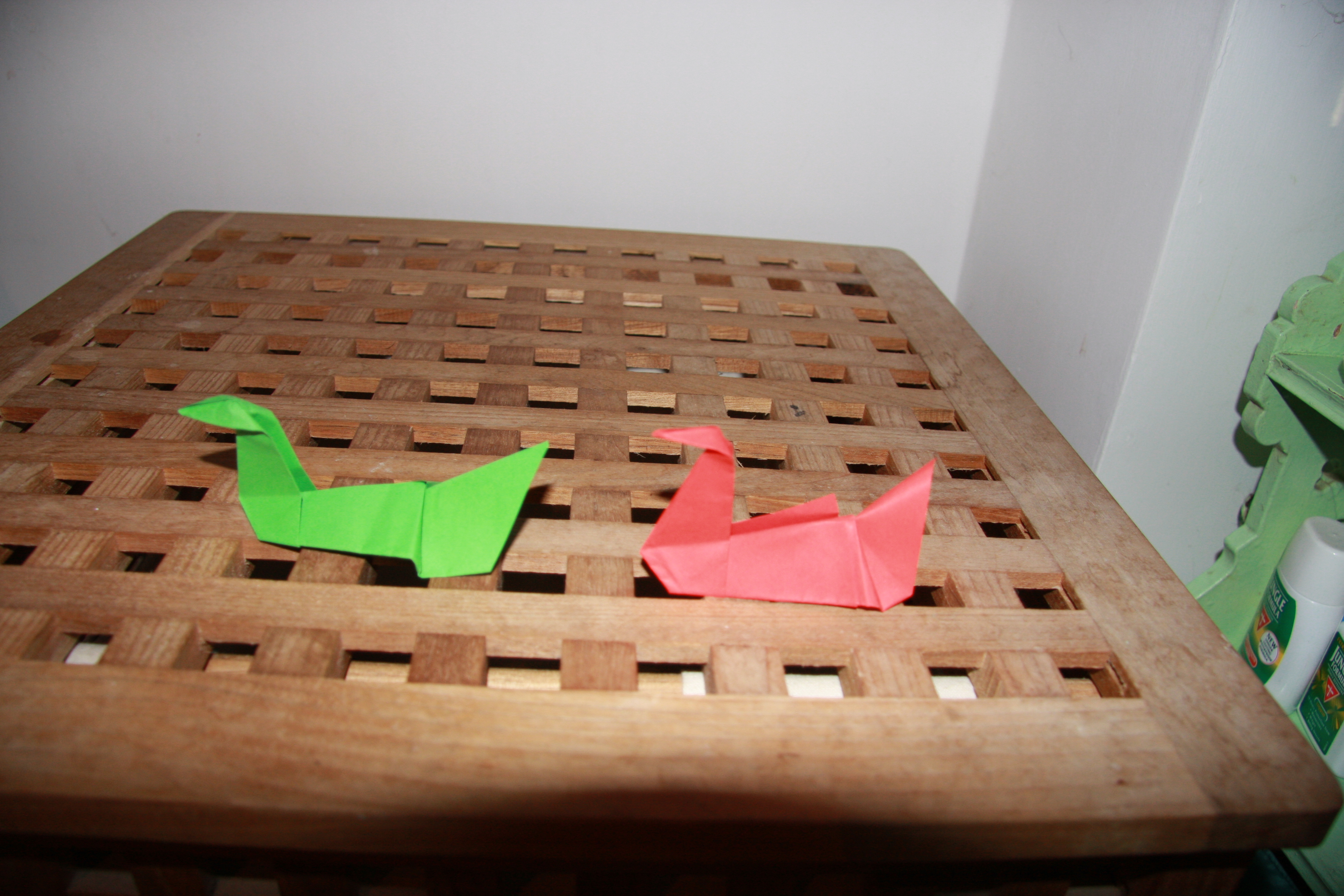
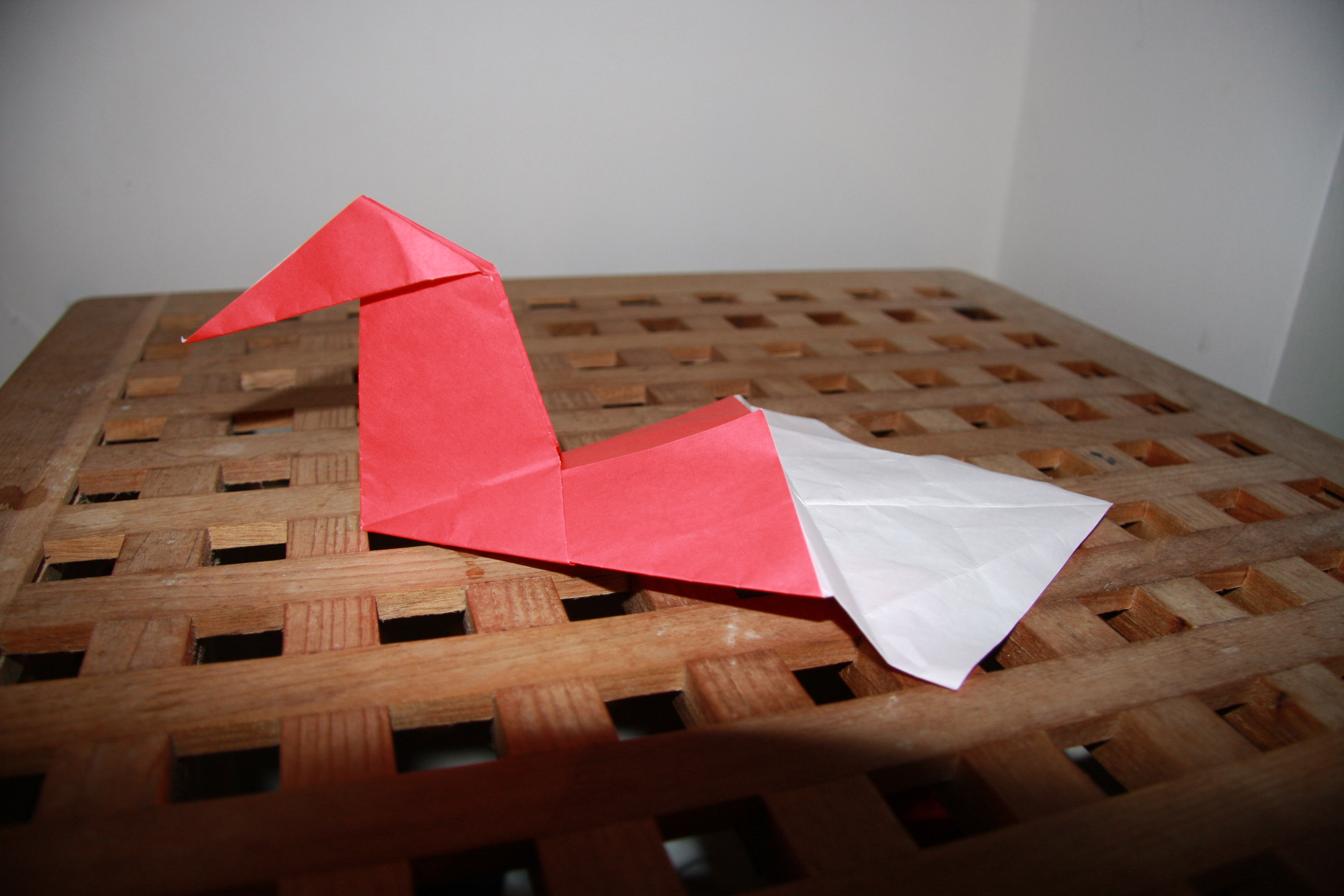
I have become a little fed up with not quite being able to follow through the diagrams and instructions. I therefore spent some time going back through the beginning of the book to make sure that I understood the symbols and what they stood for. After I had done this I tried to create a basic duck with the large paer. This was successfull, I tried again and it seemed as though things were falling into place so I tried to create a basic duck using smaller paper. It worked, so I tried some more. After a few more successes I decided to go back to making them with the larger paper and the next one was to become a base for a complex duck.

So I started to create the next basic duck and found that at the stage where I was to make the first fold to create the ducks neck that I had folded it in the wrong direction which meant that when I tried to fold the neck it tried to develop in the wrong way. I managed to find where I went wrong by comparing a successfull model with the one I was having problems with. I also used the pictures to compare the folds and saw my error. Once idnetified the error was very easily corrected. I created an almost perfect basic duck. I then went through the diagrams and suddenly saw correctly how the folds should go and how it all fell into place. I put this all down to the time I spent making sure I understood the symbols and could relate the diagrams to the actual folds.
I found that after all of the initial hassles that I was able to create a complex duck. The first one had a slightly wonky tale but was a much better effort than any I had previously done.
After I made another with the larger paper and it was almost perfect. I then tried with a smaller piece of paper and was really happy with the results. In order to reinforce the process I made several large and small complex ducks and was pretty pleased wit myself as a result.
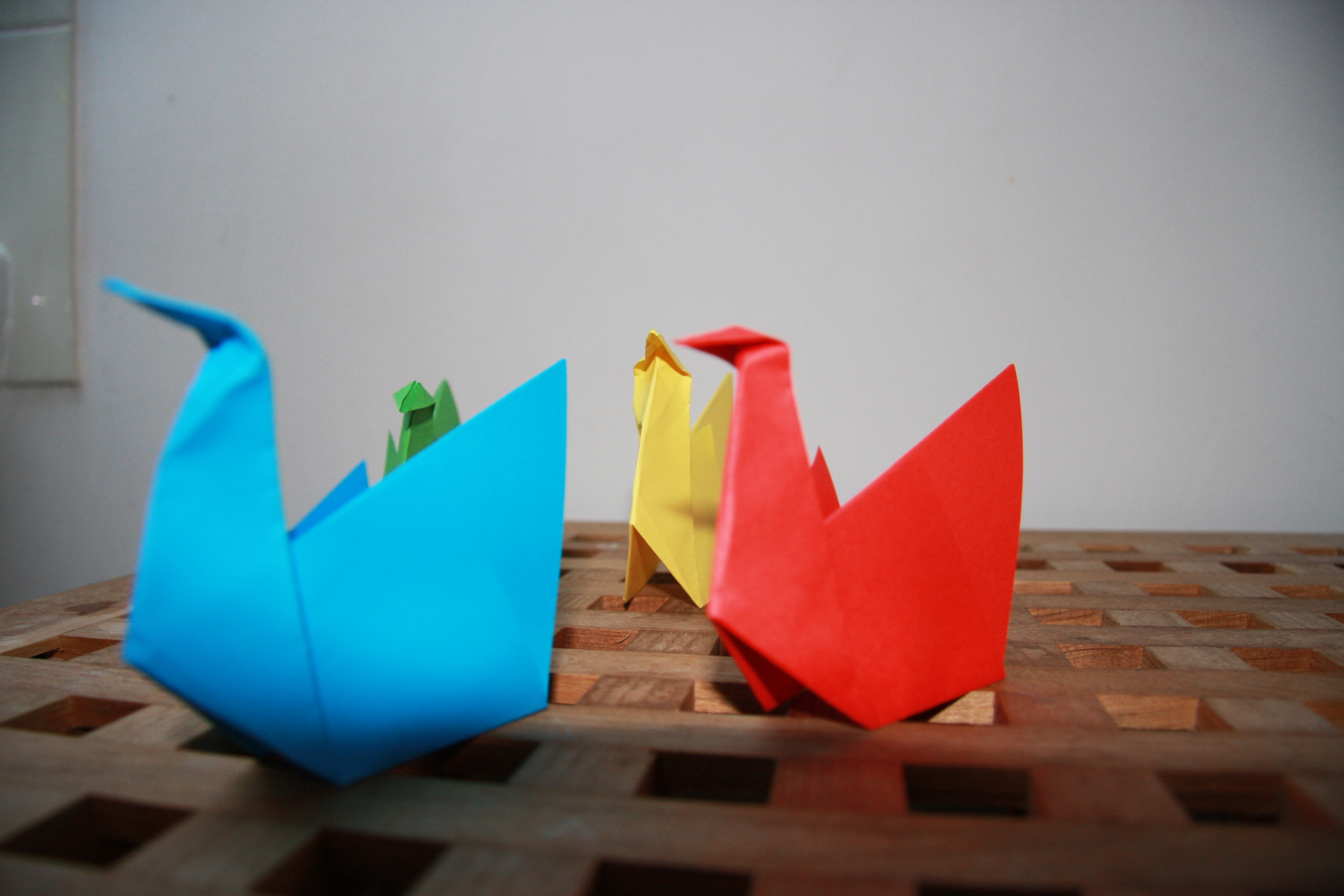
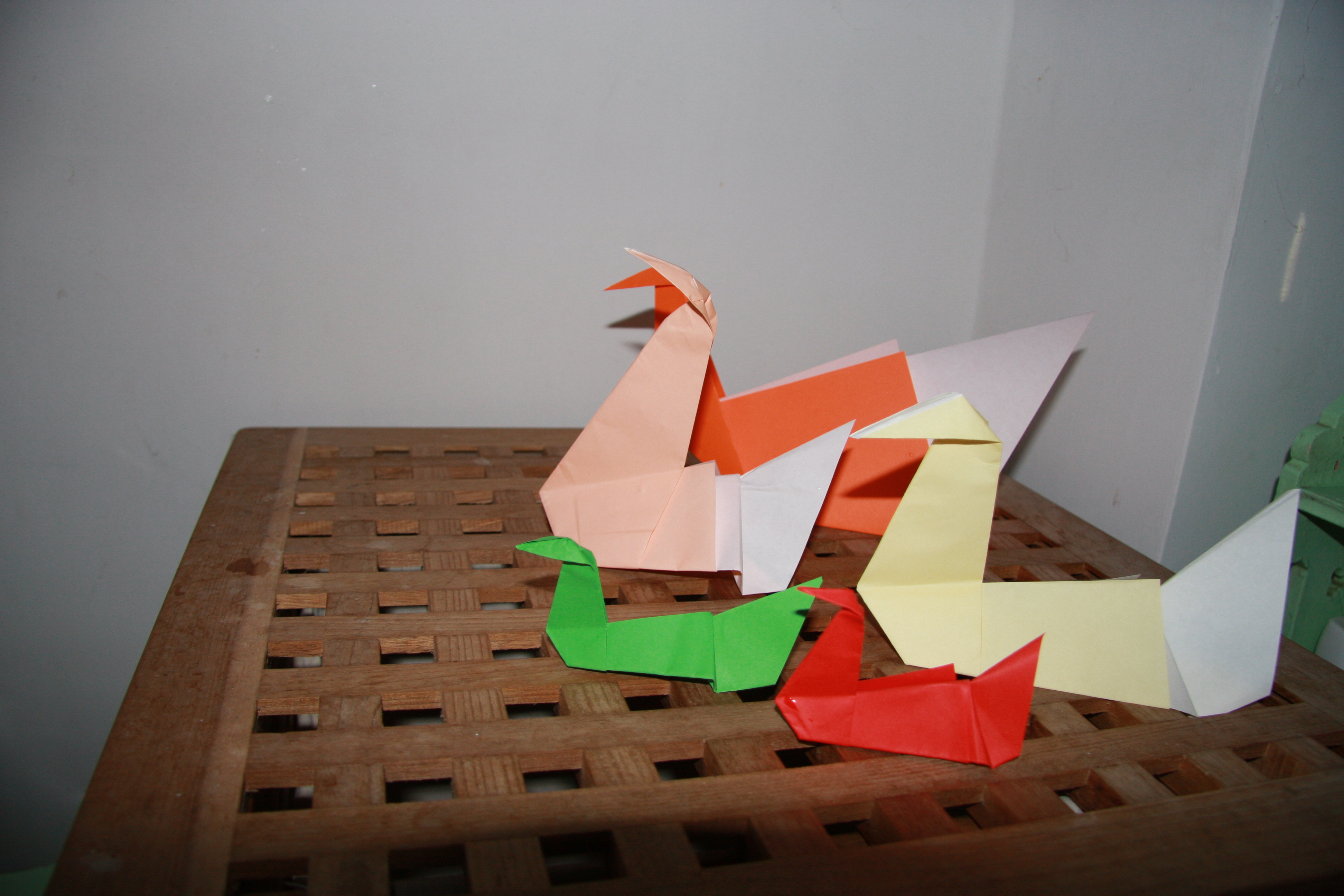
More detailed pictures 1) Large ducks of each type 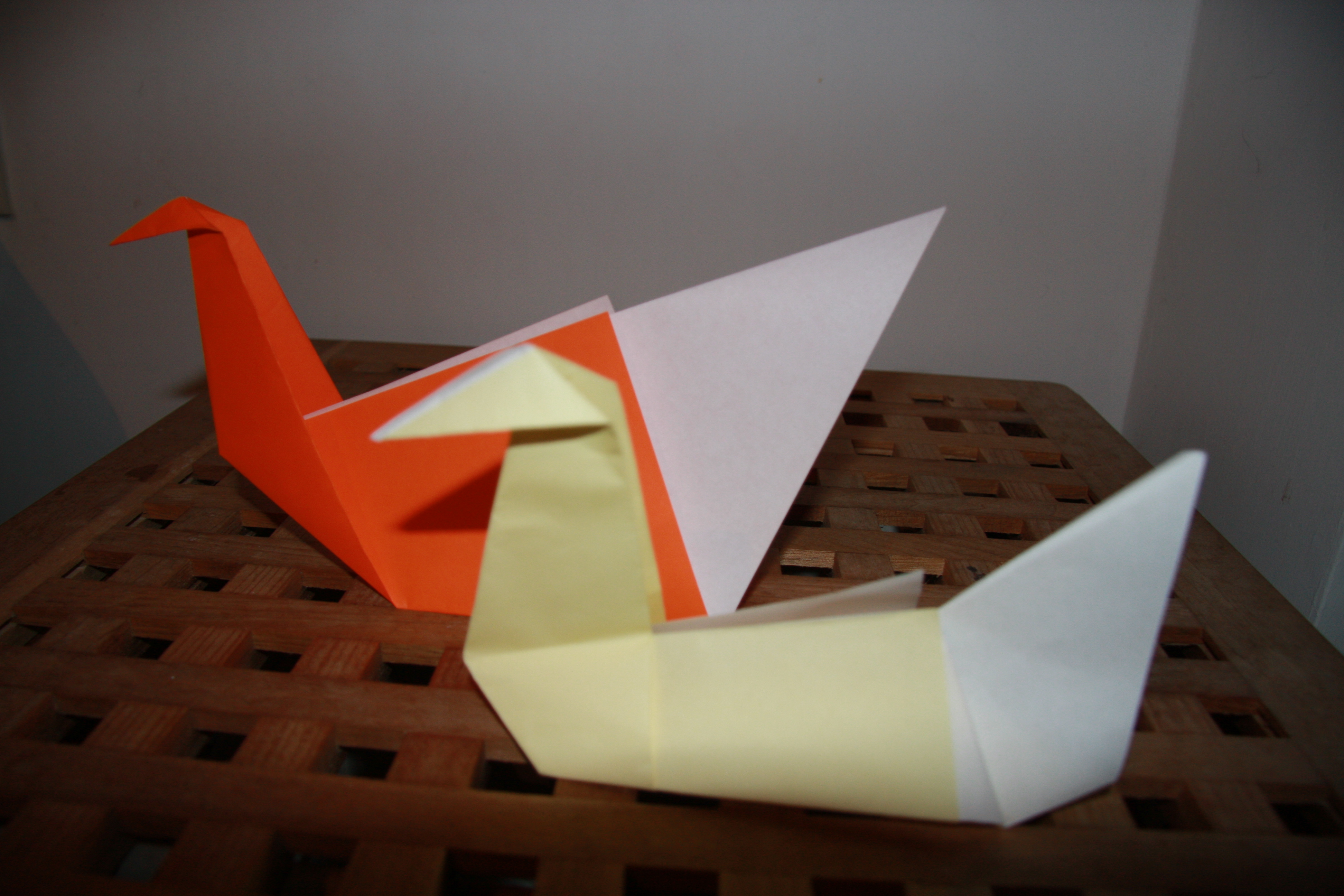
Small complex ducks in more detail
Keywords: Origami
Posted by Nicholas Palmer | 0 comment(s)
Why on earth did I take up this challenge? I continued with the simple/complex duck. I made an attempt at the complex duck - a stage on from the simple duck and felt good. It wasn't quite right I seemed to be misunderstanding the final step. I then tried to do it again and found that I was struggling to complete a simple duckl. After four pieces of wasted paper I decided to give it a rest.
The positive that has come out of this is that I am feeling confident handling the paper to complete the kite base it feels as though I know what I am doing. It is very straightforward and to be honest I should be feeling confident by now as I have completed this stage a number of times. I am just hoping that I will be able to achieve more tomorrow.
Keywords: Learning Challenge, Origami
Posted by Nicholas Palmer | 0 comment(s)
Keywords: Learning Challenge, Origami
Posted by Nicholas Palmer | 0 comment(s)
Keywords: IDEL09
Posted by Carl Simmons | 2 comment(s)
Well week 1 is over and we’re into week 2 and the first reflection is how I’ve failed to keep the planned blog, which I know will help me with the studying (I used one in my first module and not in the second and noticed the difference). I could link this to work being really busy too but that’s just me making excuses so here’s an attempt at encapsulating the starting points for my thinking.
Keywords: design, pscel09, questions, socialmedia
Posted by Emma King | 0 comment(s)
I worked through the introduction and this took me to a section that explained the symbols used in the book for the various folds and moves. I was able to understand this reasonably well until I came across the inside and outside crimp. Still I was reasonably confident and decided to have a go with my current knowledge.
The tips were very useful and one was to use larger pieces of paper to start with. I have two sizes of paper nine and three quarter inches sq which is coloured oneside and white the other and five inches sq (came with the book) coloured bothsides.
THe first thing I did was to create a kite base with the larger paper using a red piece first. After the base had been created I produced the simple duck. I struggled wioth the diagram a little but perseverance paid off and I took some photographs of the model (model taken from Origami Kit for Dummies). I then tried to create the more complex duck and this is where I was unable to fully understand the diagram at this point. After struggling for ten minutes I had a break. The overall session lasted 30 to 45 minutes and was partially successful.
The paper became vey crumpled with my efforts and I was left with a duck with a flat body, so it is time to try again.
First attempt Duck 1 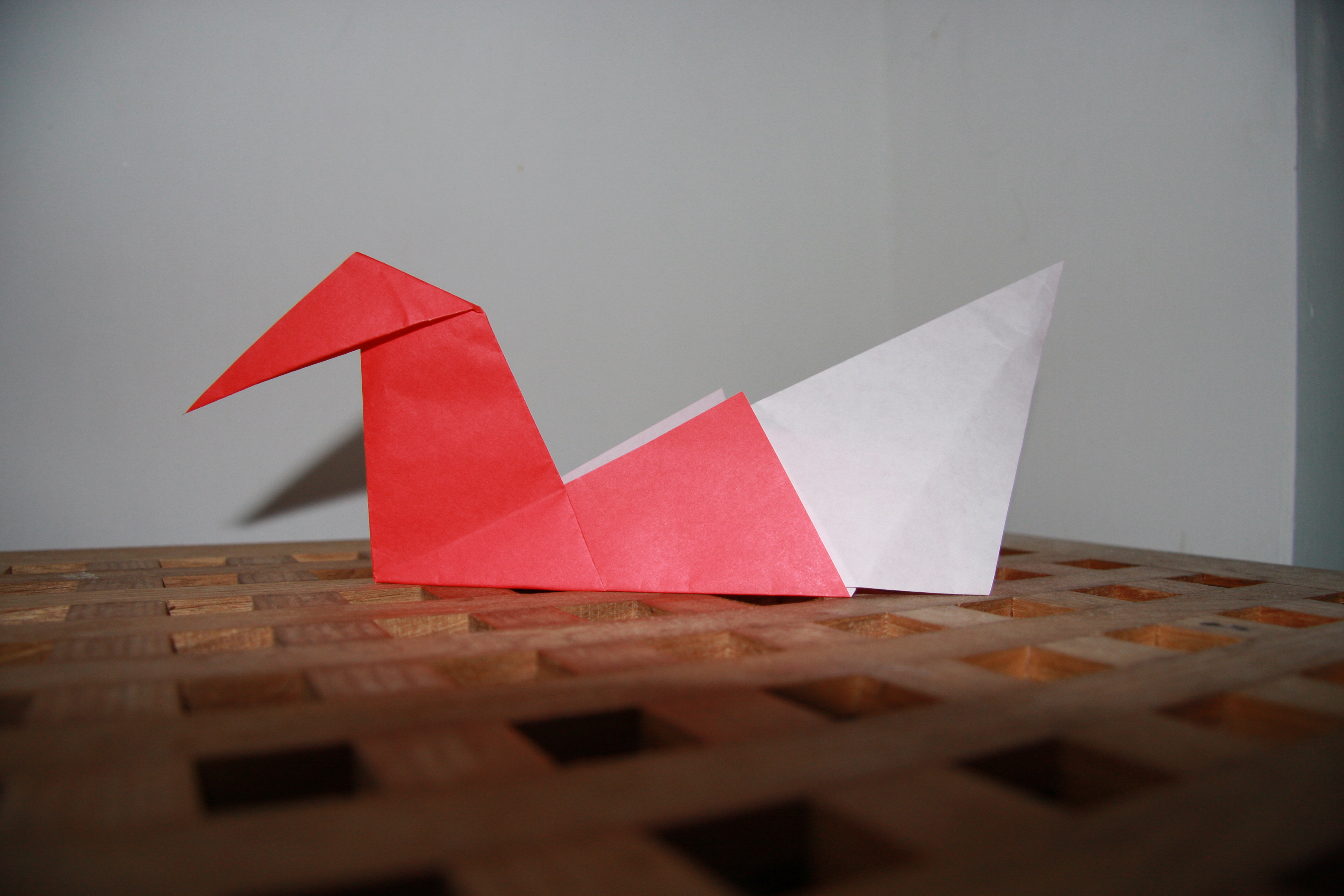
Collapsed attempt Duck 2
Keywords: Learning Challenge, Origami
Posted by Nicholas Palmer | 0 comment(s)
I am currently studying for an MSc in e-learning at Edinburgh University. I am on my fourth module which is understanding learning in digital environments. One of the assignments is a learning challenge and this blog will outline my experiences, thoughts and feelings whilst performing the learning challenge. I am going to learn how to create origami paper models. My previous attempts have got little further than paper darts or paper planesI tend to be all fingers and thumbs with these types of exercise.
I have chosen to learn how to make Origami figures for this challenge. Ther initial aim is to create a dragonfly (medium difficulty) and a beetle (challenging). I have decided to learn by 1) Working through the Origami Kit for Dummies by Nick Robinson - published John Wiley 2008. 2) websites and 3) videos from sites such as you tube.
The book is broken into three main sections
Introduction
Part 1 Coming to the crease: Basic Techniques
Part 2 Folding on: The Models
Part three: The part of Tens
I first looked atpart three which consists of three chapters 1) Ten Top Tips 2) Ten Origami Styles and 3) Ten Incredible folders ( a summary biog for ten famous Origamists)
It gave me a feel for the subject and those who excel at it. This also points the way to a number of websites which I have not looked at yet.
Lets get on with the folding!!!
Keywords: Learning Challenge, Origami
Posted by Nicholas Palmer | 0 comment(s)
Welcome to a new academic year, and to the holyroodpark.net blog space, one of the core environments for the MSc in E-learning! Please don't hesitate to get in touch with Jen Ross, the programme technical co-ordinator, if you have any questions or need any help getting set up.
Her contact details are in the technologies handbook.
Keywords: welcome
Posted by Holyroodpark Admin | 2 comment(s)