Log on:
Powered by Elgg

Stephen Bezzina :: Blog

September 15, 2011

This is the 3D model created in the 1990s of Supercar in collaboration between myself and Mick Imrie.  Mick is the expert modeller.  I did some simple Black Rock Lab buildings rather than the core vehicle.  The model has been used in many digital environments since it was created, and now can be imported via the Collada model format into Second Life and OpenSim. The models are available at http://www.aiai.ed.ac.uk/~bat/GA/supercar-3d.html

Supercar in OpenSim

Here is Supercar in full flight in OpenSim... My other car is a Toyota :-)


Keywords: IDEL11, OpenSim, Supercar

Posted by Austin Tate | 0 comment(s)

My interests include 3D/CGI modelling (useful backgound for my interests in using Virtual Worlds), and graphic art.  I very much like team projects and collaborative working, and have loved working in teams scattered across the globe on my projects and in my recreational interests.  I hope to share some of these interests with you, and frankly to get an excuse to show some of the resulting artworks, through these blog entries.

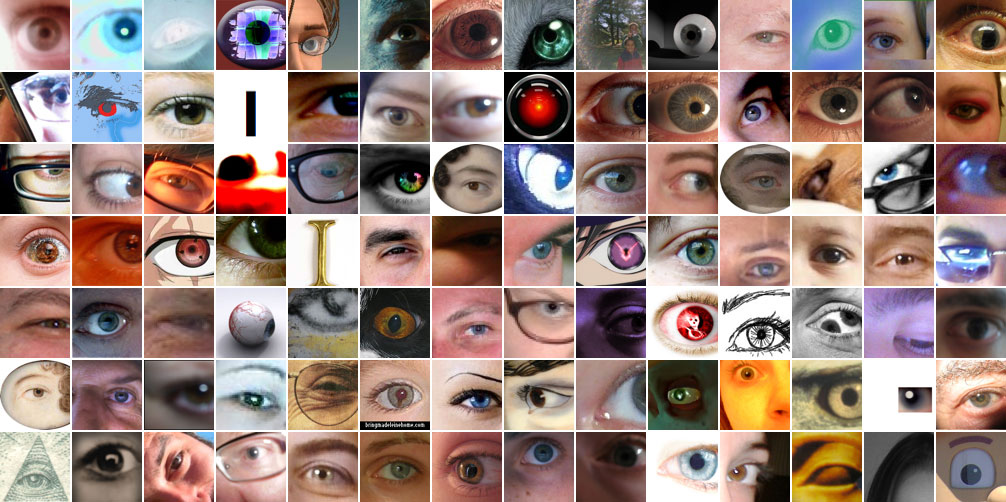
In 2008 there was a number of web-based collective artworks created and shows at the Smithsonian American Art Museum's Luce Foundation Center.  One called "ghosts of a chance " invited people to submit representations of eyes... photos, drawings, graphical concepts, etc.  They were composed together and displayed in the final artwork... "All Eyes"...

All Eyes

Click on image for the full picture. See if you can find the one I submitted.

Keywords: Collective Art, Eyes, IDEL11

Posted by Austin Tate | 0 comment(s)

One of my reseaerch interests is in the creation of "intelligent" meeting spaces for interaction between people and systems.  The programme is called the "I-Room".  More details are at: http://openvce.net/iroom

Let Ai Austin take you on a short tour of an I-Room through this YouTube video...

Posted by Austin Tate | 0 comment(s)

A couple of years back we rigged up a Moodle VLE server (http://moodle.org) and set up some "courses" to support collaborative meetings especially to allow for file resource interchange and sharing, and for questionnaire's and feedback during meetings.  We connected the web site to a meeting space in Second Life (http://secdondlife.com) using the Sloodle set (http://sloodle.org). The server still runs at http://openvce.net/moodle

I am interested again in Moodle 2 and recent work on a much richer in world linkup using the SLoodle kit which can now support rich shared media in Second Life, and important for the future, the open source OpenSimulator (http://opensimulator.org).  We want to tie the questionnaire and shared resource handling more closely to intelligent systems for meeting room support - in our I-Room work (http://openvce.net/iroom).

I plan to use this blog to document progress, trials and tribulations as we go along in the hope others might find it useful.

The first thing was how messy all the information was on what the most recent versions of SLoodle were available and for which versions of Moodle.  As a lot of people still use Moodle 1.9.x rather than the more recent Moodle 2.x.  As usual a short e-mail to one of the core users in such a helpful community got me on the right path.  But even then download links were stale, out of date copies had been archived and their link blogged rather than the original material, etc.  So job number 1 was to start a web page with the up to date information as I found it... trying to show original URLs but also providing convenient URLs (in some cases to locally stored resources).  That page is at http://openvce.net/sloodle and will evolve as things change or corrections are needed.

So to our main openvce.net web and database servers... the requirements for Moodle 2.1 means that a later version of PHP is needed than our computing support team are happy to have running due to security.  This will be fixed, but not in an immediate time frame.  So we use our usual backup experimental arrangement using one of the AIAI servers on which we have XAMPP to provide a convenient and simply managed Apache web server, MySQL database server, PHP and Perl scripting. 

I am an optimist, so I unpack Moodle 2.x install it in the right place in the web server and just start the install script in a web browser.  Ah well.  Not so fast Austin.  It complains the PHP version on XAMPP is JUST one sub release too old. Pity.

A close down of all services, an uninstall of the services, a reboot, a big safe backup of the web area, data base and some local files on the experimental machine, archive and an hour later I can try again. I put on the new version of XAMPP, reinstate the data base and web areas, put back the new Moodle area, etc.  And kick it all back into life.  A BIG PHP not running error in the browser stops me short.  Half an hour of fiddling, no joy. Something in XAMPP upgrade has gone wrong.

Luckily I can roll back.  ALWAYS CREATE A BACKUP BEFORE YOUR UPGRADE.  Half an hour later and I am back to where I started with a slightly too old XAMPP and no Moodle 2.x.  To be tried again another day.  Watch for the next install meet.

Ah well, that's where the weekend went.  I did still manage to see the Italian Grand Prix run at Monza on TV though, and was pleased Jenson Button came through to 2nd.

Keywords: IDEL11, Moodle, SLoodle

Posted by Austin Tate | 0 comment(s)

September 14, 2011

Let me introduce myself.. Austin Tate ... and my virtual worlds avatar... Ai Austin

Austin Tate  Ai Austin

Taking MSc modules for Semester 1 of 2011: "Introduction to Digital Environments for Learning", "e-Learning and Digital Cultures" and "Understanding Learning in On-line Environments".

Keywords: IDEL11, Introduction

Posted by Austin Tate | 0 comment(s)

September 13, 2011

http://www.eusci.org.uk/podcasts/eusci-podcast-extra-conversation-ai-researchers

At the 2011 the Edinburgh International Film Festival, one of the events was a screening of the 1984 scifi classic The Terminator. The event was followed by a discussion with two real-life AI researchers from the University of Edinburgh School of Informatics. We managed to catch the two scientists before the event and talk to them about the past and future of AI, its perception in the media, and whether we should worry about the Robot Apocalypse.

Listen to our conversation with:

  • Austin Tate, Professor of Knowledge-Based Systems
  • Sethu Vijayakumar, Professor of Robotics


Keywords: AI, EdFilmFest, EIFF, IDEL, Robots, Terminator

Posted by Austin Tate | 0 comment(s)

September 09, 2011

I have been in touch with the education system in my country for all of my life. Both of my parents have worked for over 30 years as teachers and teachnig assistants and I first taught English at an elementary school at the age of 20. Yes, I did get hired to one of downtown Prague's primaries  for about 350 EUR a month. Then, it was a good start for a student in Prague. However, some of my colleagues were not much better off and had already finished their studies and wanted to start families. I have never understood how these people survived in one of the most expensive cities in Europe. Well, they did it somehow.

And that is how the schools do it - somehow. It is no surprise to me that the schools I work with are underfinanced. To see the numbers, however, always makes one more conscious about the real state of the matter. No government in the last 20 years has been able to give education a real priority status. 

You can read the full report on the level of school funding in Czechia HERE.

 Even in the given circumstances I stay optimistic and believe in change. Would you like an LMS installation?

Keywords: Czech, education, finance, funding, government

Posted by Lukas Palecek | 1 comment(s)

September 07, 2011

To all the Second Life educator-users, especially those interested in language teaching. Visit one of the most exciting in-world conferences! More info at the Second Life Languages 2011. Looking forward to meeting you there!

Keywords: conference, language, Life, online, Second, sl, teaching

Posted by Lukas Palecek | 0 comment(s)

April 03, 2011


Speed, silence and sanctuary, is the topic of discussion for the final week of study in Introduction to Digital Environments in Learning. We began the course by talking about the ever increasing workload that teachers are facing in the work place. I wrote this blog: IDEL Redefining Personal Boundaries in Education where I reflect:


“In environments where technology and e-learning has not "Yet" been adopted, teachers and lecturers are used to a structured workplace where the teacher is in almost complete control of where and when they and their students can interact. Some may feel that with all the benefits that come with e-learning there will also be sacrifices and that they will have to give up more of the control that they once had.”


 So this seems to be a fitting place to finish of this module. Not only because of this, but also because it is a relief to see that education establishments are taking the lead in awareness of the issues surrounding the problems and challenges of the fast paced workplace.


So what can a university like Edinburgh do to help its students prepare before joining the workforce? What are the solutions? 

It is important as Levy states, first to reach an agreement on the nature and extent of the problem:

“This could mean raising the issue as a topic of discussion and debate on individual university campuses, as well as within umbrella organizations.”

This is something that we have been doing for example in the last week of debate during this module.  Also, it is important to conduct research and studies to examine the extent of the problem, and perceptions of the problem.


Mind over matter:

I mentioned in my last blog that I’ve found necessary with my increasing work load to find techniques that help me relax and focus, techniques such as listening to music or taking walks.

In this spirit, Levy suggests bringing contemplative practices explicitly into university curricula to help students, faculty, and staff, “strengthen their attentional faculties in the face of the erosion effected by multitasking and acceleration.

Contemplative practices quiet the mind in order to cultivate a personal capacity for deep concentration and insight. Examples of contemplative practice include not only sitting in silence but also many forms of single-minded concentration including meditation, contemplative prayer, mindful walking, focused experiences in nature, yoga and other contemporary physical or artistic practices. We also consider various kinds of ritual and ceremony designed to create sacred space and increase insight and awareness to be forms of contemplative practice.  http://www.contemplativemind.org/practices/


Ultimately whether such practices that prepare students for their speedy careers ahead of them are incorporated or not, humans do what humans do best, they adapt. However, some guidance along the way, and creating awareness and debate on such issues are at the core of what education is all about.


References:

http://www.contemplativemind.org/practices/

Levy, D. (2007). No time to think: Reflections on information technology and contemplative scholarship. Ethics and Information Technology, 9(4): 233–236.


Posted by Ellis Solaiman | 2 comment(s)

March 27, 2011

“An environment with choice and a diversity of perspectives, will encourage critical and creative inquiry. Such a community of inquiry is a requisite for higher-order learning” Garrison, D and Anderson, T (2003).


Aside from my PhD, most learning that I have been “subjected to” ( ß I choose my words carefully! ) in the past at school, college, and university, has followed very authoritarian teacher lead methods. On the other hand, this e-learning course has been a fun collaborative learning community in which there has been clear evidence of interactive cognitive presence, social presence, and teacher presence.   


But anyway, I’m about to be assessed soon, so it’s only fair that I pre-emptively return the favor, and assess my assessors and this course against the community of enquiry model detailed by Garrison, D and Anderson, T (2003).


Cognitive presence:


What is it?

cognitive presence


We see cognitive presence ‘as the extent to which learners are able to construct and confirm meaning through sustained reflection and discourse in a critical community of inquiry’ Garrison, D and Anderson, T (2003).


Confirmed at: http://communitiesofinquiry.com/cognitive_presence :


“Cognitive presence is the extent to which the participants in any particular configuration of a community of inquiry are able to construct meaning through sustained communication”


Therefore clearly an important component of cognitive presence in a community of enquiry is debate, which necessitates:


a.    The availability of enthusiastic fellow learners and educators to debate with, a requirement which has been met throughout the course by constant interactive dialogue over a range of topics with fellow students, and with teachers and tutors who have actively encouraged and participated in the discourse.

b.    The availability of mediums of communication that enable sustained rich reflective communication between the participants. The course organizers and tutors have made a fantastic effort providing us with, and encouraging us to use a number of mediums of communication, from the slow paced WebCT discussion boards, to Twitter, and the faster paced Skype Chat, Second Life, and Adobe Video Conferencing.    

Another important component of cognitive presence is the ability to construct meaning through sustained communication and reflection.

We have discussed many related topics throughout this course, and have gained meaning by reflecting on everyone’s input including that of our tutors in our weekly session using different mediums of communication. We have also been encouraged to gain meaning and reflect individually on our reading and debates through our blogs, like I am doing now!  


Categories and indicators supplied by Garrison, D and Anderson, T (2003) to assess the presence of cognitive presence:


Triggering events (Indicator could be: Sense of puzzlement): Yes for example when Clara showed up looking like a dragon, which triggered allot of puzzlement J, and a long debate on how identity in a medium such as Second Life compares to our real life identity. Other triggering events for example were our scheduled meetings in Second life, Skype, Twitter, etc. This triggered a sense of anticipation, and made me organize and collect my thoughts prior to the meetings.

Exploration (Indicator for example Information exchange): This category seems to be the same as the earlier discussion on debate. Exploring ideas, and exchanging knowledge and perspectives is essentially what debate is all about. 

Integration (Indicators: Connecting Ideas): This happened throughout the course guided by our tutors through discussions, email exchanges, and blog comments, and also by us using the discussion boards, and during the 2 weeks when we collaborated to enrich David Silver‘s, and our individual wiki’s using hypertext and other web 2.0 technologies.


Social Presence:


What is it?


social presence 


“We define social presence as ‘the ability of participants in a community of inquiry to project themselves socially and emotionally, as ‘real’ people (i.e., their full personality), through the medium of communication being used’” Garrison, D and Anderson, T (2003)


I’m not too comfortable with this definition. Two questions spring to mind, What is real? And What constitutes my full personality?


I love Einstein, because his work crosses so many boundaries. Everything can be relative, not just the movement of objects relative to each other and the speed of light through space.


If someone spends allot of time in an environment such as Second life, and interacts with a community in Second life, then for this community, their virtual characters can be just as real to each other as people are to each other in the “real world”.

Second is the issue of what constitutes a full personality. Do we always project our (full) personalities socially and emotionally during serious discussion and discourse?  Do we really need to? What about the projected personality of my avatar in SL, how do I project this personality in a video conference that has nothing to do with SL? As I argue in a previous blog, I believe that presence can occur at varying degrees. We don’t have to be fully present with our entire bodies to have useful discourse. Sometimes my full physical participation maybe required, sometimes just my voice or even just my thoughts through text chat can be enough to have effective social presence. Sometimes a text conversation maybe the most effective form of presence when other attributes such as voice or physical form could be a distraction.


Maybe I’m being very picky, but let’s try and make the definition more realistic (I’m in a critical mood):


“We define social presence as ‘the ability of participants in a community of inquiry to project themselves socially and emotionally, to a level at which they are comfortably able to communicate, and exchange their thoughts and emotions through the medium of communication being used’”


The question of social presence seems to link to that of embodiment, and identity. Garrison, D and Anderson, argue that:

Immediacy is important to a supportive and secure learning environment because it reduces personal risk and increases acceptance, particularly during critical discourse with its sometimes aggressive questioning and challenging.


I agree but I also feel that immediacy becomes less important when discourse can happen over a long period of time (This e-learning course). So for example I recognize a social presence in our email exchanges, in the blog, and on the discussion boards even though the sense of immediacy is not pronounced.


But also our tutors have encouraged us to use mediums of interaction where there has been a clear sense of immediacy, for example our camp fire voice and text conversations in Second Life, Twitter discussions, our video conference, and our skype chat.  The tools available to us on this e-learning course are more than capable of facilitating the projection of our social presence.


Teaching Presence:


What is it?


teacher presence 


“Teaching presence is defined as ‘the design, facilitation and direction of cognitive and social processes for the purpose of realizing personally meaningful and educationally worthwhile learning outcomes’” Garrison, D and Anderson, T (2003)


Our tutors have been present throughout this course, guiding our focus and conversations, and have participated in and directed discourse so that defined learning goals are achieved. (Go back and read everything in purple!).


Overlapping Cognitive, Social, and Teaching Presence:


A community of learning is most effective when these 3 presences are present and operating effectively together. Garrison and Anderson provide two overlapping areas of presence:


Social Presence and Cognitive Presence overlap to create an environment which supports discourse. This was in evidence in IDEL through our discussions on the various mediums of communication made available to us. Our dialog was focused on the topics of discussion required to achieve the objectives of this module because of our collective desire and motivation to enhance our understanding of the topics of discussion. Therefore I believe that motivation is key for relevant discourse to occur.


Teaching Presence and Social Presence overlap so that a climate is created where discourse is structured and guided. This again has been evident throughout the course where tutors have arranged and encouraged interaction between us using the mediums provided, have guided our discussions, and have participated in the discussions.    


Clara in the discussion board also suggests an overlaping teaching presence and cognitive presence:


Teaching Presence and Cognitive Presence overlap so that our dialog and reflections aren’t distracted by irrelevant topics of discussion such as our pets. Where I highlighted motivation as important in the overlap between social presence and cognitive presence to keep discourse on track, teaching presence can provide a helping hand to maintain and guide this motivation.


“Cognitive apprenticeship is a theory of the process where a master of a skill teaches that skill to an apprentice.” http://en.wikipedia.org/wiki/Cognitive_apprenticeship


Assessment Outcome: 


Having analysed the criteria, and reviewed the evidence. I can certify that this e-learning course has so far proved itself to be a prime model of what a community of enquiry should be.

community of enquiry


If I was to provide a grade then I would also have to take into consideration some minor technical issues that interfered slightly with my program of study (Services weren’t available once or twice over the duration of the course during weekends). But the positives overwhelm any minor blips, and the objectives of the course have on the whole been realized, therefore my final grade for IDEL2011 is:  95% Leaving a few percentage points to encourage discourse for improvement in this community of enquiry.  Please feel free to use this grade as a guide for any grading activities which may occur in the following weeks … cough …ehem …


References:

Garrison, D and Anderson, T (2003) Community of inquiry, chapter 3 of E-learning in the 21st century (London: RoutledgeFalmer) pp.22-31.


Posted by Ellis Solaiman | 2 comment(s)

<< Back Next >>