Log on:
Powered by Elgg

Blog :: All

You can filter this page to certain types of posts:

Filtered: Showing posts with no comments (Remove filter)

October 21, 2011

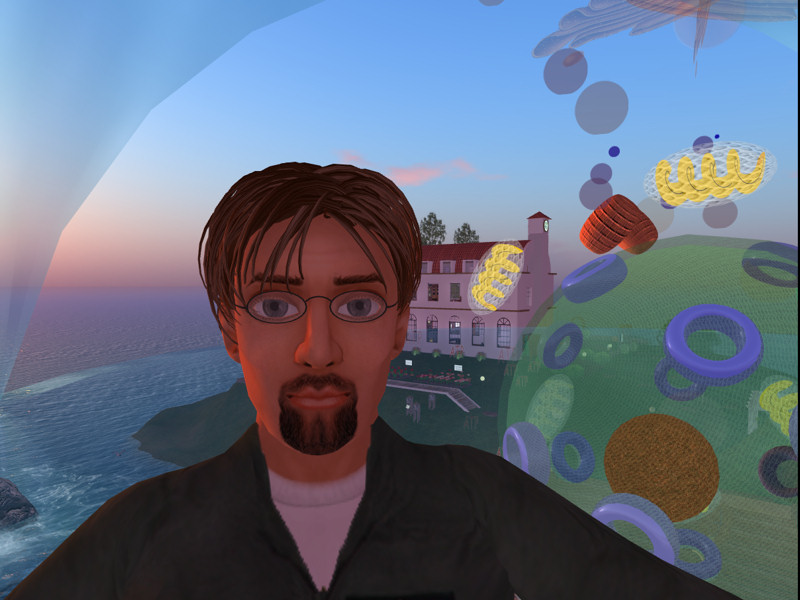
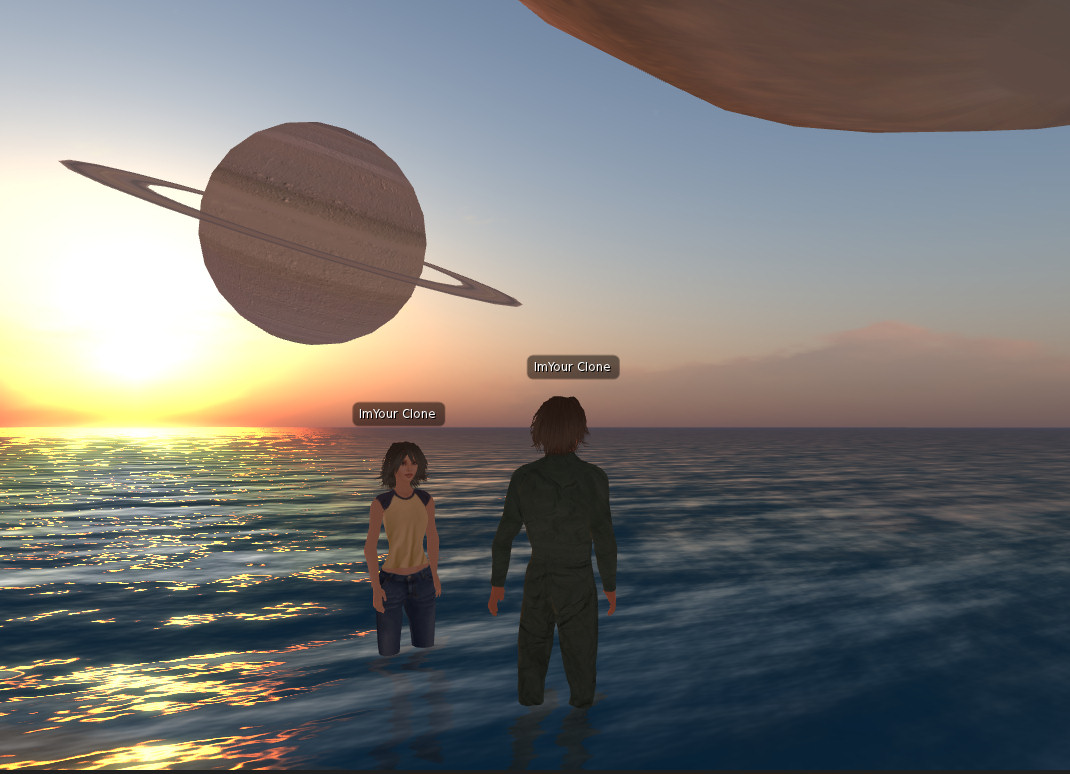
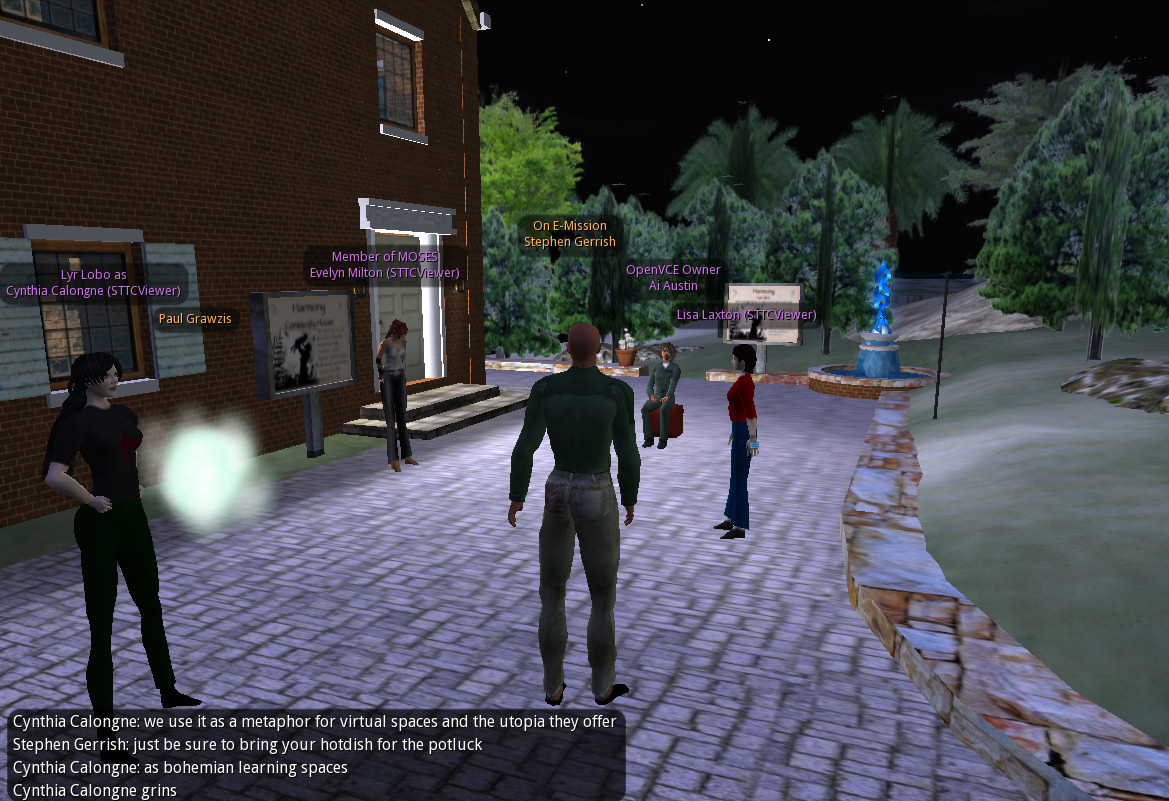
MOSES: Military Open Simulator Enterprise Strategy ( http://openvce.net/moses ) - is an OpenSim grid used for research purposes by educators and a range of organisation exploring simulation technology for training.  I am owner of a region on the grid for Open Virtual Collaboration Environment work with the US Army, and am a member of the Board of Directors who guide the development of MOSES.

The image is of one of the Office Hours meetings between estate owners...

Keywords: IDEL11

Posted by Austin Tate | 0 comment(s)

I like to create a web page when I start a new project... to add in the useful web links, pointers to information, notes, etc.  Then I gradually structure that as more content is created.  Most recently I have been doing that in the Drupal content management system on http://openvce.net which provides convenient additional facilities such as column layout, blocks in to which content can be placed, mash-up capabilities right down to adding custom HTML and PHP code, and ancillary blogging, image handling, etc.

But for the MSc activities I chose to do some of this in my own web area at http://atate.org which initially just had my work on the "bat Life Wall" and where I wanted to collect together assets that would be long lived.  I have more recently added extra areas there for my course blogs and Lifestream, my Junior Hairdressing experience for the ULOE11 module, and the virtual ethnography study for the Digital Cultures EDEDC11 module. There is also a password protected personal work area.

For work in week 6 of the IDEL11 course we will be exploring personal learning spaces and mash-ups, and so I have tried to look to do something new... something I have been meaning to explore for a while.  I wanted to use a much more flexible layout that is cleaner, and adapts to the width of anyone's viewer. And into which I can drop elements without causing problems of rendering in the wide range of browsers.

I am experimenting at http://atate.org/space/ which such a personal working space. It is based on a freely available and nice simple CSS style sheet from http://matthewjamestaylor.com/. I have customised it somewhat for my sans serif font preference and colour choices.   I added initial content that I had been collecting at http://openvce,.net./mscel and put in quick access tabs for my current MSc work and blogs.

Keywords: IDEL11

Posted by Austin Tate | 0 comment(s)

I am reading some papers by Don Norman, and one on "Distributed Cognition" (Norman, 1993) makes some very nice points about the value of large situation rooms and operations centres for providing a joint view of the current situation and actions being taken in complex environments such as power station control rooms and emergency response centres.  I have been in such centres for real and training situations, for natural disaster response in Tokyo, for a nuclear power station in the UK and for search and rescue coordination in the UK and the USA.  They are all set up to allow for people to gather round or have a view of screens and see information in a shared environment.. the operators and responders are not all looking at their own screen separately... though of course they do that to use specialised tools, information and communications which they bring to the shared space.

In our work we have sought to replicate this sort of shared situation space, as a basis for human centric decision support.  When we started to embody our technology in virtual worlds we wanted to replicate some of the benefits of this, and indeed provide a shared space for distributed participants, as is often the need in complex multinational emergencies.  We are sometimes asked why we want to replicate rooms with walls when we are in virtual worlds, and I respond that we want the wall space for displays and distinct functional areas that everyone can remember and use.
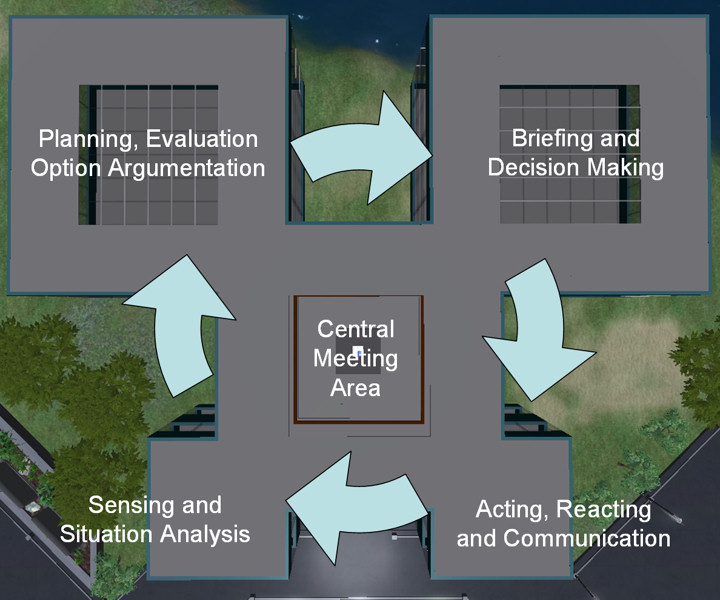
In our I-Rooms (http://openvce.net/iroom) we have a shared central space in which participants gather and communicate, and from which viewpoint they can direct their attention to any of four functional areas set in a cyclic pattern to allow for situation assessment, option exploration, briefing and external communications.  It supports the OODA Loop (http://en.wikipedia.org/wiki/OODA_loop) as an underlying approach and lets us place human and intelligent systems support into a meaningful whole which all the participants can involve themselves in as appropriate.

Reference: Norman (1993) Things that make us smart : defending human attributes in the age of the machine . Reading, Mass., Addison-Wesley Pub. Co. Chapter 6; Distributed Cognition (139 – 154).

Keywords: IDEL11, ULOE11

Posted by Austin Tate | 0 comment(s)

October 20, 2011

Keywords: IDEL11

Posted by Austin Tate | 0 comment(s)

Keywords: IDEL11, ULOE11

Posted by Austin Tate | 0 comment(s)

Discussion on avatar identity and "personhood" using papers by Tom Boellstorff and James Paul Gee as a basis...  in the Cloud Space discussion area over Holyrood Park in the Vue South region in Second Life.

Keywords: IDEL11

Posted by Austin Tate | 0 comment(s)

October 19, 2011

As part of my "Learning Challenge" for the Understanding Learning in the On-line Environment module, I have now had my first lesson... it was exciting going to class again and in a totally different environment. Reminds of the the great buzz I always sense at the start of each new academic year amongst students and staff!

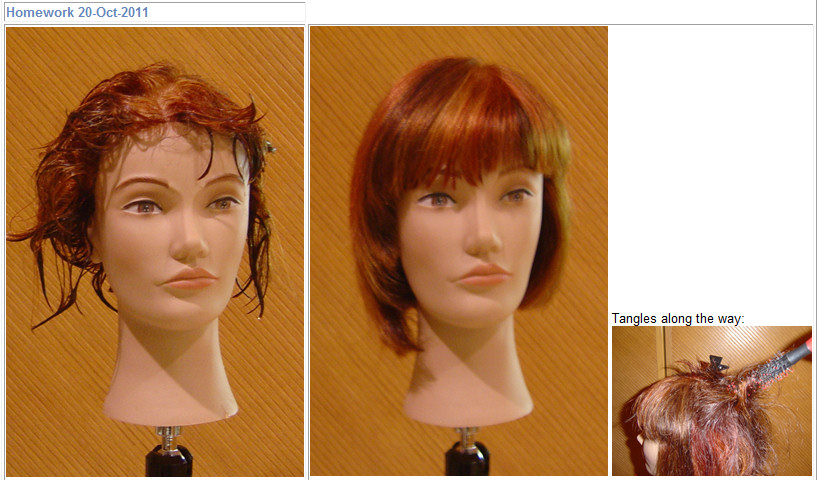
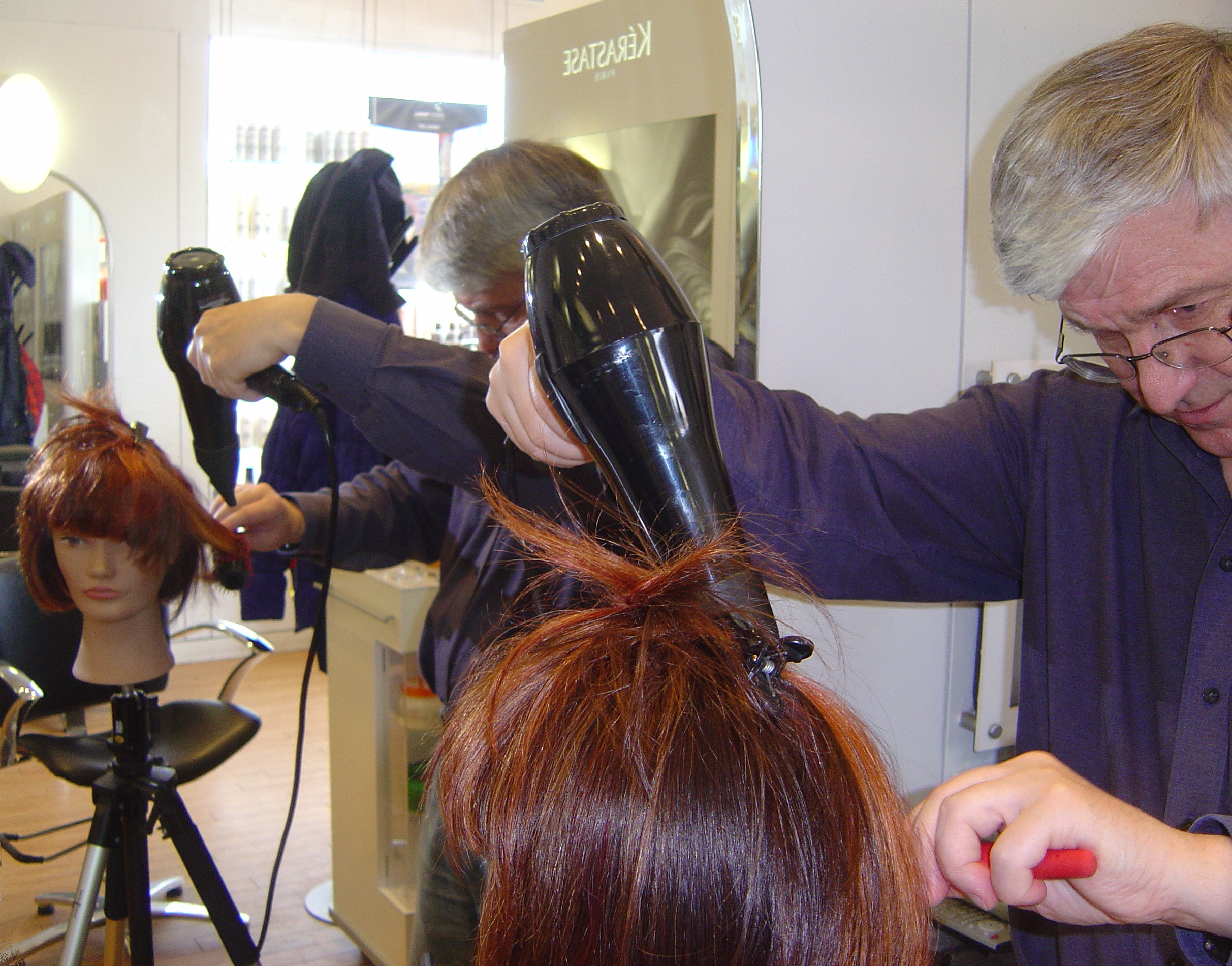
There was a LOT to take in.. but Karen Temple who is training me took things step by step. She was keen not to over do the theory and looking at books, so I got introduced right away to my "model" for the day... a disembodied head on a tripod.. but with a lovely head of hair on her to work on. It was washed and left tousled to let me learn on it.

But first we went through the various brush types... and parts of the comb. See http://atate.org/mscel/hair/. Then onto how the hair is "sectioned" to allow it to be worked on in parts and layers. It was very tricky to know where to place your hands and fingers to get best grip on the hair... and I was not separating the parts very well. I realised I was thinking about it a bit too much and when I did it a bit sloppier (at first) I got the rhythm more I think.

It took some two hours to fix my model's hair this first time. That would be a LONG appointment. Anyway she has come home with me now for homework. So I am asked to go in next week and show Karen how I can do the whole job. And the plan is that I will then be let loose on a live model. Now that will be a thrilling experience for me... and I bet for her - hopefully not in the horror film sense!

Keywords: Hair, IDEL11, ULOE11

Posted by Austin Tate | 0 comment(s)

October 18, 2011

Keywords: IDEL11

Posted by Austin Tate | 0 comment(s)

October 17, 2011

Second Life Building Tutorial

Second Life Building Tutorial

Keywords: IDEL11

Posted by Austin Tate | 0 comment(s)

Avatar Identity

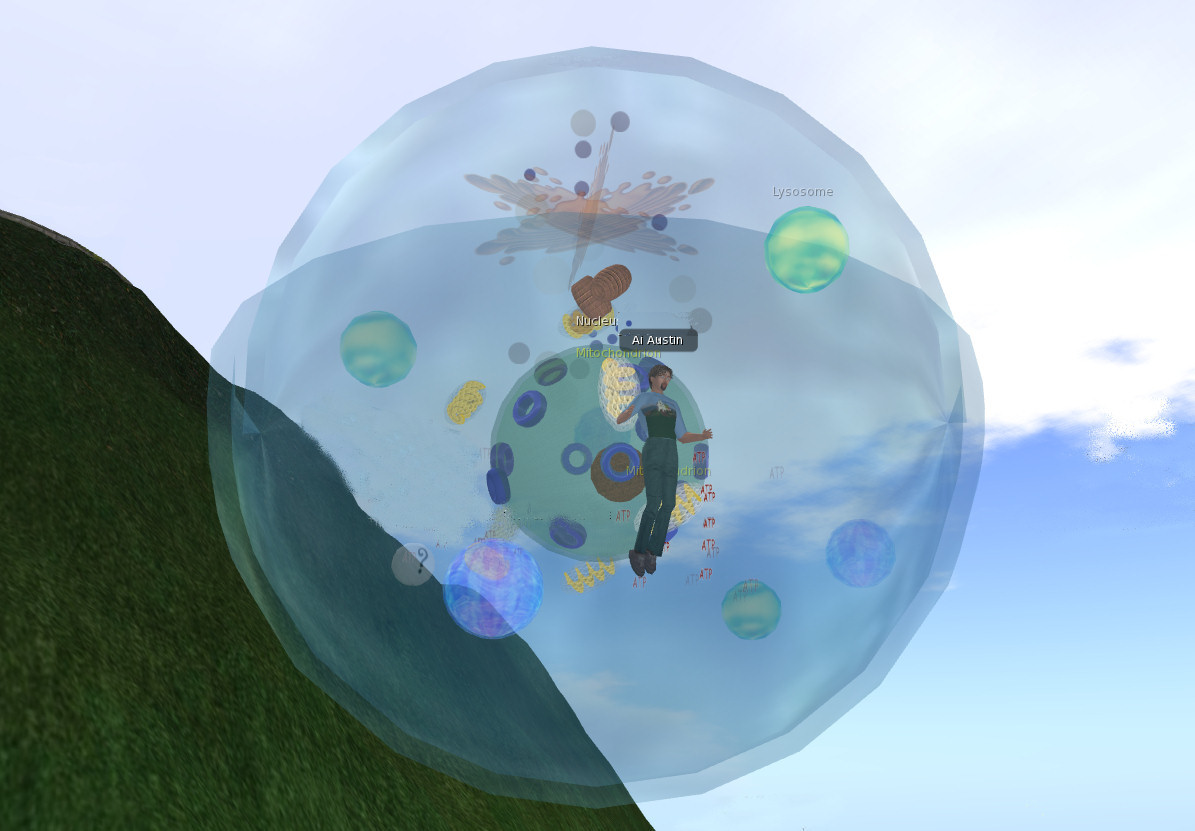
Avatar Identity exercise - are the avatar clones me, us or them? See http://atate.org/ai/ai/ for more...

Keywords: IDEL11

Posted by Austin Tate | 0 comment(s)

<< Back Next >>