Log on:
Powered by Elgg

Anna Wood :: Blog

September 15, 2011

This is the 3D model created in the 1990s of Supercar in collaboration between myself and Mick Imrie.  Mick is the expert modeller.  I did some simple Black Rock Lab buildings rather than the core vehicle.  The model has been used in many digital environments since it was created, and now can be imported via the Collada model format into Second Life and OpenSim. The models are available at http://www.aiai.ed.ac.uk/~bat/GA/supercar-3d.html

Supercar in OpenSim

Here is Supercar in full flight in OpenSim... My other car is a Toyota :-)


Keywords: IDEL11, OpenSim, Supercar

Posted by Austin Tate | 0 comment(s)

My interests include 3D/CGI modelling (useful backgound for my interests in using Virtual Worlds), and graphic art.  I very much like team projects and collaborative working, and have loved working in teams scattered across the globe on my projects and in my recreational interests.  I hope to share some of these interests with you, and frankly to get an excuse to show some of the resulting artworks, through these blog entries.

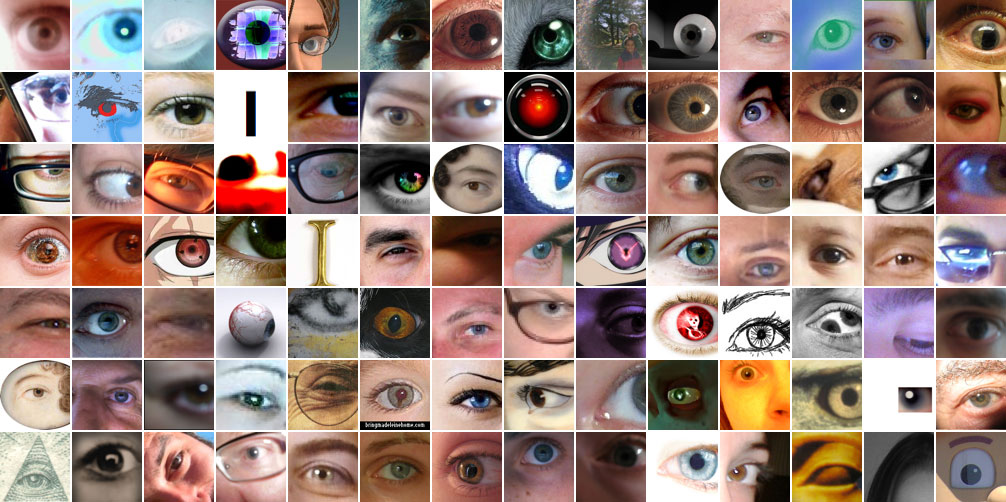
In 2008 there was a number of web-based collective artworks created and shows at the Smithsonian American Art Museum's Luce Foundation Center.  One called "ghosts of a chance " invited people to submit representations of eyes... photos, drawings, graphical concepts, etc.  They were composed together and displayed in the final artwork... "All Eyes"...

All Eyes

Click on image for the full picture. See if you can find the one I submitted.

Keywords: Collective Art, Eyes, IDEL11

Posted by Austin Tate | 0 comment(s)

One of my reseaerch interests is in the creation of "intelligent" meeting spaces for interaction between people and systems.  The programme is called the "I-Room".  More details are at: http://openvce.net/iroom

Let Ai Austin take you on a short tour of an I-Room through this YouTube video...

Posted by Austin Tate | 0 comment(s)

A couple of years back we rigged up a Moodle VLE server (http://moodle.org) and set up some "courses" to support collaborative meetings especially to allow for file resource interchange and sharing, and for questionnaire's and feedback during meetings.  We connected the web site to a meeting space in Second Life (http://secdondlife.com) using the Sloodle set (http://sloodle.org). The server still runs at http://openvce.net/moodle

I am interested again in Moodle 2 and recent work on a much richer in world linkup using the SLoodle kit which can now support rich shared media in Second Life, and important for the future, the open source OpenSimulator (http://opensimulator.org).  We want to tie the questionnaire and shared resource handling more closely to intelligent systems for meeting room support - in our I-Room work (http://openvce.net/iroom).

I plan to use this blog to document progress, trials and tribulations as we go along in the hope others might find it useful.

The first thing was how messy all the information was on what the most recent versions of SLoodle were available and for which versions of Moodle.  As a lot of people still use Moodle 1.9.x rather than the more recent Moodle 2.x.  As usual a short e-mail to one of the core users in such a helpful community got me on the right path.  But even then download links were stale, out of date copies had been archived and their link blogged rather than the original material, etc.  So job number 1 was to start a web page with the up to date information as I found it... trying to show original URLs but also providing convenient URLs (in some cases to locally stored resources).  That page is at http://openvce.net/sloodle and will evolve as things change or corrections are needed.

So to our main openvce.net web and database servers... the requirements for Moodle 2.1 means that a later version of PHP is needed than our computing support team are happy to have running due to security.  This will be fixed, but not in an immediate time frame.  So we use our usual backup experimental arrangement using one of the AIAI servers on which we have XAMPP to provide a convenient and simply managed Apache web server, MySQL database server, PHP and Perl scripting. 

I am an optimist, so I unpack Moodle 2.x install it in the right place in the web server and just start the install script in a web browser.  Ah well.  Not so fast Austin.  It complains the PHP version on XAMPP is JUST one sub release too old. Pity.

A close down of all services, an uninstall of the services, a reboot, a big safe backup of the web area, data base and some local files on the experimental machine, archive and an hour later I can try again. I put on the new version of XAMPP, reinstate the data base and web areas, put back the new Moodle area, etc.  And kick it all back into life.  A BIG PHP not running error in the browser stops me short.  Half an hour of fiddling, no joy. Something in XAMPP upgrade has gone wrong.

Luckily I can roll back.  ALWAYS CREATE A BACKUP BEFORE YOUR UPGRADE.  Half an hour later and I am back to where I started with a slightly too old XAMPP and no Moodle 2.x.  To be tried again another day.  Watch for the next install meet.

Ah well, that's where the weekend went.  I did still manage to see the Italian Grand Prix run at Monza on TV though, and was pleased Jenson Button came through to 2nd.

Keywords: IDEL11, Moodle, SLoodle

Posted by Austin Tate | 0 comment(s)

September 14, 2011

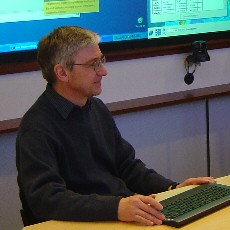
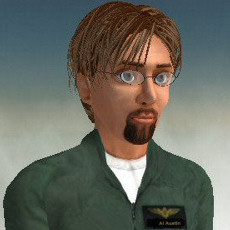
Let me introduce myself.. Austin Tate ... and my virtual worlds avatar... Ai Austin

Austin Tate  Ai Austin

Taking MSc modules for Semester 1 of 2011: "Introduction to Digital Environments for Learning", "e-Learning and Digital Cultures" and "Understanding Learning in On-line Environments".

Keywords: IDEL11, Introduction

Posted by Austin Tate | 0 comment(s)

September 13, 2011

http://www.eusci.org.uk/podcasts/eusci-podcast-extra-conversation-ai-researchers

At the 2011 the Edinburgh International Film Festival, one of the events was a screening of the 1984 scifi classic The Terminator. The event was followed by a discussion with two real-life AI researchers from the University of Edinburgh School of Informatics. We managed to catch the two scientists before the event and talk to them about the past and future of AI, its perception in the media, and whether we should worry about the Robot Apocalypse.

Listen to our conversation with:

  • Austin Tate, Professor of Knowledge-Based Systems
  • Sethu Vijayakumar, Professor of Robotics


Keywords: AI, EdFilmFest, EIFF, IDEL, Robots, Terminator

Posted by Austin Tate | 0 comment(s)

April 04, 2010

Echoing the thoughts of Hubert L. Dreyfus the last week of the course dealt with fear – fear of the new, the different and in general fear of change. In the history of mankind this is not a new theme – during the course we have been reminded of it over and over again: from Socrate's times when fear of the written word was key (quoted in Dreyfus' “On the internet”) to today's threat of video conferencing. In most cases the fear of information overload is in the shadows.


As an example we start with Dreyfus' view of Socrates as a supporter of the disembodied though. However, Socrates believes that writing would: "create forgetfulness in the learners' souls, because they will not use their memories." Centuries later, when the written word became common (thanks to handwritten books) scholars once again were worried about the advent of the printing press - different mechanisms were devised to deal with this threat. Similar concerns were raised when newspapers were becoming common, in his book “on the Internet” Dreyfus quotes Søren Kierkegaard – a 19th century philosopher – as saying: “Europe will come to a standstill at the Press and remain at a standstill as a reminder that the human race has invented something which will eventually overpower it” (Dreyfus, page 74). Near the end of the 19th century (1883) a weekly medical journal the Sanitarian discussed the subject of schools for children, it reached the following conclusion that schools will: “exhaust the children's brains and nervous systems with complex and multiple studies, and ruin their bodies by protracted imprisonment.”


Concerns were raised again with the introduction of radio: “This new invader of the privacy of the home has brought many a disturbing influence in its wake. Parents have become aware of a puzzling change in the behavior patterns of their children. They are bewildered by a host of new problems, and find themselves”. By the time television became common the radio was legitimised, the new technology, however, was different: “questions were raised about how it would affect children: Would it debase their tastes? Distort their values? Teach violence and crime? Cause withdrawn and addictive behavior? ” (both quotes were taken from “Children and Computers: New Technology - Old Concerns”, Children and Computer Technology, Volume 10 Number 2 Fall/Winter 2000).


One can only imagine the criticism when man first used fire – “it will make us lazy and weak since our stomachs will no longer be able to digest raw meat and fancy, cooked dinners will become the norm!”. There is no doubt that new technology has to be tested in the context of what it is intended to be used for (or new manners of usage should be introduced) however, it is VERY surprising to see the academic community jumping to conclusions about the applicability of technology instead of conducting the appropriate research first. Technology is an enabler - we can choose to become a mindless crowd as claimed by Kierkegaard or not, in the same way that we can decide to use the atom for its destructive power or to provide cheap energy for millions. Surely, this is all down to education...


One of the issues raised in the discussion forums of the course was the silence and contemplation required from religious believers. It is important to note however, with all due respect to religion, that the amount of information involved means that Jewish scholars need to study the Torah “night and day” and devout Muslims pray seven times a day... Other examples exist in most religions demonstrating how believers need to dedicate their whole being to deal with information intake required by religion. The main problem with the religious intake of information is the singularity of the source – by studying the religious sources one can only reach conclusions which are derivatives of the data provided in those sources.


In our history we have been repeatedly limited to what is known, what is acceptable, what has been published etc etc... for the first time in human history we have access to the raw data and the possibilities are mind-boggling. We can finally move from the need to collect the data to using and contextualising it. In a previous blog post I have mentioned the technology of mash ups as can be found on the Internet, this short presentation given at TED is a good example of what can be done when raw data is available:

http://www.ted.com/talks/tim_berners_lee_the_year_open_data_went_worldwide.html


In light of this and in the context of past fears it seems as if once again human beings are plagued by the fear of losing control: control of thoughts, control of knowledge, and control of raw data and where it might lead individuals to. Perhaps what we need is not time for silent contemplation but a better way to get from raw data to wisdom? A better way to contextualise and apply the opulance of data and information. Could something like the DIKW model provide us that?


I have previously mentioned a research commissioned by Hewlett Packard and conducted by Glenn Wilson which identified a 10 point drop in IQ as a result of “infomania” (also mentioned in “the university of google”, Barbazon). This demonstrates the fact that some of the challenges that we are currently facing as a result of information overload are real (and therefore the fear justified to an extent) but rather than dismiss the benefits that current, and new, technology offers us I believe that it is our responsibility as educators (both in the education and corporate sectors) to provide learners with the tools to make the best of what they have. This includes – the ability to define what is urgent and what is not, how to prioritise, how to identify 'real' (i.e. valid and relevant) information versus redundant and irrelevant and so on. Internet-based technology is here just like writing, schools radio, television and many other technologies were introduced to us in the past... we now need to respond, adapt to existing reality and, to quote one of my fellow students:


“I would argue that adapting is precisely what people do best.


Keywords: IDELJAN10

Posted by Asi DeGani | 0 comment(s)

March 27, 2010

Having recently started sending my daughter (now aged 4½) to school I was very worried when I saw Ken Robinson's talk on schools and creativity. One of the opening statements relates to the purpose and origins of the public schooling system - unfortunately, Robinson is right – schools still operate as if their purpose is to “produce” standardised employees for an industrial era. The main problem with this is that this era is long gone (in the majority of the Western world at least). It is my experience that this intention to “produce” labourers is also present within the corporate training world. However, with today's information economy this ancient type of labourer is no longer needed – most work places need a multi-disciplined individuals capable of solving problems especially valuable in a 'cost cutting' environment where less employees are required to complete more and more diverse tasks.


Commercial organisations both in the UK and the US have, over the last few years, complained about young workers (coming out of schools and universities) not having the necessary skills for today's workplace. If we accept the purpose of the public school systems as stated in the opening paragraph than I would argue that those educational systems need to reconsider the way they teach if they are to continue fulfilling their own objectives of 'producing' a capable workforce. An example of this lack of skills can be found in the following – “A study commissioned by Hewlett Packard and conducted by Glenn Wilson, a psychologist at the University of London, confirmed that endless typing at a phone or computer keypad – along with the clearly obsessional checking for text messages – temporarily removes ten points of a user's IQ. … The hypothesized cause for this drop in IQ is that the constant distraction of messaging and emails prevents concentration on important tasks. Rapid reaction replaces thoughtful reflection.” (“the univesity of google”, Barbazon, p 76). The inability of employees to deal with today's information overload is creating what Barbazon (and the research she mentions) describes as “infomaniacs”. It is my opinion that the skills required to deal with this overload – effective time management, dealing with sensory overload, prioritising information are but a few of the skills (all within the digital context) which schools should be teaching.


However, schools, and other educational establishments are still stuck in the 19th century mode of operating – in their article “Beyond Web 2.0: Mapping the technology landscapes of young learners” Clark et al discuss the ways in which youngsters use current technologies such as social websites and mobile phones. One of the questions raised by their work is “the potential transferability of skills between informal and formal settings.” In other words it is assumed that the skills acquired while using the web are informal and therefore not directly useful to the classroom or education. Schools are so troubled by this 'irrelevant' use of technology that “young People's 'everyday' use of digital technologies is encountering a process of de-legitimization as evidenced by the banning of mobile phone use in schools”.


In today's capitalist environment one would expect this skills gap to be bridged by an overactive training department in most organisations, surprisingly this is not the case - more and more companies understand that the majority of learning occurs outside the classroom. There can be a number of explanations for this situation (not enough research has been done on this) but to me it looks as if the speed of development of the new tools and required skills and the fact that we are a social learners translates into a failure on the part of traditional formal training.


This failure has translated well into e-learning: the majority of today's content is in the form of electronic flip books (where the “next” button is the king) which employees detest. The advent of standards like SCORM as meant that content producers can create mediocre and boring materials because of the standard. The truth is somewhere in between – while the existing standards do not dictate a boring online training product they make creativity almost impossible: in an attempt to be as efficient as possible (meaning: to be able to resell the same content to as many clients as possible) such concepts as reusability, (learning) content syndication, content repositories, training efficiency etc etc have taken the place of ideas such as knowledge retention, understanding, contextual applicability.


During the Internet bubble of the 1990s various researchers found out that one of the key elements to employee retention is the ability to offer such employees opportunity for personal growth this has also been the case with staff motivation. Staff retention and development is more important during tough economic times – a survey of 700 CIPD members held in February 2009 indicated that developing more talented in-house is the key approach (over 55%) to talent management during the recession. If e-learning is to take its proper place as an effective tool in the trainers (and managers) toolbox then 'efficiency' needs to be redefined; There is nothing wrong with an efficient learning program when efficiency means that students retain information after seeing it once. It is this efficiency that we need to strive to attain.

Keywords: IDELJAN10

Posted by Asi DeGani | 0 comment(s)

March 18, 2010

Learning is defined by the free dictionary as: “The act, process, or experience of gaining knowledge or skill.” and “Behavioral modification especially through experience or conditioning”. Looking at social learning / web 2.0 tool led me to realise that while tools as delicious can be extremely useful in an academic learning and research setting it is actually the more mundane social learning tools which hold the key to realising the theory of true organisational learning.


In his book “The fifth discipline” Peter M. Senge defines the four disciplines required to build the learning organisation:

  • Personal mastery

  • Mental models

  • Shared vision

  • Team learning


While personal mastery and mental models can be achieved on an individual basis, reaching a shared vision and team learning in today's large multinational corporates is virtually impossible without the help of technology. Senge states that “There has never been a greater need for mastering team learning in organisations than there is today” this is partially a result of the rate of change in every day life – a shared vision established today might not be relevant by the tomorrow, team learning is subject to the same speed of change but is also a victim of globalisation – where teams could be spread across different countries.


According to a recent Bersin & associates factbook report, approaches to learning using social networking tools “are still in their infancy in the U.K. But training organisations are realising that most learning takes place outside of the classroom or online course.” this realisation that MOST learning occurs OUTSIDE the classroom cannot be underestimated when discussing learning in the corporate space. In fact, some organisations “noted that they are working toward a 70 / 20 / 10 learning model, wherein 70 percent of the learning takes place through on-the-job experiences and practice, 20 percent through collaboration with others (e.g., coaching, mentoring, social networking), and 10 percent through formal learning interventions. This type of blended approach uses formal learning to build fundamentals. But the bulk of learning happens through carefully crafted informal learning activities.”


When looking at the multitude of tools that fall under the category of social learning the most used one in the corporate space is communities of practice. According to the aforementioned Bersin report the most used social learning technology is currently used by 24% of US firms – Communities of Practice. These communities are supported by a number of tools such as Microsoft sharepoint (with a number of plug-ins), ELGG etc.


In their article “Communities of Practice for Professional Development” Heidi Fisk and David Holcombe define a Community of Practice (CoP): “a place where people with similar interests connect to learn from and with each other — to freely share their knowledge, insights, triumphs and tribulations.” It is easy to see how the shared vision mentioned by Senge fits into such a community when it exists within a specific organisation. Team learning is a little harder to distil from this definition but if we take into account Senge's definition of it: “Team learning is the process of aligning and developing the capacity of a team to create the results its members truly desire.” then the ability to record and retrieve “knowledge, insights, triumphs and tribulations” means that the team (and in-fact the organisation as a whole) has gained knowledge which will modify the way the team (and therefore the organisation) behaves in the future.


Technological tools to store and retrieve this knowledge are critical since they are in effect the organisation's long term memory: when an employee wants to consult, for example, how the organisation dealt with a severe recession in the past he can bring it up in the internal system etc... this makes sure that learning takes place and not just an experience.


While the idea of social learning within educational organisations can prepare young learners for life in the workplace the concept comes into its own when used in universities and corporates: these are organisations which require long term memory to build on their activities in the past.

Keywords: IDELJAN10

Posted by Asi DeGani | 2 comment(s)

March 07, 2010

Bayne holds that “the discussion about the striated nature of the network is of limited relevance” I believe that this issue is of great importance, especially so in the corporate space (although the nature of such a discourse couldn't be further from that space).


It is useful to begin with definitions – when looking at the subject of the striated net I found the way in which Bayne applied the Deleuze & Gattari concept to be too polar. I believe that it is possible to define levels of striation. One simple way of defining levels can rely on continuity: the smoothest websites can be accessed using a web browser, in these the navigation toolbar is in the same place and visual appearance is more or less similar. They are followed by striations created by visual appearance (where the user needs a few seconds or minutes to reorient himself) an example of this could be the system is available to a student at the Edinburgh University:

The two levels which follow are websites which have walls between them (the need to log in) and then Internet environments which require users to use external applications to access them (for example second life). Even with the simple differences - every new environment (and with it the different visual layout) gives the user the feeling that he is in a new place which needs to be explored.


According to the the Nielsen Norman Group, a firm specializing in human-computer interaction, “intuitive equals familiar”. In other words, a space (or website) which we are familiar with is intuitive. The move between spaces on the web (and specifically between striated and smooth spaces) manifests itself as a 'difference' between the two spaces. Bayne refers to this difference: “such a difference is as likely to make the task of online learners and teachers more problematic, or problematic in unfamiliar ways”. As mentioned before, despite identifying this difference, Bayne finds the discussion behind it to be “of limited relevance”.


My personal experience, mostly in the corporate world, has taught me otherwise – This is far from being a purely academical discussion – IT managers go to great lengths to create smoothness in the striated corporate 'INTRANET': unifying the look and feel of the different components of the system and using such devices as 'single sign-on' to streamline the user experience. This is done in the corporate quest to achieve “enhanced efficiency and productivity” and to make sure that while the user is in the 'protected corporate garden' they are faced with the familiar. This ensures that new systems can be added relatively painlessly into the garden and as such, also affects learning. As such, these are the “virtual shanty-towns” that Bayne finds hard to see. It is the regulation of function and form but not of content which leads to users who operate in a smooth net where they are not bogged down by the differences and therefore do not waste time on getting to know the new place they have travelled to.


Internet users actually strive for the smoother – the number of services targeting striation is constantly growing: services such as iGoogle and Symbaloo are just two examples. These are personal portals which are dedicated to 'smoothing out' of the differences between a number of independent information sources and websites. Further examples can be found in the multitude of tools unifying instant messaging, e-mails and in boxes etc


However, even when outside the corporate space, striated spaces can have their benefits when used in an educational setting - specifically for younger children. Closed environments make sure that children are not exposed to inappropriate materials creating a “protective garden” where experiences can be had but without the inherent risk that results from the openness of the web. In fact, looking at the pedagogies that Bayne mentioned (Ulmer and LeCourt) a similar exercise to Ulmer's mystory could be very effective for younger children within the context of the striated space – preparing them to operate within the smooth one outside. In this context striated space can be a positive: enabling and empowering. These children will grow up used to using closed e-learning systems, they will not see themselves as “unfortunate... to be working within an institution in which the use of the virtual learning environment is compulsory”.


Keywords: IDELJAN10

Posted by Asi DeGani | 2 comment(s)

<< Back Next >>