Log on:
Powered by Elgg

Ania Rolinska :: Feeds

June 06, 2017

Walking away

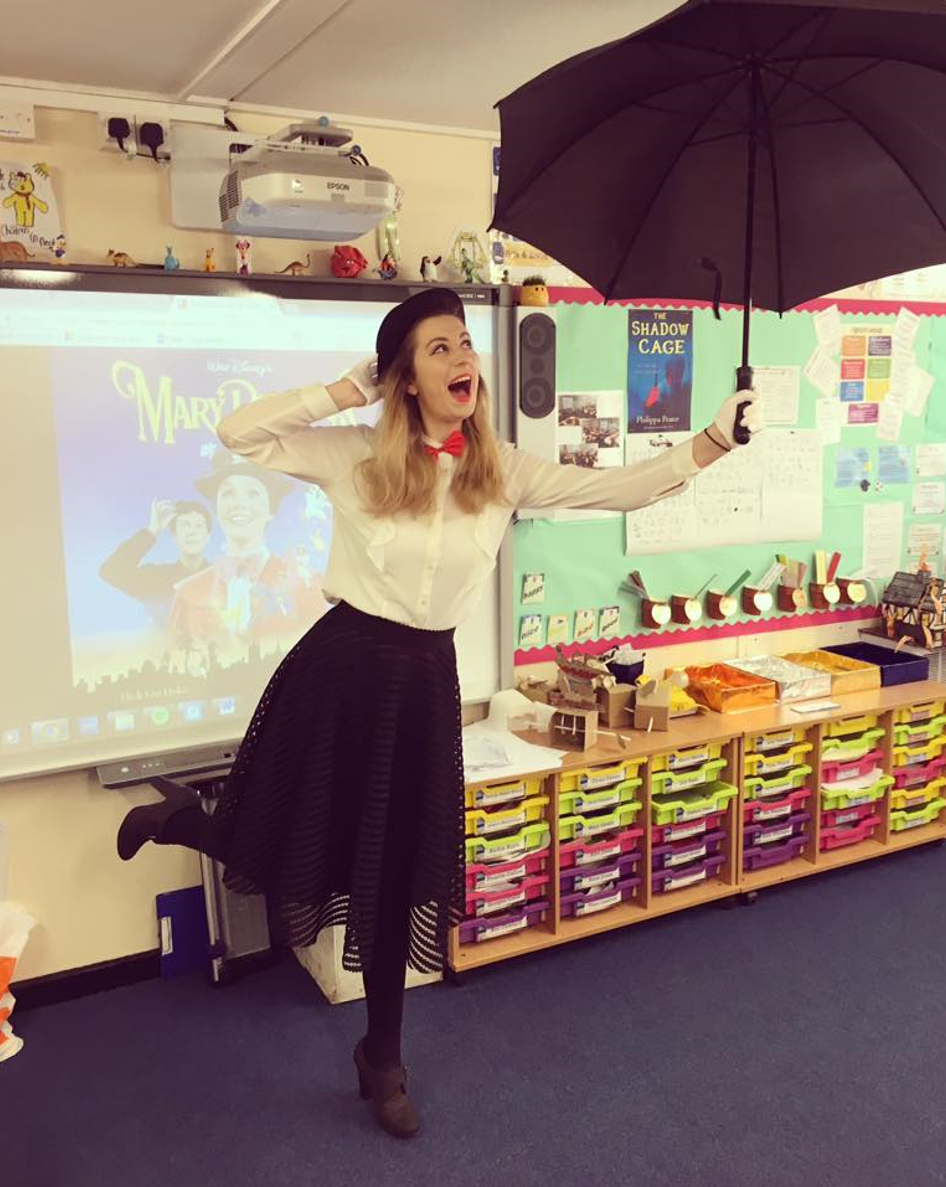
After nearly 20 years teaching in higher education, I'm walking away.

I have taken voluntary redundancy from my post as Associate Professor at Plymouth Institute of Education. Recently I was informed that the Computing and ICT specialism that I have helped to develop and deliver for the last 10 years has been cut from the B.Ed Primary teacher education programme (yeah - try explaining that).

I have mixed feelings about walking away. On the down side, I will miss teaching my undergraduate students, and the wonderful times we have enjoyed together exploring questions such as 'who should define the curriculum?' and 'what is the best way to integrate technology into the classroom?' Thanks guys - it's been great spending time with you, and watching you blossom into excellent educators. I will also miss working with my many splendid, caring, intelligent and incredibly entertaining colleagues at Plymouth, especially those with whom I have developed real friendships. I would like to thank all those in the institute who have supported me, even when some of my ideas might have looked a little crazy.

On the up side (and this is why I'm smiling) I certainly won't miss the petty bureaucracy that is on the increase at a university near you. Ask anyone who works there. They will tell you. There are now so many forms to fill in, regulations to abide by and rules to follow, it's a wonder there is any academic freedom left, or even any time to think. Nor will I miss the penny pinching austerity. Most higher education leaders are now ruled by their accountants and finance officers, who seem to think that the most important mission for universities is to make money. The balance sheet, it appears, carries more weight than quality pedagogy. I seems to me that the sole reason university heads emphasise 'student experience' is because they want to maintain a positive image from good feedback on the annual National Student Survey forms. Their key desire is to stay near the top of the league table. I won't miss the exam boards, budget cuts, tedious mark uploads and reports, the 'research excellence' framework, Ofsted inspections, the academic offence committees, mandatory compliance training days, the ethics boards and the *interminable* meetings that could easily have been conducted by e-mail.

All of this is now behind me, and I'll have plenty more time on my hands to pursue new directions. I haven't felt as relaxed as this in many years. I'm not retiring. I will still continue my personal research into technology integration, social media use in education and mobile learning - but without the pressure of having to publish in the 'right' journals. I will still blog and write as much as I wish, and I will continue to teach and speak, wherever I am invited around the globe. I'll continue to supervise my handful of PhD students and keep myself updated on the latest technology trends. And I have some personal projects planned, included writing (fiction) and playing my instruments (guitars, keyboards), and I've also been commissioned to present a new radio show, playing 70s and 80s vinyl (real fun). The show will be syndicated worldwide via the Web as well as being broadcast across the UK. Watch this space.

I'm very positive about my own future, but I'm fearful for the future of higher education - I'm not sure how it will survive if it continues to be dominated by profiteering accountants who cut and cut and cut again, and expect those that remain to continue to work just as well with dwindling resources. I worry about how universities will survive when they are frittering away their greatest asset - the intellectual capital of academics who really make university what it is. But I have a hope that among the remaining academics there are many who will maintain their integrity whatever is thrown at them, and who will continue to work tirelessly with what they have to give their students the best possible education.

My main website is here, if anyone wants to get in touch. I'm now available for weddings, Bar Mitzvahs and cocktail parties.

Photo by Stuart Heath on Flickr

Creative Commons License
Walking away by Steve Wheeler was written in Plymouth, England and is licensed under a Creative Commons Attribution-NonCommercial-ShareAlike 3.0 Unported License.


June 02, 2017

Fractal education

I love fractals. They are essentially art made from maths. The Mandelbrot set pictured here is one such fractal, and I sometimes use it in my talks to illustrate a key educational point.

Fractals are varied, but the self-similar examples such as the Mandelbrot Set replicate their patterns at every iteration, perfectly repeating themselves almost to infinity. Essentially fractals represent recursive mathematical equations, but don't ask me to explain exactly how they work - I'm not a mathematician. The important point here is that they continually repeat themselves, with no deviation from the original. And some education is similar in nature.

The teacher has learnt a body of knowledge around their specialism, and can teach this readily to the students. However, if that is all that occurs, and the students go away knowing exactly what the teacher knows, and nothing more, then I believe education has failed. If nothing new is ever learnt, humanity will be in crisis. And before you point out to me that university is where all the new learning and research is done, I would like to mention that schools are great places to do research. Some very important new things are continually learnt in compulsory education. But this only occurs when the teachers sees themselves as a co-learner alongside their students. One example of this is seen in the TED video featuring neuroscientist Beau Lotto and one of his research collaborators, Amy O'Toole - a student from Blackawton Primary School in Devon (below). Amy and her fellow primary school students became the youngest ever children to publish their research in a peer reviewed journal at just 10 years old. The study was on a science project researching into the vision of bees.


We need to move from fractal, recursive education to discursive learning and push the boundaries of our knowledge constantly. And this also applies to our school children. As Einstein once remarked, 'We cannot solve our problems with the same thinking we used to create them.'

Image from Wikimedia Commons

Creative Commons License
Fractal education by Steve Wheeler was written in Plymouth, England and is licensed under a Creative Commons Attribution-NonCommercial-ShareAlike 3.0 Unported License.br />


June 01, 2017

50 years ago today...

I never forget the first album I owned. I was a schoolboy at the time and living in The Netherlands. One evening my father brought home a cassette tape (anyone remember those?) and on it was the most bizarrely colourful photograph of people I had ever seen. I didn't know it at the time but what I held in my hand would completely change my view on music. It was transformational. I played the tape expecting to hear some sort of brass band music, or other seemingly boring stuff, as represented by the instruments the musicians were clasping on the album cover. But what I  heard transported me to another realm, where rocking horse people ate marshmallow pies. I was of course, listening to The Beatles masterpiece - Sgt Peppers Lonely Hearts Club Band.

The album was released 50 years ago today, on June 1st, 1967. The revolutionary cover design was by the famed artist Peter Blake, but the music, written mainly by Paul McCartney and John Lennon, was even more revolutionary. Its melodies and the images it painted in my mind have stayed with me all of my life. It is still, in my estimation, the greatest rock album ever made. But the design got me thinking about my other great love - learning.

Gazing now at the front cover of Sgt Peppers, I still see new things emerging, almost 50 years on. Most of the faces I can now name. They are reminiscent of the cast of hundreds that helped shape me, in my formative years, into who I have since become. There are respectful nods to many of those who influenced the Fab Four, including musicians such as the Rolling Stones and Bob Dylan

There are old, long lost friends, such as former bassist Stuart Sutcliffe, and comedy legends including comic actors Stan Laurel and W. C. Fields. Interestingly, there are also waxwork models of the four lads frozen in time from an earlier period of their lives. 

If we were each to create a collage of all those who have influenced us from our early years, who might we include? Better still, if your students created their own life-collages, would you appear in them as an important influence?

Photos by Steve Wheeler

Creative Commons License
50 years ago today by Steve Wheeler was written in Plymouth, England and is licensed under a Creative Commons Attribution-NonCommercial-ShareAlike 3.0 Unported License.


May 30, 2017

Categorisation cults

I have always been uncomfortable with the categorisation of students. Placing students into boxes because we think they are 'visual learners' or identify themselves as 'theorists' or 'activists' is not only ignorant, it's also doing a disservice to the learners we are labelling. All students should receive the best possible education with varied experiences regardless of what kind of 'learning style' we might assume describes them.

Learning styles theories are not the only myth some teachers are fooled into adopting. The Cult of Categorisation is very strong because it adopts ideas that are convenient. It extends to generational distinctions. There are many versions of this, depending on what kind of drugs people have been taking. Suggesting that people behave differently depending on when they were born is just as fallacious as pigeon holing students in learning styles, and invites mucho trouble.

Consider the notion of 'millennials' - who are categorized as having been born in the two decades before the turn of the last century.  Millennials apparently, are technologically savvy, civicly conscious, nomadic, impatient, multi-tasking and natural team workers. Oh yeah? Well so are many other people I have encountered who were not born between 1980 and 2000. Did the millennial fairy come along in her flying car and sprinkle these special people with some sort of magic dust to make them different? Clearly not, because there's no such thing as flying cars. We might as well return to the dark ages when people still believed there were dragons, unicorns and digital natives.

Anyway, here's the reason for this blog post: I was invited to record a short piece to camera about millennials (and digital natives) when I was in Barcelona last year. The result is below, watch out for the most excellent typo!


Photo from Pixabay

Creative Commons License
Categorisation cults by Steve Wheeler was written in Plymouth, England and is licensed under a Creative Commons Attribution-NonCommercial-ShareAlike 3.0 Unported License.


May 29, 2017

Desire lines

I'm a strong advocate of student centred learning. I can't see any other way education can be conceived. From my early years in education, studying Freedom to Learn by Carl Rogers and my initial forays into the classroom as a fledgling educator, I have strongly believed in the principles of keeping the student at the centre of the learning experience. As Stephen Downes once remarked, where else could the learner possibly be? Later in my career I did extensive work around the development of personalised learning environments, and was involved in research around personal web tool development. One of the things I discovered is that students create their own pathways - or desire lines - through their learning experiences. It is the role of educators to support these pathways.


While I was in Barcelona to speak at an education event I was invited to record a short video about these perspectives, and below is the result. I hope you find it helpful in outlining some of the principles of this particular philosophy on education - personalised learning.


Photo by Wil van der Aalst

Creative Commons License
Desire lines by Steve Wheeler was written in Plymouth, England and is licensed under a Creative Commons Attribution-NonCommercial-ShareAlike 3.0 Unported License.


May 27, 2017

A day in the life

We will celebrate the 50th anniversary of the Beatles album Sgt Peppers this week, and it seems very appropriate that my third year students should create a celebratory video with the same title as one of its tracks. My ICT and Computing specialists on the B.Ed Primary education programme will be leaving Plymouth University in the next few weeks to take up their first jobs in schools. To say goodbye, they invited my colleague James Bettany and I to take part in the recording of a spoof video, sending up just about everything we've ever done and experienced together over the last 3 years.

I hope you will agree it is a funny, witty and satirical look at higher education in general, and although you may not get some of the inside jokes, you will appreciate the slapstick at least! I'm going to miss teaching this bunch, and I wish them every success in the future in whatever they decide to do. So bon voyage to Charlotte, Hannah, Jess, Edward, Aaron, Tom, Jody, Georgia, Chloe, Claire, Lucy, Emily, Natasha and Frances - go and have great careers in teaching. Go out and make the difference!

Here's the video, which we all hope you will enjoy:


Photo from the video by Aaron Worth

Creative Commons License
A day in the life by Steve Wheeler was written in Liberec, Czech Republic and is licensed under a Creative Commons Attribution-NonCommercial-ShareAlike 3.0 Unported License.


May 17, 2017

Love what you do

Love what you do, and do what you love. For me, this is a great formula for a happy life, and also for a successful working life. I sometimes joke that I haven't done a day's work in 20 years. The fact is, I get paid to do what I love to do, which is teaching and research. When I was younger, my careers teacher asked me what I wanted to be when I left school. Without missing a beat I replied: 'I want to be an astronaut.' The teacher wasn't impressed.

I was persuaded that outer space probably wasn't where I was destined to be. I went off and did other things for a while which didn't really satisfy my curiosity. But deep down inside, my mind and my heart were committed to exploration, and I began to learn new skills. Looking back on my journey through various careers, and my current work as a lecturer in a university, I think that in a strange kind of way, I have become the explorer I always wanted to be. I try to find new ways to teach and learn using new and emerging technologies. I experiment with tools and technologies in different contexts. And I write and speak about what I have found. That is what I enjoy doing, and that is what I am committed to do until I get too tired or bored to do it any more.

So here I am, at the National University of Singapore, preparing to give the annual distinguished lecture for a group of research fellows. The title of my talk? My learning journey. I will trace my influences and inspirations and tell the story of how I got to be where I am now. It has been an interesting journey so far, with plenty of twists and turns, some failures and disappointments, and a few surprises. I wonder what questions I will get from my audience? Ultimately, as I continue to navigate my way through this thing called life, learning, occasionally failing, and learning again, I am loving what I am doing, and doing what I love.

Photo by Steve Wheeler

Creative Commons License
Love what you do by Steve Wheeler was written in Singapore and is licensed under a Creative Commons Attribution-NonCommercial-ShareAlike 3.0 Unported License.


May 13, 2017

The past and the future

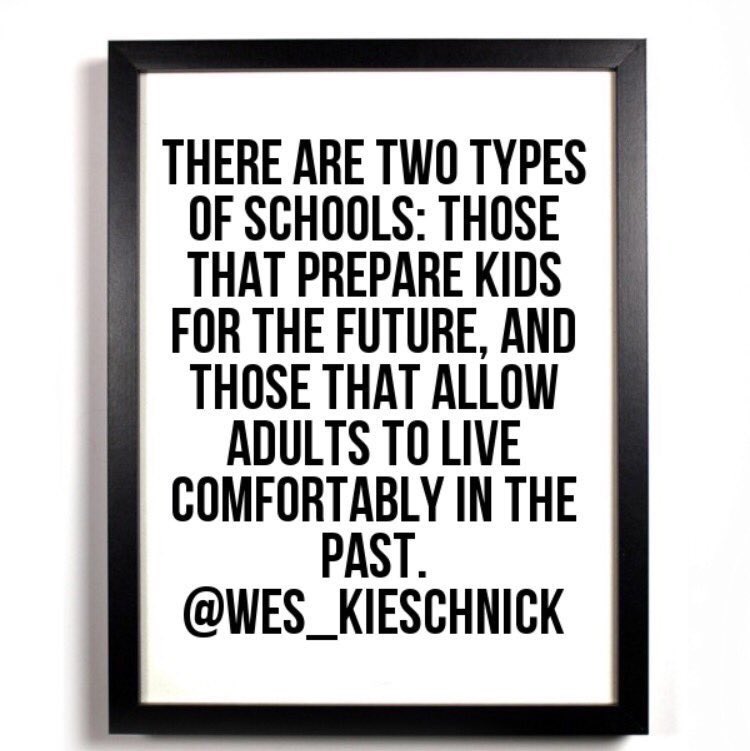
I saw this graphic on Twitter today (via Chris Cline) and it made me think. Are there really two types of schools, or is this really an oversimplification? I would argue from my own experiences of visiting hundreds of schools across the globe, that there is actually a spectrum. Clearly the binary is used as a rhetorical device, and in reality, each teacher is unique in the way they approach and practice their pedagogy. And yet there is a cogent argument in this statement.

I believe that what Wes Kieschnick is arguing here is that some schools develop a culture that militates against future oriented education. If schools ignore the need to prepare young people for a future that is uncertain and volatile, and instead fall back into the comfortable armchair of content delivery, then they fall into the latter category. If they focus on developing children's abilities to think critically, solve problems and express themselves creatively, they will be preparing them for a future that will probably demand such skills. If teachers encourage children to learn from their failures and challenge them to never give up, they will be developing grit and resilience. If, instead of focusing solely on facts and content, teachers also show children how to generate their own content and be wise to the provenance and veracity of the content they discover online, they will give them a fighting chance in a world riddled with fake news and post-truth.

This is not a debate about whether progressive or traditional teaching is uppermost. It's a discussion around far more important issues and rises above the petty and unproductive squabbling that currently rages on social media. The trads and progs can argue who's right and who's wrong, until they are blue in the face. While they are doing so, the problem is growing that children need learning that will be useful to them when they encounter problems we cannot currently anticipate. It is an important decision that every teacher, every senior management team and every funding body needs to consider: how do we future proof education?

Image by Wes Kieschnick

Creative Commons License
The past and the future by Steve Wheeler was written in Plymouth, England and is licensed under a Creative Commons Attribution-NonCommercial-ShareAlike 3.0 Unported License.


May 12, 2017

Passion for learning

One of the first things I ever learnt, right at the start of my teaching career, was that enthusiasm and passion often carry the day. Teachers who are passionate about their subject often infect their students with the same passion. Without some enthusiasm to study, the lesson is dull and dead. Teachers who are passionate usually go the extra mile to find that additional resource, or extra activity that enlivens learning, and enriches the student experience. My main subject is psychology. Although I don't often teach it directly, I find it infuses much of my teaching. This is because I love to learn about human behaviour and perception, and always crave more knowledge about what makes us who we are. I have a passion for psychology, and it somehow surfaces within just about everything I do as a teacher.

Teachers are professional learners. We get paid to be experts in our subject, as well as to help others to learn. The more we learn about our subject, the more we have to draw on when we are engaged in the act of teaching. If you are passionate about your subject, you will store up ideas, experiences and sources of inspiration throughout your career, and apply them where you think they are needed. Education is about passion, because it is the root to success, achievement, progress and motivation to continue learning for the rest of our lives.

'Develop a passion for learning. If you do you will never cease to grow.' - Anthony D'Angelo

Photo by Nick Youngson

Creative Commons License
Passion for learning by Steve Wheeler was written in Plymouth, England and is licensed under a Creative Commons Attribution-NonCommercial-ShareAlike 3.0 Unported License.


May 09, 2017

Testing times

We have known for a while that Sats - or statutory assessments - are there to provide the government with metrics about schools, and have very little to do with children's learning. We need to assess children's learning to ensure they are progressing. But there are several problems with Sats that constantly and regularly rear their ugly heads.

Firstly, there are many better ways to assess children's learning than testing. I wrote some time ago about some of the alternative ways we can track pupil progress without testing. There is also the argument that Sats are very superficial and tend only to test children's memory capacity, rather than what they have actually learned. Children don't learn any more, or any better through testing - they learn through good feedback and authentic experiences.

There is also evidence that children are being put under severe and unnecessary stress, and that many are physically sick before a test. This certainly isn't a helpful way to encourage children to pursue learning in the future. A bad experience in school at an early age can colour children's views on education for life. It doesn't look as though Sats will be going away soon though, because the government pays for state education, and the government therefore wants to track the success or failure of the schools it funds. There are several recent criticisms of the unfairness of Sats, including the Cambridge Primary Review Trust and the National Union of Teachers. Even the Independent weighs in, claiming that children in England must face more standardised testing than any other country on the planet. The UK government seems to be obsessed with testing and measuring everything.

Perhaps the most serious problem of Sats is that teachers (who know their own reputation is at stake) will tend to teach to the test, so that as many pupils as possible pass the examinations. This leads to superficial learning, a narrow interpretation of the curriculum, and ultimately, a poor learning experience. We need to support teaching, not distort it.

Photo by Wecometolearn on Flickr

Creative Commons License
Testing times by Steve Wheeler was written in Plymouth, England and is licensed under a Creative Commons Attribution-NonCommercial-ShareAlike 3.0 Unported License.


May 05, 2017

Who should define the curriculum? #EEES613

It's not an easy prospect to decide who should define the curriculum. Over 150 of my third year education students are grappling with this conundrum as I write. They have to write a 5000 word essay (their final one before they leave the university to take up their first jobs in primary teaching), and they have to try to come up with an answer. It's a tough assignment.

Clearly, there are numerous perspectives on this question. Firstly, my students will need to define what they mean by 'curriculum'. Is it the National Curriculum - the framework created by the policy units and government departments that outlines what should be taught in English primary schools? Or do they mean each individual school leadership's interpretation of that framework? Or do they mean something else? Ultimately, the question is not so much about the curriculum or who should define it. Instead, the assignment focuses on the visions and values of each student, and their future aspirations as educators.

They will need to offer their own individual perspectives, and give a critical and reflective account of how their own personal and professional identity has been shaped over the past three years. They will need to draw on their own experiences, both as teachers and as school students, alongside all they have learnt from theory and research, to answer this question. In essence, each student needs to engage with philosophy, politics, economics, sociology, psychology, ethics and global perspectives alongside their notions of pedagogy. They need to deliver a reasoned, critical and reflective response to the question.

It gets me wondering - how many qualified teachers could answer this question in such a manner? I think all of us would find it difficult to articulate our ideas, visions and values in 5000 words. Each of us would arrive at perspectives that were uniquely our own, formed and crystallised through years of practice at the 'chalk face', dealing with assessment, planning, behaviour management, school cultures, funding issues, workloads ... and constant fatigue.

But ultimately, any teacher who loves their job will tell you - it's the teacher in the classroom who ultimately decides what is being taught, and how it is taught. Regardless of the external pressures placed upon classroom teachers by governments, leadership teams and parents, good teachers know instinctively what to teach, and when and how to teach it. I am sure that as they leave the university in a few weeks, all of my students will look back on this final, tough, mind melting assignment, and realise that it is a chronicle of their journey so far - as they seek to become the teachers they really want to be.

You can follow (and contribute) the online discussion for this module on the Twitter hashtag #EEES613

Photo from Wikimedia Commons

Creative Commons License
Who should define the curriculum? #EEES613 by Steve Wheeler was written in Plymouth, England and is licensed under a Creative Commons Attribution-NonCommercial-ShareAlike 3.0 Unported License.


April 30, 2017

Learning in the real world

Reading through Keith Ansell's blog earlier this week took me a little by surprise. He had casually informed me that he had returned to blogging after a bit of a break, but I hadn't realised the extent to which he had 'returned'. He is prolific. He is also very insightful about what some might consider the more mundane aspects of teaching. Keith has commented on several recent lectures, school visits, and on numerous ideas and teaching experiences from his own work. It's a very reflective blog and is quite a treasure trove of content. It has all been generated in the last few weeks.

I particularly enjoyed reading his views on bland and joyless curricula, and how to create learning experiences that are the opposite. Too often teachers find themselves under the cosh when it comes to trying to create experiences that are creative and fulfilling. Some just teach to the test, because they are under such pressure to 'get children through' the content. All the innovative, engaging and exciting experiences go to the wall. Keith draws on his own experience as a former primary school teacher to explore the merits of outdoor education, bee keeping and canoeing.

Another of his recent posts tackles a similar theme. In Filling empty vessels Keith reflects on the work of Comenius and Freire and asks how we can move away from simply stuffing facts into children's heads, to a place where we open up their understanding to the world around them. Keith argues for authentic forms of learning throughout his blog. It's great stuff. Authentic pedagogy for real world learning is an important approach many teachers could adopt more often. I'm off now to blog some more, just to keep up with you Keith!

Photo by Steve Wheeler

Creative Commons License
Learning in the real world by Steve Wheeler was written in Plymouth, England and is licensed under a Creative Commons Attribution-NonCommercial-ShareAlike 3.0 Unported License.


April 25, 2017

Teacher Voices: Stewart Matthews

Here's another post in my continuing series on teacher voices. I'm interviewing some of my former students who have gone on to become teachers. In this post, we hear from Stew Matthews, who graduated from Plymouth University in 2010. He is now director of computing for the Park Federation where he is responsible for the technology provision of several schools near London. In his busy schedule he still manages to teach specialist sessions in computing. You can follow him on Twitter at @ExmouthBull.

1) What made you decide to become a teacher? What/who inspired you? What were your motivations? 
The decision to become a teacher was an easy one for me. During my childhood my parents separated and during this time I had several times where I arrived in school in tears. My teacher at the time spent lots of his time helping me settle during those tough mornings and helped me to continue learning even when I was distracted by the events at home. His care and support meant a lot to me, so when it came to thinking about beginning a career teaching was my obvious choice. I wanted to return the support I was given and hopefully, during my career, I would be able to offer the same support for the pupils I teach (should the need ever arise)

2) What is the best thing about being a teacher in a primary school? What gets you out of bed in the morning?
I love the challenge that being a primary teacher offers. My day can vary so much. I can be a sports coach during a PE lesson and an hour later I become a conductor of a class of 30 children playing musical instruments. I have never had two days the same, every day is unique and this keeps me on my toes. I also believe that primary teaching offers a unique option of playing a huge role in the lives of 30 children for a year (or more)

3) What does it take to become an excellent teacher? What characteristics do the best teachers have? 
I do not believe there is a magical formula for what could be an excellent teacher. Within my career I have been able to work with many excellent teachers. Some are extroverted, some introverted. Some had specialist subject knowledge, some had passions that went beyond the classroom (one teacher I worked with was interested in the emotional and mental welfare of pupils so introduced meditation and relaxation session with pupils). For me, in order to make an excellent teacher you need to remember what is most important: the pupils that are in your care. Above all else, the class (or classes) you have responsibility for should be the number 1 priority for every teacher. 

4) What do you consider your greatest achievement to date as an educator?
Being thanked by a parent for being their child’s teacher at the end of my NQT year. It had been a challenging year for me professionally (making the adjustment from trainee teacher to class teacher) but for a parent to thank me for a job well done made the whole year worthwhile. 

5) How can we improve education? If you were the Secretary for Education, what would be your first priorities? 
Priority 1) All people making decisions about education policy have to be from an education background. Many decisions seem to be made without a proper understanding of the impacts that will be felt within classrooms or by school staff. 

Priority 2) Focus less on test results and focus more on the overall wellbeing of a child. Save the in depth “technical” subject knowledge to be taught in Secondary schools and instead allow Primary schools to teach thinking skills, growth mindset and the skills to work as a team. All of this to be taught though child led subject engagement to keep children engaged in learning and to allow them to develop their own love of learning. 

6) What are the most innovative uses of technology in education (that you have done yourself, or have seen)?
The use of webcams to stream the hatching of eggs with reception children really allowed staff to break down the home/school divide and provided an opportunity for children to engage in their learning environment at home .

7) What is your favourite story or memory of teaching children you would like to share?
For me there is no single moment that stands out. My most enjoyable memories of teaching are those moments where you can see a child “get it.” They light up and suddenly are so much more passionate about a topic or subject. Seeing their enthusiasm explode and watch them begin to become more and more engrossed in their learning is just magical.

8) What advice would you give those who are just about to start out on the pathway to becoming a teacher?
Listen to advice. Experience is powerful in education. We all believe we are able to reinvent the wheel but at the end of the day 99.9% of our “new” ideas will have been trialled and tested by somebody. However, also be willing to take risks and challenge the ways things have been done. Improvements and changes can be made all around us. Never be happy with what has always been done. 

9) What will schools of the future look like? What would you like to see happening in the next 10 years?
I see schools working more towards the flexible learning model. Maybe not so much in Primary but most definitely in Secondary schools. Flexible learning from home, more focus on e-learning and modular curriculum units of work rather than a 2 year long course on a specific GCSE. 

Primary will still need the face-to-face interaction and nurture which we currently provide. I cannot imagine too much to change in Primary over this time. Most certainly not having teachers replaced by robots (something a child in one of my Year 5 classes suggested would be possible last term)

Overall the biggest change will be the focus on collaboration across vast distances. Tools such as Google for Education are already linking children across counties/countries and I see this being jumped onto even more by educators, allowing teachers to bring together children from across the globe to learn from each other.

10) What are the most significant challenges facing education right now?
Budget cuts and poor guidance seem to be crippling the education system. There seems to be lots of conflicting reports of how budgets are going to change and how many teachers/staff schools will have to lose in order to balance the books. Most politicians are well educated people, they need to remember who educated them and ensure the financial support is provided to keep the standard of teaching as high as possible.

Photo courtesy of Stewart Matthews

Creative Commons License
Teacher Voices: Stewart Matthews by Steve Wheeler was written in Plymouth, England and is licensed under a Creative Commons Attribution-NonCommercial-ShareAlike 3.0 Unported License.


April 24, 2017

Coach class

There's a wonderful scene in the 1981 movie Chariots of Fire. It's where English sprinter Harold Abrahams (who believed he was the best in the UK) has been unexpectedly and soundly defeated by former Scottish international rugby player Eric Liddell in the 400 m.

After the race, Abrahams is sat despondently in the deserted stands, holding his head in his hands. Suddenly, a voice from below interrupts his misery. Down on the track, gazing up at him is the famous athletics coach Sam Massabini. He says: 'Mr Abrahams, I know why you lost, and I can give you another 10 yards!' He goes on to explain to Abrahams that he lost the race because he was overstriding. It took an expert coach to observe this flaw in technique and point it out to the sprinter. Harold Abrahams improved his technique and went on to win gold in the 100 m at the Paris Olympic Games.

At the gym this morning I noticed several young people who have the potential to be great athletes - even world class - if they can get their techniques correct. They are at a very high level of fitness and stamina, but what are their throwing, running, jumping, or catching techniques like? One of the most important things that separates world class athletes from the rest is technique.

When I'm reading my students' work I often see technique errors. All of my undergraduates are there on their own merits. They have passed interviews and taken exams that indicate they have the potential to be great scholars. And yet quite a few fail to reach their potential as students of their subjects because they cannot apply their knowledge directly to the assessment. Some errors are trivial, such as spelling, punctuation and grammar mistakes. Others are more serious, such as not supporting statements, or making inaccurate claims. Other common errors are inconsistency, repetition, changing verb tenses, bad referencing, or simply failing to answer the question. Even exceeding the word count and running out of space can be addressed with some small lessons on how to reduce words whilst maintaining the meaning of a sentence.

All teachers have the potential to be great coaches. You need to know two things: Firstly, what does the assessment require? Secondly, what are the most effective ways to respond to the assessment task? My students often get hung up on the trivial aspects of their assignments, when in fact what they really need to do is convince their reader that they know what they are writing about and can articulate themselves confidently and critically. Sometimes all it takes is a little encouragement, of five minutes spent talking about how they can improve their techniques.

So, next time, when you see your students struggling with their grades, step in and show them how to gain that extra 10 yards!

Photo from Wikimedia Commons

Creative Commons License
Coach class by Steve Wheeler was written in Plymouth, England and is licensed under a Creative Commons Attribution-NonCommercial-ShareAlike 3.0 Unported License.


April 20, 2017

Teacher Voices: Kate Bartlett

This is a continuation of my series of interviews with former students who are now teachers. The interview on this page features Kate Bartlett, a teacher at a primary school in Cornwall. You can follow her on Twitter as MissBartlettNQT.

1) What made you decide to become a teacher? What/who inspired you? What were your motivations?
I’d worked so many jobs where I was constantly bored, uninspired and felt like I was just muddling through life. I never felt like I was truly giving my best or reaching my potential. 

I’d considered a teaching course straight after Sixth Form but decided against it at that time – I’m so glad I did as my time in the “real world” helped me better prepare for the realities of a hardworking job! 

I also LOVED primary school myself and funnily enough I am now teaching back in my old primary school, in my old classroom – I’ve come full circle!

2) What is the best thing about being a teacher in a primary school? What gets you out of bed in the morning?
My children are my motivation – there are days where I feel completely overwhelmed and unprepared, or days where my own personal demons affect me or cloud my head – the only thing that can shift that is being in front of them and teaching. You almost have to be OK when they’re there. They do make me happy! I also love the feeling that I am “making a difference” – I’m aware that is a term which is passed around a lot but it is true. Feeling like I am not only helping them learn new things but also that I am teaching them to be good people. With regard to the primary aspect, I also love being able to teach all different things – I’ve learned a lot myself!

3) What does it take to become an excellent teacher? What characteristics do the best teachers have?
I don’t think the best teachers are the ones who stay the latest or get in the earliest (although I am a slave to this), nor is it those who are most proficient at “paper pushing”. I know teachers who admit themselves that they find being hyper-organised difficult, and yet they are some of the most caring and incredible teachers I’ve known. It’s about having the commitment, the passion, the drive and the will to do the best for your children, even when you are feeling at your worst. It’s about being able to have a laugh (at yourself, often) and laugh things off when they don’t go exactly to plan. Being able to veer off the plan and have the confidence to take risks. You have to be flexible and be able to think on your feet. You have to be open to and willing to help – a team player. I don’t think the best teachers are necessarily the most knowledgeable or smartest – the passion and love for the job is at the top of my list.

4) What do you consider your greatest achievement to date as an educator?
I’m still in my NQT (Newly Qualified teacher) year so, to be honest, I see making it to every half term holiday an achievement! I think just looking back on the small things I’ve achieved and seeing the progress my children have made since September. I often put myself down and think they haven’t made any, but when I stop and look at their work I realise I have actually taught them something!

5) How can we improve education? If you were the Secretary for Education, what would be your first priorities?
Stop changing things – let things settle before introducing new things which throw everything out of balance. Stop expecting so much from children – the things we are requiring them to learn now are ridiculous. Knowing a subordinating conjunction from a co-ordinating conjunction is no better, nor a replacement, for creativity. Stop expecting so much from educators – we are human beings. Put more trust into teachers, as they have trained for significant amounts of time and are skilled and have expertise. And finally, understand that teachers just want the best for children. We really do.

6) What are the most innovative uses of technology in education (that you have done yourself, or have seen)?
It’s nothing huge but I remember seeing an app which brought children’s drawings to life on the screen– it was amazing! It inspired creative writing and really engaged them. I like using technology in a cross-curricular way – I think it is most effective like this.

7) What is your favourite story or memory of teaching children you would like to share?
There are several moments which have stuck with me, albeit small ones. I particularly remember a parent getting emotional and thanking me for everything I have done for their child. That was quite a moment. And just the silly things they say sometimes. I do like to be silly and have a laugh with my class and I remember a girl saying “Miss Bartlett, we think you’re hysterical!”. That made me chuckle.

8) What advice would you give those who are just about to start out on the pathway to becoming a teacher?
Be 100% sure it is something you want to do at that time. Prepare yourself for hard work but look forward to lots of fun, too. Don’t bother reading loads of books about teaching – it’s all different when you actually get in the classroom. Oh, and don’t ever write a to-do list expecting to complete it. You won’t. Ever.

9) What will schools of the future look like? What would you like to see happening in the next 10 years?
I would like to see an education system which isn’t so reliant on “data”. One which trusts educators to facilitate and in turn allows children to take a more active role in their learning.

10) What are the most significant challenges facing education right now?
The Government. Funding. Constant reliance on data. I graduated from Plymouth University in 2016 with a First Class Honours degree and a specialism in Computing and ICT. I work at a large junior school in Cornwall and am currently shadow Computing lead, taking over fully in September. I’m currently surviving my way through my NQT year but I have big plans for the coming years regarding blogging and technology so watch this space!

Photo courtesy of Kate Bartlett

Creative Commons License
Teacher Voices: Kate Bartlett by Steve Wheeler was written in Plymouth, England and is licensed under a Creative Commons Attribution-NonCommercial-ShareAlike 3.0 Unported License.


April 10, 2017

Thinking spaces

Do you need thinking space? What kind of space best encourages you to think creatively?

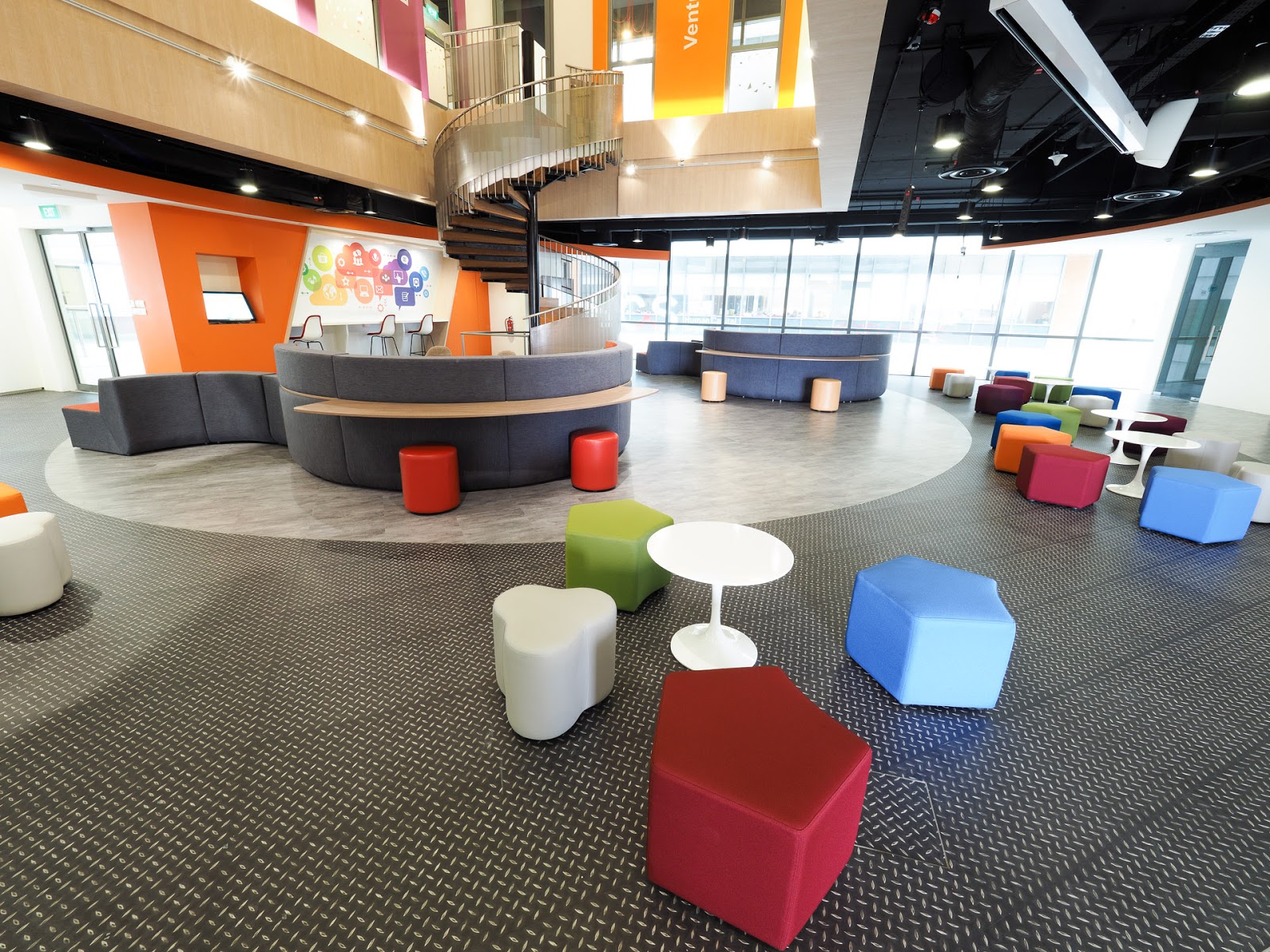
Recently I spent a week working in Singapore with the Lifelong Learning Institute. My base was iNLAB - a purpose built unit designed specifically to promote ideation - creative thinking and innovation. The image on this page is the communal area where students and staff can take breaks.

The LLI team members were writing some new research proposals and were allocated a room with large dry-wipe white boards on three walls. As I was working in this space with 5 other members of the team, I realised how useful it was to have these writing spaces to map out our ideas and plans.

Using the whiteboard surfaces for free thinking such as sketching out ideas energised the whole team. We could discuss, modify, edit and erase quickly and spread our ideas around the room.  Whiteboard rooms are a simple yet surprisingly effective method to encourage and support creativity, agile thinking and collaborative working. I have seen similar spaces in the UK and Australia, and I'm sure other organisations do it too.

This leads to several questions: How important is the design and resourcing of spaces? What spaces do you find the most conducive for thinking? What about creative thinking spaces? What about spaces for problem solving? In the digital realm, how effective are shared spaces such as wikis and forums for promoting creative thinking? How could they be designed better? How can blogs be used to encourage create thinking in education? As ever, your comments and advice are very welcome.

Photo courtesy of LLI Singapore

Creative Commons License
Thinking space by Steve Wheeler was written in Plymouth, England and is licensed under a Creative Commons Attribution-NonCommercial-ShareAlike 3.0 Unported License.


April 07, 2017

Danger in transition

Every time we change something we take a risk. When it comes to changes at a societal level, the risk intensifies, because it potentially affects many more people. 3 September 1967 was the day Sweden changed from driving on the left side of the road to the right side. It was known as Dagen H and brought Sweden into alignment with its Nordic neighbours.

Interestingly, a referendum held in Sweden in 1955 showed that 83% of voters were against the change. Imagine what would have happened if this percentage continued to drive on the left side out of protest? There would have been carnage.

The changes brought by Dagen H caused a lot of chaos and great expense as doors on buses had to be changed, new public vehicles were purchased, road signs were adjusted and most importantly - the populace was re-educated into the new way of doing things. When radical change comes, chaos and tensions can arise as people adjust and relearn.

I had an interesting conversation with my 86 year-old mother about autonomous vehicles yesterday. I was telling her about how the new robot controlled cars would be more reliable and safer. First she didn't believe they actually existed. Then she was quite sceptical about them, believing that robot driven cars would cause more accidents on the road. I argued that it was the reverse - that once every car on the road was autonomous, accidents would be radically reduced, because computers tend to follow instructions without question, whilst humans are always prone to error, lapses in concentration and other deviant behaviour. The most dangerous time, I said, would be the transition period, when autonomous and human driven vehicles were on the road together.

These are metaphors for change in education. While we are going through transitions in pedagogical practices, or technology driven innovation, there will always be casualties. Many teachers welcome change, but don't want to change themselves. Some resist new ideas when they are imposed from above, because they have no ownership, or they have no time to learn how to use them effectively. Or, in most cases, teachers adopt the new ideas, but not wholeheartedly, and only casually apply them. Those who lead the charge for change are often viewed with suspicion, especially by their colleagues, and sometimes are vilified and even victimised for their stance. We witness this happening on social media right now, where a turf war is being played out between those who wish to preserve traditional values in education, and those who wish to forge onwards with new ideas and innovation. This is certainly a time of great transition, and there is danger in transition. We need to look after each other.

Image from Wikimedia Commons

Creative Commons License
Danger in transition by Steve Wheeler was written in Plymouth, England and is licensed under a Creative Commons Attribution-NonCommercial-ShareAlike 3.0 Unported License.


April 06, 2017

No white space!

This image I saw on social media today got me thinking about creativity. In fact, it made me a little angry, just as it did Amy Burvall, who posted a commentary. You can see what is happening. This teacher is insisting on the 'proper' way to do something. In this case, it's drawing, or colouring - and it's clear to see that s/he is trying to scaffold children into a 'correct way' to do it. But what if there are many ways to do it, and in their own way, all of them are correct?

Creativity isn't something you can keep inside a box. Expression of ideas cannot be contained with rules. Colouring outside the lines should be allowed. Some of the best inventions of the last century were made by breaking or bending the rules. We need to realise that the most agile workers in the 21st Century are those who are creative in their approach. How can we nurture our future generation of citizens if their creativity is stifled?

Yes colours make sense, but they make different sense to different people. Travelling on a train a few years ago, I was listening to a mother coaching her daughter to write our a Father's Day card. The little girl started to colour a heart in, and used a blue crayon. The mother told her that hearts should be coloured in red. 'But this is my heart', insisted the little girl, 'and it's blue'.

If educators always insist on 'one answer', or the 'correct way' to do something, do we not constrain the creative instincts of our students? Why shouldn't there be some white space occasionally? If there is always something we don't know, and always a mystery about what we are learning, curiosity will continue to drive us forward. As educators it is our responsibility to encourage students to learn in any way possible. One of the best ways to stop this from happening is to impose rules that oppose creativity.

Let the children play!

Image source: Amy Burvall on Twitter

Creative Commons License
No white space! by Steve Wheeler was written in Plymouth, England and is licensed under a Creative Commons Attribution-NonCommercial-ShareAlike 3.0 Unported License.


April 03, 2017

Making it personal

For too long education systems have been standardising content, assessment and the learning experience. Clearly, one size does not fit all, and we need personalised learning experiences for our students if we are to prepare them for an ever changing, volatile world. Here's a short video on personalised learning I made for the D-Transform project last year in Barcelona. It will be used in a forthcoming MOOC on the subject of digital learning environments.


Creative Commons License
Making it personal by Steve Wheeler was written in Plymouth, England and is licensed under a Creative Commons Attribution-NonCommercial-ShareAlike 3.0 Unported License.


March 27, 2017

Explore, discover, learn

Aldrin on the moon - July 1969
Many of my greatest childhood heroes were explorers. From the era of the African continent explorers such as David Livingstone and Mungo_Park, the tragic heroism of Robert Falcon Scott and his men, to the stunningly intrepid off-world exploits of Apollo 11 astronauts Neil Armstrong and Edwin Aldrin, I found myself transfixed by the intrigue and drama of exploring the unknown, and immeasurably impressed by the courage of all those involved.

Our everyday experience of learning features discovery of a similar kind. What we learn may not be new to others but to those of us who discover for ourselves, it is very new and exciting, and what we have learnt stays with us for a lifetime. When children experiment, and ask the 'what if?' questions, they create their own meaning and construct their own understanding beyond anything a teacher can provide them. The Swiss child development expert Jean Piaget once said 'when you teach a child something, you take away forever his opportunity to discover it for himself.'

For me, one of the most difficult lessons to learn as a new teacher was to know when to stand back and let students struggle, discover for themselves and learn independently - and when to intervene. It is a fine balance. My instinct (some of which came from my formal teacher training) was to 'stand and deliver', when often I did better for my students by letting them learn for themselves. Children love to experiment. They are always asking the 'what if' questions, and this kind of speculation about the world leads to curiosity, and ultimately discovery. Teaching is not only telling and showing, but allowing space for creativity, discovery and experimentation. Let's hope we all continue to practice the correct balance for our learners.

Photo by Neil Armstrong on Wikimedia Commons

Creative Commons License
Explore, discover, learn by Steve Wheeler was written in Plymouth, England and is licensed under a Creative Commons Attribution-NonCommercial-ShareAlike 3.0 Unported License.


March 20, 2017

Teacher Voices: Lloyd Chilcott

Finding out what former students are doing now they are qualified, is one of the joys of teaching. In this series I am featuring interviews with those who have gone on to become qualified teacher. This is number seven in the ongoing series.

Lloyd Chilcott studied a BEd degree (specialising in ICT) at Plymouth between 2011 and 2015, achieving first degree honours and a dissertation award. He completed his NQT year last year at an inner city school in Plymouth. Since then he has been backpacking through North America, Australasia, and now Asia.

1) What made you decide to become a teacher? What/who inspired you? What were your motivations?
I’d like to say I wanted to become a teacher because of an inspiring professional who provided me with a love for learning, or for the joy of the lightbulb moment witnessed in the eyes of an enthralled student. But alas, I wanted to become a teacher because I looked at the adult at the front of the room and thought, that looks fun! Whilst unfortunately true, this origin story does do a disservice to the many fantastic teachers that did guide me through my primary years. Such an incredible individual was Mr Yeomans, a funny, caring, confident man who filled me with self-belief and a surprisingly good ability at tag-rugby. I left primary school thinking that he, like many others, was part of my education history, however 10 years later when I joined Plymouth University, who should be leading my specialism but Mr Yeomans! And once again he was there to give me the confidence to achieve the best I could. Mr Yeomans unfortunately left the University during my degree, leaving Steve Wheeler to run the show, but I am still extremely appreciative for his role in my life and the good that he did.

2) What is the best thing about being a teacher in a primary school? What gets you out of bed in the morning?
Working with children. Children are the most enjoyable, awe-inspiring constant I’ve known. Sure, some kids can be tricky, and you may have to remind yourself that there are more good times than bad, but sharing a genuine moment with a child can fill you up with unprecedented happiness.

3) What does it take to become an excellent teacher? What characteristics do the best teachers have?
An excellent teacher must remember that a child is a person. A tiny person with smaller person shoe sizes, but most certainly a person. This may seem trivial and obvious but I've witnessed an uneasy amount of professionals belittle, embarrass and shout at children. We wouldn't dare do this to a friend or co-worker. Children are people and they are as emotional beings as you or I.

4) What do you consider your greatest achievement to date as an educator?
My first class was the 'oh, you have that class?! Well It was nice knowing you’ class. On top of that the school was in a very tricky area and I was still an NQT. As one parent put it, “I had been thrown in the deep end of the baptism of fire”. But I managed to not only survive the year, but feel that I made a real difference to many of those kids.

5) How can we improve education? If you were the Secretary for Education, what would be your first priorities?
We must try to engage parents more and make more opportunities for them to develop skills to support their child's education and personal development. How we do this, I don't know, but it must transcend giving homework and having two parents evenings a year. Parents are the biggest influence in a child's life and we could support children far more if we provide far more support to parents.

6) What are the most innovative uses of technology in education (that you have done yourself, or have seen)?
Using VR (Virtual Reality), or augmented reality, seems to have boundless potential for education. Whilst I've unfortunately not seen this in person, I'll be the first to give it go! Just look, who wouldn't want to learn like this.

7) What is your favourite story or memory of teaching children you would like to share?

When reaching for the door, a child in my class jumped in front of me and opened it. As I went to say thank you, he said excitedly (whilst vigorously wiggling his eyebrows), “I’m sorry Mr Chilcott but I didn't think you could HANDLE opening the door”. We shared a love for terrible puns. This was a particularly terrible pun and it was perfect. My day was littered with silly little moments like that and it was absolutely my favourite thing.

8) What advice would you give those who are just about to start out on the pathway to becoming a teacher?
Teachers want to help - it's what they do. So get in touch with as many teachers as you can and start talking. They will give you practical advice, realistic expectations and great resources. And once you start teaching, you can even share your war stories with them.

9) What will schools of the future look like? What would you like to see happening in the next 10 years?
Unfortunately I think schools of the future will look much like the schools of today, which look much like the schools of the past. However I would like to see a paradigm shift in how schools look with flexible, highly accessible, collaborative learning spaces that integrate different technologies to provide an education that is based on skills, not general knowledge.

10) What are the most significant challenges facing education right now?
Excessive work hours, a significant lack of resources, a government driven by Victorian values, the negative image of teachers perpetuated by much of the media, and the test-driven culture that has greatly hampered teacher creativity and enjoyment. But hey, at least the holidays are good! ...Right?

Photo courtesy of Lloyd Chilcott

Creative Commons License
Teacher Voices: Lloyd Chilcott by Steve Wheeler was written in Singapore and is licensed under a Creative Commons Attribution-NonCommercial-ShareAlike 3.0 Unported License.


March 17, 2017

Use your learning powers

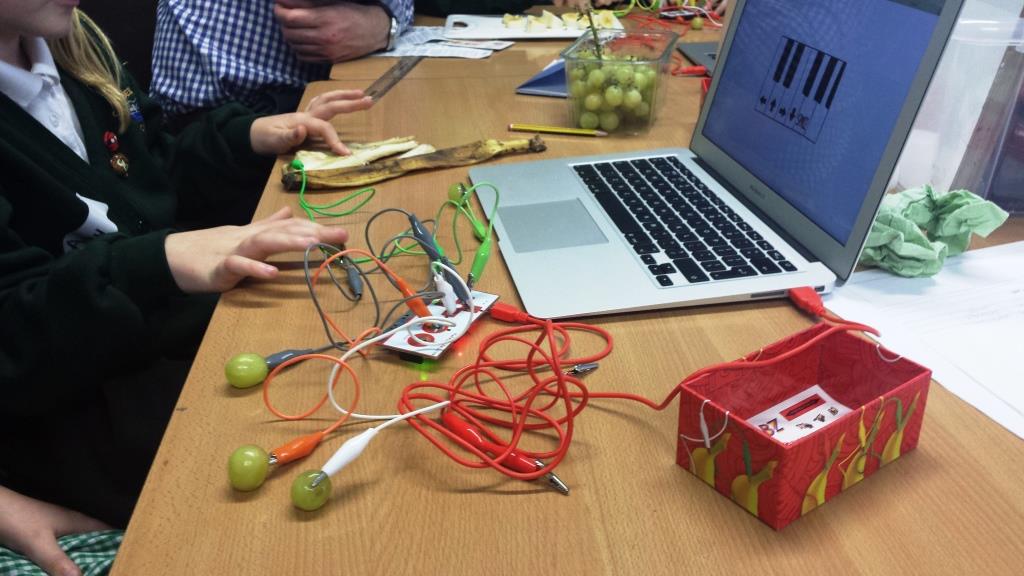
Makey Makey in action
Some time ago I wrote a blog post on innovative teaching - where teachers take risks, stand back to let students learn for themselves, and provide challenging and engaging experiences. Well, that is exactly what some of my student teachers practised this week when we crossed over the river to spend the day in one of our local primary schools.

After taking a whole school assembly on 'staying safe online' in front of 400 children at Carbeile Junior School in Torpoint, they set about engaging the children with a range of technologies.

Bluebots and numbers
The children quickly and enthusiastically got to grips with Makey Makey (where they made a piano keyboard out of grapes, and eventually musical instruments out of each other!), Lego We Do robots controlled by Scratch (where they learnt the physics of how to make the robots take penalty kicks and to save the penalties too), as well as exploring numbers and algorithmic thinking with iPad controlled Bluebot floor robots. Oh, and our vintage Bigtrak roamers also made an appearance out on a race track in the playground.

The challenge for the children was to discover for themselves how to make these technologies work and to learn from their use. It goes without saying that they energetically went about exploring these tools for themselves and they very quickly discovered new and exciting ways to apply them. My students had very little to do but scaffold the learning, and occasionally give some specific advice and explanations when one or two children came up against a problem they couldn't solve on their own.

Scratch controlled Lego footballers
The key ethos of Carbeile is that children use their 'Learning Powers' to Learn, Grow and Achieve, and this they did with enthusiasm. In fact they surprised us with the creative ways they found out for themselves, and made the technology do things we hadn't planned or considered.

It was a joy to work alongside such confident, polite and engaged children, and, as I am sure my student teachers will agree, it was a trip well worth making, just to see these children use their learning powers.

Photos by Steve Wheeler

Creative Commons License
Use your learning powers by Steve Wheeler was written in Plymouth, England and is licensed under a Creative Commons Attribution-NonCommercial-ShareAlike 3.0 Unported License.


March 16, 2017

Teacher Voices: Naomi Hancock

It's great to catch up with former students and discover what they are doing. That is exactly the purpose of this series of blog posts. This is number six in my series, asking former students on the B.Ed primary education degree programme what they are doing now. It's also a chance for them to voice their hopes and fears about teaching, now they are actually in the thick of it.

Here's an interview with Naomi Hancock (@Hancock_Naomi on Twitter), who graduated from Plymouth University in 2014.

1) What made you decide to become a teacher? What/who inspired you? What were your motivations?
I had no idea what I wanted to do for a living until my mid twenties. I got into teaching because I wanted to continue my backpacking lifestyle in Thailand but needed some funds so teaching TEFL English was my ticket. I did a four week TEFL course in Chiang Mai and landed the most wonderful job in a Thai government school on a mini English program. I fell in love with my class of 7 year old Thai children and the buzz of seeing them progress and develop as the year went on. I continued like this for a couple of years and then made the decision to come home to get my teaching qualification and pursue the first career I felt truly passionate about.

2) What is the best thing about being a teacher in a primary school? What gets you out of bed in the morning?
I love interacting with the children and showing them new tools, tricks and toys. I am currently a primary computing specialist and I love having the freedom to let children tinker, explore and learn things for themselves. I am learning everyday and thriving from the engagement of the children.

3) What does it take to become an excellent teacher? What characteristics do the best teachers have?
Patience, multitasking skills, the ability to prioritise, a quirky character. Being brave enough to have a go and to lead by example (we are all learners).

4) What do you consider your greatest achievement to date as an educator?
Getting through my NQT (Newly Qualified Teacher) year with so many challenges. I was asked to step down and told I was not strong enough to pass the final term but I made the decision to prove to myself that I was not only strong enough but also a great teacher. I had to drop the heavy burden of self doubt and continue as the classroom teacher and pass my final term as an NQT. It had been a massively challenging year juggling two young children and working in a school that is like no other trying to gear my year two class up for their SATs. I was teaching my own 6 year old daughter and my friends’ children. Always trying my best to please everyone while in reality I was not managing to please anyone. I knew I was a good teacher but I would buckle under observations. I had been judged as not meeting the teaching standards in the first two terms and a representative from the local authority came to observe me alongside the headteacher and with a little help with my planning and emotional support from my team and family I pulled off a great lesson and got enough encouragement to turn things around for the last few months. The pressure of being told you are not strong enough for the kids was crippling. My own daughter and her friends were in that class and of course you just want to give them the best. 

5) How can we improve education? If you were the Secretary for Education, what would be your first priorities?
Put less pressure on testing and assessment, more trust in teacher to instil a love of learning and supporting the children’s needs and interests. The curriculum is so packed full that there is limited room to really go into depth on topics that might really ignite some interest and passion. For me it was always a battle to ensure deep learning while also covering all the content. There was always a need to push onto the next topic to make sure the children were best prepared for their SATs.

6) What are the most innovative uses of technology in education (that you have done yourself, or have seen)?
Twitter has provided real time Q and A sessions with experts on a subject. That has engaged children and made them really carefully consider their questioning skills. Live Skypes also have had the same effect giving the children a window of opportunity to immerse themselves in the topic and conversation. Google Suite is great for collaborating and producing digital portfolios. I have just been on a CPD ran by AppsEvent in Singapore and had a taster of the opportunities for Virtual Reality in education. I’m very excited to see where VR will take us and what experiences it will allow the children.

7) What is your favourite story or memory of teaching children you would like to share?
We had been looking at the topic of Journeys for a while and this particular week’s the focus was on China. I had the low ability English group and they were still near the end of year 2 struggling with their phonics and general engagement in writing. I decided they should plan and organise a Chinese tea party and they had to write invites, recipes and shopping lists throughout the week then on the Friday we joined together with the pre-school to have a party. The children had so much pride in their work and were super excited to show off their achievements with their younger siblings and friends.

8) What advice would you give those who are just about to start out on the pathway to becoming a teacher?
Leave your self doubt at the door, work hard try your best and be proud of yourself for doing that. There is always more that could be done but you need a little self care to make sure you are strong enough to support others. Don’t be afraid to try new techniques and styles but also don’t be scared to keep it simple. Sometimes simple is best!

9) What will schools of the future look like? What would you like to see happening in the next 10 years?
I would like them to have more open and collaborative work spaces, opportunities for children to grab hold of an interest and run with it. Less teacher talking at the front of the class and more setting up opportunities for children to take charge of their own learning. What it will look like is a worry. I worry that education will become more and more privatised, with more teachers becoming stressed and leaving the profession, leaving new NQTs to keep trying to reinvent the wheel till they burn out too.

10) What are the most significant challenges facing education right now?
The pressure for teachers to enable their children to perform for tests and assessments resulting in the children being spoon fed facts rather than exploring, problem solving, collaborating and working out the answers for their own questions. All of these  are skills that they will need for the future. Teachers are under too much pressure and are leaving the profession (or at least leaving the country).
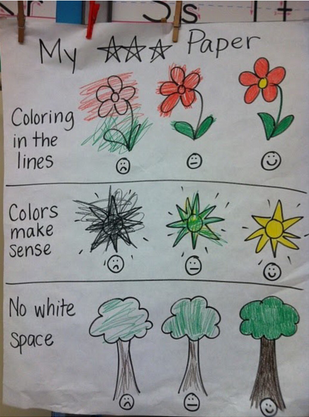
Photo courtesy of Naomi Hancock

Creative Commons License
Teacher Voices: Naomi Hancock by Steve Wheeler was written in Plymouth, England and is licensed under a Creative Commons Attribution-NonCommercial-ShareAlike 3.0 Unported License.


March 14, 2017

Teacher Voices: Chris Nesbitt

This is number five in my ongoing blog series about the lives of former students who have gone on to become successful educators. This post features Chris Nesbitt (@cnesbitt1811 on Twitter), who graduated from Plymouth University in 2015 with a first class B.Ed degree in primary education in the same group as Hannah Shelton and Megan Douglas. Chris is now leading computing and teaching Year 5 at a primary school in Bristol. Here is his interview:

1) What made you decide to become a teacher? What/who inspired you? What were your motivations?
To be quite honest when I was younger being a teacher never crossed my mind. I was motivated by money and always aimed to be a barrister. However, after my mum bought me a GCSE law book to look at I suddenly realised that the office life wasn’t for me. It wasn’t until I spent a sometime coaching football and other sports that I realised I wanted to work with children. I spent some time in local primary schools and when I saw the impact I could have just as a teenager on work experience I knew teaching would be right for me.

2) What is the best thing about being a teacher in a primary school? What gets you out of bed in the morning?
I have been lucky enough to work in Key Stage 1 and Key Stage 2, both of which have provided so many opportunities for smiles. There is nothing more satisfying than when a child that would find a piece of work difficult 'gets it', or when you can put a smile on someone’s face when they have been having a difficult time.

3) What does it take to become an excellent teacher? What characteristics do the best teachers have?
We could go down the route of the classic interview answer and say you need to be hardworking, dedicated and willing to do what required to be the best you can be. However, for me those things come with most teachers. In my eyes an excellent teacher is the person that can inspire. The person who can take the day dreamer, the class clown, the shy child, the child with a difficult home life and all others - and for one moment, engross them in their learning. Have every brain buzzing, engaged in what they are doing and every child feeling they are there for a purpose.

4) What do you consider your greatest achievement to date as an educator?
I think as a person I have grown. I was motivated during initial teacher training by the ‘outstanding’ grades but in actual fact that did nothing but boost my ego. Taking a step back and thinking about my learning, experiences and understanding of how children learn has allowed me to create better learning opportunities for my children. From this, I have seen children develop a deeper understanding but more importantly understand the 'how' and 'why' behind what they are doing.

5) How can we improve education? If you were the Secretary for Education, what would be your first priorities?
Firstly, teacher well-being. Through social media such as Twitter, I have seen several inspiring accounts that share great examples of how their schools try to make teachers' lives easier. It could be taking some time out of class, head teachers taking assemblies to allow for marking/same day intervention or providing moments to just switch off. Although the problem is this all comes from within individual schools. Where is the government support for teachers? Providing helpful tips to decrease workload or marking doesn’t help when we are held accountable for delivering ridiculous expectations. Secondly, funding is an issue. Every school across the country will say the same thing. Budget cuts do nothing but make our job harder and reduce the opportunities/support that we can provide for the children. There is more to education that tests and data. In fact there is more to life.

6) What are the most innovative uses of technology in education (that you have done yourself, or have seen)?
I have been fortunate enough to have been given the time to visit others school and watch some inspirational teachers. During this time I have been able to magpie ideas and merge them alongside my own to improve the use of technology in my school. Every teacher in our school now has an iPad which we know can be used in a variety of ways. One simple piece of software I would love to share is Air Server. It allows you to mirror you iPad display onto your SMART Board (without an expensive Apple TV in every room). I have used it to share work, model editing and inspire others using their peer’s ideas.

7) What is your favourite story or memory of teaching children you would like to share?
I think all teachers love the lightbulb moments, but for me it was when I saw one boy with many struggles both academically and at home succeed. For some his achievement many have been small but for that little boy it was the greatest thing in the world.

8) What advice would you give those who are just about to start out on the pathway to becoming a teacher?
It will be difficult. You will have moments where you think’ is it all worth it?’ But I can promise you once you get your very own class and you’re stood in front of them you’ll realise it was worth it. Most importantly, surround yourself with a great group of friends. Make it your priority when you get to University. I was lucky enough to have a great group that supported me and where always there to keep me laughing.

9) What are the most significant challenges facing education right now?
For me on top of our funding crisis it has to be our test culture. It serves no purpose except to provide data for the government ranking tables. Does it benefit the children? No! Then is it meaningful? No! We teach for the children, not for anyone else. The test culture only compels some teachers to teach to the test, making learning boring and creating unnecessary stress for everyone.

10) What will schools of the future look like? What would you like to see happening in the next 10 years?
I have experienced schools where they are completely child led. They are structured around the children and teachers are motivated by their thoughts and opinions. I loved being referred to by first name. Why should you address me as sir? I am no more important that the child in front of me. Some argue that it's respectful, but for me respect is earned it doesn’t come from a title. I would like to see more schools give up the regimented environment of ‘you must do this because this is how I like it.’ I want schools to have access to all the resources they need and for children to be given the choice of when to access them. I have seen first-hand that once the gimmick of something new disappears children make meaningful choices that support their learning. But they need the tools to make those choices.

Photo courtesy of Chris Nesbitt

Creative Commons License
Teacher Voices: Chris Nesbitt by Steve Wheeler was written in Plymouth, England and is licensed under a Creative Commons Attribution-NonCommercial-ShareAlike 3.0 Unported License.


March 13, 2017

Exploring eXSpace

In this follow-on from one of my previous posts entitled Going to the wall, I'm going to highlight some of the features we plan to incorporate into our new experimental learning space (eXSpace) at Plymouth Institute of Education. I mentioned that among the many 'sand box' tools and technologies in the space will be a number of touch surfaces. We hope for example, to purchase several units of the new SMARTboard 6000 and 7000 series interactive whiteboards for institute wide use. One of those units will be located within the eXSpace.

I saw the latest SMART interactive whiteboards on display at the BETT Show in London in January and I was particularly enamoured by two key advances in their design. The first was the context aware system built into both the 6000 and 7000 series devices. The boards can identify what colour pen the teacher is holding, and can also sense for example, when someone has walked into the room (whereupon it automatically readies itself for use). This might be seen as a gimmick by some, and indeed with previous incarnations of the SMARTboard, this feature was already integrated to a limited extent. However, picking up the red pen and then replacing it in the black pen socket didn't help matters. The colours of the pens on earlier versions were not as important as the place you located them. A pen placed in the black pen socket printed black no matter what colour it was. Now, SMART seems to have solved this problem with their new object recognition system - the black pen writes in black no matter where you store it.

The second, and probably the most important feature for teachers, is the multi-user interface. Anyone who has used previous versions of interactive whiteboards will know that in many cases, only one person can use the touch surface at a time. This is all changing. SMART have developed a screen where up to four people can use the surface simultaneously. Some might consider this overkill, but I can see some real pedagogical advantages and possibilities.

Firstly, it will support collaborative learning in numerous ways, not least because students could use the board for the purposes of brainstorming ideas, organising their projects, mapping out alternative approaches to solving a problem, group mind mapping, and so on.

Secondly, it will make it easier for teachers to work constructively alongside students using the same thinking and viewing space. The ability to interact directly with the thinking of others by creating one's own content alongside existing content, merging, comparing and contrasting and even overwriting, is a complex process that can support advanced levels of cognition and problem solving.

Thirdly, all of the content that is created on the surface can be recorded and then shared in a number of ways, not just via the SMARTboard screen, but also on the personal screens of students present or absent, synchronously or asynchronously, because it can be disseminated widely through multiple digital formats.

Ultimately, the multi-user touch surface of the SMARTboard 6000 and 7000 series allow a myriad of operations and learning opportunities that I am keen to explore with my students. The use of it in the eXSpace, if I am to be critical, may not necessarily prepare my student teachers for the classrooms they will be entering on placement, mainly because most schools won't have the 7000 series yet. Many of the whiteboard tools students will encounter out in the real world of school are often out of date, malfunctioning or due to be replaced. The SMART Learning Suite for example, combines lesson delivery, assessment, student collaboration and game-based learning software into one education resource. This has the potential, if used effectively, to connect students, teachers, and devices together. It goes without saying that such an approach could transform traditional lessons into enriching learning experiences for everyone.

What I am most keen to promote in the eXSpace however, is the utility of multi-user touch screen technologies to support and rich collaborative learning experiences. Simply being exposed to the use of new technologies may promote some innovative thinking about alternative pedagogies. I'm particularly interested in exploring the potential of such technologies to move pedagogy beyond the 'show and tell' teaching toward a more co-constructed learning where everyone is engaged in discovering new knowledge and skills.

Photo from Pixabay

Creative Commons License
Exploring eXSpace by Steve Wheeler was written in Plymouth, England and is licensed under a Creative Commons Attribution-NonCommercial-ShareAlike 3.0 Unported License.


<< Back Next >>