Log on:
Powered by Elgg

Ania Rolinska :: Feeds

December 15, 2015

They'll believe they can fly

This image was sent to me by my university colleague Will Barlow. It is clearly an illustration from another age, but the sentiments are as true today as they ever were: If you constrain a child's creativity and imagination, don't be surprised if they begin to lose their curiosity and passion for learning about the world around them.

It was wonderful earlier today to see almost 2000 very excited school children witnessing British astronaut Tim Peake's launch into space. They were watching the live TV coverage from the Science Museum in London, and I couldn't help but wonder whether that excitement will be transformed into a lifelong passion for scientific discovery. They are certainly in the right place to learn about science. One would hope that those teachers in charge of them will allow them to spend some time walking around exploring the exhibits, and focusing their attention on what scientists have achieved. The Science Museum has a particularly good display of space memorabilia, including a full scale replica of the Apollo lunar landing craft. Those children might also be encouraged to follow the 6 month long mission by Major Tim and his two fellow spacetravellers - they will be back on earth again just in time for the end of the summer term. How many projects can the kids complete in that time that will help them to learn more about subjects such as the environment, physics, biology and technology?

It only takes one person, one event, one experience, to create a spark of passion in a child. My own lifelong passion for technology and learning began on a school trip to a science museum (the full story is here). Sadly, it also takes just one person, one event or one bad experience to turn children off for life. Let's not clip the wings of our children. Instead, let's give them the space to believe they can fly.

Image source

Creative Commons License
They'll believe they can fly by Steve Wheeler was written in Plymouth, England and is licensed under a Creative Commons Attribution-NonCommercial-ShareAlike 3.0 Unported License.


December 08, 2015

New learning environments: The challenge and the promise #EDENchat

In recent years, education has evolved to the point where learning can take place anywhere and at any time, usually beyond the walls of the traditional learning space. There are all sorts of possibilities thanks to new technologies. Although distance education has been in existence for more than a century, the various technological means by which it can now be conducted have advanced quickly. The last two decades alone have seen a rapid rise in popularity of the World Wide Web, smartphones, social media, social networks, augmented reality, wearable technologies and user generated content sites. New trends have emerged including blended learning, personalised learning environments (PLEs) Massive Open Online Courses (MOOCs), mobile learning and the flipped classroom. Although it could be argued that some of these are not new concepts, in combination they have become a phenomenon that has occupied and exercised the minds of educators worldwide.

What are the challenges of these new learning environments? What do new learning environments promise in terms of new learning, new pedagogy and new opportunities? What are the issues we need to address to make new learning environments a success? And what new skills and knowledge do educators need? These and other questions will be addressed at the final Twitter #EDENchat session of the year on Wednesday 16th December, when we will discuss issues, challenges and benefits of the new learning environments mentioned above. As ever, the session will be one hour in duration, and will start at 20.00 GMT (21.00 CET). Please join us, and come prepared to share your expertise, ask questions, challenge others and be challenged, and generally learn together as we head towards 2016. I hope to see you there!

NB: All previous #EDENchats can be found here as Storified archives

NB: The next series of #EDENchat will start on 13 January, 2016. Further details will be posted about the schedule on this blog and also on the EDEN NAP website later.

Photo by Sarah Macmillan on Flickr

Creative Commons License
New learning environments: The challenge and the promise #EDENchat by Steve Wheeler was written in Plymouth, England and is licensed under a Creative Commons Attribution-NonCommercial-ShareAlike 3.0 Unported License.


Going off road

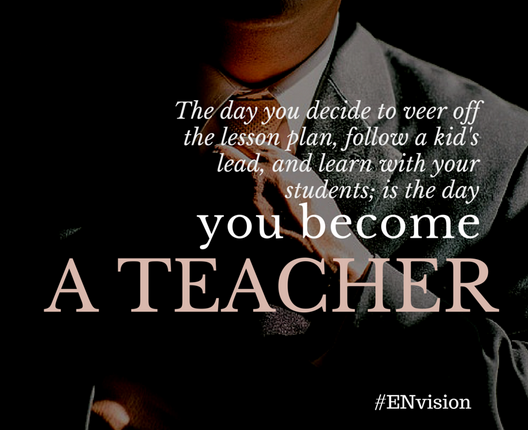
Veering off the beaten track is something I often do. Beaten tracks are too 'safe' and restrictive for me. I like to go off road and explore, and I often find myself down some backstreet in a city I've never visited before, chatting to locals or taking photos of strange new sights.

I can't help it. I have never been comfortable when I'm confined. Nor have I been happy simply 'towing the line' where important things like teaching and learning are concerned. I suppose that's also why I've always been uncomfortable with lesson plans. I always have an idea of what I'm going to cover in my lectures and seminars, but I rarely write anything down, preferring to keep several ideas in my head so that I can respond quickly and flexibly if the situation demands it. As a result, my teaching is now more responsive than it was when I was less experienced, and used strict frameworks and defined resources to conduct my lessons.

This kind of free-wheeling approach to teaching isn't for everyone, of course. We show our education students how to create lesson plans, schemes of work and other closely defined documentation to track and manage teaching, and they are trained to adhere to these. I wouldn't encourage any teacher to depart from them... unless of course they see a need to do so. In such cases, I advocate flexible, agile lesson plans from which teachers can change direction, when they need to, or when they sense they have to. That flexibility should extend to the introduction of ideas you may not be familiar with (learning together with your students), the sequence of the content, and also the learning outcomes you have identified. Ultimately, it should also embrace assessment of learning. If you come up with a better (or more appropriate) way to assess than the method you have outlined in your lesson plan, do it.

Lesson plans are a little version of the curriculum. They are created to provide suggestions and should not be treated like stone tablets. They should be used to interpret content and activities, and as a guidelines rather than as rules to follow regardless of whatever is happening. Ultimately, it's your students' learning that is the most important element of teaching, and if the lesson plan gets in the way of that, ditch it.

Image/graphic text by Miot Sheremeti

Creative Commons License
Going off road by Steve Wheeler was written in Plymouth, England and is licensed under a Creative Commons Attribution-NonCommercial-ShareAlike 3.0 Unported License.


December 07, 2015

Technology makes a difference

Interactive tools engage learners
I have often heard the argument that there is no evidence that technology improves learning. This is a vacuous claim that is either a) based on ignorance of the available research literature, or b) possibly the result of a deep seated fear, mistrust or dislike of technology in general. My usual response to such a claim is that children with special educational needs are a classic example of technology improving learning. For children with special educational needs, especially those with physical disabilities such as deafness or vision impairment, technology not only improves learning, it actually enables it to happen. Without adaptive technology, many disabled children could not access certain types of education and would be marginalised from learning.

But there is a larger mass of evidence to show that technology is not only making the difference for all learners, it is actually creating new and previously unattainable opportunities for learning. Technology does make a difference. Let's start with widening access. Children (and adult) learners all over the globe are accessing content that allows them to learn. Even if we disregards the highly successful phenomenon of Massive Open Online Courses, there is an ever expanding menu of content that covers just about every subject and theme under the sun, available for free online. Further, social media and social network services can connect anyone with internet access to experts in any academic discipline for real time content sharing and discussion.

But what about the question of whether technology improves learning? There is a wealth of evidence that indicates technology can make a positive impact on learning outcomes. Below are just two of the available research reports (you can search for others on the Web).

A research study at Durham University in the North East of England suggests that multi-touch, multi-user surfaces can improve the learning of mathematics. 400 children were involved in the study, which demonstrated that 'smart tables' enabled better collaboration and problem solving during maths lessons. Class teachers receive a live feed of output from the children's interactions on the surface, and can intervene when necessary. Research has shown that the touch surfaces enable children to discover a range of alternative solutions to maths problems, simply through interacting with each other in new ways.

A meta-study from ARCC in the United States reveals that technology, when appropriately used can make a significant difference in learning outcomes in all subjects. The evidence from the various studies has a recurring theme: that technology can make improve student achievement if they are integrated appropriately into teaching and learning. When what technology can do best - offering online access, interactive capabilities and a vast range of options on content - is made available and meaningfully integrated into teaching, the results are undeniable.

Photo by Edward on Wikimedia Commons

Creative Commons License
Capturing the moment by Steve Wheeler was written in Plymouth, England and is licensed under a Creative Commons Attribution-NonCommercial-ShareAlike 3.0 Unported License.


December 04, 2015

Capturing the moment

It was a great pleasure to give the opening keynote at the Social Science special interest group Higher Education Academy conference yesterday in Manchester. You can look up the Twitter hashtag for the two day event which is #HEASocSci15. The audience were a group of academics from across the UK and Ireland who specialise in social sciences. In the room there were lecturers in economics, politics, sociology, psychology and education. I had some very interesting, and at times intense conversations with a number of delegates as between us we tried to navigate the future of higher education from our various perspectives. Perhaps the standout part of the day for me though, was to see the wonderful artistic skills of Simon Heath, as he captured the essence of my keynote (illustrated above). As a consulting artist, Simon is incredibly talented because it's a rare skill to be able to listen to a speech, fillet out the key elements and then render them in real-time as a collage of images and words. He also live tweets from the conference as the images take shape!

On the left is Simon's later cartoon development of the strange pairing of Mickey Mouse and Superman - an example of the #twistedpair blogging challenge I instigated in the summer. He captures the idea perfectly, and adds the caption 'pedagogy of the unlikely', which perfectly captures what the blogging challenges were all about - finding meaning and learning together through seemingly bizarre and disassociated pairings of ideas, characters or objects.

I'm sure you will agree, his work is pleasing to the eye as well as informative. We need more of this at conferences! The title of my keynote was 'Learning in the Digital Age - Theory and Practice'. Just in case you want more detail though, the entire slide deck from my HEA Social Science conference keynote is below.


Photo by Steve Wheeler
Graphic by Simon Heath

Creative Commons License
Capturing the moment by Steve Wheeler was written in Plymouth, England and is licensed under a Creative Commons Attribution-NonCommercial-ShareAlike 3.0 Unported License.


November 30, 2015

Narrative pedagogy 4: Connecting the dots

Teachers can learn a lot from the techniques writers use. In this short series I'm exploring some of the storytelling techniques that can be adapted for use in education. The first post featured a technique called Interrupted Routine; the second discussed Red Herrings in narrative. Number 3 in the series was about Deus ex machina (God out of the machine or 'an act of God'). Number 4 is Chekhov's Gun.

The Russian author Anton Chekhov believed that every element in a story should have a purpose. He offered the example of a writer describing a gun hanging over a door. He argued that the gun must be fired later in the narrative, otherwise it serves no function in the story. In other words, if something is not essential to the story, don't include it. It's a minimalist literary rule.

There are various instances of the Chekhov's Gun principle in popular fiction. In the first episode of the Walking Dead zombie apocalypse TV series, Rick Grimes takes a grenade from a dead soldier. We don't see the grenade again until several episodes later, when he uses it to blow an escape hole in a pane of bullet proof glass. Some might assume that the writers needed a means of get Rick to escape and so back-engineered the first episode to include the grenade. But I like to think it was just an example of brilliant story telling.

In Rowling's Harry Potter saga, there are numerous applications of Chekhov's Gun. Notably, Ron Weasley's pet rat Scabbers is introduced in the first book. Ron tries to turn the rat a different colour using a spell his brothers have taught him, but he fails. We don't know why the spell fails, and this element in the story seems somewhat irrelevant. The story moves on to other matters. It is only later in another Harry Potter book that we discover the reason why the spell failed. Scabbers is in fact a wizard who has taken on the form of the rat to hide. Comedians often use the same principle of Chekhov's Gun in their routines. They introduce a seemingly random topic early on in their set, and it seems there is no relevance. Later, toward the end of their set, they revisit the theme, and the entire narrative connects. It's a very effective method to help the audience join the dots.

How might we use the principle of Chekhov's Gun in education? Teachers can introduce elements of a lesson that are intriguing, but at first have no meaning. Later, these same elements can be revisited, and principles learnt around them. The approach helps students to connect together the elements of the lesson or lecture and to see a more holistic view. In language teaching, the teacher may speak a phrase at the start of the lesson, move on to develop the lesson theme and then revisit the phrase during the plenary. In a science or history education, an object may be placed at the front of the class, and not used until right at the end of the lesson. Used appropriately, it can be a very effective method to prepare students' minds for when an important principle or concept needs to be conveyed. By the same token, teachers should only include in a lesson those elements that are absolutely necessary.

Photo by England on Flickr

Creative Commons License
Narrative pedagogy 4: Connecting the dots by Steve Wheeler was written in Plymouth, England and is licensed under a Creative Commons Attribution-NonCommercial-ShareAlike 3.0 Unported License.


November 28, 2015

20 tools for legacy learning

I'm not going to be around for ever, and neither are you. As teachers, we only have a short time to make an impression on our students, and that time goes by very quickly. So what legacy do we leave behind when we stop teaching? Is our influence as educators solely confined to the memories of those who have sat in our classes? I believe our influence can be much wider and long lasting, certainly in the digital age. There are so many ways teachers can continue to educate long after they have gone. Before the digital age, teachers could write books and articles to share their knowledge. Today, teachers are spoilt for choice. Here are five ways we can give our knowledge to generations of learners we will never meet:

1) Blogging. Blogs such as the one you are now reading have been set up to share knowledge, and also to encourage discussion. The more teachers share their ideas and interact on public spaces such as blogs, the more that dialogue and emergent thinking can be preserved for future generations to learn from and enjoy. If you want to blog, tools to look out for include Blogger, Wordpress (includes Edublogs), Typepad, Tumblr.

2) Video. Creating videos of events, presentations, interviews, demonstrations... in fact anything that we can learn from, is another way to store up ideas for future generations to use. Video is also very effective for storytelling, and one of my favourite things to watch on video is documentaries. They capture my imagination and get me asking questions I would otherwise have missed. Tools to look out for: YouTube, Vimeo, SchoolTube, Daily Motion.

3) Slideshows. There are many tools available for sharing slides, and if you really want to give your slidedecks impact, record an audio commentary to accompany it. Most hosting site provide the facility for you to add audio that synchronises with your slides. Tools to look out for: Slideshare, Authorstream, Speakerdeck, Sliderocket.

4) Photographs. Images tell a story that goes beyond words. Powerful images can be used for a number of educational purposes, and students can engage with them at many levels. Some of the most powerful images of our time capture moments in history where everything changed. They can be a valuable legacy for our future generations of learners. Tools to look out for: Flickr, Instagram, Imgur, Photobucket, Pixabay.

5) Audio. Don't underestimate the power of audio. Some of the most evocative moments in history have been captured in audio format. Radio has been a powerful medium since it was first invented, and we live in an audio culture. Simply look around in any public place and not the number of people who are walking around wearing headphones or earbuds. Podcasting is a popular method for conveying knowledge in audio format. Tools to look out for: Podbean, Libsyn, Audacity.

So think about how what you know can be shared with others long after you are no longer around. Teaching is for a season. But learning continues for a lifetime.

 Photo from Wikimedia Commons

Creative Commons License
20 tools for legacy learning by Steve Wheeler was written in Plymouth, England and is licensed under a Creative Commons Attribution-NonCommercial-ShareAlike 3.0 Unported License.


November 26, 2015

Narrative pedagogy 3: Out of the blue

Teachers can learn a lot from the techniques writers use. In this short series (on what I will call 'narrative pedagogy'*) I'm exploring some of the storytelling techniques that can be adapted for use in education. The first post featured a technique called Interrupted Routine; the second discussed Red Herrings in narrative. Here's number 3 in the series: Deus ex machina (God out of the machine or 'an act of God').

The world is full of problems. We encounter them every day. You're late for work, rush out to your car, and discover that you have a flat tyre. At that very moment, a friend is passing by and pulls over to ask if you would like a lift. Of course, that kind of miracle doesn't happen in real life.... or does it?

When I was 12 years old I was in a car accident. We were living in the Shetland Islands at the time. One winter evening my father was driving my mother and I home from a shopping trip along the sea road. We found ourselves in the middle of a blizzard, and the snow was falling fast. It was dark, the temperature was dropping rapidly, and the road was icy. As my father drove us around a sharp bend in the road, he accidentally hit the brakes, we spun around several times on the ice, and ended up at a perverse angle, with the front of our car pointing downwards looking at a steep incline into the sea.

We were terrified. There was no traction in the wheels. Try as he might, my father was unable to extricate us from the danger we were in. There was no way we were going to get out of this without help. But in the middle of a blizzard, in the dark, in the middle of nowhere, where would it come from?

At that very moment, we heard voices outside, and as if by magic two large men materialised out of the snowstorm. I heard them talking to my father, and there were a few moments of silence. Then our car was literally lifted back onto the road. My father wanted to thank them, but they had disappeared. There was no-one there. Our lives had been saved in a most surprising and unexpected manner.


Popular culture is full of such interventions 'as if from above'. The use of deus ex machina can be seen in the movie Life of Brian. Toward the end of the film, the main character is falling to his death from a high tower, but is saved by a passing alien spacecraft. It's an absurd, literally out-of-the-blue resolution to the storyline, but what else do you expect from Monty Python? A more believable deus ex machina can be found in H. G. Wells' novel War of the Worlds, where the seemingly invincible alien invaders are ultimately defeated by the smallest living organism on Earth - a virus.

Discovering strange and improbable solutions to big challenges is what science is all about. It is also the basis of problem based learning (or PBL). Students are presented with a problem and limited resources (e.g. time) with which to solve them. They have to draw on their expertise, prior knowledge and ... yes, sometimes luck - to solve the problem. Sometimes they don't know how they solve the problem, or where it comes from. It seems as though the answer comes from outside of their influence. Often, in the most advanced forms of PBL, ill structured problems are given, where instructions are sparse or ambiguous, or several potential solutions to the problem might be possible. Suddenly the circle is incomplete. Several possible escape routes have been explored and choices made. In Gestalt theory, all humans are assumed to have an innate psychological need to complete the incomplete, to close the circle. They join the dots together in their heads to make sense of the world around them.

PBL calls on this specific human trait - the need to make sense. Unconscious knowledge can be drawn upon to solve most problems no matter how ill-structured they might be. Prior knowledge usually helps us to solve the seemingly intractable problem. New learning occurs when students study the problem space, and think of possible algorithms they have previously encountered that might apply or be adapted. This forms connections between the known and the unknown. Deeper learning emerges when students reflect and discuss their experience once the problem has been successfully solved.

Photo by Kabir Bakie on Wikimedia Commons

*Yes, I know that the term 'narrative pedagogy' has been used before, but in other contexts. My use signifies how storytelling devices can be applied to everyday pedagogy.

Creative Commons License
Narrative pedagogy 3: Out of the blue by Steve Wheeler was written in Plymouth, England and is licensed under a Creative Commons Attribution-NonCommercial-ShareAlike 3.0 Unported License.


November 25, 2015

Narrative pedagogy 2: Maintaining the suspense

Humans have been telling stories since time immemorial. Narrative is built into our collective memory, and is part of what makes us human. Stories are compelling. Every story is a lesson, and every lesson can be a story. Teachers can learn a lot from the techniques writers use. In this short series on what I will call 'narrative pedagogy'* I want to explore some of the storytelling techniques that can be adapted for use in education. Yesterday I wrote about a technique called Interrupted Routine. Here's number 2 in the series:

Closely aligned to Interrupted Routine is another narrative device known as the Red Herring. It's a technique beloved of crime and suspense writers such as Sir Arthur Conan Doyle and Agatha Christie that is used to keep the reader guessing.  Red herrings are clues that lead the reader in the wrong direction. They are distracted from the real villain, and focuses for a while on other characters. Similarly to Interrupted Routine, the Red Herring maintains interest, because the reader is now engaged in trying to work out 'whodunnit' or what happened.

Warning - Spoiler Alert!
In a recent episode of  the zombie apocalypse series The Walking Dead, Glenn, who is one of the central characters, is standing atop a trailer trying to escape a seething mass of zombie 'Walkers'. His companion falls and takes Glenn with him. The next shot we see is a close-up of Glenn screaming in pain and horror as blood gushes everywhere. The audience is shocked. They believe he has been torn to pieces by the herd of Walkers. Confusion reigns as everyone tries to process what they have witnessed. Social media goes crazy with speculation and fans try to resolve their confusion. Is Glenn really dead? No-one knows for sure. But everyone keeps watching to find out.

It isn't until 3 episodes later that it is revealed in additional scenes that Glenn falls under his companion, and that it is in fact his companion's body that has been torn apart, not his. He subsequently wriggles free and under the trailer, and escapes to safety. So the first scenes were just a red herring to convince us all that Glenn had died.

I have occasionally used the red herring technique in my own teaching. I inform my students that I'm going to tell them a deliberate lie at some point during my lecture. Now their interest in piqued. They listen more attentively during the lecture to see if they can detect the falsehood. Sometimes the lie is real, but sometimes there is no lie at all. Except of course for the red herring - that I promised I would tell a lie at some point in the lecture.


Both the interrupted routine and red herring devices are used to focus interest and also to sustain the momentum of the story telling. Red herrings can keep students in suspense, or even in a state of confusion - something that may or may not be pedagogically desirable. The longer students are kept in suspense, the more they will be interested in what comes next (well, up to a point - you need to decide). I sometimes use a rather dangerous demonstration in the classroom to explore visual perception. It's potentially dangerous, because if it goes wrong, I'm likely to be injured and there will be blood. It involves a can of baked beans and my index finger!

The video above shows a version I recorded several years ago during a lecture. Because of the perceived danger, and the suspense over whether I will actually go through with the trick or not, you will see that the students are totally focused. When I eventually complete the trick, there is surprise and confusion. How did I manage to do it without getting injured? They discuss it for some time afterwards, trying to figure out how the trick worked. But it is just a red herring. There is no danger, because it is a sort of illusion. They now need to think about whether they actually saw what happened, or something else entirely. Or... was the whole thing just a red herring?

If used appropriately, red herrings can also encourage students to sort good information from bad information.

Photo by Daniel Hollister on Flickr

*Yes, I know that the term 'narrative pedagogy' has been used before, but in other contexts. My use signifies how storytelling devices can be applied to everyday pedagogy.

Creative Commons License
Narrative pedagogy 2: Maintaining the suspense by Steve Wheeler was written in Plymouth, England and is licensed under a Creative Commons Attribution-NonCommercial-ShareAlike 3.0 Unported License.


November 24, 2015

Narrative pedagogy 1: Focusing their attention

Humans have been telling stories since time immemorial. Narrative is built into our collective memory, and is part of what makes us human. Stories are compelling. Every story is a lesson, and every lesson can be a story. Teachers can learn a lot from the techniques writers use.

In this short series on what I will call 'narrative pedagogy'* I want to explore some of the storytelling techniques that can be adapted for use in education. Here's the first literary device: Interrupted Routine.

Students get bored easily in class. Boredom is often caused by routine. When nothing changes, there is not a lot to look forward to. Conversely, there is little that piques our attention more than a sudden disruption to routine. Interrupted Routine is one of the many narrative devices writers use to keep their readers or viewers interested.

This is how it works: You think you know your favourite character, and then suddenly, they behave out of character. The familiar pattern of behaviour is broken. Something happens which you least expect to happen. This shocks you, and you are now intrigued as to why things turned out differently to your expectations. It keeps you on your toes because now you are looking out for more shocks, and expecting the unexpected. Your focus has been sharpened.

In Tolkien's Lord of the Rings, the main protagonist is the hobbit Frodo, who with his best friend Sam, is on an epic quest to destroy the One Ring. At a critical point in the narrative, Frodo turns angrily on his best friend Sam and abandons him in the hostile territory of Mordor. This is a shock, because when everyone expected them to stay loyal to each other whatever was thrown at them, suddenly they are separated and everything looks bleak. It is only later that they are reunited, their friendship is resolved, and the reasons for Frodo's hostility are revealed.

How can this technique be used in teaching? Well, here's one example: Now and then I present a topic for my students to debate. It's usually quite an emotive one, about morality, ethics or some other fairly intractable issue. I divide them into two debating teams and ask them to elect speakers who can best present the group's arguments. Next I ask them to spend some time discussing and writing down their arguments on a sheet of paper so they can structure their rhetoric. With a few minutes to go I ask the two leaders to approach me with their crib sheets. I inspect the two sheets, and then I switch them. I give group A's sheet to group B's leader, and vice versa. Suddenly they are confused. I have done something they didn't expect and now both teams are wrong-footed. They now have 5 minutes to go away and rehearse the opposing team's arguments before they debate. Ultimately, both teams get to see all of the arguments, and the ensuing role play is often powerful, because they have focused keenly on the content.

Whatever techniques you use to try to maintain the interest of your students, we can all learn a lot from narrative devices. I would be very interested to hear from any teachers who have used this or a similar technique to keep students attention. Please share them in the comments box below.

Image source

*Yes, I know that the term 'narrative pedagogy' has been used before, but in other contexts. My use signifies how storytelling devices can be applied to everyday pedagogy.

Creative Commons License
Narrative pedagogy 1: Focusing their attention by Steve Wheeler was written in Plymouth, England and is licensed under a Creative Commons Attribution-NonCommercial-ShareAlike 3.0 Unported License.


November 22, 2015

The things we've learnt are no longer enough

The title of this post comes from the lyrics of the Joy Division track Transmission. It was played during the introduction of the 2015 ALT-C Conference in Manchester. The quote was used in the opening session because a) Joy Division were from Manchester, b) it's an iconic post-punk track and c) it's a challenge for education today.

It led me to the question - what are we actually teaching our children today? We teach quite a lot of knowledge in our classrooms, and we also teach skills. Thinking and doing are central to the curriculum. Is this knowledge (and are these skills) up to date? More importantly, are the knowledge and skills we teach future proofed? Teachers are in an invidious position, trying to educate children when we don't know what the future will be for them. And before someone says 'It's always been thus..' I would like to point out that the current labour market has never been so volatile, prone to change and disrupted by technology as it is right now.

There is a lot of discussion about the future of work. Some would claim that many of the jobs that will be available for children when they leave school in 10 years do not exist yet. Whether this is true remains to be seen, but one thing we can be certain of is that future jobs will be highly dependent of new technologies, and many future jobs will contribute toward the advance of new technologies.


So what are we teaching the children in our schools? Are we preparing them for a future replete with technology and change? If so, what are the transferable skills they need to learn? They will need to be literate in a era of major technological advances, the digital age. My list may be different to yours, but think about these: problem solving, team working and collaboration, designing and making, decision making, leadership, logical (algorithmic?) thinking, research and discovery, and of course communication skills. I believe that transliteracy - the ability to communicate across multiple platforms and media will be one of the most important. I also believe that learning to learn (or metalearning) will be a key skill for all this century. I sincerely hope that children who leave our schools in the next decade have learnt enough to survive and thrive in a future that is uncertain. They will, if we ensure the skills they develop are adaptable to any circumstance.

Photo by Wesley Fryer on Speed of Creativity

Creative Commons License
The things we've learnt are no longer enough by Steve Wheeler was written in Plymouth, England and is licensed under a Creative Commons Attribution-NonCommercial-ShareAlike 3.0 Unported License.


November 20, 2015

One of the best

Once in a while, someone comes into your life, profoundly influences it, and then is gone. You forget, but the legacy remains. Just such a person was Carol Woodward. She was headteacher at Woodford Primary School, just a mile or so away from my home in Plymouth. I knew her both as a parent and in a professional capacity. I served as a governor at Woodford for several years, and later had some professional contact with her in my teacher educator role. She was a wonderful teacher, an inspirational leader, and she had my greatest respect.

All three of my children attended Woodford, but my youngest child, who was then in the process of being diagnosed with autistic spectrum disorder, was the one who benefited from her care the most. His condition made him very difficult to manage in class, as he oscillated between sudden, volatile behaviour and social withdrawal. It was a difficult time for our family and also for his teachers, but Carol was incredibly supportive, making sure my son had all of the resources to ensure he received a quality education. Her care and attention, her sunny disposition and her decisive intervention were instrumental in ensuring that my son was educated to the highest standards. The children in his class were also incredibly supportive, which is a further testament to the high quality of the teaching at Woodford School.

Over time, my son has learnt to manage and surmount the challenges his autism presents, and now, aged 20, he is in his first year at Plymouth University, studying on a degree programme in computer graphics and games design. He's doing very well. As a family we can't thank Carol enough for the hard work, dedicated care and superb encouragement she gave us all during my son's years at her school. We would love her to know that he is now studying at university, and that her efforts from all that time ago have paid off. We would love her to feel proud of what she achieved with him. But she will never hear it. Sadly, she will never know, because Carol took her own life at the end of the last school term.

The heartbreaking tributes from children currently at the school, and those from her family show just how much she was loved, and the high esteem in which she was held. Tragically, Carol's life came to an end when she could no longer face the pressure and the ignominy of a poor OFSTED report. Her health and mental well being declined rapidly following the government school inspection. It had been conducted while the school was experiencing disruption from building works. The report said the school was inadequate, because communication with parents was 'not always effective', and some bullying incidents had not been recorded. These are questionable criticisms of a school that has enjoyed an exemplary track record for decades. Did the school deserve such a damning report on the basis of these small failures?

It's impossible to say what other pressures there were in Carol's life, and what finally caused her to decide to take her own life. But for those who knew her, and knew the pride with which she led her school, and looked after the children in her care, it is clear. The OFSTED visit would have caused a tremendous amount of unneeded pressure on everyone, and the trauma of receiving a report that showed the school in a bad light would have been a major contributory factor to her death.

It can only be speculated upon what went through the minds of the inspectors of Woodford School, when they wrote their report. Some of my colleagues are currently school inspectors, or have been in the past, so I am aware of the pressures they themselves face from above. OFSTED's leadership is not famed for its friendliness. Established as the government's education watchdog, many believe that OFSTED has evolved into an attack dog, coached to act aggressively. Regardless of the hype and media surrounding OFSTED, we need a reality check. Schools have improved tremendously over the last few years, and many are now asking whether OFSTED is still necessary. This simply adds further fuel to the fire.

Life is precious, and the lives of teachers are fraught with challenges and pressures. You don't need to look too far to find accounts of teachers suffering from insomnia, anxiety, depression, alcoholism and stories of the culture of fear in schools. Caring for the mental health of teachers is an issue that is not addressed sufficiently in our society. How many teachers entertain suicidal thoughts because of the extreme pressures brought on by a school inspection? Most educators would agree that the additional pressures created by a school inspection do nothing to improve the quality of teaching. In this case, it seems a school inspection cost the life of an excellent teacher.

Carol Woodward was one of the best, sadly taken before her time. In time, the OFSTED report will be forgotten and the school will move on. In her time, thousands of children have benefited from Carol Woodward's excellent teaching and leadership. That will be her legacy. May she rest in peace.

Related items:
Head Teacher suicide verdict
Head's suicide raises questions about Ofsted inspection

Photo: Evening Herald

Creative Commons License
One of the best by Steve Wheeler was written in Plymouth, England and is licensed under a Creative Commons Attribution-NonCommercial-ShareAlike 3.0 Unported License.


November 14, 2015

Constructing learning in the digital age

From a cognitive constructivist perspective, learning is achieved through the twin processes of assimilation and accommodation. The latter implies that new learning is 'bolted onto', or constructed within, existing cognitive structures known as schemas. Learning relies on the individual construction of reality, according to Jean Piaget. Such construction of meaning is unique to each individual, and therefore centres on each learner's efforts to make sense of the subject.

In a sense, an algorithm has much in common with a schema, particularly because both have rules and sequences of instruction that can be followed to achieve a specific goal. Both are self contained but have the potential to be connected to larger sets of instructions. The computer algorithm is therefore a means of giving instructions to a machine that replicates the way we believe our minds function. Personal schema on the other hand, are often peculiar to the individuals that created them usually through solo exploration and discovery.

Alternatively, social constructivism - in Vygotsky's terms - is the construction of personal meaning within a framework of social experience. Lev Vygotsky stresses the importance of language and culture, and argues that learning is socially mediated. His notion of the Zone of Proximal Development (ZPD) is a model to describe the efforts and interaction between a learner and a more knowledgeable other person (MKO) to negotiate meaning within a realistic range of learning. The learner constructs his own meaning with the MKO as a guide in the process. The boundaries of the ZPD can be variable, but in most contexts, it is generally more extensive than learners can achieve on their own.

Jerome Bruner developed ZPD theory to include the concept of scaffolded learning. Scaffolding was a metaphorical representation of the many active ways in which teachers (or MKOs) focus their efforts and expertise to support of learners at the start of their learning, but gradually fade this support as learners become more independent and competent.

The idea of discovery learning also originates with Piaget, and has provided some powerful, but at times contentious pedagogical practices in primary education. It maintains a focus on personal construction of meaning through exploration and experimentation, and relies less on social contexts than ZPD theory.

Hypertext is non-linear and potentially chaotic in nature, drawing the user (learner) down through layers of meaning, to the endless possibilities of learning by discovering. It is ill-defined, driven by the learner, and has no boundaries or limits other than those the learner imposes upon herself. It is exploratory, rule-less and rhizomatic, where the learner discovers for herself any number of divergent nodes of knowledge, and random corridors of travel.

Learners with digital technology can discover for themselves, and drive their own learning, but it will be less structured than formal educational processes. They are able to explore avenues that may or may not be intended by the creators of the content, but in their nomadic exploration of hypermedia, learners discover for themselves the benefits and risks of autonomous learning. The initial digital space acts as a scaffold, but the farther away the learner wanders from this base - and the more mouse clicks he executes - the more vulnerable he may become to misdirection, misunderstanding, and a sense of isolation from his original aims and purposes. And yet this glorious freedom of knowledge excavation and the potential to synthesise disparate and previously dislocated concepts can be compelling.

Photo by Till Krech on Wikimedia Commons

Creative Commons License
Constructing learning in the digital age by Steve Wheeler was written in Plymouth, England and is licensed under a Creative Commons Attribution-NonCommercial-ShareAlike 3.0 Unported License.


November 13, 2015

Networks are everything

We live in a highly connected world. Networked learning is vital for learning today. Creating a social web around you, and being able to connect with others in your profession is vital for the world of work too. In fact networks are everything. These views were expressed during an interview I recorded during the Barcelona EDEN conference with Maarten de Laat. Maarten is a professor at the Open University of the Netherlands, and is highly active in the field of networked learning. He had some very interesting and thought provoking things to say about the significance of networks and how they are changing learning today.


Video courtesy of the European Distance and E-Learning Network (EDEN)

Creative Commons License
Networks are everything by Steve Wheeler was written in Plymouth, England and is licensed under a Creative Commons Attribution-NonCommercial-ShareAlike 3.0 Unported License.


November 11, 2015

Inspire to learn

On 3-4 December I'll be in Manchester to present a keynote speech at the Inspire Conference, sponsored by the Higher Education Academy. The conference is themed around excellence in teaching of the social sciences, which reflects my own professional and academic background. During my undergraduate degree I specialised in psychology, but also studied a number of other social sciences, including politics, economics, sociology and human geography. I'm quite at home in this area of academia, and my thinking is shaped and informed by these disciplines, so I was delighted to be invited to speak. As a prelude to the event, the organisers have asked me to write a short blog post which takes the form of my responses to four questions:

Q1. What will you be speaking about at the Inspire conference in December? The title of my keynote is 'Learning in the Digital Age: Theoretical Perspectives.' My key premise is that learning technology is just about everywhere in education. Universities are replete with lecture capture tools, interactive media, web based content and personal response technologies; students arrive equipped with social media and mobile devices; technology supported distance education has been long established; universities are experimenting with flipped classrooms, gaming and MOOCs. I plan to discuss our possible responses to this. What should we make it all, and do we consider these new trends threats or opportunities? How might we harness the powerful potential of these tools and technologies to engage students more, and enhance learning in higher education? What theories could be used to explain these phenomena, and how can social/psychological models better our understanding of how people learn when their communication, relationships and learning are mediated through technology? I plan to explore several of the older social science theories, and  compare and contrast these with some of the newer, emerging theories to determine what they offer. Can the established theories still offer useful explanations of new practices and experiences, or can we gain some illumination for a better understanding of learning in the digital age from the newer theories?

Q2. What issues in HE teaching and learning are you passionate about? My passion is learning - in all its possible forms. In fact, as a lecturer working in higher education, I consider myself to be a professional learner. I have gone on record as saying that although I don't need to work any more, I continue to work at Plymouth University, mainly because it is a great place to learn and to continue developing my research interests around digital pedagogy. I will hopefully continue to work in higher education for as long as I'm interested. I will quit when I get bored, which at the moment isn't that likely.

I'm passionate about sharing knowledge. My maxim is: 'Knowledge is like love. You can give it away as much as you like, because you still get to keep it.' And it's true - knowledge is not finite like money or resources. It's limitless and should be available to anyone and everyone who needs it, and given away for free. Yes, education costs money. But ignorance is even more costly. It is the responsibility of governments to provide free education to its citizens. We enter a moral quagmire if we expect students to pay expensive tuition fees that will keep them in debt for most of their professional lives, and exclude many others who can't afford the debt.

Another equally disturbing issue for many scholars is the immoral and unethical  business of academic publishing. The big four publishers - Elsevier, Wiley, Taylor and Francis and Springer - are making huge profits worldwide from the goodwill of academics. They publish publicly funded research which has been freely written, reviewed and edited by academics, and make huge profits from it. This doesn't make sense. My belief is that if the content has been freely offered, and already funded by tax payers, it should be offered freely, or at the very least, at an affordable level to the academic community. The big four show no signs of relenting in their profiteering, so several years ago I took a very public decision to resign as editor of a major academic journal. I subsequently pledged that I would never again write, review or edit for a closed academic journal.  I'm not the only one. This is a growing trend as was evidenced recently when the entire editorial team on one of Elsevier's academic journal Lingua resigned over high price and lack of open access.

The big four maintain a strangle-hold over universities, perpetuated by exercises such as the Research Excellence Framework review. And yet, the trust placed in high impact journals may turn out to be unfounded, especially when all the metrics are taken into consideration. How many people read an article in a closed journal? No-one knows for certain, but we know for sure how many access an article from an online journal. Many other academics are taking decisions similar to mine and turning their backs of closed academic publishing. This damning expose originally published in the Huffington Post reveals why the days of the academic publisher may be numbered.

I still disseminate my own research widely, but now I do so through social media, blogs and open access journals. We have the technology. All of my content is licensed under Creative Commons, so that others who wish to, can freely use it, repurpose it, and redistribute it without cost. All they need to remember is to attribute my ideas to me, under the same CC licence. If all academics shared their research this way, knowledge would indeed be free, and everyone would benefit.

Q3. As a lecturer how important do you think it is to look at teaching and learning issues through a disciplinary lens? I'm completely biased of course, but I believe that psychology is the perfect lens through which to understand and evaluate teaching and learning. Psychology is the science of human behaviour, and is the perfect discipline to apply as a foundation for all forms and levels of pedagogy. Psychology provides numerous theories to explain memory, perception, learning, social interaction, motivation - in fact just about any aspect of education. I firmly believe that without an understanding of psychology, teaching is diminished. How can we possibly hope to offer good pedagogy, and create inspirational learning environments if we don't fully appreciate how the human mind works? We have a long was to go however, with many areas - undiscovered countries - such as how certain areas of the human brain function, why some students succeed while others fail, and so on, but we are getting there. The psychology of learning is a very exciting area of academic study. That's why I'm a student of psychology. For me, it's the best possible discipline to apply to my practice as I strive to become a better teacher and a more effective learner.

Q4. What advice would you give to early career academics who want to develop their teaching and learning careers? Strive to be extraordinary and never give in. Be an inspiration to your students by showing a real passion and enthusiasm for your subject. Students won't care how much you know or how many letters you have behind your name, but they will be impressed if you show a keen interest in their work and their progress. Go the extra mile. Seize every opportunity that presents itself. Be prepared to take risks. Connect and spend time with people who are innovative,and associate with those who are doing things differently, or in ways that surprise you. Learn from them as you develop your own professional identity. And remember - doctors save lives, but teachers make lives.

Photo by Alan Chia on Wikimedia Commons

Creative Commons License
Inspire to learn by Steve Wheeler was written in Plymouth, England and is licensed under a Creative Commons Attribution-NonCommercial-ShareAlike 3.0 Unported License.


November 09, 2015

It'll never get off the ground

A model of the first hovercraft - the SR-N1
The world's first commercial hovercraft, the SR-N1 was launched in 1959. It was thought to be the future of sea travel, and regular services were soon in operation across the English channel. An invention largely attributed to Sir Christopher Cockerell, the hovercraft caught the imagination of a lot of kids around my age. I even had a Corgi model in cast metal similar to the one in this picture (this is in fact an Airfix 1/72 model). I vividly remember the iconic white plastic air intake, and for me, the design ideas embodied by the hovercraft symbolised the future.

Sadly, due to increasing competition from other cross-channel services and the opening of the Channel Tunnel and Eurostar train services, the cross channel service between Dover and Calais closed in 2000. The only commercial service still running in the UK is from Southsea (Portsmouth) to Ryde on the Isle of Wight.

A mere decade later, while I was at Wellington Grammar School (now known as Ercall Wood Technology College) in Telford, I was a part of a team of schoolboys (it was then a boys only school) that designed and built a personal hovercraft. Building a fully functioning hovercraft was quite a feat of engineering for a group of 12 and 13 year olds. In fact it was visionary, and ahead of its time. Not many schools could take on such a project, and not many teachers at the time were thinking about the pedagogy of learning by making (constructionism).

Making a hovercraft caught our imagination. I can still remember the distinct odours of the glass fibre, rubber, glue and newly cut wood as we grappled with materials to construct our fabulous floating vehicle. Some of the other boys, (who I would like to think were less fortunate because their design and technology projects were not as interesting) laughed at us, and told us our creation would never get off the ground. But it did. It was designed to hover, not fly, and hover it did. We took it out into the upper playing field, and took turns riding it around, until the fuel ran out. With the help of our D and T teacher, and with a lot of perseverance we somehow made it work. No one laughed at us after that.

And that is the bottom line. Once you have an idea, you will need resources, the support of an expert, and a lot of perseverance to create something different, and make it work. Some will laugh at you, think you are strange and deride your efforts. But ultimately, you will have a great learning experience, developing transferable skills including problem solving, decision making, design thinking, and creativity.

Photo by Bill Abbott on Flickr

Creative Commons License
It'll never get off the ground by Steve Wheeler was written in Plymouth, England and is licensed under a Creative Commons Attribution-NonCommercial-ShareAlike 3.0 Unported License.


November 06, 2015

Distance Education in transit? #EDENchat #EDENchatUS

What will distance education look like in the future?
Distance education has been with us for a long time. Some would argue that the first instance of distance education occurred in the first century, when Saul of Tarsus, otherwise known as the Apostle Paul, sent letters of instruction (epistles) by courier to the fledgling Christian church scattered across Asia Minor and Southern Europe. More formally, distance education has existed since the early, primitive but quite effective correspondence courses of Sir Isaac Pitman, who used the developing technology of the time, the uniform penny postal service to support his endeavours. This was in 1840, and correspondence courses became the dominant form of distance education for several decades. The subsequent introduction of new technologies such as the telephone, radio and television, and satellite telecommunication ensured that distance education became more accessible to many around the globe. The advent of the Web, along with wider access to computers, smartphones and other personal technologies, has transformed distance education to the point that anyone can now access free learning through MOOCs and other online forms of content delivery.

What will be the future of distance education? Will it be subsumed into online learning, blended learning or e-learning, or will it survive as a separate discipline? What new skills and knowledge do distance educators require today in the contexts of unprecedented technology development? What does it take to be a distance educator, and how does this differ from conventional (or contiguous) educators?  Can conventional pedagogy be adapted to distance education, or is a complete transformation of pedagogy required for learning at a distance to be successful? All these and other allied questions will be discussed when #EDENChat joins forces with the United States Distance Learning Association (USDLA) for a one hour special online Twitter chat on Wednesday 11th November, at 20.00 GMT (21.00 CET/15.00 ET) where we will also use the hashtag #EDENchatUS.

Please join us on Twitter to discuss the future of distance education. All previous #EDENchat transcripts can be found on the EDEN Website here.

Photo by Ed Yourdon on Flickr

Creative Commons License
Distance Education in transit? #EDENchat #EDENchatUS by Steve Wheeler was written in Plymouth, England and is licensed under a Creative Commons Attribution-NonCommercial-ShareAlike 3.0 Unported License.


November 04, 2015

'Just for me' learning

You've probably heard of 'just in time' learning. It's a form of learning that is accessed at the point of need. A worker requires additional knowledge or skills to meet the challenges of a new job role and receives it there and then. We used to call it on the job training. 'Just in time' is often seen as a counterpoint to the standard, traditional 'just in case' curriculum where learners are provide with everything they might possibly need, in the event that someday, some of it will be useful. It is rather a hit and miss strategy and it's not very effective. Just in time learning now takes precedence. This economic delivery of content has been described as bespoke learning, and is the core of personalised learning in many organisations. Recently, there has been a shift to deeper forms of personalised learning, especially in the context of personal learning tools such as smart phones and social media. 'Just for me' learning epitomises this ethos.

Every employee should have the opportunity to personalise their learning, and now organisations are recognising this necessity. Learning and development departments are beginning to provide workers with the means to learn independently and in a self-determined manner. But we can go much further. Learning and Development professionals recognised long ago that employees learn better when they are motivated. Learning tends to be deeper when people are interested in the subject matter, and even more so when it relates directly to their work. Most importantly, learning is most effective when it is accessed at a convenient time, and in a convenient place. So 'just for me' learning can be more effective than just in time learning, because it is tailored more directly to individual needs. But where are we heading with this trend? What is the ultimate learning in organisations? Ladies and gentlemen, please welcome onto the stage.... 'just enough' learning.

Photo by Japanexperterna.se on Flickr

Creative Commons License
'Just for me' learning by Steve Wheeler was written in Plymouth, England and is licensed under a Creative Commons Attribution-NonCommercial-ShareAlike 3.0 Unported License.


Tested to distraction

Should we put our children through so much stress?
Get ready for a rant. Here's the bottom line: More testing doesn't lead to better learning. In fact, over-testing distracts from the real business of learning. This is something all governments should understand and accept, but unfortunately, most do not or will not. It would certainly help if those who were in charge of running our education systems were former teachers. In England, the current Education Secretary - not a teacher - is considering introducing (or rather re-introducing) testing for 7 year-olds. This is a scheme that failed and was withdrawn in 2004, but is now being proposed again. According to her speech, in recent news reports, Nicky Morgan admits she wants to be able more closely to monitor the 'quality of schools' in England.

So there we have it. For the current UK government, testing is not there to support better learning. It's there to ensure schools are doing well. Ultimately, it will indicate how far off the pace we are in the world education rankings. It seems that governments care more about league tables such as PISA than they do about the quality of children's learning. Schools are political footballs. Governments are more interested in ensuring that their statistics and metrics continue to rise, than they are about children's learning. For them, testing is a mechanism that keeps schools in check, and they care little about the collateral damage caused.

The side effects of over-testing are that children become victims of the scramble to be best in the league tables. Teachers are pressurised to deliver better all round results. They are forced to teach to the test, which detracts from good pedagogy and also leads to higher stress and anxiety levels, not only for the teachers themselves, but also for many of their students. Everyone is forced to perform at a level that aligns to what those in power expect. A narrower curriculum also results from the regime of over-testing. Everyone is distracted from the business of learning by the need to 'perform'.  I have already written about the superficiality and inappropriateness of many tests in a post called Who put the ass in assessment? so I won't bore you further here. But when performance counts more than learning, then education systems are in a lot of trouble.

How are we going to prepare our children for the future if all we cause them to do in the classroom is suffer anxiety as they prepare for tests? How are we going to teach a wide and all embracing curriculum when teachers are so over-burdened with marking, administration and compliance with standards that they have no freedom to teach? How can we expect children to learn well when all they are thinking about is their grades? No wonder schools are haemorraging experienced and new teachers at a faster pace than we can train and replace them. Yes, assessment of learning is an important part of formal education, but the current system of testing is destroying schools. Over-testing is akin to a gardener who is constantly uprooting his plants to monitor and record their growth. He will look very busy, and there will be plenty of statistics, but ultimately, plant growth will be compromised.

Photo by Sarah Horrigan on Flickr

Creative Commons License
Tested to distraction by Steve Wheeler was written in Plymouth, England and is licensed under a Creative Commons Attribution-NonCommercial-ShareAlike 3.0 Unported License.


October 24, 2015

That'll teach him

My school years were patchy to say the least. My father was in the Royal Air Force, so I spent most of my formative years travelling, and switching schools on a regular basis, which played havoc with my education. I went to 10 schools in total, starting in Gibraltar at St George's Primary School and completing my schooling in Brunssum, Holland at the AFCENT International School. My school years were difficult for one important reason. There was no National Curriculum, which meant that every school taught what they considered to be most important. Because I switched schools every year or so, I learnt some content two or three times, and I missed some content completely. I learnt more about process than product during those turbulent years.

On reflection, I can now see exactly how teachers can either make or break a child's education. The old maxim 'Doctors save lives, teachers make lives' is true. I recall one teacher in particular who took me on and inspired me to learn new things. Mr Handel was one of the two primary teachers at Cherhill Primary School near Calne in Wiltshire, who stand out in my memory. He spent time with me helping me in the areas I was struggling with, and he really went the extra mile, to make sure I achieved to my full potential. The other teacher in the same school was the polar opposite. I once asked her a question about English grammar. She looked at me with contempt, told me I had asked a 'stupid question' and then made a big joke out of it. The whole class laughed at me, and I went bright red with embarrassment. I was only 8 years old, but I can still recall how it felt. It taught me a lesson. I never asked another question in class throughout the whole of my school life. I will refrain from naming that teacher.

Many teachers are excellent at what they do, and really care about the children in their care. I try to do the same, aspiring to be like Mr Handel, taking time to give my students individual attention if they are struggling in some difficult area. I try to instil some of these values in my student teachers too. But there are a very few teachers who can stifle creativity and discourage individualism - exactly the traits we need to draw out from our learners so that they can develop the skills to transfer into lifelong learning. Teachers can make all the difference, but sometimes it is time and pressure that militate against this. I look at my own children now as they negotiate their way through school and into work, and I sometimes cringe at some of the things they come home and tell me about their school experiences. It's as tough for them as it was for me. But school isn't the be all and end all and nothing is graven in stone.

My travelling took its toll on my formative years, and I left school with very few qualifications. I made a lot of friends, and had to keep making new ones, so I became very adept at interpersonal skills, but was very weak on content. All of my academic achievements have been made because of my own efforts and due to my own passion for learning, and all of them after the age of 30. The week I finally left school, my form tutor met with my parents. 'Steve is a great lad, and is very sociable' he told them, 'but don't ever expect him to become an academic'.

Photo by Cam Good on Flickr

Creative Commons License
That'll teach him by Steve Wheeler was written in Plymouth, England and is licensed under a Creative Commons Attribution-NonCommercial-ShareAlike 3.0 Unported License.


October 22, 2015

The Red House opens

The Red House in Plymouth
Throughout my professional career I have had the pleasure to visit many excellent schools across the globe. Each one offers me a little more understanding and insight into the grander picture that is education. I count it a privilege to learn from the students and staff at every school I visit. But to be there at the birth of a school is a quite extraordinary honour. Tonight, along with more than one hundred others - supporters, parents, children and teachers - I saw the Red House officially opened by Sir Nicholas Serota, Director of the Tate Gallery. The Red House houses PSCA - the newly established Plymouth School for the Creative Arts.

PSCA is a history making school. Situated in the heart of Plymouth's drab dockland area of Millbay, it is a colourful haven for creativity and self expression. It is the first British school to open as a free school under the patronage of a College of Art, and  - as its visionary head teacher Dave Strudwick said in his speech tonight - it is a school from reception through to employment. Currently with just over 400 children on roll, ultimately it will be a place of learning for more than 1000 students.

Some of the children performing at the Red House opening 
As leader of this creative community, Dave Strudwick has a progressive vision for the curriculum of the Red House. He wants to ensure that the expressive and performing arts have equal time with the STEM subjects. He refuses to accept the oft accepted belief that children cannot succeed if they are poor at maths or science. Failure is not an option when learning through doing and making is the norm. The Tate Gallery's Sir Nicholas made his own prediction that PSCA will very soon become a template for contemporary education that many other schools will copy. PSCA, he said, contradicts the views of politicians that arts and creativity should take second place to STEM subjects. He said he expected government ministers to eat their words when they visited in the future.

The Red House is a beautifully designed space within which learning and creativity can flourish. Built on three floor levels, it gleams boldly in contrast to Millbay Docks international ferry port and the adjacent industrial units. This is almost a metaphor for the fight it has endured against its critics. Instead of classrooms, the school features studios and other open, flexible and creative spaces. As one might expect, dance, music, drama and other expressive arts feature largely in the school curriculum. Students can develop their thinking through a number of traditional and non-conventional curriculum activities. They might find themselves designing the menu and cooking the school lunch, under the supervision of a teacher called Andrew (students know their teachers by first names) - who incidentally has also been an award winning chef in his time. Teachers come from all backgrounds. There is an award winning composer who has worked for BBC radio and the Ministry of Sound, foreign language, geography and history teachers who are passionate to connect their subjects to learning to many other subjects, and a deputy head responsible for performance and pedagogy. The curriculum draws on evidence, expertise and understanding from psychology, neuroscience and social history. Creating Individuals and Making Futures is the school's defining document, guiding all their practises and processes.

Many of us will follow the development of PSCA over the coming years, as it blossoms and develops into a beacon for creativity, in a city that has re-created itself over and over again.

Photos by Steve Wheeler

Creative Commons License
The Red House opens by Steve Wheeler was written in Plymouth, England and is licensed under a Creative Commons Attribution-NonCommercial-ShareAlike 3.0 Unported License.


October 21, 2015

Backing the future #BackToTheFuture

Image source: Deviant Art http://mjmstudios2020.deviantart.com/art/
Many people are excited about today - Wednesday 21st October 2015. The reason? It's Back to the Future Day - the day the fictional characters Marty McFly and Dr Emmett Brown arrive from 1985 into 'the future' in the wonderful science fiction movie trilogy Back to the Future. There will be many blogs and articles celebrating this today. So here's one more (I refuse to be left out). Back in the late 80s and early 90s, the films were a must for everyone of a certain age. Those of us who were the same age as Marty, late teens, early twenties, were fascinated by what we might be doing in the future. Would we still be alive when 2015 arrived. What age would each of us be? What would 2015 bring us? How would we cope with all the new technology? What jobs would we be doing? Would we have children? Grandchildren? These are the reasons why so many of us are excited by the fact that the date has finally arrived, so we can look back on time, and compare what we hoped and expected with today's reality. We are all time travellers - in one direction at least.

In Back to the Future 2, Doc brings Marty and his girlfriend Jennifer, into to the future to try to avert a personal disaster. This is the old timeline trope where you go back in time to change something there, in the hope that it will make your own present better in some way. However, the twist in Back to the Future Part 2 is that Marty has to travel into the future to redeem his present. Along the way there are many twists and turns, and a temporal dance of intricate proportions results. It's a splendid yarn, and it kept us entertained for some time back in the day. Yet, looking at the movie now, how many of the technologies that were predicted actually exist, and what does it mean for us, living in 'the future' of 2015?

Source: http://www.flickriver.com/photos/amphalon/sets/
Flying cars are a classic example of a technology that has been predicted for more than a century. The French artist Villemard painted images of flying vehicles back in 1910. We are still waiting, because, after all, do we really need or desire flying cars? How might they make our lives better, and what attendant risks and challenges might the flying car bring to our already complicated 21st Century lifestyles? Driverless cars are probably enough to be grappling with right now. Other similar technologies featured in BTTF2 included self lacing footwear, self-drying and adjusting clothing, and yes - the hoverboard. Back in the eighties, skateboards were new and exciting. Now it seems they are largely consigned to the hardcore of youths who regularly try to severely injure themselves by performing dangerous tricks on hard surfaces in deserted city centres in the evenings. Whether or not hoverboards have been invented or indeed are commercially viable is open to discussion, but we already have Maglev trains that work on a similar principle, so we could say that this prediction is partially fulfilled.

Other technologies are conspicuous by their absence. There is no mention of the Internet in the movie. Where are smartphones and social media? All are missing because they either didn't figure in the minds of the writers, or they simply hadn't been invented at the time the movie was being made. Other technologies are laughable by their inclusion - think of the Fax machines middle-aged Marty's boss uses to fire him from his job. Does anyone still use fax machines in 2015? Controlling the weather? Hmmm. And what about the inverted, gravity defying orthopaedic frame used by Marty's ageing father George McFly? Hardly credible then, or now.

One interesting technology that does appear in the movie was nascent in 1985, but it did exist - video conferencing, and it is portrayed accurately in BTTF2. Note that several times in the movie, the characters communicate with each other through wall screens that project images and sound. I first saw videoconferencing in 1972, it has been around for a while in various forms, and it was already featuring as a futuristic means of communication in such TV shows as Star Trek. It wasn't hard to include it as a future means of communication, and of course this is particularly accurate with the advent of FaceTime, Skype and other similar visual media. But it's an isolated case of accuracy in the midst of mis-predictions.

Image and graphics by Steve Wheeler
We run the risk of ridicule when we try to predict the future. No-one has been there. It's impossible to predict it with great accuracy. Alexander Graham Bell, credited with inventing the telephone, was so excited by his wonderful idea he made this declaration (left). He was right. Every town in the U.S. has a telephone. But it's a ridiculous statement, in hindsight. The fact is, everyone who wants a cell phone has one (or more) in their pockets. Bell couldn't predict the future beyond his current frame of reference, because as Voltaire once pointed out: 'Every man is a creature of the age in which he lives, and few are able to raise themselves above the ideas of the time.' Those who can break out of their current thought culture, and imagine a different future, are the visionaries who create that future.

Voltaire also said 'The present is pregnant with the future'. Go make your own future.

P.S. I'm a big fan of the Back to the Future trilogy, so if you try to suggest I'm dissing these movies, your comments will die at the moderation stage. :)

Creative Commons License
Backing the future #BackToTheFuture by Steve Wheeler was written in Plymouth, England and is licensed under a Creative Commons Attribution-NonCommercial-ShareAlike 3.0 Unported License.

October 16, 2015

I want to break free #twistedpair

My #twistedpair are Nelson Mandela and Captain Jack Sparrow.

Nelson Mandela spent more than 26 years in South African prisons, mainly in squalid and inhumane conditions. He was imprisoned largely as a punishment for his political beliefs and membership of the outlawed African National Congress during Apartheid.

I won't forget the day I visited Robben Island, the penal colony on which Mandela spent the large proportion of his prison sentence. It's a small island in the bay near Cape Town. It is unbearably hot in the fierce summer sun, and is cold and inhospitable in the winter months in the icy Antarctic wind.

I visited the cell in which he spent most of his time, and was appalled at how small and cramped it was. I would have been easy to despair. Yet Mandela didn't give in. He proved that in adversity, when all the odds seem stacked against you, you can still achieve your dream. You need persistence, resilience and a strong belief that what you are doing is right. Mandela had all those qualities. He survived.

Mandela's cell on Robben Island
Eventually he was released as the political climate changed and the influence of Apartheid began to decline, and he was ultimately elected as president of the country that had once rejected him. He studied for a law degree while still in prison, won the Nobel Peace Prize in 1993 and became one of the most revered icons of the age.

Jack Sparrow is the fictional character of the movie series Pirates of the Caribbean. Sparrow is a wisecracking rascal of a character, who leads a motley crew that represent freedom from the ruling powers of the British Empire and the East India Company. Sparrow and his crew fight numerous battles with the powers that be, and ultimately using his guile and audacity he triumphs again and again, but always with a cost.

On the face of it, it seems that Jack Sparrow and Nelson Mandela have very little in common, and there is no comparison between a fictional pirate and a real-life hero who freed an entire nation. But there is this: Both fought tyranny and sought freedom. Like Mandela, Sparrow ends up in prison, although it's only for a brief period. Sparrow is freed from prison to rescue an innocent girl from the grasp of a gang of ruthless pirates, while Mandela is released from prison to rescue an entire nation from its hatred and divisions.

There are many prisons in life - some are physical but many more are self imposed, mental prisons. Apartheid was an idealogical prison, created in the minds of racists. It limited millions of people from achieving their full potential. But it was defeated. In education the same principle applies. Mental prisons are those in which we limit ourselves by the way we think. To break free from a mental prison, you will need to change the way you think.

What can we learn from this #twistedpair? Mandela once said: 'Education is the most powerful weapon which you can use to change the world.' I say: You have to be on the inside if you want to change things. To break free, you need to see beyond the walls and imagine a better world. Be persistent. Be resilient. Believe.

Photo by Stepph on Wikimedia Commons

Creative Commons License
I want to break free #twistedpair by Steve Wheeler was written in Plymouth, England and is licensed under a Creative Commons Attribution-NonCommercial-ShareAlike 3.0 Unported License.


October 14, 2015

Is education broken?

During the EDEN Conference in Barcelona this summer I had the pleasure to interview several keynote speakers. One was Audrey Watters, who has been in evidence recently at a number of high profile events such as ALT-C 2014 and ICDE 2015. Formerly a university academic and now a freelance writer, Audrey has courted her fair share of controversy and opposition, not least due to her forthright views on education, technology and a host of related topics. As a self styled 'expert on political pie throwing', rabble rouser and 'Ed Tech's Cassandra', Audrey Watters is not shy of making her views public on her blog Hack Education and she makes for interesting conversation. This interview was recorded for the EDEN YouTube channel, featuring questions such as: Is education broken beyond repair? Is Google the largest surveillance network in the world? Does the web constitute a new form of cultural hegemony? Is the web really open?


Video courtesy of the European Distance and E-learning Network

Creative Commons License
Is education broken? by Steve Wheeler was written in Plymouth, England and is licensed under a Creative Commons Attribution-NonCommercial-ShareAlike 3.0 Unported License.


October 13, 2015

Lessons to be learnt

I was asked a very thoughtful question by one of my first year education students earlier today. The group had been tasked to consider strategies about how they might embed a new technology into their primary school lessons. This is not a simple task, because schools are notoriously conservative organisations, and new ideas are not always welcomed with open arms. The question from the student was 'what can we learn from the introduction of previous technologies in history?'

The poet Steve Turner once wrote 'History repeats itself. It has to, because no-one ever listens.' Yet there are some great lessons to be learnt from history if we know where to look.

I immediately thought of failed technologies, and in particular, the Sinclair C5 electric car (actually a tricycle). In a 2013 poll it was voted the worst innovation disaster in modern history. The C5 was an invention that was very much ahead of its time. It was so futuristic that no-one was really prepared for it, not many could see an immediate need, and very few were prepared to invest their cash in purchasing one. But that wasn't the only reason the Sinclair C5 failed to capture the public imagination.  It was a great idea, but it was not fully conceived. It was difficult to drive, had a top speed of only 15 miles per hour, and required more battery power than it was capable of delivering. It was low on the ground and flimsy, and there were fears that its low visibility might result in a number of fatal accidents. Yet the most important factor that contributed to its failure was neither technological nor conceptual. On the day the C5 was launched to the press and media there was a cold spell, and there was snow on the ground (as can be seen in a quick Google image search). The open cockpit of the electric car was not conducive to comfort at the best of times. On a cold, icy day, it was a disaster. Bad press reports from the launch were the final nails in the coffin for the C5, and ultimately its production was halted.

From this sad tale, we can glean several principles that might aid us when we try to embed new technologies or ideas into conservative environments.

1) Relevance: Make sure the technology is relevant to the needs of your community
2) Design: Ensure that technology is easy to understand and use
3) Model: Provide a conducive environment within which to showcase the new technology
4) Protect: Closely manage anything that has the potential to go wrong

Photo by Alan Gold on Flickr

Creative Commons License
Lessons to be learnt by Steve Wheeler was written in Plymouth, England and is licensed under a Creative Commons Attribution-NonCommercial-ShareAlike 3.0 Unported License.


<< Back Next >>