


In a chart much the same as last week's, LA Noire stays in the lead for its third week despite over halving its sales numbers. The Sims 3: Generations was the week's highest new entry, beating Hunted: The Demon's Forge, which entered at 14.

If there was any sentiment going into Microsoft's E3 briefing this year, it was that Xbox 360 feels like the future. And the past and the present. It was a wheel-and-disc 360 made of Meccano, remember, that in 1936 burned down the Crystal Palace, having suffered the now-infamous 'three red lamps' error. Scientists predict that in the 24th century, the holodeck aboard the USS Enterprise will suffer crap textures because COD sells better on console.
As part of the game design work the Consolarium have been carrying out, we often visit subject leaders meetings and are invited to ISIS days to do some CPD with staff. Recently, I visited a group of computing teachers in Ayr to take them through possible uses of BYOB in their Computing courses as a follow on / extension to Scratch. The session was well received and the teachers seemed quite inspired to take BYOB forward in their schools. However, it was perhaps the use of external devices with Scratch or BYOB that really caught their eye.
Scratch 1.4 and BYOB have the ability to interact with external hardware such as Picoboards through the sensor options. However, it’s not just Picoboards that can interact with Scratch.
Lego Wedo
The Lego Wedo sensors and motors can also be used with the sensors. In particular, the LEGO® WeDo™ Robotics Motion Sensor and the LEGO® WeDo™ Robotics Tilt Sensor can be used to detect the outside world. Note – a Lego Power Functions Extension Wire and Lego USB hub are also required.
What’s really interesting about this in terms of the gaming world is that there is potential for pupils to use these sensors to build their own controller for a game – perhaps linking up with Design and Technology / 3D Modelling courses to design and build their own controllers that could house the lego sensors. I demonstrated about this at a Teachmeet last year.
Kinect
Then we come to the Kinect. Yes, the Microsoft Kinect Motion Sensor can be used with Scratch! Stephen Howell took some time to get the Kinect sensor to interact and work with Scratch as an input device. Watch his demo below:
Scratch and Kinect from Stephen Howell on Vimeo.
Find out how to do this on Stephen’s blog. I have used Stephen’s program and was really engaged and excited by it. I think it would make Game Design with Scratch even more attractive and challenging for our learners.
Console Controllers
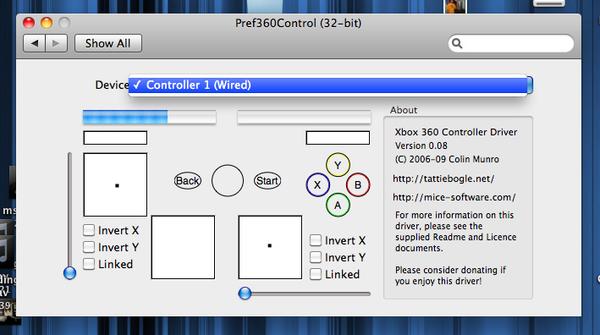 If our learners are creating games with Scratch, why not get them to play/control their games with their own console controllers? There are many controller mapping programs available for PC and Mac that will allow users to map their keyboard and mouse presses to a controller. So, if our pupils create a game that uses the arrow keys to move, why not map the arrow keys to the controller allowing the player to use hardware that they are familiar with, that sits within their own cultural domain, to play the game?
Microphone
Finally, what about other modes of control? The sensor blocks in Scratch have a loudness command. Could we challenge our learners to create a game that responds to noise levels? For example, consider this:
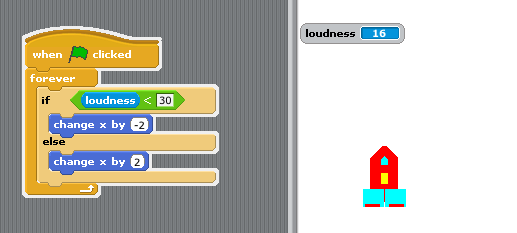
Using the loudness sensor we can control the left / right movement of the rocket.
Overall….
While Scratch and BYOB are not specifically deigned to create games, they are often used for this task as they offer a friendly, easy to use environment. However, by using additional gaming hardware, we can create a learning environment that should hopefully resonate with our pupils and encourage them to engage with the game design process further.

The 2011 Electronic Entertainment Expo kicks off this week, taking place between June 7 and 9 at the Los Angeles Convention Centre in California. You’ll find in-depth coverage of the show and all the big announcements on our site throughout the week, but ahead of that, here’s our guide to some of the event’s highlights.
While not officially the first day of the show, many companies have chosen to hold their respective press conferences on Monday.

Drum Hammer Dig was conceived and built within 48 hours, as part of Ludlum Dare’s 20th design competition, the theme being “It’s dangerous to go alone! Take this!” With a complete set of features but only one level, you should perhaps think of it as a creator’s sketch, or the vertical slice of a larger project.