Log on:
Powered by Elgg

Rory Ewins :: Blog

March 16, 2012

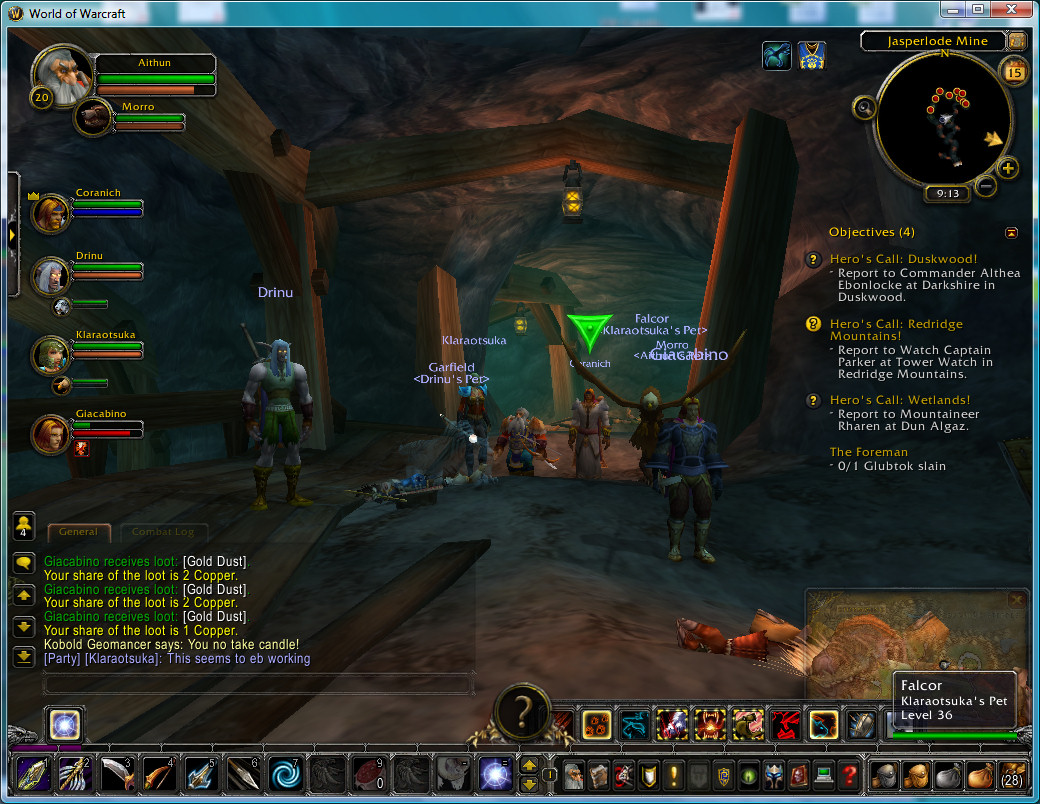
The Fellowship of IDGBLers met once more on 15th March 2012. This time to take on the challenge of a "Dungeon" available through a portal which takes you into a separate "instance" of the game.

I think we had fantastic teamwork. If we had just sailed in to the Dungeon with 4 strong players and even my short legged dwarf we could have wiped out everyone. Without much stratgey. But Coranich left to pick up a classmate.. and we all got wiped out! We tried again with much more care and planning and despite a few "deaths" we won through. Folks covered one another better, and we went to find lost characters - like myself once too. We had to learn new tricks for blasting open doors too. We were definitely in our ZPD.


Keywords: Deadmines, IDGBL, World of Warcraft

Posted by Austin Tate | 0 comment(s)

March 15, 2012

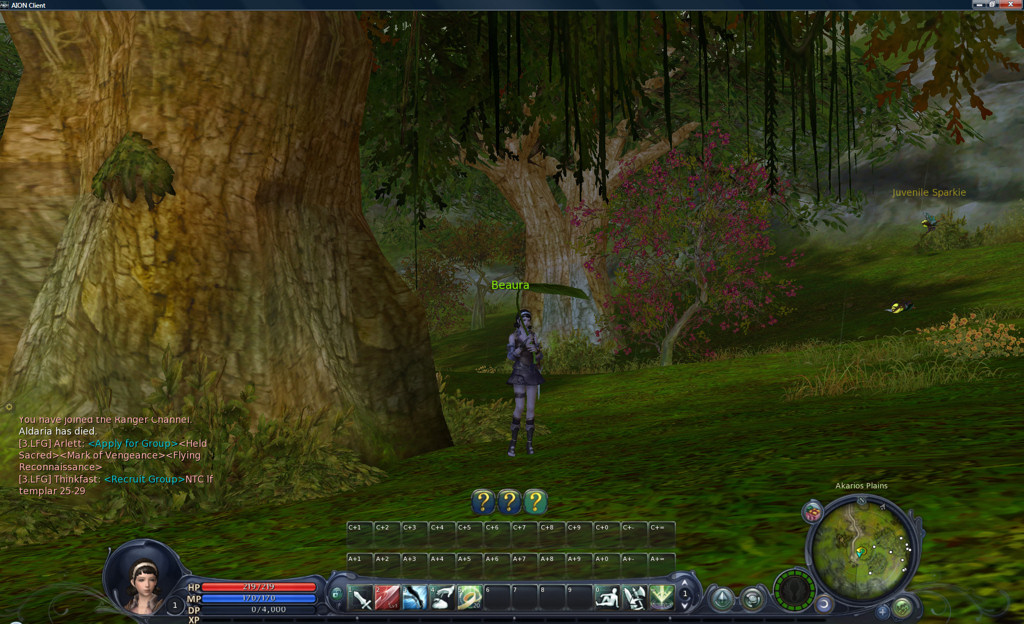
I tried the free to play Aion MMORPG available for download from http://www.aionfreetoplay.com/. I am on EU server "Anuhart".

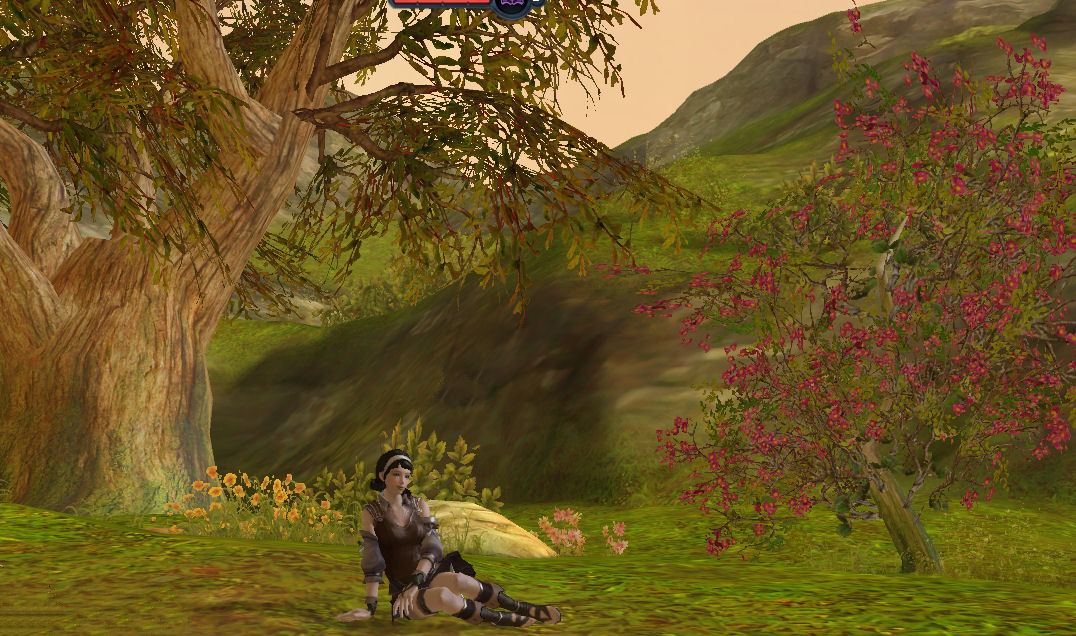
I entered as one of the races of Daeva (assigned to me on account creation), and selected the Elyos faction and Scout class. It was raining, hence the leaf umbrella.

The free to play Aion game allows for only 2 characters to be created, but gives access to all 55 levels, nearly 4,000 quests, and all territory travel, unlike the level 20 restricted World of Warcraft free starter edition.

Entering a new world, with a new character, even though the interface had many similarities to World of Warcraft, reminded me how important scaffolding was, and the value of the community created wiki information sites. I will hold off creating my main (male) character with my usual name prefixed aith "Ai" until I know more about the game and the factions. 

Keywords: Aion, IDGBL

Posted by Austin Tate | 2 comment(s)

March 09, 2012

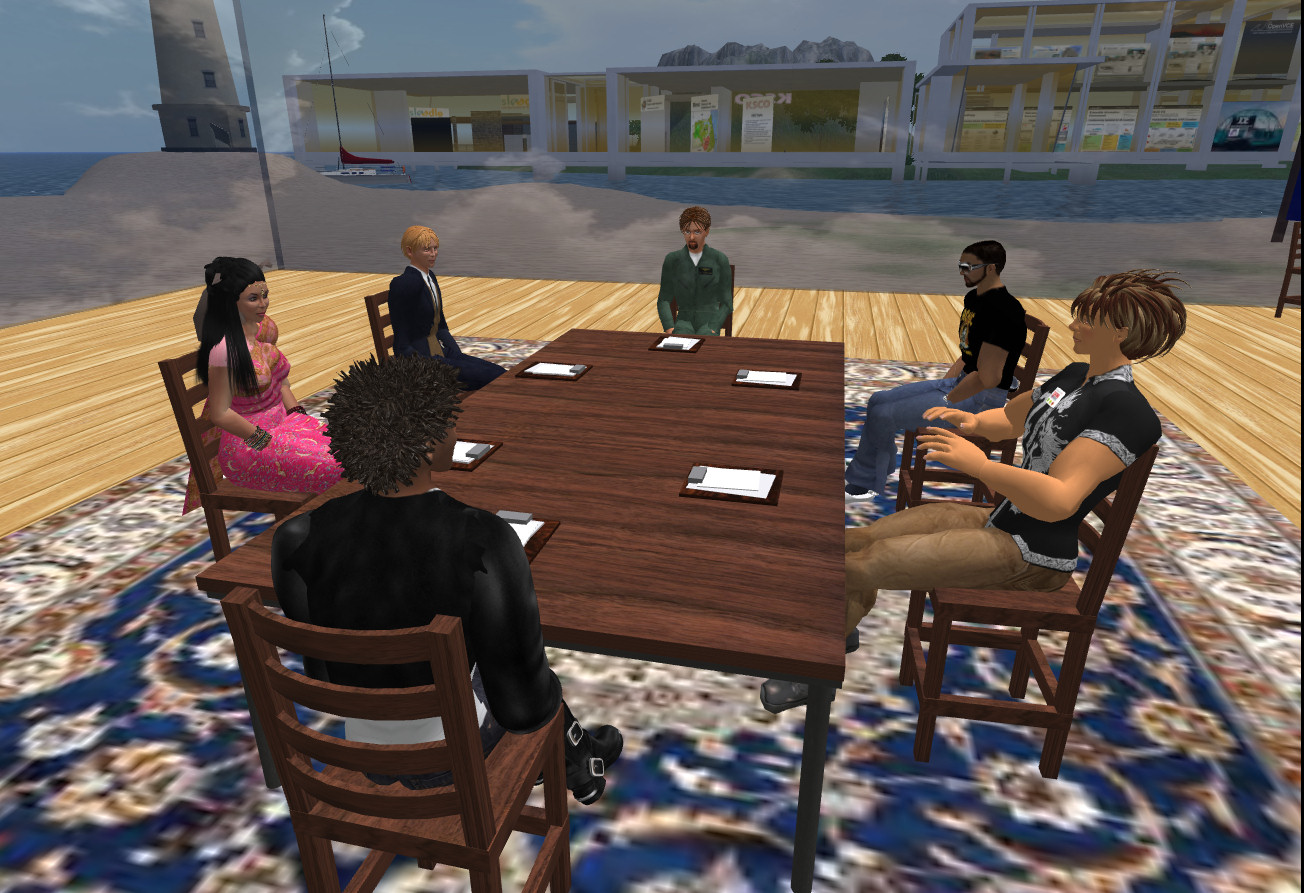
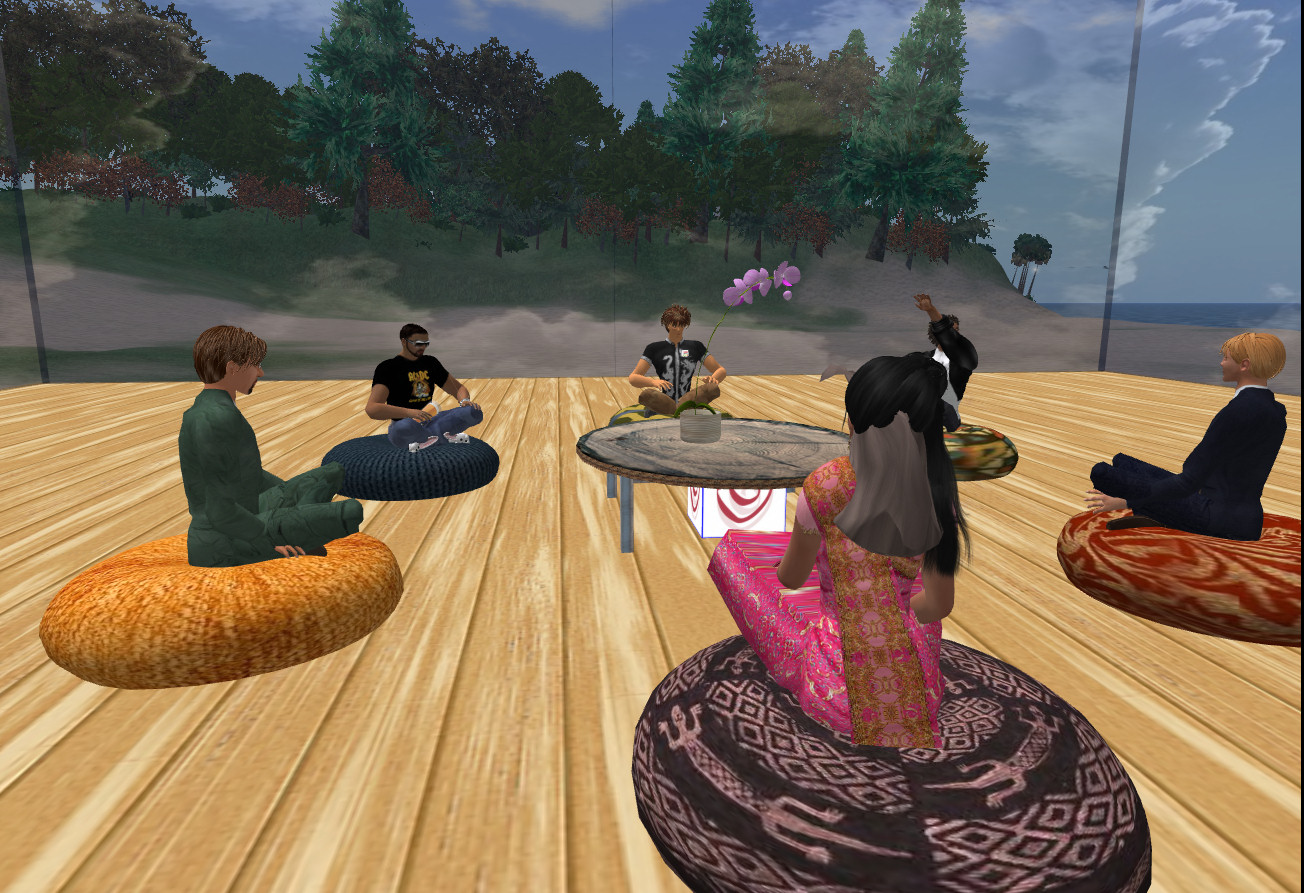
The Introduction to Digital Game-Based Learning class met Elena Northmead at the Virtual University of Edinburgh's Vue South Beach Pavilion in Second Life for a discussion on Augmented Reality Games.

Keywords: ARG, Second Life

Posted by Austin Tate | 0 comment(s)

The three papers present what the future universities and colleges would probably be like with the increasing digital media available. They are very enlightening and desirable, especially for the college practitioners. The new learning environment would be completely different from what we have assumed. It would be the complex combination of the present in–campus education system,  the digital online environment and the online real-life community.

 In the new learning environment, the new digital generation will have free access to a broader continuum of tools in their lives. The decentralized modal could set up a new environment where experts or masters help learn better and be more helpful as facilitators. It's important for the teachers to accept their position as a learning teacher. The teachers will face greater challenges. Traditionally, teachers will have more resources and should be a master or at least an expert in certain field. The dominant position and the authority will be challenged with the learners as a team who will have the same resources at hand. Confucius said “If three of us are walking together, at least one of the other two is good enough to be my teacher”. Hanyu, a learned poet and essayist in ancient China, noted "Students are not necessarily inferior to their masters, and instead the teachers not superior to the students." Not only the soft boundary exists between the distance education and the in-campus education, but also the difference between teacher and students would not be so significant. Teachers would be the program facilitator and coordinator. More different positions for the learning program would arise.  

More teachers need work together as a team for some program in order to handle the complex learning environment. The requirement that the different websites be seamless and uniform posit a challenging situation where not only the program developers, the course designers and the teachers should be in pace with what and how the websites will present. Teaching groups will  work together in a seamless way.

 The decentralized modal of learning environment would not solve all the problems in the new personal learning environment. The in-campus education will still play an essential role even in the new learning environment. Human being likes communication and group work and encouragement. It is necessary to have experience of working together.   

Keywords: roles of teachers

Posted by xiangjun sheng | 1 comment(s)

March 06, 2012

The Introduction to Digital game-Based Learning class met Frank Lassard at the Virtual University of Edinburgh's Sandbox in Second Life for a demonstration of Holodecks for creating scenes for role play and meetings.

Keywords: Holodeck, Second Life

Posted by Austin Tate | 0 comment(s)

March 04, 2012

In mid 2011, "Kirstens Viewer" based on Linden Labs' open source Second Life Viewer code, added support for 3D stereo vision using a variety of 3D methods, including simple red/cyan glasses.  This viewer is no longer maintained and is not available for download.  but the last version created - Kirstens S21(9) - still works with current Second Life servers. Here is an example image from Kirtsen's Viewer in red/cyan 3D (click on image for a full sized copy and get out your 3D glasses to see the effect):

There was an earlier patch for an early version of  the Second Life Viewer from the University of Michigan to support 3D stereoscopic views in Second Life. See http://3dvision-blog.com/forum/viewtopic.php?f=2&t=142 and https://jira.secondlife.com/browse/VWR-2972?

Keywords: 3D, I-Room, Kirtsens Viewer, Red/Cyan, Second Life, Stereo

Posted by Austin Tate | 0 comment(s)

March 02, 2012

I have been thinking about the game design asessment since Christmas.  It is my style to make notes and get ideas flowing early on and collect assets before seriously starting any work element.  I had originally thought a game using assets already available to me from a project on the "Virtual World of Whisky" might make a suitable topic for the game design.  See for example:

I have seen other opportunities while exploring quests in World of Warcraft, a number of space-themed games mentioned in this blog, and playing a range of new (to me) games on the course.

I am finding that a number of themes keep arising in my interests while engaging with these games and thinking about their narrative, objectives, and the ways in which they introduce artifacts and skills.

  • Situated Learning and Narrative
  • Levels, Scaffolding and Push to the ZPD (Vygotsky)
  • Use of encyclopaedia resources
  • Community-based Learning
  • "Ancient" style of learning at the feet of teachers

My interests continue to be strongly with games which have a social and community dimension, and a way to engage players with the broader community involved is often something they involve.

So, I have begun development of a game design for a quest style game in the Avatar movie theme areas of a MMO such as Second Life. The game is based on an exploration of the Pandora moon flora and Na'vi culture.  It will have strong community and knowledge sharing aspects, but allow for play that engages with others or not, with consequences.  I call the game "Moon Bloom – The Legend of the Bloom of the Aligned Moons".

Posted by Austin Tate | 3 comment(s)

I have found it much more interesting to explore the routes, travel mechanisms and locations which can be reached in World of Warcraft rather than just carrying out more quests, which I find are very linear in their design, with seemingly pointless to and fro movements.

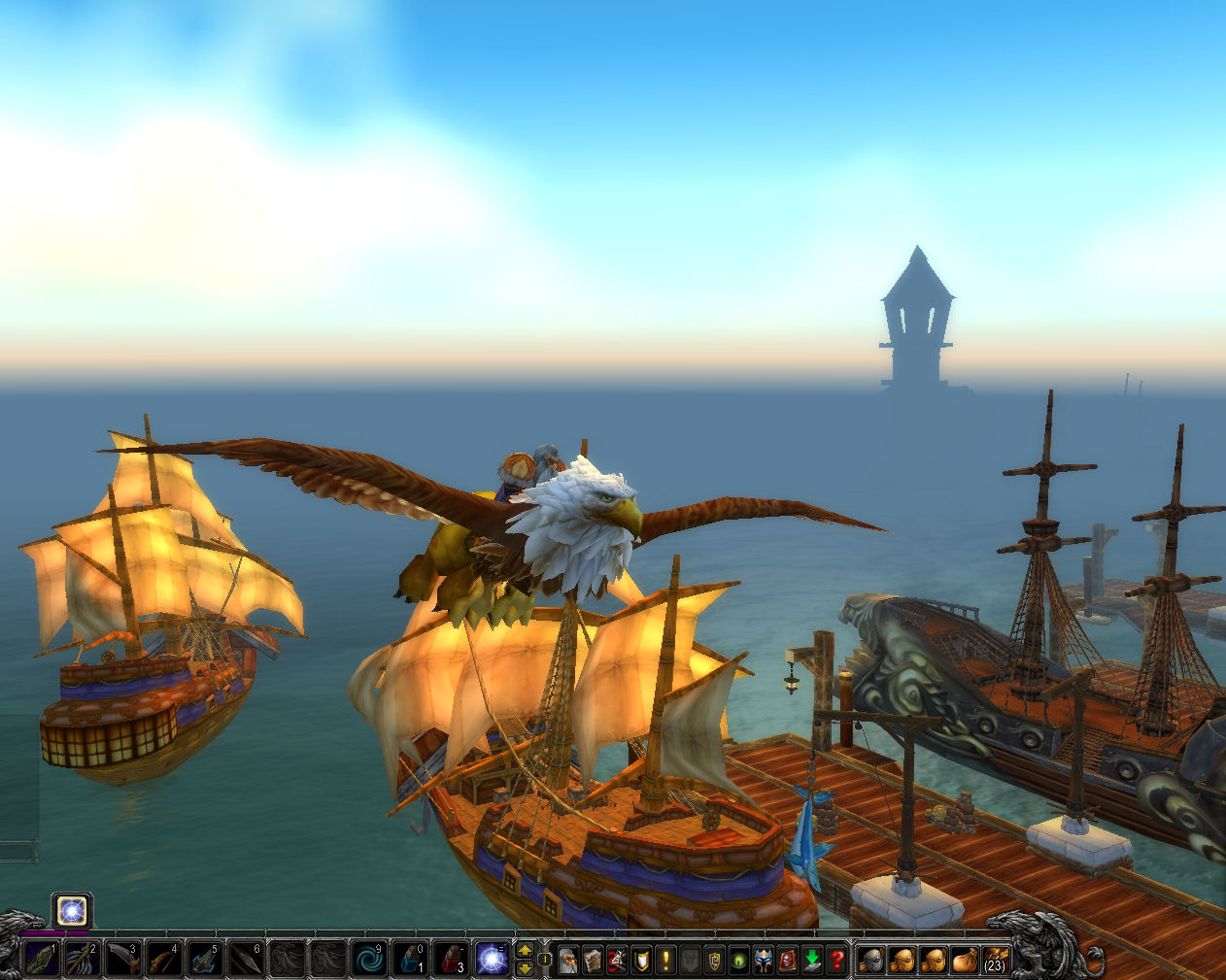
I explored Stormwind Harbour, used the boat routes available from there (and Menethil Harbour) to locations on the continent of Kalimdor, and found Thargold Ironwing who kindly gave me a free gryphon tour of the harbour - see http://www.wowwiki.com/Thargold_Ironwing

At level 20 my Dwarf Hunter was able to learn a riding skill to allow for a mount to be purchased and used.  So I now have the steed appropriate to the Dwarf race, a ram. This makes movement between sites much quicker and allows low level attacks to be avoided.

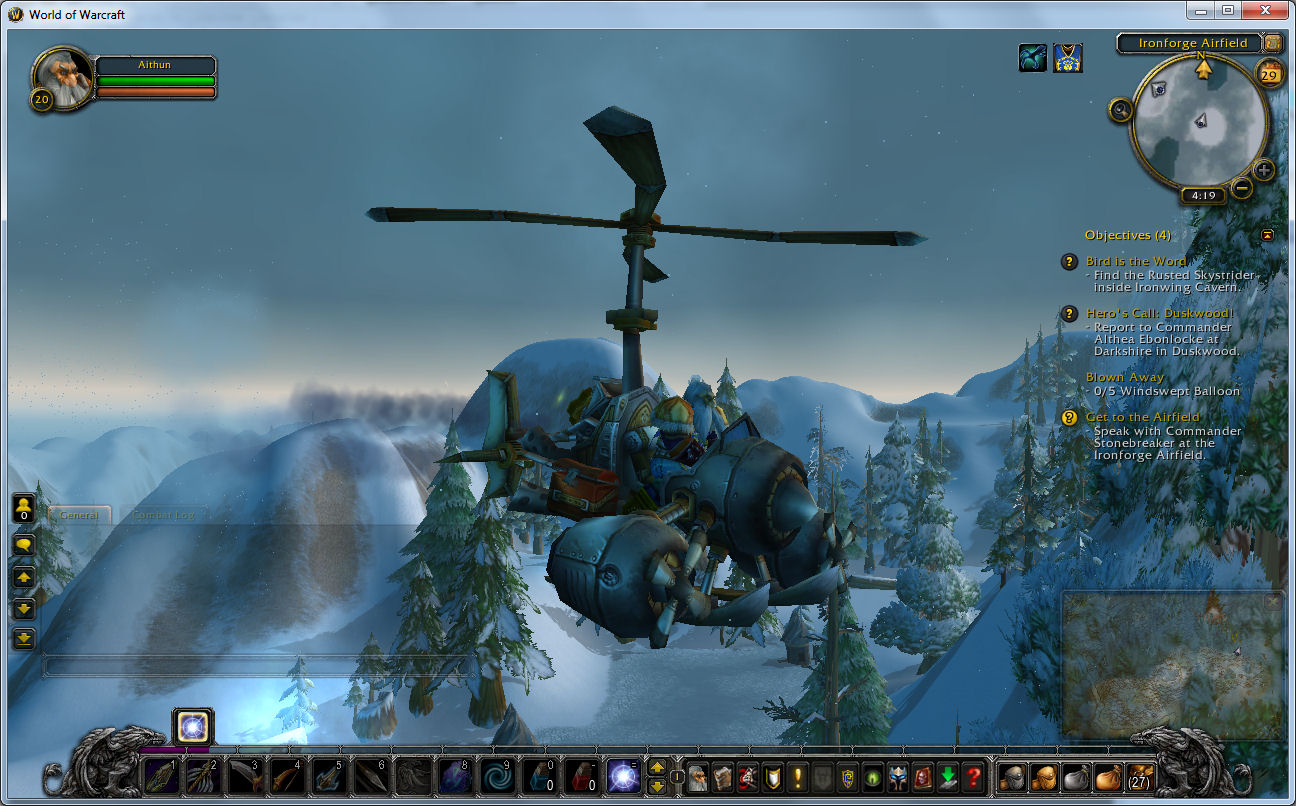
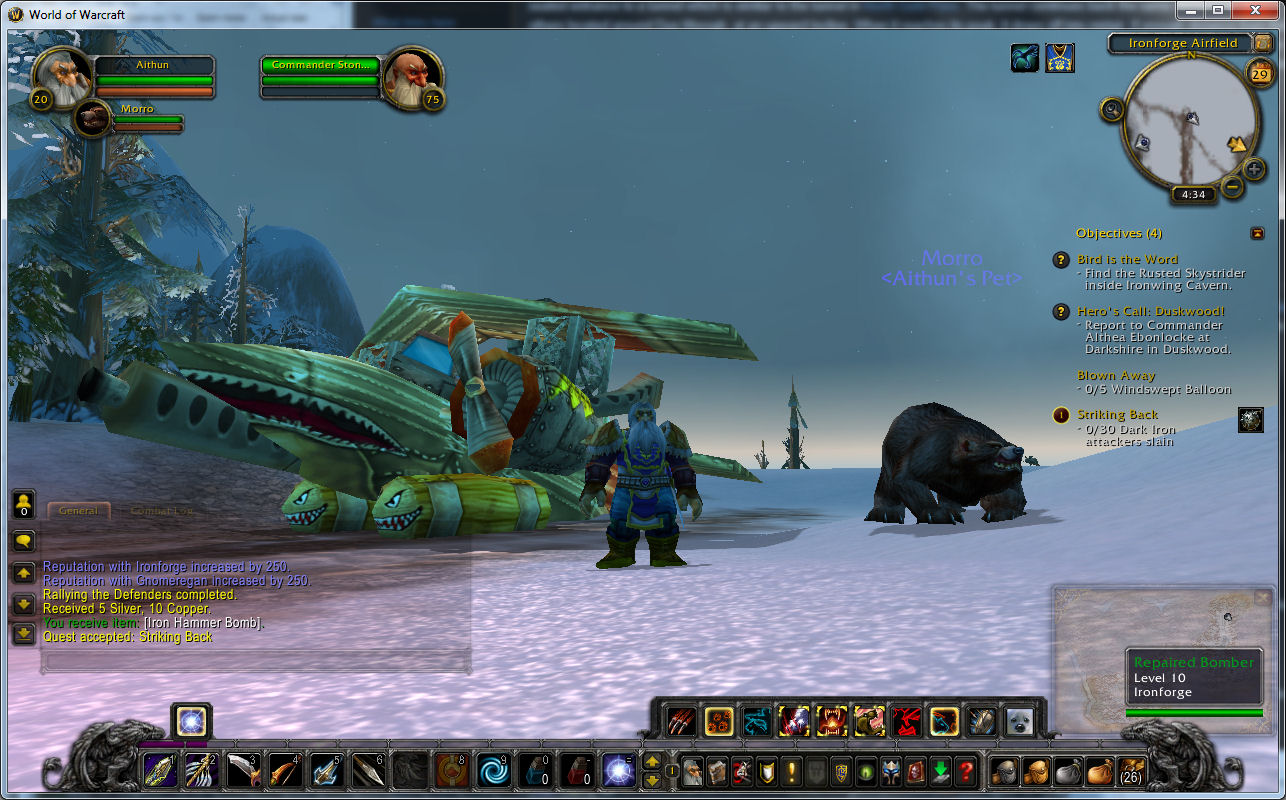
I am now discovering more route and vehicle types including an ornithopter and a (repaired) bomber.

Posted by Austin Tate | 0 comment(s)

February 11, 2012

On the importance of objectives for game, learning and activities design


“A key challenge when designing a game for e-learning is ensuring that the goals within the game support to the learning objectives and not detract from them.” (Whitton, 2010, P.90)


The importance of a well defined 'learning goal' in the design process became painfully apparent during the third and fourth week of the course. Somewhere during the activity of designing a Learning game using Google Earth group 2 focused more on the interactions (activities) then achieving the learning goal. The reason: a learning goal was not defined.


I think the main reason behind this was the reversal of the design process: instead of asking - “Can a game help me deliver content (or concept) X?“ the question leading the group was: “Design a game with a learning goal”. The time scale made the problem worse – instead of designing a coherent game with a story threading through it the group focused on specific gaming like activities.


Gee claims that “Good game designers are practical theoreticians of learning” (Gee, 2004) – especially if the reverse is true one would not go about designing a lesson without having defined the learning objectives first.


Scot Lake from the BrandonHall discusses the difficulty of introducing the 'game' idea into the workplace and instead suggests the gamification of specific experiences: as an example he provides loyalty cards – the idea of getting 'points' for specific Activities (in this case shopping with a specific store) is then used to encourage us to do more of that activity (and of course there are also 'prizes').


The idea of using commercial-off-the-shelf games has been discussed in different publications (Gee, Whitton, Malone etc) but, while existing off-the-shelf games can be included in day-to-day learning (in schools or universities) the same cannot be said of the workplace (with a few specific exceptions). Regardless of the scope of the planning (single activity or a complete game) it is hard to ignore the Importance of object definition.


References

Posted by Asi DeGani | 0 comment(s)

February 03, 2012

On the importance of visual quality

Both Greenfield and Gee talk about the importance of visual quality in video game. As part of the online discussions accompanying the course I put this point as to be one of the issues I have with second life as a gaming platform. While I have previously written about the demographics of second life based on age the issue of visual quality opened up a new interesting angle for me.

I have been a part-time gamer for a while now – I started with the traditional consoles such as Atari And today focus mostly on PC based games. For me a game with poor visual quality provides a limited amount of what Newman refers to as the player's sense of 'being there'.

An objective(?) analysis

Armed with this point of view I set out to Objectively compare second life with the games that I prefer to play, was I biased? Or was I missing something? I started with an objective test, a screen-shot taken in both environments:


[You do not have permission to access this file]

 [You do not have permission to access this file]

Screenshot taken with second life graphics set to 'Ultra'

Battlefield screenshot with graphics set to 'High'


In my personal opinion it is clear that second life graphics are not as good as is technologically possible. It is important to note that both shots were taken at a ' typical' location, without any preparation made ahead of time (other than adjusting the level of display graphics).


The source of the problem (?)

The “willing suspension of disbelief” is a critical element In the enjoyment of a video game (this can also be applied to books, films etc). Into larger amount of 'suspension' needed the less enjoyable the game. This becomes a specific issue when games have to compete with other visual media (such as other games, TV and film) – be for real-time 3-D visuals were possible game producers would overcome this by using 'connecting sequences' that were shot with well-known actors – to give the game a film like quality. In the past few years regular display cards have been able to crunch the numbers necessary to create 3-D images in real time this means that the messy change of media type (from computer graphics to cinematics) is no longer necessary.


Obviously, there would be a greater need for this type of 'self deception' in an audience that is more frequently exposed to the visual media used in TV and video games, in other words – old people (who have less exposure to video games) would feel more comfortable with lower quality graphics because of the smaller need for the suspension of disbelief. This tied in very nicely with usage statistics available from Linden labs. In 2008 about half of the population In second life was above the age of 30:

Age group

18-24

25-34

35-44

45 plus

%

15.5

35

28

20


However the even more interesting piece of data was the average usage per month based on age:

Age group

18-24

25-34

35-44

45 plus

Average usage hours per month

37.84

55.55

66.06

70.17

Source: banana verse


While there is no doubt that other elements affect these numbers, how big an effect does visual quality have?


References


Keywords: Game based learning, Second Life, Visual quality in games

Posted by Asi DeGani | 0 comment(s)

<< Back Next >>