<rant>
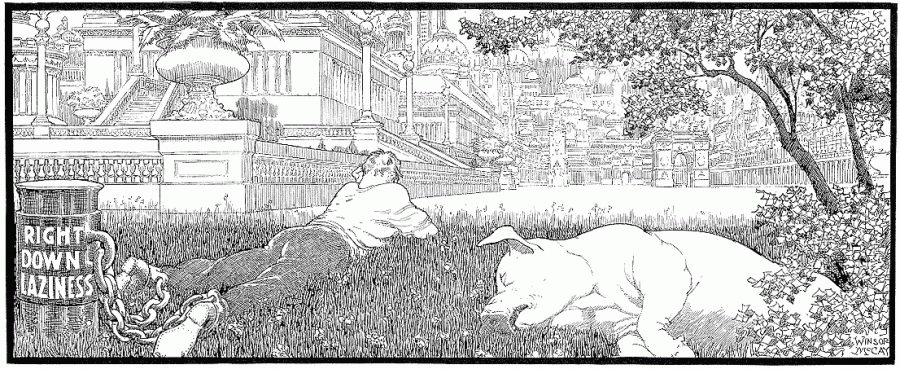
You don’t have to cite studies to me. I already know that various kinds of video games can have some positive educational effects. As somebody who has wasted way too many hours on video games since 1977 or so, this isn’t surprising to me. The notions that it might help train kids to think ahead, improve reaction time and some processing abilities, or even occasionally (very occasionally) teach some actual subject matter fall into the “duh” category for me. I have watched my sons get hooked on Minecraft (I never, never should have installed it last summer! I rue the day!), and I freely admit that they have learned a little about getting themselves organized, planning ahead, and of course a little about such things as mining and building.
So why am I not on the “let’s let kids play Minecraft for hours in class” train? It’s one thing mainly. There is one argument that some educators and parents for some bizarre reason are constantly ignoring:
Opportunity cost.
Yes, boys and girls, opportunity cost. You know what? If there were a multi-billion dollar industry behind any number of other activities—cooking, say, or board games or television-watching—you’d find zillions of new studies showing that those activities are delightfully educational as well. Why do I say so? Because almost everything has some measurable educational impact. You must be doing something pretty goddamned mind-dulling, like watching Growing Up Kardashian, if you don’t emerge just a little smarter.
So it’s not terribly surprising that playing video games, and Minecraft in particular—yes the time-sucking bane of the young lives of so many boys, and some girls too—has some educational benefit.
The question is whether it’s a wise use of time for educational purposes. And that is a matter of comparative educational benefit. You know what has more educational benefits than video games? Pretty friggin’ much everything on the curriculum. It’s all about efficiency, and qua efficient educational experience, most video games absolutely suck for most educational purposes—compared to the traditional alternatives.
Now, don’t get me wrong. I think reading textbooks and doing worksheets and taking way too many quizzes and tests is pretty inefficient. This is why we homeschool. Reading a lot more meaningful books and keeping the busywork to a minimum is more the thing (that’s what we try to do). My point is not that ordinary school curricula are wonderful, but only that adding heavy doses of Minecraft to it simply exacerbates an already appalling problem.
I can imagine a response: “But Minecraft is really inspiring to my kids! I can get them to write about their worlds, and we have worked in a lot of creative Minecraft lessons that the kids love!” I’m sure that’s all true. If it stopped at a few lessons now and then, then heck, maybe we’d be doing it. But Minecraft is like crack for kids. They don’t play for a half an hour. They play for hours and hours, until you drag them, kicking and screaming, from the computer. And I reiterate my point: There are all sorts of extremely fun stuff that we could be doing, which have some educational benefit. But we don’t do them during study time, and why? Because we have better things to do.
If you want your kids to be well-educated, you’ll think harder about educational efficiency and opportunity cost.
</rant>
This work addresses important models of programmatic support specific to the STEM doctoral experience.
via TCRecord
In this commentary, authors discuss the Houston Independent School District's (HISD) highest-stakes use of its contracted value-added system (i.e., the Education Value-Added Assessment System (EVAAS)) to reform and improve student learning and achievement throughout the district's schools. Authors situate their discussion within a related report on the recent release of Houston Superintendent's own evaluation scores. Authors also situate their discussion within the evidence, as per the recent release of the state's large-scale standardized test scores. Authors assert that, perhaps, attaching high-stakes consequences to teachers' value-added output in Houston is not working as intended.
via TCRecord
I’ll dive right into H’s schooling. He’s now age 9.
The new tasklist orientation. This past year the biggest problem has been motivating him to study enough. Until November, it was a struggle. Although Mama’s helping quite a bit more, especially with E., H. still requires management and I still have to work full-time. While he can do quite a bit without being closely advised, if he’s not monitored, he’ll just do whatever he wants.
To get help with keeping him on track, we went through the long process of enrolling H. in Ohio Connections Academy. After testing he was admitted in the 8th grade in most subjects and 7th grade in math. So he was at OCA for one week in, I guess it was, November. I thought he’d be able to proceed through the curriculum at his own pace, but he really couldn’t, i.e., they aren’t flexible that way. OCA’s advertising and protestations to the contrary are spurious. The tasks are not really a la carte, either. H. ended up saying that he could learn a lot more doing “Papa’s curriculum,” and I had to agree.
Digression about OCA and public school curriculum
An aside—public school curriculum as represented by OCA’s Pearson texts (Connections Academy is owned by Pearson) looks very “meaty.” Kids are constantly doing things that certainly look educational and they’re hard to fault. The problem is that putting all that crap together amounts to a lot of busywork. A lot of assignments are basically repetitive or drilling what ought to be obvious or to be picked up on the fly. It’s more efficient (it has been for us) to stick mainly to reading high-quality books and do straight writing, math, and language study; much of the extra crap kids are drilled on ancillary to the main curriculum is incredibly annoying.
Language Arts texts, ugh, don’t get me started. H. was going to have to read just two chapter books for the semester. But on those books he was going to have to answer questions, take quizzes, do vocabulary sets, etc., etc., meaning he spent at least as much time with ancillary busywork as actually reading the book. Why not just answer some questions at the end the book, have him look up words he doesn’t know, then read another book in the same time? Worse than that—much worse—are the textbooks. Here we have short stories, nonfiction essays, poems, etc., which altogether looks great (although nonfiction should be studied in history and science). The trouble is that there is two or three times as much material padding all the readings. It’s appalling.
The history text was similarly ugh-inspiring. Don’t get me wrong, it seemed to be fairly well-written and comprehensive. The problem was that there were a zillion sidebars, too many pictures and other bells and whistles, and the text itself was a compilation of facts rather than anything resembling a narrative. This is not how to teach history.
The math and science curriculum was a bit better, but also suffered from the padding problem, albeit less so. H. likes the CK-12 biology set-up we have going much more, though, and Khan+IXL for math is hard to beat, for H. anyway.
There was also way, way, way too much testing/checking/quizzes over everything. That takes time, time that could be spent actually learning. I’m not referring to standardized tests. I’m referring to everyday quizzes and exams. Just way, way too much.
But we did bring from our failed experiment the excellent technique of breaking down the school day’s tasks into small chunks and getting them checked off (by me…hopefully to be passed on to Mama soon) regularly. The checklist discipline clarifies to H. exactly what we’ve decided he’ll work on. He can decide in what order he does things in, but he has to complete a whole “day’s” work before he moves on to the next “day.” Generally speaking a “day” requires anywhere from one to two days, maybe 1.5 days on average. The checklist discipline also helps me to decide how long to allot to H. for a task, and how long to set a timer after which I check in with him. For example, this was a recent checklist:
So far, so good: he’s done more work on an average day in the last six weeks or so than he has at any time in the last few years.
Math. H. is now working concurrently on IXL.com‘s 6th and 7th grade math. So, this is kind of weird. In my high school back in the early 1980s, most kids did pre-algebra in 8th grade, algebra in 9th grade, etc. If you were in honors classes, though, you’d do pre-algebra in the 7th grade, algebra in the 8th grade, and geometry in the 9th. So here’s the thing: IXL’s sixth grade is on the advanced track. Then they have two years, the 7th and 8th grades, doing pre-algebra. Algebra is supposed to be a 9th grade activity. (IXL doesn’t teach Calculus yet.)
As a result, and since the 7th grade stuff looked very doable, we decided to combine IXL’s 6th and 7th grade. If the 7th grade stuff is just a review of their 6th grade stuff, as it often is, I just make him get his IXL score for the 7th grade version up to 30, and if he does so without any mistakes, he can skip the rest. Anyway, that’s working out. The idea is that he’ll do this for the next six or nine months and then tackle IXL 8th grade, which does introduce quite a few new topics.
Khan Academy’s free videos at this level are finally quite good, so I just assign him to watch those before the topic comes up and lo and behold, he usually doesn’t need much help from me. That’s all we do for math now. Maybe when we get to algebra we’ll switch to a textbook. But at this point, we’ve tried Saxon and Singapore and a few others, and this seems to be most simpatico to H. I wish he liked a more substantive curriculum, but motivation is key, and with Khan, he does seem to be learning the concepts pretty well.
Writing. It’s been a long time since I had H. do anything like a systematic writing program, but I decided he needs systematic training in certain kinds of writing, even if he is able to put together decent sentences and paragraphs. So in November we started working on Writing with Skill. We’re going through it very slowly, maybe too slowly, because I still let him do “own choice” writing every other day, and I give him special assignments like poetry or, as recently, a speech (his speech is about why you should have a pet dog). Another “break” we took was to get feedback from Fiverr on a long story he wrote, then rewrite the story incorporating the feedback. That was fun. Anyway, I’d say his writing is progressing nicely.
He’s also occasionally been doing his own choice of IXL Language Arts topics and got hooked, for a little while anyway, on Vocabulary.com. He is still working in Cursive Writing Words (!) and I’m threatening to make him write some essays in cursive as soon as he’s done with that. He can type pretty quickly…up to 50 wpm or so.
Literature. As to literature, for a long time I was having him do an hour a day, except that for most of this year, he rarely did that. He did maybe an hour a day three times a week. So instead, after the Ohio Connections Academy experiment, I decided to make the assignments more reasonable: I’m having him do half-hour of reading actually daily. This works out much better than requiring an hour, and he’s made more consistent progress in his reading, with fewer of the “breaks” of many days that he used to take. Recently he finished The Hunger Games and The Lord of the Flies, and he’s almost done with The Wind in the Willows. I’m not sure I could tell you what else he’s read this year…definitely a fair few. E.g., he did read The Hobbit, and he read the first three chapters of The Fellowship of the Ring but decided that it was boring (as a Tolkien fan, I was scandalized by this but I let it go; he’ll get the appeal later). I got him The Hunger Games after he read and enjoyed a few other dystopian novels, Anthem, Animal Farm, and The Giver.
Another thing we did (are still doing, too) was to compile an anthology of poetry. I’m not sure how we got into this. This was mostly his idea, and he’s still quite gung-ho about it. The dream is to co-author and eventually publish a poetry anthology for young people (ages 8 to 15 or so). We were doing this for about 30 minutes per evening, most evenings, last fall; but then we decided we needed to get back into the evening reading (e.g., we still haven’t finished Oliver Twist, which I started reading to him a long time ago). But we still work on it every so often and our intention going forward is to spend a couple of hours working on it on Saturday or Sunday afternoons. We work together at the same time on this Google doc. Of course, I work more efficiently than he does, so I guess most of what you see there is my work, but H. does make a lot of contributions to every aspect of the production. We’ve also worked on transferring this document to a better-formatted MS Word version, but the text so far is pretty much the same.
This inspired some interesting poems from H. recently, the first doubtless inspired by “A Swing Song”:
The Sky
Sky, sky,
Up high,
No animal but
The bird is sly
Enough to venture
Into the sky.
Low, low,
Down below,
Where any foe
Would love to go
Who cannot fly high
Up into the sky.
=============
The Frog
There once was a frog,
Who loved to sit
On a particular log.
He liked it as no other,
And he didn’t even bother
To sit on any other.
There once was a frog,
Who loved to bathe
In a particular bog.
He liked it as no other,
And he didn’t even bother
To bathe in any other.
History. This is a subject that we started very well on, with the first 1.5 books of The Story of the World read alongside three other history books. Then we started slowing down and since then it’s been pretty hit and miss. Under the new checkbox scheme, H. is finally making excellent forward progress in The Story of the World vol. 3 (done as of early January; soon to start vol. 4), as well as The Landmark History of the American People and Look-It-Up Book of Presidents, and occasionally something else. He also has to add questions to SuperMemo, which is one big reason why he’s made relatively slow progress; but he does remember some history as a result.
Science. Last summer or so we finally finished our study of chemistry. This included What’s Chemistry All About? as well as the two long sections about chemistry in the Usborne Science Encyclopedia (quite good). He read a big long book about the elements as well as How to Make a Universe with 92 Ingredients and some other things. Then we switched to biology last fall. This was quite cool, because his fairly in-depth exposure to chemistry prepared him to dive past middle school level biology and go straight to this free CK-12 Biology text. For the first time ever he’s doing most of his science study without me, which is great. I still have been reading What’s Biology All About? at the dinner table, which is very easy, but he still enjoys it. In addition to just reading the CK-12 text, I make him answer half of the comprehension questions, do all of the corresponding quizzes in the (stunningly good) CK-12 app, and add questions to SuperMemo.
Geography, etc. In an earlier version of this post I neglected to say anything about his geography study. Well, this has been a problem. We’re still working on U.S. geography, and I don’t think we’re even halfway through the states. In our evening reading, among several other things, we were working our way through the National Geographic U.S. Atlas for kids, and our progress was steady, but quite slow. Then last fall we dropped all of that for the poetry anthology and, though H. did read a few short “True Books” about U.S. regions, for the most part geography was dropped. More recently I started him reading the atlas by himself, and making SuperMemo questions, and I think he did that for 2-3 states. But he complained that it was boring, so for Christmas I gave H. a geography workbook with map-labeling and fact-drilling work. He seems to like this better. Anyway, I do hope with the checklist method we’ll get through U.S. geography this year.
H. has continued to do drawing and other art projects, mostly with Mama, at home—when given specific instructions, he has retained some of the ability he gained in his art classes, which he no longer takes (they were getting repetitive). He has also been practicing piano, but not very much; he’s basically been treading water for the last year, although he has learned to play with two hands and it getting more confident anyway. But he declares he doesn’t like it and we haven’t insisted very often.
Java/programming. For a long time I’ve been telling my programming-crazy son that he really must go all the way through a programming tutorial. Well, I said to myself, if he isn’t going to do it all on his own, I’ll just “make” him. It turns out that he’s very happy to be “made” to do this; he enjoys having the time (only 15 minutes per day) to do it. He goes through the text quickly—he started a few weeks ago and is around the end of chapter three of Think Java, which is written for high school preparing for the AP exam. He seems to be highly motivated and enjoying himself greatly, and so far isn’t complaining about any problems. On his own he has thoroughly learned Scratch, and has made some inroads into Visual Basic, and bits of other languages. He wants to be a programmer when he grows up.
Latin and Greek. Don’t ask me how, but in the nine months since my last update, we have gone through only pp. 39-63 in Benjamin D’Ooge’s Elements of Latin. We have also made more progress in Maud Reed’s Julia, as well as Mima Maxey’s Cornelia. In the last week or two, though, we put these down and started in on Orberg’s Lingua Latina, mostly because H. says D’Ooge is boring. I exhaustively compared the programs, and I have to admit that LL might be better for us at this stage. Although it seems we have done only a little work on Latin, we have not really been shirking too much. We have actually gone over several things repeatedly, done a hell of a lot of review (we spend half of our 30-45 minutes each morning on Latin in SuperMemo review). The stuff that we’ve learned, we’ve learned to death, and that includes the stuff in Julia and Cornelia. We have mastered a lot more vocabulary than what appears in D’Ooge.
As of just a few days ago, we decided to let H. finish by himself the books we’ve started reading together at night. Instead, we’ve started studying (for 20-30 minutes per night) ancient (Attic) Greek out of the same textbook I used in college, Athenaze. We’re still learning the alphabet…I’ll let you know how it goes. I’m motivated and so is H. He thinks the alphabet is pretty cool and he infers (he realizes this is an invalid inference, however correct the conclusion is) that the language must be pretty cool too.
Supermemo. Here’s one of our great success stories. At some point in November, I told H. he can finish 100 SuperMemo review questions in 30 minutes (why not?). I check after 15 minutes if he has finished 50, then after another 15 minutes I check if he has finished 50 more. A lot of the time I don’t really have to check at all—he almost always does it without getting distracted. He writes down the number he has left to do after each three minutes on a snazzy spreadsheet, which automatically calculates his rate of review (instant feedback is very handy), and so I hardly have to monitor him at all. He actually chooses to do Supermemo first thing in the day sometimes, which he never used to do.
Dinner reading. I still do reading to H. at dinnertime. This includes Help Your Kids with Language Arts on Mondays (now mostly done), What’s Biology All About? Tuesdays and Thursdays, poetry on Wednesdays, art and music on Fridays (shared between both boys), logic workbooks on Saturday (almost done with Orbiting with Logic, thus completing the Prufrock series—again, both boys are doing logic now), and, lately, a slightly modernized version of Pilgrim’s Progress on Sundays. The amazing thing is that E. at age 4 and 5 absorbed quite a bit of the chemistry and biology I’ve been reading to H., and as a result he’s doing very well on science; he wants to be a scientist when he grows up.
Anyway, that’s all I have time to write up, for now…I’ll add some info about E., now age 5 and addicted to “BrainPop,” soonish.
I know, I know: That title sounds ridiculously click-baity. But if you’ll look at my blog, you’ll see that I don’t really go in for click-bait titles.
Unfortunately, I mean it quite literally. It’s an enormous problem that we aren’t talking about enough. And I want to propose that one reason for it is a massive failure of civics education.
Support for democracy is declining. First, let’s talk a bit about support for democracy—yes, democracy itself, as in voting for your leaders and representatives and holding them accountable in the arena of public debate. Only one in five Millennials aged 18 through 29 cast a ballot in the 2014 elections—the lowest youth voter turnout in 40 years, says the Atlantic.
As Vox recently asked, “Are Americans losing faith in democracy?” The article makes a series of points illustrating that Americans, especially younger Americans, are ignorant of and aren’t engaging in American political life. The article’s main source is a forthcoming paper by Roberto Foa and Yascha Mounk titled “The Democratic Disconnect,” together with the World Values Survey. The writers summarized their own work in the New York Times last September.
Asked how much interest they have in politics (as Vox reports), Americans born in the 1930s said “very interested” or “somewhat interested” almost 80% of the time; for those born in the 1970s, the figure dropped to about 50%, and for those born in the 1980s, it was continuing to drop just as precipitously.
More sobering is the survey question about how essential it is to live in a democracy, rated from 1 to 10. The percentage of Americans responding “10,” essential, has dropped from the 70% range for those born in 1930 down to the 30% range for those born in the 1980s. A 40% drop in support for democracy itself is a momentous generational change.
In case you think that’s a mistake, compare that to a question asking whether “having a democratic political system” was a “bad” or “very bad” way to run the U.S.: while the percentage for those born in the 1950s and 60s hovered around 13%, for those born after 1970, in the surveys since 1995, the percentage rose from about 16% to over 20%.
Even openness to army rule—something we associate with banana republics—has climbed from 7% to 16% of all Americans.
Support for free speech in America is declining. This is incredibly important: the Pew Research Center found that 40% of American Millennials are OK with limiting speech offensive to minorities (up from 12% for seniors aged 70-87). A stunning 51% of Democrats want to make “hate speech” a criminal offense, and 37% of Republicans. If you have even a passing familiarity with First Amendment law, you’ll know that these things are contrary to the First Amendment.
That is how it is possible—and not implausible—that 50 Yale students could sign a petition within an hour to repeal the First Amendment, as this video of Yalies showed:
What the video shows notwithstanding, Yalies are very smart. They can compare their attitudes toward offensive and hate speech with what they learned in their elite civics and history classes about the First Amendment, and infer that they’re opposed to the First Amendment. If they’re reasonably intelligent, self-aware, and honest with themselves, as some Yalies are, they’ll recognize that their intolerance to certain kinds of speech commits them to an opposition to free speech.
The increasing hostility toward free speech among many of our future leaders at elite colleges like Yale has been frightening to many of us, and has sparked a national conversation—an example is here, summarizing some recent episodes and calling academe to return to free speech.
Here’s a possible reason why: Civics education has been weak for years and recently declining even further. I don’t pretend to know why support for democracy and free speech have been declining, but if our students for some generations have simply not been well educated about basic American civics, that must be part of the explanation.
In the National Assessment of Educational Progress—the “Nation’s Report Card”—for 2014, only 23% of 8th graders scored at or above proficient in civics. While 39 states do require a course in American government or civics, only two states require students to pass a test in American government/civics to graduate from high school. As the Civics Education Initiative reports,
[T]he Civics Education Initiative…requires high school students, as a condition of graduation, take and pass a test based on questions from the United States Customs and Immigrations Services (USCIS) citizenship civics exam – the same test all new immigrants must take to become U.S. citizens.
To date, six states…have passed legislation implementing the Civics Education Initiative, with a goal of passage in all 50 states by September 17, 2017 – the 230th anniversary of the signing of the Constitution.
But, you wonder, if new immigrants have to pass this citizenship civics exam to get in the country, wouldn’t American high schoolers be able to pass it? No. In studies, only 4% of high schoolers in Oklahoma and Arizona passed it.
The National Council for the Social Studies published a position statement summarizing the sobering truth: “Sadly, the narrowing of the curriculum that has occurred over the past several years combined with the scarce attention to civic learning in a number of state standards and assessment measures has had a devastating effect on schools’ ability to provide high quality civic education to all students.”
According to a 2011 study by the Intercollegiate Studies Institute, ignorance was not rectified at the college level:
beyond mere voting, a college degree does not encourage graduates to become actively engaged in more consequential aspects of the political process. Said another way, among persons with equal civic knowledge, those having earned a bachelors degree do not demonstrate any systematic and added political engagement beyond voting. … A college degree appears to have the same negligible participatory impact as frequently listening to music, watching prime-time television, utilizing social networking sites, and emailing.
Knowledge of basic political facts among the general public is shockingly low. For example, only 40% of Americans surveyed in a recent survey by Pew knew which party controlled each house of Congress, and only about a third of Americans could even name the three branches of government.
Civics isn’t easy, and political philosophy is even harder. But both are necessary. If this purported decline of commitment to the basic American system is real, and if it’s rooted in poor civics education, it doesn’t seem surprising to me.
For all the emphasis on reading and the massive, feature-rich language arts textbooks, American public school students don’t have to read many books, period. Most of them are not prepared to read and comprehend the Constitution, much less the complex historical works such as The Federalist Papers, Common Sense, and Democracy in America that explain and defend the American system.
Education matters. It is likely that we will face more battles in higher education and, increasingly, in the public sphere over the necessity and advisability of maintaining robust democratic institutions and adherence to free speech. I fear that as we answer more and more attacks, reference to the Constitution and American political principles will not be sufficient. Part of the problem can be laid at Jefferson’s doorstep, when he wrote, “We hold these truths to be self-evident.” The fact is that they aren’t self-evident, that philosophers have argued for and against them quite a bit, and in the years ahead, the better the pro-freedom side acquaints itself with those arguments, the better chance we’ll have.
A recent study found that corporal punishment declined in Texas public schools from 2010-2011 to 2014-2015. The percentage of students who attended school in districts that formally prohibit corporal punishment increased from 60% to 66% over four years. Furthermore, through the examination of OCR data for the 2011-2012 academic year, the study found that 72% of Texas students attended school in districts that did not report a single incident of corporal punishment.
via TCRecord
As the edTPA quickly becomes the gold standard of teacher performance assessments, the field needs to reflect on what sense our candidates are making of the measure. In this commentary we share our candidates’ conclusions about what the edTPA measures well and less well, and the dangerous inferences they draw from these conclusions. Our aim is to alert teacher preparation programs that teacher candidates view the high stakes performance assessment as an exhaustive checklist of competencies, rather than one of many measures that assess different clusters of teaching skills. The field must counteract this erroneous conclusion and help candidates understand that there are critical competencies that fall outside the scope of the edTPA, which must be developed before being ready to practice.
via TCRecord
Sixteen states require their Departments of Education to assign a single performance indicator such as a “letter grade” to schools within those states. We take a look at the relationship between school grades and poverty in one of these states. Our analysis indicates that there is a moderate negative correlation between poverty and school performance indicators. We discuss the implications for communities and structural poverty and make a plea to reconsider the manner in which single performance indicators are determined.
via TCRecord
The purpose of this commentary is to consider the role of contemplative practices in the teacher preparation curriculum. Contemplative practices help reduce stress, improve a sense of well-being, and increase coping abilities for professional demands. They can be particularly useful in managing stress in transition situations. We suggest that students preparing to teach be provided specific training on how to use contemplative practices for sustaining positive personal and professional development.
via TCRecord
This commentary advocates the use of Black popular culture in the field of educational leadership to address contemporary concerns of urban youth. Representations of what Black life means for urban youth is heavily mediated by popular culture, for better and worse. The influence of rap artists or athletes in the entertainment industry; homicides in the Black community; or the recent police brutality cases unfolding in national news impacts urban youth in school culture. How youth represent their experiences in popular culture is of consequence to school leaders committed to social transformation of public life in urban education. At a time in which youth protest “Black Lives Matter” on social media and the streets, the standardization of traditional educational leadership theories, based in Taylorism, have become all but irrelevant to the human condition of Black youth. This article deploys the use of film, music, comedy, and sports as discursive institutions by which educational leaders can become familiar with the sociocultural realities of urban youth in popular culture. The pedagogy of non-hegemonic Black popular culture enables educational leaders to discover how urban youth represent their identities; negotiate their agency; and seek empowering possibilities in their future.
via TCRecord
The commentary raises the question of whether teachers are becoming aides to tools of technology.
via TCRecord
This essay discusses “Black English” in the context of the overall African American culture, with particular emphasis on the consequences of reliance on non-standard English in a competitive, capitalistic, majoritarian-oriented society.
via TCRecord
This commentary critiques top-down, instrumental approaches to character education. We argue that a pedagogical move from teacher instruction to student construction of what it means to be a socially responsible, politically engaged citizen in a democracy requires a thought-driven approach to character education. We draw from political theorist Hannah Arendt’s analysis of thinking and moral considerations to guide our review of a widely promoted character education program: Character Counts!
via TCRecord
Teachers College Record subscriptions will now include two yearbooks in each calendar year.
via TCRecord
First, let me state my basic thesis poetically. To some, it will sound unoriginal, implausible, and overwrought:
We in the West are falling in a moral abyss. We are in mid-fall. It’s been long since we careened off the precipice, though we have not hit bottom.
 Poetic language is vague, so let me explain what I mean.
We began falling when we (many of us) stopped earnestly using the language of moral judgment, i.e., the discourse of individual responsibility, of suffering the hard consequences of foolish action, of liberal knowledge, hard-earned wisdom, of bad judgment, of the risky exercise of freedom that entails and requires judgment, of sound character and good habit, of courage, humility, and other virtues. In short, our strength of character is weakened, and the cultural wisdom needed to keep it strong, the cultural capital we built up over thousands of years, has been squandered in the space of a few generations.
So many good and necessary habits we used to have, which strengthened our character and that of our children, have been carelessly tossed in the dustbin of history. Instead, look at what we have. Look honestly. Look past your partisan or religious contempt and your haughty reactions, and try to judge soberly how far what I say here is actually true.
Blaming others, rejecting responsibility… What we have is a society that blames others for our failings. Our problems are blamed on benighted parents, racism and sexism, evil corporate masters, venal politicians, the corrupting influence of mass media, violent video games, and other dark forces. But ultimately, these too are all thought to be pawns and tools, and our problems are really all “structural” or societal. Ultimately we must engineer a better way to control the dark forces that inflict all our problems. In any case, our problems are not individual. We, too many of us, act as if we have no individual responsibility for our failings. We cannot be blamed.
 …because of a rejection of personal freedom. We have a society that increasingly rejects personal blame because it increasingly rejects personal freedom. This is a natural human belief that dies hard, but it is dying with contemporary education. Cynical journalists and “thought leaders” quote philosophically sophomoric scientists who assure us that free will is an illusion. Many educated young people believe this. Many educated older people also act as if they believe it. Our society is bathed in the language of therapy rather than philosophy and ethics. We are not lazy; we are depressed. We are not selfish, vain, and nasty; we have narcissistic personality disorder. Our children aren’t immature and irresponsible; their frontal cortexes are incompletely developed. We are not evil; we have antisocial personality disorder. Mass murderers are not inhumanly wicked, they are always “troubled” and must have a history of mental illness. The most appalling enemies of our civilization, groups like ISIS, are not monsters, they are merely reacting to abuse of Western power in their home territory. Even positive responsibility—praise—sometimes goes by the wayside. The inventors and entrepreneurs of every sort, the people who actually create progress, are sometimes denied their accomplishments by an egalitarian tendency to say, “you didn’t build that”: it was society, it was all of us working together. Both blame and praise are shared out into society at large.
Collectivized risk and coddling above freedom. We have a society that insulates our youth from risk, that cushions every blow, that places safety above freedom. Our older generations remember a society in which one saved diligently for “a rainy day.” Now, we have collectivized risk, with credit cards, bankruptcy meaning only the loss of credit, the social safety net beneath it all. These are not bad things in moderation, surely, but we have gone too far. We are forced to buckle up and we may not smoke in public—all for our own good, of course, and who really can complain? Many of our professors and university administrators are increasingly comfortable with and even insistent upon sheltering our children not just from harsh behavior but from harsh talk and offensive ideas, ideas known by society’s enlightened elite to be benighted and wrong. A growing number of young people, meanwhile, being so used to their cocoon-like existence, demand such coddling; they were apparently never taught that there might be something wrong with it, wrong because inconsistent with their self-reliance, rights, and freedoms.
“The salt of the earth”—ignored, at best. We have a society that indeed glorifies foolish youth and is fascinated with famous idiots, finding hard-earned wisdom—as opposed to the latest fads handed down from on high—to be just another, quaint point of view. The ordinary, solid man and woman, who get married, stay together, maintain a stable household for children, are productive and pay their taxes, obey the law and do their duty, and grow old and full of wisdom—these people used to be thought of as “the salt of the earth.” Today they are ignored, forgotten; worse, sneered at as bourgeois, middle class, and old-fashioned; or worse still, dismissed as merely “privileged” and as part of an oppressor class. They are rarely honored, except by their families and friends. The former “salt of the earth” hear signals everywhere that their lives are boring, inauthentic, even offensive. Many philosophers and priests of days gone by would disagree, but they too are boring and offensive.
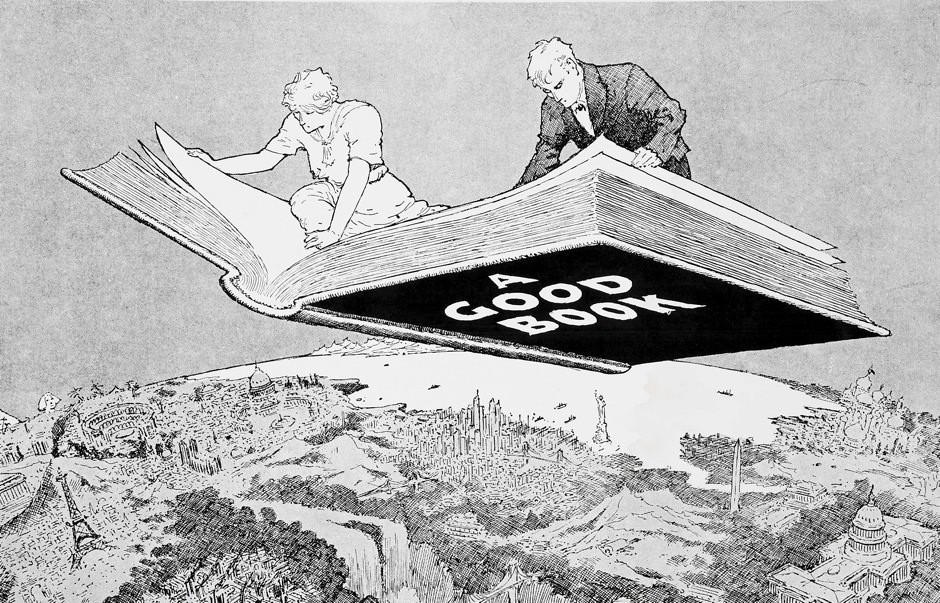 Wisdom literature—ignored, at best. We consult psychologists, celebrities, and pundits for wise advice on living, rather than philosophers and priests—but perhaps that’s understandable, since so many of today’s philosophers and priests have really gotten out of the wisdom game, after all. The philosophers focus on technical questions far more than broad, useful soul- and mind-craft, and I have heard that our religious leaders focus not on how to avoid sin and live more pure and holy lives, but instead on how to rely on God to inspire us to success and abundant joy. Increasingly, our teachers reject the wisdom of “dead white men,” glorifying whatever is new or genuinely produced by online communities, so long as it can be consumed quickly and easily by those who have never been taught to pay attention. The great books are less and less thought of as sources of perennial wisdom but instead are increasingly forgotten or, when remembered, viewed with contempt and hatred.
Increasingly, we lack the cultural capital needed to pass on the classic virtues.
So very much has been lost already.
A society of educated fools. Wisdom—gone. Although more of us than ever are college educated now, fewer than ever seem acquainted with or comfortable discoursing in terms of the best concepts, examples, and narratives of perennial, classical Western values. It’s all so old-fashioned and pretentious to us now. Much wisdom could be found in the Bible, whatever its faults might be, but in a largely secular society, those things are mentioned only the church services that a dwindling minority of the population attend on Sunday, and often not even there. Public discourse, which now mostly takes place online, the  discourse that at least among educated adults ought to be the most informed by classical standards of knowledge and logic, is mostly an exchange of tiresome fallacies, insults, and memes, when it does not consist of outraged head-nodding in Internet silos. We have become a society of educated fools.
Conscience replaced. And the practical wisdom, the wisdom that ought to inform how we spend our time and guide important decisions, seems a dwindling commodity as well, as more and more supposed adults act like selfish adolescents in their personal habits and relationships. Judgment of ourselves in moral terms, once called “conscience,” is rarely done or discussed. We can’t help but feel guilty at our faults—moral feelings die hard. But we don’t put a moral description on our faults. They are mistakes, self-destructive behavior, stresses, failures, embarrassments, addictions, flare-ups of psychological problems. They are so rarely vices, bad habits, foolish choices, bad actions, shameful behavior. The very idea of practical wisdom sounds increasingly antique and even foreign. Today we have “life hacks” that sound like technology instead of soulcraft.
Out of control, with a shrug. Self-control, or temperance—gone. Since around the 1990s we have freely admitted to binging on everything. We waste thousands of hours of our free time in front of television sets, not improving ourselves. We smile indulgently as many of our college students get drunk every weekend and “hook up”—it’s merely a rite of passage and youthful high spirits. Of course, everyone can agree there’s a problem when one of these hook-ups ends in a rape accusation. But the problem, society’s leaders say, is that our young men have failed to receive the proper sensitivity training. It is not due to a thoroughly vicious tendency on the part of everyone, men and women of all ages, to dehumanize others, to use others. We don’t discuss how appallingly damaging this high-spirited behavior can be to the souls of some students, those who go on to become alcoholics (not drunkards), who get pregnant and abort the babies and regret it for the rest of their lives, who cannot view the opposite sex with a sense of romance and without cynicism. Avoiding the entire morass, many of our men are glutted on desensitizing porn. Even our boys are glutted—on time-wasting video games. Many of us are glutted on social media, a huge time-suck that is often strangely impersonal. In the face of our many and varied temptations, it seems most of us can barely hold it together. We can’t stop ourselves—or so we tell ourselves, with a self-indulgent shrug.
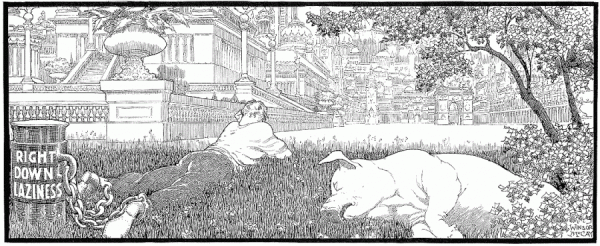
Kindness and humility, uncool. Humility, unselfishness, kindness—the winning social graces of caritas, they too are sadly mostly gone. We are still restrained by peer pressures to behave more or less politely. But there is something at once pretentious and very small about so many people today. Few seem to find a value even in the outward display of ostensible humility, such as self-deprecating remarks. Besides that, actual humility involves candidly admitting faults, limitations, and ignorance, apologizing, allowing others to go first—everything that flows from a realistic assessment of human frailties and an acknowledgement of others as true equals. Instead, we are told to promote our personal brands and “never apologize, never explain.” In big cities especially, civilization has evolved in such a way that “taking what’s yours” and aggressive self-assertion are expected parts of being an ambitious go-getter. It is also simply part of being “cool.” Indeed, the very idea of “cool” involves some amount of contempt or cynicism toward other human beings. The notion seems to be that it is cool to act like you don’t really care about basic civility and kindness, about acting like ladies and gentlemen. The sheer inhumanity of man toward man sometimes on display online and in traffic still sometimes surprises me, and I’m almost 50; younger people don’t realize that “polite society” wasn’t always like this. It’s changed—really. Things have gotten better in some ways, yes, for example toward women and minorities; but they have also become ruder, cruder, and less graceful toward everyone.
I could go on but I don’t want to write a book—I just want to make it clear what I mean when I say we are in a “moral abyss.”
A nonpartisan abyss. I have not mentioned the moral criticisms conservatives make of the liberals: I take no stand, here, on whether the problems I have sketched are related to the conservative political bêtes noire of abortion, gay marriage, and drug legalization. Nor do I mention the moral criticisms liberals make of conservatives. Whether lingering intolerance, racism, sexism, anti-intellectualism, etc., are part of the abyss, I will leave the reader to decide.
The abyss is throughly nonpartisan. I have many friends who would take great issue with any suggestion that any such moral abyss is a consequence of the post-1960s liberal drift of society. I think they will mostly agree that good habits, and the classical virtues I have discussed, are important. I think my conservative friends will agree as well.
The sociological abyss. While I find our moral abyss can be described in a politically neutral way, there are some deep social problems I do associate with this moral abyss. Divorce rates have stayed at 50% for the last half-century; illegitimacy rates have soared over 40%, while marriage rates have shockingly declined; in Western societies and especially among elites, childbearing has fallen below the replacement rate, and appallingly, certain radicals in the “childfree” movement readily admit that they hate children; drug addiction is widely regarded as one of the leading ills of society; homelessness remains a huge problem; crime, while it has declined, lingers above pre-1970 rates, and it has probably declined in the U.S. because of how many criminals we lock up for long periods; etc. Arguably, these are each related to the common atrophying of our character.
Call all that the sociological abyss, and as appalling as it is, it is not the abyss that I mean. As bad and as consequential as all that is, I am more concerned about the moral abyss that resides within each of us.
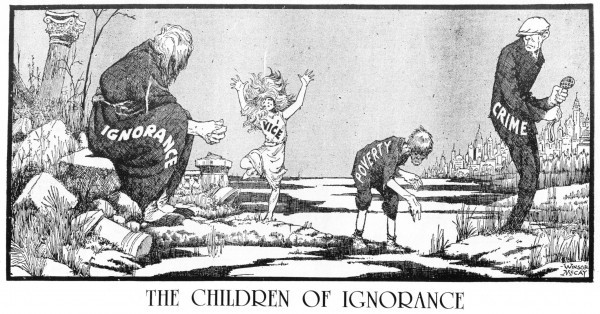
The abyss in us. I mean an abyss within me and within you. There are “saints” among us, no doubt. I’m not one of them, and I doubt you, reader, are one either. Our souls, so to speak, have collectively atrophied. When I talk about such things as lack of temperance and unkindness, I think ruefully of myself, my friends, and my family as much as I think of anyone else. I’m not trying to be falsely modest; I am making a hand-wringing confession. These problems seem to be in all of us, or nearly all of us, to some extent. If my hypothesis is correct and there were some valid way to measure at least the classical virtues I have mentioned, then as a society we would have seen a measurable decline from a hundred years ago until now.
Aren’t we living in a golden age? Still, you might say, it seems somehow ridiculous and perverse to complain about a moral abyss, and, if not motivated by a religious point of view, my complaint is simply weird, I will be told. (Especially by my fellow libertarians.) The world has gotten better. Literacy rates worldwide have grown. Standards of living have risen. Crime has declined. We live in nothing short of a golden age of invention, entrepreneurship, and technology.
A gilded age. All true. But all completely and utterly irrelevant to the problem I’m endeavoring to describe. Please, please make an effort to understand what I’m saying; it’s important. The problem I’m describing is not reliably reflected in sociological or partisan issues. Of course it seems bizarre, to someone strolling down the bustling, famous, elite avenues of New York City, San Francisco, London, or Paris, to hear we are falling in a moral abyss. I understand the attitude. I get it: our society is deeply impressive, yes, in many ways. I’d say we live in a gilded age.
If this is your reaction, I want to grab you metaphorically by the collar and shake some sense into you, because you don’t comprehend at all. The outward trappings of civilization in the centers of power mean nothing to the character of the everyday person in the civilization. Surely, if you are liberally educated or have some moral sense, you must know this.
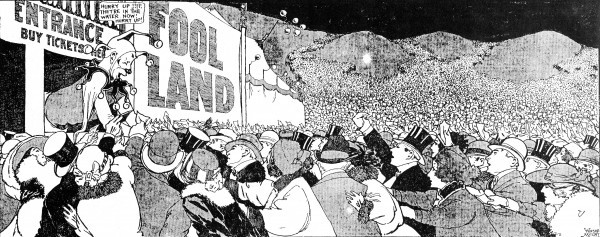
The challenges of parenting in the 21st century. So many parents lack a knowledge of the religious texts, the literature, the history, and the philosophy teaching such virtues. They have a weak grasp of the concepts and of the language needed to pass them on. Above all, they lack the virtues within themselves to teach them by example. Consequently, parents today produce children that must struggle to learn the qualities of character they so desperately need to know to lead decent, contented lives and ultimately maintain our civilization. And not surprisingly, we parents fail a lot, even if we try. It was always so, I’ll be told. Perhaps, but it’s gotten worse, a lot worse. The virtues were already weakened in our own parents’ generation.
Keeping up with the equally decadent Joneses. I admit that the problems I’m describing here might seem relatively unimportant “first world problems.” Your family is not homeless, probably nobody is strung out on drugs, the children are loved by their parents (whether together or divorced), etc. You’re doing fine. In that case, then yes, OK: you’re doubtless doing just fine compared to the Joneses. But you and the Joneses and everybody else together are living in a weakened version of Western civilization. I fear we are living on borrowed time, running on the fumes of the Enlightenment. The moral fiber within each of us has weakened, and in some it has thinned to the breaking point.
What is to blame for mass murders. It breaks in various startling ways. It was, for example, the recent shooting in Roseberg, Oregon, of nine innocent people, that inspired this cri du coeur.
Here’s why I don’t blame guns for mass murders. We went through generations in which guns were much less restricted than they are now, and we did not have regular mass shootings. Blame, instead, our moral abyss. We need to begin by blaming ourselves, our bad habits, and above all our utter foolish incomprehension about the way freedom, responsibility, and morality work in the world. After these atrocities, all too often we see hear stories that a brazen killer was “a nice guy” and good citizen and seemed normal enough. To be sure, sometimes the evil among us hide their evil thoughts and habits very well. But I think more often the actual behavior of those people is just not morally judged, period.
The rejection of responsibility makes the atrocities possible. The fact that we must look to societal causes rather than within the souls of the murderers—that is of course what these people are, after all, cold-blooded, soulless killers—is a profoundly deep part of the problem that brings these monsters into existence. If they had been raised in a society in which they were taught to take responsibility for themselves, in which the tools in their hands are not blamed, but instead the characters that wield them, then they might have found within themselves the moral wherewithal to resist the temptation to take out their frustrations on innocent others.
We are the abyss. I blame the monsters first and foremost. I also blame their parents and the abysmally amoral society they were brought up in, without which they would not seek to lash out as they do. “There but for the grace of God go I,” says the lovely, humble Christian sentiment. I do blame the abyss. But we are the abyss, all of us. The abyss is in the killers, it is in their parents, and it is in me, and you, and almost everyone in this utterly degenerate old world.
We need to change.
If we find a purpose in the so many senseless killings of innocents, let it be a call to all of us, a call from somewhere outside of the abyss, so that we may all climb out of it. We need to stop making excuses for our moral failings. We need to own up to them, hang our heads in shame, support each other in correcting them, and improve our souls and improve our society.
We need to regain our moral sense.
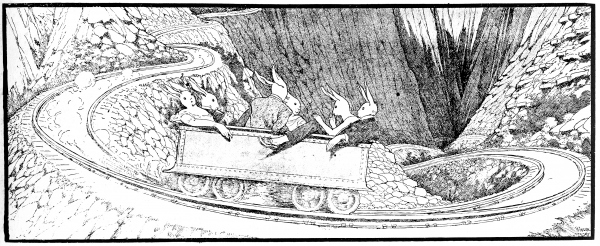
A video of this post (play it with close captions on):
Writing this afterword pulls me back in. The fine scholarly work of the Yearbook—its focus on history and purpose, on research and impacts, on structures, roles and accountability, and on leveraging change—has enabled me to reconnect with my roots and passion. Rip Van Winkle, looking with a fresh set of eyes on something that is both familiar and removed. Here’s what stands out to me.
via TCRecord
Long-term PDSs have been successful at navigating accountability, resource, and infrastructure issues as partnerships are shaped and modified to meet the needs of the schools and universities.
via TCRecord
Long-term PDSs have been successful at navigating accountability, resource, and infrastructure issues as partnerships are shaped and modified to meet the needs of the schools and universities.
via TCRecord