Log on:
Powered by Elgg

Silvana di Gregorio :: Blog :: Archives

February 2010

February 07, 2010

Week 3 – Update on game experience

While I did not enjoy the arcade games, I have enjoyed Solitaire, Tetris and Columns and this week Mahjong and Bookworm. I haven’t had a chance to play Scrabble yet but that is a game I have played since I was a child.  I also have always played Solitaire as well as puzzle games such as crosswords and sudoku.  I like to look for patterns and also having some time to reflect, although all the games had a timed element but I didn’t find them as frantic as the arcade games.

I didn’t realise how complex Mahjong was – I was concentrating on clearing all the tiles. I did notice the scoring but didn’t understand it. It wasn’t until Anna directed us to the link explaining the rules and the different suits you could make that I realised the complexity. But I am quite happy to play it on a simple level. I think I could get into it, and slowly learn the different suits you could make and think more strategically.

I never gave much thought before this course about defining what is ‘play’.  I think I just thought of it as a negative – the opposite of work. But I enjoyed the Kane and Sutton-Smith readings. I liked the focus on the different rhetorics of ‘play’ and situating them within their historical and/or scholarly context.  In particular, I find interesting the tension Kane points out between ancient (fate, chance and community) and modern rhetorics (freedom, progress and imagination).  As Kane says, there is a paradox:

To be a player is to try to live and thrive between freedom and determinism, chance and necessity. P. 40
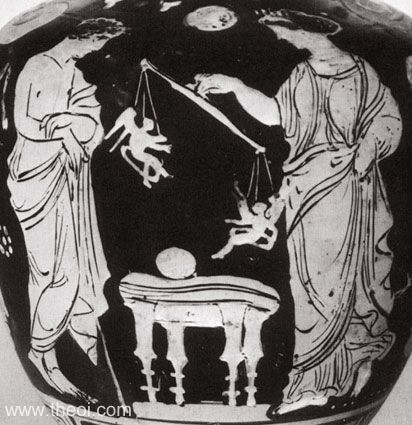
vs.

I am not sure, though, how much the modern rhetorics are free of fate and determinism.  Progress can be seen as deterministic – particularly following Piaget - that there are stages of development that a child must go through.  Intertwining this developmental approach with play, turns play as something inherent in our genetic makeup, something we do not have control over.  Rather than being the ‘playthings’ of the gods, the child is a ‘plaything’ of his/her genetic make-up. Kane does touch upon this in saying that there is a tension between the modern rhetoric of play as progress –something that is hard-wired in our make-up and the modern rhetoric of play as imagination.  But Kane talks about our biological urge fusing with our creative imagination.  But where does our creative imagination come from? It comes back to the age old debate of nature vs. nurture.  But instead of posing fate and freedom or nature and nurture as oppositions, shouldn’t they be seem as a kind of continuum – in some areas we have more control than others. Or should they be visualized as concentric circles with freedom within fate/ or nature.  That we have certain ‘room for manoeuvre’ within a certain context.  Hence, our genetic composition or social circumstances at birth are fate or beyond our control.  But within that context, we have some freedom in the ‘raw material’ we have to start with.  And isn’t that what happens within game?  There are rules that are given but within the context of rules, we have some control over how we play the game.

Kane brings an interesting dimension into the discussion of play – considering what is ethical play. 

by dignifying our play with an ethical force, we can begin to create and act, rather than simply consume and spectate p. 62 

I think his choice of the term dignifying is revealing.  It seems he is countering the interpretation of play as being frivolous.  But there is also a moral dimension in his argument which is a critique of what he sees as the dominance of Western consumer-oriented society.

References

Kane, P. (2005) Chapter 2, 'A General Theory of Play'. In The Play Ethic : a Manifesto for a Different Way of Living. London, Pan. p35-6

Sutton-Smith, B. (1997) Chapter 1, 'Play and Ambiguity'. In The Ambiguity of Play. Cambridge, Mass: Harvard University Press.


Posted by Silvana di Gregorio | 0 comment(s)

February 10, 2010

I just spent a couple of hours yesterday in Quest Atlantis (in the plague village - which is teaching about persuasive writing). I was totally immersed in this world and didn't notice the time go by. Barab et al talk about their learning engagement theory which they developed in QA - integrating learning, playing and helping in the context of social issues in an aesthetically-rich dramatic play. The plague story does this with students taking on the role of an investigative journalist trying to find evidence to persuade the community to either support or not Dr Frank(instein)'s experiment to find a cure for the plague. The story line is engaging (satisfying Malone's idea of fantasy and curiosity and uncertain outcome). QA seems to emphasize social responsibility as well - so there are moral issues interwoven in the story. I haven't finished all the activities but I think the storyline will let you argue both sides of the argument although there are nudges to re-consider your argument as you gather more evidence - but you only are suppose to use evidence that supports your argument (but I haven't finished it yet - so I don't know if there is scope to address counter-evidence in a way that supports your argument.)

Keywords: Barab, IDGBL10, Malone, Quest_Atlantis

Posted by Silvana di Gregorio | 2 comment(s)

Malone makes a distinction between toys and tools. He says that: A good game should be easy to learn but difficult to master.


Whereas: A good tool should be both easy to learn and easy to master. 

tool users should be able to focus most of their attention on the uncertain goal, not on the use of the tool itself p. 66


This distinction is relevant for my work – training and consulting in CAQDAS – tools that support the analysis of qualitative data (such as ATLAS.ti, NVivo, MAXqda etc.)  All these tools are difficult to learn – and many people who start to use these tools are new to analyzing qualitative data – so they are learning two new big areas at once.  But even those people who are experienced qualitative analysts need to learn what the new affordances a software package can offer qualitative analysis.  These tools are both difficult to learn AND difficult to master – which could explain why they have been slow to be adopted, even though they have been around since the 1980s. 

 Malone rightly identifies that one issue facing the designers of these packages is:conflict between desire to have the system to be easy to learn for beginners and the desire to have it be powerful and flexible for experienced users To overcome the above dilemma, Malone suggests that designers build in a logical progression of increasingly complex microworlds for users of different levels of expertise. The trouble with applying this principle to CAQDAS tools is that you need to understand most of the features as they work together in an integrated way to support an analysis.  However, I can see that in designing a game to teach qualitative analysis (as opposed to tool use), you could build in levels that correspond to the analysis process and you could use the CAQDAS software tools as an environment to play the game. And in an indirect way you would be teaching the tool use at the same time.Need to think more on this

Keywords: CAQDAS, IDGBL10, Malone, tools, toys

Posted by Silvana di Gregorio | 0 comment(s)

February 17, 2010

I feel we have gone into constructing our learning activity rather back to front.  We were given Google Earth as a platform to design a game and my initial response was - ??? – what kind of a game can we construct using Google Earth? This was a bit exasperated by the fact that I had already a long weekend away booked so I knew I would have less time to think about this. Luckily the deadline was extended – thank you Fiona and Anna.

I already had Google Earth on my computer and I have played with it before – mainly exploring different parts of the world – tracking my daughter when she went to Chile, last year – that sort of thing. But I have never created anything in Google Earth – although I have read placeholders and information that other people had put on it.

Before going away I was quite focussed on the reading for the week (see previous blogs) and doing some preliminary research to find out a) what games have been developed using Google Earth, b) educational resources using Google Earth and c) technical information, online tutorials etc on creating placemarks etc.

I was surprised by the number of educational resources (as well as other types of resources) that has been created with Google Earth.  One of them was a resource created by the UK Met Office on the effect of climate change on the Earth – with a timeline from 1999-2099.  Helen had mentioned climate change as a possible theme for our game and this Met Office climate change ‘skin’ seemed a good platform to build a game.  My Sonic Group team members liked the idea.  I immediately focussed on learning the technical aspects of creating placemarks etc and so did my team members.  I wasn’t focussed on what the learning objectives of the game were. I had a hazy idea that the players would learn about climate change from traversing the information the Met Office had already put in the climate change Google Earth ‘skin’.  I started to think about how game players could interact by taking on different roles in different parts of the world – with the idea that problems in one part of the world would also have impacts on other parts of the world – but quickly realised that was too ambitious.  Wesley showed us how we could create a quiz in Google Earth and that seemed a more realistic approach. So we have divided up the work in constructing the quiz but haven’t set out our learning objectives yet – although I can see we can do that retrospectively.  Given the time constraints and the skills we had to learn, we had to do this backwards.

However, I think we needed to first understand the affordances of Google Earth and what was possible before we could think of what kind of learning outcome would be best achieved within Google Earth. And I think the process I described above was doing that. So maybe it was not really so backwards.  This game is a first exploratory attempt to see what is possible using Google Earth. And our climate change topic is something that does uses the affordances that Google Earth offers.

Keywords: game_design, Google_Earth, IDGBL10

Posted by Silvana di Gregorio | 1 comment(s)

February 19, 2010

I like Whitton’s view that games can be seen as a constructivist learning environment  - probably because a constructivist approach to learning fits well with the kind of teaching I am involved in – teaching and facilitating the qualitative data analysis process.  In fact, Whitton feels that games have greatest relevance to higher education learning in the development of high level transferable skills.  She defines these as:

·         Analysis

·         Critical evaluation

·         Autonomy

·         Team working

All the above are relevant to the research process and I hope to develop a game that can demystify the qualitative data analysis process. 

Whitton places a high value on collaborative learning. She quotes Wilson:

"a place where learners may work together and support each other as they use a variety of tools and information resources in their guided pursuit of learning goals and problem-solving activities" Wilson 1996:5

However, she stresses that the collaboration does not have to be part of the game but can be incorporated as part of the learning package for a particular set of learning outcomes.

Last year I took the Effective Course Design module and constructed a 10 week online course on qualitative analysis aimed at doctoral students or researchers new to qualitative analysis.  While each student on the course would come with their own research project, I constructed an initial collaboration activity where they were working together on the same material which was followed by individual AND cooperative work. They were developing analysis on their own individual project but the activities were structured so that on a regular basis they would report back their analysis-in-process to the small group they were assigned to.  And they would comment on each other’s work –as well as learn from each other.  I am thinking of designing a game for the collaborative activity part of this course where they are all working on the same material which either could replace the current collaborative activity in this course or could form part of new course aimed at those people who do not have a research project yet but who would like to learn about analyzing qualitative data. 

Whitton points out that while games are good at providing experiences and applying theories, they are not very good at providing meaningful reflection and abstract conceptualization.  For the kind of analysis game I would want to construct, reflection and conceptualization are very important.  Whitton specifies a number of additional activities that can support reflection and abstract conceptualization.  The ones I can see supporting developing an analysis include reflective diaries, small group work and production of artefacts such as presentations. 

Of course, I am jumping the gun here.  Whitton recommends starting with the learning objectives of a course and consider how you would normally meet them.  As I have already created an online course specifying my learning objectives, I intend to start with that.  At the moment, I think I can see how a game could fulfil the initial collaborative element of my learning objectives.  But I need to reflect on this further.  Then I can move into developing what Whitton calls a game concept specification:

·         Learning objectives

·         Genre

·         Brief description

·         Plot

·         Gaming activities

·         Constraints

·         Collaboration

·         Reflection

Reference

Whitton, N. (2010) Chapter 6, 'Designing a Digital Game for Learning'. In Learning with Digital Games: A practical guide to engaging students in higher education, London: Routledge.


Posted by Silvana di Gregorio | 0 comment(s)

February 25, 2010

I woke up the morning after I posted Team Sonic’s game and suddenly wondered – but is it a game?  We were so focused on getting it done within the time constraints and our own limited time that not only did we not work out our learning objectives in advance but we did not think through what elements of a game we were using. We just assumed it was a game.

It is only now, having tried to construct a game, that the reading we did early on as to what constitutes play and what constitutes a game is starting to come together for me.  Initially, before this course, I never thought what constituted a game was problematic.  After I did the initial reading, I started to realise the multi-faceted nature of games and the different cultural, historical, and theoretical perspectives on play.  But my understanding was in the abstract.  Having now tried to construct a game, I realise how slippery the whole idea of a game as – especially when trying to use it in education.  What is the difference between a learning activity and a game? Was it a game we constructed or a learning activity?

During my chat session with Anna and Fiona, I started to rattle through Whitton’s characteristics of games, listing the characteristics that I felt was lacking in our climate change game.

·         It is not competitive (but I added that I thought competition was not necessary in a game)

·         There is no winner – linked to their being no competition above

·         There is no indicator of progress during the game (no scoring etc.)

On the positive side I said:

·         The fantasy element made it game-like

·         And collaboration was done outside of Google Earth in the reflection piece which was to consolidate the learning that was achieved during exploring climate change on Earth – the fantasy element was carried over into the reflection piece to keep the continuity with Google Earth; in fact, while the reflection piece was outside of Google Earth and in a wiki, it was part of the game – as the reflection is the goal – the ‘report’ to be given to the Mission Chief

Anna asked if there was an element of challenge – and yes, there is a challenge in working out the clues which start easy but get progressively harder (to be honest we did not deliberately design it that way – it just worked out that way) but I think the reflection at the end is the most challenging piece.

There was a goal, as mentioned above, the report to the Mission Chief on evidence of climate change on Earth.

The game allowed exploration – players could explore and read the other Met Office reports which we did not specifically direct them to – they could play with the timeline – to see how climate change will impact some parts of the Earth before other parts, etc.

There is no interaction with other players during the Google Earth part of the game. However, the reflection piece was designed so there would be interaction in that a) players could see each other’s reports and b) each team, in the end, would have to compile a final report collaboratively.

The reactions to playing the game have been very positive. Everyone said they enjoyed it. And some people have been writing reflective reports on their experience.

So it does have characteristics of a game – despite my initial doubts.  I think the cohesiveness of the fantasy is what holds it together as a game. Nicola, in her report, said the anagram, while cute, should have been more meaningfully tied to the narrative we constructed in Google Earth.  I agree but given the time we had, we had to make a quick decision on the anagram.


Posted by Silvana di Gregorio | 1 comment(s)