Log on:
Powered by Elgg

Thaleia Deniozou :: Blog

November 16, 2011

I have always been fascinated by fast cars, advanced planes and spacecraft and there is a thread running through my interests which I have been able to explore while creating my "Life Wall" - http://atate.org/ as part of the MSc in e-Learning Digital Cultures course - so this blog post fills in some background.

Fast Cars

Many members of my family have been involved in motorsport at a number of levels, and I got the bug early on. I had a scrambling motorbike that we used in fields adjacent to our house in Knottingley, West Yorkshire, and later developed a drag racing sprint bike that we raced at Ricall aerodrome on Drag Racing weekends with the North of Britain based British Quarter Mile Association (BQMA). I was already a rally car navigator for my older brotherSon local De Lacy Motor Club events before I could legally drive myself. I can read a map as if its a 3D model laid out before my eyes. We were taught to drive by my dad in our field and on local aerodromes, and I used my brother's (fast racing) go-kart a few times. Scary to be that close to the ground at nearly 100mph. I passed my driving test almost as soon as I was 17, joined the De Lacy Motor Club and competed in local rallies and driving test and motorcross, and I have a few trophies to show for the effort.

But my interest in fast cars and vehicles went beyond that. I loved the engineering cutaways shown in the "Eagle" comic each week, and I followed a number of UK and US Hot Rod and Drag Racing communities via magazines. I was lucky to be taken by my elder brother to see the first visit of the US Drag Racing Team to the UK, who brought over the dragsters then just touching 200mph from a standing start in a quarter mile sprint. Don Garlits, Don Prudehome, Tony Nancy and the other famous racers of the 1960s were all there when I saw a 200mph run at RAF Woodvale in Lancashire. I was an avid followers of the fascinating battle for the land speed record in the US between Art Arfons and Craig Breedlove as they went through 400mph, then 500mph and then 600mph in the space of a couple of years. My dad took us over to see Donald Campbell doing some of his trials runs on Coniston Water in the UK Lake District. I continue to follow the more recent land speed records attempts and have been a supporter of Richard Noble and Andy Green's supersonic record car in 1997 with my name being carried in certificates in the car as it did its runs at Black Rock Desert in Nevada. I now support the new Bloodhound SSC car being designed to do 1,000mph. My name will be on its tail.

Fast Planes

The early 1960s were a good time for those interested in fast planes and supersonic or hypersonic travel - with the X-15 rocket plane able to do hundreds of flights straight up into space and back on a ballistic trajectory. We are only just getting back to the time that will be reasonably feasible again with Virgin Galactic's SpaceShip Two. Though it was not something that was known about to the general population in the 1960s, it later transpired that the SR-71 Blackbird was routinely flying at Mach 3 or more for many hours on high altitude spying and scientific missions since the 1950s. I still find the SR-71 the most beautiful aircraft and take every opportunity to visit one in the museums around the world as I travel. And I take one for a spin any time I can in Flight Simulators.

Far Space

So with these interests, its not surprising I was also interested in space. I was interested in space before sputnik flew, and already had (and still have) a well thumbed copy of Patrick Moore's "Boys Book of Space", with pencil drawings of the features of the moon in the back from my pre-teen years. I lived through the early Space Race years, and have my collectors cards that went from Sputnik up to visionary deep space probes and talk of a "Grand Tour" of the solar system which I loved the idea of. It would be some years before my AI planning software was used by NASA JPL as a basis for Steve Vere's Deviser planning system that would (after its launch) model the activity of the Voyager spacecraft which actually flew this Grand Tour mission, and continues to send tweets which I receive each day of its position far beyond the Solar System edge.
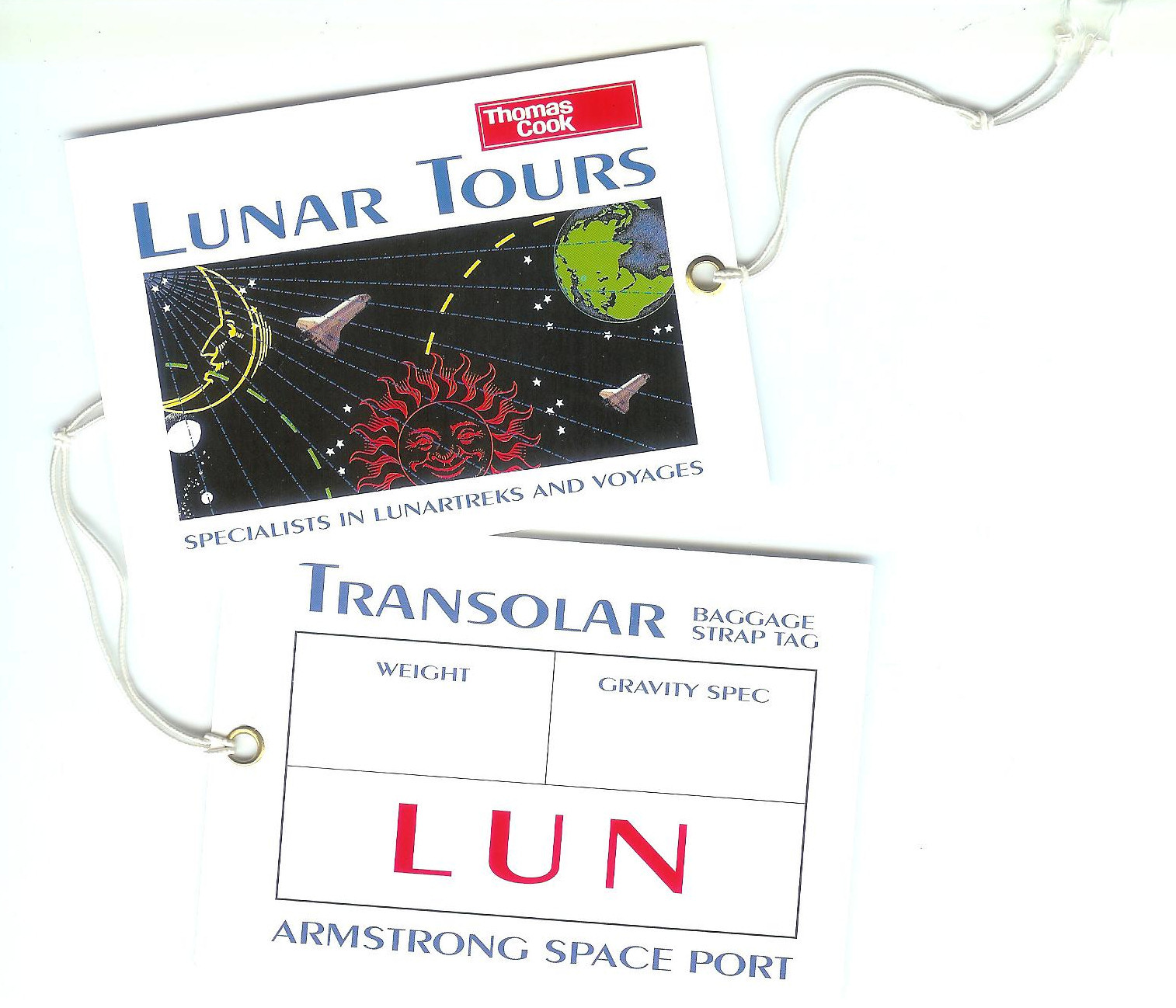
Thomas Cook Luggage Labels LUN

I have ready to use luggage labels (issued for promotional purposes) when I registered my interest in Thomas Cook flights to the Moon!

I am a Fellow of the British Interplanetary Society which is a fantastic way to stay in touch with space related activities as an amateur. But I have also worked professionally with the European Space Agency consulting on autonomous spacecraft, and worked on projects with them on planners for the ERS-1 spacecraft and a system for assembly. integration and test of Ariane launchers. Our work at AIAI has also fed into telecommand systems for EUMETSAT metrological spacecraft and for ground station planning for the UK Skynet observation spacecraft.

One thing we have found to be a great way to stay in touch with missions has been to place our name on lists carried on CDs, chips or plaques on board exploration spacecraft. We have had our names on the Opportunity and Spirit rovers now on Mars, and our name was carried on a chip on-board the return capsule on Stardust sample return mission to Comet Temple 1. The chip should be in the Smithsonian museum in future. Our names were also on the Deep Impact comet penetrator mission. Our names and photos (and those of my virtual world avatar after an invitation from a NASA Colab group I am part of in Second Life) have flown on each of the last flights of the Space Shuttle in the last 12 months. Unfortunately, we just missed seeing one launch while in Florida after a launch scrub, but did visit and see the penultimate Space Shuttle Discovery on its pad at Cape Canaveral. But in the past we have seen two shuttle launches. And we will shortly be off to Mars again on the new "Curiosity" Mars Exploration Lab.

Forever - To infinity and Beyond

But perhaps the one I find most interesting, is that our names and a poem I wrote were carried alongside other digital artifacts on board the European Space Agency's Huygens Titan lander taken by the Cassini spacecraft to Saturn. All contributors were provided with a copy of the whole set of artifacts by ESA when the content were completed before launch. We followed that whole mission. Huygens drifted down through methane clouds gently to land in soft terrain on the shores of a liquid methane lake overlooked by the rings of Saturn through a hazy sky.

Huygens at Titan by Emile Raphael Franco for Planetary Society Art Competition

Drift down through the clouds... We're with you.
Swing slowly on the parachutes aloft...

Our names now stand by that methane sea, at a point in the solar system beyond the distance where the Sun will eventually grow in its red giant stage and consume the Earth. To infinity... and beyond...

[Blog post originally on Digital Cultures on 8-Oct-2011. Reposted on Holyrood Park IDEL11 Blog for Presentation Purposes]

Keywords: IDEL11
Posted by Austin Tate | 2 comment(s)

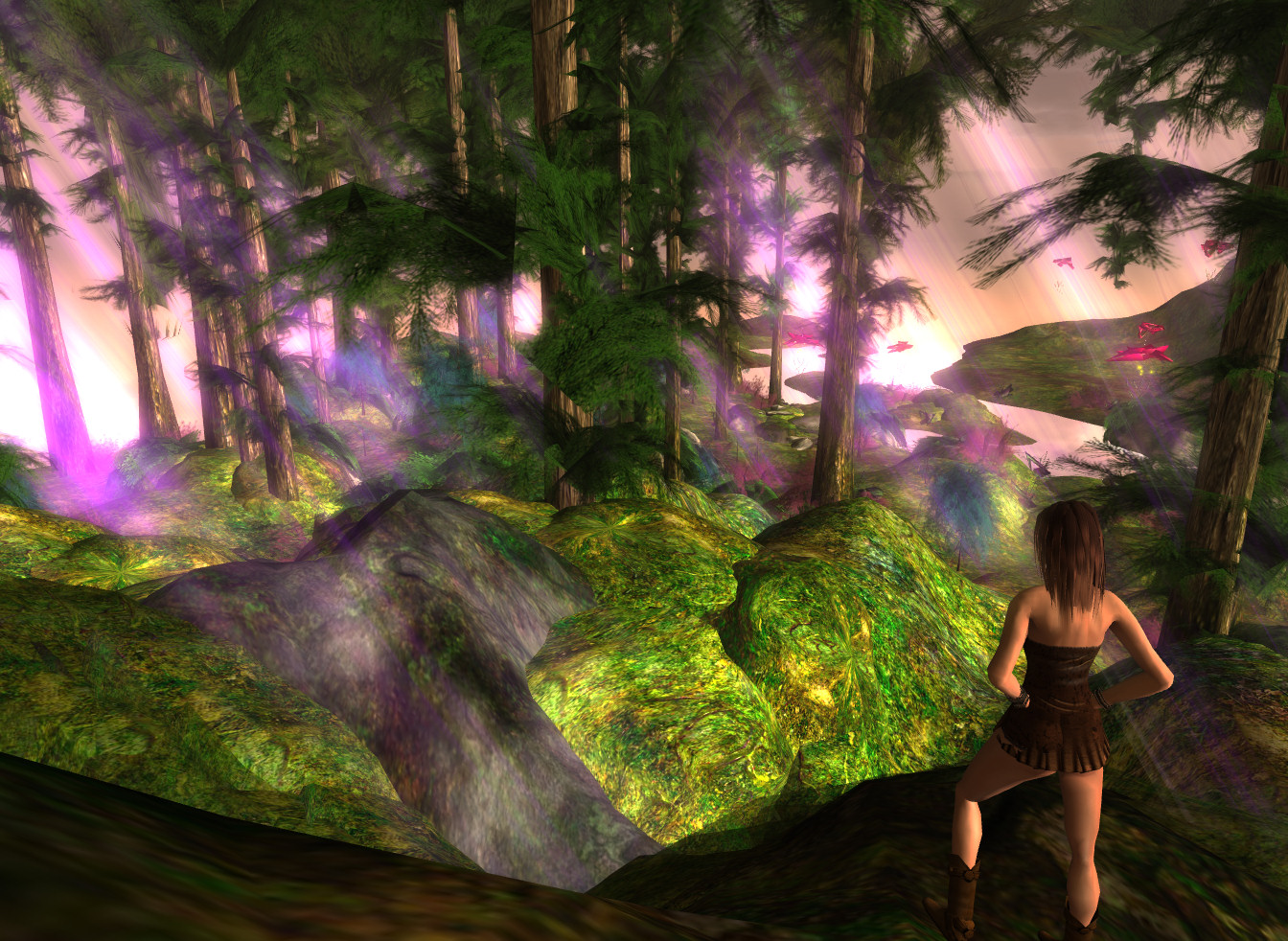
I have been cooking up another project… the appeal of utopian “Other Worlds” and projecting identities into them (see Gee, 2003). The creative experience of imagineering such a world, making it plausible and “real”, and inhabiting it in a social context is something I want to explore more.

http://atate.org/another-planet/

I have been initially building some images related to this on WallWisher and making some notes about a grammar of "connections", which I hope to partially explore in a Digital Cultures course assignment.

Gee, James Paul (2003) "Learning and Identity: what does it mean to be a half-elf?" from Gee, James Paul, What video games have to teach us about learning and literacy, pp 51-71, Basingstoke: Palgrave Macmillan.

Keywords: IDEL11, Other Worlds

Posted by Austin Tate | 0 comment(s)

Landow (2006, pp 284-285) gives a very nice example of the effect of using Hypermedia alongside Peter Heywood's usual weekly topic based course on cell plant biology. He observed that students could follow links ahead into later materials, versus being over constrained by the current topics and resources to hand.  This encouraged them to make links between items in the course, and look for more interesting opportunities to them as individuals for discussions and assignment topics. The wiki and hypertext elements added to the traditional weekly format course made possible a way for the class to work asynchronously, we well as to maintain class focus based on the weekly content and milestones.

I have come across this also in my use of Moodle along side the OpenVCE.net community portal (for asynchronous community support) and meeting spaces in Second Life, Adobe Connect or Skype (for synchronous meetings of the community).  We wanted to have both elements of a cross course community resource area and a topic or time tabled element.  We did this by having a standing OpenVCE community "course" using Moodle's "social" format, and also a "topic" or "weekly".

I would observe that in some studies we have done of communities who engage in distributed collaboration (Hansberger et al., 2010) we find that the types of functions they wish to perform together leads to a set fop requirements for both synchronous and asynchronous interactions, which can be facilitated by different tools.

Hansberger, J.T., Tate, A., Moon, B. and Cross, R., Cognitively Engineering a Virtual Collaboration Environment for Crisis Response, Proceedings of the 2010 ACM Conference on Computer Supported Cooperative Working. (CSCW 2010), Savannah, Georgia, USA, 6-10 February 2010.

Landow, George P., (2006) "Reconfiguring literary education" from Landow, George P., Hypertext 3.0: critical theory and new media in an Era of Globalization pp.278-291,302-309, Baltimore: Johns Hopkins University Press.

Keywords: IDEL11

Posted by Austin Tate | 0 comment(s)

November 15, 2011

Responsive Open Learning Environments (ROLE - http://www.role-project.eu/) is an EU project which provides an interesting example of a learning environment being created with an open widget based approach which might allow for a personal learning environment to be created by an individual within the context of a managed learning environment for a course.

It makes use of the OpenSocial (http://opensocial.org) API for widgets to allow for a range of community contributed widgets to be used.

There is an Open University provided introductory course on ROLE and information on incorporating ROLE elements into a Personal Learning Environment accessible at http://labspace.open.ac.uk/course/view.php?id=7433


Keywords: IDEL11, ROLE

Posted by Austin Tate | 0 comment(s)

November 10, 2011

Our experience of setting up Moodle as an administrator, for a couple of sample courses of different kinds (weekly, topic based and social format) and by adding in the SLoodle module both in the web end of Moodle and in Second Life classroom has been a frustrating experience.  This is a mostly due to the very many layers of user permissions, user roles, different styles of setup, confusion over what happens at site, user and course levels, and interactions between these, and so on.  We still cannot work out why some users can see their SLoodle profiles and others cannot even with all permissions ticked on (more than should be needed).

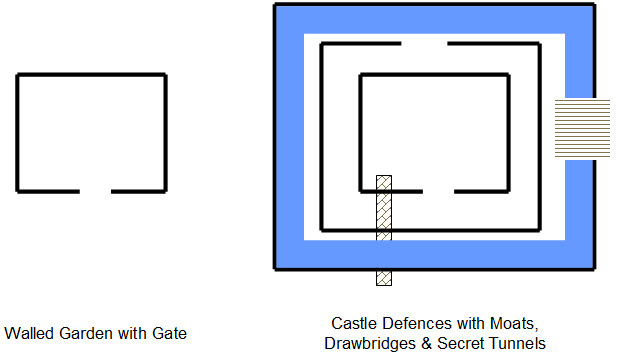
This makes me think of the "Walled Garden" idea which is how I see VLEs like Blackboard's WebCT.  The wall is there for a number of reasons:

  • To protect those inside;
  • To protect and control access to the assets inside;
  • To keep out undesirables;
  • To provide a clear gateway where people can enter, or request entry.


But my mental picture of Moodle is more like a complex arrangement of "Castle Defences" with multiple battlements, with entry points offset from one another and the direction to turn not obvious at every level. There are moats and some bridges across.  But you are not sure where they all are. There may even be secret tunnels you don't know about and that others may be able to use, and you suspect there are as its all so labyrinthine.

Posted by Austin Tate | 0 comment(s)

November 07, 2011

My earlier blog postings have described my own preferred approach to the creation of a PLE which at its outer level is simply an easily customised web page.  I chose a freely available well constructed CSS1 stylesheet that maximised the viewable area of the central content when viewed on a wide range fo devices and browsers, using a layout that allows for flexible width.  Below this top levele entry web page a number of directories hold the locally stored content, for my own images, screenshots, and resources that it is suitable to provide locally (i.e. have no copyright issues) and these can be pulled into the web page via relative URLs to allow for the whole PLE to be easily shifted to a new hosting environment, used locally off a memory stick, or cut to CD.  The resources and images can also be used in other blogging and course discussion forums via URL reference where appropriate.

This approach works fine for me, as I am comfortable with using a simple text editor to edit HTML directly, and have a simplistic but working understanding of the CSS style sheet approach.  I also can access an area where I can store and serve the files easily.  But this custom approach is not suitable for all.  Technically a way to create such a custom web area and make changing its content and layout easier would be preferable for some. There are many drag and drop frameworks for dropping in content in "frames" and an emerging set of "widgets" that can be dropped into "containers" in such self hosted web sites using a number of script libraries.  Again, this can be quite technical to initially set up, but easy to use thereafter. I do worry about the long term stability of some of these mechanisms though, and they do mean that the contents have to be served using a web server, rather than it being possible to simply copy and use the files on a memory stick or off a CD locally on a single computer off-line Some blogging frameworks like WordPress, richer content management systems like Drupal and Joomla, and commercial platforms like iGoogle provide simple approaches for columns of content with inclusion of "blocks" made up of various types of content, widgets and frames.

The issue of security and legality must also be taken into account.  there can be legal constraints on the monitoring which an institution is obliged to perform on its own staff communications, and in some cases on the official communications of its students.  Issues of copyright infringement may also need to be investigated.  These legal requirements can be made more difficult in highly decentralised and personalised environments.

A study of the use of personal web sites as the basis for PLEs at Graz University of Technology (UT Graz) in Austria (Taraghi et al., 2010) described a set of issues to be considered before going on to describe their own framework and approach. They base their approach on work by Schaffert & Hilzensauer who describe seven crucial aspects to consider in the adoption of PLEs:

  • The role of the learner
  • Personalisation
  • Content
  • Social involvement
  • Educational & organisational

So, it is important to look at ways in which the basic approach of using a personalised web page and web area as the basis for a PLE might be made more widely accessible and accesptable within the constraints of an educational institution's role and requirements.  An educational establishment can encourage the use of PLEs alongside their institutional learning support systems.  It could seek to provide a framework or "template" approach which all students can adopt and adapt a framework or arrangement that suits them, and that they feel comfortable supports them and the degree of autonomy they seek.

Reference

Schaffert, S. and Hilzensauer, W (2008) "On the way towards Personal Learning Environments: Seven crucial aspects," in eLearning Papers, no. 9, July, 2008.

Taraghi, B.,  Ebner, M., Till, G. and Muhlburger, H. (2010) "Personal Learning Environment - A Conceptual Study", iJET - Volume 5, Special Issue 1: "ICL2009 - MashUps for Learning", January 2010.

Keywords: IDEL11, PLE

Posted by Austin Tate | 1 comment(s)

November 04, 2011

My interest in personal portable information stores and information predates my use of the approach as a PLE.

I am interested in a computer-based personal assistant and ways in which that could build information to help you throughout your life.  Issues of privacy and ownership and location of that information immediately are an issue when that is contemplated.  Its clear to me that this means the data must be owned, hosted and controlled by an individual in some way, and ANY access to it approved and logged at the user ownership end.  This is WAY WAY different to its being hosted and accesible to Facebook and Google+ (or an Institution like a government, insurance company or teaching organisation). 

I liked recently a pointer from Daniel Griffin on the MSc Digital Cultures course on the Diaspora Freedom in Software community (http://diasporafoundation.org/ and https://joindiaspora.com/) and specifically to Eben Moglen's "Freedom in The Cloud" presentation at NYU Feb 5 2010. http://www.youtube.com/watch?v=QOEMv0S8AcA

I was reminded of some discussions I had 20 years ago with telecoms providers about a user centric architecture for use of personal profile information from a computer-based personal assistant. the personal information was served on each request from the user end and with access to information and resources controlled by the user... WAY WAY different o how we have come to use Facebook and Google+ where our data is in their servers and used when they want for their benefit.

Section 3 - The Personal Profile - From http://www.aiai.ed.ac.uk/~bat/tania.pdf

One important feature of the approach to be taken is that the concept of a long lived Personal Profile for communications and information use will be established. It will be a guarantee of the approach that the information that an individual builds in their co-worker personal profile will be able to stand alone and be meaningful outside of its specific use in this particular generation of information agent. We will establish the concept of a separate transportable personal profile that can accompany the user for the rest of his or her life and can grow with him or her.

Keywords: Diaspora, EDC11, Personal Profile

Posted by Austin Tate | 0 comment(s)

November 03, 2011

I am experimenting with a style of non-linear essay employing a customised Typographical Visual "Neo-Grammar". It involves experimentation with expressing the core message carrying semantically tagged "connectors" in a type and layout style and with interactive linking capabilities well suited to on-line communications of layers of content.

Grammar ::=  <Planet>: <Locale>: <Connector>  [ — <Annotation> ] 

<Connector> ::= <Token> ⊃—⊂ <Token>

Token gives identity elements, citations and references.

Keywords: IDEL11, Neo-grammar

Posted by Austin Tate | 2 comment(s)

October 30, 2011

Its Halloween, and the Zombies have attacked!

There has been a bit of a  struggle to get the "cron" job running on the Moodle setup.  cron.php is an admin routine that is run every few minutes to do a number of maintenance things, like pulling in information feeds, external blogs, clearing away pending messages, etc.  It need a bit of setting up and a couple of different mechanisms using the Windows Task Manager had not been working correctly.

I had settled on a way to initiate the cron.php script by calling it from a job every few minutes which launched the Firefox/Mozilla browser run the job, and then should have terminated.  I got that suggestion off blog postings by others who has similar problems getting cron to run.  It seemed to work after I set it up on testing, so I left it for a day or so...  But when I came back... spookily... there were many "Zombie" processes running.  My colleague experienced in these matters tells me that happens when you launch a browser to run a script in a web page and he had seen this issue before.

We are also still working to get the outward bound e-mail going on our Moodle 2.1.2 setup on Windows.  This is way more complicated than it should be with many layers involved.  Settings are all over the place in Apache, PHP, Moodle and beyond your machine in the SMTP server you use, as well as perhaps in multiple firewalls and out bound messaging spam filters on the way.  We have been gradually picking our way through these layers.  Our University will not allow e-mail out with a "from" address that is not validated as a legitimate University address - sensibly.  So we are having to use a "Moodle Admin" address personally tied to a staff member at the moment, which is not ideal. We have established a "noreply" address that will validate now too. More layers to work out before its working properly I am afraid.

In general, I also am finding a lot of Moodle settings are hidden away a bit or are in several places or in multiple layers whic all need to coordinate. Things like e-mail setup is under Site Administration -> Plugins -> Message Outputs -> E-mail.  The site admin/support e-mail addresses also appear there and in Site Administration -> Server -> Site Contact.  Rooting round to change the roles an individual is assigned is also convoluted, rather than just a set of check boxes off the user page you have to edit roles... and not via the edit button but by knowing to click on the role title hyperlink. And some roles are considered "System Roles" which are changed on a different web page.

Keywords: Cron, IDEL11, Moodle, Second Life, SLoodle, Zombies

Posted by Austin Tate | 1 comment(s)

October 28, 2011

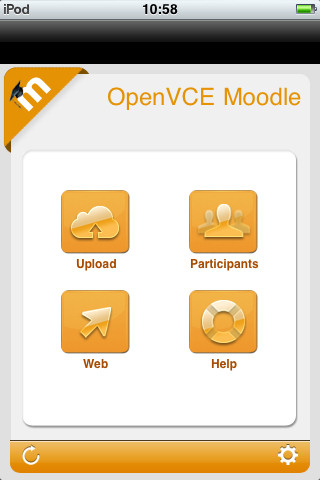
There is an iPhone/iPod/iPad app called "My Moodle" which provides mobile device access to Moodle 2.1+. See http://itunes.apple.com/us/app/my-moodle/id461289000

The experimental Moodle 2.1.2 site at AIAI now has mobile web services enabled as required to support this app - they are off by default. See http://docs.moodle.org/20/en/Enable_mobile_web_services

My initial attempts to snap a screen shot image with an iPod and upload it via the My Moodle app indicated the file exceeded the maximum upload file size, yet the PNG file involved was only 44KB... and our site is set for upload file limits of 8MB to 128MB depending on what layer is filtering.

 A future road map for development of the My Mobile app is available. See http://docs.moodle.org/dev/Mobile_app

Keywords: IDEL11, Mobile, Moodle, SLoodle

Posted by Austin Tate | 0 comment(s)

<< Back Next >>