


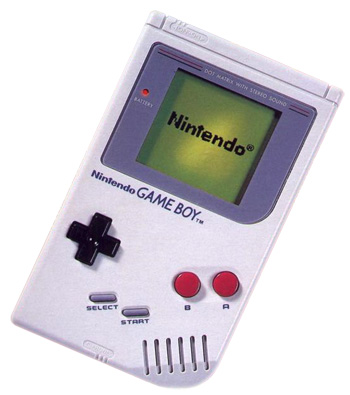
 Beyond that early memory we graduated to the games console. We had a Gameboy between us, and used to be assigned strict turns to play Tetris. We had Mario, and other platform games but I distinctly remember spending far more time on the puzzle games. It'd be somewhat crude to assign personality types to game styles, but I do wonder if there is something in that. From there we moved through a couple of Playstation models. Game style was far more varied there, and generally followed the popular trends of the day. Certainly an indication that the social aspects (peer pressure) of gaming with others started to kick in. At that stage we were certainly not playing others online, but certainly discussion about games at school influenced our choice of purchases. Mortal Kombat, Tomb Raider, Gran Turismo are the titles that stick out in my head now but there were many more. In terms of timeline it might be a little wooly but around about the same time we got our first computer, and the wonders of dialup Internet access. I can still remember the sound identifying when the modem had successfully connected. I had two real loves on that Acorn, Sensible Soccer (the never fail to score at the edge of the D thing was great), and Sim City. If Gladwell claimed mastery is at 10,000 hours I think we probably got pretty damn close in the few years we played. Certainly if you consider that our Sims ran in faster than real-time we definitely were. Interestingly, I can't remember the Internet enhancing my gaming experience at all.
  As an aside- there was something about Sim City that strikes me as unique now. We devoted hours to building cities, planning layouts, transport networks and the like in order to see them destroyed. Our goal was to build something and then initiate the disasters. Seeing the city ruined and bankrupt never felt like a bad thing, just an opportunity to modify strategy and try again. At a step back (and 20 years post..) repeatedly adapting strategies to minimise failure is not an immediately sell-able concept for a game but certainly one that appealed to me. Realising the correct save/revert to saved technique while experimenting was something that I think I could accurately claim is a skill I need almost daily in my current role, and one that I certainly learnt from games. As a group of software developers I'm not sure my intro to version control should have been here, but it probably was. Leaping forward the web properly kicks in, and my next major milestone is gaming while at University. It was early days for web games, but simple puzzles and (weirdly, considering the technology available…) online versions of the old-school Tetris style games were popular. My shared house had a Gamecube which was largely used for social gaming in a similar way to the board games we also had (a damn expensive board game..), we played Quake online in small communities (largely of people we knew in RL), and Championship Manager was something that I would say actually disrupted my studies (and was probably the cause of one of my housemates failing and dropping out in year 1). I can also claim to have become an expert virtual skateboarder courtesy of Tony Hawk during this period while never actually physically attempting the activity...
  Jumping over a whole set of events we're largely now at the current. Gaming for me now is almost entirely on portable devices. As a group of staff in previous years we spent a lot of time playing Travian, again about the community experience and team building, but it started to disappear as the time commitment grew. Or, it disappeared as the group started to get to know each other and we found other common interests beyond the game activity itself. I can't actually prove that, but I imagine my colleagues would confirm. The conclusion of this is about the future. Games for me are now about potential. What is it that makes me spend 4 hours last week playing golf on my iPad, but 0 hours actually on a golf course? More importantly, what is it that motivates our students to devote hours to achieving something that has no major impact on the things that we measure on them on, whether that is grades, careers, salaries, or whatever measure you choose? Are we measuring the wrong things? That is why this is important. Game mechanics motivate us to do more for the pure enjoyment of doing it, and if you think back through your own personal gaming history you'll find that you're learning skills along the way without realising it. Over the posts that follow I intend to explore my own learning experiences through games, and start to develop some ideas about how we can encourage this in our schools. And more importantly, in our students.
 Keywords: GBL


