Log on:
Powered by Elgg

Blog :: All

You can filter this page to certain types of posts:

March 13, 2012


Studying games based learning means I tend to encounter the phrase ‘I’m no good at games’ a fair bit. The problem I have with it is I’m not sure it is possible. What people who say this actually mean is any one or more of the following:

1) I am intimidated by computers or don’t want to learn

Needs no explanation, we’ve all seen it. In this example ‘no good’ translates quite nicely as ‘don’t want to try’. It’s about motivation. I’ll cite my Grandad as case in point. He doesn’t want a mobile phone because he’s no good at ‘technology’, but he can achieve the kind of magic with the cricket on his Sky+ box that I can only dream of.

2) I consider gaming to be a somehow lower form of entertainment

This one might be a little bit specific to the shire of white middle class England I live in, but there’s a social divide in play. You can test this out for yourself. Next time the ‘what did you do at the weekend’ question comes up in a peer group try alternating your responses between:

  1. I got my hunter up to level 20 in WoW.
  2. We went to the new Titanic exhibition at the city museum and I finally got round to finishing Obama book.

3) I’ve forgotten that ‘games’ is a wider field than that shooting thing my son likes

There’s no question that electronic gaming has got popular. The problem is that people tend to generalise based on what they see in the media. Talk about gaming and our first points of reference are either first person shooters and how they are encouraging little Jonny to go all Black Hawk Down on his school or that weird kid who stays up all night doing strange things with orcs.

Gaming is a massive field. It includes those board games you used to love and still make me play at Christmas, the whole of the sports world, even those stupid games you play with yourself on the commute to work or with the receptionist in your building. I refuse to accept that anybody can be bad at Every Game.

4) I feel the need to project myself as a serious grown up

This is very similar to 2), but needs a section of it’s own. At what point in our lives do we stop playing? Early childhood play is about learning. Go to school and learning becomes work and play what we’re allowed to do afterwards. As ‘serious’ adults do we spend time playing? Would you be prepared to tell your friends in the book group you’ve been playing? Why not?

5) I want to stop this conversation as soon as possible and talk to somebody here who is less geeky

Potentially more a reflection on me rather than the wider subject…

Image source- PS3 Controller by Chi

Posted by Tim Dalton | 0 comment(s)

March 12, 2012

WBT enables learners to explore by themselves. The general approach of how people learn is through the process ‘Tell them, show them, and let them try’. Compared with traditional learning, it is easier to access for the learners to ‘try’ by themselves. Taking simulation training as an example, the learners are able to play multiple roles in simulation. They can experience consequences of alternative behaviors and even the negative behaviors can be included. (Horton, 2000)

        In terms of test and exercise, WBT enables ‘immediate feedback’ to fit learners’ expectation. (Horton, 2000) In traditional approach, it takes ages for the learners to wait for their feedback. Even if the feedback is revealed after the test is completed, they will usually receive them as a whole instead of in piecemeal. WBT allows feedback to be demonstrated piece by piece, and keeps learners from missing several related questions because of a single misunderstanding. (Horton, 2000)

        Moreover, the hints can be provided in order to assist the learners to investigate the learning in depth. Hints can take many forms, such as: background information or instructions on how to perform the next step. (Horton, 2000) The role of giving the hints is quite similar to the role of facilitator in traditional training. However, to guide the learners in more specific way individually is definitely one of the strengths of WBT.

Finally, WBT enables learners to experience something nearly impossible to occur in real life. In a role-play scenario, Lee and Hoadley (2007) indicate that by acting as a different gender, learners observe more details in sexual incidences and even discriminations. Likewise, if the costs of failure are high, it is relatively suitable to use simulation for learning (Horton, 2000). For example, nuclear plant operators, airplane navigator.

Reference

Horton, W. (2000) Designing Web-Based Training : How To Teach Anyone Anything Anywhere Anytime, New York ; Chichester : Wiley


Lee, J.J., and Hoadley, C.M. (2007) Leveraging Identity to Make Learning Fun: Possible Selves and Experiential Learning in Massively Multiplayer Online Games(MMOGS), Innovate, Vol. 3, No. 6, http://innovateonline.info/?view=article&id=348

Keywords: simulation, Web-Based Training

Posted by Ming-Wei LEE | 0 comment(s)

March 09, 2012

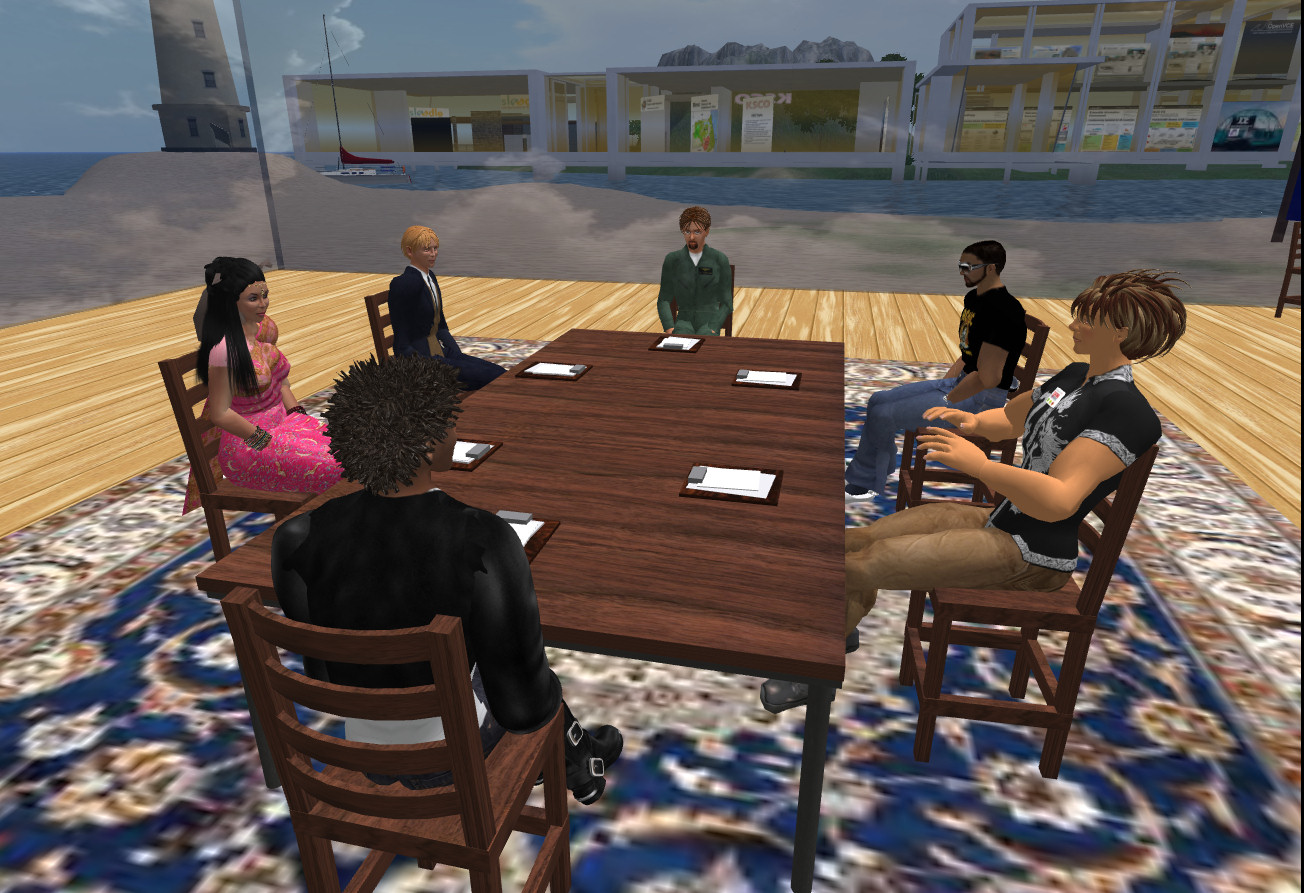
The Introduction to Digital Game-Based Learning class met Elena Northmead at the Virtual University of Edinburgh's Vue South Beach Pavilion in Second Life for a discussion on Augmented Reality Games.

Keywords: ARG, Second Life

Posted by Austin Tate | 0 comment(s)

The three papers present what the future universities and colleges would probably be like with the increasing digital media available. They are very enlightening and desirable, especially for the college practitioners. The new learning environment would be completely different from what we have assumed. It would be the complex combination of the present in–campus education system,  the digital online environment and the online real-life community.

 In the new learning environment, the new digital generation will have free access to a broader continuum of tools in their lives. The decentralized modal could set up a new environment where experts or masters help learn better and be more helpful as facilitators. It's important for the teachers to accept their position as a learning teacher. The teachers will face greater challenges. Traditionally, teachers will have more resources and should be a master or at least an expert in certain field. The dominant position and the authority will be challenged with the learners as a team who will have the same resources at hand. Confucius said “If three of us are walking together, at least one of the other two is good enough to be my teacher”. Hanyu, a learned poet and essayist in ancient China, noted "Students are not necessarily inferior to their masters, and instead the teachers not superior to the students." Not only the soft boundary exists between the distance education and the in-campus education, but also the difference between teacher and students would not be so significant. Teachers would be the program facilitator and coordinator. More different positions for the learning program would arise.  

More teachers need work together as a team for some program in order to handle the complex learning environment. The requirement that the different websites be seamless and uniform posit a challenging situation where not only the program developers, the course designers and the teachers should be in pace with what and how the websites will present. Teaching groups will  work together in a seamless way.

 The decentralized modal of learning environment would not solve all the problems in the new personal learning environment. The in-campus education will still play an essential role even in the new learning environment. Human being likes communication and group work and encouragement. It is necessary to have experience of working together.   

Keywords: roles of teachers

Posted by xiangjun sheng | 1 comment(s)

March 08, 2012

To begin with, among the six reasons why the players had engaged with the game (Whitton, 2011), I personally can be easily motivated by ‘completion’, ‘narrative’ and ‘puzzle-solving’. I think these educational games are quite interesting and fun compared to the rest of learning methods and approaches, such as: lecture, group discussion…


However, in the ARGOSI project, there is huge amount of responses indicate the disengagement of the learners. As it is mentioned in the conclusion part, if it is formally assessed and arranged as part of the education content, the percentage of engagement may increase. (Whitton, 2011) What I am thinking here is, by doing so, the learners may engage not because of the game design or the attractive true natural of ARG gams but because it is one of the mandatory elements of their study. So, the form of learning may not matter at all, just like the post-graduate students are all engaging in their dissertation if they need to obtain their master degree.


I also realize that it is not easy to find out why people do not engage instead of engaging. My initial thought to this is quite straightforward. Maybe it is just because that this game is designed as education-oriented, not leisure-oriented. Therefore, students will not easily accept the new policy or new learning materials which purely come from school authority. In my own experience and opinion, they usually consider these interventions as another kind of bothering. Moreover, according to adult learning theory, the learners are likely to resist unless they can choose the learning objects as being relevant to their own needs. (Swanson, 2011) Further, I assume that the low response rate is due to the learners’ self-diagnose needs do not match with the outcomes which they assume this ARGOSI project will produce.


What if the aim of the ARG game is to assist students to practice job interview skills, will it benefit their engagement? This goal is so practical and in my opinion, it can attract students to a certain extent. To be honest, I would like to design a game with this topic, and maybe I can do some research accordingly to investigate further.

Referenes:

Knowles, M., Holton, E., & Swanson, R. (2011) The Adult Learner : The Definitive Classic In Adult Education And Human Resource Development, Amsterdam ; Boston : Elsevier.

Whitton, N. (2010) Encouraging Engagement in Game-Based Learning. International Journal of Game-Based Learning, 1(1), pp.75–84.

Keywords: ARG, ARGOSI project

Posted by Ming-Wei LEE | 0 comment(s)

March 07, 2012

I’ve been spending a fair bit of time in WoW recently, attempting to mash it into the PLTS framework to see what comes out the other end. More on that to come. In this post I want to talk about failing and how we’re not doing it nearly as often as we should.

The thing about learning to fail is that you learn that it’s actually not so bad. You develop skills to help you manage it, to come back afterwards. But we’re scared of it. We’ve built a system where failing is a big bad thing, and we must avoid it at all costs.

Distinctly Average

The problem with that is it breeds mediocrity. The biggest hardest part of my role is dealing with the fear of change, the unknown. It is safer to stick with what we know, maintain the status quo. You see it in individuals, and in whole institutions. You can’t fail if you don’t push it too hard.

This attitude means we end up falling into a trap where can can easily do the same to our students. At the big scary end of school you must pass your exams to get to the next thing. Want to create an environment that’ll scare you about failing? Not being allowed to carry on if you do will achieve that.

I don’t have a huge problem with this though. We need goals to challenge us, targets we are motivated to achieve. Succeeding at a difficult task is such a positive experience, we can’t take that away.

My problem is that because the fail is scary rather than building their confidence to think they can do it, it’s safer make the task easier. Take the BTEC in X because it’s an easy way to 5 GCSEs rather than doing that triple science you’re not smart enough for, improve this coursework by doing Y in order to tick enough boxes on the mark scheme, your current grades mean you should do the foundation paper and get a safe C grade rather than risking the higher, and so on.

Gamification

In the game world the tasks don’t get easier the more you fail. There isn’t an easy way round a hard obstacle, you just have to persevere. What we in schools need to learn from games is why people come back to them, again and again.

One reason is because it’s safe to fail. I’m happy to admit that in WoW I die fairly frequently. When you die in WoW you become a ghost, a little gravestone appears on your map and you have to head off and find your body. Once you’ve found it you carry on from where you left off, having learned from your mistake.

The quest doesn’t become any easier to accommodate my poor play, I don’t get a man over my shoulder telling me which button to press. I reflect on my own performance and adapt, all the time knowing that if I’m still not quite successful I can just have another go.

I’ll finish with a McGonigal quote:

“When we’re playing a well-designed game, failure doesn’t disappoint us. It makes us happy in a very particular way: excited, interested, and most of all optimistic”
Image source- red fail by griffithchris

Posted by Tim Dalton | 0 comment(s)

March 06, 2012

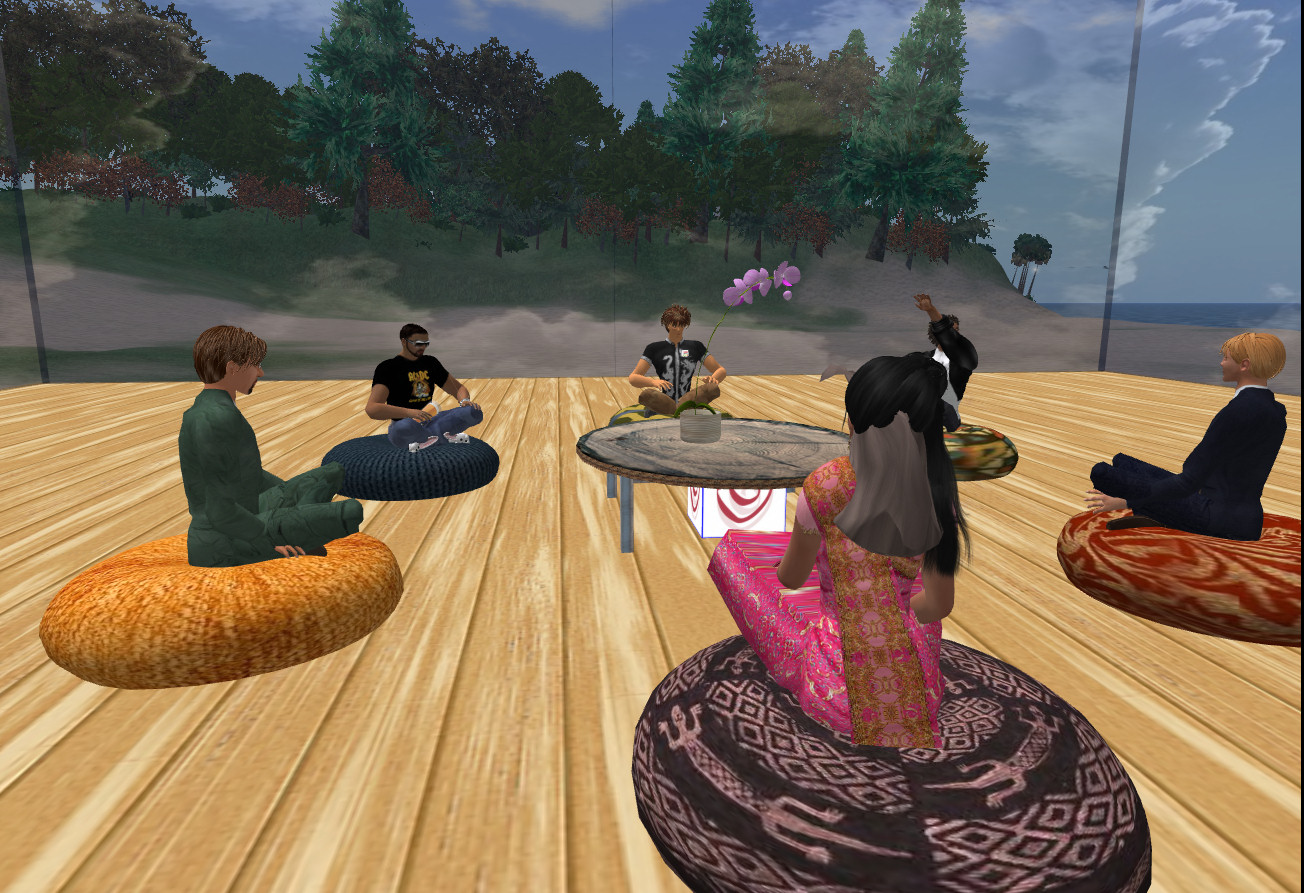
The Introduction to Digital game-Based Learning class met Frank Lassard at the Virtual University of Edinburgh's Sandbox in Second Life for a demonstration of Holodecks for creating scenes for role play and meetings.

Keywords: Holodeck, Second Life

Posted by Austin Tate | 0 comment(s)

March 04, 2012

In mid 2011, "Kirstens Viewer" based on Linden Labs' open source Second Life Viewer code, added support for 3D stereo vision using a variety of 3D methods, including simple red/cyan glasses.  This viewer is no longer maintained and is not available for download.  but the last version created - Kirstens S21(9) - still works with current Second Life servers. Here is an example image from Kirtsen's Viewer in red/cyan 3D (click on image for a full sized copy and get out your 3D glasses to see the effect):

There was an earlier patch for an early version of  the Second Life Viewer from the University of Michigan to support 3D stereoscopic views in Second Life. See http://3dvision-blog.com/forum/viewtopic.php?f=2&t=142 and https://jira.secondlife.com/browse/VWR-2972?

Keywords: 3D, I-Room, Kirtsens Viewer, Red/Cyan, Second Life, Stereo

Posted by Austin Tate | 0 comment(s)

March 02, 2012

I have been thinking about the game design asessment since Christmas.  It is my style to make notes and get ideas flowing early on and collect assets before seriously starting any work element.  I had originally thought a game using assets already available to me from a project on the "Virtual World of Whisky" might make a suitable topic for the game design.  See for example:

I have seen other opportunities while exploring quests in World of Warcraft, a number of space-themed games mentioned in this blog, and playing a range of new (to me) games on the course.

I am finding that a number of themes keep arising in my interests while engaging with these games and thinking about their narrative, objectives, and the ways in which they introduce artifacts and skills.

  • Situated Learning and Narrative
  • Levels, Scaffolding and Push to the ZPD (Vygotsky)
  • Use of encyclopaedia resources
  • Community-based Learning
  • "Ancient" style of learning at the feet of teachers

My interests continue to be strongly with games which have a social and community dimension, and a way to engage players with the broader community involved is often something they involve.

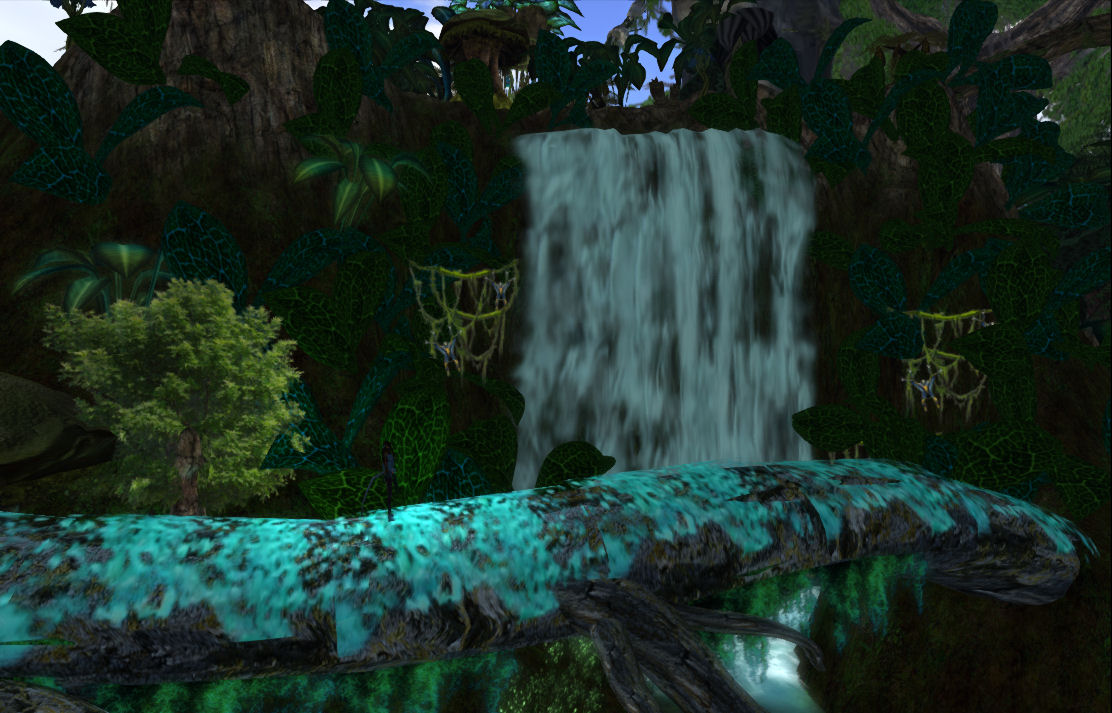
So, I have begun development of a game design for a quest style game in the Avatar movie theme areas of a MMO such as Second Life. The game is based on an exploration of the Pandora moon flora and Na'vi culture.  It will have strong community and knowledge sharing aspects, but allow for play that engages with others or not, with consequences.  I call the game "Moon Bloom – The Legend of the Bloom of the Aligned Moons".

Posted by Austin Tate | 3 comment(s)

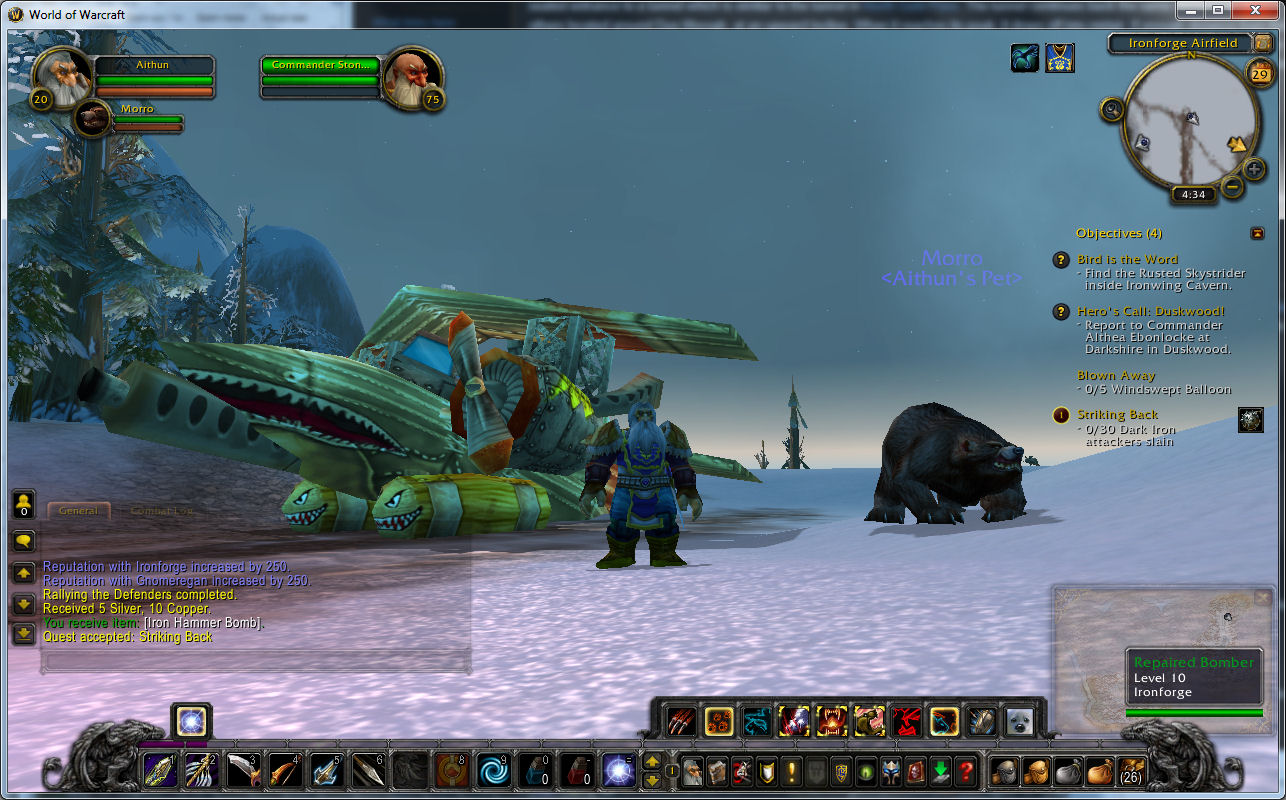
I have found it much more interesting to explore the routes, travel mechanisms and locations which can be reached in World of Warcraft rather than just carrying out more quests, which I find are very linear in their design, with seemingly pointless to and fro movements.

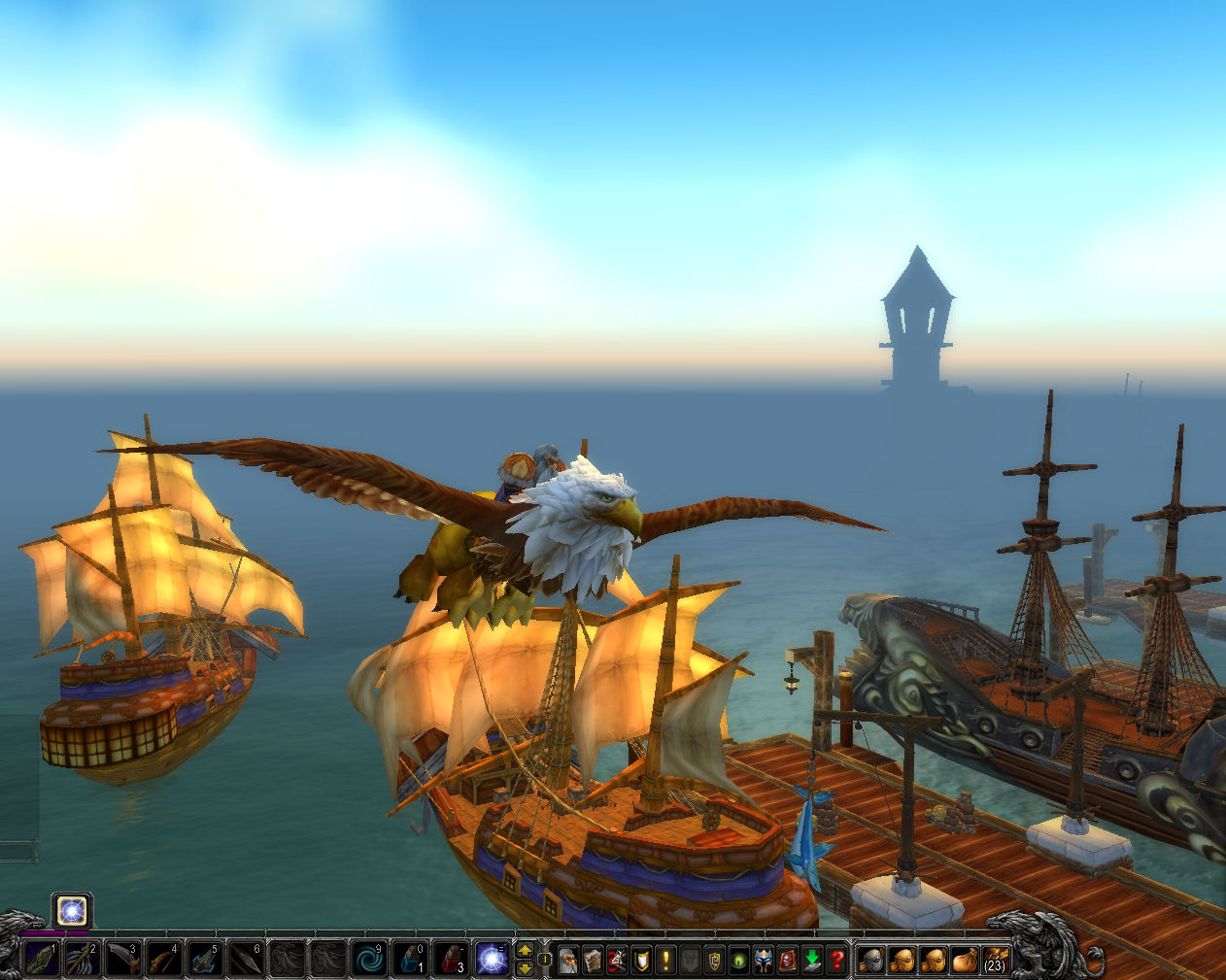
I explored Stormwind Harbour, used the boat routes available from there (and Menethil Harbour) to locations on the continent of Kalimdor, and found Thargold Ironwing who kindly gave me a free gryphon tour of the harbour - see http://www.wowwiki.com/Thargold_Ironwing

At level 20 my Dwarf Hunter was able to learn a riding skill to allow for a mount to be purchased and used.  So I now have the steed appropriate to the Dwarf race, a ram. This makes movement between sites much quicker and allows low level attacks to be avoided.

I am now discovering more route and vehicle types including an ornithopter and a (repaired) bomber.

Posted by Austin Tate | 0 comment(s)

<< Back Next >>