On the definition and form of games
Defining games
As part of the introduction to digital game-based learning course I was keen to start by establishing some ground rules for the discussion. The cornerstone to these would be the definition of a 'game' (which would then give way to the definition of a digital game). The importance of definitions in any scientific endeavour cannot be underestimated. The quote I have used in the past makes the point eloquently:
“Controversial and unsystematic terms are the cause of serious problems in examinations of learning situations. Without a consistent vocabulary, it is difficult to relate investigated learning situations to each other and the results are confined to single cases. ” (Zürcher, 2010)
If this is the case, unless we define what a 'game' is we will be unable to have a coherent discussion. A good examples this is the fact that one of the threads discussed the 'game of life'.
Between gaming and playing
One of the first things that I ran into when thinking about the definition of games was the difference between the terms 'playing' and 'gaming'. For example, 'gamers' are individuals who spend considerable time playing video games and, in some cases, invest considerable amounts of money in the hardware used for this activity. On the other hand, children at schools have 'play time' (and we also have 'supervised play').
Looking at the dictionary definitions are helped a bit:
| play/plā/ Verb: Engage in activity for enjoyment and recreation rather than a serious or practical purpose. Noun: Activity engaged in for enjoyment and recreation, esp. by children. | game/gām/ Noun: A form of play or sport, esp. a competitive one played according to rules and decided by skill, strength, or luck. |
I find it interesting that the emphasis in 'play' is on enjoyment and recreation where as the emphasis in 'game' is on rules, skill, strength or luck. This to me defined a match more rigid and planned game and a much more flexible and open play. The competitive element mentioned in the definition of game indicates that they would typically be an objective, the attainment of which is defined by the rules. This raised a few questions for me – is there no objective in 'play', Can it not have a serious purpose? Can a 'game' not be enjoyed?
On the importance of games and play
Maria Montessori mentioned the importance of experiential play for preschool children – experiencing different materials, different objects and playing with every day objects such as opening and closing buttons and zippers. Greenfield mentions the importance placed by developmental psychologist Piaget on the development of motor skills.
The form of games
Surprisingly something that these definitions tied very nicely into was the manner in which Zürcher tackles the definition of formal and informal learning; This, from the very same article I used to explain why a definition is needed in the first place.
It then struck me that a clear distinct line can be drawn between the different forms of learning Zürcher deals with and the two definitions that I have been struggling with:
Play – informal learning
Game – formal learning
Children playing with zippers and buttons in a Montessori preschool do not have an objective they need to achieve and are not abiding by any rules – they are learning from experience. In a similar manners city design students using Sim City can understand how different variables interact in a city environment. Rules can be used to transform play into game (so a game can be built with Lego bricks etc). Zürcher defines the relationship between formal and informal as a scope rather than two opposites and so is the case between play and game.
My general feeling is that play can be used where there is less need for testing and monitoring and games when there is greater need to monitor skill and improvement (its easier to watch a learner vocabulary grow as their scrabble score improves but harder to understand how much better their imagination has improved form playing with lego).
The final question for me is – can we use the notion of formality to decide between gaming and playing? And can we go further and use it to design the actual activity...? That's a whole other post.
References
Zürcher, Reinhard (2010). 'Teaching-learning processes between informality and formalization', the encyclopaedia of informal education. [www.infed.org/informal_education/informality_and_formalization.htm. Accessed: 20/1/2012
Greenfield, Patricia M. (1984). 'Mind and media : the effects of television, video games, and computers'. Chapter 7 pp. 86-114, Fontana Paperback, London
Google definitions, accessed 23/1/2012








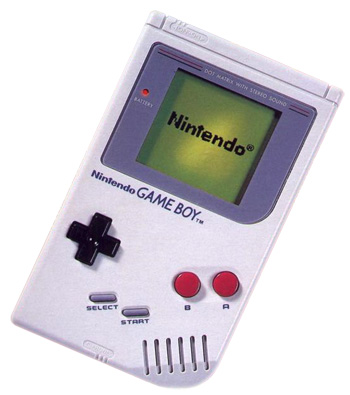 Beyond that early memory we graduated to the games console. We had a Gameboy between us, and used to be assigned strict turns to play Tetris. We had Mario, and other platform games but I distinctly remember spending far more time on the puzzle games. It'd be somewhat crude to assign personality types to game styles, but I do wonder if there is something in that. From there we moved through a couple of Playstation models. Game style was far more varied there, and generally followed the popular trends of the day. Certainly an indication that the social aspects (peer pressure) of gaming with others started to kick in. At that stage we were certainly not playing others online, but certainly discussion about games at school influenced our choice of purchases. Mortal Kombat, Tomb Raider, Gran Turismo are the titles that stick out in my head now but there were many more. In terms of timeline it might be a little wooly but around about the same time we got our first computer, and the wonders of dialup Internet access. I can still remember the sound identifying when the modem had successfully connected. I had two real loves on that Acorn, Sensible Soccer (
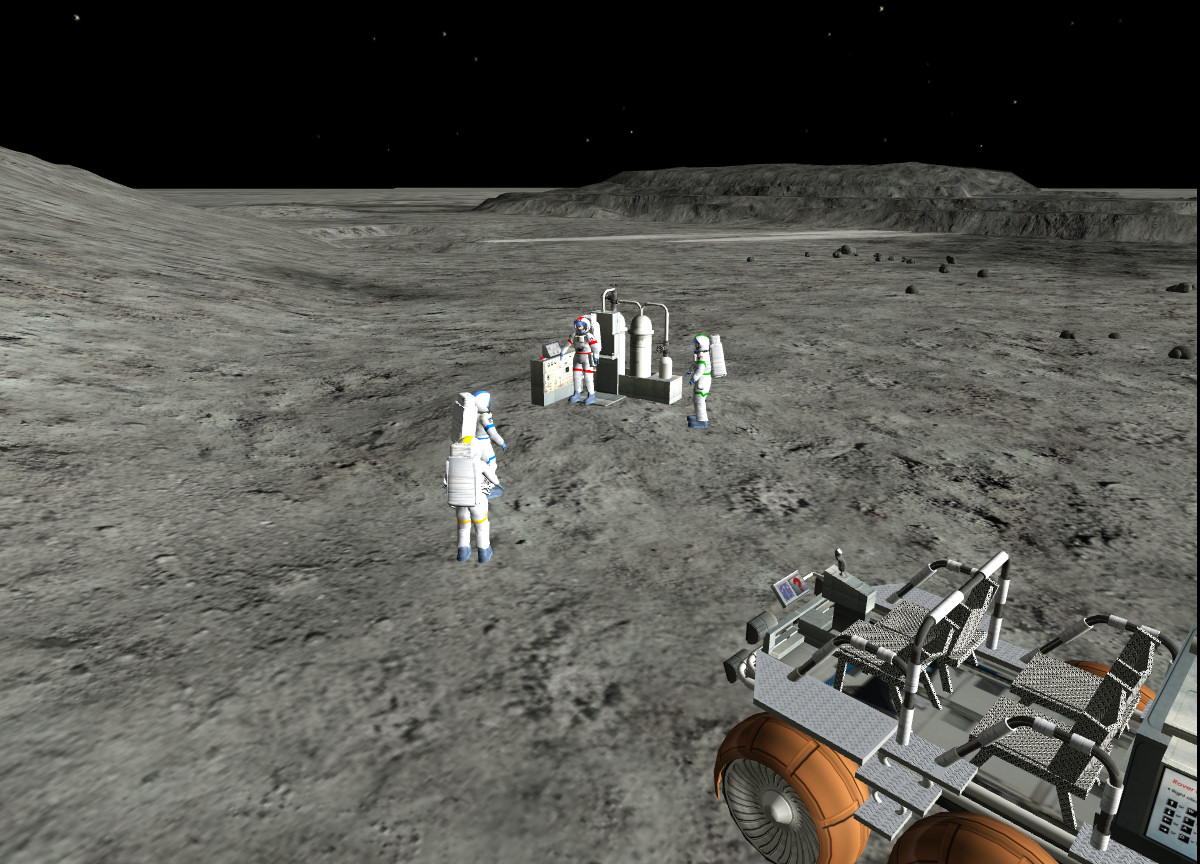
 As an aside- there was something about Sim City that strikes me as unique now. We devoted hours to building cities, planning layouts, transport networks and the like in order to see them destroyed. Our goal was to build something and then initiate the disasters. Seeing the city ruined and bankrupt never felt like a bad thing, just an opportunity to modify strategy and try again. At a step back (and 20 years post..) repeatedly adapting strategies to minimise failure is not an immediately sell-able concept for a game but certainly one that appealed to me. Realising the correct save/revert to saved technique while experimenting was something that I think I could accurately claim is a skill I need almost daily in my current role, and one that I certainly learnt from games. As a group of software developers I'm not sure my intro to version control should have been here, but it probably was. Leaping forward the web properly kicks in, and my next major milestone is gaming while at University. It was early days for web games, but simple puzzles and (weirdly, considering the technology available…) online versions of the old-school Tetris style games were popular. My shared house had a Gamecube which was largely used for social gaming in a similar way to the board games we also had (a damn expensive board game..), we played Quake online in small communities (largely of people we knew in RL), and Championship Manager was something that I would say actually disrupted my studies (and was probably the cause of one of my housemates failing and dropping out in year 1). I can also claim to have become an expert virtual skateboarder courtesy of Tony Hawk during this period while never actually physically attempting the activity...
  Jumping over a whole set of events we're largely now at the current. Gaming for me now is almost entirely on portable devices. As a group of staff in previous years we spent a lot of time playing