

 At the top end of the new year I have been reading some of the inevitable predictions people 'in the know' have been making. Some are plausible, others a little outlandish, and some downright rediculous. If I were to make my own prediction about what we can expect this year, I would say that we can expect a lot of change. I think this would be a safe prediction, because it has always been thus. We have seen a lot of changes in the last decade, some of them have been game changing. Think of the Apple iPad and other similar touch screen devices introduced in the last year and consider how they have begun to impact upon the world of learning. Think farther back to see the far reaching effects of the Social Web on learning. I'm giving a number of presentations in the coming few months both in the UK and farther afield in Europe in which I will try to outline what I think these changes will be and how technology will play its part in the future of education. My prediction is that the changes will be disruptive. My wikipedia page claims that I am a 'disruptive activist', which is quite an apt description of me - I use the term on my Twitter profile page. But just what is disruptive activism?
Disruptive technologies are those that change the market and in most cases replace an existing technology. They are characterised by their capability to do so over a relatively short period of time. Some are known as 'killer applications' because they completely wipe out the opposition due to their placement in the market, their greater appeal, availability and lower price, to name just a few of the key factors. The replacement of Betamax video tape with VHS tape (even though the latter was technically inferior) was one classic example of a disruptive technology in the 1980s. Another example of disruptive technology was the way digital photography has replaced chemical photography. In just a few years, digital cameras have improved in quality, shutter speed, resolution, and most importantly pricing, to the point that the photographic giant Kodak this week announced the last batch processing of one of its iconic products - Kodachrome film.
As David Conrad recently wrote: The speed of the decline of the traditional wet film approach to photography has been spectacular. Yet in the early days of the digital camera it all seemed so unlikely. The cameras were low resolution, often in black-and-white only, and yet even so the machine just couldn't process the end result. There just weren't disks that could hold that amount of data. The idea that resolution, storage and processing power would increase to the point where a digital camera could rival the quality of a 35mm film image was, and to a certain extent still is, ridiculous.
Digital photography, the digital darkroom and computational photography has changed the way that images are created, manipulated and distributed and wiped out the old ways of doing things astonishingly quick. (Source: Kodachrome Died)
The rapid rise of digital photography is due to the advantages of digital cameras over conventional cameras. Digital cameras are multi-functional, in some cases capable of recording video as well as capturing stills. The multiple affordance of digital media to be able to see instant results, record, delete, share and edit images on the move, and the ability to extract a great deal of information about camera source, geographical location and other useful information, are all attractions the conventional camera cannot compete with. Why wait several days or even hours to get colour prints when you can have them in seconds?
So what is disruptive activism? One of the clues lies in my presentations over the last couple of years on the ideas behind Edupunk. It's a subject I will revisit at the Learning without Frontiers conference in London next week. Along with Leigh Graves Wolf, I am hosting a hack conference session on the subject and will try to outline the philosophy behind the movement, and discuss how and why disruptive activism is necessary in education today. Edupunk is more than simply a 'do it yourself' philosophy. It's about challenging current practices, and in particular the commoditization of learning, and the manner in which edubusinesses are cashing in on gradually disappearing education budgets. Disruptive activism for me is about raising people's awareness to the alternatives that exist. It's about encouraging people to learn for themselves. It's about personalising learning. It's about finding new ways to do things that are more effective and more fit for purpose. It's not about being popular - people are free to shoot at me, and they often do. Disruptive activism is more about being dissatisfied with the status quo and not accepting that 'this is the way it should be'. Yes, we can be sure that one thing this new year will bring is change. I hope it will be the kind of change that disrupts bad practice and creates better opportunities for learning.
Image source
Disruptive activism by Steve Wheeler is licensed under a Creative Commons Attribution-NonCommercial-ShareAlike 3.0 Unported License.


Yesterday I began my review of a busy year by featuring the top ten cities I visited around the globe in 2010. The countdown continues from 5 to 1:
 5) Serekunda, Gambia. Going to the Gambia in February was a profound learning experience for me. Serekunda is the largest city in one of the smallest and poorest African nations and it has to be one of my most inspirational experiences, ever. I was in Gambia looking after some of our education students, and we were on a week long comparative study tour. The students learnt a lot, but then so did I. The noisy bustle of the crowds, the colourful sights, the opressive heat and the huge variety of odours that assail your senses leaves you captivated, bewildered and excited all at once. We visited some of the schools and saw how teachers were coping with no money, few resources and the constant threat from sicknesses such as malaria. They are truly heroic. The pace of life in this tiny west african country is generally slow, but the people's minds are quick, and I had several opportunities to just sit down and talk to local people about life in the Gambia. People in the streets just approach you and want to talk. I learnt a lot about education, society and politics from these folks, and it was a rewarding but also at times a disturbing experience. To say my time in the Gambia changed my perspective on life does not do any justice to what I learnt there. Related blogpost.
 3) Nuremburg, Germany. It's the place you read about in all the Second World War history books. Nuremburg is famous for being the site of the Nazi war crime trials. But if the city was remembered just for that episode, it would be doing the city an injustice. Nuremburg is deep in the German region of Bavaria, and is such a charming place with its medieval castles and architecture that largley survived the allied bombing. I spent a pleasant afternoon in the warm May sunshine wandering around just sampling the atmosphere and enjoying a meal of bratwurst and potato salad, accompanied by a fine draft of the local brew. Speaking of beer - the famous Bergkirchweih beer festival in nearby Erlangen was quite a spectacle. With 11,000 seats, it is the largest beer festival in Europe. I was in Erlangen to meet with colleagues on the Concede project, and during our evening out at the beer festival I amused myself observing the antics of a local cast of thousands as they consumed large quantities of the falling down water and their collective bodily co-ordination gradually deteriorated. I stuck to drinking Radlers - the German eqivalent of shandy (beer and lemonade) just to be on the safe side. Related blogpost.
2) Auckland, New Zealand. I set foot in New Zealand in October, in the Southern Hemisphere springtime. It's just about as far away from the UK as you can get, but as I had already spent a week in Australia, I was just about acclimatised to springtime in Autumn and being 12 time zones away from my own. Auckland is the first city of New Zealand, but it's not the capital. It just behaves as if it is, sprawling for many miles across the northern tip of the North Island. I was well looked after by both my hosts (I was there to keynote the Auckland University of Technology conference) and also by my own family who live in Mount Wellington, an Auckland suburb. Highlights of my stay in Auckland were a trip to Devonport on the ferry, and the view from Mount Eden over the city. I also spent a lot of time with my cousins, second cousins, and their delightful children, who took a real shine to me. I was sorry to leave this wonderful place with its friendly people, but I will be back there again in December 2011. Related blogpost.
 1) Valencia, Spain. This was my first visit to the beautiful Spanish city of Valencia, but I hope it will not be my last. I was in Valencia in June to speak at the EDEN Conference, and I was very impressed with the city. I stayed in a hotel just across the road from the stunning City of Arts and Sciences (Ciudad de las Artes y de las Ciencias) and made three visits during the few days I was there, because I needed time to take it all in. To say it is visually stunning is an understatement. I have already blogged about it here, so I will leave you to appreciate the picture on the left which I hope captures just a little of the futuristic grandeur of the place. I met up with several people at the conference who I had always wanted to speak to, including George Siemens, Alex Pickett and Sebastien Fiedler, whom I spent some time with. The EDEN conference was as usual, a mix of new and old, challenging and mundane, and you took your chances, but the networking opportunities were excellent, and time 'off the pitch' was time well spent.

2010 has been another busy year for me, with a lot of travel and I estimate that I have more than 54,000 air miles to my name - more than twice around the globe. When I add all my hours travelling in trains and buses on top, and all the hours spent waiting in airport lounges, it makes me feel exhausted just thinking about it. But the travel is part of my job, and on reflection, it has all been worth it. I have met some extraordinary people, learnt some valuable lessons and have visited some incredibly beautiful and captivating places. Here are the first 5 of my top ten interesting cities of 2010 (I will post my top 5 tomorrow):
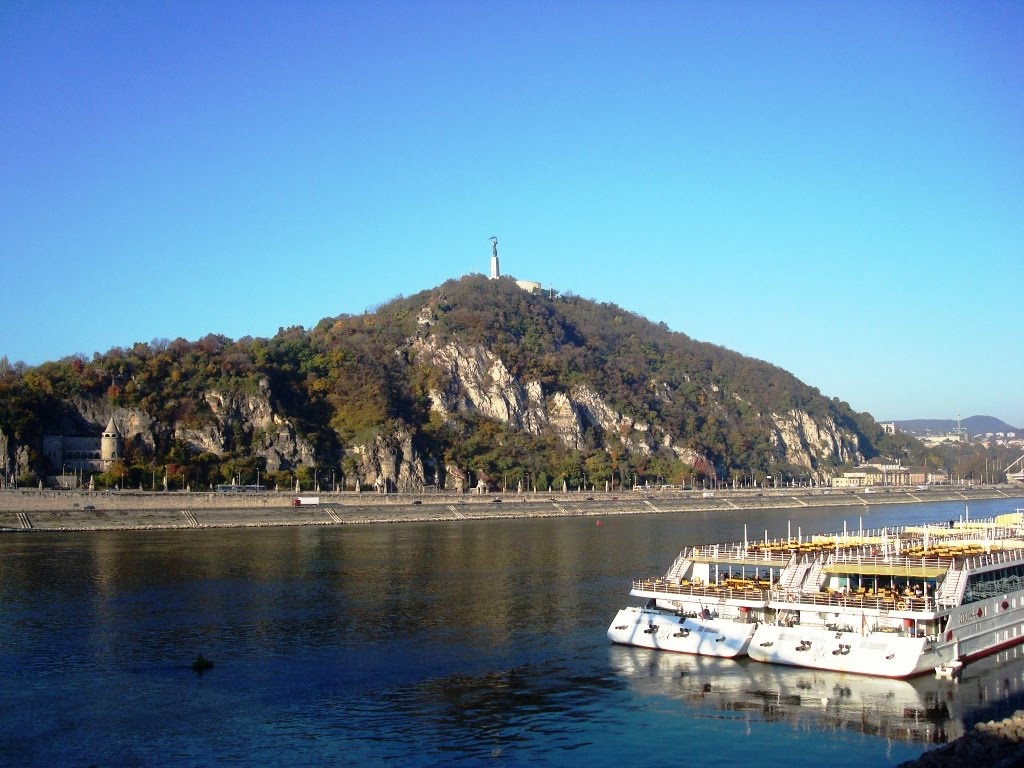 10 =) Budapest, Hungary. Budapest is always beautiful, no matter what time of year you visit. On my previous 2 visits, the city was basking in the sunshine of midsummer. This time we were shivering in close to zero temperatures of early winter. I was in Budapest to keynote the EDEN Research Workshop, and also to meet with colleagues on the Concede (user generated content) project. This time I stayed on the Pest side of the river for the first time, and spent some time in the freezing air wandering around some of the winding backstreets of the city. I came across several Bohemian cafes where student life had a high profile. This is a picture I took looking across from the Pest to the Buda side of the Danube, with the Firsherman's Bastion (Varhegy) in the distance and two of the popular river launches in foreground. There are several universities clustered along the banks of the Danube, and the nightlife is vibrant as a result. I noticed that just as I had seen during my summer visits to Budapest, people still sit outside to eat and drink in the cafes and bars here. They just wrap up warm and sit huddled together underneath the heaters. Related blog post.
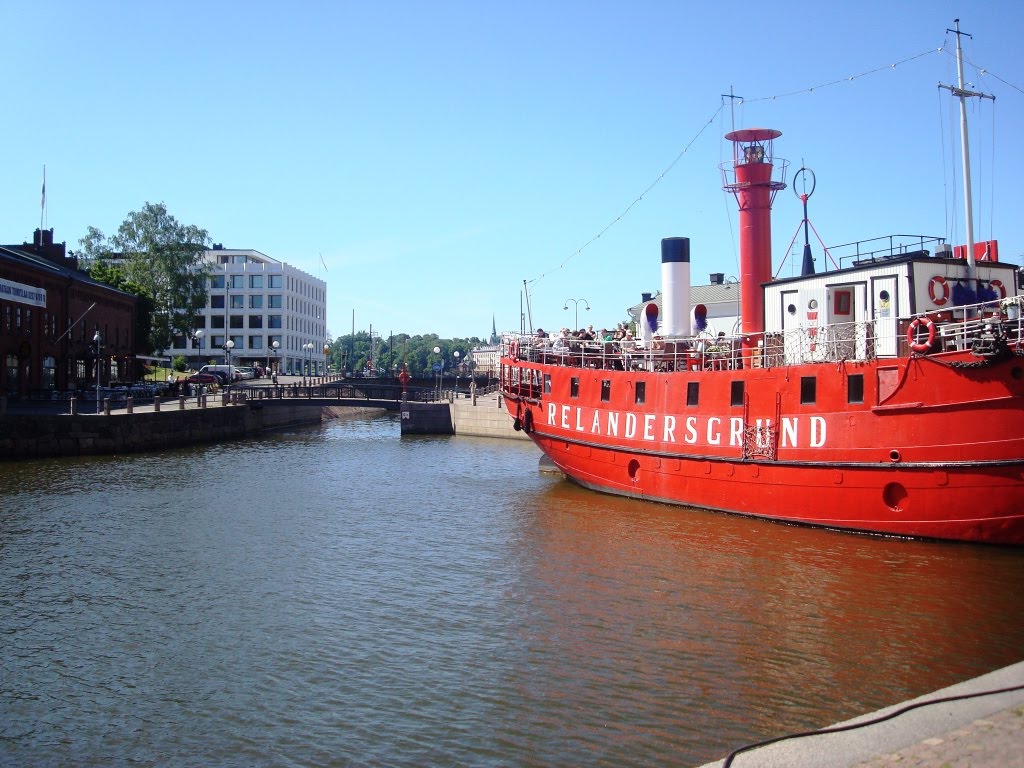 10 =) Helsinki, Finland. Yes, I know I said this would be my top ten, but this is my way of squeezing eleven favourite cities into a top ten blog post. This was also my third visit to the capital of Finland, and again as in previous years, I was priviledged to be there just after the midsummer solstice when the sun in the Northern hemisphere is at it's highest. You need to personally experience the white nights of Scandinavia to properly appreciate how amazing they are. It's difficult to sleep at night unless you have some heavy curtains, because there is no night - only twilight for a few hours. I was invited to Helsinki to serve on a two day panel of experts as we assessed over 4 dozen applications for educational research grants provided by the Academy of Finland. It was hard work but a lot of fun and very fulfilling, as we selected several worthy research projects and signed off several million Euros of research funding for education that day. I took a walk along the southern quayside during my last day in the city, and saw some wonderful views, including this old trawler vessel, now converted into a fun riverside restaurant and bar. Related blog post.
 7) Christchurch, New Zealand. I was in Christchurch for my biggest gig of the year, and possibly my largest speaking engagement so far. I was one of 4 keynote speakers at the Ulearn conference, New Zealand's (and probably the Southern Hemisphere's) premier education conference, and my audience on Day 2 of the event was almost 1800 teachers. I also hosted 2 workshops during Day 3, on Teaching with Twitter, and Learning in a Web 2.0 World. My slideshow for my Twitter workshop is available for free download here. I also recorded an Edtalk on OER for the Core Ed people who were running the conference. Wandering around the city of Christchurch was an experience, not least because it was still recovering from the September quake that had damaged it so severely. Christchurch itself reminded me so very much of middle England, with quaint old buildings, punting on the River Avon amid the weeping willows, old college style architecture, and a genuine old English ambience. Prior to the conference, we were rocked by a 5.0 magnitude earthquake - and that was decidedly very un-English. Related blog post.

