Log on:
Powered by Elgg

Ania Rolinska :: Feeds

December 01, 2018

Fantasy and reality

Image from Pixabay
Here are some of my recent (and random) thoughts about the future, science fiction and technology reality. It's not meant to be an essay, but is more a free flow of ideas around these themes. 

My lifelong interest in technology has almost certainly been inspired by reading science fiction novels. When I was still at school, I read voraciously - Isaac Asimov, Poul Anderson, Robert Heinlein, A. E. van Vogt, Arthur C. Clarke, Philip K. Dick - books from all of these writers and many others were stacked on my bedroom shelves. Some had been thumbed through many times (I have kept most). They appealed to my imagination and fired my interest in the future, how it would be shaped and the impact technology would have on society. At around the same time as I was reading sci-fi, the lunar landings were happening. I avidly followed all of the Apollo missions, and can still name the astronauts and their missions.

Years later, as I look back on my favourite science-fiction novels, many are focused on predicting future - Isaac Asimov's Foundation trilogy for example, and many of the writings by Poul Anderson, provided me with quirky, out-of-left-field ideas to play with about the things to come. I revelled in the exotic nature of new technologies and the unpredictable outcomes of robotics, artificial intelligence and enhanced human capabilities.

As I observe the current scene, I feel the exponential rise of the digital age, and the impact it is exerting on learning and work is exciting and daunting in equal measure.  It is exciting because new and previously inconceivable opportunities are opening up for everyone, from school through to lifelong learning. It is daunting because a great responsibility rests on everyone of us to ensure that the very best characteristics of technology supported learning are exploited, while the very worst aspects are negated. How we are doing this is still nascent and in some contexts, unknown.

The science fiction writers of the 20th Century gave us plenty of warnings about the misuse and abuse of technology. Isaac Asimov's 3 laws of robotics were written as a safeguard for humans against the rampage of the machines, but as everyone who ever read I, Robot knows, such 'laws' can be broken, with disastrous consequences for humans. The fractured identities of Heinlein's Stranger in a Strange Land are a salutary warning of the shock of the new and the battle to survive in an alien environment.  Philip K. Dick poses a number of deep and pertinent questions around android and AI sentience in Do Androids Dream... (Bladerunner), while other more convoluted and probably impossible ethical issues are raised in Minority Report.

These are useful depictions of possible realities, but they paint a dystopic picture of our relationship with technology. I am more interested in the positive things technology can do for humanity than in the tools themselves. Yes, future problems must be anticipated and obviated, but most tools are initially designed to help, not to harm.  My children will tell you that I am fairly useless when it comes to figuring out how a device works, or how to interface it with another. My work is focused on the ideas behind how tools can be used to connect us together, to help us to think better, and to engage us in learning and other useful activities. The science fiction writers provided a trigger for my interest, but it is the researchers and writers of today who hold my attention.

Creative Commons License
Fantasy and reality by Steve Wheeler was written in Plymouth, England and is licensed under a Creative Commons Attribution-NonCommercial-ShareAlike 3.0 Unported License.


November 14, 2018

Weapon of choice

Me with an incredible weapon
What is your weapon of choice? As an educator, what tool or technology would you never be without in the classroom or learning space?

For me, it is quite simple. My one weapon of choice is a dry wipe board and some pens. If there was nothing else, I could still conduct all my lessons using a board and pen. At a push, a chalkboard would do just as well.

There are so many things you can do with a whiteboard and pens. One of my methods is to provoke a discussion with students and then summarise their comments and arguments on the board. I often catch them taking photos of the board so they can go away and revisit the notes later on. With an interactive whiteboard it's easier - I simply email the screen capture to my students as an attachment. I have written extensively about how I use IWBs in the last few years.

Another method is to get students to use the board to present their ideas. This means sitting down and relinquishing control of the screen to them, something some educators may find uncomfortable. But for me, it's a natural progression - a use of the tool by students to learn for themselves.

There are so many other methods I could write about here, including quizzes, brainstorming sessions, and illustrations/diagrams, but now it's your chance. Please share your 'weapon of choice' below in the comments box. Hopefully we can start a discussion thread about the effectiveness of different technologies, media and tools for education!

Creative Commons License
Weapon of choice by Steve Wheeler was written in Plymouth, England and is licensed under a Creative Commons Attribution-NonCommercial-ShareAlike 3.0 Unported License.


November 02, 2018

Know your own strength

Photo source: Maxpixel
I broke a rowing machine yesterday at the gym. I don't know my own strength. Ironically, that's the very reason I attend the gym regularly. I want to know my own strength. I want to know what my limits are, and then try to exceed them. Apart from breaking the rowing machine, my fitness regime is going swimmingly (without the swimming, obvs). I have learnt a lot. I know about cross trainers, treadmills and weights. I thought a Dip Assist was someone telling me where to stick my Doritos*, until I discovered the weights area. And it was while I was working out at the gym this morning that this thought came to me: To know your own strengths, it's often wise to compete against yourself rather than anyone else.

The gym I attend is full of people of all shapes and sizes. Some are incredibly strong and fit, and I would feel very inadequate if I pit myself against any of them in a strength or endurance contest. No, it's better to pit myself - against myself. And so, I play a little game. The first item I use every morning is the treadmill. It's pretty high tech, with a digital readout of just about everything I need to know. It can measure my heart rate (pulse), how many calories I'm burning up, how many kilometres I have run, and how long I have been running (or walking). Every day, I try to improve one aspect of my workout.

It can look like this:

1. How much quicker can I run today?
2. How many more calories can I burn in 20 minutes today?
3. How much longer can I run today, before I need to stop
4. How many kilometres can I run today in 20 minutes?
5. How quickly does my heart rate reduce over one minute?
6. How far have I run today compared to yesterday?

and some very personal ones:

7. How much weight have I lost?
8. How long did it take for me to pick myself up off the floor after that workout?

All of these, and many more metrics can be compared to my achievements on previous visits to the gym, and that also applies to rowing, cycling, cross training and weight training. I'm asking myself the question - how am I improving? And the tools in front of me are giving me the feedback I need. You don't need high tech equipment either, as a Fitbit fitness tracker or other wearable personal metric tool would just as easily do the job.

But back to my initial premise. We need to know our strengths in all aspects of our lives. Because, in discovering our strengths, we can also identify our weaknesses, the deficits in our knowledge, skills or abilities that can be improved. Measurement of attainment against the self achievements is known in educational circles as ipsative assessment. It's a very fair and often very effective means of measurement, and can also be powerfully motivating.

The evidence is there for us to see. Paul Black and Dylan Wiliam (2003) write about assessment for learning, where the act of measurement flags up weaknesses and shows how they can be addressed. John Hattie (2012) argues that one of the two most important factors in good learning is useful feedback. There are many other studies that emphasise that personal feedback is vital to good learning. Learning and Development professionals would do well to take heed of these factors and embed them in training programmes. It will be a real strength.

References
Black, P. and Wiliam, D. (2003) Assessment for Learning: Putting it into practice. Maidenhead: Open University Press.
Hattie, J. (2012) Visible Learning for Teachers. Abingdon: Routledge.

* Other brands are available.

Creative Commons License
Know your own strength by Steve Wheeler was written in Plymouth, England and is licensed under a Creative Commons Attribution-NonCommercial-ShareAlike 3.0 Unported License.


October 29, 2018

Head, hand and heart

Photo from Pxhere
I can't speak for anyone else, but my own personal learning is most enriched when I'm in conversations with others. Whether it is sat during a break in a conference schedule; over a few drinks in the evening with a couple of colleagues; in breakout sessions; or simply sat discussing ideas across a social media channel; all of these can be rich veins of new thinking for me. I suspect it's the same for many others.

I recently read a thought provoking article in the RSA journal about how one English school is harnessing the power of dialogue to enhance learning. In Anatomy of Learning, Peter Hyman reports on great developments at School 21, a school for 4-18 year olds located in Stratford, East London. Hyman argues that schools should be places where learning can be experienced in all its complexity. School 21 achieves this by teaching across the three domains of head, heart and hand. In other words, the school focuses equally on knowledge, emotional intelligence and skills. Schools have failed to achieve a good balance in their curricula, Hyman argues, instead, focusing on one to the detriment of others. In Hyman's own words:

"School is, for too many young people, neither enjoyable and fulfilling in its own right, nor a powerful enough preparation for the exciting yet dangerous world they will enter. The high stakes hoops and hurdles that must be navigated to pass exams are now so intense for both teachers and pupils that little else really matters. Policymakers and politicians think that the harder exams introduced this year raise expectations about what pupils can achieve, but they are in fact doing the reverse. They put a ceiling on the extraordinary learning that could happen if schools were freed from the imperative of teaching to the exams" (Hyman, 2017).

Peter Hyman hits the nail squarely on the head. Whenever I discuss the challenges of education with teachers, the same theme always emerges - teaching to the test, and the pressures it places on staff and students - is the greatest issue that is always expressed. There isn't enough time for students to discuss their ideas, explore complexity and create things. All they can be focused on is passing each test as it is presented.

Hyman's perspective is that change is needed and that a repertoire of curriculum strategies is required to give young people a rounded education. These include real world learning (which presumably involves immersion in real world problems, challenge based learning etc), maths mastery, oracy techniques and storytelling - and dialogue, plenty of dialogue. Hyman concludes by arguing that schools need backing from government to promote different approaches to learning and the curriculum than are currently prevalent in education.

The promotion of head, hand and heart education presents 'three interlocking conversations', he suggests, enabling students to wrestle with big ideas, discuss what it means to be human, and encourage them to offer their highest contributions.

Now that's a school I wish I could have attended when I was young.

Reference
Hyman, P. (2017) Anatomy of Learning. Royal Society of Arts Journal, 3: 26-31.

Creative Commons License
Head, hand and heart by Steve Wheeler was written in Plymouth, England and is licensed under a Creative Commons Attribution-NonCommercial-ShareAlike 3.0 Unported License.


October 14, 2018

All in the game

Photo by Nestor Galina
I have written many times about game based learning and its place in education. Here's a revisit to a post I published several years ago. It examines the long game and strategy elements of learning through game playing. I am, as ever, interested in your views.

Games playing is not always viewed as a serious pedagogical method. Some teachers dismiss it as time wasting, or as a frivolous activity that is best employed at the end of term, when the serious business of teaching has started to wind down. For those teachers, games fulfil a similar function to 'sticking on a video'. It's a convenient time filler, keeps the kids quiet and isn't too taxing on the mind. And yet many teachers are coming to the realisation that playing games is more than a time filler, and actually has many positive benefits for students.

Most games playing in schools is confined to a single classroom, and applied to a single subject. But with a little planning and resourcing, we can go a lot farther than this. We could conceivably apply a grand strategy to games that could play out across entire schools.

I remember an elaborate game we played when I was in school in the 1970s. All of my teachers were involved. The context is important for this story. I was in school on a military base in Holland, and my father was in the armed forces. We were living on a forward base in Western Europe during the height of tensions in the 'Cold War'. At this time, all children and their families lived in a time when nuclear war was a very real possibility. Although the threat hung continually over us and no doubt exercised our parents' minds, most of the time we kids simply got on with our lives.

The school set up a 'long game' which lasted several days, in which all of our British year group, along with the American, Canadian and German sections of the school, were assigned tables to sit at. Each table had a flag and name representing a country, and those of us on each table had to decide who would act as our head of state, foreign and finance ministers, diplomats, armed forces chiefs and so on. During the long game, scenarios were imposed upon us which we had to negotiate, in order to avert hostilities that might otherwise lead to a worldwide nuclear holocaust. It was engaging, thrilling and compelling, and we learnt a lot not only about politics, but also curriculum subjects such as mathematics (economic decisions), languages (negotiation through translation), communication skills, history and geography. We also practised a lot of transferable skills including leadership and teamwork (collaboration and co-operation), problem solving, critical thinking and decision making. This was learning by stealth, and we had a lot of fun during it. Pedagogically, it was a stroke of genius. Oh, and you'll be pleased to hear that between us, we managed to avoid destroying the world in a nuclear war.

One games theorist, - Bernie DeKoven - has something profound to say about games: "... whatever it is that you're playing, there are two things you have to take seriously: being together, and the sheer fun of it all. No game is more important than the experience of being together, being joined, being equal - governed by the same rules, playing for the same purpose. And no purpose is more uniting and freeing than the purpose of being fun with each other."

How often do we apply games on such a grand scale in schools? How often do we tap into the incredibly powerful method of engaging learners? Probably not that often, because it takes a lot of work on the part of the teacher(s) to conceive it, design it and then implement it in real learning contexts. And yet the pay off can be immense. And there are plenty of ready made games and gaming strategies already available for free. I would be interested in hearing from anyone who has done work with games across the curriculum at this level. If you have any games for teachers to use freely, then please share the links in the comments box below.

Creative Commons License
All in the game by Steve Wheeler is licensed under a Creative Commons Attribution-NonCommercial-ShareAlike 3.0 Unported License.


October 09, 2018

Connected learning

Image from PXhere
Connected learning is currently a popular phrase in education. It's the theme of my keynote speech to the EADL conference in Tallinn, Estonia in May 2019. Learning in the digital age involves a lot of technology, but fundamentally the role of the learner is still to explore, discover and acquire knowledge. Through technology, we can connect not only with content but also context - people, resources and ideas, and we can also share our own ideas for discussion and further learning. There are many theories and constructs that can inform us of the nature and potential impact of connected learning. The following some thoughts from a post I originally published in 2015:

From a cognitive constructivist perspective, learning is achieved through the twin processes of assimilation and accommodation. The latter implies that new learning is 'bolted onto', or constructed within, existing cognitive structures known as schemas. Learning relies on the individual construction of reality, according to Jean Piaget. Such construction of meaning is unique to each individual, and therefore centres on each learner's efforts to make sense of the subject.

In a sense, an algorithm has much in common with a schema, particularly because both have rules and sequences of instruction that can be followed to achieve a specific goal. Both are self contained but have the potential to be connected to larger sets of instructions. The computer algorithm is therefore a means of giving instructions to a machine that replicates the way we believe our minds function. Personal schema on the other hand, are often peculiar to the individuals that created them usually through solo exploration and discovery.

Alternatively, social constructivism - in Vygotsky's terms - is the construction of personal meaning within a framework of social experience. Lev Vygotsky stresses the importance of language and culture, and argues that learning is socially mediated. His notion of the Zone of Proximal Development (ZPD) is a model to describe the efforts and interaction between a learner and a more knowledgeable other person (MKO) to negotiate meaning within a realistic range of learning. The learner constructs his own meaning with the MKO as a guide in the process. The boundaries of the ZPD can be variable, but in most contexts, it is generally more extensive than learners can achieve on their own.

Jerome Bruner developed ZPD theory to include the concept of scaffolded learning. Scaffolding was a metaphorical representation of the many active ways in which teachers (or MKOs) focus their efforts and expertise to support of learners at the start of their learning, but gradually fade this support as learners become more independent and competent.

The idea of discovery learning also originates with Piaget, and has provided some powerful, but at times contentious pedagogical practices in primary education. It maintains a focus on personal construction of meaning through exploration and experimentation, and relies less on social contexts than ZPD theory.

Hypertext is non-linear and potentially chaotic in nature, drawing the user (learner) down through layers of meaning, to the endless possibilities of learning by discovering. It is ill-defined, driven by the learner, and has no boundaries or limits other than those the learner imposes upon herself. It is exploratory, rule-less and rhizomatic, where the learner discovers for herself any number of divergent nodes of knowledge, and random corridors of travel.

Learners with digital technology can discover for themselves, and drive their own learning, but it will be less structured than formal educational processes. They are able to explore avenues that may or may not be intended by the creators of the content, but in their nomadic exploration of hypermedia, learners discover for themselves the benefits and risks of autonomous learning. The initial digital space acts as a scaffold, but the farther away the learner wanders from this base - and the more mouse clicks he executes - the more vulnerable he may become to misdirection, misunderstanding, and a sense of isolation from his original aims and purposes. And yet this glorious freedom of knowledge excavation and the potential to synthesise disparate and previously dislocated concepts can be compelling.

Creative Commons License
Connected learning by Steve Wheeler was written in Plymouth, England and is licensed under a Creative Commons Attribution-NonCommercial-ShareAlike 3.0 Unported License.


October 02, 2018

Mistakes, marmalade making and me

Photo by Leslie Seaton on Flickr
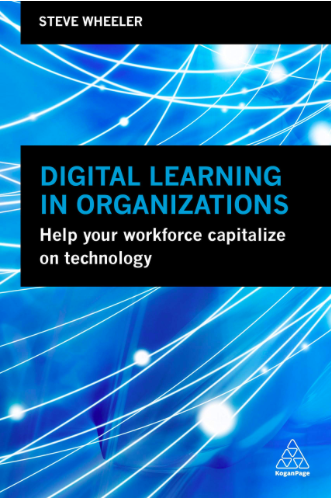
I submitted my manuscript for Digital Learning in Organisations to my publishers today. It's been half a year in the making, and will be published on April 3, 2019, so it's good to finally complete the writing. I published a brief synopsis of what can be expected last week, and also unveiled the front cover graphics. There will be copy editing, graphics and other work still to be done, but I notice that Amazon is already taking pre-orders of my book on its sites.

So, just to pique your interest (and just in case you're even remotely interested in grabbing a copy for yourself), here is a brief excerpt from the book. It's from the introduction, and focuses on learning, return on investment and the importance of a knowledgeable and skilled workforce:

While at college, I took a summer job working in a fruit canning factory on the outskirts of the market town of Hereford. Herefordshire is in the centre of fruit growing country, so the factory was ideally located. With no training whatsoever, I was allocated to a production line, a moving conveyor belt where I was required to check the quality of the jars and cans of fruit as they slowly passed. This was easy, boring work requiring very little skill. During my second week at the factory, I was asked to do a different job, which involved making marmalade. It was made from pulped Seville oranges, which arrived in large metal cans, directly from Spain.

My new job, which was demonstrated to me by the foreman, was to grab a can of orange pulp, position it on a platform, open it with the blade on a large can opening machine, and then dump the entire contents into a vat. When the vat was full, it was wheeled away to be turned into marmalade, a new vat arrived, and the process began again. ‘Mind your fingers!’ the foreman warned me, and then he was gone.

My ‘training’ complete, I launched into my career as a marmalade maker. Paddington Bear would have been green with envy. In a short while I became quite proficient at grabbing a can, opening it on the machine, and then pouring it into the vat. This went well, and my confidence grew. Then I encountered a can that was considerably lighter than the others. It also seemed to vibrate as I picked it up, and I thought I could hear a faint buzzing sound. Thinking this to be a little strange, I shrugged, and began to open it anyway. To my horror, as the top came off, thousands of fruit flies swarmed out, and buzzed around the factory in a huge, angry black cloud, landing on just about everything. I could see grown men and women screaming as they fled for the exits. I quickly followed them as the entire factory floor was officially evacuated and production ground to a halt.

I’m not sure how much money the factory lost that day but it cost them an entire day of downtime while the factory was fumigated and sanitised. This was a disaster that I wasn’t liable for, because I had not been adequately trained. But that oversight in failing to inform me of all the possible problems of the job I had been allocated, cost the company dearly. It was a poor return on investment.

The point of the story is this: Learning in organisations can be expensive, but lack of training, out of date skills and incomplete knowledge can be much more costly. They can cause loss of motivation among workers, damage an organisation’s reputation, or completely ruin a brand. Good, effective learning is essential if the company aspires to move forward, remain competitive and become a market leader. Cutting the training budget is therefore false economy. Promoting learning that can be applied immediately and authentically to the workplace will benefit everyone within the organisation. It invests in the most important asset any business owns – human intellectual capital.

Creative Commons License
Mistakes, marmalade making and me by Steve Wheeler was written in Plymouth, England and is licensed under a Creative Commons Attribution-NonCommercial-ShareAlike 3.0 Unported License.


September 24, 2018

Digital learning in organisations

Bless me blogger - for I have sinned. It's been more than a month since my last post on this blog. That's unusual. But there's a very good reason for neglecting this for a while.

I have been busy writing a new book, and the last month has involved a lot of research and writing, completing, editing and polishing of my manuscript for final submission later this month. It's a book I was commissioned to write for Kogan Page, and will be aimed at the learning and development (L and D) sector. It's quite a departure for me, because my last 5 books have focused on learning and technology for schools, colleges and universities. It was about time I tackled another sector of learning and I have become very familiar with leaning and development in organisations over the last decade.

Although this book is focused on digital technology and future developments for learning in the corporate sector, I believe it still has many facets that educators in all sectors will find interesting, challenging and informative.

The title of the book is 'Digital Learning in Organisations', and is already being marketed on Amazon and other online outlets. It will contain 11 chapters (12 if you count the extended introduction I have written). With titles such as 'Hyperconnected Communities of Practice', 'Connection and Disruption' and 'Knowledge Networks', I hope you can see where I'm taking the book. There are chapters on game based learning and digital readiness (literacies), as well as a closing chapter entitled 'How We Shape Our Futures', which focuses on the future of learning, new and emerging technologies, risk factors, societal challenges, cyborg cultures, Artificial Intelligence, humanisation of technology and other futurist perspectives.

Digital Learning in Organisations will be published by Kogan Page in both paperback and ebook formats in April 2019.

Creative Commons License
Digital learning in organisations by Steve Wheeler was written in Plymouth, England and is licensed under a Creative Commons Attribution-NonCommercial-ShareAlike 3.0 Unported License.


August 18, 2018

Dirty tricks

Image from Wikimedia Commons
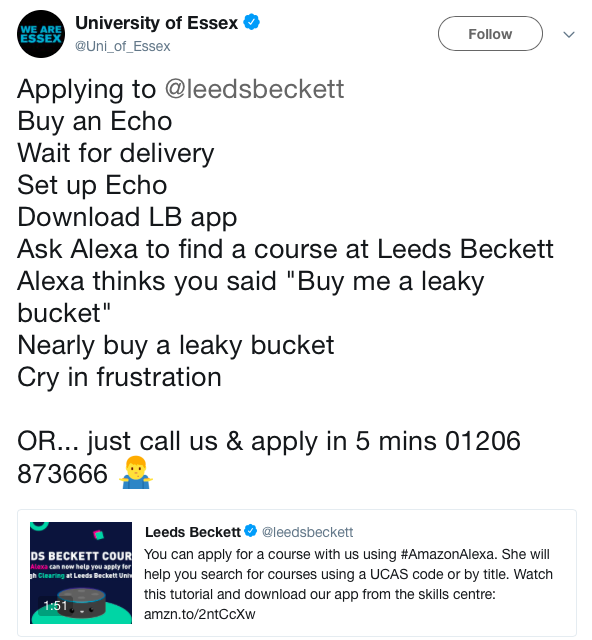
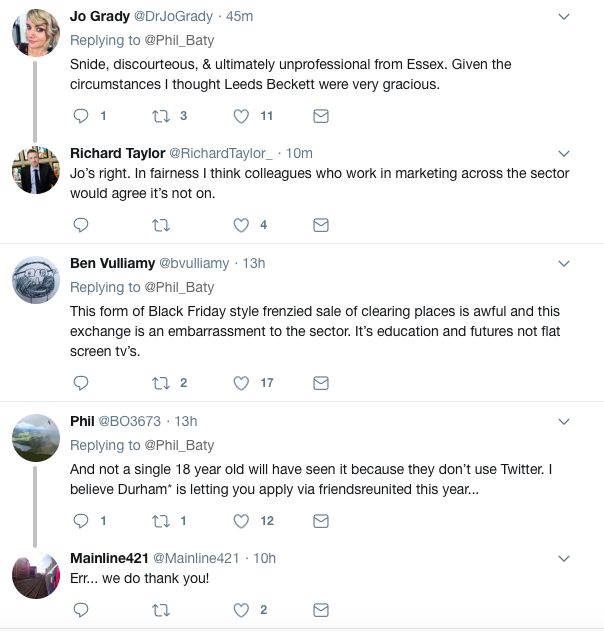
It's the silly season. With thousands of places still not taken at universities in England, marketeers are scrabbling frantically to recruit as many students as they can. When everyone else is sunning themselves on the Costa, the poor admissions tutors (I know ... I was one) and their beleaguered marketing teams are chained to their telephones, straining a gut to grab every last school leaver they can possible lay their grubby little mitts on. Extraordinary lengths are being taken to gain an advantage over rivals.

Two universities in particular are laying into each other just like a couple of lads in a school playground. Dissing each other in a social media slanging match are the pre-92 University of Essex with 14,000 students (whose Chancellor just happens to be the somewhat vociferous Speaker of the House of Commons, John Bercow) and post-92 university Leeds Beckett University - a much larger, northern university with 24,000 students, but less history and prestige.

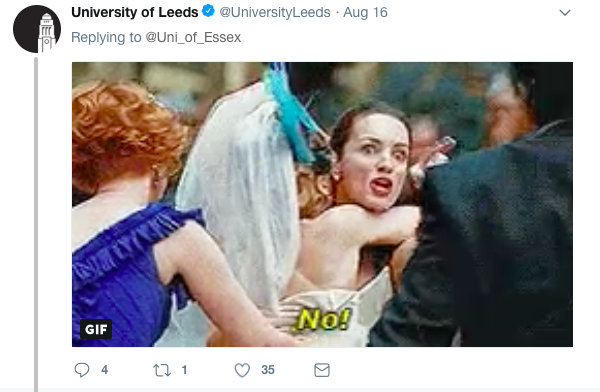
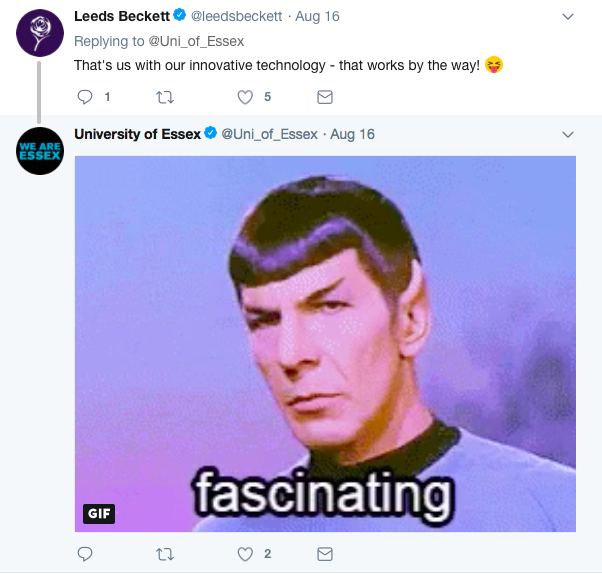
Essex it seems, took exception to the fact that Beckett was using Amazon's Alexa to get down with the kids this year. A series of social media snipes followed from both sides, much like a conversation between a teacher refereeing two little boys caught in a school yard brawl. It went a little like this:

Essex: 'Beckett started it Miss. He was using a whizzy new technology called Alexa to recruit his gang. So I stamped on it.'


Beckett: 'That was expensive kit Miss, and he trashed it, so I flicked him with a V.'


Essex: 'Well 'cos .... Beckett's just a show off, so he deserved it. Then he poured a can of coke down my neck.'


Beckett: 'Essex hit me Miss, he punched me right in the stomach when I wasn't looking. Then my big bro got involved.'


Essex: 'He hit me Miss, and anyway he started calling me names.'


Beckett: 'He's a liar Miss, and his pants are on fire.'


Essex: 'You leave my pants out of this!'

Miss (exasperated): 'Alright alright, I've heard just about enough of this. Why did it turn into a mass fight? There are several children waiting to see the school nurse.'

Beckett: 'Essex shouted "pile on everyone" and they all jumped on. He's a $@%&!'

Essex: 'It was all Beckett's fault. He started it, and he's the $@%& Miss!'


Miss (angry): 'That's it - detention for both of you! Go to the Headteachers office NOW!'

All's fair in love and war. Welcome to Higher Education in the UK, circa 2018.

Creative Commons License
Dirty tricks by Steve Wheeler was written in Plymouth, England and is licensed under a Creative Commons Attribution-NonCommercial-ShareAlike 3.0 Unported License.


August 15, 2018

State of play

Photo via Pexels 
Those who play video games discover that failure can be a common theme. Because it's a game, it doesn't really matter. Gamers can constantly reiterate moves and decisions to try to reach the next, higher level. Often, a move has to be repeated many times before a solution is found and the gamer can legitimately move to the next stage of the game. This aligns neatly to the idea that we can learn through failure. In this way, learning for gamers is a journey from novice to expert.

Game based learning should be one of the most important strategies for 21st Century education, but there is resistance from certain quarters. Humans have enjoyed playing games since time immemorial, and are hard-wired to do so. Now in the age of technology, we have opportunities our ancestors could not even dream of. Video arcade games such as Asteroids and Space Invaders of the 1970s were just the start of the rise to prominence of digital games. They were simplistic, but none the less compelling, and players like me spent hours honing their dexterity and hand-eye coordination.

As video games developed, so emerged a realisation that they could be designed to educate. In the last few years, through the development of handheld controls such as the Nintendo Wii, 3D screens (e.g. Nintendo 3DS) and non-touch gestural and voice controls (Microsoft's XBox 360 Kinect) games have become increasingly captivating, and have an immersive quality. Go further, and the visor equipped games in recent years have taken immersive experiences to another level. Games, whether digital or analogue, handheld or immersive, have the capability to motivate, challenging players to improve their dexterity, problem solving and reasoning skills, encourage teamwork and collaboration. 

Teachers who appropriate games into classrooms and learning contexts need to do so carefully, but once implemented, and with the game integrated into learning, we discover that they have a huge role to play in 21st Century learning. As Mark Grundel argues: 'Creativity, problem solving, critical and analytical thinking, decision making, risk taking, all (are) found in game-based learning.'

How long will it be before educators accept that games based learning is a legitimate pedagogy and not a waste of time?

Creative Commons License
State of play by Steve Wheeler was written in Plymouth, England and is licensed under a Creative Commons Attribution-NonCommercial-ShareAlike 3.0 Unported License.


July 29, 2018

Weapons of mass deception?

Image by Mike McKenzie via www.vpnsrus.com
Fake news. Alternative facts. Deception. Lies.

The media seems full of reportage on how social media carries content designed to deceive users. This recent article from the BBC News website calls into question some of the electoral results, including allegations of deliberate targeting of voters during the Brexit referendum. There does seem to b growing evidence that this may have been perpetrated, but in the midst of all the hyperbole and accusations, what role does social media actually play in the deception of the masses? How much of these problems are actually the fault of the social media, and to what extent are Facebook, Twitter and other popular platforms actually culpable?

My view echoes that of Marshall McLuhan who (allegedly) said: 'We shape our tools, and thereafter they shape us.' He probably borrowed this quote from Winston Churchill who said a similar thing about buildings. And he in turn probably borrowed it from someone else. Regardless of the provenance of the quote, it makes sense. Our tools are designed to perform tasks. And yet our inventive minds can concoct other uses which the designers did not have in mind when first they were created. A knife can be used to cut materials, or to maim and kill. It is completely dependent on its user.

Back in 1996 Richard Clark argued that media are mere vehicles that deliver content.  Robert Kozma disagreed, maintaining that media were far from neutral, because they had inherent affordances that users could perceive and exploit. In the end, both arguments held water. The use of the tool - or in this case, the social media - can be bent to the will of the user to achieve her/his purpose. Clearly, this debate is still relevant today.

Social media in itself is not inherently evil - it is simply a set of tools used to communicate, share and connect. What should be questioned is the minds behind the content that is being delivered. Ostensibly, this cannot be stopped, because those who wish to spread dissent, hate, deceit and rumour will do so regardless of the tools available to them. What schools and communities can do however, is provide better education for all users. Many schools are already teaching digital citizenship and safeguarding, warning children about the dangers of social media and smartphones and their need to be vigilant about who they contact and communicate with using these tools.

The next step will be to teach digital discernment - knowing the difference between fact and fiction, real news and fake news. This is a big challenge for all of us, because none of us are completely exempt from deception on the web.

Creative Commons License
Weapons of mass deception? by Steve Wheeler was written in Plymouth, England and is licensed under a Creative Commons Attribution-NonCommercial-ShareAlike 3.0 Unported License.


July 27, 2018

Change

Photo by Steve Wheeler
I took my 90-year-old father and 88-year-old mother out for a drive around their home town of Plymouth yesterday. It was a small treat to celebrate their 67th Wedding Anniversary, and they really enjoyed their outing. They gazed out through the windows as the city passed by, and gave me a continual commentary on their memories. Mum and Dad's main remarks were around how the town had changed drastically since their last excursion (they don't get out much these days). Their trip down memory lane (or in this case, many lanes, streets, roads and avenues) was interesting because they were able to tell me what each street looked like when they were in their childhood during the war years.

Plymouth was heavily bombed during the Blitz, and many streets were devastated, and were demolished. Some are now completely unrecognisable from those years, because entire neighbourhoods have been rebuilt (and rebuilt again) over the years, some with large housing estates, and others like the city centre, with high rise buildings such as the one pictured (Beckley Point is a newly opened 23 story student accommodation block across the road from the University campus).

For Mum and Dad, the changes have seemed sudden, mainly because they have not visited the city centre regularly in recent years. Their memories of Plymouth go back to the 1930s and 1940s, and these are still vivid for them. I'm in town just about every day and the changes for me have been gradual, but for Mum and Dad, it was a shock to see the many radical changes that have been made since their last visit.

I got to thinking - perhaps it's a little like that in education. Those of us who have worked in education recently probably don't recognise all of the drastic changes that have been made in the last two or three decades. Education in some ways is probably unrecognisable from the 70s and 80s. Someone who left school during this time may visit a school or a university today and be surprised by how much it has changed.

Children no longer tend to sit in rows while listening to a teacher at the front of the classroom talking from a blackboard. Most schools today have clusters of tables where a lot of collaborative work and active learning takes place. The teacher tends to move around the room, dealing with individual needs and the children are involved in project work and challenge based learning. There are classroom assistants too, and some are very specialised in their classroom input. Assessment is beginning to change too (although in some places not as quickly as we would wish). Tests and exams still exist, but children's learning is now also measured through continuous assessment, and teaching is differentiated according to student abilities. Most children with special and additional needs are catered for within the mainstream setting, instead of being separated out into 'special schools'. None of this happened in the 1960s and 70s.

In universities, change is less evident, but nevertheless it is there. Students still tend to sit in rows and raked theatres, listening to their lecturers in large auditoriums and lecture theatres just as they did in the 1960s. Well, they do when the cohorts are very large. When they are in smaller groups, students tend to work together to solve problems, create their own content, or learn in situated contexts that relate to the profession they will eventually be joining. Although learning is still assessed through examinations, there is also a lot more project work, and assignments can be submitted electronically. Digital media are now common place, and students and staff communicate through email, Learning Management Systems and social media. Access to knowledge is ubiquitous, through online resources and networks. Computer power is no longer confined to specific rooms, where you need to book time. Now it is everywhere, because students carry it around in their pockets. This kind of access to powerful computing enables and encourages new forms of learning. Again, none of this was available to students in the 1960s.

Education is changing, but those of us who are on the inside tend not to notice because we are so close to it. Those outside however, would probably be quite surprised if they returned to schools several decades after they left. Change is relative to the observer.

How do you view this? Let me know your thoughts in the comments box below!

Creative Commons License
Change by Steve Wheeler was written in Plymouth, England and is licensed under a Creative Commons Attribution-NonCommercial-ShareAlike 3.0 Unported License.


July 12, 2018

Digital is default

Image by Martin42 on Wikimedia Commons
When I read Being Digital for the first time, way back in 1997, it slowly dawned on me that everything was about to change. The book was published in 1995, just as the Internet was beginning to invent for itself a space that previously had not existed.  The following year I joined a ground breaking project in which my team set up digital learning spaces for businesses and individuals in hard-to-reach rural areas that until then had no infrastructure. We pushed the boundaries of technology, culture and human relationships as we extended digital spaces for learning into virgin territory.

Nicholas Negroponte's book was a useful guide for me during these pioneering activities. We had dinner in 2013 and I got him to sign my copy. It's on my book shelf. Negroponte's idea that society was shifting from moving atoms to sending bits was revolutionary - it showed that content had a new context. It revealed that new economies and ecologies were emerging from the digital age that would require a radical adjustment to our societal mindset.

Very soon thereafter, social networks and then social media began to emerge. They were free to use, and we slowly learnt that when things are free, the user becomes the product. It is only now dawning on us that there are complex legal, ethical and moral challenges around this model of digital society. Being digital in the 21st Century is less innocent than it was at the end of the 20th Century. Back then we were tentatively finding our way, discovering what was possible, but not necessarily what was appropriate. Lessons are still being learned.

Today, being digital is a way of life for many in the developed world, and is consolidating in the developing world too, but at the start of the digital age the ground was unstable. When the dot.com bubble burst in the last few years of the 20th Century, the shock was seismic. The notion of  centralised online content had seemed sustainable. What followed was a mad scramble to fill the empty spaces with a new digital approach, one that was decentralised, where spaces were 'free' and open, and where everyone who wished to participate could do so. The companies that survived this period, such as eBay, Google and Amazon, quickly adapted to this idea, with new marketing strategies that leveraged new tools such as social filtering, recommender systems and tagging. Tim O'Reilly's notion of the architecture of participation was apt. It described rapidly expanding spaces with increasing connections and user centred tools that could enable us to connect, discover, navigate, repurpose, reimagine and share. Now, anyone could act as their own publisher or producer, create an online learning space or a blog, share videos, photos, music - indeed, any content that could be digitised. Rapid growth ensued. If you weren't online, you were history. If you were, you were geography.

Photo by CCMSharm2 on Wikimedia Commons
What does it mean to be digital today? For many it means they are connected to a much larger community of colleagues, friends and family than they would have been without digital. Without digital connection I am peripheral at best, isolated at worst. Being digital today means that bits are the currency in which I trade. Some still buy a newspaper every morning. Photographs may still be stored in an old shoe box. Artefacts do not lose their charm or value for many, but secure storage is now the Cloud, and it is synonymous with rapid access to information. The idea of content has shifted to one that is now malleable, negotiable, quickly revised, open to change and repurpose.

Context has also changed. We are no longer tethered to our desks or to a specific location. Connecting, sharing, navigating on the move through smart mobile devices has become the norm. Digital is the default. For educators this means that they can, if they so wish, become global educators, reaching out with their blogs, YouTube videos and content sharing tools to a worldwide audience of people eager to learn. Being a digital scholar means that educators can be open in sharing their content and expertise, and the potential to amplify this content is exponential.

We don't know what being digital will be like in the coming decade or two, but we can reflect on the past two decades of the new century and realise that we have come a long way in a short time. We are still learning our lessons about what is possible and more importantly, what is permissible and appropriate. One thing is certain. We will not be returning to shifting atoms anytime soon, unless of course that is our choice. The psychological event horizon was breached two decades ago, and now we can only move forward.

Creative Commons License
Digital is default by Steve Wheeler was written in Plymouth, England and is licensed under a Creative Commons Attribution-NonCommercial-ShareAlike 3.0 Unported License.


July 05, 2018

There's life after HExit

Photo by Dave Simpson - CrossRhythms Radio
It's a funny old life. Just over a year ago I was working full time in Higher Education, as an Associate Professor. My main role was as a teacher educator, and I enjoyed almost 20 years working with great students, and wonderful colleagues. However, as those of you working in universities and colleges will know, it's not a bed of roses, and if anything, life in higher education is becoming more difficult with economic stringencies (cuts), austerity (penny pinching) and accountancy driven policy (bean counting).

Academics are expected to do more with less, and students are expected to pay more for less. On top of all this, the bureaucracy, surveillance and managerialism are unbearable for many, so there has been a steady exodus from higher education in the last few years. I was one of those who left higher education, and my account of my experiences and the reasons I left can be read here on my Learning with 'e's blog, and also on the Times Higher Education site.

So what have I been doing with my time post-HExit? The picture above will give you a clue, but I am not only doing my stint as a community radio DJ - which is great fun because I get to play all my favourite vinyl recordings of rock, blues, funk, soul - I'm also still quite active in all sectors of education.

Work this last year has taken me to Toronto, Brussels, Prague (twice), Dublin (three times), Auckland, Singapore (twice), Copenhagen, Aarhus, and a host of UK cities to present my work, and also to visit schools, colleges and universities to offer my professional services as an innovation consultant. I am also examining more PhD vivas than I ever did, and working as an external examiner for a Masters Programme.

This work is supported by my new consultancy company, Steve Wheeler Associates, which exists to advise and consult with schools, colleges, universities and organisations as they come to terms with change, innovation, new learning and emerging technology. I'm also spending some of my time working as Head of Research and Innovation for a new Ed Tech start-up company called LiketoBe, which you can read about on this link. I'm in the process of writing a new text book for Kogan Page too. I'm as busy as ever, but would still like to hear from you if you think I can help your organisation. Get in touch here.

And of course, I have plenty more time to spend enjoying playing my guitar, walking, writing (short stories such as this one), reading, watching great movies and doing all the other things I always wanted to do but never had the time. I'm off now to put together another show for radio, which means I have to listen to an awful lot of vinyl records. I know - it's tough, but someone has to do it.

Creative Commons License
There's life after HExit by Steve Wheeler was written in Plymouth, England and is licensed under a Creative Commons Attribution-NonCommercial-ShareAlike 3.0 Unported License.


July 02, 2018

What you see is what you do

Image from Public Domain Pictures
In a previous post, I wrote about the Interactive Whiteboard (IWB) and the challenges it faces as a technology for education. I also published a second post in which I listed 6 ways IWBs could be used to engage learners in the classroom. IWBs have been around since 1991, when the first was developed by SMART Technologies. And yet, as I discussed in my previous posts, some teachers struggle to use them for more than simple projection or display activities.

I outlined some of the strategies that schools could consider to improve the use of IWBs in classrooms, particularly around interactivity, engagement and motivation. I also suggested that affordances of IWBs should be considered when deploying them in learning and teaching contexts. Affordance was a term introduced by psychologist James Gibson to describe all of the potential applications a user might perceive from the (visual) design features of tools.

Essentially, the design of the technology can either constrain or enable the actions of users, so what you see is what you do. Bear this in mind as you read through the bullet points below. Here are a magnificent seven ways interactive whiteboards can be used to enhance learning and engage learners:
  • Firstly, IWBs can promote better engagement in learning. It can be used as a focal point to motivate, promote deeper concentration Due to its enhanced visual capabilities, it can also promote  visualisation of concepts. The use of maps, diagrams, animations, and also mind mapping can engage students at higher levels of understanding (Barber et al, 2007, pp 77-78). 
  • Secondly, large screen interaction can call upon many of the senses and engage learners in activities beyond fact learning. As McFarlane suggests, a variety of interactions are possible, where students can connect personal response tools to vote or answer questions displayed on the main screen. This can also aid the teacher in monitoring student understanding at a group level (McFarlane, 2015, p 26).
  • Thirdly, IWBs are versatile as tools. They are not limited to display and presentation mode, although many teachers confine themselves within this functionality. As stated above, IWBs are for students as well as teachers. A strong recommendation is for teachers to step aside, practice the social constructivist mantra of letting students interact with the content, and also each other as they learn.
  • Fourthly, IWBs can become an extension, or mind tool for students. The act of creating, inputting and interacting with content on a large screen is beneficial because it taps directly into the process of learning, enabling learners to manipulate ideas and concepts as they learn, experimenting, failing and learning through problem solving.
  • Fifthly, IWBs promote better collaborative learning, between students and with the teacher. Researchers argue that this is mainly because good IWB use in the classroom creates enhanced speaking and listening opportunities (Barber et al, 2007, p 46).
  • Sixthly, there are a number of tools and technologies that can be integrated with IWBs to enhance learning still further (Barber et al, 2007, pp 85-94). These include digital microscopes, visualisers, scanners, digital cameras (still and video), webcams and interactive voting tools (see above).
  • Finally - and especially for those who teach mixed abilities and grade levels - the IWB can be used as a tool for differentiation. Researchers point out that the split screen functionality on many IWBs supports aspects of differentiation, where students from mixed ability groups can work together or in parallel on the screen (Smith et al, 2006). 
It's clear that there is plenty of life left in large screen touch surfaces such as Interactive Whiteboards. When effectively embedded within good pedagogy, they enhance learning and engage learners. Their scope and potential are only limited by our imagination and as teachers we have a duty to provide our students with great learning experiences. With a little planning and creativity, IWBs can play a key role in how we achieve this. 

References
Barber, D., Cooper, L. and Meeson, G. (2007) Learning and Teaching with Interactive Whiteboards. Exeter: Learning Matters.
Gibson, J. J. (1979) The Ecological Approach to Visual Perception. Boston, MA: Houghton Mifflin Harcourt.
McFarlane, A. (2015) Authentic Learning for the Digital Generation. London: Routledge.
Smith, H. J., Higgins, S., Wall, K. and Miller, J. (2005) Interactive whiteboards: Boon or bandwagon? A critical review of the literature. Journal of Computer Assisted Learning, 21(2), 91-101.

Creative Commons License
What you see is what you do by Steve Wheeler was written in Plymouth, England and is licensed under a Creative Commons Attribution-NonCommercial-ShareAlike 3.0 Unported License.


June 26, 2018

Does practice make perfect?

Image from Wikimedia Commons
Does practice make perfect? Malcolm Gladwell's claim that 10,000 hours of deliberate practice is required to become world class in any field, has been challenged by a Princeton University study. There is also the argument that too much practice can lead to false belief in ability and loss of concentration, resulting in errors and even catastrophe. Many car accidents are caused by novices, but a similar number are caused by experienced drivers. The common factor is distraction, also known as loss of focus.

Right now, two of my favourite theories are James Gibson's Affordances theory and David White's Digital Residents and Visitors theory. The first is useful because it helps us to understand how people use tools and technologies, and the second helps us to explain how technologies are used in different contexts.

In Affordance theory, the design of a tool can present a number of possible ways to use it. For example, a knife can be used to cut bread and also to spread butter. The first action relies on the sharpness of the edge of the knife, while spreading butter relies on the flatness of the blade. These are two separate affordances of the design of the knife, but its design also has constraints. It cannot easily be used to eat with as one would with a spoon or a fork (although this is not entirely impossible). The caveat is that with practice, the user of the tool can come to understand what can be done, and what cannot be done with the tool.

This connects neatly with Residents and Visitors theory, which states that habitual use of a tool (or technology) results in the user becoming familiar with the tool to the extent that they can be considered 'resident' in that tool. Conversely, visitors are those who only use a tool or technology on a casual basis and therefore are less adept at using it than a resident in the same tool. My hypothesis is that residents of tools and technologies are more familiar with the affordances and constraints than visitors. This would explain how visitors might make more errors of use than residents. However, it might also run counter to the use of some technologies where over familiarisation can lead to distraction which can result in error and mishap. The environment is as important as the tool - the manner in which we apply technology is as important as the context.

Therefore practice does not necessarily make perfect, but understanding the affordances and constraints of our tools helps, as does focus on the task in hand.

Creative Commons License
Does practice make perfect? by Steve Wheeler was written in Plymouth, England and is licensed under a Creative Commons Attribution-NonCommercial-ShareAlike 3.0 Unported License.


June 16, 2018

Future skills #metalearning

Photo by Steve Wheeler
Lately, I'm asked to speak on this subject more than any other. The idea of future skills for learning is widely debated in all sectors, but for me, the answer is the same, whether you are a primary school student or a participant in learning and development in a large organisation. Today, the most important skills seem to be focused on one ability - learning to learn, or meta learning.

Why is learning to learn so important? Knowing how, where and when we best learn is important in a world of constant change and disruption where there is an over-abundance of opportunity to swamp our senses with information. Knowing why we learn best in a particular way, or specific environment is also crucial. Being agile and flexible is not enough in this rapidly changing, media rich and multiple stimulus world. It is so easy to become distracted and diverted in the digital age, so the ability to maintain focus is an important aspect of knowing how we best learn.

John Biggs described meta learning as reaching a state of 'being aware of, and taking control of our own learning' (Biggs, 1985). It involves managing our perceptions, expectations and practices to optimise the time we spend acquiring new knowledge and skills. It also involves avoiding practices that divert our energy and attention away from genuine learning. In the digital age, where we are constantly bombarded with content, it is about making sense of what is necessary and relevant, discerning good from bad content, and discarding that which is extraneous or invalid. There is a connection here also to the theory of heutagogy, which in Blaschke et al's terms, places the learner at the centre, as 'the primary driver of the learning process and experience.' (Blaschke, Kenyon and Has, 2014).

Learning to learn is vital for everyone in the digital age. There are many other future skills we need - skills to thrive and learn in the future. In the next few posts I'll explore some in detail. Any commentary and discussion on this is are very welcome in the box below.

References
Biggs, J. B. (1985) The role of meta-learning in study process. British Journal of Educational Psychology, 55, 185-212.
Blaschke, L. M., Kenyon, C. and Hase, S. (2014) Experiences in Self Determined Learning. Leipzig: Amazon Distribution.  

Creative Commons License
Future skills #metalearning by Steve Wheeler was written in Plymouth, England and is licensed under a Creative Commons Attribution-NonCommercial-ShareAlike 3.0 Unported License.


June 04, 2018

6 interactive whiteboard tips

Photo by David Goehring on Flickr
In my last post, entitled Cinderella Technology, I wrote about the tremendous potential of the interactive whiteboard (IWB) and highlighted some of the reasons why it often fails to be realised in school classrooms.

They have been around for a long time, but IWBs seem to have polarised teachers.

There are those who use the IWB avidly, incorporating it into their lessons, embedding it into their programmes of study and exploiting the potential of the onboard tools.

There are others who avoid the use of the IWB studiously, and even some who are opposed to its use, claiming that it is distracting, too expensive, complicated or unnecessary.

The label of 'Cinderella technology' was offered because of the failure of capitalise extensively on the power of IWBs to inspire, engage and enrich. I promised six things teachers should consider if they wish to optimise the IWB in their classrooms:
  • Firstly, it's important that IWBs are optimally positioned within learning spaces. I have seen classrooms where the IWB has been poorly positioned, so that there is only limited sightline or access for some students. For smaller children, the adjustability of a screen to varying heights is also important. If they can't reach it, they can't use it. Some IWBs have runners that enable height adjustment, and a projector arm incorporated into the design to obviate the need for continual recalibration. 
  • Secondly, IWBs run on software that periodically requires upgrading. Schools can arrange for updates to be automatically installed overnight, or during non-teaching hours. Having access to all the latest tools and services means that teachers can provide the best possible experience for their students. SMART's Learning Suite, for example, is a useful online resource that shows how educators can get the best out of their IWBs. 
  • Thirdly, teachers need time to tinker, experiment and test out new ideas and new pedagogies. Building training time into the school year for educators is rarely time wasted. In my experience, one of the biggest factors in the failure of any technology is poor use or lack of knowledge of the affordances of the tool. Failure to understand the capabilities of a technology will often result in poor use, lack of use, and ultimately, rejection.
  • Fourthly, in relation to the above point, there should be time for teachers to express their creativity. Teachers need to know what the possibilities are, and then they need to have opportunities to apply their imagination and ideation to the technology before they use it with students. 
  • It's also worth remembering that the introduction of any new idea, whether it is technology or technique, needs to be managed with the user in mind. In other words, school leaders who wish their staff to travel with them need to lead by example, promote dialogue and above all, listen to what the team says. Managers need to win the hearts and minds of teachers if they wish to see IWBs successfully adopted into everyday practice (Wheeler and Winter, 2005).
  • Finally, teachers should see the potential for the IWB to become more than just another teaching tool. The positioning of the screen can reinforce teacher centred approaches to education, but conversely can be used to encourage deeper engagement and participation from students. The interactive capabilities of large screen touch surfaces should evoke ideas about how students can be involved. I have seen some incredibly effective teaching that involves students taking turns to use the board to present their ideas, perform their work and interact with content on the screen. 
I hope you can see that there is still a tremendous potential for interactive whiteboards in the classroom. To bring this Cinderella technology to the ball, teachers need to spend some time and energy preparing it and practising its use, exploring the possibilities and testing out new ideas and pedagogies. Teachers need to ask the 'what if?' questions and test out the possibilities of the technology. Ultimately, the success or failure of any classroom technology is in the hands of the practitioner. If the teacher sees good, appropriate uses and the potential to extend, enrich and enhance learning and engage the student, then they will do all they can to embed the technology, and apply it to make their lessons successful.

In the next post in this series, I will discuss some of the specific affordances the IWB offers to education and offer a magnificent seven ways to enhance learning for all students.

Reference
Wheeler, S. and Winter, A. (2005) Winning hearts and minds. In S. Wheeler (Ed) Transforming Primary ICT. Exeter: Learning Matters.

Creative Commons License
6 interactive whiteboard tips by Steve Wheeler was written in Plymouth, England and is licensed under a Creative Commons Attribution-NonCommercial-ShareAlike 3.0 Unported License.


June 01, 2018

Cinderella technology?

Image by Glamhag on Flickr
Large screen touch displays seem to be the 'Cinderella technology' of education. In the popular folk tale, Cinderella is described on Wikipedia as: "... one whose attributes were unrecognised, or one who unexpectedly achieves recognition or success after a period of obscurity and neglect." 

Initially, the most common large screen display, known as the  interactive whiteboard (IWB) - was viewed with great promise, but over time, due to misuse, lack of training or knowledge (and in some cases, neglect), interactive whiteboards appear to have been sidelined in some schools.

Many good uses of the IWB are reported in the literature, and many schools have harnessed its potential to transform aspects of teaching and learning. And yet, there are also many who have missed the opportunity to leverage the power and potential of IWBs in the classroom. The latter seem not to have made connections between the affordances of the IWB and authentic, situated pedagogy.

Successfully introducing new technologies into complex environments can be a great challenge. Teachers are incredibly busy, have increasingly difficult workloads to contend with, and have little time to spend experimenting with new ideas. In service training days are usually spent catching up with the latest rules, government edicts and preparation for school inspections. If there is little or no time to try out new ideas, teachers will not feel comfortable with tools such as interactive whiteboards.

There is now a huge selection of IWBs and other touchscreen devices available for schools. However, where they have been deployed in education, IWBs have sometimes been used in a limited or superficial manner, almost as an afterthought. In some cases they have been used as a substitute for older technologies such as chalkboards and projection screens. In short, one of the significant issues around the use of IWBs has been a lack of transfer of the tool into effective pedagogy.

So, how can educators tap into the powerful affordances of the interactive whiteboard? What can teachers do to bring the interactive touch surface from out of the shadows? Watch out for my next post in which I will present six important points educators should consider, should they wish to exploit the tremendous potential of the interactive whiteboard.

Creative Commons License
Cinderella technology? by Steve Wheeler was written in Plymouth, England and is licensed under a Creative Commons Attribution-NonCommercial-ShareAlike 3.0 Unported License.


May 31, 2018

Theatre of dreams

Photo by Sean MacEntee on Flickr
Old Trafford. The Theatre of Dreams. It's the home of Manchester United - probably the greatest football team in the world. Ever.

Yes, I know - I've probably just alienated a large percentage of readers, and some may never return, but I care not.

I'm very proud to have been a Manchester United fan since 1970, when as a young lad, I first saw them play against Wolverhampton Wanderers at Molineux. Playing in the team that day were several legends, including George Best, Denis Law and of course, the man who called Old Trafford the 'Theatre of Dreams' - Sir Bobby Charlton.

One of my cousins, Steve Morgan, actually owned Wolves between 2007-2017, but I bet he wished he'd owned Man Utd instead!

I was excited then, to be invited to Old Trafford to speak at the 2018 EdTech Expo, hosted by Salford University. The conference is on midsummer day - 21 June. A click on the conference website will tell you that the themes of the event are close to my own heart:
The programme will focus on getting industry and education to work together to harness technology and put learning first. The event will explore how technology is used in the classroom, how the latest innovations will shape the future of education and how to use the technology already in place to its full capacity.
I'm looking forward to speaking on one of my favourite themes - digital literacies and competencies for 21st Century learning. For those who object to my use of the term '21st Century', consider that many schools still teach from a 20th Century curriculum, and need to be reminded that each and every child in school today was born in this century, while every existing teacher was born and educated in the last century. It's an unimportant gulf to bridge when we talk about ways of thinking, and methods of teaching. We are all in this together.

Digital literacies are also an important theme because teachers everywhere need to know exactly what they and their students need to know, to be able to leverage the power and potential of digital technologies. Simply having access to smart mobiles or social media is not enough. Students need to understand what they can and can't do with these tools, how they can optimise their learning and use it to enhance their opportunities. Teachers need to know how technology can support learning and drive it forward, rather than simply being used to replace earlier technology. We all need to know how to harness technology in our everyday lives, especially at work, where we need to be able to work smarter and more competitively.

And there lies one of the greatest problems faced by our present generation of school leavers. Schools and industry don't talk to each other enough. Education and industry rarely communicate effectively. The skill sets demanded by organisations is not always the same thing schools are teaching. There's a thought provoking quote on the conference website:
“90% of new jobs require digital skills, so children need to grow up as more than just digital consumers but practitioners and creators.” – Anne Milton, Skills and Apprenticeship Minister.
Whether or not this is entirely accurate is a moot point. Even if only half the new jobs in the future require digital skills, we must still make digital literacies a priority in schools. We must continue to support development of digital competencies in colleges and universities, so that students can leave formal education as lifelong learners, able to use new technologies to their advantage in any, and every place of work they choose. Finally, schools must listen more to the demands of organisations, and industry must do more to communicate their needs to schools.

These will be my key messages at EdTech Expo 2018 in Manchester.

Creative Commons License
Theatre of dreams by Steve Wheeler was written in Plymouth, England and is licensed under a Creative Commons Attribution-NonCommercial-ShareAlike 3.0 Unported License.


May 21, 2018

12 tips for great speaking

Photo by Tup Wanders on Flickr
In my previous post, I reflected on 18 years of keynote speaking in academic conferences. I mentioned that I had spoken at over 250 international events in more than 35 countries. In nearly two decades, I guess you learn quite a lot. If you are lucky enough to be invited to address an audience of your peers at a conference, a lot will depend on what you say and the manner in which you say it. You want your speech to be memorable, inspiring and thought provoking. You'll also need to be convincing if you want to put your arguments across effectively. So I'll share some of the top tips I recommend for keynote speakers. Here are a dozen:

1) Start out with a humorous story or funny remark. It gets your audience on your side and relaxes everyone. If the story or joke are relevant to the talk you are giving, all the better. Don't force the humour, but some lighthearted sections within your presentation are often a great way of keeping people interested in your talk.

2) If you're using slides, make sure you minimise the text on them. It's a horrible experience to sit in a conference session and see slide after slide containing lines of text. Better still, use images and other evocative visuals to support your presentation. Images almost always evoke better memories than text.

3) In relation to 2), if you do have to use text on your slides, don't be tempted to read straight from it. People have come to hear your ideas, not listen to you read text from a screen that they can read for themselves.

4) Engage with your audience. Maintain eye contact, by sweeping your gaze across the group as you talk. Move around a little rather than standing stock still (make sure you have a lapel mic or headset though, otherwise your audience may not hear you). Use your entire body to perform your presentation - hand movements and facial expressions can convey a lot of meaning.

5) Don't speak too quickly, but do speak clearly - this is difficult if you're nervous, but do your best. Slow down when you need to, and vary the tone of your voice as you speak, to emphasise key points. Pause for dramatic effect if required. These techniques may need some rehearsal if you're not used to public speaking, but practice helps.

6) Repeat key points if you think you need to. You can do this in various ways, by reinforcing your points with images, video, sound, or repeating important words or phrases.

7) When planning your talk, find out how long you are required to speak, and stick to it. It's difficult sometimes, but prior rehearsal of your talk can often highlight where you can remove some points, or reduce images or text to improve your timing.

8) Try to stick to a maximum of three main points. These can be arguments you wish to make, emphasis on key findings, or even interactions of previous points.

9) Leave time for questions at the end of your talk if you can. Discuss with the organisers what they want in terms of discussion with, and questions from the audience.  Receiving feedback from your audience often gives you pointers about how to improve next time. The dialogue you have with audiences can also be very valuable in advancing your own ideas and theories.

10) In relation to 9), if you are asked a question and you don't know how to answer, be honest and say so. Then promise to explore the question and get back to them later. This will usually mean exchanging contact details.

11) In relation to 10), your last slide can contain your own contact details such as email address, social media accounts, website URL, and even your phone number if you feel brave enough!

12) Think about sharing your slides after the event. I use Slideshare.net to share my slides with my audiences. Do it properly, and you'll find that your audience numbers are far greater than the number who were present in the room! Share them under a Creative Commons license and you'll be surprised how far, and how quickly, your ideas will spread.

I hope the above points are as helpful to you as they have been to me.

Creative Commons License
12 tips for great speaking by Steve Wheeler was written in Liberec, Czech Republic and is licensed under a Creative Commons Attribution-NonCommercial-ShareAlike 3.0 Unported License.


May 17, 2018

Speaking for me

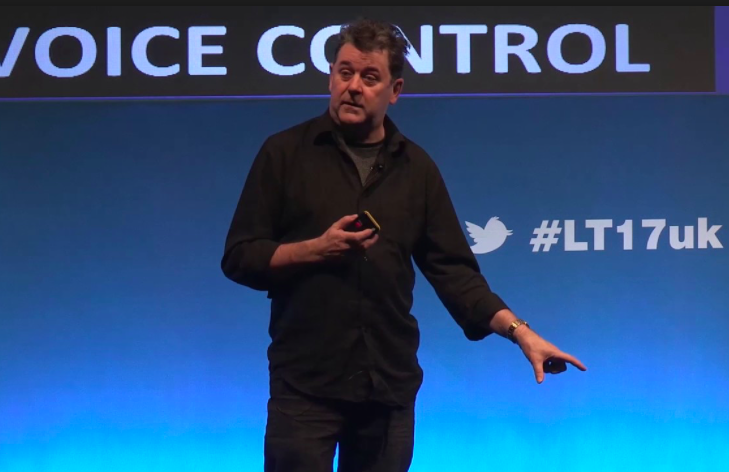
Image from Learning Technologies Conference
One of the delights of working in academia is that now and then you get to travel. For some it is a chore, and for others it is a necessary part of the role of being an academic. For me, although the travel itself can be boring, seeing other parts of the world, making new friends and experiencing fascinating new cultures is quite wonderful.

I have been fortunate to have visited almost 50 countries in my career, mainly to speak at conferences and work on research projects, but also to run comparative study visits with my students to places such as the Czech Republic, South Africa, Germany and Ireland.

I turned down many invitations to speak internationally over the years due to university teaching. Now I'm an independent academic consultant, I am unconstrained by those commitments, and I can travel where I'm invited. Since leaving university in July 2017 I have spoken at events in Canada, the Czech Republic, New Zealand, Singapore, Denmark, Ireland, Belgium and at events across the UK.

Below is the link to my keynote speaker website. Over the last 18 years I have been invited to present keynote speeches at more than 250 national and international events in 35 countries. My first was a 30 minute keynote in Bergen, Norway in June 2000. Since then I have developed my repertoire to include workshops, seminars, study days, 1-2 week resident consultancies, and even after-dinner speaking!

Check out my website, and if you think I could be a useful addition to the speaker line-up at your next event, do get in touch on the link below!

Steve Wheeler Keynote Speaker

Creative Commons License
Speaking for me by Steve Wheeler was written in Plymouth, England and is licensed under a Creative Commons Attribution-NonCommercial-ShareAlike 3.0 Unported License.


May 14, 2018

Down on the farm

Image from Pixabay
Is it me, or is academic peer reviewing taking (another) nose dive?

I have just been invited by the editor of an online open access peer reviewed journal to review an article.

They matched me to the article on the basis of my CV which they say is 'academically striking'. (I'm not sure what that means...)

The article they have 'aligned' to my expertise is entitled: “Farmers Coping Strategies to Face Labour Shortage in Northern and Southern Dry Zones of Karnataka.” 

Clearly they checked the wrong CV.

If I'm honest, after 20 years of working in a mainstream academic environment, the only agricultural concept I'm entirely familiar with is how to handle copious amounts of manure.

I would be interested in hearing from anyone else who has been invited by 'editors' of 'academic journals' to review articles that are far removed from their expertise area. 

I think we should be told. 

Creative Commons License
Down on the farm by Steve Wheeler was written in Plymouth, England and is licensed under a Creative Commons Attribution-NonCommercial-ShareAlike 3.0 Unported License.


April 27, 2018

Digital readiness

Image by Tableatny on Flickr
Are we ready for what's coming? Can our students leverage the power of new technologies to enhance their learning? Can we use technology to engage our learners and enrich their experiences?

In January of this year I was invited by the University of Greenwich to give an Open Lecture. Greenwich is an historic place, with plenty of interest for those who wish to explore the past, but it is also quite a forward looking institute, as the series of recent Open Lectures proves. My own presentation, as I documented in a recent post, was on digital readiness - the skills, competencies, capabilities and literacies required for those who are in education and wish to make sense of technology. It's complex, multi-layered and progressive, because as technology advances and our views and uses of it develop, so new issues and challenges continually emerge. I try to address some of those in this presentation, and it would be good to continue a dialogue with other learning professionals around these themes.

The video link is below, the talk is about 40 minutes including discussion, and I would be interested in hearing from anyone who has views on this subject. I would particularly be interested in understanding your views on what skills, competencies and capabilities you think are essential for those studying and teaching in all sectors of education and training.

Open Lecture: 2018 Steve Wheeler- Literacies and competencies for learning in the digital age from Educational Development Unit on Vimeo.

Creative Commons License
Digital readiness by Steve Wheeler was written in Plymouth, England and is licensed under a Creative Commons Attribution-NonCommercial-ShareAlike 3.0 Unported License.


April 21, 2018

Barriers to innovation?

Image from Pxhere
In March I posted a survey question as a part of my ongoing research into the adoption of new technologies in learning. The background for this question was a statement I made during a keynote discussion session at Learning Technologies in London in January. I was asked about innovation in organisations. From my experience working in all sectors of education and training, I claimed that the most likely sector to innovate with new learning technologies would be primary education. This would be followed closely by Learning and Development in organisations. Secondary schools and universities/colleges would lag behind, largely because high stakes assessment was an important consideration in these sectors.

There are clearly more factors to consider than these as barriers to the adoption of new ideas and innovation, but this is a good start. The survey question was really a way to confirm whether or not my hypothesis was sound. As you can see from the findings of a small sample of just 314 votes, the results are aligned to my claim. Whether this small sample is representative of the learning community in all sectors is open to discussion. But the result is interesting none the less.

What do you think might be other determining factors, or barriers to innovation and uptake of new technologies for learning? I would love to hear your views, which you're invited to post in the comments box below.


Creative Commons License
Barriers to innovation? by Steve Wheeler was written in Plymouth, England and is licensed under a Creative Commons Attribution-NonCommercial-ShareAlike 3.0 Unported License.


<< Back Next >>