Log on:
Powered by Elgg

Ania Rolinska :: Feeds

April 03, 2018

We won't get fooled again

Image from Pixabay
April Fool's day jokes are usually fun, and I've indulged myself once or twice. But amidst all the springtime pranks and laughter, a serious point was also made on social media. It was that April 1st appears to be the only date in the entire calendar when people make a real effort to carefully check news stories, to avoid being fooled.

Wouldn't it be great if everyone learnt to do this every day, with every piece of news encountered? As most of our news is conveyed to us via digital media, we need to be literate in the use of these media if we are to learn not to be fooled by fake news. This is why digital literacies are such an important set of skills for all to learn. Schools should hold digital literacy as a centrally important part of the curriculum, given the importance digital technology plays in children's lives. Young adults, especially those studying in higher education, should also be given an education in what it means to discern the truth and detect lies on social media and the internet. Older people also need to be made aware that not all content online is true, and that some content is downright dangerous, if they believe it.

Without these skills, it is easy to hoodwink people, get them to believe in conspiracies and false 'facts', subscribe to fake organisations, and even rob them of their savings. If we all made a concerted effort to raise awareness around digital literacies, the world would be a better, safer place. If we don't, we'll all get fooled, again and again.

Creative Commons License
We won't get fooled again by Steve Wheeler was written in Plymouth, England and is licensed under a Creative Commons Attribution-NonCommercial-ShareAlike 3.0 Unported License.


March 28, 2018

Integrity, credibility and plagiarism

Image by TilerX on Flickr
I was in the audience at a recent conference when a keynote speaker (who will remain nameless) presented several of my images and ideas in his slideshow. The first was credited to me, and it was nice that he mentioned me as he was talking about the slide.

The following half a dozen or so slides were also from one of my presentations, but I was annoyed to see that my name and the Creative Commons licence I always apply to my slides had been removed.

The slide that annoyed me the most was a diagram that I had devised based on the ideas of another researcher. Not only had my name been removed, but so had my acknowledgement of the original researcher. Somehow, I managed to keep quiet during the presentation, but I later approached the speaker at the end of the session, and pointed out to him that he had used several of my slides without acknowledging me, and that the Creative Commons (CC) licence had also been removed. I was more annoyed when he didn't seem too perturbed and was unapologetic. He simply smiled and promised he would include my name in future presentations where he used my slides. I'll see if he does. 

Now, to be clear, I am very happy with other people using my slides and ideas. That's why I publish most of my content with a CC licence, to encourage sharing. But I'm not happy when people ride roughshod over the rules of CC licensing and do whatever they wish. Creative Commons licences require those using the content to acknowledge the source, and to also use those materials under the same version of the licence. This speaker broke both those rules, and I am aware of others on the circuit who continue to do the same.

Source: Donald H Taylor's Twitter stream
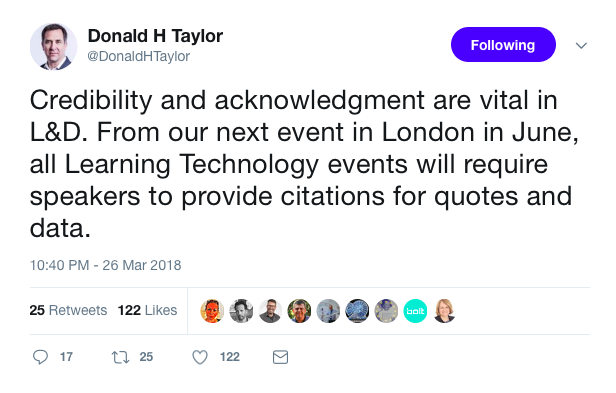
This kind of experience leaves a sour taste. It is plagiarism of the worst kind, because essentially, the speaker is taking the credit for the ideas and hard work of others, and doing it publicly. It deceives the audience and damages the credibility of the conference once it comes to light. I was therefore very pleased yesterday when Donald H Taylor tweeted about the forthcoming London conference. Don is chair of the Learning and Skills Group and also chairs the Learning Technology conferences.

I respect his integrity and value his leadership. His clear message to all was that he aims to maintain credibility of his events by ensuring that all speakers provide citations for the data and quotes they use in their presentations.  I would go a little further and argue that speakers also need to acknowledge sources of images and photographs too. These are just as easily misappropriated. 

It would be great if other conference organisers followed Don's lead. 

Creative Commons License
Integrity, credibility and plagiarism by Steve Wheeler was written in Plymouth, England and is licensed under a Creative Commons Attribution-NonCommercial-ShareAlike 3.0 Unported License.


March 25, 2018

Mythical beasts

Image from Wikimedia Commons
Last week I posted a Twitter poll with the question: Which myth is the most damaging for learning? Before I reveal the results, here's the reasoning behind the poll:

I am constantly amazed at the persistence of 'mythical beasts' in education. I call them mythical beasts, because they are like unicorns. They seem very attractive in appearance, but they don't exist, and believing in them has no purpose other than to make you look foolish. They are the myths of education, and I want to know why they are so resilient.

Some educational myths are about the nature of learning, others concern the role of teachers, or technology, and of course, there are several questionable theories floating around about the human brain and how we learn. Some mythical beasts tend to become so well known they become entrenched in teacher talk. How many for example have heard teachers talking about 'digital natives'?

There are theories that are so persistent that despite being shown to be outdated or disproved, still continue to drive practice, both in the classroom and in everyday working lives. This is sometimes because teachers are ignorant of the latest research, or worse, because the theory fits into their expectations, confirming what they believe. To slay that kind of mythical beast would be unthinkable.

Take for example, the idea of learning styles. This attracted nearly a third of the poll votes at 31%. Categorising students as being predominantly 'audio' or as 'visual' learners, or deciding they are reflectors rather than activists, sounds intuitive and convenient. Teachers can pigeonhole their students, and thereby manage them more efficiently. But the fact is, learning styles don't exist. Psychologists say that there is absolutely no evidence for learning styles such as auditory or visual learning. People learn in many different modes, calling on their audio, visual, kinaesthetic, tactile, proprioceptive, olfactory and other sensory modalities, depending on context. We do students a disservice if we expect them to learn predominantly in one particular style, and yet the belief continues to persist in the teaching profession.

Another persistent untruth is the theory of left and right brain dominance, also referred to as hemisphericity. This received just 6% of votes. This theory argues that people are either left brain or right brain dominant, and that left brain dominant people are better at logical and mathematical reasoning, while right brain people are considered more creative and have better visual-spatial skills. The truth is that of the brain can be used for all these purposes equally well, as has been discovered through the study of brain damaged patients. Furthermore, there is no evidence to show any correlation (let alone a causal link), between right hemisphere activity and creativity.

Another damaging myth is that we only use ten percent of our brains. Again, this is false but only attracted 9% of the poll voting. If we did, ninety percent of our brains would be unused. And yet neuroscience research has shown that much of the brain lights up during specific tasks. It's completely variable and context related, and we often use all of our brains - even a simple act such as tying up shoes activates most of the brain's functionality.

According to the Twitter poll however, none of the above myths is considered to be the most damaging. By far the biggest mythical beast in education, according to the 668 people who voted, is the belief that people have fixed intelligence. More than half of all those who voted (54%), selected this myth as the most insidious. Research shows that intelligence is not fixed at birth, but fluctuates throughout a lifetime. We won't touch on psychometric testing here - which itself hosts a menagerie of mythical beasts.

The tension is between entity theory, where people believe that intelligence is a personal quality that is fixed; and incremental mindset theory, where people believe that intelligence can be increased through personal effort (see for example Carol Dweck's Growth Mindset theory - please note though that mindset theories are more about beliefs than actual intellectual ability). Which do you believe? And where is the evidence for either?

The reason why more than half the voters chose fixed intelligence as their most damaging myth in education are not clear. I'm opening up the comments section below so that everyone can have their say. What are your views?

Creative Commons License
Mythical beasts by Steve Wheeler was written in Plymouth, England and is licensed under a Creative Commons Attribution-NonCommercial-ShareAlike 3.0 Unported License.


March 22, 2018

Serendipity

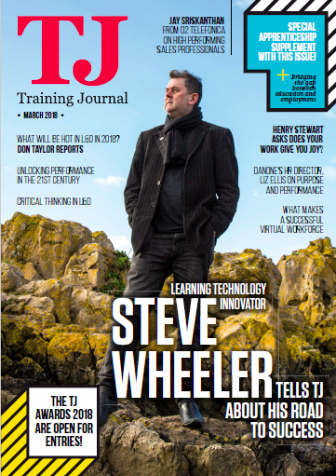
It was quite exciting to appear on the front cover of Training Journal this month. I was approached by the editor of the journal after my presentation in London at the Learning Technologies annual conference.

When she asked for an interview, I thought the brief video conversation that followed was it, but no - there was more to come. A written interview was next, and then a photoshoot (studio and external shots) with professional photographer Louise Sumner followed, and the result.... well, judge for yourself.

Here's an excerpt from the interview, with me talking about 'my road to success', and how serendipity played an important part in my career development...

What and when was your career turning point?
I believe in serendipity. I have been fortunate to have been in the right place at the right time on several key occasions during my career. 

The first was when I was working as a manager in the National Health Service and heard about a new university project that placed new and emerging technologies into the hands of local communities. It was 1996, and a period of great technological transformation, and the project aimed to set up distance learning centres in hard-to-reach rural areas. Each centre would have internet connected computers, video conferencing and digital satellite teleconferencing. This was pioneering, futuristic work and I was immediately captivated.

I was appointed training manager. It was only a three-year contract and meant me leaving a permanent job, which worried me. My new boss assured me: ‘Steve, if you make this job a success, you’ll be world class.’ I took him at his word. 

My job was to broker training programmes from training providers, help to transform them into digital and online content, and then deliver them direct to the local businesses in nearby centres. 

It was challenging, hands-on work, because the idea was very new, and we were breaking new ground for training. I learnt a lot about new technologies, the concept of distance learning, and interestingly, a lot about people and local politics!

I was again in the right place at the right time a few years later when I was invited to present at a conference in Ankara, Turkey. While there, I spent time with several luminaries in the world of online and distance learning, who all too a shine to me. I was quite new to distance learning, but I was suddenly elevated to ‘expert’ status. They invited me to speak at several high-profile conferences, to join several editorial boards on well-known journals, and was even offered a job in the US. I didn’t realise it at the time, but travelling to Ankara launched my career in distance education into the stratosphere.

On another occasion I heard about a job that was being advertised in higher education. I read the job description and realised very quickly that it had been written just for me! (Well, that’s the way it seemed, anyway). I applied and was appointed as a Senior Lecturer in distance education at Plymouth University. This was where I stayed, training teachers and developing the concept of technology supported learning, for almost 20 years. Many of my former students have gone on to become hugely successful proponents of technology supported learning and have positively influenced the lives of countless students. 

Looking back now, it seems that I grabbed every golden ball that was thrown to me.


Creative Commons License
Serendipity by Steve Wheeler was written in Plymouth, England and is licensed under a Creative Commons Attribution-NonCommercial-ShareAlike 3.0 Unported License.


March 13, 2018

Belonging, friendship and learning

Image from Pixabay
Flawed though it is, Maslow's theory of motivation highlights at least one important theme: We are social beings and we need to know that we belong.

Belonging needs are complex and are sometimes misunderstood. Yet most teachers would agree that children who feel they belong will learn better than those that feel excluded. Feeling accepted as a member of a group brings psychological safety as well as a sense of acceptance. We want to be known, welcome, recognised by those around us. The power of peer approval cannot be underestimated, and often becomes the source and impetus of positive behaviour within the classroom and beyond.

A key role of the teacher is to ensure that all children feel they belong. Management of behaviour, especially around the relationships children develop with each other, is a crucial aspect of professional practice for all educators. Clamping down on bullying and other marginalisation within a classroom is vital if learning is to be optimised for all.

During their teenage years I asked my two daughters what they liked most about going to school. They both replied: 'our friends.' Friendship is a vitally important ingredient throughout our lives, but it is especially crucial when we are growing up and developing our personalities and perspectives on the world.

When one of my daughters dropped her smartphone and smashed it on the stone floor of our kitchen, she was devastated. I assured her that we had insurance and that a new smartphone would be with her within a few days, but she pointed to her ruined phone and wailed 'You don't understand Dad! All my friends are in there!' She experienced grief and separation from her friends, because her relationships were being chiefly mediated through her smartphone.

Young people's lives are predominantly mediated through technology because they want to connect, belong, engage with their friends. This is why cyberbullying is particularly insidious. Children who are bullied in the classroom may rightly feel that they don't belong. Children who are bullied via technology cannot escape from the bullying because it follows them inside their smartphone.

Friendship is vital, but so is the need to feel you belong. Teachers who focus on relationship building in the classroom have begun a process that will follow children throughout their lifetimes. Making a child feel that they belong and valuing their contributions unconditionally can be the first step to that child achieving all they ever wished to be in life.

Creative Commons License
Belonging, friendship and learning by Steve Wheeler was written in Plymouth, England and is licensed under a Creative Commons Attribution-NonCommercial-ShareAlike 3.0 Unported License.


March 12, 2018

It's a complicated business....

Image from Pexels
Two recent articles have prompted a flurry of commentary on social media around the quality of learning in higher education.

The first, from the Times Higher Education Supplement was entitled 'Academics fail to change teaching due to fear of looking stupid'. A year long study found that younger academics held on to strong ideas about what they considered to be 'good pedagogy', often because they had inherited these ideas from their own professors while studying at university. Generally, this was the traditional didactic method of standing up and delivering content. Other methods, including interactive, collaborative and student centred approaches to teaching were shunned, because to adopt them would expose the younger academics to potential ridicule or loss of face. It takes a strong and courageous academic to swim against the tide in many academic communities (see positive deviants).

The second article from the BBC, suggests that the UK government is about to implement plans to grade all university courses into three categories - Gold, Silver and Bronze. The implications of this are that universities will need to work that much harder to market their programmes to future students. Does this mean that teaching standards will need to improve? Does it mean that new approaches to teaching will need to be adopted by academics to attract a savvy generation of new undergraduates to their courses? If it does, this should be a welcome move. However, if the decision means that lecturers are put under even greater pressure than they are currently under, then we should expect an even greater exodus of good staff from universities than we are currently witnessing.

It's a complicated business, higher education....

Creative Commons License
It's a complicated business.... by Steve Wheeler was written in Plymouth, England and is licensed under a Creative Commons Attribution-NonCommercial-ShareAlike 3.0 Unported License.


March 11, 2018

The future as we know it....

Image from Pixabay
In February I spoke at Learning Technologies in London. It's an annual two day event for learning and development professionals where we meet to discuss and debate issues around new technology, innovation in the workplace and corporate learning. Many of the sessions are standard - a speaker at the front talks about a specialised issues and there is time at the end (usually) for some discussion and questions.

This year, we wanted to break the format a little, so David Kelly and I, with the expert chairing and refereeing skills of Andrew Jacobs, put together a debate on future technologies in work based learning. During the discussion, we touched on legal, moral and ethical issues of technology and human interfaces, virtual vs augmented reality, the advantages and disadvantages of search engines, artificial intelligence, change and disruption (where I elaborate on my new inertia and disruption model) and organisational context and culture.

As you will probably ascertain by watching the video, we are role playing here and there, adopting stances that we don't necessarily agree with, simply to promote some disagreement. The audience rose to the challenge and joined in with some great questions, both in the room and via the social media backchannels. I hope you enjoy watching the discussion, and gain some insight into what we think the future might hold for learning and development.


Creative Commons License
The future as we know it.... by Steve Wheeler was written in Plymouth, England and is licensed under a Creative Commons Attribution-NonCommercial-ShareAlike 3.0 Unported License.


March 09, 2018

The anomie in our midst

Photo from Maxpixel
The French sociologist Emile Durkheim's study of suicide led to a theory that instability resulting in a breakdown of standards or social conventions can lead to alienation. He called it 'anomie' and described it as a condition in which we discover that all of the social values and connections we considered important, are suddenly no longer there, and we become detached, lost, void of our sense of community and identity.

There is plenty of instability today, and although most of it tends not to lead to tragic acts such as suicide, it can lead to feelings of loneliness, helplessness or alienation within society.

Instability today comes in many forms, but derives (according to Durkheim in his day), from either the division of labour (the way work is organised) or from rapid social change. By division of labour, he means that the regimes of work we find ourselves in can erode our sense of personal identity. Today, rapid social change has become a dominant aspect of society, but there are many other disruptive forces acting upon our world. These include the constant threat from terrorism, the fear of nuclear conflict, various forms of discrimination and the effects of austerity and economic turbulence, as well as global factors such as climate change, natural disasters, the refugee crisis, and political uncertainty.

Anyone watching TV news today is likely to be bombarded with images of suffering and devastation ('viewers may find some of these scenes disturbing'), the aftermath of criminal activities, civil unrest, and the inevitable political rhetoric. After all, bad news sells newspapers and TV subscriptions. We may be asked to look away of we don't want to know the scores, but we continue to look on, with horrified fascination. This clearly has an impact on each of us.

But what do our children make of it all?

Clearly, school is a place, possibly the place, where they can begin to make sense of it. In all probability, when there is a major disaster, or a global incident that is covered extensively by news channels, teachers can take the opportunity to discuss these with their students, and turn them into teachable moments.

But what is the long term effect on children? Social change leads to ruptures in the fabric of our lives, disrupting what we depend upon, whether it is a motorway closure that leads to motorists being stranded for hours, because there is a suspicious package on the hard shoulder that must be investigated; to widespread instability caused by political decisions that go wrong; to massive loss of life because of escalating conflict.

For children, social change may be as simple as having to move from one school (where all their friends are) to another school, and feeling like an outsider. Imagine how refugees fleeing from the only home they ever knew might feel, especially if they are school age children. If they have also lost their parents, it is even more traumatic.

How do teachers handle a situation where refugee children arrive in their classrooms unable to speak the language, the trauma of what they have witnessed fresh in their minds, suddenly immersed in an alien culture? Teachers have their work cut out to cope with such situations alongside all of the existing duties they must attend to. Theories such as Durkheim's anomie may be useful in shaping our understanding of how people feel alienated in society, whether they are refugees or natives to the country they live within. Particularly, teachers need to be aware of the psychological impact such exposure may have on children, and many will need additional training to be able to manage it effectively.

There will always be change, and we will constantly be required to battle against threats to our society, but it is how we rise to meet these challenges that will define who we are as a people.  

Creative Commons License
The anomie in our midst by Steve Wheeler was written in Plymouth, England and is licensed under a Creative Commons Attribution-NonCommercial-ShareAlike 3.0 Unported License.


March 03, 2018

#EduGoalsMOOC resources

Image from Wikimedia Commons
For the #EduGoalsMOOC Twitter chat today, I have compiled a short list of useful resources that relate to the use of technology in education, and specifically technology integration. The first site is run by Dr Ruben Puentedura, who is the author of the SAMR model. His website Hippasus explore this model in detail and offers a number of useful examples of how it can be applied in practice.

The second useful resource is TeachThought which is run by Terry Heick. I have often quoted from this site because it offers practical and useful resources and ideas around the use of technology in education, as well as professional development tips for teachers and a regular podcast.

Another useful resource I often return to time and again is Edutopia, which was founded by the legendary Star Wars film producer and director George Lucas. I like Edutopia because it is dedicated to improving teacher practices in compulsory education, not only in the use of technology, but around an entire skillset that includes pedagogy, assessment and the management of literacy, numeracy and special educational needs.

One of the sites I discovered more recently is TeachThought's WeGrowTeachers site which is a blog run by teachers with a mission statement to provide world class global professional development from a personalised perspective. Some of the videos it offers are particularly useful to teachers in all sectors of education.

On now to a few colleagues who provide very useful services around technology in education:

First up is educator Richard Byrne, whose site FreeTech4Teachers offers a prolific and regularly updated briefing on just about every new teaching and learning app and device as it becomes available. Richard's writing is brief but regular and the way he constantly keeps apace of all the latest developments is impressive.

I also recommend that you visit David Hopkin's blog Don't Waste Your Time, which covers a lot of theoretical and practical debates and themes around technology supported learning. David has worked in a higher education context for several years, so this site is largely focused on university and college education.

If you want quirky and innovative, you should pay a visit to Amy Burvall's site which hosts whimsical and out of left field ideas that many will find refreshing and sometimes surprising. If you want to give your teaching a new direction, some of Amy's ideas - especially around technology in the classroom - are not to be missed.

Finally, Jerry Blumengarten's site Cybraryman is a cornucopia of brilliant ideas and resources that focus on just about every aspect of technology supported learning. His site is organised very effectively into sections and is easily searchable on just about any subject in education for teachers, parents and students.

Creative Commons License
#EduGoalsMOOC resources by Steve Wheeler was written in Plymouth, England and is licensed under a Creative Commons Attribution-NonCommercial-ShareAlike 3.0 Unported License.


March 02, 2018

The cult of the grade

Image by Wecometolearn on Flickr
Grading is a remnant of the Industrial Age. A grade on an essay has essentially the same function as an approval stamp on factory produce. It says 'this product meets the requirements.' Grades first appeared, according to Mary Lovett Smallwood, in 1813 at Yale University as a measure of student progress. The idea was derived from earlier writings in 1785.

Grading is practiced today from primary school through to higher education. Score consistently at 70% or above and you will be awarded a first class degree. 60%-69% and you have landed an upper second class degree, and so on .... down the scale. Schools use the lettering system - from A (the top students) to F (fail). It's simple to manage because it fits neatly into the criterion referenced mode of assessment.

It seems strange that the education community is willing to adopt new technologies and develop new theories and methods of education, but it can't arrive at a way to get rid of grading. Assessment drives pedagogy, so if assessment doesn't change, it's difficult to teach in new ways. The way teachers teach is defined by the way they assess learning. If the end result of assessment is a grade, and teachers are judged by the average grade of their classes, then it's no surprise that they will teach to the test.

Assigning a number or letter to a student's work can be counterproductive because students tend to be more interested in the grade than they are in their learning. 'Is this information in the test?' they ask. If it's not, they can disregard it. Grading says nothing about the other skills they have acquired that are not represented in the test. All a grade tells us is how well they have learnt to play the game - that is, how good their memory is at recalling facts when prompted. As John Holt believed, external motivation such as grading reinforces children's fears of failing exams and receiving disapproval from adults. Children learn how to avoid embarrassment instead of learning the content of lessons. The atmosphere of fear not only restricts their love for learning and suppresses their natural curiosity, it also makes them afraid of taking chances and risks which is a necessary ingredient for true learning (Holt, 1982). Reducing a student's work to a number/letter reduces their efforts to a statistic. They become defined by their grades. It's bad pedagogy, and needs to be challenged.

However, most formal education is still rooted in the past because 'that's the way we've always done things', or 'if it ain't broke, don't fix it.' It is difficult, when leaders resist, for institutions to break out of old, traditional thinking about pedagogy. It is even harder when there is constant pressure from above (the government and funding bodies) and from the side (parents and other stakeholders) to keep faith with the 'cult of the grade'. 

In school we cram their heads full of facts and assess the capacity of their memories. We award a grade that shows where they have measured up in terms of the 'expected' standards. They will then be ready to take up their place in a standardised world, where everyone is the same, and where uniformity and synchronisation are regulation. They become a number in the telephone directory, on a National Insurance card, on a driver's licence, in a passport. Reduce a student to a set of numbers, and this prepares them for a world in which that principle is perpetuated. 

But the world has changed, and in most cases the workplace is no longer static, standardised, uniform. If we continue to teach and assess in the old tradition, we fail to prepare young people for tomorrow. A grade won't do them much good when they come to apply for a new job, or pitch their business idea in front of a panel of investors, but it will look good on their school report, and the funding bodies will be satisfied. A grade will have no relevance when they begin work and have to negotiate with their colleagues, solve problems that could be life-changing, or think critically about the choices they must make, but it will keep their parents happy.

What would happen if businesses changed their approach to recruiting, and instead of focusing on what grades students achieved at school, concentrated instead on the skills and aptitude they brought to the workplace? Assessment would have to change quickly to meet these new needs of industry. Finally, for those who ask for alternatives, here's a great piece by Terry Heick on 12 alternatives to grading in schools. What would you do to run the cult of the grade out of your school?

Related posts
7 Ways to assess without testing
The AfL truth about assessment
What is authentic assessment?

Reference
Holt, J. (1982) How Children Fail. New York: Perseus Books.

Creative Commons License
The cult of the grade by Steve Wheeler was written in Plymouth, England and is licensed under a Creative Commons Attribution-NonCommercial-ShareAlike 3.0 Unported License.


February 26, 2018

What is authentic assessment?

Photo by Frederick Rubensson on Flickr
'In every talk, I'm asked where I would start first in revolutionizing education (K-professional school): Answer, always. Assessment. Until we change how and what we measure from 19th c productivity norms, education will deliver a 19th c product.'

This was a message tweeted by Cathy Davidson recently. It's important because it shows that assessment drives they way we teach. Cathy proposes a causal link between the way we conduct assessment in formalised education and the deficit we see today in the workplace. If we focus on measuring the product and ignore the process of learning, we fail to prepare students for modern work. Children will leave school ill-equipped to face a highly volatile, technological rich and mentally demanding workplace. Let's examine this in more detail:

Assessment in schools is still based largely on memory and recall of facts. I acknowledge that there are attempts to introduce new modes of assessment that draw on long-term development of knowledge and skills (project work), and team work (peer and collaborative work), as well as presentational skills (performance work), but essentially, high stakes testing (the one that really counts towards a 'grade') is still very much the preserve of the exam or essay. These have their uses, but there is much more available in the assessment repertoire of effective teachers. 

I recently worked as a visiting scholar at a university that trained nurses. The nurse lecturers asked me to solve a problem in which student nurses seemed disengaged with the assessment tasks. In the ensuing discussion, I asked them how the students were assessed and was told they were required to write essays. I asked whether nurses wrote essays when they were working in clinical areas, and was told, no - they generally wrote reports and case studies. I suggested the tutors should change the assessment from essay writing to report writing, to align it with authentic contexts of working.

This is a simple principle of pedagogy known as constructive alignment (Biggs and Tang, 2011) where we start with outcomes that students need to achieve, support these with appropriate pedagogy, and then assess accordingly (Biggs, 2014). If we think a little about what needs to be assessed, and then in what context the learning will eventually be applied, it becomes evident which mode of assessment might be most appropriate. 

Do you have good examples of authentic assessment? You're welcome to share them in the comments box below. 

References
Biggs, J. and Tang, C. (2011) Teaching for Quality Learning at University. Maidenhead: McGraw Hill.
Biggs, J. (2014) Constructive alignment in university teaching. HERDSA Review of Higher Education, Vol 1. Available online here.
Creative Commons License
What is authentic assessment? by Steve Wheeler was written in Plymouth, England and is licensed under a Creative Commons Attribution-NonCommercial-ShareAlike 3.0 Unported License.


February 23, 2018

Ambient learning

Photograph from Pexels
One of the most valuable properties in any organisation is intellectual capital - the intangible value of a business generated by its people. Companies that ignore it do so at their peril. But how can an organisation build upon its intellectual capital? The answer is to value staff by providing them with relevant learning opportunities as they work.

In the past, budgets were set aside for corporate training, and in a traditional sense this was conducted in specific areas designated for this purpose - usually a training room or computer suite. In many large organisations today this is changing, with learning and development now conducted largely while employees are on the move, or sitting at their work stations. This approach to ambient learning (some might also refer to activity learning) proves to be more authentic, and the learning can be applied directly to tasks in situ - real learning for real contexts. 'On the job' training has always existed - but has been based upon the apprenticeship model (see yesterday's post for elaboration).

Now, ambient learning can be driven by the learner - as they encounter problems or challenges, they can gain instant access to content that helps them to learn more about the issues and how they might be resolved. Learning occurs in the authentic context of the activity, rather than as a detached concept or set of procedures which one has to apply later if and when the problem arises. Ambient learning also relates to people adapting their technologies and environments to suit their working practices.

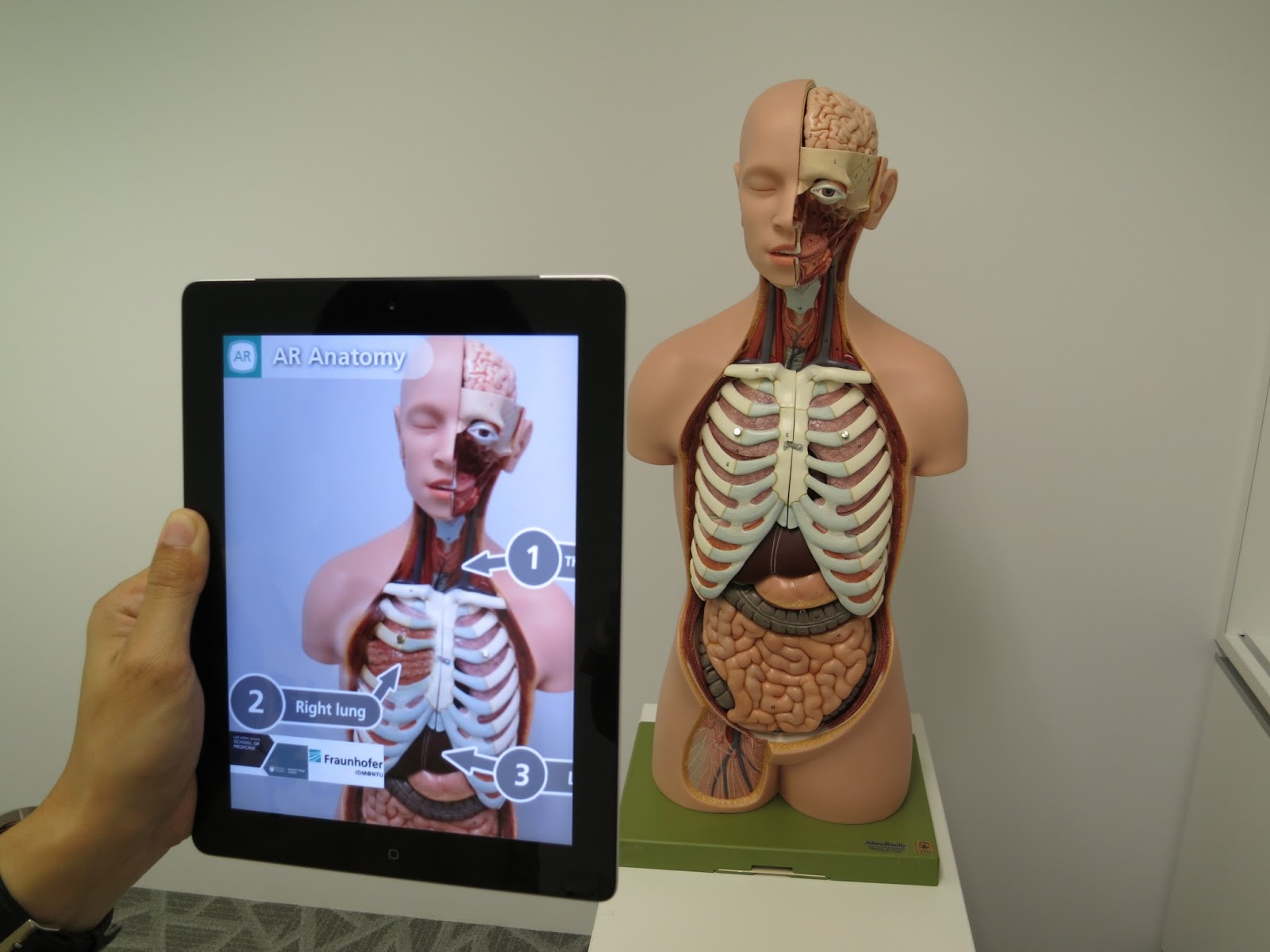
There is less requirement for direction from others, because the actor is in the best position to carry out the intervention, based on their personal tools and social connections. They can draw upon archived content written by experts, or upon the live expertise of knowledgeable members within their professional learning network. One clear example of technology supported ambient learning can be seen in the increasing use of Augmented Reality (AR) tools in the workplace. Viewing work contexts via a smartphone camera while superimposing additional digital information has multiple benefits that are still being explored.

Clearly, it is vital that large organisations that wish to capitalise on ambient learning promote good practice around the use of social media and personal devices. Freedom to use these tools will enable workers of the future to drive their own learning around authentic, real-time problems, and thereby increase the intellectual capital of the entire organisation.

Creative Commons License
Ambient learning by Steve Wheeler was written in Plymouth, England and is licensed under a Creative Commons Attribution-NonCommercial-ShareAlike 3.0 Unported License.


February 22, 2018

Better together

Photo by US Dept of Agriculture on Flickr
Social learning is one of the vital components of contemporary learning and development. None of us lives in a vacuum, and we are better, stronger and wiser when we learn and work together.

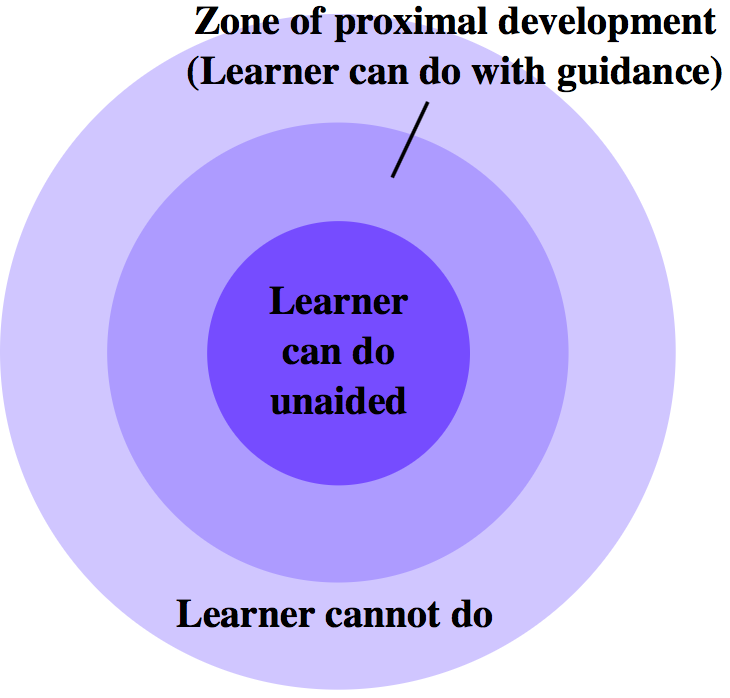
Russian psychologist Lev Vygotsky (1978) argued that we learn best when we are immersed in a socially rich, culturally relevant environment. Language is key, as is context. So is the social connection between those who are learning, and those who are supporting that learning. Vygotsky's Zone of Proximal Development (ZPD) theory has several layers, but the important one to consider is the zone where we are able to learn more with the help of a more knowledgeable other person.

Image from Wikimedia Commons
This has been the principle of apprenticeships since ancient times. Young men and women would learn and practice their skills and knowledge in the presence and under the authority of a master craftsmen or practitioner. They were corrected as they learnt, and the scaffolding came directly from the authority source. This support became the learner's ZPD, and as the learner became more competent, the scaffolding faded. This important nuance of education was relegated during the era of mass instruction, where entire classrooms of individuals were taught at the same pace, at the same level of understanding and in a uniform environment where behaviour was strictly standardised.

This kind of en masse training is no longer relevant in an age where many are independent knowledge workers. It is also a poor method of learning. This is because learners are individuals. Each of us learns differently at our own pace and in a variety of contexts and modes, depending on our preferences, the time we have available, and according yo our abilities and motivation. Social learning in the workplace works because it capitalises on these individual differences and various contexts, and relies on the relationship between those who are undertaking the tasks.

Social learning is strongly relational. Albert Bandura (186) argued that people learn from each other through observation, imitation, and modelling. Everyone knows something, but no-one knows everything. Therefore, in a peer relationship, each employee can provide social scaffolding for others, whilst receiving support in return. Dialogue between individuals mediates the social capital and generates the intellectual capital. Dialogic interaction therefore enables the reciprocation of knowledge and skills transfer across multiple ZPD contexts.

Personal technology and social media can support social learning in the workplace, and make it a reality no matter the size of an organisation.... and we can all use a little help now and then.

References
Bandura, A. (1986). Prentice-Hall series in social learning theory. Social foundations of thought and action: A social cognitive theory. Englewood Cliffs, NJ, US: Prentice-Hall, Inc.
Vygotsky, L. S. (1978) Mind in Society: The development of higher psychological processes. Cambridge, MA: Harvard University Press.

Creative Commons License
Better together by Steve Wheeler was written in Plymouth, England and is licensed under a Creative Commons Attribution-NonCommercial-ShareAlike 3.0 Unported License.


February 20, 2018

Old technologies don't die

Photo by Steve Wheeler
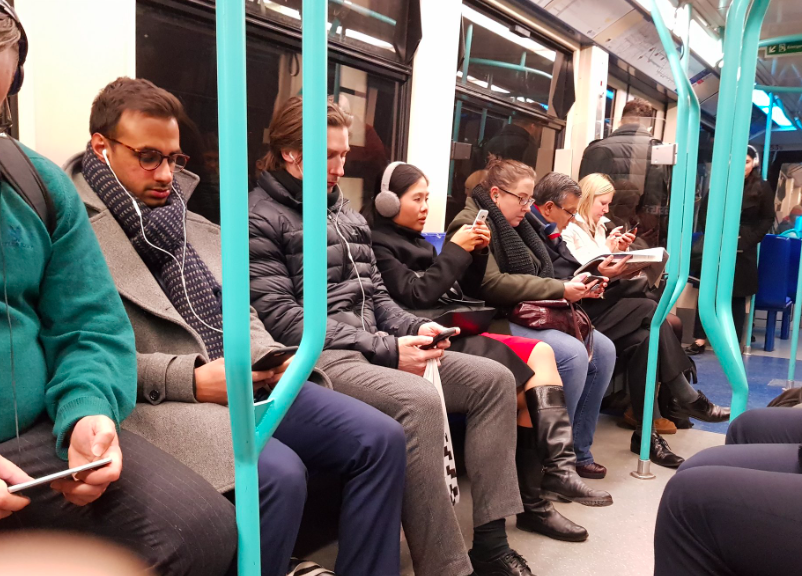
We connect with each other and with information in many ways. Today, more than ever we have a bewildering array of choices, including a variety of means to connect using smart phones and the Web. I captured the image on this page recently on a Dockland Light Railway train as it sped across East London.

You can see just about everyone in the photo is using a smartphone in some way. They are accessing information, listening to music, watching TV or a movie, perhaps making a call to a friend or family member. Some are zoned in, using their ear buds or head phones to listen to content without distraction. It has become a familiar scene in many industrialised cities across the globe. There is one exception in this image though, and you have probably spotted him while you gaze at the image. Yes - the man about six people along from the left is reading a newspaper. He's a positive deviant. He's doing things differently. Because he can. And he also knows the value of the 'mobile device' in his hands.

Witnessing this scene reminds me that no matter what technologies emerge, and no matter what disruptive innovations come along, we will always have the older, more traditional media to use. I still see overhead projectors lurking in the corners of school and university classrooms. Paper didn't disappear when the computer age arrived. Even chalkboards are still in evidence in some classrooms I visit. We can connect to information in many ways, and we should never rule out completely the older, more traditional technologies, because they still have uses.

Personal, connected digital technologies enable us to access content and interact quickly and easily. We can also repurpose, share and create content using these devices. However, sometimes reading a paper based book or newspaper offers an experience that is still valuable. There is something special about turning over a new page in a novel. The sensory experience of the aroma of a newly printed book is not replicable on a smart phone or tablet.  Kindle readers are convenient, but when the batter runs out, we can revert to paper based content. Teachers who are effective know that anything and everything can be used to create stimulating and creative learning environments. That's why they never rule anything - tool, resource or technology - from the mix.

Old technologies don't die - they get built upon.

Creative Commons License
Old technologies don't die by Steve Wheeler was written in Plymouth, England and is licensed under a Creative Commons Attribution-NonCommercial-ShareAlike 3.0 Unported License.


February 19, 2018

Hacking Digital Learning Strategies #Bookreview

Photo by Steve Wheeler
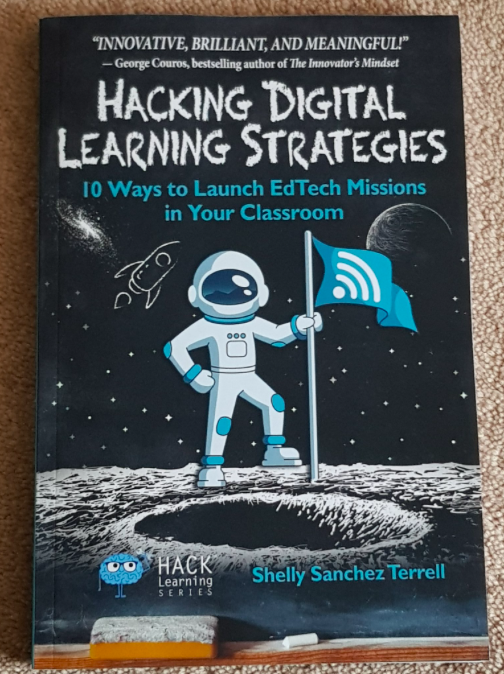
When Shelly Terrell speaks or writes, people take notice. She has done the hard miles as an educator and has innovated along the way, continuing to share her knowledge and her ideas freely among the global education community. It is a delight to see her new book has been published, and it was a joy to receive a copy for review recently.

Hacking Digital Learning Strategies sounds quite a daunting title for a book of practical ideas, but with the cartoon spaceman on the cover, readers will know they are in for a fun ride with plenty of happiness along the way. Its also one in a series of 'Hacking' titles published by the Hack Learning Organisation. With phrases such as 'I don't have to do all the teaching or know all the answers' and 'we need to find ways to tap into students' passions', you just know that Shelly's book will be completely student centred from start to finish. And it is.

This book is not about technology. In 183 pages it focuses on teaching strategies that have a proven track record of success. It highlights the need to engage students in their thinking and the importance of scaffolding their behaviour as they learn. The book calls for better understanding of the affordances of technology, not as means to an end, but as catalysts that provoke, excite and motivate children to go the extra mile, as they learn about the world around them, and discover exactly how they might fit into it. 40 pages at the back of the book present 'mission tool kits' for teachers - lesson plan resources that any educator would find easy to adapt and apply in their classroom.

Shelly does not shy away from weighty issues such as motivation, creativity, honesty and truth, but meets them head on, offering teachers a useful practical guide about how to infuse these into every lesson. She is bent on achieving global action around the use of technologies in education. From citizen journalism to crowdfunded innovation projects, from producing videos to creating digital text books, this volume is replete with relevant, contemporary ideas that leverage the power and potential of technology to help children to learn. The end result, as Shelly expresses in her final section, is that children will 'innovate with technology to improve their communities around the world'.

Creative Commons License
Hacking Digital Learning Strategies #Bookreview by Steve Wheeler was written in Plymouth, England and is licensed under a Creative Commons Attribution-NonCommercial-ShareAlike 3.0 Unported License.


February 13, 2018

Future vision

Augmented reality and smart glasses are the future, so it seems. Wearing your computer on your face as a heads-up device in the form of spectacles sounds like a very good solution for untethered activities of all kinds.

But we should forget Google Glass. It was a first attempt, a tentative stumble into a rich augmented world of information, entertainment and communication. Glass was awkward to wear and not very easy to use. Many of us wanted to have content delivered straight into our vision or superimposed on the real world as we travelled, but not many of us wanted to look like freaks. Even today, wearing new versions of Glass with its obtrusive camera units still make you look like you just walked off a SciFi movie set.

Now, several companies have built on the initial concept of Glass and have developed more stylish, discreet versions of wearable augmented reality. The first, Intel's Vaunt, uses very low level laser emitters to send digital content straight to your retina. It is almost indistinguishable from a conventional pair of spectacles. Take a look at the promotional video:


Another wearable AR device that has a conventional appearance is the Vue, which comes complete with audio connections that work via a bone conduction system. Vue enables all the functions you might expect, including hands free phone calls, augmented reality content, environmental control and activity tracking. It is also adaptable, coming in a variety of frames, with reactive glass and also in the form of conventional sunglasses. Here's the promotional video for Vue:


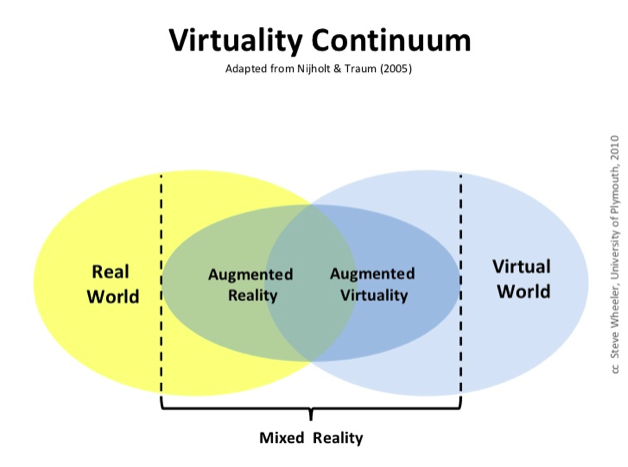
Here's one more smart glasses device for you to consider: This one looks a little strange when you wear it, but it is a personal technology designed for use in specialised environments. yes, it can be used for entertainment, but the Microsoft Hololens is probably best applied in the workplace. Hololens takes from the best of both worlds - both augmented and virtual reality technologies. In fact, it's called mixed reality, because the user is able to interact with virtual worlds, but without being fully immersed in the virtual world. Below is the promotional video which highlights some specific uses for the device in the work environment:


At the top of this page you'll see a diagram I repurposed from a presentation I gave in 2010. It explains the virtuality continuum, showing where each of the devices above might be placed. As we adopt more wearable technologies, we enter into a world where information becomes more available, and can be superimposed upon the real world around us. We are still discovering ways to engage learners and enhance learning using these emerging technologies. Smart glasses are still in their infancy, but will grow quickly as we find new ways to exploit them in authentic contexts.

Creative Commons License
Future vision by Steve Wheeler was written in Plymouth, England and is licensed under a Creative Commons Attribution-NonCommercial-ShareAlike 3.0 Unported License.


February 12, 2018

People, politics and pedagogy

Photo by David Bushell on Geograph
In a previous incarnation I was Training Manager for a distance learning project called RATIO back in 1996. RATIO was a three year project funded by the European Union and as a team we were tasked to establish 40 learning centres across the rural areas of South West England.

Over the first of few months of the project, we met with local communities, selected centres, and developed our relationship with the local businesses and stakeholders. Then we began to roll out our technology, embedding networked computers, video conferencing and digital satellite television receivers into the centres.

This was where the problems started. There was plenty of squabbling about how many computers each centre would be allocated, and then once they received them, how much training we were giving them in comparison to other centres. They were getting the technology for free, but still wanted to get all they could out of us.

On one occasion, I remember setting up a new centre in a small Devon town. We needed our team to install a satellite dish, and to do this we needed line-of-sight with the communications satellite. There was a huge tree in the way. Following a lengthy process of negotiation with various local community groups, the parish council, the town council and the district council, several environmental agencies and various technical groups, the general consensus was that the best solution would be to hire a tree surgeon to come in and lop a couple of branches off the tree. This would give us line of sight to the satellite and the centre would receive perfect reception.

On the day, I arrived on site with the two centre managers, two tree surgeons, my technical team, and a representative of the council. We began to set up all our equipment, and the two tree surgeons set up their ladders ready to remove the branches. At that moment, a small grey haired man approached us and asked us what we were doing. When we had explained the task, he informed us he was the chair of a local committee that was a sub-group of another committee that was associated with the district council (phew!), and complained that they had not been consulted. He threatened to sue the project, the tree surgeons, the centre, the council - and me personally - if we so much as touched the tree.

There followed another few weeks of negotiation while we attempted to placate everyone before we were finally able to go back and complete the task. The branches were removed, the satellite dish installed, and the local community could enjoy and learn from the educational programmes we broadcast via the satellite. Working on that project, I think I learnt far more about people and politics than I ever learnt about technology or pedagogy.

Creative Commons License
People, politics and pedagogy by Steve Wheeler was written in Plymouth, England and is licensed under a Creative Commons Attribution-NonCommercial-ShareAlike 3.0 Unported License.


February 08, 2018

Learning is a journey

Image from Pixabay
Learning is a journey. Learning has never been about reaching a destination. It is a process, not a product. Yet many education systems have failed to accept this reality. Sadly, formalised learning is usually characterised by product based objectives. 'The learner will be able to...' or 'by the end of this lesson the student will...' seem to run counter to the true nature of learning - the journey.

By contrast, process based learning does not require an individual to achieve any set standard or level of skill or knowledge, but is a way of creating environments, opportunities and motivations for people to learn more, and to optimise their learning. Formalised learning should not be about control. It should focus on trust. The educational theorist and humanist Carl Rogers once wrote that we should aim to foster 'a climate of trust in the classroom in which curiosity and the natural desire to learn can be nourished and enhanced' (Rogers, 1983).

Industrialised education systems were criticised by Brazilian educator Paulo Freire (1993) who decried the shallow nature of formal schooling. He argued that schooling turned students into '"receptacles" to be "filled" by the teacher. The more completely she fills the receptacles, the better a teacher she is. The more meekly the receptacles permit themselves to be filled, the better students they are.' Freire's banking concept of education is well known. It is premised on the idea of students reaching a destination - being 'filled' with facts. The final exam marks the end of that journey.

Learning is more than mere acquisition of knowledge, or being filled with facts. Learning is a complex process that requires commitment on the part of the learner in pursuance of their interests, exploration of their physical and social environments and discovery of the self. There is also a definitive role for teachers, who should support, scaffold and facilitate these learning efforts. However, in formal education, emphasis is placed firmly on the delivery of subject knowledge, delivered in compartments, and assessed largely in the cognitive domain.

All of formal education points firmly in the direction of products, with scant attention paid to the process of learning. Many commentators have argued that we should return to the true meaning of pedagogy, a subject I have also expanded upon here. Recently, Moravec (2013) argued that pedagogy is not about instruction, 'but the responsibility teachers take for the process by which (the) student becomes a fully developed human being, engaged with the reality of the world.' This makes eminent sense. But many schools remain mired in the product of learning, because this is demanded by the assessment regime. Simply, teaching is driven by assessment.

Therefore, the best way to transform the product into a process is to change assessment.

References
Friere, P. (1993) Pedagogy of the Oppressed. London: Penguin.
Moravec, J. W. (Ed: 2013) Knowmad Society. Charleston, SC: Education Futures.
Rogers, C. R. (1983) Freedom to Learn. Columbus, OH: Merrill Publishing.

Creative Commons License
Learning is a journey by Steve Wheeler was written in Plymouth, England and is licensed under a Creative Commons Attribution-NonCommercial-ShareAlike 3.0 Unported License.


February 02, 2018

Digital capabilities

Image from Wikimedia Commons
I visited the University of Greenwich for the first time recently to give an invited open lecture to academic staff. The university main campus is situated in the old Royal Naval College in the beautiful surrounds of the Royal Parks. The buildings, designed by Sir Christopher Wren were completed in 1712 and they ooze history. Also of course, Greenwich is the place where 'time begins' at the Meridian Line. Lord Nelson was once a resident there and there is plenty for history fans to visit and explore.

Sadly I was on a very quick visit, so I will have to return in the future to see more of this wonderful place. Below is the video that was recorded via PanOpto (and a very furry microphone) by the university's splendid technical crew. There is plenty of discussion around digital competencies, learning theory and teaching environments, and I hope you'll find the content thought provoking. If you have any questions or comments, the box is below ready to receive them.


Open Lecture: 2018 Steve Wheeler- Literacies and competencies for learning in the digital age from Educational Development Unit on Vimeo.

Creative Commons License
Digital capabilities by Steve Wheeler was written in Plymouth, England and is licensed under a Creative Commons Attribution-NonCommercial-ShareAlike 3.0 Unported License.


January 28, 2018

My Live School

Photo by Ilmicrofono Oggiono on Flickr
It was heart-warming to see so many passionate educators at the recent BETT Show in London. Thousands of teachers from all sectors descended on the Excel Centre last week to view the latest in learning technology, hear from key speakers in the field of education, and of course, to connect and reconnect with others of like mind. It is arguably the latter that draws the majority of teachers to BETT year after year. The BETT TeachMeet, organised by Drew Buddie, Dawn Hallybone and Ian Usher and their colleagues was a great success, as was the aftermath in which many of us made our way over to one of the Excel watering holes to continue networking long into the night.

It was there in the post-Teachmeet social that I met Louise Stone, an Infant School ICT Co-ordinator who invests time promoting a wonderful organisation called My Live School. The website is worth checking out, because it offers schools a chance to start their own school radio, and even gives away free starter kits! In conversation with her over a few drinks, I discovered how passionate she is about getting children to conceive, produce and present live radio. The benefits are numerous, but let me just list a few here:

1) Children need to do research to find out more about what they will be presenting.
2) They need to be aware of their audience, which encourages more awareness and skill development in speaking, listening, and reading.
3) There is an immediacy to School Radio that gives authenticity to the learning - and feedback can also be fairly immediate too, with the use of other technology.
4) School Radio generates a lot of excitement about learning of specific subjects, many of which link directly to the curriculum.
5) Children learn to work in teams and to collaborate with each other.
6) Children learn to communicate in new ways, and develop wider skills for the 21st Century, especially around digital literacies and fluencies.
7) School Radio can boost confidence.
8) The creative elements of script writing, interviewing and sound recording/broadcast can be directly transferrable into other learning activities.

Now, I have written glowingly about school radio on several previous occasions, notably in the Hidden Audience Effect (which is a key affordance of school radio that encourages children to raise their game) and in Radio Waves. Several schools are now engaged in creating resources and infrastructure that can facilitate school radio. It doesn't take much to set up a small studio and a system to broadcast sound across a school campus. There are several available guides online, but perhaps one of the most useful and accessible is this one called Let's Listen.

Creative Commons License
My Live School by Steve Wheeler was written in Plymouth, England and is licensed under a Creative Commons Attribution-NonCommercial-ShareAlike 3.0 Unported License.


January 12, 2018

The EDEN Interviews: Frans Mäyrä

Image from Pixabay
Below is the final video interview I did with keynote speakers at the 2017 Annual EDEN Conference, held in Jonkoping, Sweden. It features a conversation with Professor Frans
Mäyrä. Frans is Professor of Interactive Media at the University of Tampere in Finland, and his research interests focus on the topic for the conversation - Ludic literacy. Frans explains in detail what Ludic literacy entails, how games based learning can be leveraged to create more engaging learning experiences, and how playful forms of learning contrast with more goal oriented learning traditionally delivered in university settings. This is a fascinating conversation that encompasses serious games, playful culture, deep learning, simulation and suspension of reality, immersion and multiple realities. Students as 'designers of games' is a particularly interesting facet of this approach to higher education.


Creative Commons License
The EDEN Interviews: Frans Mäyrä by Steve Wheeler was written in Plymouth, England and is licensed under a Creative Commons Attribution-NonCommercial-ShareAlike 3.0 Unported License.


January 08, 2018

Who are you inspiring?

Image from Maxpixel
If you are a teacher, then you will probably have inspired many young people. In a recent blog post I wrote about inspiration - something I think everyone needs in their lives.

Children especially, can be inspired by small things that teachers do. Often, we don't appreciate the impact we can have on the lives of our students. In the busyness of the day, we don't always realise how inspirational some of our actions can be. You never know who you are inspiring....

I met up with one of my former youth group members a few years ago (yes, I used to run youth groups in the 80s and 90s) at an event on the Plymouth seafront. Jonathan Lloyd trained as a teacher and is now head at a school in Wales. I've been in touch with him on social media since. It's amazing to think that the young lad who used to attend my youth group is now all grown up, a fully qualified teacher, and a school leader too! Jonathan has turned out to be quite an inspirational teacher, and revels in the success of the children he has taught over the years. Here's one of the stories he related recently on Facebook, with a call to other teachers to reflect on their own impact:
Who are you inspiring! I’ve just had probably one of my most humbling experiences today. Whilst sat having dinner at the Eden Centre a young man approached me, he said ‘Mr Lloyd, do you remember me?’ and I said ‘I’m sorry I don’t'. 
He told me his name and I had taught him over 18 years ago in my first class. He told me that during this time he had little self esteem, his parents were dysfunctional and his academic standards were low. He said that you showed me care and compassion and you had a saying that ‘Success comes in Cans, not Cannots!'

His face as a boy came back to me and his backstory !

He then told me that I worked with him daily and by the time he left he had moved from an SEN child to a good average. I also asked him to come to Cricket practice and he represented the school team at Trent Bridge in a National Final!
He said that I made him feel special and wanted ,and as a result he wanted to become like me. He then told me he had come back to his parents for Christmas and is now working as a PE teacher in Birmingham. Wow!! He was so excited and thrilled about what he was doing and said it was because I had been an example to him all those years ago. I felt so humbled by what he was saying! It reminds me every day of the privilege I have as a Headteacher to positively influence so many children’s lives for the good! Our every action as an adult can affect the children in our daily reach. I suppose the question is ‘Am I still doing this and are you?
NB: If you have any similar stories of inpiration that you would like to share, please post them in the comments box below. 

Creative Commons License
Who are you inspiring? by Steve Wheeler was written in Plymouth, England and is licensed under a Creative Commons Attribution-NonCommercial-ShareAlike 3.0 Unported License.


January 04, 2018

Passion for education

Photo by Anthony Easton on Flickr

In my last post I wrote about inspiration - for those who are teachers, and also for those who are learning - and I guess, that is just about everyone.

I also touched on the theme of passion - the love for learning that all successful teachers tend to exhibit. We all need inspiration, and many would argue that we perform better as educators when we have passion.

We need to see education for what it is - the means to draw out the best from children and give them the best preparation to thrive in the world.

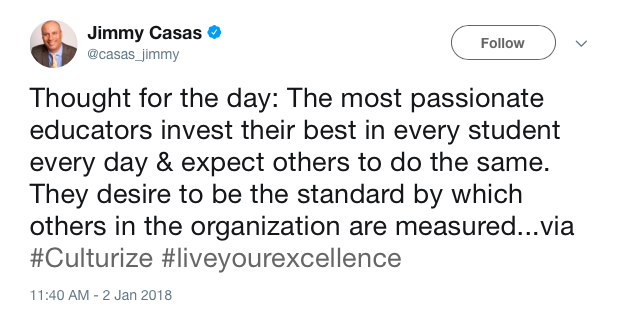
Further inspiration about education came this week from a tweet by Jimmy Casas below:


It's true of course. Those teachers who have a great passion for education exert every muscle to ensure that the best possible learning opportunities are presented to their students. It matters not where that student sits in the class, or what their history has been. Unconditionally regarding each child with positivity is key to good pedagogy (Rogers, 1983).

Teachers who strive to do their best for children tend to have the most impact across the board. Effective pedagogy not only has impact, it's contagious. Often, in my own practice, if I witness a good method or technique, I adopt it myself. I develop it and apply it to my own professional context. Colleagues who have been in my sessions have then incorporated my ideas into their own practice. Teaching is like that - it's an ever evolving, always changing terrain in which we discover new things constantly, reflect upon them, practice them ourselves and then share them across our communities. This process promotes 'a different way of being' teachers (Bolton, 2006).

But while teachers are attempting to be the very best they can be, there are many problems to be faced. Some appear to be contradictions. An interesting question arose on Twitter recently around standards. It was a simple question: Why are we expected to standardise our testing when we have differentiated in our teaching? This is profound. Many teachers think this but few voice it as an issue. There is incongruity in our schools. When children notice these disparities they can become discouraged. 

While we can all be passionate about what we teach, there are still many problems in education that cannot be fixed quickly. Injustice, lack of clarity, contradictions, unfairness and traditions that are long overdue for a change - all are present in our school systems. What cannot be fixed will need to be circumvented. The very best teachers find ways around these problems, and teach brilliantly despite the conditions they are forced to endure. It's often our passion that carries us through.

References
Bolton, G. (2006) Reflective Practice. London: Sage.
Rogers, C. R. (1983) Freedom to Learn. Columbus, OH: Merrill.

Creative Commons License
Passion for education by Steve Wheeler was written in Plymouth, England and is licensed under a Creative Commons Attribution-NonCommercial-ShareAlike 3.0 Unported License.


January 02, 2018

Be an inspiration!

Image from Pixabay
We all need inspiration. At the start of the new year, we need all the inspiration we can get to create the impetus and motivation to keep going.

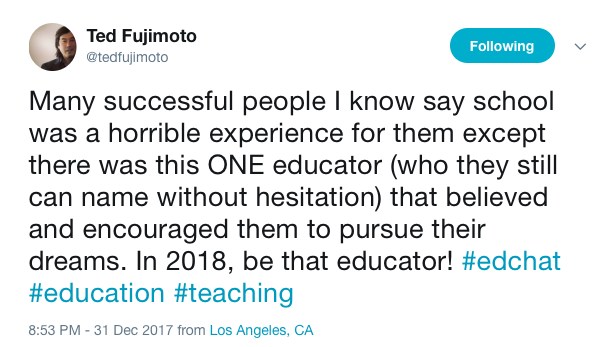
So it was timely that a thought provoking tweet from Ted Fujimoto appeared in my timeline this morning. It has prompted me to think about what it means to be an inspirational teacher.

What does an inspirational teacher do, and what should I emulate and avoid? Here's the tweet:

Thinking back on my own school days, this resonates strongly within me. My time at school was not a good time. Much of it was focused on avoiding bullying and escaping from ridicule and failure. Most of my teachers seemed to be there just to fill in the hours before home time. But, thankfully, there were TWO teachers - one in primary school and one in secondary school that stood out for me. 

Why is it that these two teachers stand out in my memory all these years later? 

They stood apart from the average teachers I encountered because of their passion, their dedication and their willingness to go the extra mile when called upon to do so. Both made an impact on my life at an early stage, when it was critical to do so. Both created within me the desire to learn, to create, to question; and both encouraged me when no one else did. Even when I failed, they encouraged me to pick myself up and try again. 

Both loved their jobs working with young people, and both exuded a joyfulness and exuberance that demonstrated love for their subjects and a deep desire to pass their knowledge on to the children in their care. Most importantly, both teachers believed in me - that I could reach as high and far as I wished to go to achieve my dreams - even if I surpassed their own achievements. These are the characteristics that I try to emulate during my own work as an educator. 

Do you believe in your students? Are you passionate about your subject and do you have a deep desire to impart your knowledge to them? And in the long term - are you willing to encourage them to question everything, reach farther and attain what seems to be unreachable? Here's the hardest part - will you be proud of them when they surpass everything you have ever done? If these are your characteristics as a teacher - then you cannot fail to be inspirational. 

I wish you a successful, peaceful - and inspirational - NewYear!

Creative Commons License
Be an inspiration! by Steve Wheeler was written in Plymouth, England and is licensed under a Creative Commons Attribution-NonCommercial-ShareAlike 3.0 Unported License.


December 22, 2017

Transition and change

Photo from Pixabay
2017 has been a year of transition and change. Looking back on the year, I now realise that I was heading for some major changes of direction in my professional life. I have connected again with some old friends and colleagues, said goodbye to a few and met some new ones too. My PLN continues to grow and I have been privileged to work with some really excellent people.

The start of the year saw the usual events in and around London, including the BETT Show at the Dockland Excel Centre in January, where 4 of my students joined me to present during the conference. It was great meeting up with so many colleagues from the schools sectors and discussing new technologies, pedagogies and issues of the day. As usual, my own student teachers came away inspired, buzzing with enthusiasm and wishing to try out what they had learnt in their own classrooms.

In the first week of February I was back in London, this time in the west of the city, speaking at Learning Technologies in Olympia. I shared the stage with my good friends Andrew Jacobs and Dave Kelly, from the world of Learning and Development (corporate learning) and we will be reprising this trio in 2018. I am always impressed by the enthusiasm and drive of my colleagues in the Learning and Development sector, especially their intense desire to strive for excellence as they meet the challenges of change and innovation across all fields of activity.
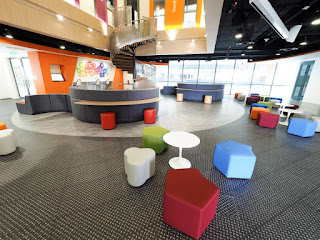
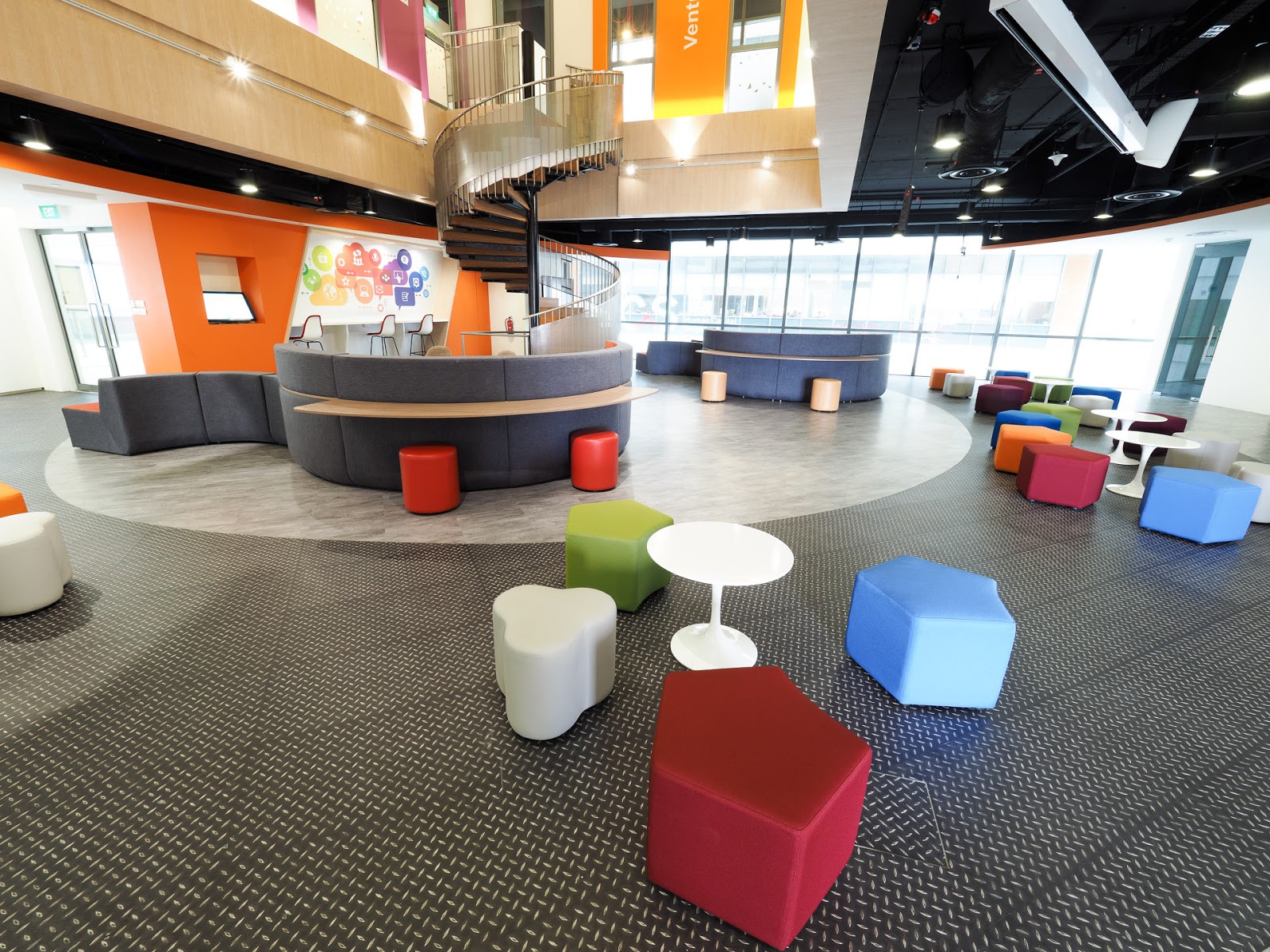
INLAB - Photo by Steve Wheeler
In March I travelled to Singapore to participate in a week-long research symposium with the Lifelong Learning Institute. I worked with a team of great people during the week including famous learning theorist Roger Saljo, and spent time exploring research in the ideation rooms of INLAB - a purpose built area for the promotion of creative learning and exploration. As a visiting fellow of LLI, I hope to be able to work again with the team in Singapore in the coming years.

April brought me to a watershed moment in my career when I was informed that my digital literacies programme had been inexplicably axed by the university. I decided there and then that it was time for me to bow out and I applied for voluntary redundancy. Many of my colleagues and students were a little shocked by my decision, because I had told them often that I would never retire - because I loved the job too much. But my hand had been forced, and I realised that there was a whole world outside of academia that I wanted to explore some more.

In May I returned to Singapore as distinguished speaker for the National University award ceremony for excellence in research. It was a great honour to receive the invitation - it was my second of three visits to the Lion City in 2017, and as usual it didn't disappoint. I also spent another week teaching at the Technical University of Liberec in northern Czech Republic and this time I brought one of my students with me, so he could take part in a project with the local Radio Broadcasting company. Hopefully, Sound Czech will continue in the future.
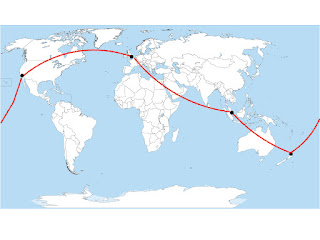
Circumnavigating the globe: Map from Wikimedia Commons
In June I wrote about my decision to 'retire' from full-time academic work at Plymouth University (on 6 June - D Day - a decision day for me in many ways) in a post entitled Walking Away. The same day the Times Higher Education called me and asked if they could run the story, and it appeared in the newspaper the following day. By then I had already been planning what I was going to do next, for several weeks.

I was delighted to accept an invitation to spend a week as a guest of the Peel School District Board in Mississauga, near Toronto, Canada, during August. I gave a keynote speech to more than 300 dedicated Canadian educators (who gave up 3 days of their vacation to attend a conference at Cawthra Park Secondary School). I also presented two workshops, and had the privilege of witnessing the solar eclipse - thanks to the teachers who lent me a pinhole camera they had made for the event. This was my first visit to Canada, and I was impressed by the passion and dedication of all of the teachers I met. The full story is here.

In September I found myself travelling across the UK, speaking at various events and I also paid a second visit of the year to the Emerald Isle. I was keynote speaker for a one-day event at the Law Society of Ireland, and spent a delightful couple of days in Dublin. The Law Society's campus is a wonderful mix of ancient and modern architecture, and it awards its own degrees to graduates. In September I also started work as Head of Research and Innovation for a start-up company called LiketoBe.org which connects schools with business and experts to promote better careers advice. The story of my work with LiketoBe can be read here. It was also a delight to witness my final full cohort of student teachers graduating and launching their careers in education during a ceremony on Plymouth Hoe.
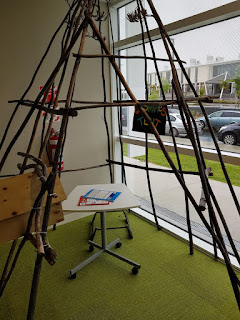
Jasmine's tent by Steve Wheeler
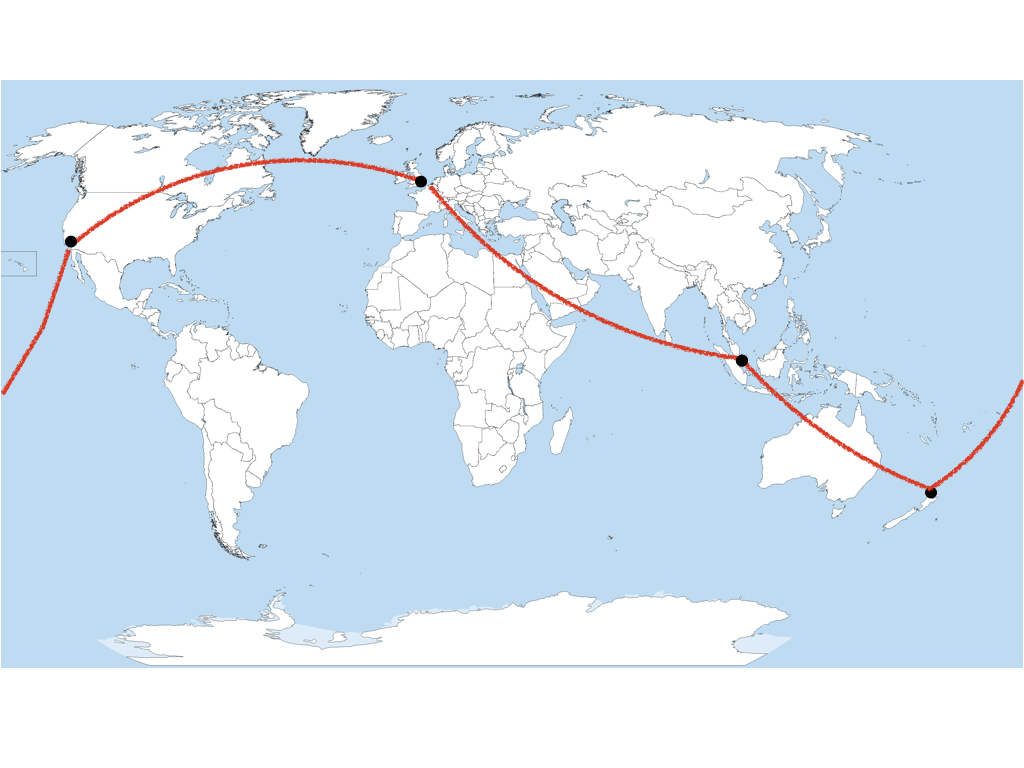
Late October and early November saw me flying out on a round-the-world tour, which took in Brussels, Los Angeles, Auckland and Singapore. I had never travelled completely around the globe before, so it was an adventure. I spent most of my time in late October and early November working as a resident academic consultant at Auckland University of Technology. It was a challenging, but thoroughly enjoyable and fulfilling time for me, and I hope I added some real value to the work of the university. My time was spent giving presentations and workshops and meeting with teams of academics to discuss change and innovation. While I was down under, I spent a fair amount of time researching and writing, with some visits to schools. One outcome was this post about a child with special needs. I also developed a new model of organisational innovation which I wrote about here.

In November I aired the model publicly for the first time during my opening keynote speech to the Learning Technologies Asia conference in Singapore on 8 November. During the conference I spent time with old friends Dave Kelly, Laura Overton, Marco Faccini, Ger Driesen, Bryan Alexander and Donald Taylor, as well as some familiar Tweeps I met face to face for the first time, including Helen Blunden and Sahana Chattopadhay.

December has been a wind-down month, with just a few engagements in the diary. The most significant thing that has happened is the launch of my new consultancy agency - Steve Wheeler Associates Ltd - which will offer a growing number of services to schools, colleges and universities in the coming years, including staff development sessions and master classes in change management, innovation and pedagogy, learning technology, assessment, social media and education, e-safety, special educational needs, mental health, and behaviour management. I'm building a team that will do this work at a global level. Here's to a prosperous and successful new year - and do get in touch if you think we can work together in any way!

Creative Commons License
Transition and change by Steve Wheeler was written in Plymouth, England and is licensed under a Creative Commons Attribution-NonCommercial-ShareAlike 3.0 Unported License.


<< Back Next >>