I spend a lot of my time on public transport, and one of my favourite pastimes is eavesdropping on other people's conversations. It not only passes the time, but I also learn new things from listening in, even if the conversations are sometimes ill-informed.
Earlier this week, as I travelled into work by bus, I overheard an elderly gentleman conversing with three young people. He had watched the two young men as they gazed into their smart phones, and then said to the young woman: "Can I ask why you haven't got
your phone out?' She replied: 'I was hoping for a conversation with these two...'
His response was a light-hearted discussion with them which concluded with the statement: 'The art of conversation is dead.' The exchange then descended into: 'There's too much technology around' and, 'I don't know what the world is coming to...' and I switched off at that point. But it led me to think -
is the art of conversation dead? Sherry Turkle seems to think it's in trouble. In
Alone Together (2011) Turkle implies that technology is distracting us from social interaction, and is ruining conversation: 'The relentless connection leads to a new solitude'. Others believe similarly.
Jaron Lanier (2011) believes that interactive technologies are 'deadening personal interaction.' There are various similar views in recent publications.
An alternative perspective to this is that conversation isn't actually dying at all - rather, it's evolving into something, new, something different.
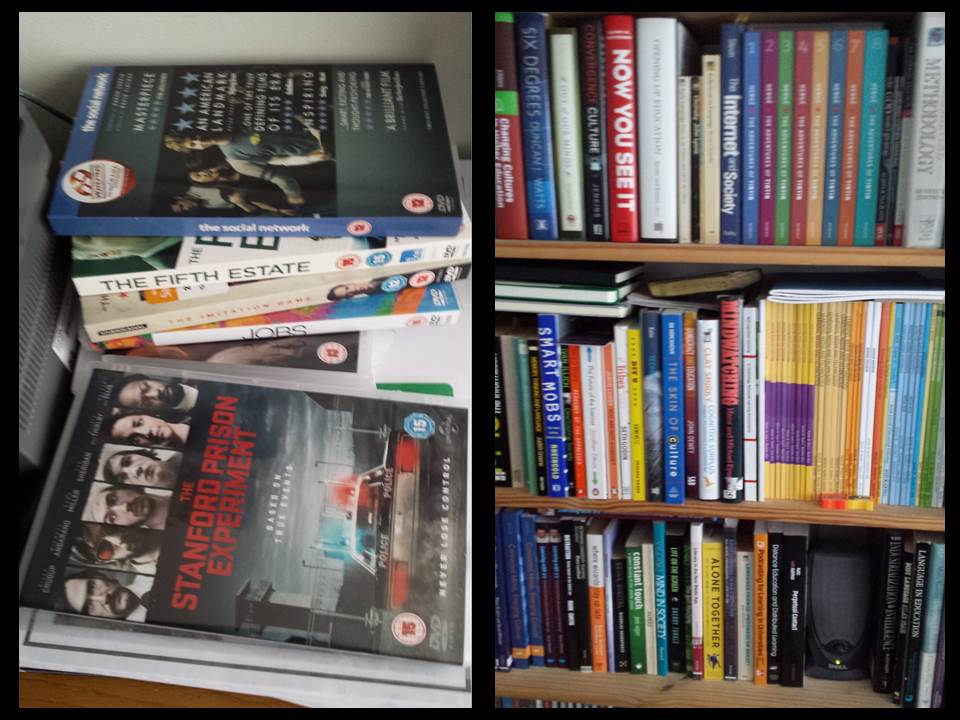
The images above show that different media have the capability to distract people from the 'real world' around them. We often see people on public transport and elsewhere, with their heads buried in their technology. But prior to mobile devices, we also used to see many people with their heads buried in books, magazines and newspapers. Yet mobile phones and other interactive, connected devices have an advantage over traditional media. With a connected device you can hold a conversation with someone who is not in the same geographical location. Therefore, conversation can still occur, but it is now enhanced by the technology.
Lankshear and Knobel talk about
new and emerging media literacies (2006) that do not replace traditional literacies such as speaking and listening, but extend and enhance them. This is echoed by Kress (2009) who holds that new technologies are encouraging new forms of literacy and communication.
My own research shows similarly that digital literacies allow us to extend our communication repertoire, enabling us to interact powerfully in new digital environments (Wheeler, 2015). Holding a Skype conversation requires new skills that go beyond face to face conversations. You may be aware for example of the reduced social cues that are caused by the limitation of interaction that is mediated by a camera and phone connection over the Internet. There may be latency (delay) due to the distances involved, and there may be limitations to the sound and visual elements of the Skype call. The same applies to any distance conversation (but we are already used to some of these effects because of a century or more of telephone use).
Conversation is changing, but that doesn't mean it's dying. As we come to terms with using our tools and learn more about what it means to carry them around with us, so we discover new ways of communicating. Conversation can now take place in many modes. It is important to realise that, yes, although people can be distracted by their devices, they are still able to hold conversations. So, back to the bus: The three young people were in fact holding a conversation. They were watching YouTube videos, and I head them discussing these before the retired gentleman intervened. As new technology emerges into the public domain and becomes more popular, we need to prepare ourselves for even more new ways of communicating. The art of conversation is not dead. It's very much alive and is diversifying in many new directions.
ReferencesKress, G. (2009)
Literacy in the New Media Age. London: Routledge.
Lanier, J. (2011)
You are not a Gadget: A Manifesto. London: Penguin.
Lankshear, C. and Knobel, M. (2006)
New Literacies: Everyday practices and classroom learning (Second Edition). Maidenhead: Open University Press.
Turkle, S. (2011)
Alone Together: Why we expect more from technology and less from each other. New York: Basic Books.
Wheeler, S. (2015)
Learning with 'e's: Education theory and practice in the digital age. Carmarthen: Crown House.
Photo
source
Is technology killing the art of conversation?
by Steve Wheeler was written in Plymouth, England and
is licensed under a Creative Commons Attribution-NonCommercial-ShareAlike 3.0 Unported License.












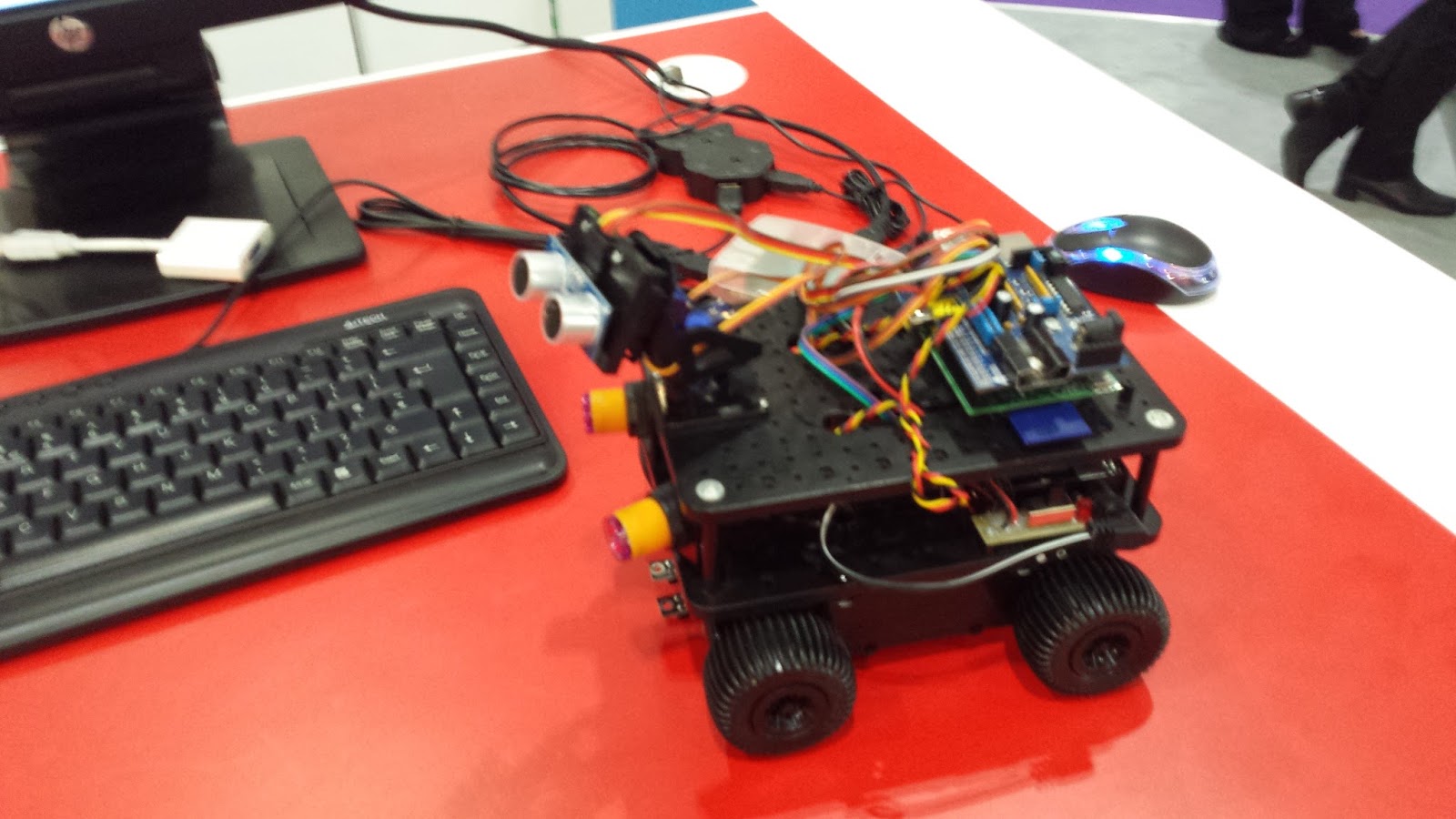








 Some of these are engineering problems, while others are mathematical (some students discovered they needed to measure the entire circuit so they could calculate where the 90 degree turns should be programmed into the routine). The students were only given 90 minutes to create, program and test their robots, and quickly discovered that time was also an issue. The teams had to work closely and creatively to complete the task.














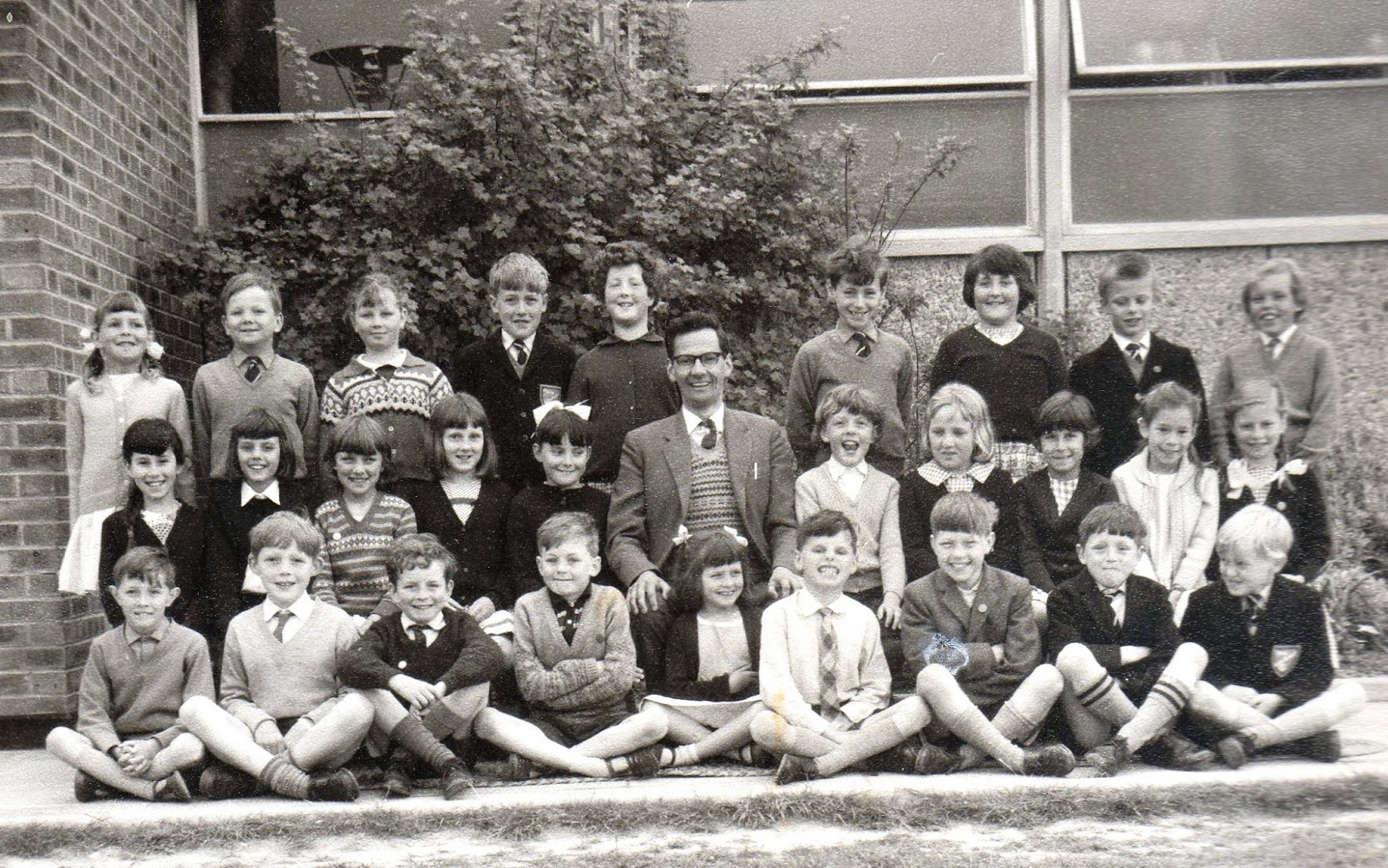
 Teachers have one of the hardest jobs in society. It's not just the long hours, or the endless struggles with challenging behaviour. Entertaining the flights of fancy and seemingly ludicrous ideas of children day in, day out, can make one quite a cynic. When children are asked what they want to do when they leave school, some have no idea. Others have several ideas, and one or two have their sights firmly fixed on a specific goal. It is not the job of teachers to ridicule or laugh at these hopes and aspirations. Some teachers think they have seen and heard it all. Most do not voice their thoughts out loud, but if they do, it can be damaging to young hearts and minds. Some who read this blog may recall my own experiences in school, and the long term damage that was caused when certain teachers ridiculed me. Teachers have a significant responsibility to nurture children's aspirations and instil within them a desire to succeed, and a determination to achieve their aspirations. School should provide the first steps to turning dreams into reality.



.JPG)
