Log on:
Powered by Elgg

Ania Rolinska :: Feeds

July 30, 2016

Instagram, WhatsApp and Learning

In a recently published article, my colleagues Maged Boulos, Dean Giustini and I write about how learning through social media is transforming medical practices, health care and education. Here's an excerpt from the article, published in the open access journal Future Internet. The full text is available at this link.

Learning is essentially a social activity, where people scaffold and extend each other’s knowledge gain [54], but in recent years, new theories have emerged to explain distributed forms of learning that have been made possible through mobile technology and social media. Digital forms of scaffolding emerge where learners access new knowledge using personal devices [55]. The power differentials between experts and novices is also thought to be diminishing due to new and emerging forms of peer learning and knowledge production. This ‘paragogical’ theory is based on the premise that online networks are sufficiently developed to support user-generated content that can be shared freely and widely [55,56] to inform communities of practice and interest [57] (‘paragogy’ in this context refers to the conscious practice of peer learning, according to [56]). Another emerging theory relates to the increasing mutability of knowledge in the digital age. Proposed by Siemens [58], ‘connectivism’ suggests that knowledge now resides in the network as well as in the minds of those who use it. Learning is amplified and knowledge becomes more widely available as the network of people, tools and connections strengthens. WhatsApp fulfils many of the requirements of this kind of learning, and its rising popularity—particularly among younger generations—assures it continues to be widely used, and scrutinized, in many forms of peer production and information dissemination. The same could be said about Instagram and its uses in medical education [59].

Photo from Pixabay

Creative Commons License
Instagram, WhatsApp and Learning by Steve Wheeler was written in Melbourne, Australia and is licensed under a Creative Commons Attribution-NonCommercial-ShareAlike 3.0 Unported License.


July 28, 2016

Storytelling with technology

It's important we listen to the student voice - educators are foolish if they don't. What students say can and often does inform our professional practice. I've written about this in previous blogs, and have also put this principle into action by incorporating student voice into many of my own public presentations.

On several occasions I have also invited my students to join me on stage to present their views. Recently I said goodbye to another year group of my primary education students who will be teaching in their own classrooms come September. They were a particularly talented and insightful group of young people, and I learnt a great deal through teaching them for three years as they developed their teaching skills. Before they left the university for the last time, I persuaded three - Kate, Becca and Ryan - to speak out one more time about their views on technology supported learning. Building on a previous post about narrative education, I asked them to focus specifically on the question of how they use technology for story telling. Here's the short video of the interviews - there are some great ideas for all teachers here:


Photo from Flickr

Creative Commons License
Storytelling with technology now by Steve Wheeler was written in Auckland, New Zealand and is licensed under a Creative Commons Attribution-NonCommercial-ShareAlike 3.0 Unported License.


July 08, 2016

Digital capabilities and curiosity

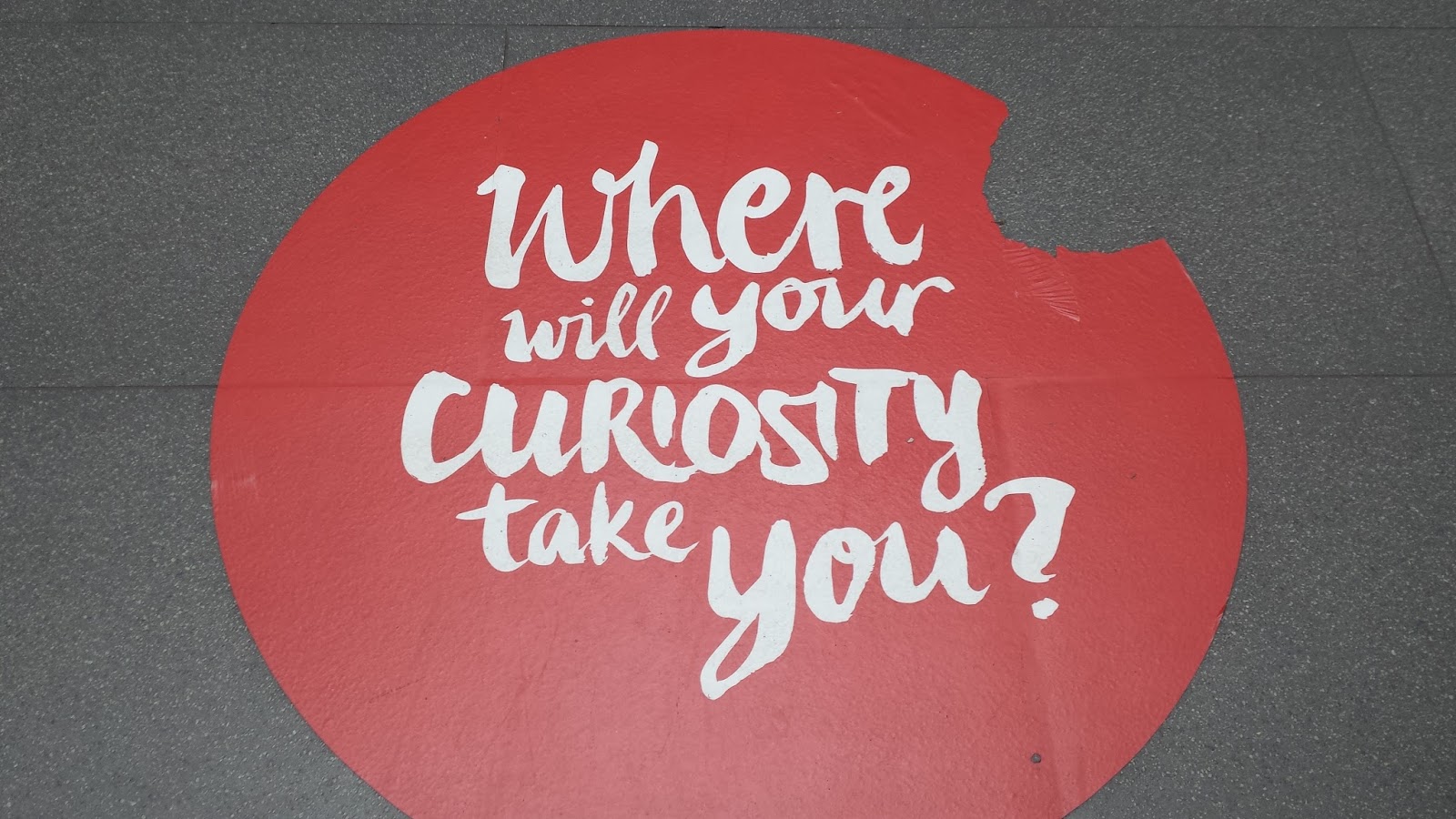
On the floor of the Science Centre, Staffordshire University
I haven't written or blogged as much as I usually do, because I have been doing some travelling recently. I've been speaking at a variety of conference up and down the country, and it can get quite time consuming putting in the miles and preparation. But during the conferences, I have heard some interesting ideas which I would like to share a little wider. Here are my reflections on the learning and teaching conference held at Staffordshire University.

Our opening keynote Helen Beetham talked about digital capabilities, which is becoming a well trodden phrase in higher education. Helen said that digital capability is the capacity to thrive in digital environments. Now this might seem simplistic, but actually, it's a profound idea, because there are many different digital environments, and many different ways of using them. This idea connects with my own recent comments on transliteracy - the ability to communicate ideas equally effectively, no matter what tools or technologies you use.

Helen also argued that technology has the capability to engage and distract at many different levels. Again, this is something that all educators should be aware of. My own pointed comment later in my own keynote was that disengagement and distraction during lectures is probably more a symptom of the dull nature of some lectures than it is about the attractiveness of personal devices. It's not as simple as that, but engaging teaching usually motivates and inspires. The technology should be there to be used as an additional, enhanced aspect of learning, not as a substitute for good pedagogy. Ultimately, teachers should be attempting constantly to pique the curiosity of students - the more students are allowed to question and explore, the more inquisitive they will become.

In my presentation I was also critical about the design of some learning spaces in higher education. Our keynotes were presented in a large traditional lecture theatre with tiered seating. My comments were that lecture theatres did not naturally lend themselves to collaborative and interactive pedagogies, and that the affordances of the room (i.e. the design features) militate against flexibility. Where for example were the power sockets that students could use to recharge their devices when batteries were flat? How did students work together in groups when all were facing the same way in chairs that could not turn? The affordances of the spaces we create, I said, shaped the way we teach and the way students learn. A major rethink is necessary, because as Helen argued in her keynote, the physical and virtual spaces of learning are blurring together.

More to follow

Photo by Steve Wheeler

Creative Commons License
Digital capabilities and curiosity by Steve Wheeler was written in Plymouth, England and is licensed under a Creative Commons Attribution-NonCommercial-ShareAlike 3.0 Unported License.


Future technologies now

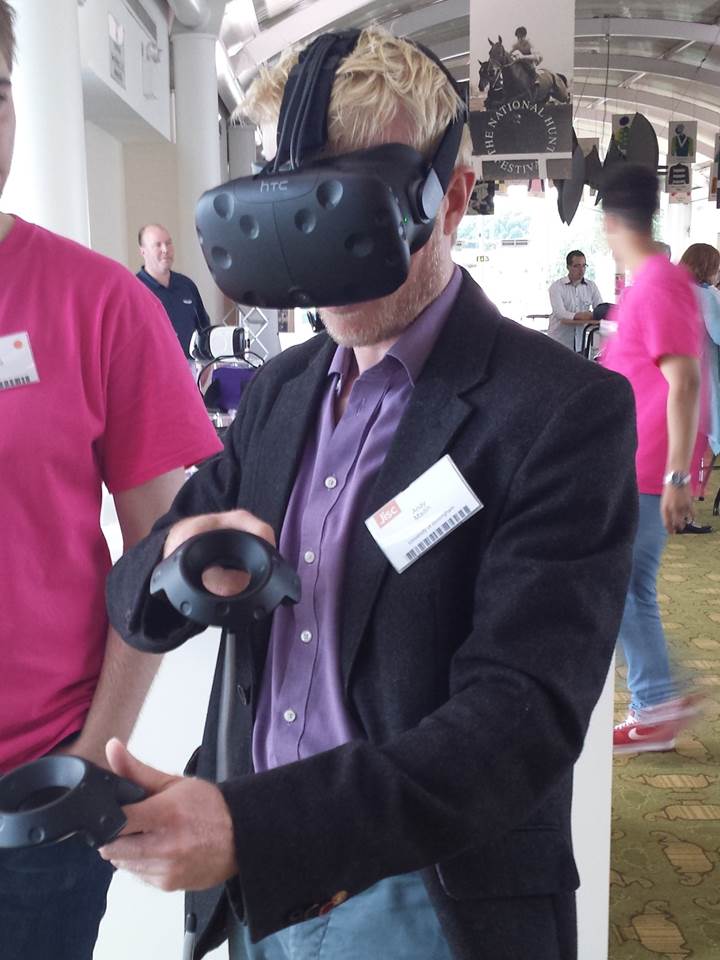
HTC Vive in action - Photo by Steve Wheeler
At the JISC Connect More event held in Cheltenham recently, a number of futuristic technologies were on display for delegates to experience. The latest virtual reality headsets were enjoyed by many who were fascinated by how low cost headsets, combined with iPhones or Android phones could create such rich and immersive experiences. Google Cardboard was on show, but so were other alternatives. In fact, it was surprising how inexpensive but robust some of the alternatives were in comparison to Cardboard.

Also on show was the HTC Vive - a VR suite which provided a truly immersive experience (pictured). The capability of the system to allow you to render 3D images and then view them from all angles and perspectives was quite a powerful effect. The technology has plenty of potential to be used across the curriculum, and not solely in creative arts.

Robotics featured quite heavily, but the star of the show was undoubtedly the Double 2 virtual presence technology - essentially an iPad mounted on top of a column transported by a Segway, as used by the likes of exiled former intelligence officer Edward Snowden. It was controlled by JISC staff and moved around the conference floor in a style, and was a little unnerving for some, when they turned to be confronted by a smiling virtual face - at eye level. All of these technologies will undoubtedly find some useful application in higher education in the coming years. As they develop and the software becomes more powerful and responsive to our needs and desires, we will see some exciting new pedagogies emerge.

Personally, I can't wait.

Photo by Steve Wheeler

Creative Commons License
Future technologies now by Steve Wheeler was written in Plymouth, England and is licensed under a Creative Commons Attribution-NonCommercial-ShareAlike 3.0 Unported License.


July 01, 2016

Leadership in time of crisis

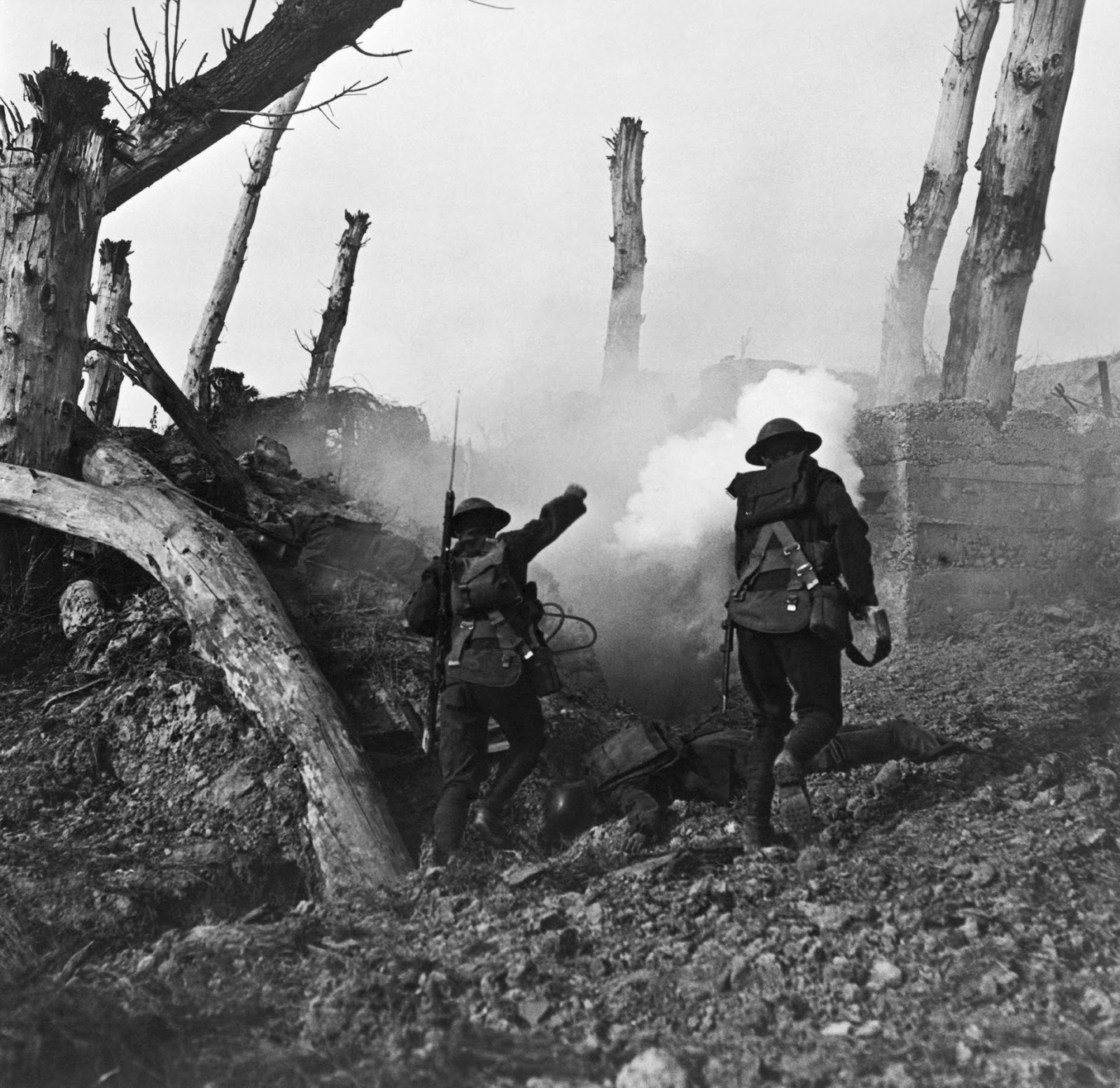
Today marks the centennial of the bloodiest battle in the history of the British Army. On July 1, 1916, British and Allied forces engaged with German forces in the Battle of the Somme. The first day was a disaster. The Allied forces sustained more than 54,000 casualties with 19,240 dead in just 24 hours. They gained barely three square miles of territory, and the battle raged on for another 5 months.

There are several theories as to why the Allies suffered so many casualties. They were extremely high because the Allied forces underestimated the strength of the German entrenchments. Although bombarded for a week, the Germans were able to emerge largely unscathed when the shelling ceased. They then set up their machine guns and proceeded to mow down the advancing Allied troops in their thousands.

A simpler explanation is that the Allies lacked decisive leadership, and communication between unit commanders was poor or non-existent. This resulted in lack of co-ordination and decision making when it was most needed. Another perspective is that the battle was fought using tactics that were antiquated. Advancing in a line across a field toward your enemy may have been an effective doctrine in the 19th Century, but against machine guns, barbed wire and minefields, it was disastrously ineffective.

What can we learn from this tragedy?

Firstly, good leadership is vital for any organisation. If leaders have no clear vision of where they are taking their organisation, failure can be expected. If they underestimate the strength of rival organisations, or fail to spot the weaknesses in their own, they will be in trouble. Leaders need to be decisive in their actions, but cannot do so without access to high quality information. When a crisis arises, they need to be at the front, leading, not running and hiding, or hoping that 'things will work themselves out.'

Secondly, good communication is important, at all levels. If leaders have no idea what their colleagues or teams are doing, or what problems and challenges are being faced, they cannot make informed decisions. Where they gain information relies on the quality of their communication systems and the quality of the networks they join. Often, associating with the right people pays off, but trusting poor sources can end in disaster. In a time of crisis, we should all know who our friends are.

Thirdly, the old ways are not always the best ways. Sometimes innovation is required. Leaders who are entrenched in old ways of thinking, or who are set in their ways, will miss opportunities to exploit events and change the direction of an organisation. Leaders are not always the best people to find new ways of doing things. But they should listen to those who work within the organisation that do understand innovation, and they should encourage and support new ideas that spur the organisation forward.

Everything is a risk, and leadership in any organisation is all about weighing up the risks against the benefits. That's why we need good leadership.

Photo from Wikimedia Commons

Creative Commons License
Leadership in time of crisis by Steve Wheeler was written in Plymouth, England and is licensed under a Creative Commons Attribution-NonCommercial-ShareAlike 3.0 Unported License.


June 22, 2016

Remix culture and education

In my last blog post I illustrated a new model of digital literacies in the context of the remix culture. Since then, several have asked me what I mean by remix culture, and how it applies to education.

Remixing is the act of taking previously created works or artefacts and adapting them in some way. Sometimes several works are combined or 'mashed up' to create new versions. In the digital age, where many have access to the participatory web such as social media, it is easier than ever to remix and mashup content.

Remixing is a human pastime that has existed for millennia. We see or hear something we like, and we try to make our own personal version of it. In popular culture, folk songs and stories, often with no traceable origin, have been sung or told, and then retold across the generations. Often old stories and songs are modified to meet the needs or interests of contemporary society. Parodies and satirical versions of original stories or songs are also considered to fall into this category of remixing.

One of the most widespread examples of digital remix is Wikipedia. The online encyclopaedia relies almost exclusively on members of the public to share their knowledge and update contents. That knowledge is published, and then modified and remixed to the point where it becomes more accurate. The appeal of Wikipedia and also any digital remix is that it is never complete. It is always a work in progress.

The digital age has given us many tools which can be used to easily remix the work of someone else. Garage Band for example, enables the production and reproduction of just about any musical instrument sound, and allows the user to mix these into a musical sequence. Photoshop is software that allows users to do the same thing with images. Vidding, modding, sampling and hacking are all techniques developed in the digital age to modify, remix and repurpose existing content. This article tells us why the remix culture is such an important movement because 'all cultural artefacts are open to re-appropriation' when the meaning ascribed to objects is transient.

Remixing is a creative process. It takes imagination to adapt an existing piece of art or music into something new or apply it in a completely different context. However, in formal education settings, remixing is sometimes seen as undesirable. For example, some students copy and paste content from the web into their own work, and claim that it is their own. This is clearly plagiarism, and is considered an academic offence. If instead they paraphrase the ideas of another and cite the source, it is research and is considered acceptable. There is a fine line between copying and remixing. It is the extent to which you can prove that your own influence, imagination and thought processes have been invested into the work of someone else to make it significantly different to the original piece that assumes importance.

There are many educational applications for remix. Any of the above tools can be used to promote creative thinking. Students can also be encouraged to think more critically about the origin and provenance of content, and how it can be so easily subject to change. Teachers should be aware of existing copyright law, and also how to use licences such as Creative Commons to discover and share content that is specifically created for remixing.

Image from Wikipedia (remixed by Steve Wheeler)

Creative Commons License
Remix culture and education by Steve Wheeler was written in Plymouth, England and is licensed under a Creative Commons Attribution-NonCommercial-ShareAlike 3.0 Unported License.


June 12, 2016

Digital literacies in the age of remix

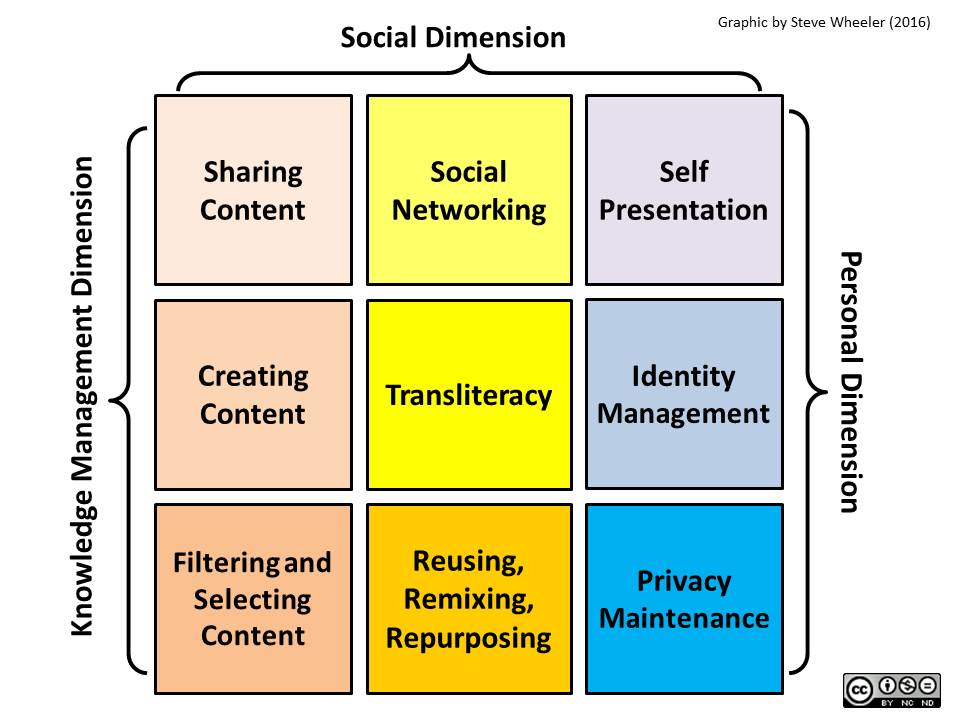
I presented this latest version of my digital literacies model at the 2016 Solstice Conference hosted by Edge Hill University. The slide is from my keynote presentation on digital storytelling. The components in the model are by no means exhaustive - I acknowledge there are many more literacies, some of which are emergent due to new technologies and services. What I have attempted here is to represent what I consider to be the most important, or most regularly observed literacies and try to place them in context. It's also important to note that these do not replace the conventional literacies of reading and writing, speaking and listening, but are supplemental to them.

I have added three dimensions. The social dimension is self explanatory, because the components on the top row are all outward facing. The personal dimension should be equally clear, because the components in this column are focused on personal organisation of space, digital identity and personal branding. The left hand column attends to how knowledge is managed. These components describe how learners organise their content and what they do with it.

I would like to draw your attention to the middle column, which as yet has no categorisation (and this is embryonic, so components may be added, removed, or reorganised in the future). This section seems to rely particularly on creativity and flexibility. My explanation of transliteracy is that it is the ability to be able to present your ideas, connect and manage your presence equally well no matter what tools and technologies you select. If you are transliterate between YouTube and Facebook, you should be able to use both equally well for similar tasks. This aligns neatly to White and Le Cornu's Digital Residents theory.

Perhaps also of some note is the component of reusing, remixing and repurposing. Kevin Kelly recently argued that we are in the age of productive remixing, suggesting that recent innovations are little more than recombinations of earlier media genre and technologies. The same could be argued about knowledge. The synthesis of opposing ideas, coupled with the ability to source knowledge freely leads to an infinite number of new combinations, and growth can become exponential.

As ever, these ideas are open for comment and contructive criticism.

References
Kelly, K. (2016) Remix, Rewind, Reinvent - Where media is going next. Wired Magazine, July-August, 156-163.
White, D. and Le Cornu, A. (2011) Visitors and Residents - A new typology for online engagement. First Monday, 16, 19, Available Online (Accessed 14 June 2016).

Graphic by Steve Wheeler

Creative Commons License
Digital literacies in the age of remix by Steve Wheeler was written in Budapest, Hungary and is licensed under a Creative Commons Attribution-NonCommercial-ShareAlike 3.0 Unported License.


June 11, 2016

Learning, storytelling and technology

My keynote presentation at Solstice 2016 (hosted by Edge Hill University, England) featured numerous narrative devices and storytelling tools. In particular, I built upon my recent blog series on narrative pedagogies, including a discussion around the use of literary devices in the classroom.

These included the use of Chekhov's Gun, (which also featured a dangerous illusion at the end of the presentation as a demonstration of the principle), interrupted routine and red herrings.

There were discussions around blogging, animations and social media tools and their use in education. You can see the slides from the presentation here, and you can also download freely via my Slideshare account.


Creative Commons License
Learning, storytelling and technology by Steve Wheeler was written in Ormskirk, England and is licensed under a Creative Commons Attribution-NonCommercial-ShareAlike 3.0 Unported License.


June 07, 2016

Scaffolds and spirals

If you're a psychologist, an educational researcher, or a teacher, you have almost certainly quoted him at some point in your career. If not, he has definitely influenced your practice in some way. He was more than a giant, he was a colossus of the world of education and psychology. His name was Jerome Seymour Bruner, and he died yesterday at the age of 100 after an illustrious and highly influential career.

Bruner was one of the founding fathers of the theory of social constructivism, an approach that pervades many of the daily activities in schools across the world.

Bruner will perhaps be best remembered for two important contributions to our understanding of learning. His first contribution was an extension of Vygotsky's Zone of Proximal Development theory. Along with his colleagues, Bruner proposed the idea of instructional scaffolding, where experts provide a support framework for novice learners, which can gradually be faded as the learner becomes more competent and knowledgeable. This simple idea was the basis of many programmes of study, across all sectors of education. It engages the learner is increasingly more complex forms of learning, whilst incorporating collaboration, problem solving and task modelling (Wood et al, 1976).

Bruner's second significant contribution to education was the spiral curriculum. This involved content being structured so that anything can be taught at simplistic levels to begin with, with a gradual progression to more complex versions, which continually build upon, and revisit, earlier versions. In this approach to education, the teacher avoids the role of direct instructor and instead, adopts the role of facilitator of learning.

Bruner made many other important contributions too numerous to mention in a short blog, but it's safe to say that he has greatly influenced the way we conduct education today. We have a lot to thank him for, and he leaves a wonderful legacy for educators everywhere.

Reference
Wood, D., Bruner, J. S. and Ross, G. (1976) The role of tutoring in problem solving. Journal of Child Psychiatry and Psychology, 17 (2), 89-100.

Photo by Tony Hisgett on Wikimedia Commons

Creative Commons License
Scaffolds and spirals by Steve Wheeler was written in Plymouth, England and is licensed under a Creative Commons Attribution-NonCommercial-ShareAlike 3.0 Unported License.


June 04, 2016

Not so impossible

You will see a lot about Muhammad Ali in the coming days. The passing this week of arguably one of the greatest sporting legends of the last century will spawn a host of tributes, accolades, news reports, reflections, documentaries and obituaries. But for me, it wasn't so much Ali's sporting prowess that impressed. Champions come and go, and others quickly replace them. Nor was it his larger than life, motor-mouth personality. There are plenty of others who would be prepared to out-talk him.

No, it was the character of the man, and in particular, his keen insight into the human condition that impressed me the most. Muhammad Ali's greatest legacy will be his never-say-die attitude toward adversity. He was arrested and stripped of his boxing title because of his refusal to serve in the US army during the Vietnam War. He was against the war,  but he never stopped fighting. He earned back his reputation and his boxing title (several times). He stood up for what he valued and believed in, whatever the cost.

Everyone can learn from this. Sometimes what we value will cost us dearly. It takes energy and effort to achieve our visions, and nothing valuable is achieved easily. We should reflect on his quote below, so we can all see the potential in ourselves to be greater than we though we could ever be:

"Impossible is just a big word thrown around by small men who find it easier to live in the world they've been given than to explore the power they have to change it. Impossible is not a fact. It's an opinion. Impossible is not a declaration. It's a dare. Impossible is potential. Impossible is temporary. Impossible is nothing."

Nothing is impossible if we have the will to succeed and spend time and energy making it happen. We can all do things we thought were impossible, if we change our perspectives. That snide comment from someone you once considered to be a friend. That time you were frustrated or disappointed and thought that everything was against you. Those who didn't believe in you when you knew you spoke the truth. The talking behind your back when others gossiped without knowing the facts. The injustice you experienced when you should have received a reward for the work you did. We have all experienced these set-backs. But it's how you respond to them that reveals your character. Getting up, dusting yourself off and carrying on means you refuse to accept defeat. It means you don't believe in impossible.

Impossible should not be allowed in the classroom. As teachers, we should all do something new that scares us every day. That's how we can stay at the top of our games. We owe that much to our students. How can we expect them to develop a back-bone if we aren't resilient ourselves?

So believe in the possible. Never stop fighting. Go on. It's a dare.

Photo by Ira Rosenberg on Wikimedia Commons

Creative Commons License
Not so impossible by Steve Wheeler was written in Plymouth, England and is licensed under a Creative Commons Attribution-NonCommercial-ShareAlike 3.0 Unported License.


May 24, 2016

3 ways to cope with bullying

I don't know about you, but I was bullied at school. I remember how horrible it felt to be excluded, disliked, in fear of violence every play time. There were mornings I hated going to school, because I knew what might be waiting for me just inside the school gates. Bullying is an ongoing, endemic problem in schools, where children who are vulnerable can be made to feel they are on the outside, lonely, hated by those who are meant to be their classmates.

My own daughter Amy was continually bullied at school, throughout most of her secondary school life. Although it was a very bad time for her, she has emerged a much stronger person. Sadly, that doesn't happen to everyone and bullying continues to be a serious problem in schools across the globe. Here, on her YouTube channel Amy Hacks Life, she courageously talks about her experience and what she has learnt about herself and other people. Amy offers three pieces of advice about how children today can deal with bullying.


Photo by Charamelody on Flickr

Creative Commons License
3 ways to cope with bullying by Steve Wheeler was written in Liberec, Czech Republic and is licensed under a Creative Commons Attribution-NonCommercial-ShareAlike 3.0 Unported License.


May 16, 2016

4 reasons to use Creative Commons

In the social media age, sharing and repurposing are common place. Many professionals depend on the ability to amplify and distribute content freely through their networks. This raises a number of tensions around creativity, intellectual property and copyright. Creative Commons (CC) is a copyright management system that goes a long way to addressing these issues.

Teachers in all education sectors trade in knowledge and content. Creative Commons licences can enable teachers everywhere to access content and share their ideas freely. The CC license at the foot of this post allows you to repurpose any of the content of this page for your own use, and share under the same licence (SA). It also requires that you attribute the content to me (BY), and prohibits you from making any financial gain from it (NC). The same applies to the image on this page, which is also published under an identical licence.

Here are four reasons why teachers should consider adopting CC in their day-to-day professional practice:

1) Education is a human right. Everyone needs to learn, and knowledge should always be freely available. In an age where there is widespread poverty, famine and social upheaval, information, and specifically knowledge, are desperately needed by millions of people across the globe. This is why I'm opposed to closed journals. Putting content behind pay-walls is the antithesis of publishing. The hoarding of this knowledge militates against the sharing of knowledge, and deprives people who desperately need it.

2) Sharing your content freely under a CC licence enables others to learn from you for free, and also enables you to repurpose your content in forms that benefit them and their communities. Subsequent onward sharing by others perpetuates the same licence, so that your content always stays free to others and remains attributed to you. If everyone shared their content under a CC licence, the world would surely be much more knowledgeable.

3) There is immense payback for those who share their content under a CC licence. Your content can be amplified - shared and re-shared - and thus disseminated more widely by networks. Because it is attributable to you, those who use it can discover other similar content you may have made available, and you get the credit. Giving good content away for free may also attract people to follow you and/or subscribe to your social media channels.

4) If you publish under a repurpose/reuse version of the CC licence, others can use portions of your content, or modify your content for additional audiences. Several of my blog posts and slide shows have been translated from English into other languages. When my slideshows were translated into Spanish, my views and follows rose exponentially, when people living in South American countries where Spanish is widely spoken suddenly discovered my content.

Photo by Yamashita Yohei on Wikimedia Commons

Creative Commons License
4 reasons to use Creative Commons by Steve Wheeler was written in Plymouth, England and is licensed under a Creative Commons Attribution-NonCommercial-ShareAlike 3.0 Unported License.


May 13, 2016

Locked inside


George was locked inside his own head.

He couldn't get out. He didn't want to get out. He was quite comfortable, locked inside his own head.

The inside of his head felt safe and secure. Everything inside his head was familiar. Outside his head the world looked scary and unpredictable.

And so George sat there alone with his own thoughts, playing games inside his mind. He never played with the other children, even when they asked him. He was comfortable on his own, free to be himself, inside his own mind. Inside George's head, everything was possible, there was no-one to tell him what to do, and no-one could make him feel sad.

The other children looked at George and were curious. They tried to talk to him, but George said nothing. He wouldn't even look at them. They tried to get him to play with them, but George just sat there, staring ahead. In the end, the other children got bored with George. Then they called him names. Then they ran away laughing. They left George alone, locked inside his own head.

George was always alone with his own thoughts.

One day, George began to wonder what it might be like to escape from his own head. He imagined what it would be like to unlock the door in his mind and go outside. But he couldn't. It was scary outside his head, and he began to get anxious just thinking about leaving his safe place.

So he stayed locked up inside. All around him, the children played and laughed and danced, and ran. And George just sat there, staring ahead, and locked inside his own head.

Until, one day, Maisie came along.

She looked at him and wondered what George was thinking. But George just sat there, staring ahead.

So Maisie gently touched his hand. George looked down, and then he looked at her. She had a nice face, he thought. George smiled, and suddenly the lock in the door inside his head began to turn. It opened and the light streamed in, and George didn't feel unsafe any more. In fact he was happy. His smile began to widen.

He jumped up, and soon he and Maisie were running around, laughing and playing together. As they ran between the trees and through the long grass together, he thought 'this is fun!'

Maisie agreed, and her tail wagged with joy.


If you enjoyed this, there are more of my short stories on this site.

Photo by Nino Barbieri on Wikimedia Commons

Creative Commons License
Locked inside by Steve Wheeler was written in Plymouth, England and is licensed under a Creative Commons Attribution-NonCommercial-ShareAlike 3.0 Unported License.


May 11, 2016

Question Time!


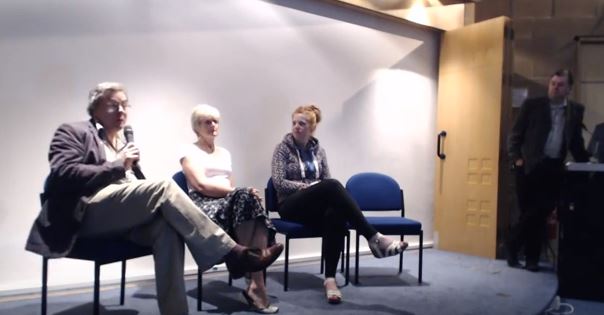
Plymouth Institute of Education staff conducted their own version of Question Time last night for students on the Visions and Values module. Over 100 third year education students attended to hear several colleagues debate the future of the primary curriculum.

Education lecturers Kelly Davis, Phil Selbie, Miles Opie, James Bettany and Kath Vineer all featured, taking the stage to field questions about education, testing, curriculum, philosophy and politics.

The entire 2 hours debate was live streamed on the web, and the result can be seen below on the Visions and Values YouTube channel. Watch out for Kath's wonderfully comedic role-playing of the current Education Secretary as she responds to questions from chair Steve Wheeler and rebuttals from the other panelists.


Photo from the video by Benji Rogers

Creative Commons License
Question Time by Steve Wheeler was written in Plymouth, England and is licensed under a Creative Commons Attribution-NonCommercial-ShareAlike 3.0 Unported License.


May 09, 2016

Tested to breaking point?

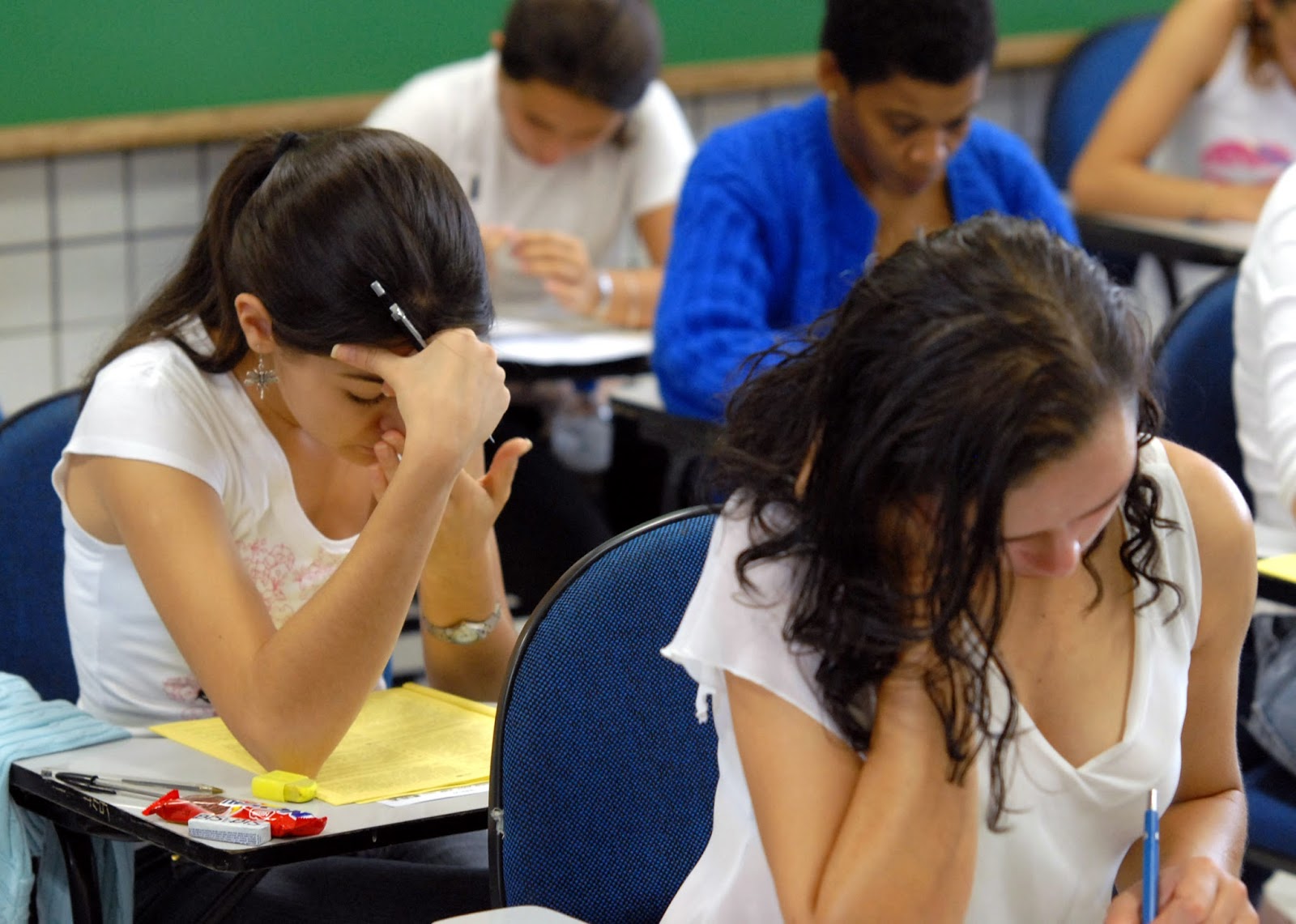
Anyone who regularly read this blog will know my views on testing in schools. I would get rid of it. I'm not opposed to assessment - it's a vital part of pedagogy, because we need to know how our students are doing, but more importantly, students need to know their own progress, and what to do to improve. I believe in assessment for learning - providing students with constructive feedback to extend their learning. But testing is a problem that will not go away. In my previous post I proposed seven ways teachers can assess learning without using tests.

This morning, when I opened up the Education section on the BBC News website, I saw this research reported: Its headline - Primary pupils feel test pressure - simply underlines the problem. We are laying too much pressure on the shoulders of our school children. If over half the children in this sample reported that they are nervous and under pressure to do well in tests, then something is very wrong indeed. School should be a place where children learn, not somewhere they feel pressurised to perform. Ultimately, standardised testing provides a snapshot of where the child is, there and then. If a child is distressed or anxious while they are sitting a test, then will this not be reflected in their grades? (I'm not even going to start on the pressures testing places on teachers).

It's clear to me that testing at this stage in a child's learning journey is not for their benefit. It generates grades which are then added to a database to indicate how well the school is doing, and ultimately feeds into statistics to work out school league tables. What on earth are we doing to our children? Must we put them under such pressure just for the sake of a few statistics? This is not a game - we should never forget that school is an important stage in the learning journey of individual children. What they experience in school will ultimately shape their perceptions of who they believe they are, what they think they are capable of achieving, and the worth they place on their own efforts. Turn them off through bad experiences in testing, and you may lose them for life.

Regular testing of children can be compared to constantly uprooting trees to see how well they are growing. I have never heard of a tree that grew better because it had been regularly uprooted.

Photo by Jim Champion on Wikimedia Commons

Creative Commons License
Tested to breaking point? by Steve Wheeler was written in Plymouth, England and is licensed under a Creative Commons Attribution-NonCommercial-ShareAlike 3.0 Unported License.


May 07, 2016

7 ways to assess without testing

There has been much consternation in recent weeks about the amount of standardised testing the British government is determined to impose upon English school children. Children don't learn any more or any better because of standardised testing, unless there is feedback on how they can improve. But SATs seem to be the weapon of choice for many governments across the globe. It seems that little else matters but the metrics by which our political masters judge our schools. At a recent head teachers conference, one of the most astute comments was 'you can assess without testing.' There are many ways to assess, and here are seven:

1) Teacher assessment. Questioning is an old, tried and tested method where teachers check children's understanding. The questioning must be appropriate, and timely however. A well timed question can reveal how developed children's understanding is, and what needs to be done to help them to reach a particular standard. Another method is teacher assessment is through observation. This has been used for centuries, and is great for ascertaining how well a child has mastered a particular skill, whether they are disengaged or are on task, and how well they are integrating into the social context of learning.

2) Show and Tell. When children get the chance to present something to the rest of their class, they often grab it with both hands. If they are passionate about a topic, they will show how much they have learnt by what they present and how they present it. Show and tell also encourages children to think about their learning, and makes them more aware of how they have learnt it. Most importantly, show and tell helps children to develop their articulation and explanation skills (speaking and listening).

3) Personal Development Plans. Teachers can work with individual students to agree on what they wish to achieve. This is often connected to their passions and keen interests, and can be instrumental in shaping their future careers. This is a very personalised form of self-assessment, which can be facilitated by the teacher as an informal method of assessment. It indicates how well students are progressing in a range of subjects, but ultimately is about their readiness to take up responsible positions in society.

4) e-Portfolios. This is clearly a digital age assessment tool, allowing students to build their own personal profiles, develop a CV, showcase their achievements and generally develop their presentation skills using a set of digital tools. This goes hand in hand with number 3, enabling students to apply their learning with a view on their future employment. Most e-portfolios have a setting that allows students to share their learning and qualifications with others such as potential employers, when required.

5) Games. There is an increasing number of games that can showcase children's learning, especially in some of the core subjects such as numeracy, science and literacy. Although games are generally fun and can be competitive, the key aspect of playing the game is that children can develop reasoning and problem solving skills which are demonstrated in the levels they reach and the points they score.

6) Authentic challenges and real world tasks. My own students showcase their learning through making videos or writing blogs. The feedback is informal, and the learning is variable, but such activities can clearly lock into the demands of future work. Some of my students are given the chance to speak publicly, either at Teachmeets run by their own Education Society, or at other events nationally, and even internationally such as conferences.

7) Project work. This can take many different forms, depending on what most interests the student. Some projects can run for a term, or even an entire academic year. Students develop a number of organisational skills such as resource and time management, and if the project is collaborative, can also lead to building negotiation, decision making and leadership skills.

There are many other ways to assess without testing. Your comments are very welcome!

Related posts:
Tested to breaking point?
The AfL truth about assessment

Photo by Agência Brasil on Wikimedia Commons

Creative Commons License
7 ways to assess without testing by Steve Wheeler was written in Plymouth, England and is licensed under a Creative Commons Attribution-NonCommercial-ShareAlike 3.0 Unported License.


May 06, 2016

It's still a box

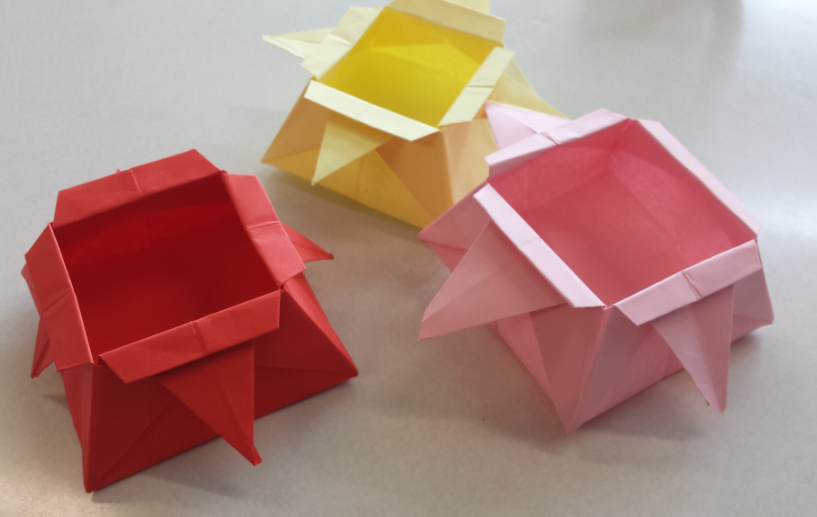
I participated in a student-led seminar today, in which three of my third year education students - Nicki, Sian and Joe - encouraged us all to do some serious thinking about the political influences on schools. We were split into four tables, and each given an origami task to complete. Two of the tables were allowed to collaborate, sharing the instructions and working in their teams to complete the task together. On the other two tables, we were instructed by one of the students, who had sole possession of the instructions. The result is what you see in this image. It was no surprise that the first two tables, collaborating in teams, completed their task first. The boxes, all created from the same pattern (set of instructions) were similar, but there were some qualitative differences. Was there a creative difference? This led to a brief discussion on which method was the most effective - collaboration and exploration, or direct instruction? We concluded that there were merits and disadvantages for each.

Our discussion about the different ways knowledge is presented in classrooms quickly turned toward political influences. We discussed the ways governments ensure that schools comply with their requirements and the tremendous influence political parties can exert over education systems. There was some conversation over the British government's plans to make all grant maintained schools in England into academies by 2020. Academies would no longer be required to adhere strictly to the National Curriculum, and they would be self governing. Some considered this to be a good idea, while others were not convinced that academies were the best way forward. We discussed whether academy schools have a false perception of their freedom and autonomy.

The Marxist theorist Antonio Gramsci had some interesting ideas about freedom and autonomy. He developed the theory of cultural hegemony, which describes the process whereby the ruling class imposes its values and beliefs upon the masses and these then become a cultural norm which is not questioned. Hegemony is an implied means of power. The academies will therefore believe they have complete autonomy to teach what they want, how they want to, but ultimately the government will continue to maintain control through funding, and through inspections. The students left the room with a deeper understanding of the political implications of school systems. One remark was that 'there are many ways to create a box, and many methods that can be used to teach it, but ultimately, everyone still makes a box.'

NB: As this story is being written, news has broken that the Government has reversed its decision on its plans for academisation of all schools in England.

If you wish to follow the Visions and Values discussion threads, the Twitter hashtag is #EEES613.

Photo by Steve Wheeler

Creative Commons License
It's still a box by Steve Wheeler was written in Plymouth, England and is licensed under a Creative Commons Attribution-NonCommercial-ShareAlike 3.0 Unported License.


May 04, 2016

#LearningIs social

Humans are inherently social. We want to be accepted by others. Most of our learning is achieved within social contexts. I can't recall many examples where I have learnt something significant without the presence of others. From language acquisition, to basic numeracy and literacy skills, to more sophisticated activities such as public speaking, dining out with old friends or driving in traffic - all have been scaffolded and coached through the influence of others. Conversations are some of the richest learning experiences, even in our senior years. Discussions prompt us to consider alternative perspectives which widen our understanding.

Even when we are on our own, much of our learning through resources such as books and videos is mediated socially - there is another mind behind the resource. Vygotsky's ZPD theory is often cited at this point. You know, the fact that each of us can only learn so much on our own, but with a More Knowledgeable Other person by our side, we can learn that much more.... Well, our network of friends and colleagues is that MKO - and they aren't necessarily by the side of us any more. In the digital age, it is commonplace to connect into a Community of Practice that reflects or represents our interests. In Lave's terms, the CoP is essential for developing our sense of purpose within our chosen community. It's not simply about learning all of the relevant knowledge and acquiring all of the essential skills - it's also important that we assimilate the culture of the community, the hidden curriculum, the social mores and acceptable practices. This is a form of conformity, and those who are maverick in their mentality may baulk at this idea. Yet it is essential if we wish to belong.

There are many social theories that explain our membership of 'tribes' or communities. From Maslow to Latane to Festinger, and even taking into consideration the 'risky' social experiments of the sixties, such as Zimbardo's Stanford Prison experiment, or Milgram's shocking compliance studies, psychology is replete with explanations about how we operate in social contexts and engage within our communities. Bandura's experiments on learning through the observation of others lend more weight to the conclusion that we all want to belong and be accepted, and learning gives us the social capital to do so. Teachers therefore need to pay attention to the way classrooms are managed. Is there space for collaboration and communication between students? Do we build time in for discussion and conversation? Are students able to connect with others outside the classroom to extend their discussion and learn more widely? These are questions for all educators, regardless of the age groups they are teaching.

Photo by William Murphy on Flickr

Creative Commons License
#LearningIs social by Steve Wheeler was written in Plymouth, England and is licensed under a Creative Commons Attribution-NonCommercial-ShareAlike 3.0 Unported License.


May 01, 2016

Bowie, Prince and teacher legacy

So far, 2016 has been a very bad year for celebrities. It has been called 'the year the music died'. With only a third of the year gone, the world of entertainment has already said final farewells to several iconic musicians, including my own personal favourites David Bowie, Prince Rogers Nelson and Eagles front man Glen Frey. Many others, giants in their own genres of entertainment, are also gone. The genius of Beatles producer Sir George Martin is no more, and we also lost the flamboyant and hilarious producer David Gest. Personally I shall miss the gentle, wry humour of my comedy heroes Ronnie Corbett, Victoria Wood and Sir Terry Wogan and the laconic, brooding thespian presence of Alan Rickman. The list could go on - and sadly it probably will - as 2016 plays out.

There is always a silver lining though. Each of these stars has left behind a legacy of their work, in the form of sound recordings, movies, interviews and videos of their performances. Although they are no longer among the living, we can still appreciate their extraordinary talents vicariously, through their legacies.

This got me wondering: What about teachers? What are our legacies? What do we leave behind that is memorable? Many teachers don't leave movies or videos or sound recordings behind when they shuffle off this mortal coil do they? Well, in the social media age, some might. But for most teachers, probably the best and most fitting legacy they can leave behind is in the minds of their students. We should all ask ourselves these questions: What have our students learnt because of our efforts? What positive impact have we on the lives of this generation? What differences have we made that would have been lost without us? And how will we be remembered by those we have educated?

The child is your legacy. What better thing can you do in life than put a really good person in the world who is going to make it a better place? - Alexis Stewart.

Photos by Michael Drummond on Pixabay and Rob Schofield on Flickr

Creative Commons License
Bowie, Prince and teacher legacy by Steve Wheeler was written in Plymouth, England and is licensed under a Creative Commons Attribution-NonCommercial-ShareAlike 3.0 Unported License.


April 30, 2016

Nine years old

Several summers ago, I found myself driving past my old primary school. I pulled off the road, and parked my car on a grassy verge. I stepped out and gazed around.

The fields were golden and the sun was shining. Only a few white, wispy clouds drifted in the clear blue sky overhead, and a faint breeze ruffled my hair. I remembered many days like these during my childhood. In fact, I couldn't recall any dark or wet days from my time at that school. Every day was a sunny day when I was small.

I gazed over at my old primary school. I strolled across, taking in the rusty gates and the old stone walls of the school. It was off the main road, down a country lane, surrounded by fields. The school stood in the lee of the grassy hillside where the big chalk horse stood like a sentinel, watching over it.

The gates were closed but unlocked, the chain hanging redundant. They creaked open as I pushed, and I walked across the cracked concrete school playground. Not much seemed to have changed in the intervening years, except that the school was considerably diminished in size. I had remembered it as being a lot larger than it was right now, but I suppose I had grown a lot since I was nine years old.

A memory came to me of a boy, small for his age, standing in the corner of the playground, his back up against the wooden wall of one of the temporary classrooms. He was surrounded by several bigger lads, who penned him in, asking him if he was a mod or a rocker. The little boy felt scared. He didn't know what to answer, because he didn't know what mods and rockers were. Whichever way he answered, he might get hit. In the end he said he wasn't either. He said he was just a small boy with freckles on his face. The bigger lads got bored, left him alone, and walked away.

I saw the same small, thin boy sitting at his desk as I peered in through the window of my old classroom. He seemed to be struggling with some maths problems. Another, more capable child was assigned to help him. The nine year old boy still couldn't make sense of the maths, felt frustrated, and eventually gave up, thinking that some things were just too difficult for him to understand.

I moved along the side of the building and gazed in through what used to be the head teacher's office. I remember the smell of tobacco that emanated from that room. I saw the small boy, sat in the head teacher's office, at a wooden desk, during the lunch time break. He was being punished by the head teacher because he had not written his number 8 properly. Instead of writing it in a continuous flow, he had drawn two joining circles. Now he had to learnt how to write it properly, again and again and again, while outside, the screams and shouts of the other children seeped in through the window. He always wanted to be somewhere else. Anywhere but in this musty, tobacco scented room.

Once more I made my way along the building and peered through the windows into the assembly hall. The climbing frames were still on the wall, and the parquet floor was as I remembered it - just a lot more worn. Again I saw the same little boy, this time proudly clutching a prize for the best painting in his year group. He went on to win other prizes in school too. All were for his artistic ability. He felt very proud that day.

I turned to go. Those memories were from many years before. A lot of history had flowed since I had last been at the school. I wouldn't be coming back again. As I got back into my car and began to pull away, I glanced back one more time. There, standing by the gates was the nine-year-old boy. He was smiling and waving at me.

Photo by Simpleinsomnia on Flickr

This story first appeared on Signed, Sealed and Delivered.

Creative Commons License
Nine years old by Steve Wheeler was written in Plymouth, England and is licensed under a Creative Commons Attribution-NonCommercial-ShareAlike 3.0 Unported License.

April 29, 2016

Roboteach!

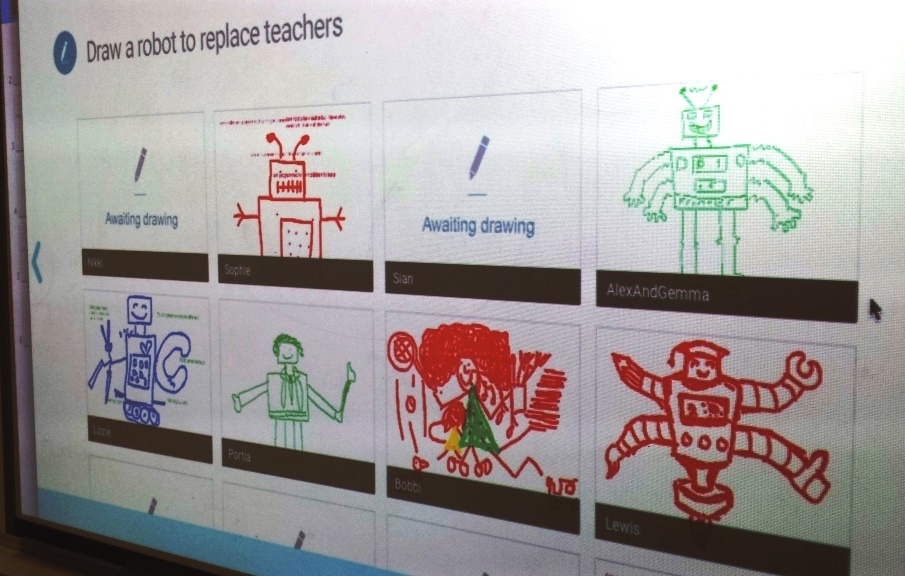
If you had to design a robot to replace a teacher what would it look like and what would it be able to do? This was the task students were asked to perform during a student led seminar earlier today.

Ostensibly, the task was for our student primary educators to draw a robot and label the parts, but at a deeper level, the students were actually discovering how democracy and decision making in government works. This was how it worked: Three groups of students were each asked to design their robots and post them using the web sharing tool Nearpod. The first (red) group had to work separately without discussion or collaboration. The second group (green) were asked to discuss their ideas in small groups before designing their robot. The third (blue) group were able to discuss freely how their robot should be designed and make collective decisions.

The results were varied and a lot of discussion ensued about which method was the best for such a complex task. But the activity also revealed other issues and challenges, namely, what do teachers actually do? How much more are teachers more than information transmitters, and what do they do that robots could (never) do?

Some students designed their robots with multiple utilities, such as writing arms, pointing and indicating tools, and creative forms of technology. Everyone designed robots in the shape of androids. Some had wheels, and lots of arms. Almost all designed robots that were connected to knowledge, usually through antennae or radio transceivers. One student even had the empathetic sense to design a robot with a furry, cuddling arm to comfort students when they were distressed! The most popular design though was a plan to replace the teacher .... with another teacher.

Says it all, really - doesn't it?

'Any teacher who can be replaced by a computer ... should be.' - Arthur C. Clark

Photo by Steve Wheeler

Creative Commons License
Roboteach! by Steve Wheeler was written in Plymouth, England and is licensed under a Creative Commons Attribution-NonCommercial-ShareAlike 3.0 Unported License.


April 28, 2016

#LearningIs personal

We all learn differently. Each of us has preferences. Everyone of us has individual needs and personal requirements. We are unique individuals. Unfortunately, most of us are products of education systems that are based on the industrial model of education which is far removed from personalised learning. Standardised content and testing, synchronisation of behaviour, compartmentalisation of content and batch processing by age are features of this model of schooling. It means that everyone has to try to fit in, even if the methods and environments don't meet their needs.

Friedrich Nietzsche once said: 'In large states public education will be mediocre in the same way that cooking in large kitchens is usually bad.' Standardised education has been criticised with the observation that 'one size does not fit all', but the counter argument is that if we didn't standardise what happens in our schools, there would be no state funded education. It would be too expensive to manage a personalised education system that suited everyone's needs and preferences.

So is there a better way, and one that is affordable?

The personalised learning movement continues to grow in influence. An body of literature, books and videos has emerged in recent years explaining the benefits of the personalised curriculum, espousing individualised assessment and championing student centred learning. There is also a regular international conference dedicated to personalised learning environments. But how much of this work has actually been put into practice on a grand scale? I believe there is a place for personalised learning in large state funded education systems, but it is difficult to break through the wall of standardisation. Some schools have managed, largely due to visionary leadership, rather than as the result of any governmental intervention. Personalised learning is an agenda arising from the grass roots, because its ideological basis is far removed from most governmental ideals.

Personalised learning places the student firmly at the centre of the learning process. Teachers become guides and co-learners, supporting learning and largely standing back so that it can be achieved. Students are encouraged to be more proactive in their learning, and are allowed to choose/bring their own devices into the classroom. These become personal windows on the world, enabling them to drill down and investigate for themselves, the finer details of content they need to learn. Personal learning environments reach beyond the technologies institutions provide - especially virtual learning environments/managed learning environments. Even assessment can be personalised. In schools, assessment of pupil progress is a form of ipsative assessment, where students are measured against their own previous performances. Personalised learning is possible, but not always adopted due to the resistance from many schools who find it easier and less time costly to follow pathways they have already created.

Photo by Cyrillic on Wikimedia Commons

Creative Commons License
#LearningIs personal by Steve Wheeler was written in Plymouth, England and is licensed under a Creative Commons Attribution-NonCommercial-ShareAlike 3.0 Unported License.

April 27, 2016

#LearningIs making

One of my Plymouth Institute of Education colleagues, Dr Nick Pratt, gave a talk to my third year students yesterday. Many sound bites from his talk can be seen on the Twitter #EEES613 hashtag. Nick's talk stressed the political and pragmatic aspects of the curriculum, where he gave several examples of how what we teach is tempered and also constrained by how we are required to teach it. He told the story of his own daughter who was being taught how to make bread in school.

The lessons went on for three weeks, covering all sorts of theory and content delivery, before finally, in the fourth week, the children got to make their bread. The result was not too good, and by now Nick's daughter had become thoroughly bored, and hated the idea of making bread. Co-incidentally, during the same period, Nick was given a birthday present. The gift was to attend a two hour bread making evening class. He really enjoyed the lesson, and came home with four perfectly good loaves of bread he had made himself. He has been making his own bread ever since.

Nick showed how his daughter was not actually being taught how to make bread - she was being instructed in the use of technology and domestic science, and was being taught to the test. Because these are demanded by the curriculum, the bread making was incidental and didn't take priority over the curriculum subject. The content took precedence over the learning process, and the result was a disaffected child. The lessons were focused on teacher Nick's daughter to be a successful school student not a successful baker. This techno-rational approach, he said, is a systematic methodology that has dominated education for a long period. It is where everything is reduced to census points and where knowledge is contained within silos for 'transmission'. The techno-rationalist approach, so valued by Conservative governments is a stark contrast to the humanist approach espoused by John Dewey, he pointed out, where children are firmly in the centre of the process of learning.

Learning where children create meaningful products, Nick said, is a more powerful way of learning, because they need to negotiate the problems and challenges as they develop their skills to make. This echoes the work of Seymour Papert who argued that the best kinds of learning occur when children take charge. Learning, Papert argued, is deeper and more meaningful when children can make things related directly to their learning. Clearly, though, making on its own is not enough. It has to be relevant, authentically connected to the content, and it needs to be timely. Nick's entire lecture is available to view on YouTube below:


Photo by Hans Hillewaert on Wikimedia Commons

Creative Commons License
#LearningIs making by Steve Wheeler was written in Plymouth, England and is licensed under a Creative Commons Attribution-NonCommercial-ShareAlike 3.0 Unported License.


April 26, 2016

Student voices unheard?

In yesterday's post I mentioned the Youth Media Team who featured at the ICT in Education Conference in Ireland. I also stressed how important it is to give students a voice in their own education. Students should be at the centre of the learning process - where else could they legitimately be? However, if they don't have a voice in their own learning, they are peripheral to the process, and education fails them. How do we give students a voice? In UK higher education, the National Student Survey and other similar large scale attempts to gather data about student views is useful in offering a snapshot of what learners think about the provision of education. But it doesn't represent all of the students, because quite a few don't participate, and it fails to indicate all of the issues and challenges students face. PISA is similar in its scope in indicating excellence in education provision but is only repeated every 3 years, focuses solely on 15 year olds and again, there are many countries who do not participate.  All of these grand schemes for gathering big data are aimed at essentially one outcome - generating statistics to create league tables. The result is that universities, and ultimately countries, strive to meet the criteria of these surveys, and ignore the issues that are not covered by the surveys.

So much for league tables - but what about our university students? Do their voices go largely unheard? At an individual level, students can approach their tutors, programme leaders and mentors to discuss the issues that concern them. But how often are these encounters unrecorded, or problems not addressed? How many students leave higher education prematurely or are marginalised and disaffected because their voices are unheard or ignored? In many instances I have listened to student complaints, and have heartily agreed that their issues need to be addressed, but have been in no position to do anything about it, because university regulations prohibit any intervention or change to be made.

If we ignore student voices, we will miss some valuable insights into the way they learn. Learning is changing (not on a biological or fundamental level but rather in the manner that learning can now be achieved), and there are more ways to gain access to knowledge than there have ever been. Students bring their personal devices into formal learning spaces, but institutional infrastructure sometimes fails to support the use these new technologies. How many lecture halls have adequate wifi connectivity, or charging stations/power sockets near to seating areas?

Student voices, if heard and acted upon, could transform the learning spaces we use in formal education. What kind of assessment feedback is the most effective for students? What methods of learning do they prefer? Are these supported? How much of their work is achieved outside of the formal learning space, and what should we provide to support extra-mural learning? Many of these questions are glossed over, or are not sufficiently addressed in higher education. If we fail to listen to student voices we are teaching blind.

Photo courtesy of JISC

Creative Commons License
Student voices unheard? by Steve Wheeler was written in Plymouth, England and is licensed under a Creative Commons Attribution-NonCommercial-ShareAlike 3.0 Unported License.

April 25, 2016

Who's driving?

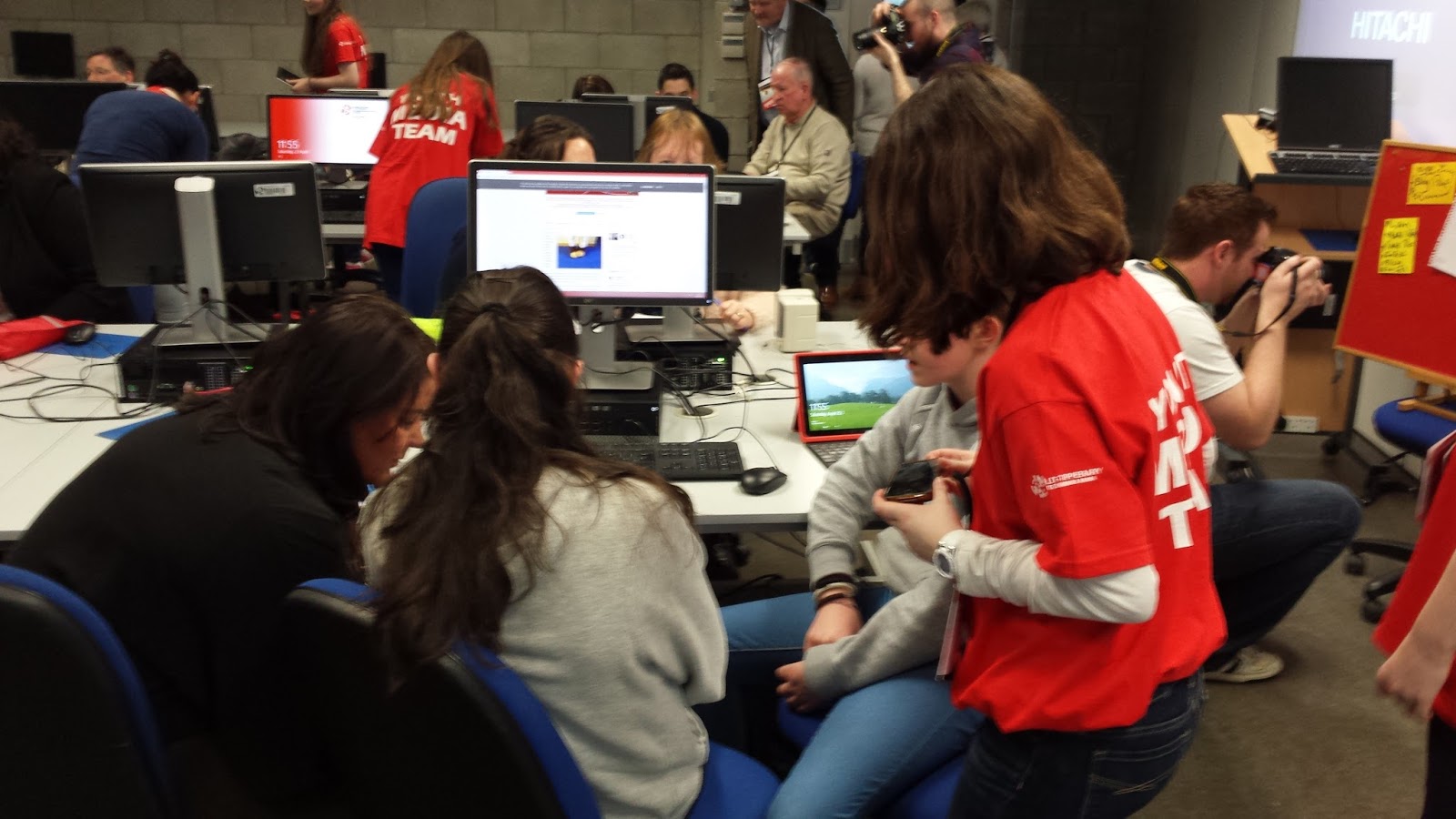
One of the most impressive features of the ICT in Education conference at Limerick Institute of Technology was the high profile involvement of school children. Ireland's Youth Media Team were in great evidence throughout the day, resplendent in their bright red t-shirts, busy documenting the proceedings using a variety of media and technologies. They blogged about everything that happened. They captured images and wrote narratives around them. They video recorded throughout the day. They interviewed delegates and speakers. They even presented their own student led workshops during the conference.

I talk a lot about the emerging theory of paragogy and how it can be applied. Well, here it was, exemplified by students from schools showing teachers how to use technology for digital story telling. The teachers were learning from the students, and will use their learning in future professional practice. I plan to elaborate on this in a future blog post.

Paragogy in action - students teaching teachers
I was interviewed by two of YMT's young digital journalists Amy and Anna, who quizzed me on my views about using technology in schools. Their questions were astute, touching on subjects such as the issues and challenges social media brings to conservative environments such as schools. The result was available instantly, published with no editing via Audioboom for the world to hear. They have no fear about making these artifacts public. They simply want to get their messages out there for others to see.

The students invited me outside onto the lawn during a break in proceedings, to show me how to play the game of hurling. This is a very Gaelic activity, and the hurling stick looks like a brutal object that could do a great deal more damage than a hockey stick. I wouldn't want to play it for real, but learning the technique and playing some hits was fun. I discovered there are quite a few transferable skills from other games that require hand-eye co-ordination and quick movement. My efforts with the hurling stick were also captured on video and tweeted out for everyone to see. I hope I didn't look too much of a fool!

Students should be more involved in our education events. When I ran the Pelecon event at Plymouth University, we had a special feature - several sessions were always devoted to the student voice. Students from primary and secondary schools came to the event to showcase their learning, and some came in via video link. They never failed to impress. We all learnt a lot from them. Teachers have to ask the question - who is driving learning? My view is that teachers and students can drive learning together. We can all learn a lot from each other. Thanks to the Youth Media Team for showing us some of the ways we might achieve that.

Photos by Steve Wheeler

Creative Commons License
Who's driving? by Steve Wheeler was written in Thurles, Ireland and is licensed under a Creative Commons Attribution-NonCommercial-ShareAlike 3.0 Unported License.


<< Back Next >>