Log on:
Powered by Elgg

Ania Rolinska :: Feeds

April 21, 2016

Dodgeball pedagogy

Here's a thought provoking article from our subject leader in Physical Education here at the Plymouth Institute of Education. Dr Tim Lynch, who joined us recently from his previous post at Monash University in Australia, writes about a game played by children across the globe - dodgeball (or 'poison ball') and how it can be used with trainee teachers as a way of determining the quality of games in physical education.

Tim shows how what is considered a risky and potentially dangerous game can be adapted to a safer, quality learning experience. This is innovation in pedagogy - using existing and familiar contexts, to revise and modify as great learning experiences. It's good to have Tim as a member of our great team of educators.

Dr Tim Lynch's Professional Website

Plymouth Institute of Education blog

Photo courtesy of Suarts on Flickr

Creative Commons License
Dodgeball pedagogy by Steve Wheeler was written in Plymouth, England and is licensed under a Creative Commons Attribution-NonCommercial-ShareAlike 3.0 Unported License.


April 20, 2016

Streaming learning events

We broadcast our first live learning event yesterday, where our third year students listened to a talk by innovative school leader Dave Strudwick. We are live streaming all of the keynote lectures for the next few weeks for our Visions and Values module - with a focus on educational philosophy, theory and practice.

The video of Dave's presentation is below, with much thanks to the digital wizardry of technical manager Benji Rogers and his team, who made sure the live feed went out on the web as well as recording it for posterity.

The next lecture in the series will be tomorrow, at 1600 BST (GMT +1) when our speakers will be Kelly Davis (One size fits all - or does it?) and Miles Opie (The Finland question - an analysis of the Finnish education system). The YouTube link for tomorrow's learning event is here. The entire schedule of learning events over the next few weeks is at this link.


Dave Strudwick's talk was well received, not least because he challenged us all to examine our motives and inspirations as teachers, and to reflect on what had shaped our identities as educators. He showed examples of how his own school, Plymouth School of Creative Arts, harnesses the power of new technologies, and also creates a child centred culture for learning within its studios and learning spaces. The Red House, situated near to the international ferry port in the dockside area of Plymouth is a must for teachers to visit if they wish to see innovation in action. There is much to ponder in this thoughtful and insightful presentation.

Photo by Steve Wheeler

Creative Commons License
Streaming learning events by Steve Wheeler was written in Plymouth, England and is licensed under a Creative Commons Attribution-NonCommercial-ShareAlike 3.0 Unported License.


April 15, 2016

Visions, values and video streaming

Over the next few weeks at Plymouth University we are running a module for our third year student teachers about the philosophy of education. In fact, it's more than just educational philosophy - it's about how they develop their personal visions and values of teaching and develop their professional identities too. During the sessions we will discuss social and political influences the curriculum, and explore many of the theories, practices and influences that have made school what it is today (for better or for worse). We will feature a series of presentations and dialogues which we are calling 'learning events'. Each learning event will feature two or more guest speakers, drawn from the world of education, some in universities, some from schools, and also members of the business community. Each will present their personal visions and values to an audience of around 180 students at Plymouth University.

We want to share these events with the world. We think they are worth sharing. There are two ways you can join in. The presentations will be live streamed to the web, so that you can also participate from wherever you are in the world. We will also be running a live two-hour Twitter backchannel using the hashtag #EEES613.

The schedule of sessions is here (all times are British Summer Time - GMT+1)

19 April (1630-1800) Dave Strudwick (Headteacher of Plymouth School for the Creative Arts) and Steve Wheeler.
21 April (1600-1800) Miles Opie and Kelly Davis (Lecturers, Plymouth Institute of Education)
22 April (1400-1600) Kath Vineer (Lecturer in Education, Plymouth Institute of Education) and Jason Holland (Headteacher of Montpelier Primary School)
26 April (1600-1800) Dr Nick Pratt (Associate Professor, Plymouth Institute of Education) and Michelle Virgo (Home Schooling Advocate)
28 April (1600-1800) Robert Bennett (Lecturer, Plymouth Institute of Education) and Dan Roberts (Headteacher, Devonport High School for Boys)
3 May (1600-1800) Sadie Medway (Lecturer in Art, Plymouth Institute of Education) and Dr Graham Stirling CBE/Chris Cole (Business sector - Cornerstone Vision)
5 May (1600-1800) Dr Tim Lynch (Lecturer in Physical Education, Plymouth Institute of Education) and Rouen Gargan (Associate Lecturer, Plymouth Institute of Education)
10 May (1600-1800) Question Time with Rachael Hincks-Knight, Kath Vineer, Miles Opie and Phil Selbie (Lecturers in Education, Plymouth Institute of Education)
12 May (1600-1800) Phil Selbie and James Bettany (Lecturers, Plymouth Institute of Education)

This link will take you to the live streams via YouTube.

Please join in during the live learning events and discuss the meaning of education with us!

Photo by Jimmy Rehak on Wikimedia Commons

Creative Commons License
Visions, values and video streaming by Steve Wheeler was written in Plymouth, England and is licensed under a Creative Commons Attribution-NonCommercial-ShareAlike 3.0 Unported License.


April 09, 2016

#LearningIs sharing

We should share more. The picture on this page of two children sharing was shared freely by its author on Wikimedia Commons. I'm using it freely because he gave his permission in a Creative Commons licence on the site. Freely does it. The image will get a lot more exposure than those by other photographers who don't freely licence their work. Yes, I know photographers need to earn a living just like everyone else, but giving one or two images away for free is actually good practice. It draws attention to your work from those who would otherwise not see it.

On my recent travels, several people have asked me where they can download my slide decks. Well, they've been available for some time in one format or another on my Slideshare site.  There are almost 100 slideshows which you can download for free (and also use freely with attribution) there, and there are also some conversations around them which you can read and even participate in. We need to share more of our learning freely. As Brian Lamb once said: It seems perverse in a world of need, where there is so much poverty, that people hoard knowledge (paraphrased).

Below are some of my most viewed slide decks:


April 04, 2016

#LearningIs symbolic

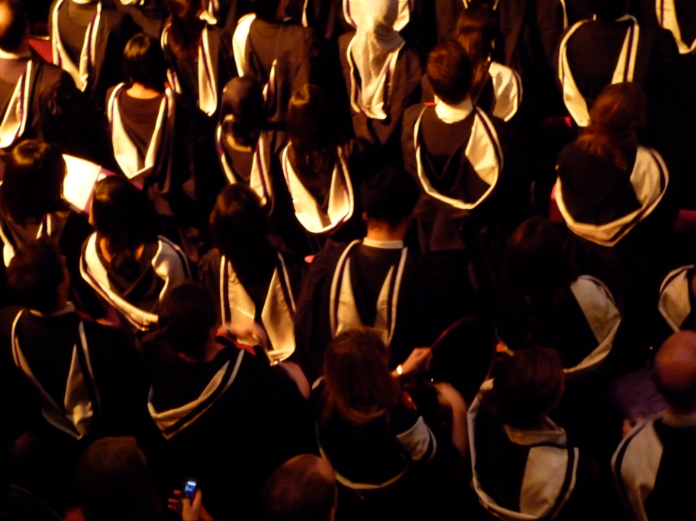
How do you represent your learning? Some people display framed certificates on their walls, or photos of their degree ceremony. Others keep a CV in which they list all their achievements, or a collection of memorabilia of their time at college or university. Many keep libraries of books, journals and other media on their shelves, used for reference to remind them of theories, principles or methods they wish to recall. Some represent their learning through their conversations, both face-to-face and virtually through social media, with their colleagues, scholarly friends and associates. Some teach, and see their own learning represented as a legacy that lives on in the next generation of learners.

I do all of the above, but also keep a collection of lanyards and name badges from conferences I have attended. When I look at them, hanging up on the wall of my office, they help me to remember the people I met, the conversations I had, the things I learnt and the contexts in which I learnt them. People represent their knowledge symbolically in many different ways.

For me though, the most important way to represent my learning, and to continually reinforce it, is to write about it, either here on this blog, as articles and pieces for journals and magazines, and occasionally in the form of books or book chapters. For me, another powerful representation of my personal learning can be found in public speaking. This is not so much because of the speech act itself, but more importantly, through the conversations afterwards with those who are interested in pursuing the ideas I have presented.

Many of us had great fun last summer exchanging images as we challenged each other to blog about learning using pictorial metaphors. The #blimage challenge was very popular and enabled many to represent their learning in new ways. The iterative power of this is infinite. Learning is symbolic, but can also be demonstrated in so many practical ways. How do you represent your learning?

Photo by Juliette Culver on Flickr

Creative Commons License
#LearningIs symbolic by Steve Wheeler was written in Plymouth, England and is licensed under a Creative Commons Attribution-NonCommercial-ShareAlike 3.0 Unported License.


March 31, 2016

#LearningIs connected

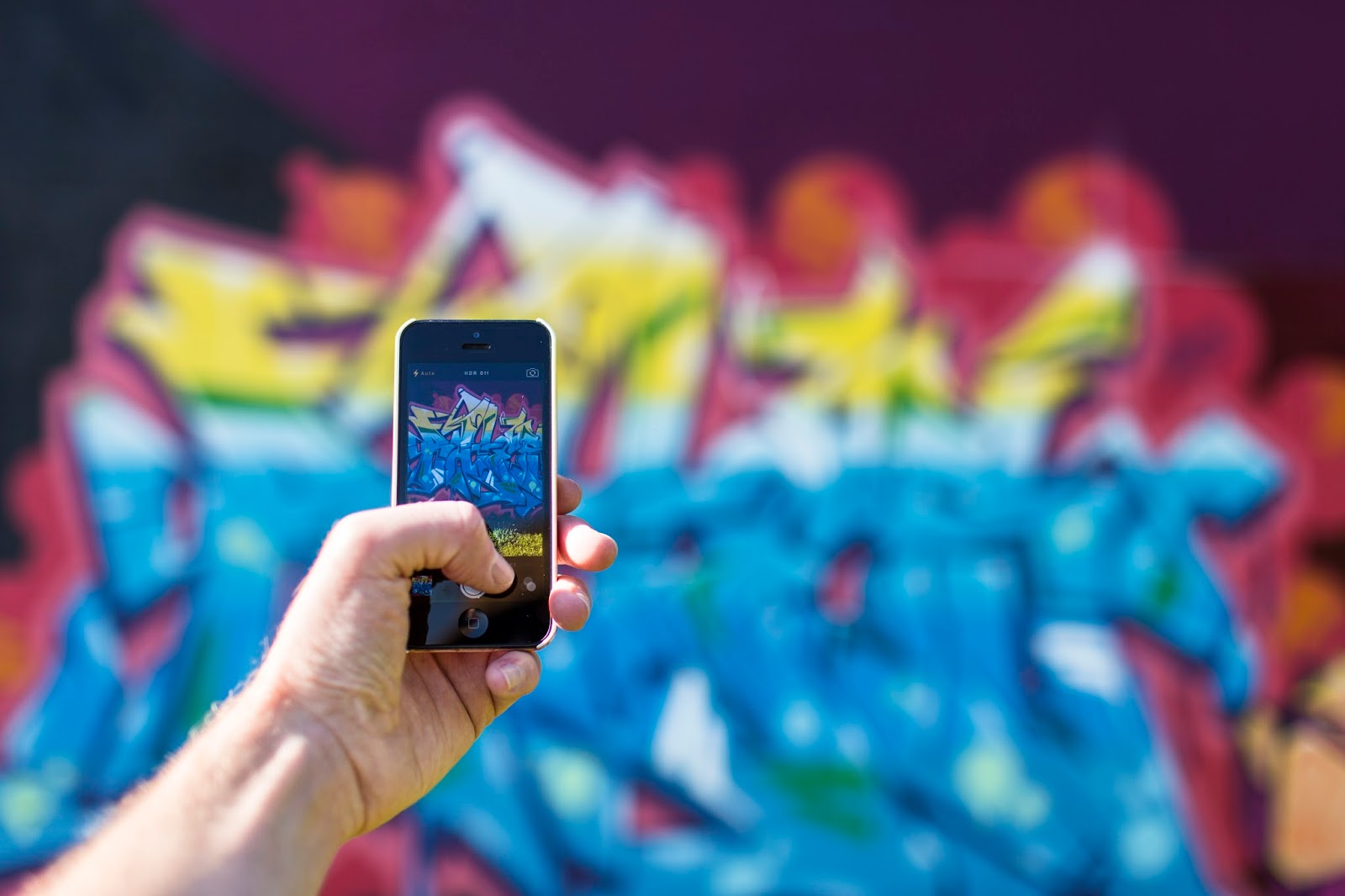
Learning in the digital age means being connected. True, many people in the world are still unconnected, but with mobile phones subscriptions rising exponentially, more people now have access to digital content than ever before. Being connected has many dimensions. Students are connected to digital content through a variety of tools and technologies, increasingly through devices that are personally owned. Students are connected to each other through social media and networks. Students are connected to their teachers through similar means. And students are connected to tools that enabled them to discover new content, to collate and curate it, to repurpose/remix it and to share it within their communities of practice.

Being connected has given rise to an array of new learning opportunities including MOOCs, blended learning and flipped classes. What would learning be like without these connections? Learning would still continue, but probably with less interaction, collaboration and certainly less immediacy than is possible with connections. It is this triumvirate of affordances that make learning in the digital age so different from anything that has gone before.

Photo by Jake Stimpson on Flickr

Creative Commons License
#LearningIs connected by Steve Wheeler was written in Plymouth, England and is licensed under a Creative Commons Attribution-NonCommercial-ShareAlike 3.0 Unported License.


March 28, 2016

Not a TED speaker

Groucho Marx once sent a telegram to a Hollywood Club he had joined. It said: 'Please accept my resignation. I don't want to belong to any club that will accept me as a member.' It was a joke of course, and a self-deprecating one at that. But it also held a subtle caveat about involvement in organisations. What happens if you subscribe to a society or club that subsequently damages your reputation? It led me to wonder about the activities some academics are currently engaged in. So I sent a Facebook status update and a tweet that said: 'I'm going to include not a TEDx speaker in my CV'. Again, it was a throw away remark, but thinking about certain conferences, I wonder perhaps if it's best that many of us aren't so involved.

TEDx is the offspring of TED Talks, and the trouble with TED talks, it is claimed, is that everything is awesome, ideas are 'worth spreading', but very little is actually remembered. They're nice videos to watch, but how much do you actually learn? For many, these events can be little more than vacuous and self-congratulatory, where presentation style takes precedence over substance. TED Talks often end with a standing ovation with the audience whooping and whistling, as the spot-light bathed speaker basks in the glory of their 16 minutes or so of fame. It seems more like a cult of celebration and celebrity than something designed to inform and challenge. What's more, I have never seen any dialogue with the audience - presumably it would be too messy and unpredictable for TED. Because no critical element is present, any idea can be presented without fear of challenge.

TED takes a lot of care over how it selects its speakers, grooming and training them to present in the style approved by TED, and only when they are ready are they let loose to entertain the paying audience. TED makes a lot of money presenting its goods in this wrapper. It's true that many of the speakers are very polished, dynamic and persuasive. I have no idea to what extent TEDx is run along similar lines, or whether it's a great departure from its bigger brother, but it seems to adopt the same format, and the main difference is that it is scaled down and appears in a venue near you.

What does speaking at a TED event do for an individual? Apparently it looks good on a CV, but so does a life-saver certificate or a stint working in a voluntary organisation. What does it actually mean? I've met and worked alongside several TED speakers, and they are genuinely nice people, but I have never met one who has been willing to talk openly about the hoops they had to jump through to become a TED speaker.

I have been approached twice for nomination as a potential TED speaker. Both times I declined. I wouldn't presume. My most memorable speaking engagements to date have been in places such as the Royal Institution, The Royal Society and numerous universities around the globe. I didn't need to do anything other than turn up and speak. I have been lucky to speak at many truly amazing events, and the larger the event, the more pressure there is on keynote speakers to entertain. But entertaining is only one small aspect of public speaking, and hopefully substance still takes precedence. For me, the most important thing is that audiences should be informed and challenged, and that whenever possible, they should be able to have dialogue with the speaker. So I will continue to speak at events when I'm invited, but I won't be speaking at a TED event, and I'm quite happy it will never appear on my CV.

Photo from Wikimedia Commons

Creative Commons License
Not a TED speaker by Steve Wheeler was written in Plymouth, England and is licensed under a Creative Commons Attribution-NonCommercial-ShareAlike 3.0 Unported License.


March 22, 2016

#EDENchat: Which personal technologies?

This week #EDENchat will feature a discussion on how we use personal technologies for learning. There are many personal technologies available, including smart phones, e-books and e-readers, games consoles and laptop computers. All of these tools are used mainly for informal learning and other activities unrelated to education. Where they can be harnessed for formal education, what are the main issues and challenges? How can teachers incorporate the potential of personal technologies into formal learning, whether in the classroom or at a distance? How does mobile computing and ubiquitous connectivity influence education? What is the potential to transform education through these personal, mobile tools? All of these questions will feature in the #EDENchat discussion which takes place tomorrow, Wednesday, at 20.00 GMT.

As usual, the EDEN team will also Storify the chat as a digital archive, and previous chat archives can be found at this site. Please join us to discuss your use of personal technologies in education, either as a teacher or as a student.

Photo by Intel Freepress on Flickr

Creative Commons License
#EDENchat: Which personal technologies? by Steve Wheeler was written in Plymouth, England and is licensed under a Creative Commons Attribution-NonCommercial-ShareAlike 3.0 Unported License.


March 20, 2016

Opening the box

For the second time in a few days I was back in Paris this week, where I experienced a sense of deja vu (surprisingly, the French have no word for this.)*

I had been invited to speak at the American Research Society's International Conference on Education and Information Technology (ICEIT 2016). It was a small but knowledgeable gathering of academics from many countries inside and outside of Europe including the Philippines, Japan, India, China, Morocco, Iran, UAE, Malaysia, Saudi Arabia, Bangladesh, Bolivia and Brazil. One paper that stood out for me was presented by Joe Khalife, a veteran teacher of computer science based at the Lebanese American University.

A teacher for 25 years, Khalife was adamant that technology has created many challenges in higher education, not least that information is now freely available everywhere. It has created a binary, he argued, between experience and product based learning; the former is situated, authentic, whilst the latter is in danger of becoming irrelevant in a fast paced, ever changing world.

Many colleagues, he said, started their careers in a time when the responsibility of the teacher was to pass on information to students, instruct them and test them. Many lecturers, he argued, were 'walking tape recorders', imparting content. Now, in the advent of mobile computing where knowledge is everywhere, he said, the shift from teacher-centred to student-centred learning is inevitable, but it will require a fundamental shift in the role of the teacher, and also in their attitude toward these possibilities. Collaborative learning, Khalife argued, is fundamental to this shift, and can take on any form, from simple to complex, with personal technologies at the heart. He emphasised however that collaboration is not the goal, but only the means through which students can learn through solving problems, completing tasks and making.

Khalife has transformed learning experiences for his own students, preferring to create environments where they become actively engaged as co-creators of knowledge rather than passive recipients. Their personal technologies enable them to learn anywhere and at any time, supporting collaboration between students and those beyond the walls of the university. Students, he said, have to 'get outside the classroom box' to make sense of these new experiences and complete their tasks successfully.

*Don't even think about it.

Photo by Richard Wheeler on Wikimedia Commons

Creative Commons License
#LearningIs creative by Steve Wheeler was written in Paris, France and is licensed under a Creative Commons Attribution-NonCommercial-ShareAlike 3.0 Unported License.


March 16, 2016

#LearningIs creative

Learning can certainly be creative, if the conditions are right. Firstly, creative learning requires active engagement. Teaching can be more effective when questions are posed or challenges are presented, than when content is delivered or knowledge imparted. There is a place for the latter, but if teachers wish their students to go the extra mile, they need to directly involve them in learning. This means learning spaces where just about anything is possible, where students are kept guessing, and where they are offered the chance to discover for themselves.

Creative learning in the classroom is almost always 'small c' creativity. If it were 'big C' creativity, then we would all be geniuses, discovering earth changing formulae and devising life changing inventions. But that is rarely possible. When the little boy or girl in your class comes up with a new way of solving a maths problem, or discovers a new painting technique, it may be something you have seen a hundred times before. But it's creative for them. It's something they have arrived at themselves, without your help. That's 'small c' creativity, and it's the basis for self regulated learning.

Creativity doesn't happen overnight, and it's not a sudden occurrence requiring no effort. On the contrary, creativity requires a lot of effort and commitment. It requires thinking space, time to reflect, time to experiment. It sometimes means failure and it requires persistence. Archimedes spent a lot of time thinking over problems before his Eureka! moment. Thomas Edison attempted hundreds of combinations and versions before he finally succeeded in his quest to design a commercially viable light bulb.

Children also need encouragement from teachers to improve chances for creative learning. Steve Jobs once said: 'Creativity is just connecting things. When you ask creative people how they did something, they feel a little guilty because they didn't really do it, they just saw something.It seemed obvious to them after a while. That's because they were able to connect experiences they'd had and synthesise new things.' A teacher once peered over a little girl's shoulder and asked her: 'What are you drawing, Sophie?' The little girl replied 'I'm drawing a picture of God.' The teacher said 'But no-one knows what God looks like.' Without missing a beat, Sophie said: 'They will when I'm finished!'

'Creativity is allowing yourself to make mistakes. Art is knowing which ones to keep'. - Scott Adams

Photo by AisforAmy91 on Flickr

Creative Commons License
#LearningIs creative by Steve Wheeler was written in Plymouth, England and is licensed under a Creative Commons Attribution-NonCommercial-ShareAlike 3.0 Unported License.


March 12, 2016

#LearningIs mobile

Much was discussed during the UNESCO Mobile Learning Week in Paris. The image presented here was ironic, appearing as it did on the door to the main venue of the conference, but as several pointed out, the device in the image is a reference to a bygone age when mobile phones were primitive. Hopefully we have advanced technologically and culturally in that time, but some of the problems we experienced then are still with us today. Here is my summary of seven of the themes and challenges raised during the conference.

1) A digital divide still exists across society, even for those who own smart phones. Significant problems include a lack of broadband connectivity in various parts of the world. Many more people now own mobile phones, but a large proportion of these are non-smart (i.e. don't have internet capability). However, these are still used effectively by those who desire to access educational opportunities to which they would otherwise have no access.

2) Literacy levels are still very low across many parts of the world, not just in developing nations but also the industrial world. There is a great need for basic literacy education, and several mobile learning projects are beginning to address this.

3) Learners need consistent, reliable access to learning materials, but also connections to peers and teachers if learning by mobile is to be effective. We cannot fully duplicate on-campus experiences, but we can certainly strive to provide an equivalent.

4) One of the most powerful methods of learning (and associated pedagogy) is to incorporate social media into mobile phone use. This addresses number 3, and provides learners with a lifeline when they are in need of motivation, inspiration and support.

5) Pedagogy supporting mobile learning is generally mixed and/or blended for many, with resources available inside classrooms, but also beyond the classroom, downloadable from a variety of platforms and providers. The quality of this varies but it is difficult to attempt to address this problem (but see number 3 above).

6) Mobile learning content for children needs to be engaging and activities should be focused on clear learning outcomes. Games seem to be an important element in children's mobile learning and has for example been effective in teaching refugee children new languages.

7) Interaction with others through mobile devices still appears to be the most effective method of remote learning available. Good content coupled with expert support and peer interaction that is consistent and reliable can result in quality learning outcomes.

Photo by Steve Wheeler

Creative Commons License
#LearningIs mobile by Steve Wheeler is licensed under a Creative Commons Attribution 3.0 Unported LicenseBased on a work at steve-wheeler.blogspot.com.


March 10, 2016

#LearningIs doing

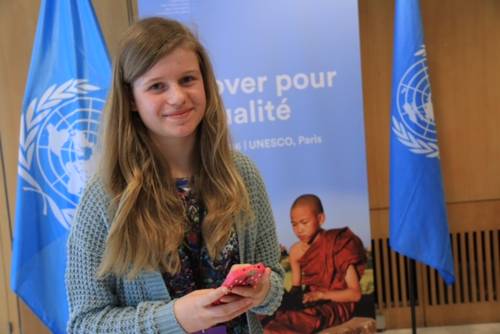
Photo of Manon by Unesco
I was privileged to share the stage with a school student during the UNESCO Mobile Learning Week  symposium. Held each year in Paris, under the shadow of the iconic Eiffel Tower, #MLW2016 attracted delegates from almost every nation in the world, who came together to spend 5 days learning about the latest news and research on mobile learning.

My panel session featured three academic colleagues, and Manon van Hoorebeke, a 13-year old school girl from Belgium. Manon was 11 when she won the 2014 award of European Digital Girl for her work coding with Scratch and Arduino. She learnt her skills at Coderdojo events, and now passes these on to other children. Her dream is to encourage more girls to become involved in technology, and wants more schools to teach children how to use technology in primary schools.

When asked how she best learned in school, she was scathing about traditional teaching, preferring instead to learn by doing and making. She said that she and her school friends liked to be presented with challenges and problems they could solve, rather than being told what the answers were. As a representative of her generation of learners, it was also refreshing to hear her talk frankly about why it is important for children in school to be given access to technologies.

Photo courtesy of United Nations on Flickr
When quizzed on what she thought about schools exams, she declared that they had bad connotations amongst her friends, because to fail them would be to displease their parents. She was concerned that the pressure placed on children by exams in schools meant that they learnt little from testing. This was a shame, she said, because everything that happens in school should make good learning. Testing has the potential to help children to learn, she said, but failure is seen as bad. It should be seen as a positive thing which all could learn from. These remarks became the basis for some extended discussion about assessment by the rest of the panel.

Along with the hundreds of delegates present at UNESCO Headquarters, I was impressed by Manon's courage to sit on the stage under the lights in front of a large international audience, speak in reasonably fluent English, and teach the gathered experts in the room a thing or two about what school should really be like. And all at the age of just 13. My comment following from her remarks was that everyone in the room and all educators should pay attention to Manon and her generation of learners. They are not the future, I said, they are the present, and we must find ways to engage them in learning in ways that are relevant to them - and that includes embedding personal and mobile technologies into the mix. It will also require some changes in pedagogy, so that children become more involved in active learning, where doing and making situate their education.

Manon's blog Better be a Digital Girl is well worth a read. Also read her interview for UNESCO following the panel discussion.

Creative Commons License
#LearningIs doing by Steve Wheeler was written in Paris, France and is licensed under a Creative Commons Attribution-NonCommercial-ShareAlike 3.0 Unported License.


March 07, 2016

#LearningIs everywhere

Photo from Pexels
It seems like a cliché, but it's true. Everywhere you look, everywhere you go, whatever you do, whatever the time of the day, you will encounter learning opportunities. How often have you discovered something new and thought - well... I never knew that! Often learning is incidental or serendipitous. Learning is so naturally a part of being alive, we are not always aware we are doing it.

Certainly we can set out deliberately to learn something new, either on a formal or informal basis. We can enrol on a course, or we can trawl the web. Learning experiences in a formal education course will be different to learning from our informal autodidactic efforts. Although we learn naturally, and learning is a process - a series of events - deliberate learning is caused by curiosity, a desire to discover more.

Schools, colleges and universities were established as attempts to harness these natural propensities and locate them in formal contexts. Concepts such as curriculum, classes, assessment, lessons and 'teaching' are artificial - contrivances that do not occur naturally. They have been devised because institutions require structures, with the intention to optimise teaching and learning. Clearly, optimisation doesn't always follow because sometimes intentions don't align with reality, and not every structure benefits the learner.

Yet for those who are determined to learn something new and significant, technology is playing a key role. Technology provides access for millions to education - something that was previously impossible or extremely problematic. Online programmes of study including MOOCs are still in great demand, and learning through mobile devices is at an all time high. Significantly, although a high percentage of online students do not complete their studies, many students argue that the end product is not as important as the process. In other words, the knowledge and skills learned have more value than the accreditation in many cases.

For many years we dreamed about learning any time, any place. Technology has made this dream a reality for many. We are very privileged to be living in the digital age, where learning opportunities are everywhere, and knowledge is more available than it has ever been.

Photo from getacover.com

Creative Commons License
#LearningIs everywhere by Steve Wheeler was written in Plymouth, England and is licensed under a Creative Commons Attribution-NonCommercial-ShareAlike 3.0 Unported License.


March 05, 2016

#LearningIs lifelong

As I remarked in my previous #LearningIs post, learning never stops. It is lifelong. Often we don't even realise we are learning, but we are constantly being exposed to new information, and if we pay attention, we are likely to internalise that information in some way.

If you had told me during my school years that learning didn't stop when I left school, I would have been horrified. I didn't enjoy school for most of the time. I found it tedious, many of the teachers didn't seem to be interested in helping me to learn, homework was an invasion of my personal time, and I didn't come away with much for all my efforts. Any notion of additional learning after my schools years would have been anathema to me. I had confused learning with schooling. I didn't know it at the time, but school was just the start of a learning journey for me, as it is for many millions of others. I fact, I only really started learning seriously when I began to direct my own studies later in life. This was when I became motivated to study because I was interested in learning more about my chosen topic - psychology. I did this all of my own bat, studying part time while holding down a full time day job and a part time evening post teaching at a local college.

The idea of lifelong learning only dawned on me during my time training to be a teacher. It also hadn't occurred to me that most of my later education came from informal learning - because I was interested, I went the extra mile and studied more widely than my job, or my degree required. It was here that the world opened up for me and I began to see the wider picture of life around me.

It's the same for anyone. The main ingredient is interest - self motivation - inspiration to learn something new. It's what students desperately need if they are to succeed as lifelong learners. It's also an ingredient that is sadly missing from many formal learning programmes, whether in schools, colleges of universities. It has never been easier to become a lifelong learner. The personal, connected technologies we now have at our disposal are an increasingly important component of informal learning. It will take a little longer to integrate such tools into formal learning spaces, and some believe this will never happen on a grand scale.

Regardless of whether we use technology however, we will all continue to learn, and some of us will be fortunate enough to discover how to unlearn and relearn - ultimate skills for the 21st Century. Yes, learning is lifelong, because life needs learning. And when we discover how to self regulate our learning, then are we truly independent.

Photo by Geralt on Pixabay

Creative Commons License
#LearningIs lifelong by Steve Wheeler was written in Plymouth, England and is licensed under a Creative Commons Attribution-NonCommercial-ShareAlike 3.0 Unported License.


#LearningIs lifelong

As I remarked in my previous #LearningIs post, learning never stops. It is lifelong. Much of the time we don't even realise we are learning, but we are constantly being exposed to new information, and if we pay attention, we are likely to internalise that information in some way.

If you had told me during my school years that learning didn't stop when I left school, I would have been horrified. I didn't enjoy school for most of the time. I found it tedious, many of the teachers didn't seem to be interested in helping me to learn, homework was an invasion of my personal time, and I didn't come away with much for all my efforts. Any notion of additional learning after my schools years would have been anathema to me. I had confused learning with schooling.

I didn't know it at the time, but school was just the start of a learning journey for me, as it is for many millions of others. I fact, I only really started learning seriously when I began to direct my own studies later in life. This was when I became motivated to study because I was interested in learning more about my chosen topic - psychology. I did this all off my own bat, studying part time while holding down a full time day job and a part time evening post teaching at a local college.

The idea of lifelong learning only dawned on me during my time training to be a teacher. It also hadn't occurred to me that most of my later education came from informal learning - because I was interested, I went the extra mile and studied more widely than my job, or my degree required. It was here that the world opened up for me and I began to see the wider picture of life around me.

It's the same for anyone. The main ingredient is interest - self motivation - inspiration to learn something new. It's what students desperately need if they are to succeed as lifelong learners. It's also an ingredient that is sadly missing from many formal learning programmes, whether in schools, colleges of universities. It has never been easier to become a lifelong learner. The personal, connected technologies we now have at our disposal are an increasingly important component of informal learning. It will take a little longer to integrate such tools into formal learning spaces, and some believe this will never happen on a grand scale.

Regardless of whether we use technology however, we will all continue to learn, and some of us will also be fortunate enough to discover how to unlearn and relearn - ultimate skills for the 21st Century. Yes, learning is lifelong, because life needs learning. And when we discover how to self regulate our learning, then are we truly independent.

Photo by Geralt on Pixabay

Creative Commons License
#LearningIs lifelong by Steve Wheeler was written in Plymouth, England and is licensed under a Creative Commons Attribution-NonCommercial-ShareAlike 3.0 Unported License.


March 03, 2016

The 'cheating watch scandal': Are we victims of our own devices?

Oh dear. It's a scandal. Apparently there's a watch on the market that allows students to cheat during exams! What a shock! In a recent BBC News item, the so called 'cheating watch' is said to give them an 'unfair advantage', because the wearer can revert it quickly back from its 4GB display of exam answers to a conventional clock face. One head teacher is quoted as being worried that the watch may be a temptation for 'students who are stressed over exams'.

But stop one minute. (Here comes a rant). Why must our students get so stressed around exam time? What are we doing to our children? Isn't this evidence that actually, exams don't do much good for their well-being? What are exams for anyway? At the end of years of study, can the entire history and process of learning be reduced to a few numbers or letters? And who is the 'grade' for? The student, the teacher, or the school? Many would agree that the grade data are for governments to use. Ultimately, they aren't interested in how well the students are learning. All they care about is obtaining statistics that show how good their education system is in comparison to others.

Yesterday I asked a group of students what they look at first when they get their assignments back from marking... was it the grade, or the feedback? Most admitted they were more interested in the grade - the feedback was secondary. Haven't we got this all backwards?

Sure, students will bring devices into the exam room. Just try to stop them. This trend cannot be halted. Soon wearable devices will be less easy to detect, and there will even be biological implants. How are these going to be stopped? Our entire exam system will be proved worthless and irrelevant. Perhaps that will be a good outcome.

But dig down a little beyond the sensationalism of the headline*, and the BBC news item raises a number of questions around the education systems we perpetuate. In fact, the furore over 'cheating watches' says more about our rotten education system than it does about our students, or their teachers. If exams are only about getting grades and they are largely premised on 'remembering facts', then students are going to do their best to tip the balance in their favour, and that includes using personal technologies to improve their chances. No-one should blame them.

But what if the exam system was reformed? What if, instead of asking students to repeat what they had learnt in class, the examination required them to solve problems, show initiative and criticality, ask questions that haven't been asked, create something new they hadn't been taught? What if exams were more focused on assessing how well a student could learn, rather than what they had memorised? Then, perhaps bringing 'cheating watches' into the exam room wouldn't be a problem at all. But that would probably be asking too much, wouldn't it? Don't blame the students. Don't blame the technology. Change the exam system!

* Yes, my own headline is also sensationalist - taste the irony...

Photo by DC John on Flickr

Creative Commons License
The 'cheating watch' scandal: Are we victims of our own devices? by Steve Wheeler was written in Plymouth, England and is licensed under a Creative Commons Attribution-NonCommercial-ShareAlike 3.0 Unported License.


The 'cheating watch scandal' - time for a change in our exams system

Oh dear. It's a scandal. Apparently there's a watch on the market that allows students to cheat during exams! What a shock! In a recent BBC News item, the so called 'cheating watch' is said to give them an 'unfair advantage', because the wearer can revert it quickly back from its 4GB display of exam answers to a conventional clock face. One head teacher is quoted as being worried that the watch may be a temptation for 'students who are stressed over exams'.

But stop one minute. (Here comes a rant). Why must our students get so stressed around exam time? What are we doing to our children? Isn't this evidence that actually, exams don't do much good for their well-being? What are exams for anyway? At the end of years of study, can the entire history and process of learning be reduced to a few numbers or letters? And who is the 'grade' for? The student, the teacher, or the school? Many would agree that the grade data are for governments to use. Ultimately, they aren't interested in how well the students are learning. All they care about is obtaining statistics that show how good their education system is in comparison to others.

Yesterday I asked a group of students what they look at first when they get their assignments back from marking... was it the grade, or the feedback? Most admitted they were more interested in the grade - the feedback was secondary. Haven't we got this all backwards?

Sure, students will bring devices into the exam room. Just try to stop them. This trend cannot be halted. Soon wearable devices will be less easy to detect, and there will even be biological implants. How are these going to be stopped? Our entire exam system will be proved worthless and irrelevant. Perhaps that will be a good outcome.

But dig down a little beyond the sensationalism of the headline*, and the BBC news item raises a number of questions around the education systems we perpetuate. In fact, the furore over 'cheating watches' says more about our rotten education system than it does about our students, or their teachers. If exams are only about getting grades and they are largely premised on 'remembering facts', then students are going to do their best to tip the balance in their favour, and that includes using personal technologies to improve their chances. No-one should blame them.

But what if the exam system was reformed? What if, instead of asking students to repeat what they had learnt in class, the examination required them to solve problems, show initiative and criticality, ask questions that haven't been asked, create something new they hadn't been taught? What if exams were more focused on assessing how well a student could learn, rather than what they had memorised? Then, perhaps bringing 'cheating watches' into the exam room wouldn't be a problem at all. But that would probably be asking too much, wouldn't it? Don't blame the students. Don't blame the technology. Change the exam system!

* Yes, my own headline is also sensationalist - taste the irony...

Photo by DC John on Flickr

Creative Commons License
The 'cheating watch scandal' - time for a change in our exams system by Steve Wheeler was written in Plymouth, England and is licensed under a Creative Commons Attribution-NonCommercial-ShareAlike 3.0 Unported License.


Learning spaces

There is an excellent history of student generated content at Plymouth Institute of Education. Throughout the programme of initial teacher education, our specialist computing and ICT students are constantly creating blogs, videos and other digital representations of their learning. Occasionally I like to showcase some of their work for a larger audience such as in I'm blogging this. So here's another batch for you: The question the students had to address on this occasion was: 'How can psychological and pedagogical theories be applied to create effective learning spaces?' Clearly, the word 'space' can be extended to beyond the walls of the traditional classroom. Here is a selection of some of the videos my students have created:

The video below by Charlotte Faber shows how teachers can use a range of techniques to help children to remember better. Again, this content is supported by psychological theory - which she will later be able to use in her formal assignment for this module.


The video above by Jody Day is about creating environments to help children to learn and remember better. He draws on some essential psychological theories to support his arguments.

This video (Screencast doesn't embed easily into Blogger) by Claire Sims discusses learning environments for children and addresses the issues of curiosity, connections, play, and active learning through making and exploring.


This is a thoughtful video by Edward Larter that focuses on how children best learn, and what teachers can do to facilitate memorable learning. The background jazz music is an added bonus!

Finally, here's a video by Chloe Dwelly that focuses on how ICT can help children to learn:


The students also blog regularly about what they are learning during their sessions, and these thoughts can be developed further into their assignments with some deeper thinking and application. Blogging becomes more than just an 'online diary' as students begin to engage with the more critical aspects of their learning, reflect on their practice, and demonstrate through a number of digital literacies how they have made use of theory in practice (praxis), critical awareness of the issues, and a developing ability to present their work for a discerning audience of more than one.

Here are a selection of some relevant blogs by students, some with additional videos on show. Do have a read and send a comment or two - they will really appreciate the encouragement!

Little Miss Blogservation by Jessica Rood
Learning with Miss Sims by Claire Sims
Student Experiences by Jody Day
World Wide Ed-ucation by Edward Larter
Emily Plym14 by Emily Brannigan
Charlotte Bytes by Charlotte Faber
Lunch Boxes and Crayons by Chloe Dwelly
Primarily Georgia by Georgia McEnery
Worthwhile Education by Aaron Worth
Blackboard to Blog by Frances Dingle
Learning with TEA by Tom Langley

Creative Commons License
Learning spaces by Steve Wheeler was written in Plymouth, England and is licensed under a Creative Commons Attribution-NonCommercial-ShareAlike 3.0 Unported License.


March 02, 2016

BETTing on the future

I'm flying out next month to a place I always wanted to visit - Abu Dhabi. Having already presented at the BETT Show in London's Excel earlier this year, I'm honoured to also be invited to keynote the BETT Middle East Show. Ahead of this presentation, the BETT Middle East team asked me for an interview about the future of education which I have reproduced here:

What are you responsible for day to day at Plymouth University?
I am curriculum lead for two subjects - computing and science - on all of the initial teacher education programmes at Plymouth. I lead a team of academics who are engaged in developing the next generation of teachers. I also chair the Faculty’s Digital Learning Futures group which is there to think about and develop new responses to the needs of education, including the integration of new and emerging technologies, and the development of new learning spaces.

Why did you choose the education sector?
I have been involved in education, across all 4 sectors (primary, secondary, tertiary and professional) because to educate is to prepare, and an educated population can meet the needs and demands of society more effectively. I’m biased of course, but I don’t believe there is a more noble profession, because doctors may save lives, but teachers make lives.

What do you think are the main challenges facing educators today in the Middle East?
One of the great challenges is the decline in the oil industry, which has enriched the Middle East in recent years. The currently oil rich countries now need to look to new and emerging industries that will replace fossil fuel economies, and that are more sustainable. The unrest due to insurgencies in parts of the middle east are a concern not just for the region but also for the entire global community. Education, whether face to face, or technology mediated, can play an important role in improving intercultural relationships and raising awareness of social responsibilities.

If you could change one thing for education leaders in the Middle East, what would it be?
I would provide educators with access to all of the world’s knowledge in their local language.

How can schools help their students succeed in today's fast-paced, highly competitive global economy?
When they leave school, today’s future workforce will need to be agile thinkers, flexible and creative in their approach, and tech-savvy. They will need to be digitally literate and effective self-promoters to be successful in the emerging economies of the future.

Who was your greatest teacher and why?
My American music and drama teacher, Larry Domingue was a liberal, approachable and very talented teacher. He turned a blind eye whenever I turned up at the back of his lessons (and should have been elsewhere). I wasn’t allowed to study music, according the curriculum of the time, but his approach to education was to inspire rather than constrain. I successfully followed a career in music which included leading several bands, songwriting, and the running of my own independent record label in the 1980s as a result.

What are the best practice case studies you are aware of in using technology to enhance educational outcomes, either in the UK or the Middle East?
Involving students in the production as well as the consumption of knowledge is a radical shift in education and can be achieved through the use of the new social media and personal technologies. Students can now create, repurpose, share and remix content and more importantly, engage in dialogue with others beyond the walls of the classroom as a result. Some universities are now breaking with tradition away from standard didactic delivery to incorporate personal response technologies into the lectures. One of my PhD students is currently doing his research around the use of these tools in a Saudi university.

What does the future of technology in education look like and how long is it until we ‘get’ there?
Trying to predict the future, is like trying to catch up with a mirage in the desert. You can see something there, but it’s always moving away from you as time progresses. The best thing we can do is to watch the trends and anticipate what might be happening in the next 1-2 years. Any further down the timeline, and our predictions are often hopelessly wrong. The future of technology in education, from the recent trends, is an increase in personal technology, and a potential for wearable, smart technologies to be introduced widely.

How can student outcomes best be improved in the next decade?
By good pedagogy. All else is secondary and an extension of this.

What book are you currently reading?
I’m currently reading Andy Wier’s The Martian, which is a fiction book (recently a movie starring Matt Damon, but the book is better than the movie) about an astronaut stranded on Mars. Every page is replete with science, computing and mathematical solutions he comes up with to respond to life threatening, and seemingly intractable problems.

Which global visionary do you admire for their work on education?
I love the work of Sir Ken Robinson, whose ideas around creativity and school reform particularly resonate with me. I am friends with Sugata Mitra and Stephen Heppell, both of whom have offered a number of radical and at times controversial solutions to every day pedagogical problems.

Describe the biggest challenge you've ever had to face.
Trying to balance my professional life and personal life has always been a huge challenge. I have been quoted as saying ‘I live and work in the future, but I go home at weekends’. It’s partially true, but sometimes I have to bring work home with me!

What is the greatest achievement of your career?
Being voted as most inspirational teacher in the entire university by my peers and students has to come near the top of the list.


If you could do any job in the world, what would it be and why?
I am in the job I have always wanted. I’m a global educator with students everywhere. I will continue in this role until I retire.

Photo by Hisham Binsuwaif on Flickr

Creative Commons License
BETTing on the future by Steve Wheeler was written in Plymouth, England and is licensed under a Creative Commons Attribution-NonCommercial-ShareAlike 3.0 Unported License.


BETTing on the future

I'm flying out next month to a place I always wanted to visit - Abu Dhabi. Having already presented at the BETT Show in London's Excel earlier this year, I'm honoured to also be invited to keynote the BETT Middle East Show. Ahead of this presentation, the BETT Middle East team asked me for an interview about the future of education which I have reproduced here:

What are you responsible for day to day at Plymouth University?
I am curriculum lead for two subjects - computing and science - on all of the initial teacher education programmes at Plymouth. I lead a team of academics who are engaged in developing the next generation of teachers. I also chair the Faculty’s Digital Learning Futures group which is there to think about and develop new responses to the needs of education, including the integration of new and emerging technologies, and the development of new learning spaces.

Why did you choose the education sector?
I have been involved in education, across all 4 sectors (primary, secondary, tertiary and professional) because to educate is to prepare, and an educated population can meet the needs and demands of society more effectively. I’m biased of course, but I don’t believe there is a more noble profession, because doctors may save lives, but teachers make lives.

What do you think are the main challenges facing educators today in the Middle East?
One of the great challenges is the decline in the oil industry, which has enriched the Middle East in recent years. The currently oil rich countries now need to look to new and emerging industries that will replace fossil fuel economies, and that are more sustainable. The unrest due to insurgencies in parts of the middle east are a concern not just for the region but also for the entire global community. Education, whether face to face, or technology mediated, can play an important role in improving intercultural relationships and raising awareness of social responsibilities.

If you could change one thing for education leaders in the Middle East, what would it be?
I would provide educators with access to all of the world’s knowledge in their local language.

How can schools help their students succeed in today's fast-paced, highly competitive global economy?
When they leave school, today’s future workforce will need to be agile thinkers, flexible and creative in their approach, and tech-savvy. They will need to be digitally literate and effective self-promoters to be successful in the emerging economies of the future.

Who was your greatest teacher and why?
My American music and drama teacher, Larry Domingue was a liberal, approachable and very talented teacher. He turned a blind eye whenever I turned up at the back of his lessons (and should have been elsewhere). I wasn’t allowed to study music, according the curriculum of the time, but his approach to education was to inspire rather than constrain. I successfully followed a career in music which included leading several bands, songwriting, and the running of my own independent record label in the 1980s as a result.

What are the best practice case studies you are aware of in using technology to enhance educational outcomes, either in the UK or the Middle East?
Involving students in the production as well as the consumption of knowledge is a radical shift in education and can be achieved through the use of the new social media and personal technologies. Students can now create, repurpose, share and remix content and more importantly, engage in dialogue with others beyond the walls of the classroom as a result. Some universities are now breaking with tradition away from standard didactic delivery to incorporate personal response technologies into the lectures. One of my PhD students is currently doing his research around the use of these tools in a Saudi university.

What does the future of technology in education look like and how long is it until we ‘get’ there?
Trying to predict the future, is like trying to catch up with a mirage in the desert. You can see something there, but it’s always moving away from you as time progresses. The best thing we can do is to watch the trends and anticipate what might be happening in the next 1-2 years. Any further down the timeline, and our predictions are often hopelessly wrong. The future of technology in education, from the recent trends, is an increase in personal technology, and a potential for wearable, smart technologies to be introduced widely.

How can student outcomes best be improved in the next decade?
By good pedagogy. All else is secondary and an extension of this.

What book are you currently reading?
I’m currently reading Andy Wier’s The Martian, which is a fiction book (recently a movie starring Matt Damon, but the book is better than the movie) about an astronaut stranded on Mars. Every page is replete with science, computing and mathematical solutions he comes up with to respond to life threatening, and seemingly intractable problems.

Which global visionary do you admire for their work on education?
I love the work of Sir Ken Robinson, whose ideas around creativity and school reform particularly resonate with me. I am friends with Sugata Mitra and Stephen Heppell, both of whom have offered a number of radical and at times controversial solutions to every day pedagogical problems.

Describe the biggest challenge you've ever had to face.
Trying to balance my professional life and personal life has always been a huge challenge. I have been quoted as saying ‘I live and work in the future, but I go home at weekends’. It’s partially true, but sometimes I have to bring work home with me!

What is the greatest achievement of your career?
Being voted as most inspirational teacher in the entire university by my peers and students has to come near the top of the list.


If you could do any job in the world, what would it be and why?
I am in the job I have always wanted. I’m a global educator with students everywhere. I will continue in this role until I retire.

Photo by Hisham Binsuwaif on Flickr

Creative Commons License
BETTing on the future by Steve Wheeler was written in Plymouth, England and is licensed under a Creative Commons Attribution-NonCommercial-ShareAlike 3.0 Unported License.


March 01, 2016

#40years of educational technology: Social media

Previous posts in this series tracked the development of educational technology over 40 years. I first started working in the field of educational technology in January 1976, at a time when technology was used more for teaching than it was for learning. That is, the technologies that dominated educational technology in the 1970s were technologies that were primarily teacher controlled and oriented toward instruction.

Around the turn of the century we all began to be aware of a surge in the use of the Web for creating content. By 2006 several social networking sites were enjoying surges in popularity, including MySpace, Bebo and of course, Facebook. 2006 was also the year Twitter was launched. Other tools such as wikis, blogs and podcasts also began to be used in education, at first tentatively, and then as embedded features in various programmes of study.

A key attraction of these technologies is that they are inherently participatory. Social media lend themselves naturally to support learning through discussions, collaboration and sharing. They also have the capacity to support personal learning. They are vital components of the web, and social media are important for education - because learning is essentially social and personal.

My initial interest in researching the social web stemmed from some early work my colleagues and I did around wikis and blogs in medical education in 2005-2006. I then began also to experiment with wikis as alternatives to Learning Management Systems in teacher education around 2006-2008. What fascinated me the most about the use of wikis in education was that content was never complete, but was always a work in progress. We enjoyed great success, with many students learning through creating, sharing and editing content online, a collateral effect of which was better writing outcomes.

Several research papers followed including The Good, the Bad and the Wiki, and also a number of research papers presented at international conference. I also conducted research into the use of blogs in a number of educational contexts, which also yielded several publications. Ultimately, learning through social media tools is now embedded within my professional practice, with students creating their own content before, during, and as a direct consequence, of teaching sessions. A vibrant user generated content culture has existed in my own institution for several years, and this is strengthened with each successive student cohort. Not only do they share their blogs and videos, students also connect with experts and fellow students beyond the walls of the university and in so doing, they participate directly in the education discourse. Social media is one of the most versatile, and very personal technologies available to teachers. We are only just beginning to understand the power and potential it has to enhance and extend learning.

Photo by Tomas Castelazo on Wikimedia Commons

Previous posts in this series:
First Days 1976-1980
The Moving Image 1976-1986
Computers 1980-1990
Networks 1986-1995
Telematics 1996-2003

Games based learning 1986-present

Creative Commons License
#40years of educational technology: Social media by Steve Wheeler was written in Plymouth, England and is licensed under a Creative Commons Attribution-NonCommercial-ShareAlike 3.0 Unported License.


Learning spaces

There is an excellent history of student generated content at Plymouth Institute of Education. Throughout the programme of initial teacher education, our specialist computing and ICT students are constantly creating blogs, videos and other digital representations of their learning. Occasionally I like to showcase some of their work for a larger audience such as in I'm blogging this. So here's another batch for you: The question the students had to address on this occasion was: 'How can psychological and pedagogical theories be applied to create effective learning spaces?' Clearly, the word 'space' can be extended to beyond the walls of the traditional classroom. Here is a selection of some of the videos my students have created:

The video below by Charlotte Faber shows how teachers can use a range of techniques to help children to remember better. Again, this content is supported by psychological theory - which she will later be able to use in her formal assignment for this module.


The video above by Jody Day is about creating environments to help children to learn and remember better. He draws on some essential psychological theories to support his arguments.

This video (Screencast doesn't embed easily into Blogger) by Claire Sims discusses learning environments for children and addresses the issues of curiosity, connections, play, and active learning through making and exploring.


This is a thoughtful video by Edward Larter that focuses on how children best learn, and what teachers can do to facilitate memorable learning. The background jazz music is an added bonus!

Finally, here's a video by Chloe Dwelly that focuses on how ICT can help children to learn:


The students also blog regularly about what they are learning during their sessions, and these thoughts can be developed further into their assignments with some deeper thinking and application. Blogging becomes more than just an 'online diary' as students begin to engage with the more critical aspects of their learning, reflect on their practice, and demonstrate through a number of digital literacies how they have made use of theory in practice (praxis), critical awareness of the issues, and a developing ability to present their work for a discerning audience of more than one.

Here are a selection of some relevant blogs by students, some with additional videos on show. Do have a read and send a comment or two - they will really appreciate the encouragement!

Little Miss Blogservation by Jessica Rood
Teaching with Natasha by Natasha Ferguson
Learning with Miss Sims by Claire Sims
Student Experiences by Jody Day
World Wide Ed-ucation by Edward Larter
Emily Plym14 by Emily Brannigan
Charlotte Bytes by Charlotte Faber
Lunch Boxes and Crayons by Chloe Dwelly
Primarily Georgia by Georgia McEnery
Worthwhile Education by Aaron Worth
Blackboard to Blog by Frances Dingle
Learning with TEA by Tom Langley

Creative Commons License
Learning spaces by Steve Wheeler was written in Plymouth, England and is licensed under a Creative Commons Attribution-NonCommercial-ShareAlike 3.0 Unported License.


February 26, 2016

#LearningIs memorable

In this new series of posts I'm investigating learning. Each post will start with '#LearningIs...'

We never stop learning, but all learning must be memorable. Learning involves using our senses to make meaning from our environment. Once we see, hear, or otherwise sense something we have an interest in, we will begin to pay attention. Much of this information can be lost if we don't encode it in some way, that is, make sense of it in a way that is memorable to us. This can be achieved through mnemonics, rhyme, method of loci, rehearsal, using post-its, personal technologies or any idiosyncratic method we devise to make learning more memorable. The best teachers know intuitively how to make learning memorable for their students.

Our senses are constantly being bombarded with images, sounds, sensory experiences, and we couldn't possibly remember it all. This is where the working memory (WM) comes to our help, and it has many tricks. It allows us conscious thought and deliberate actions. Everything you have ever learnt has passed through WM on its way to your long-term memory (LTM), and has been actively coded so that you can recall it later when you need it. According to constructivist psychologists, we construct schemas which are episodic memories that relate to each other, enabling us to perform specific tasks or activities. These mental representations of our world allow us to also organise and internalise new information in LTM.

We never stop doing this, although when schemas are established and very well rehearsed, it can be difficult to add new information. Ever walked into another place and then 'forgot' why you're there?You don't know what you were trying to find because the routine is old and familiar and you are therefore not particularly paying attention. Or, interference has occurred which has pushed the first thought out of WM and you're now thinking of something entirely unrelated. Because of this 'action slip', you may have to go back to where you first had the thought, so you can reactivate the schema that caused you to move in the first place!

Memory and recall thus play vital roles in how we learn, But the simple learn / code / repeat process is only the start of very complex cognitive processes. We continually build our repertoire of knowledge and skills by making connections between experiences, ideas, events and objects, and much of this is governed by pattern recognition. At the very highest levels of learning, we have the capability to think about thinking - metacognition - which enables self-awareness. Through our actions, the consequences of those actions, and our reflections on our lives, we develop our affective memories, otherwise known as attitudes and beliefs. Again, this is a lifelong process, which involves plenty of social interaction and synthesis of diverse concepts.

I could go on, talking about all of the discoveries about how memory works and how we recall or forget information, but I won't. I'll leave it for another time. That's if I don't forget...

Photo courtesy of Pexels

NB: This post touches on a selected range of cognitive theories. Other perspectives are also available.

Creative Commons License
#LearningIs memorable by Steve Wheeler was written in Plymouth, England and is licensed under a Creative Commons Attribution-NonCommercial-ShareAlike 3.0 Unported License.


#LearningIs memorable

In this new series of posts I'm investigating learning. Each post will start with '#LearningIs...'

We never stop learning, but all learning must be memorable. Learning involves using our senses to make meaning from our environment. Once we see, hear, or otherwise sense something we have an interest in, we will begin to pay attention. Much of this information can be lost if we don't encode it in some way, that is, make sense of it in a way that is memorable to us. This can be achieved through mnemonics, rhyme, method of loci, rehearsal, using post-its, personal technologies or any idiosyncratic method we devise to make learning more memorable. The best teachers know intuitively how to make learning memorable for their students.

Our senses are constantly being bombarded with images, sounds, sensory experiences, and we couldn't possibly remember it all. This is where the working memory (WM) comes to our help, and it has many tricks. It allows us conscious thought and deliberate actions. Everything you have ever learnt has passed through WM on its way to your long-term memory (LTM), and has been actively coded so that you can recall it later when you need it. According to constructivist psychologists, we construct schemas which are episodic memories that relate to each other, enabling us to perform specific tasks or activities. These mental representations of our world allow us to also organise and internalise new information in LTM.

We never stop doing this, although when schemas are established and very well rehearsed, it can be difficult to add new information. Ever walked into another place and then 'forgot' why you're there?You don't know what you were trying to find because the routine is old and familiar and you are therefore not particularly paying attention. Or, interference has occurred which has pushed the first thought out of WM and you're now thinking of something entirely unrelated. Because of this 'action slip', you may have to go back to where you first had the thought, so you can reactivate the schema that caused you to move in the first place!

Memory and recall thus play vital roles in how we learn, But the simple learn / code / repeat process is only the start of very complex cognitive processes. We continually build our repertoire of knowledge and skills by making connections between experiences, ideas, events and objects, and much of this is governed by pattern recognition. At the very highest levels of learning, we have the capability to think about thinking - metacognition - which enables self-awareness. Through our actions, the consequences of those actions, and our reflections on our lives, we develop our affective memories, otherwise known as attitudes and beliefs. Again, this is a lifelong process, which involves plenty of social interaction and synthesis of diverse concepts.

I could go on, talking about all of the discoveries about how memory works and how we recall or forget information, but I won't. I'll leave it for another time. That's if I don't forget...

Photo courtesy of Pexels

NB: This post touches on a selected range of cognitive theories. Other perspectives are also available.

Creative Commons License
#LearningIs memorable by Steve Wheeler was written in Plymouth, England and is licensed under a Creative Commons Attribution-NonCommercial-ShareAlike 3.0 Unported License.


February 25, 2016

#LearningIs ...

I just watched a video of teachers at Geelong College responding to the question What is Learning? (the video is below - take a look).

From this, the many definitions and perspectives that were offered made me think that each could be elaborated on, supported with pedagogical theory and opened up for further discussion.

It's a question of deep interest to me, and probably all other educators around the globe. I previously wrote on the subjects of the meaning of pedagogy and the meaning of education, and attempted to address the question 'what is learning?' I have also written extensively on the many ways we learn using technology. But what do we really mean by 'learning' and are there any universal constants?

With thanks to Aussie educator Aaron Davis for sharing the link on Twitter, I'm planning to write a series of posts about learning called '#LearningIs....' If you have any '#LearningIs...' statements, post them in the comments box below, and I'll get cracking!


 What is Learning? from CLRI on Vimeo.

Image by Jessica Duensing on Flickr

Creative Commons License
#Learning is ... by Steve Wheeler was written in Plymouth, England and is licensed under a Creative Commons Attribution-NonCommercial-ShareAlike 3.0 Unported License.


<< Back Next >>