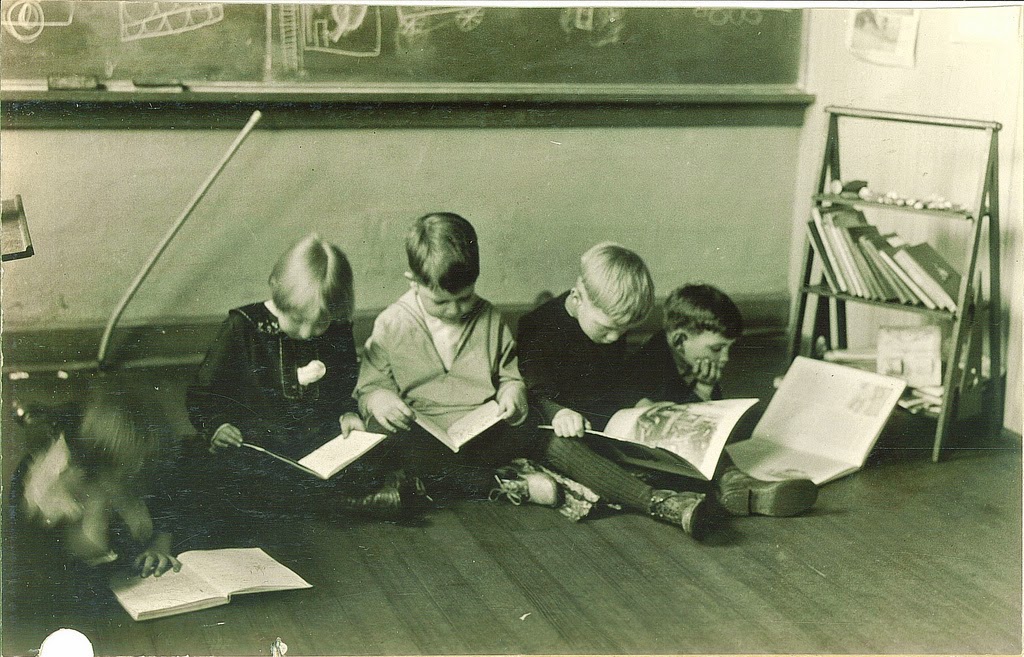
Teachers should listen to children more. When children ask questions, they are seeking understanding, but sometimes the teacher can be too busy to listen to the meaning behind the question. They fail to 'read between the lines'. I have several horror stories I could tell about how asking questions in class ended up in ridicule for the child and a subsequent 'switching off' from learning - but I won't go down that road today. Read my blog post 'Pay attention at the front!' and you'll get the general idea. Instead, let me say that the 'listening but not hearing' problem is just one of the 'gaps' teachers and students experience just about every day in education - chasms and transactional distances that can open up between intentions of one person and misrepresentations of another.
It's a serious problem. It can lead to war.
In online/digital learning environments, my own research has shown that the gap can be amplified or reduced, depending on a) the skill of the teacher b) their attitude and c) how the technology is being used. Sounds like a no-brainer, I know, but it's actually a lot more complex and nuanced than that. There are gaps in perception about the purpose of education, gaps in how we interpret the problems we encounter each day as educators, digital divides between the haves and the have nots, the cans and the cannots, even the wills and the will nots... We could be here all day discussing these perceptual gulfs in our understanding. A song written by Beatle George Harrison contains the lines 'I was thinking about the space between us all, and the people who hide themselves behind a wall of illusion...' (Within You, Without You). He was right. There is a psychological space between each of us, and although it is impossible to bridge completely, we need to do our best as educators to know and understand our students as well as we can.
Below is a slideshow I presented at last year's Future of Technology in Education Conference (FOTE 2014), at the University of London. The video that accompanies the keynote speech is also available below with the abstract.

 |
| One of my students @sophiefownes developing an essay response |
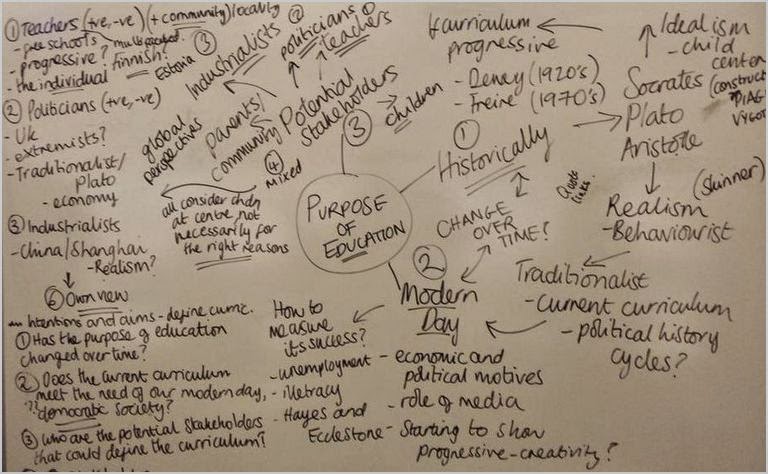 |
| Student mind map |











 I did an interview for Sponge UK last week, talking about my views on technology in learning, and speculating on the future (as you do). Here's an excerpt of the transcript of that interview, with a question about my new book:
You’ve got a new book out based on your popular blog. What ideas are you trying to get across?
It covers a wide range of concepts such as games-based learning and future technology along with a serious critique of the current learning and education system, and how it can be improved. The book challenges people to look at technology as just a tool rather than as something special. I think one of the biggest problems is that we get seduced by the ‘magical’ nature of technology when it’s first introduced. I know schools and organisations that buy the latest technology because it's new and they don't want to be 'left behind' and then once it arrives they think ‘Ok, now what do we do with it?’ And, of course, that is an absolute mistake.
What we should be doing is looking for the challenges and the problems, and fitting technology into that context to provide solutions. The other big message is that if the technology becomes central to the learning process, and people have to think too much about how they can make it work for them, they are not really thinking about learning which should be their prime focus. Technology should be made mundane, it should disappear, should become 'transparent' so learners can see through it and into the real purpose which is their learning.
I suggest doing away with computer suites, for instance, because in the real world we don’t go somewhere specific to compute, we compute anywhere - walking down the street, in the coffee shop, at the airport. People don’t go to a room 'where computing is done' because networked technology it is now ubiquitous. We hold our computers in our hands. I think the ultimate message is that we have a lot of practice going on with the use of technology in learning and there’s a lot of learning theory out there but often the two don’t come together. I want people to think about how the theory and the practice can combine to make learning environments more powerful, more effective and more responsive to individual needs. I call this digital praxis which is the sweet spot where theory and practice merge to optimise learning.
If you want to read more, the full version is on the Sponge website. My new book Learning with 'e's is published by Crown House in paperback and Kindle formats.
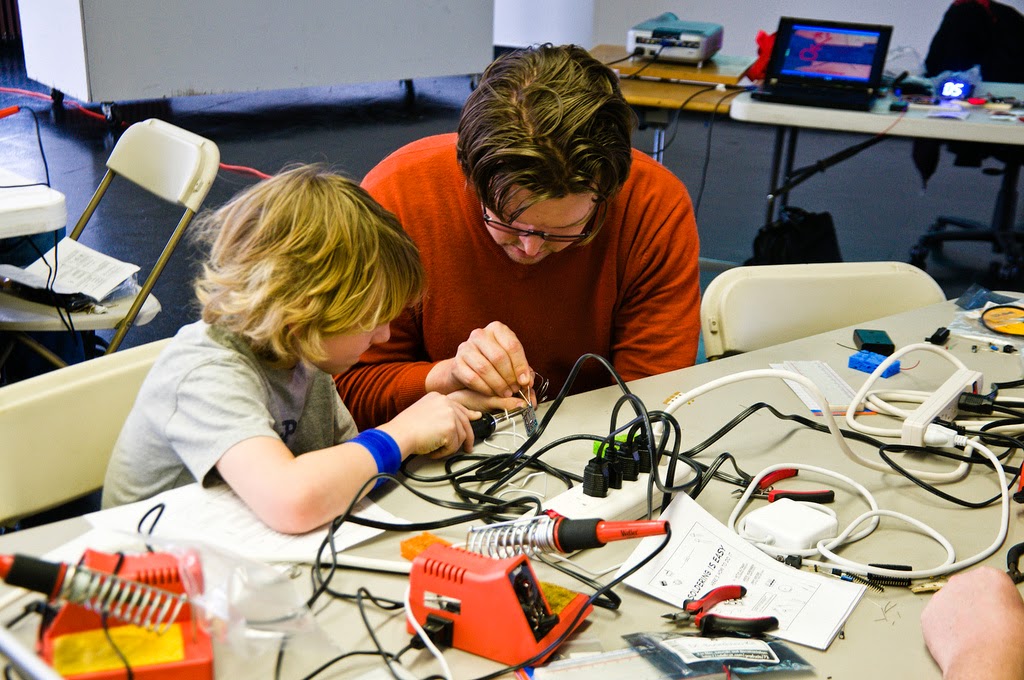
Photo by Steven Depolo on Flickr
Like a sponge by Steve Wheeler is licensed under a Creative Commons Attribution-NonCommercial-ShareAlike 3.0 Unported License.