


_0.jpg)
.jpg)


First things first. We’ll be simple. Where on Earth was the Vitality Sensor?
That bitter disappointment aside, we had to be content with a press conference which apparently effortlessly hit a sweetspot in the Venn diagram of self-celebration, wry deference, nerdish awkwardness, earnest confidence and creative vigour, one that it’s hard to imagine any other videogame company coming near.


E3 2011 has kicked off with Microsoft and Sony's press conferences and a ream of announcements - we hope you're enjoying our coverage.
As this is a new site, we wanted to put out a few pointers on what to expect and how some of its new functionality can make following E3 here better than before.
Actually, that should be “If they build, they will come….”
Build what though? Enter Arduino.
Arduino is an open-source electronics prototyping platform based on flexible, easy-to-use hardware and software. It’s intended for artists, designers, hobbyists, and anyone interested in creating interactive objects or environments.
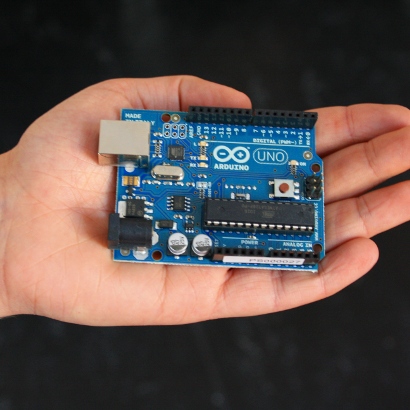
I have been playing around with arduino for a while now and on friday 11th March I had the opportunity to attend an arduino work shop for schools, thanks to Steve Bunce at Vital.
What strikes me about Arduino is the opportunities if offers to link up subjects in the context of CfE. Not only can our learners be offered the opportunity to learn to program, but can get some physical hands on time by building a device, learning about resistors, actuators, transistors, motors and a number of other electrical and mechanical devices. There are even soft Arduino components (such as the Lilypad) that allow learners to build electronic clothing. A quick search on Youtube or Vimeo for Arduino will give you a flavour of the types of projects that can be built.
Make Magazine is a great resource to get some Arduino inspiration and starter tips.
The Consolarium have bought some Arduino starter kits and are working with Braeview Academy in Dundee to see how effective it can be within the curriculum.

Sony's PSP successor, codenamed Next Generation Portable, has a final name: PlayStation Vita. The system will cost $249.99 with WiFi, or $299 for WiFi/3G, and will be released this year.

Speaking at Sony's E3 conference today, Sony boss Jack Tretton revealed that the company will be launching a PlayStation branded 24" 3D display to lower the cost of 3D gaming.
The monitor requires glasses to view, but is capable of displaying two seperate fullscreen images for each player.
Sony will be releasing a $499 bundle which will include the 24" 3D monitor, a pair of glasses, Resistance 3 and an HDMI lead.
The glasses will retail for $69.99 if bought seperately.

Finnish developer RedLynx has revealed a rather brief glimpse of Trials Evolution, sequel to the 2009 Xbox Live hit, Trials HD.
There's not a lot to go on in the video, posted below, but it would appear to show simultaneous multiplayer near the end.
Regardless, if you have any Extreme tracks left to master, now would be the time to tie up those loose ends.

Cloud storage, improved Kinect voice support, a new invite system and the integration of the Bing search engine will head to the Xbox 360 in a dashboard update later this year, Microsoft has confirmed.
The firm touched on the new features during today's E3 press briefing, but Xbox Live mouthpiece Larry "Major Nelson" Hryb has since gone into a little more detail on Microsoft's plans to further integrate Kinect with its console.