Log on:
Powered by Elgg

Sian Bayne :: Blog

January 26, 2010

Things had started to get pretty sophisticated in the home console market pretty quickly as I got near to finishing primary school and although my mum certainly wasn't enthused by computer games we started to hear about them through friends and, I suppose, the media. The Sega Mega Drive came out and we started occasionally renting consoles and games when we went to the village shop to rent video cassettes. Sonic the Hedgehog became the first game my sister and I both got pretty good at playing and I remember spending hours and hours of the weekend with my sister and I lounging on my mum's big squishy bed playing Sonic on the second telly. We never plugged it into the big TV downstairs as it wasn't seen as appropriate to play games in the lounge as it would be visible, would interfere with visiting adults and, in our wee house, would have meant us getting under my mum's feet. Gaming was to be done in relative privacy.

There was all of one Sega console in the village shop so we'd also rent and play Super Mario Brothers on the NES. In fact I can't recall which we started out with but Sonic felt rather more energised and entertaining to play and certainly had the showier graphics of the two. However all of the visual shorthand and game play tactics learned in Super Mario would turn out to be handy in later Nintendo titles from Mario Party to Super Mario Sunshine and Luigi's Mansion. And no matter which console was available for hire, these occasional weekends of gaming felt like a pretty special and unusual activity.


All of the games played to date were fun but were marked by extreme frustration. Not just over understanding controls and goals of the game but mainly over getting a chance to play at all. Access to just about all the machines or gaming devices was rationed in the extreme because they weren't owned hugely widely and were expensive to buy.


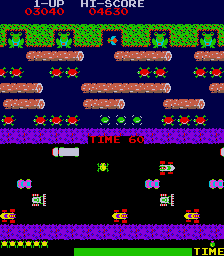
For instance Frogger had been used as a (learning free) reward at school – a carrot for finishing work on time or doing well but even then maybe 5 people would be crammed into the (open) cupboard awaiting their turn the moment you killed your frog.


Having just replayed the game this week I can see why it was so frustrating – a very unsuccessful player can burn through froggy lives in about 2 minutes, controls are fiddly and reaction speed is a part of the challenge all of which, in a room full of enthusiastic 9 year olds, means it's very easy to kill your frog(s) with the smallest delay in reaction. Then one was left sitting there waiting the next turn exasperatedly for maybe half an hour.


I knew that arcade games existed out there in a sort of parallel urban universe but programme like Blue Peter, Press Gang and Grange Hill ran stories about how addictive and dangerous they were with little differentiation between One Armed Bandits and other types of arcade games. News Round highlighted people thieving money and bunking off school to support arcade playing habits. All of the above are surely the precursor to the current array of gaming scare stories though I'm sure there was a small kernel of truth there also. But, in any case, this was all very academic as we were living in a small village so an arcade seemed like a bizarre scary place. I think anything from sky diving clubs to film sets to strip bars probably all seem less bizarre and much more accessible to the average 10 year old growing up in the same place today. At the time though such establishments seemed very “There be dragons!” to us. Watching Ferris Bueller's Day Off I remember thinking how very mature and bad-ass the girl who is mistaken for Ferris in – gasp! - an arcade must have been. To this day I see arcade gaming machines as pricey, for other people, and pretty much equivalent to gambling thanks to all those media warnings about their addictiveness.

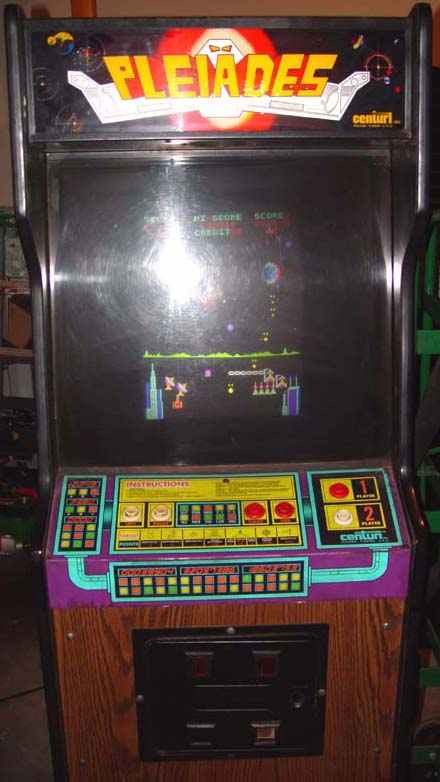


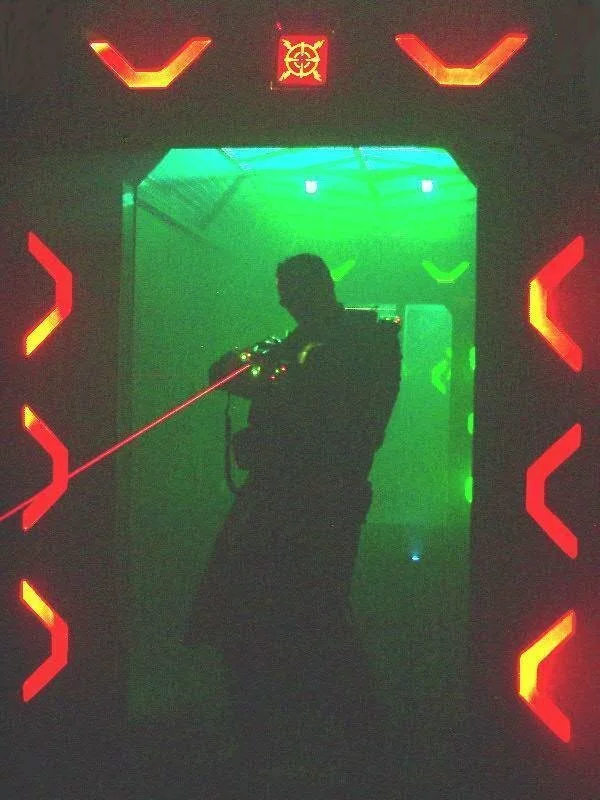
Some diversionary arcade-ish gaming was, however, permitted in the palace of tackiness that was the Laser-quest venue that opened up in Cardiff in the early 90s. Amongst my favourites here were the games that were hybrids of electronic and physical games – I particularly remember a basketball game where you threw real balls and the points were electronically totted up. It wasn't that clever but – like Laser-quest itself - it felt very high tech and gave you a very physical sense of feedback and sense of accomplishment – oddly the natural successors to these types of games are probably the WII and Project Natal (for Xbox). Indeed very few of the video/computer/digital games I encountered till the late '90s had anything to do with beating other people, most were about beating your own high score or a previously set high score. This was very different to the other types of games I was playing – from catch to bowling (bowling being the highlight of an 11 year olds life) or laser-quest (all very performed forms of play) to the many varieties of board games played with friends.


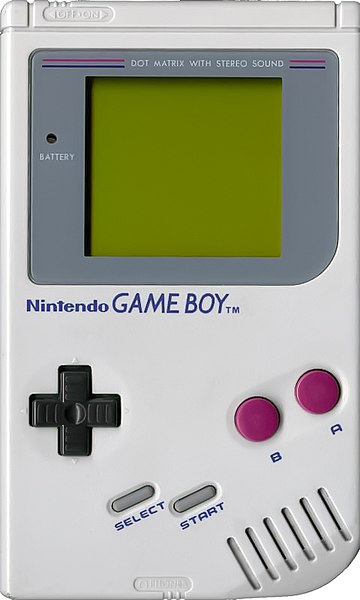
Next into my gaming life wandered the Nintendo Game Boy. It seemed like an excessively expensive treat and it was thus not me (busy with crafts) but my sister who asked for/part paid for a shiny new Game Boy to entertain her into her teens. Tetris was almost the only thing anyone in the house ever played on her Game Boy, in part because it had been bundled free but, in larger part, because it was a very simple and very addictive game to play. Although my sister also acquired such classics as Bill & Ted's Excellent Game Boy Adventure the gameplay rarely contended with Tetris. Indeed not only did I start poaching the Game Boy to play a few levels but so did my mum who became sufficiently addicted to get, if I recall correctly, the highest score in the house (when I mentioned this course the other week she commented on how addicted she had been to Tetris in fond but baffled terms).


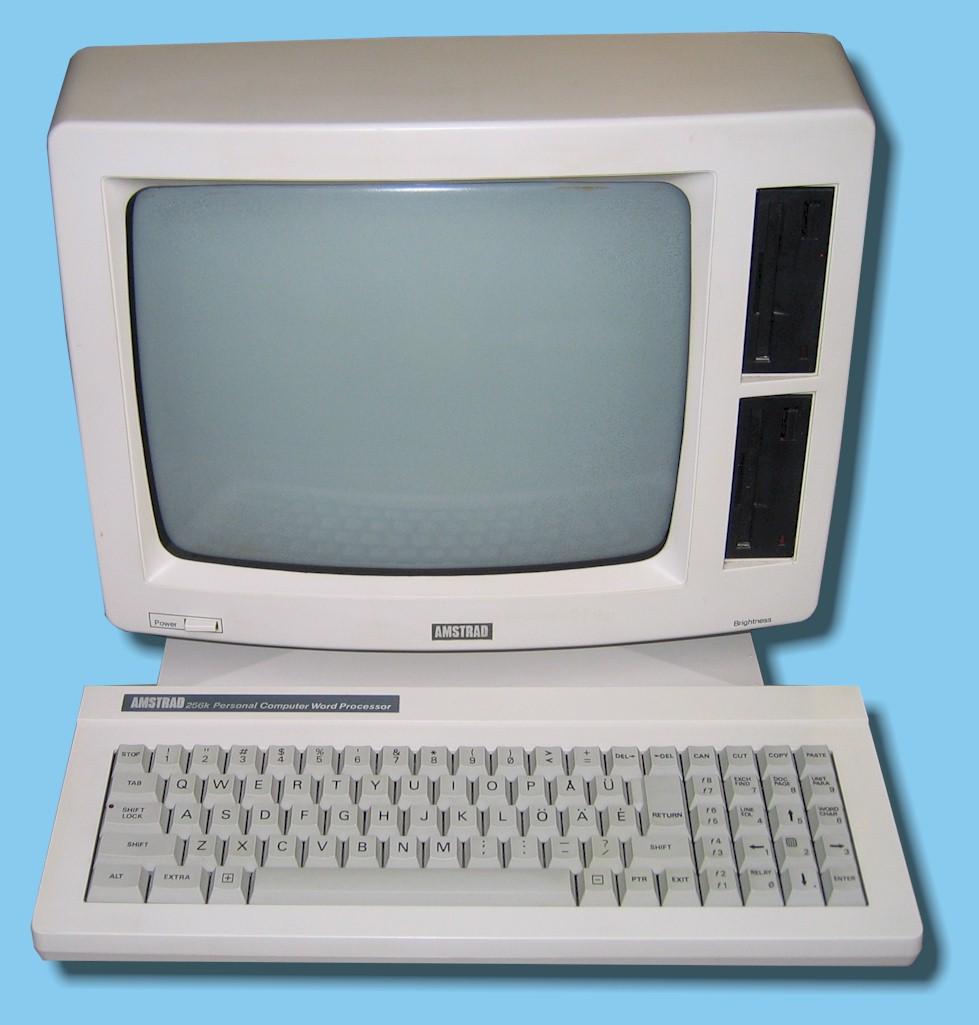
I never got interested enough for my own GameBoy but I did become fascinated with making pretty shapes on screen and, having just gotten access to my dad's very old Amstrad, I was largely entertaining myself trying to find ways to draw random pictures with text (also fun, of course, on typewriters) and experimenting with watching his vast archive of old films. Other digital games and entertainment largely passed me by as I really wanted more freedom and creativity in my gaming and platform games and puzzle games of the time were fairly dictatorial about how you could play the game. It was great to get absorbed in beating the clock but wasn't terribly satisfying.

Having said this a few games offered some short term distractions. A leisure centre near us offered a very underused and cheap Tekken arcade game and that, on a pleasing visceral level, became a good way for my sister and I to beat each other up in an acceptable and entertaining manner.

 At school the one room of PCs also had but one exciting game available. Snake, in all it's basic glory, looked vaguely like it could be a bit mathematical and somehow slipped through the academic net. Thus the room was oft packed with school peers playing for extended periods. I enjoyed it but found the opportunity to write up and format actual pieces of work more exciting in terms of the hours I would spend on the computers. Snake was fun but writing let me express myself rather than fill time. This, as you may notice, is a bit of a theme with my enjoyment of computer games and some of my attitude about what makes good games and thus good learning games. Reflecting on my previous gaming experience feels like a useful part of a process of understanding what would and could have truly engaged me as a learning gaming process. Graphics and interactivity has moved on substantially but conceptual elements of what makes a good game seem important even in the lowest tech computer games experiences.


As PCs were getting more sophisticated they started to be the main space I encountered games (leaving consoles to others at this point) including Solitaire, MineSweeper, Hearts (which I never did or have understood), and the curious Mavis Beacon touch typing game. It's only in recent years that I realise what a handy primer the latter game was. It didn't teach me to touch type but it did focus me, after years of watching my mother type like lightening when working from home, on thinking about which keys should do which keys when I actually learned speedy touch typing some years later through enthusiastic use of chat rooms on AOL when we finally got a (modern) PC at home.
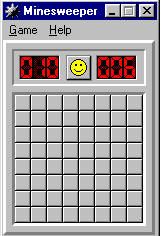

PCs also brought gaming to an older friend in my neighbourhood which also meant I started to see games that much more closely resemble what the term “computer game” means to most people these days. These were games like Doom, Civilisation, and Tomb Raider and, noticeably, these were adult games with gore or ridiculously proportioned stars or complex goals and game play. They were a world away from Mario or Tetris but, at the time, they looked both more life like and more disappointing – the bright garish animation of kids games suited the screens better and the power of the computers meant that Solitaire or minesweeper could move fast but games like Doom could move quite choppily with parts of the screen barely rendering in time for you to play them.

However by the time we had that first Windows machine at home the internet existed. Indeed we'd gotten the PC, in part, to allow my mum access to email for work. So my first experiments with the PC were about the enormous package of bundled CDs roms (including creative but random titles like an Alan Titchmarsh Gardening program), those included Windows 95 games and, most excitingly of all, very slow dial up internet explorations which would take me away from games for several years as I met new people across the world and read and wrote and chatted – all activities that seemed terribly exciting compared to gaming for hours to a teenager who was more than ready to move out of a small village and wanted to explore lots of things that school and friends weren't offering me about films, about my identity. It was a revelation and just couldn't compare with any other leisure pursuit for most of my late teens. But when I reached university the internet was plentiful, the real life opportunities greater and the call of games was thus a little stronger...
 

Keywords: gaming, IDGBL10, Mario

Posted by Nicola Osborne | 0 comment(s)

January 25, 2010


Last week, getting myself set for looking at computer games for this module, I started to think about what games I'd played before and was staggered by the variety and number of games I had, at some point, come into contact with.

Because both of my parents had computers purely for work at a time when Apricots and early Amstrads just didgn't come with any sort of game I probably started with Frogger on the BBC computer at school. There was one other game too but early Frogger is what I properly recall playing badly in the broom cupboard (where all the primary school computers used to be kept/used).


Around the same time as Frogger appeared I took possession of a little purple portable Snoopy Tennis game which, despite being effectively Pong with even less potential for game variance, kept me entertained for hours. This was the same portable gaming device (with only one pre-loaded game and fixes labelled buttons) that other people had Donkey Kong on but that was never my bag (playing it again this week it still isn't). I also vividly recall having, in parallel with Snoopy Tennis, small (but not as small) water games – you pressed a button to push balls around a water maze. They were fun too but they got broken or accidentally drained far faster than Snoopy Tennis' batteries died.


In the next few years several friends started getting various games. One friend had what, in retrospect, must have been one of the early (and expensive) Sinclair machines. I remember tapes, I remember baffling minutes of loading and finally blotchy graphics on a small colour telly. I have absolutely no recollection of the game or gameplay. Friends of my sister had Paperboy (an Atari game) involving a paper boy cycling his route – although I remember watching at least 4 rounds of people playing before realising that this was the plot as the graphics were very basic. As these friends got consoles (because that was pretty much what you played games on at the time) they became experts at the games they had available. But they pretty much all had different games. This meant visits to these friend's houses might involve watching them play but inevitably, if you had a turn, you would be dead in seconds and have to watch your friend gloat as they showed off their skills. There was a little peer learning and support but many of these kids assumed you would know all about the game too and some revelled in their status as an expert player. That said not many friends had games at all partly because of the cost (my home village is now well funded and very middle class but in the 80s incomes were modest and computer games prohibitively pricey) and partly because most of my sister and my friends were little girls. Memory of play at that age involved toys, various hours spent styling hair, making up dance steps to the Reynolds Sisters and doing little craft projects and Brownie badges. Computer games were just not a mainstream activity for anyone under 10 and most of the girls I knew just weren't that excited by them. Those that were tended to have brothers or lots of cousins that they were keen to keep ahead of.


My dad had been the sort to buy small robots and VCR machines (we always had two, the better for making amateur records of classic movies to remove Channel 4 ads) when he saw them but he was always more into things like Scalelextric, things with a physical note, but it probably wouldn't have been long until we would have had computer games or a console of our own in the house had his death not intervened when I was about 9. This pretty much ensured we wouldn't be in the mood, nor in any way able to afford much in the way of new technology for a while. My dad would go out and spend money in occasional overenthusiastic bursts on things that looked new and shiny, my mother however had always been less impressed with expensive gadgets and with cash short she certainly wasn't about to focus on games as a spending priority. She was working from home pretty much full time though and using a computer and laser printer to do so. Her boss occasionally came round with early laptops and, once, a very early modem so as friends started to get used to computers as gaming devices we were learning that computers were hugely powerful publishing tools. I think in the long term this probably fared both myself and my sister fairly well – when we first got access to PCs at secondary school we both found it easy to use them for work and research whilst peers seemed unable to tear themselves away from basic games like Snake. But that was later...


Keywords: 80s, games, IDGBL10, ItWasAcceptableInThe80s, Mario, SnoopyTennis, Sonic

Posted by Nicola Osborne | 0 comment(s)

January 21, 2010

So here we are at last, the sixth and final module that is "research methods". I know that I would like to do my dissertation on learning spaces as my institution has just opened it's doors to a new Library and Student Services centre called Augustine House. If you want a feel for the place, there's an interactive floorplan that you can view and there is also a special Flickr set (compare these against the previous library provision). Incidently, anyone wanting to look at different examples of learning spaces that are situated across the UK can view JISC Infonet's Flickr pages.

JISC (2006) informs us that learning spaces:

"...should be able to motivate learners and promote learning as an activity, support collaborative as well as formal practice, provide a personalised and inclusive environment, and be flexible in the face of changing needs." (p. 3)

However, as the JELS (2009) report found out, there is very little by way of evaluating the effectiveness of learning spaces and a fair bit of research would be needed to begin to understand what is going on. Temple (2007), in his literature review, is particularly scathing on how little we understand such spaces:

"...if the curriculum in higher education is a set of experiences, that a student inhabits, experiences that that arise from a student’s interaction with his or her ‘learning environment’, then any attempt to trace the influence of one particular thread of experience may well be doomed..." (p. 69)

So, over the last 18 months I have been involved in a part JISC-funded project that is part of their Institutional Innovation Programme, which:

"...represents a £13.08m investment aimed at supporting existing institutional strategies by providing solutions to institution-wide problems, based upon proven practices, technologies, standards and services. The solutions will act as exemplars to other institutions by demonstrating innovation and good practice, and building knowledge and experience, which can be shared across institutions."

Our project, which we called iBorrow, has deployed 200 location-aware (re: wireless) netbooks within Augustine House which students and staff can "borrow" just by taking them out of the recharging cabinets as if they were picking up a book from off a shelf. One of the many things that we want to see is if it can provide a large-scale demonstration of how thin-client notebooks with location-aware technology can enable us to not only provide "no fuss" access to a full range of software and learning resources but also effectively manage the configuration of the facilities within the large flexible learning spaces of Augustine House.

As part of my preparation and understanding of learning spaces, I have managed to fill three A4 box folders of papers on the subject as well as looking at the notions of "place" and "space" under the auspices of environmental psychology. To help me make sense of all of this information, I have devised a mind map (click on the image below to enlarge) that covers a large number of themes (and I suspect that I have only scratched the surface).

Learning Spaces Mind Map

References

JELS. (2009). A Study of Effective Evaluation Models and Practices for Technology Supported Physical Learning Spaces. Bristol: JISC. Available at: http://www.jisc.ac.uk/whatwedo/projects/learningspaces08.aspx [Accessed 21 January 2010].

JISC. (2006). Designing Spaces For Effective Learning - A Guide To 21st Century Learning Space Design. Bristol: JISC. Available at: http://www.jisc.ac.uk/publications/programmerelated/2006/pub_spaces.aspx [Accessed 21 January 2010].

Temple, P. (2007). Learning Spaces for the 21st Century: A review of the literature. York: The Higher Education Academy. Available at: http://www.heacademy.ac.uk/projects/detail/lr_2007_temple [Accessed 21 January 2010].

Posted by Wayne Barry | 0 comment(s)

1. what seem to be the main motivators (drivers/stimuli) or hindrances for teachers to use ICT in their assessment practice; epistemological beliefs implication in selecting their assessment method.

or


2. how epistemological beliefs (beliefs about knowledge and learning) affect ICT teachers' assessment beliefs and methods and what are their perceptions about students' benefits from their assessment methods.

Keywords: thoughts, topic

Posted by Angelos Konstantinidis | 0 comment(s)

January 19, 2010

I guess it would be beneficial to jot down some initial thoughts about my research question, so:

  • epistemological beliefs, beliefs about intelligence among teachers (who use ICT in their teaching) of secondary-high school education (in Greece) and how these beliefs affect their assessment beliefs and methods (note: they may employ different assessment methods incoherent with their beliefs?)
  • how various assessment methods can motivate or demotivate students; assessment affect students' sense of autonomy?
  • how students' beliefs affect their preference for assessment methods?
  • Should I expand to teachers-students of primary or tertiary education?
  • Should I focus only to secondary education or only to high schools?
  • Should I focus only to ICT teachers or should I include other disciplines also (provided that they use ICT in their teaching practice)?

Keywords: thoughts

Posted by Angelos Konstantinidis | 0 comment(s)

January 15, 2010

This is a very brief blog post to kick off my blog for the Introduction to Digital Game Based Learning module which kicks off on Monday. Since I haven't used the Holyrood Park blogs since IDEL it's going to be quite weird returning here to post updates. (Right now it's also a little challenging - my home broadband has given up the ghost and my new provider/line problems may take a while to correct so I may seem unnaturally shy online for the first week or so since I'll probably still be posting after work from the office.) 

At this stage I'm tremendously excited about beginning the course having started to read through Gee (with Whitton lined up for next week) and having seen all the wonderful nostalgic gaming references in the introductory posts to the WebCT discussion boards. It's been a long time since I played games regularly but for a while now I've been wanting to dust off my thumbs and see what's new so the idea of doing this and learning how to use games for learning seems fantastic. I'm especially keen to find out how I can take learning objectives and training ideas and make those into a compelling and fun computer game so I'm already thinking about possible ideas for the final assignment even if it is jumping the gun a little.


Keywords: gaming, IDGBL10

Posted by Nicola Osborne | 1 comment(s)

November 02, 2009

The experience of using computers gives me the feeling of playing a game; sometimes I win (find what I need, do what I want to do etc.), sometimes I loose (can’t fix the damn machine, can’t download something etc.), but I always enjoy playing and that’s why I am returning back.

I started quoting my own metaphor of using computers only to say that I will try to apply a game metaphor for both VLE’s and PLE’s.


VLE (webct, moodle)

A VLE is a massive multiplayer online game. People play with it and accordingly learn from it but they have to stay inside game’s “margins”. When someone “finishes” playing and turns off the computer, the game is still there played by a lot of people; even if some of its gamers are sleeping or working. Accordingly, in VLE’s the discussion board is always open, anyone who is registered can contribute anytime. You can go to sleep or to work, but when you return back something new happened. Despite this, you can still read new posts or finish uncompleted tasks and hence continue “playing”.

In addition, gamers have to follow certain game rules; if they breach these rules they face the potential danger to been thrown out of the game by the authorities. In that sense they are somehow restricted. In VLEs there is always a sense of authority and of course there are always some rules to follow. Gamers can also communicate with each other (through the game or using extra tools; i.e. email-skype) and even structure groups inside the game. Accordingly participants communicate through VLE or/and other tools and they can follow one course or another (in that way they structure groups).

Finally, a MMOG can be a free game or a commercial one (moodle-webct). When it is free usually it is more open; some courses in moodle are open to anyone. Unfortunately, commercial games are usually more “fancy”, so if you like games usually you have to buy one (or more Wink).


PLE (igoogle, pebblepad)

A PLE is one’s game collection. In that sense it can be comprised of miscellaneous games: tableboard, online, mmog, free, commercial. Your game collection is your game story (summative in that sense, like pebblepad), you started with one game, then you proceeded to another, after that you played with some friends a multiplayer game etc. On the other hand, occasionally we try new games; when playing a new game we reflect a lot on that. Accordingly, when something is under development (i.e. a perspective, a thought , an idea) it is there in our PLE to reflect on that idea. Thus, our game collection is not only summative, but it also conceals dynamic. Besides, we must not forget that in every collection we have favorites, i.e. games we usually play; if you look at your igoogle screen you will notice that the links you use most are on the top. Finally, like games a PLE can be free (like igoogle) or commercial and thus glossy (like pebblepad; impressed by flash player, but I consider it redundant Money mouth).

My picture for PLEs can be illustrated somehow by one game only: the snakes and ladders. It is summative (our story in the game) and there is a dynamic and reflection (we can choose whether to follow a ladder or not or we must return back sometimes due to a snake).


snakes and ladders


Posted by Angelos Konstantinidis | 0 comment(s)

October 02, 2009

A blog is an example of an embodiment of thought which would otherwise most likely exist in it's thinker's head - or those that heard it and thought it worthy of memory space.

Keywords: IDEL09

Posted by Carl Simmons | 2 comment(s)

September 09, 2009

Welcome to a new academic year, and to the holyroodpark.net blog space, one of the core environments for the MSc in E-learning! Please don't hesitate to get in touch with Jen Ross, the programme technical co-ordinator, if you have any questions or need any help getting set up.


Her contact details are in the technologies handbook.

Keywords: welcome

Posted by Holyroodpark Admin | 2 comment(s)

April 08, 2009

Tempus fugit - Doesn't time fly when you are having fun? After a 12 week tournament that is the "Digital Game-based Learning" module. All good things must eventually come to a full stop. Whilst we have been reading, writing and debating about the "serious" business of games, gaming and play; more importantly, we have also have had a lot of fun doing it and learning a little more about ourselves along the way.

I started the course by reflecting upon my previous experience and engagement with games, gaming and play (see "Flashbacks of a Fool") that had largely seen me leave videogames and computer games back in the 1990s preferring the more traditional games that had a largely social element to them, i.e. playing games with family or friends. The course had literally thrust me back into the digital gamesphere (see "All work and no play?" and "The Agony and Ectasy of Social Gaming") using a range of game consoles like the Nintendo Wii, Microsoft Xbox, Apple's iPod Touch as well as my own PC.

I had reflected that some of the games currently on the market and online had "enchanted me and brought out a child-like wonder in me (not seen since 1999)". This "enchantment" extended to the papers written by Pat Kane and Brian Sutton-Smith on their notions of play (see "The Language of Play") which can be a catalyst for creativity, originality and new developments and should actually be incorporated in each and every one of our lives as normal as it is eating, breathing and sleeping. Howeve, this "enchantment" is a little offset by the "moral panic" that sets in whenever the popular press or eminent scholars and thinker have their tu'penny worth to say on the subject (see "Videogames: A moral panic?").

Inevitably, the course would eventually touch upon my favourite hobby horse (my thanks goes to the course leaders of the "Digital Environments" modules and my colleagues at work for introducing me to it) that being Marc Prensky and the "Digital Natives" / "Digital Immigrant" dichotomy (see "Digital Natives Revisited"). Given that Prensky works in the games industry and feels passionately that learning and games can go hand-in-hand. No arguments there, it's just the grand rhetorical statements backed up by hardly any empirical research that has turn this issue into something of a pathological obsession for me - I should learn to take Michael Winner's esure advice, though James Newman's paper riled me more than Prensky's papers (see "Videogames: A tug of war").

One of my interests is identity and the course has given me ample to think about and experience. From Second Life, using the voice activated feature within it with Iris Bosa had raised questions about voice modification, personalisation and identity (see "The Curious Case of Voice Identity"); to J.P. Gee's concept of the “tripartite” of identities and the notion of the "other" in games, was presented in a very compelling and original way (see "The Learner with a Thousand Identities") that is an interesting addition to the Identity literature.

The module also called for group collaboration to design a Google Earth game (see "The New Seven World Wonders Quiz - A Team 2 Production"); solve a WebQuest (see "WebQuest DSV"); and devise a role playing game for Second Life (see "Dragons' Lair RPG - A Team 2 Production") that saw some fantastic online collaborations using Skype and a Wiki which led me to comment that it was the "most amazing brain-storming, project management session ever conducted virtually. We went from an idea to a fully-realised project plan in 1.5 hours". I have rarely seen online collaborations work at this frenetic speed and intensity before, so thank you Team 2 for an exhilarating experience. The group tasks themselves could also have been envisaged as a "game" that involved overcoming a number of obstacles and difficulties to arrive at the finish line in time with a fully realised product.

J.P. Gee presents some rather interesting concepts of "affinity groups" and "affinity spaces" (see "The Affinity towards Groups, Spaces and Learning") which I could use in relation to my insitution's new £35m library and learning centre, Augustine House, in terms of how learning spaces are been used physically as well as virtually by the student corpus and the academic community; and would such learning spaces present opportunities for real learning to take place (see "The Four Horsemen")?

So for now, I bid Hamish, Fiona and the challenging "Digital Game-based Learning" course a fond and affectionate adieu.

Until next time gamers, until next time ...

Posted by Wayne Barry | 0 comment(s)

<< Back Next >>