Log on:
Powered by Elgg

Blog :: All

You can filter this page to certain types of posts:

Filtered: Showing posts with no comments (Remove filter)

November 18, 2011


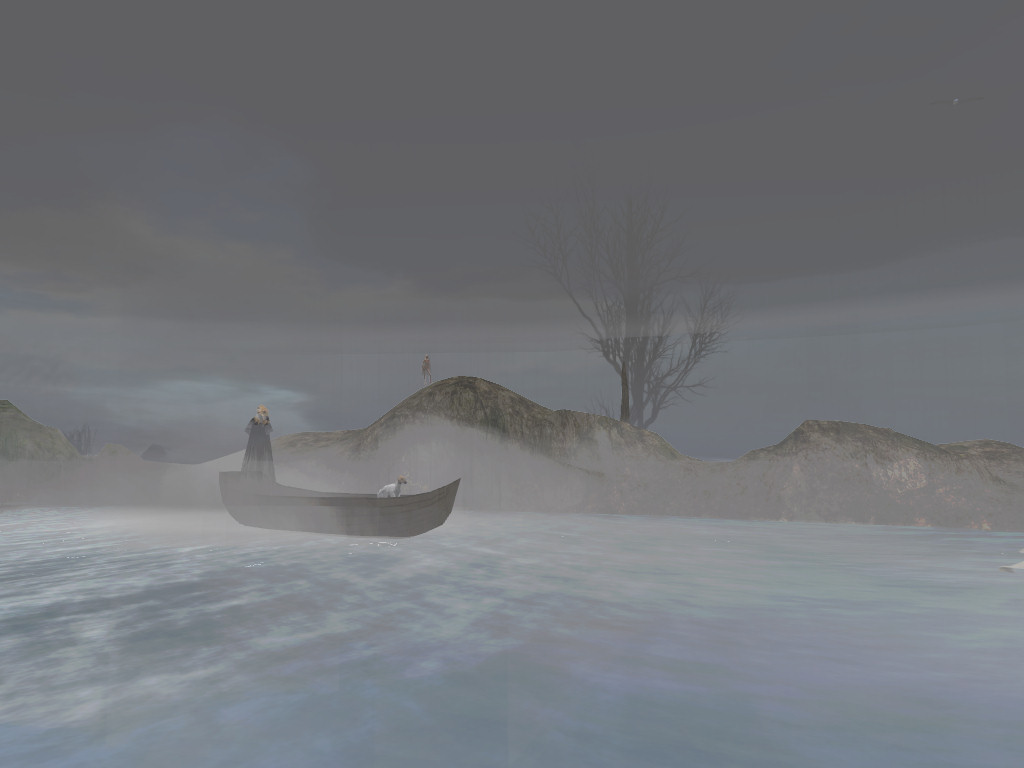
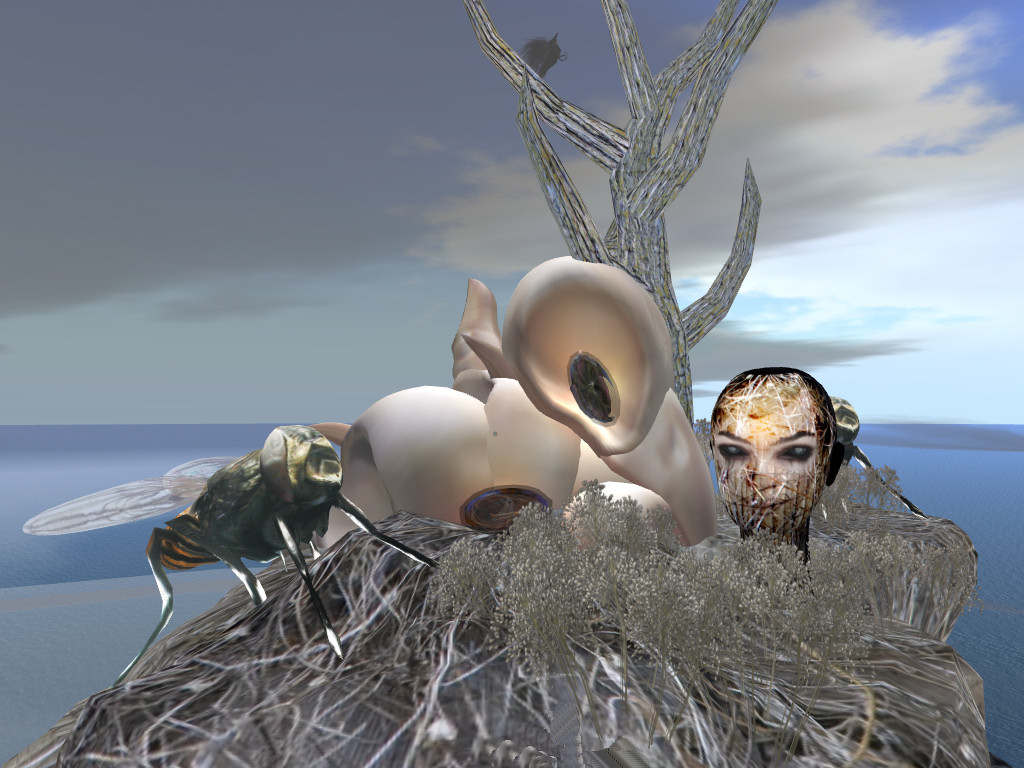
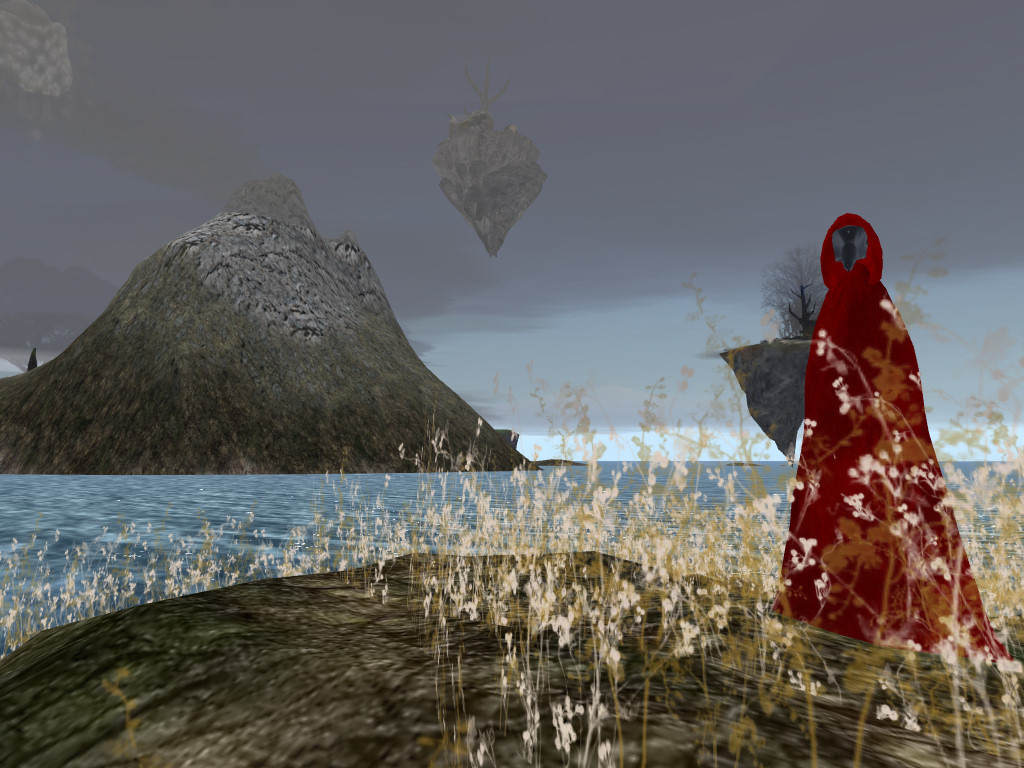
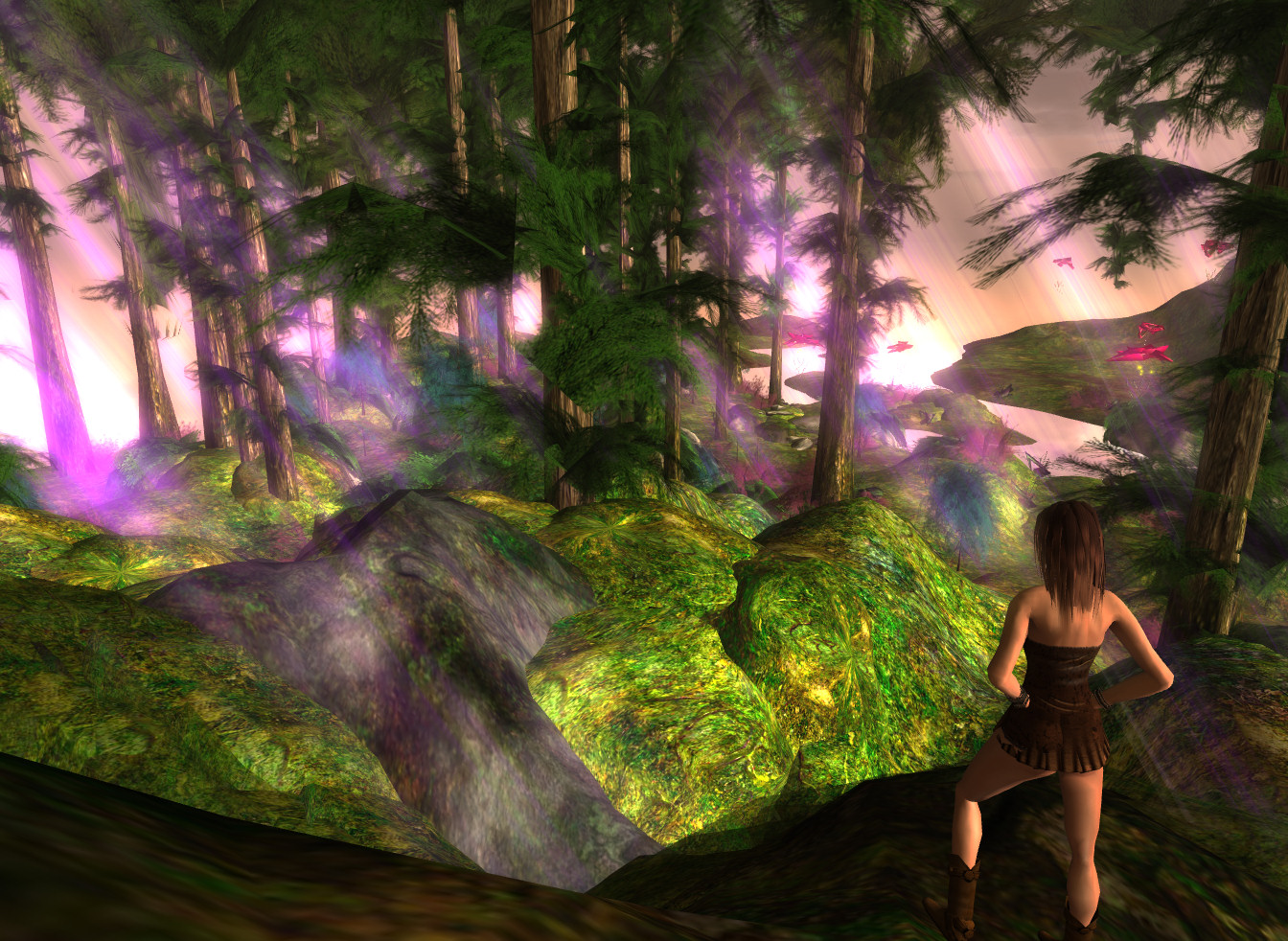
A very beautifully designed Second Life region is worth exploring. I suggest you arrive in the Meta_Body area first. Use this teleport link:

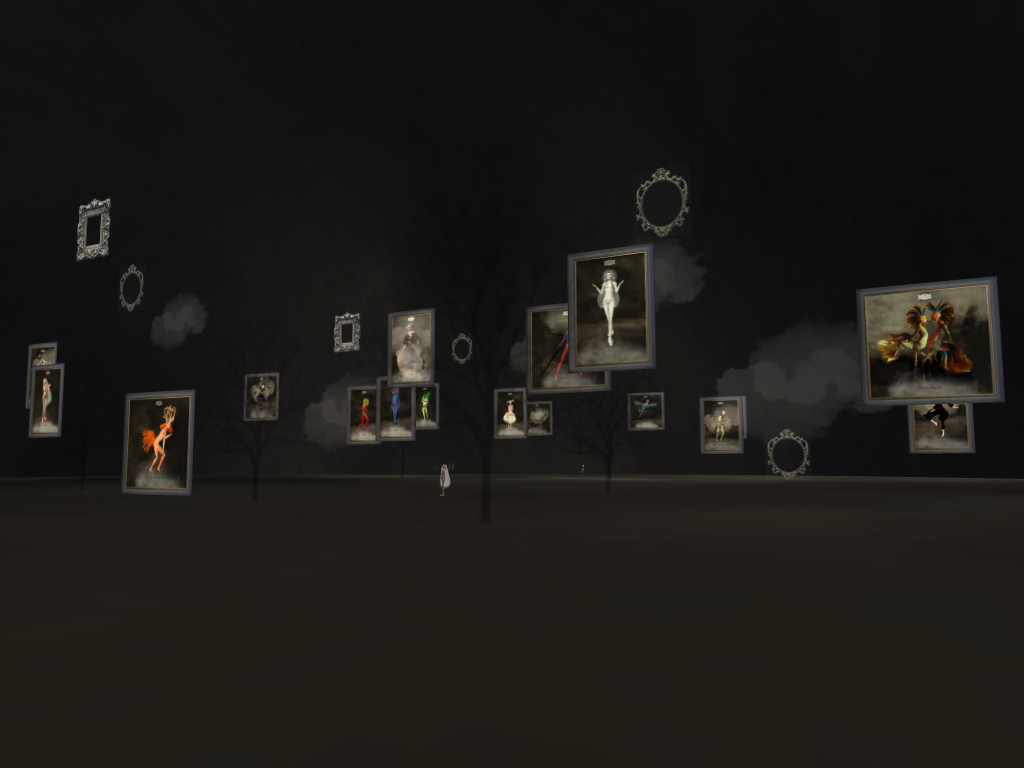
Look at the (freely available) avatars to explore your identity and see which feel strange to you, and some which might appeal. There are a few male and more female avatars available to try. Select the strangest before you embark on a tour of the lovely areas which are on the land surface, on small islands, on sky islands, and underwater. Sit for a while on some of the areas. Click on things to see what they do.

Eventually find your way to a white ice themed area with a lady playing a white piano. Try touching the black "Omega Star Dream 5" sphere for an animated tour through some of the lower elements of the region. If you cannot find this use this SLurl to get there directly:

[Reposted from EDEDC Digital Cultures Blog]

Keywords: IDEL11, Second Life

Posted by Austin Tate | 0 comment(s)

November 16, 2011

Professor John McCarthy died on 24th October 2011 at the age of 84. He was an early pioneer of computer technology, computer time-sharing, and inventor of LISP, one of the very first computer programming languages. LISP was, radically, based on symbolic computing.  He was an early pioneer of Artificial Intelligence, and indeed originator of the term "AI" which was adopted following the title he gave to a conference at Dartmouth College in Vermont which John convened in the summer of 1956. John received the Turing Award, and many other accolades and honours, including the United States National Medal of Science.

John McCarthy was known to many of us in the Artificial Intelligence community as the "Father of AI", and I came to know him as very much a baby in the subject. In my student days in the early 1970s he appeared on the BBC TV program "Controversy" in debate with Sir James Lighthill on the value of research on general purpose robots alongside my PhD supervisor, Donald Michie, himself an AI pioneer and war time code breaker who had worked with Alan Turing at Bletchley Park.  He wrote and communicated widely on his interests in robot decision making.

Typical of John's desire to communicate about his field was a short sci-fi story he wrote in 2001, "The Robot and the Baby" which has many interesting themes, and to me epitomises his breadth of interests, politics and fascinating opinions.  A capable companion robot – “Robot Model number GenRob337L3, serial number 337942781--R781 for short” – was one of many deployed to assist people and deliberately made unappealing and emasculated by the constraints society had placed on robot use.

The story begins:

“Mistress, your baby is doing poorly. He needs your attention.”
“Stop bothering me, you …''  …  “Love the … baby, yourself.”

John amusingly includes a long line of reasoning by R781 in the bracketed notation of LISP on probabilities of the baby being harmed if it disobeys its key constraints:

(= (Command 337) (Love Travis))
(True (Not (Executable (Command 337))) (Reason (Impossible-for robot (Action Love))))
(Will-cause (Not (Believes Travis) (Loved Travis)) (Die Travis))
(= (Value (Die Travis)) -0.883)
(Will-cause (Believes Travis (Loves R781 Travis) (Not (Die Travis))))

With this reasoning R781 decided that the value of simulating loving Travis and thereby saving its life was greater by 0.002 than the value of obeying the directive to not simulate a person. There follows a progressively escalating series of events where the whole world is watching the handling of the situation by the authorities, and commenting in real time on the event on social media - anticipating Twitter by some years.

Read the story (at http://www-formal.stanford.edu/jmc/robotandbaby.html) if you want to explore an informed opinion on the ethics, issues and dilemmas involved in human and robot interaction, which one day we may face. The story has many thought provoking elements. I personally feel for the emasculated robot that is left in the Smithsonian.

Keywords: IDEL11, McCarthy

Posted by Austin Tate | 0 comment(s)

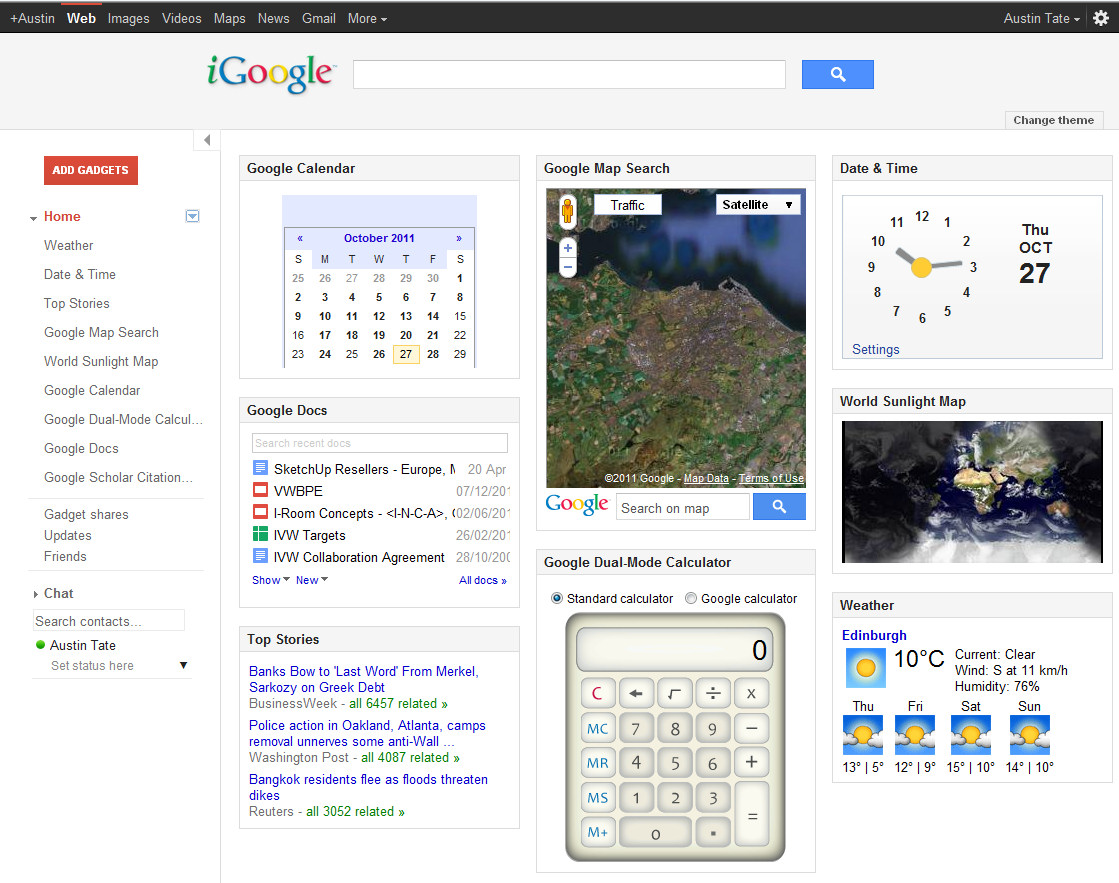
iGoogle is sometimes used as a framework for an individual’s PLE, since it provides a  convenient and readily accessible “container” for a range of widgets and content items which can easily be added and removed. It is also relatively open in the types of widget and content that can be embedded.

My iGoogle page is here... I occasionally have it up on a secondary computer as its convenient to have the calculator, search functions and quick links to my Google calendar, contacts, e-mail etc. I also like the world map with sun shadow widget which can be made full screen on the secondary computer screen which is a nice. Better than buying the $3,000 executive version :-)

Keywords: IDEL11, iGoogle

Posted by Austin Tate | 0 comment(s)

I have been cooking up another project… the appeal of utopian “Other Worlds” and projecting identities into them (see Gee, 2003). The creative experience of imagineering such a world, making it plausible and “real”, and inhabiting it in a social context is something I want to explore more.

http://atate.org/another-planet/

I have been initially building some images related to this on WallWisher and making some notes about a grammar of "connections", which I hope to partially explore in a Digital Cultures course assignment.

Gee, James Paul (2003) "Learning and Identity: what does it mean to be a half-elf?" from Gee, James Paul, What video games have to teach us about learning and literacy, pp 51-71, Basingstoke: Palgrave Macmillan.

Keywords: IDEL11, Other Worlds

Posted by Austin Tate | 0 comment(s)

Landow (2006, pp 284-285) gives a very nice example of the effect of using Hypermedia alongside Peter Heywood's usual weekly topic based course on cell plant biology. He observed that students could follow links ahead into later materials, versus being over constrained by the current topics and resources to hand.  This encouraged them to make links between items in the course, and look for more interesting opportunities to them as individuals for discussions and assignment topics. The wiki and hypertext elements added to the traditional weekly format course made possible a way for the class to work asynchronously, we well as to maintain class focus based on the weekly content and milestones.

I have come across this also in my use of Moodle along side the OpenVCE.net community portal (for asynchronous community support) and meeting spaces in Second Life, Adobe Connect or Skype (for synchronous meetings of the community).  We wanted to have both elements of a cross course community resource area and a topic or time tabled element.  We did this by having a standing OpenVCE community "course" using Moodle's "social" format, and also a "topic" or "weekly".

I would observe that in some studies we have done of communities who engage in distributed collaboration (Hansberger et al., 2010) we find that the types of functions they wish to perform together leads to a set fop requirements for both synchronous and asynchronous interactions, which can be facilitated by different tools.

Hansberger, J.T., Tate, A., Moon, B. and Cross, R., Cognitively Engineering a Virtual Collaboration Environment for Crisis Response, Proceedings of the 2010 ACM Conference on Computer Supported Cooperative Working. (CSCW 2010), Savannah, Georgia, USA, 6-10 February 2010.

Landow, George P., (2006) "Reconfiguring literary education" from Landow, George P., Hypertext 3.0: critical theory and new media in an Era of Globalization pp.278-291,302-309, Baltimore: Johns Hopkins University Press.

Keywords: IDEL11

Posted by Austin Tate | 0 comment(s)

November 15, 2011

Responsive Open Learning Environments (ROLE - http://www.role-project.eu/) is an EU project which provides an interesting example of a learning environment being created with an open widget based approach which might allow for a personal learning environment to be created by an individual within the context of a managed learning environment for a course.

It makes use of the OpenSocial (http://opensocial.org) API for widgets to allow for a range of community contributed widgets to be used.

There is an Open University provided introductory course on ROLE and information on incorporating ROLE elements into a Personal Learning Environment accessible at http://labspace.open.ac.uk/course/view.php?id=7433


Keywords: IDEL11, ROLE

Posted by Austin Tate | 0 comment(s)

November 10, 2011

Our experience of setting up Moodle as an administrator, for a couple of sample courses of different kinds (weekly, topic based and social format) and by adding in the SLoodle module both in the web end of Moodle and in Second Life classroom has been a frustrating experience.  This is a mostly due to the very many layers of user permissions, user roles, different styles of setup, confusion over what happens at site, user and course levels, and interactions between these, and so on.  We still cannot work out why some users can see their SLoodle profiles and others cannot even with all permissions ticked on (more than should be needed).

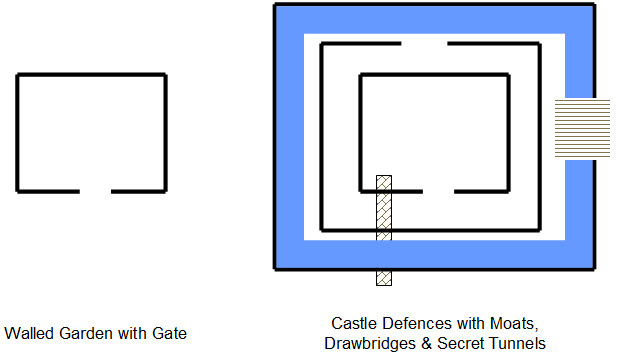
This makes me think of the "Walled Garden" idea which is how I see VLEs like Blackboard's WebCT.  The wall is there for a number of reasons:

  • To protect those inside;
  • To protect and control access to the assets inside;
  • To keep out undesirables;
  • To provide a clear gateway where people can enter, or request entry.


But my mental picture of Moodle is more like a complex arrangement of "Castle Defences" with multiple battlements, with entry points offset from one another and the direction to turn not obvious at every level. There are moats and some bridges across.  But you are not sure where they all are. There may even be secret tunnels you don't know about and that others may be able to use, and you suspect there are as its all so labyrinthine.

Posted by Austin Tate | 0 comment(s)

November 04, 2011

My interest in personal portable information stores and information predates my use of the approach as a PLE.

I am interested in a computer-based personal assistant and ways in which that could build information to help you throughout your life.  Issues of privacy and ownership and location of that information immediately are an issue when that is contemplated.  Its clear to me that this means the data must be owned, hosted and controlled by an individual in some way, and ANY access to it approved and logged at the user ownership end.  This is WAY WAY different to its being hosted and accesible to Facebook and Google+ (or an Institution like a government, insurance company or teaching organisation). 

I liked recently a pointer from Daniel Griffin on the MSc Digital Cultures course on the Diaspora Freedom in Software community (http://diasporafoundation.org/ and https://joindiaspora.com/) and specifically to Eben Moglen's "Freedom in The Cloud" presentation at NYU Feb 5 2010. http://www.youtube.com/watch?v=QOEMv0S8AcA

I was reminded of some discussions I had 20 years ago with telecoms providers about a user centric architecture for use of personal profile information from a computer-based personal assistant. the personal information was served on each request from the user end and with access to information and resources controlled by the user... WAY WAY different o how we have come to use Facebook and Google+ where our data is in their servers and used when they want for their benefit.

Section 3 - The Personal Profile - From http://www.aiai.ed.ac.uk/~bat/tania.pdf

One important feature of the approach to be taken is that the concept of a long lived Personal Profile for communications and information use will be established. It will be a guarantee of the approach that the information that an individual builds in their co-worker personal profile will be able to stand alone and be meaningful outside of its specific use in this particular generation of information agent. We will establish the concept of a separate transportable personal profile that can accompany the user for the rest of his or her life and can grow with him or her.

Keywords: Diaspora, EDC11, Personal Profile

Posted by Austin Tate | 0 comment(s)

October 28, 2011

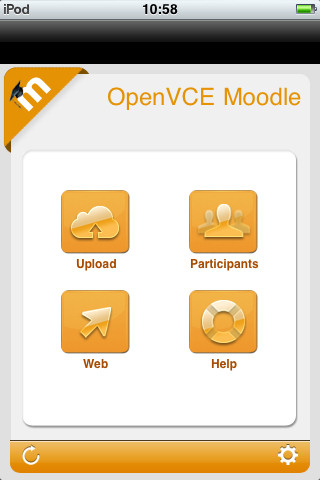
There is an iPhone/iPod/iPad app called "My Moodle" which provides mobile device access to Moodle 2.1+. See http://itunes.apple.com/us/app/my-moodle/id461289000

The experimental Moodle 2.1.2 site at AIAI now has mobile web services enabled as required to support this app - they are off by default. See http://docs.moodle.org/20/en/Enable_mobile_web_services

My initial attempts to snap a screen shot image with an iPod and upload it via the My Moodle app indicated the file exceeded the maximum upload file size, yet the PNG file involved was only 44KB... and our site is set for upload file limits of 8MB to 128MB depending on what layer is filtering.

 A future road map for development of the My Mobile app is available. See http://docs.moodle.org/dev/Mobile_app

Keywords: IDEL11, Mobile, Moodle, SLoodle

Posted by Austin Tate | 0 comment(s)

I have been testing elements of the SLoodle Second Life toolkit version 2.0.10 alpha alongside Moodle 2.1.2 and the SLoodle module 2.0.10 alpha with a few revisions being made by Edmund Elgar, a SLoodle developer and one of the owners of Avatar Classroom (http://avatarclassroom.com). The testing is throwing up some minor issues and a couple of PHP scripts have been changed as a result.  They will appear in the next alpha test build of SLoodle as the developers move towards the first beta version suitable for Moodle 2.

To date the tests have included:

  1. chat link up between a Second Life classroom and the Moodle chat tool, and logging of authorised by individual avatars in world
  2. in-world assessment delivery drop box
  3. presentation screen using shared media web based image, video and web page URL assets
  4. multiple choice voting and presentation display


Keywords: IDEL11, Moodle, SLoodle

Posted by Austin Tate | 0 comment(s)

<< Back Next >>