Log on:
Powered by Elgg

Cecilia Goria :: Blog

January 25, 2010


Last week, getting myself set for looking at computer games for this module, I started to think about what games I'd played before and was staggered by the variety and number of games I had, at some point, come into contact with.

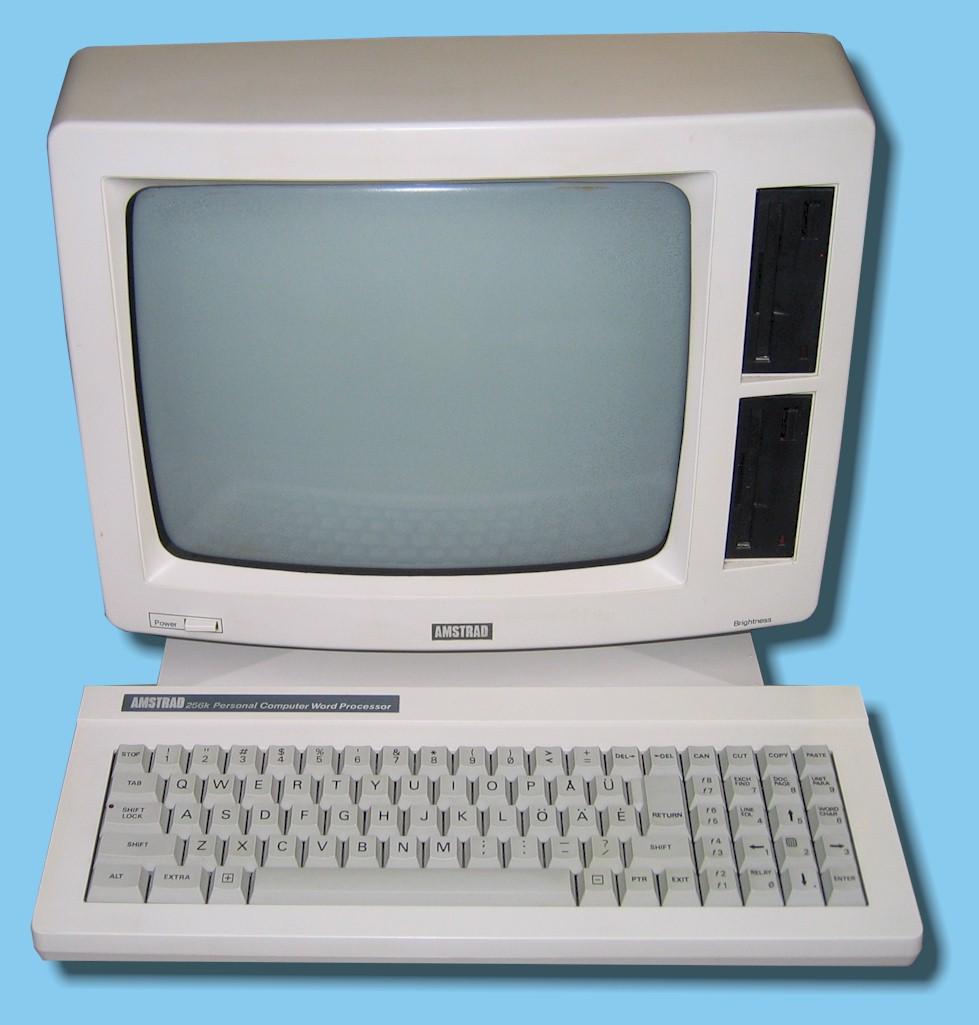
Because both of my parents had computers purely for work at a time when Apricots and early Amstrads just didgn't come with any sort of game I probably started with Frogger on the BBC computer at school. There was one other game too but early Frogger is what I properly recall playing badly in the broom cupboard (where all the primary school computers used to be kept/used).
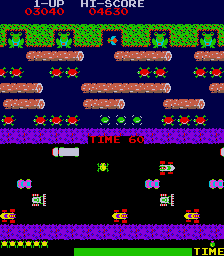

Around the same time as Frogger appeared I took possession of a little purple portable Snoopy Tennis game which, despite being effectively Pong with even less potential for game variance, kept me entertained for hours. This was the same portable gaming device (with only one pre-loaded game and fixes labelled buttons) that other people had Donkey Kong on but that was never my bag (playing it again this week it still isn't). I also vividly recall having, in parallel with Snoopy Tennis, small (but not as small) water games – you pressed a button to push balls around a water maze. They were fun too but they got broken or accidentally drained far faster than Snoopy Tennis' batteries died.


In the next few years several friends started getting various games. One friend had what, in retrospect, must have been one of the early (and expensive) Sinclair machines. I remember tapes, I remember baffling minutes of loading and finally blotchy graphics on a small colour telly. I have absolutely no recollection of the game or gameplay. Friends of my sister had Paperboy (an Atari game) involving a paper boy cycling his route – although I remember watching at least 4 rounds of people playing before realising that this was the plot as the graphics were very basic. As these friends got consoles (because that was pretty much what you played games on at the time) they became experts at the games they had available. But they pretty much all had different games. This meant visits to these friend's houses might involve watching them play but inevitably, if you had a turn, you would be dead in seconds and have to watch your friend gloat as they showed off their skills. There was a little peer learning and support but many of these kids assumed you would know all about the game too and some revelled in their status as an expert player. That said not many friends had games at all partly because of the cost (my home village is now well funded and very middle class but in the 80s incomes were modest and computer games prohibitively pricey) and partly because most of my sister and my friends were little girls. Memory of play at that age involved toys, various hours spent styling hair, making up dance steps to the Reynolds Sisters and doing little craft projects and Brownie badges. Computer games were just not a mainstream activity for anyone under 10 and most of the girls I knew just weren't that excited by them. Those that were tended to have brothers or lots of cousins that they were keen to keep ahead of.


My dad had been the sort to buy small robots and VCR machines (we always had two, the better for making amateur records of classic movies to remove Channel 4 ads) when he saw them but he was always more into things like Scalelextric, things with a physical note, but it probably wouldn't have been long until we would have had computer games or a console of our own in the house had his death not intervened when I was about 9. This pretty much ensured we wouldn't be in the mood, nor in any way able to afford much in the way of new technology for a while. My dad would go out and spend money in occasional overenthusiastic bursts on things that looked new and shiny, my mother however had always been less impressed with expensive gadgets and with cash short she certainly wasn't about to focus on games as a spending priority. She was working from home pretty much full time though and using a computer and laser printer to do so. Her boss occasionally came round with early laptops and, once, a very early modem so as friends started to get used to computers as gaming devices we were learning that computers were hugely powerful publishing tools. I think in the long term this probably fared both myself and my sister fairly well – when we first got access to PCs at secondary school we both found it easy to use them for work and research whilst peers seemed unable to tear themselves away from basic games like Snake. But that was later...



Keywords: 80s, games, IDGBL10, ItWasAcceptableInThe80s, Mario, SnoopyTennis, Sonic

Posted by Nicola Osborne | 0 comment(s)

January 24, 2010

This is a reflection on this week’s reading, my experience of playing the platform games of this week, and how I am relating it to my own work on supporting qualitative analysis through the use of software tools such as CAQDAS e.g. ATLAS.ti, NVivo, MAXqda etc.

I found Whitton’s thesis that good learning activities share similar characteristics to games as illuminating.  While a game may have more or less of the characteristics she defines – competition, challenge, exploration, fantasy, goals, interaction, outcomes, people, rules and safety, so too, can learning activities share some of these characteristics.  She acknowledges that some of these characteristics need to be understood with caution when applied to education e.g. safety is not usually relevant as the outcome of a course will have real-life consequences – however, safe activities can be constructed to aid learning e.g. in this module, our contribution to the discussion board is not graded but people use it as a way to test their ideas.  Her premise is that we as educators can learn from good game design and I look forward to reading more of her book.

Newman’s discussion about the context of where games are played helped me understand my frustration with the platform games we played with this week – Pacman, Donkey Kong and Frogger.  They were originally arcade games, designed to be played on coin-operated machines to generate money for the arcade owners.  Given this function they can’t last that long.  But also playing them was a public performance and observers could learn about patterns and tricks by observing how others played.  The noise, which I found irritating when I played (I turned off the sound), was an essential attraction of the games. Newman reminded me of the arcade halls in British piers – Brighton is the one I know.  And the sound of the games and the flashing lights was a way to attract kids – it made the pier an ‘exciting place’.  There are quite a few Youtube videos on arcade games and there is a big nostalgia for them.  The comments on the Youtube videos below support that. I am of a different generation so missed out on playing games in arcades.  My step-children did (and my daughter is of another generation yet again).

A more polished tribute to arcade games.

In relation to my own work, Newman’s discussion around paedia and ludus is pertinent.  I do consulting and training on supporting people who are analyzing qualitative data (i.e. unstructured data, such as indepth interviews, videos, graphics etc.)  I have always talked about ‘playing’ with the data when starting an analysis.  The CAQDAS software platforms I support can be seen as ‘playgrounds’ where the data is located and can be played with.  Although I am currently exploring (and have recently published an article) on how Web 2.0 tools have the potential to do the same.  There is a tension though, particularly with new students, between wanting and needing rules and the freedom to play.  But this tension is also apparent in different epistemological stances towards data analysis. In particular, those of a post-modern turn have been turned off these software tools because of a belief that they impose some rigid structure – are rule-bound in some way – whereas in fact they are flexible generic tools that the analyst decides how to use – much the same way Newman argues that the player has control over moving between paedia and ludus.  While I have always thought of qualitative data analysis as about playing with the data, I never thought of the platforms as similar to games before.   This week has given me a lot to think about!

 References

Newman, J. (2004) Chapter 2, 'What is a video game? Rules, Puzzles and Simulation'. In Videogames, London: Routledge.

Whitton, N. (2010) Chapter 2, 'Recognising the characteristics of digital games'. In Learning with Digital Games: A practical guide to engaging students in higher education, London: Routledge.

Keywords: videogames definitions pacman donkey_kong frogger platform_games Whitton Newman arcade_games IDGBL10

Posted by Silvana di Gregorio | 0 comment(s)

January 21, 2010

1. what seem to be the main motivators (drivers/stimuli) or hindrances for teachers to use ICT in their assessment practice; epistemological beliefs implication in selecting their assessment method.

or


2. how epistemological beliefs (beliefs about knowledge and learning) affect ICT teachers' assessment beliefs and methods and what are their perceptions about students' benefits from their assessment methods.

Keywords: thoughts, topic

Posted by Angelos Konstantinidis | 0 comment(s)

January 20, 2010

I experienced a combination of compulsion and frustration playing Pacman, Donkey Kong, and Frogger.  The compulsion was that I kept going – replaying the game, thinking this time I will get through to the next level.  Frustration was when I nearly made it but not quite.  I also experienced a kind of recklessness when I was close to completing a level – just rushing in to finish it instead of calming down and taking my time to finish.  There is definitely a physiological response – I found myself holding my breath, feeling slightly anxious and the adrenalin pumping around my body.  It was totally immersive but I partly resented this immersiveness.  The resentment is due to feeling that I was ‘wasting my time’ playing these games – although having to experience them for the course did give them a legitimacy for me. 

Newman looks at why do players play. He  cites Rouse’s key motivations: challenge, immersion and the fact that players expect to do, not watch.  Certainly, I have experienced the immersion.  It is interesting what Newman (2004) says about ‘challenge’ – that players expect to lose.  Maybe that is why I find them so frustrating – I don’t expect to lose (but I keep losing).  The pleasure he claims is through replaying and practicing until the performance gets better.  For me these platform games are too simple – in that I find the repetition too boring. Maybe I would enjoy it more if the rewards were more ‘real’ – rather than just getting to the next level.  Although I expect I would get elated if I ever make it to the next level.

 Newman, J. (2004) Chapter 2, 'What is a video game? Rules, Puzzles and Simulation'. In Videogames, London: Routledge.

Posted by Silvana di Gregorio | 2 comment(s)

January 19, 2010

I guess it would be beneficial to jot down some initial thoughts about my research question, so:

  • epistemological beliefs, beliefs about intelligence among teachers (who use ICT in their teaching) of secondary-high school education (in Greece) and how these beliefs affect their assessment beliefs and methods (note: they may employ different assessment methods incoherent with their beliefs?)
  • how various assessment methods can motivate or demotivate students; assessment affect students' sense of autonomy?
  • how students' beliefs affect their preference for assessment methods?
  • Should I expand to teachers-students of primary or tertiary education?
  • Should I focus only to secondary education or only to high schools?
  • Should I focus only to ICT teachers or should I include other disciplines also (provided that they use ICT in their teaching practice)?

Keywords: thoughts

Posted by Angelos Konstantinidis | 0 comment(s)

January 18, 2010

“Mum, you’re not playing a game!”, my eighteen year old daughter exclaimed when she suddenly came into my study.  I quickly showed her my Digital Game-based Learning course book and explained that it was a module for my MSc in E-Learning course.  I think that sums up my starting point with games – playing games is not something associated with me and I am embarrassed to be caught playing a game!  

I was playing PacMan and it was the first time I played that game.  I was successful in getting to Level 2 at my first attempt but I did not realise that when I ate a large sphere and the ghosts turned blue that I could try to ‘eat’ them to earn extra points. I only learned that (and the fact that those things were ghosts) by later googling to find out more about the game. [Note: My getting to stage 2 at my first go was just beginners luck. I found it more difficult subsequently!]

I had a harder time with Donkey Kong.  The up key did not appear to work when I tried to make the man climb the ladder so I decided that I would have to make a number of points jumping over barrels before I could make it to the next level. But that did not seem to work. I got very frustrated and would have given up if I were not on the course. So again I googled ‘Donkey Kong pattern’ and gathered that the man could go up the ladder.  I realised that he had to be positioned exactly in front of the ladder in order to go up it.

Having done some of the initial reading about the definitions of digital or videogames, I realise that I have played some before. In particular, I have played minesweeper on my phone as well as brick???.  And I have played solitaire on my laptop.  I never thought of them as digital games – mainly because I didn’t play with anyone else – they were solitaire games. (And yes, I just used the word ‘game’.)  But I did not go out of my way to get those games – they came with my phone/laptop and I only played them when I was in transit when I was tired of reading.  But I enjoyed playing them (as long as no one I knew saw me playing them!).

Keywords: Donkey_Kong, IDGBL10, Pacman

Posted by Silvana di Gregorio | 1 comment(s)

January 15, 2010

This is a very brief blog post to kick off my blog for the Introduction to Digital Game Based Learning module which kicks off on Monday. Since I haven't used the Holyrood Park blogs since IDEL it's going to be quite weird returning here to post updates. (Right now it's also a little challenging - my home broadband has given up the ghost and my new provider/line problems may take a while to correct so I may seem unnaturally shy online for the first week or so since I'll probably still be posting after work from the office.) 

At this stage I'm tremendously excited about beginning the course having started to read through Gee (with Whitton lined up for next week) and having seen all the wonderful nostalgic gaming references in the introductory posts to the WebCT discussion boards. It's been a long time since I played games regularly but for a while now I've been wanting to dust off my thumbs and see what's new so the idea of doing this and learning how to use games for learning seems fantastic. I'm especially keen to find out how I can take learning objectives and training ideas and make those into a compelling and fun computer game so I'm already thinking about possible ideas for the final assignment even if it is jumping the gun a little.


Keywords: gaming, IDGBL10

Posted by Nicola Osborne | 1 comment(s)

November 02, 2009

The experience of using computers gives me the feeling of playing a game; sometimes I win (find what I need, do what I want to do etc.), sometimes I loose (can’t fix the damn machine, can’t download something etc.), but I always enjoy playing and that’s why I am returning back.

I started quoting my own metaphor of using computers only to say that I will try to apply a game metaphor for both VLE’s and PLE’s.


VLE (webct, moodle)

A VLE is a massive multiplayer online game. People play with it and accordingly learn from it but they have to stay inside game’s “margins”. When someone “finishes” playing and turns off the computer, the game is still there played by a lot of people; even if some of its gamers are sleeping or working. Accordingly, in VLE’s the discussion board is always open, anyone who is registered can contribute anytime. You can go to sleep or to work, but when you return back something new happened. Despite this, you can still read new posts or finish uncompleted tasks and hence continue “playing”.

In addition, gamers have to follow certain game rules; if they breach these rules they face the potential danger to been thrown out of the game by the authorities. In that sense they are somehow restricted. In VLEs there is always a sense of authority and of course there are always some rules to follow. Gamers can also communicate with each other (through the game or using extra tools; i.e. email-skype) and even structure groups inside the game. Accordingly participants communicate through VLE or/and other tools and they can follow one course or another (in that way they structure groups).

Finally, a MMOG can be a free game or a commercial one (moodle-webct). When it is free usually it is more open; some courses in moodle are open to anyone. Unfortunately, commercial games are usually more “fancy”, so if you like games usually you have to buy one (or more Wink).


PLE (igoogle, pebblepad)

A PLE is one’s game collection. In that sense it can be comprised of miscellaneous games: tableboard, online, mmog, free, commercial. Your game collection is your game story (summative in that sense, like pebblepad), you started with one game, then you proceeded to another, after that you played with some friends a multiplayer game etc. On the other hand, occasionally we try new games; when playing a new game we reflect a lot on that. Accordingly, when something is under development (i.e. a perspective, a thought , an idea) it is there in our PLE to reflect on that idea. Thus, our game collection is not only summative, but it also conceals dynamic. Besides, we must not forget that in every collection we have favorites, i.e. games we usually play; if you look at your igoogle screen you will notice that the links you use most are on the top. Finally, like games a PLE can be free (like igoogle) or commercial and thus glossy (like pebblepad; impressed by flash player, but I consider it redundant Money mouth).

My picture for PLEs can be illustrated somehow by one game only: the snakes and ladders. It is summative (our story in the game) and there is a dynamic and reflection (we can choose whether to follow a ladder or not or we must return back sometimes due to a snake).


snakes and ladders


Posted by Angelos Konstantinidis | 0 comment(s)

July 14, 2009

i hope this links up ok

Posted by Sian Bayne | 0 comment(s)

June 11, 2009

linking from hp

Keywords: linking testing storytlr

Posted by Sian Bayne | 0 comment(s)

<< Back Next >>