Log on:
Powered by Elgg

Noreen Dunnett :: Blog

January 31, 2010

Last week I was frustrated by the arcade games I was playing.  I realized that they weren’t just random and that there were patterns but I couldn’t quite make out the patterns. At one point, I stopped the Pacman to see if I could discern a pattern in the behaviour of the ghosts (without any success!). Having read Greenfield now, I realise that was the wrong strategy. The strategy is not in identifying a pattern in just one element of the game e.g. the ghosts – but the pattern depends on the interaction between the ghosts, the pacman and the board itself.

I was starting to ‘feel’ that some parts of the board were more dangerous than others.  But I did not have the patience to pursue and investigate that feeling. I think it does have to do with learning styles – as Emma mentioned on the Discussion Board.  Thinking of Kolb’s learning cycle, I think arcade games would favour those who prefer an active experimentation style.  I, on the other hand, have a more reflective learning style and the sheer speed of the games does not allow any time for reflection. 

James Paul Gee’s account of the view that videogames are a waste of time as they have no content has resonance with the views expressed by my friends including my husband.  I never held that view myself mainly because I have no experience of those games.  Gee argues elegantly that a semiotic domain is not just content but...

”a  lived and historically changing set of social practices. It is in these social practices that 'content' is generated, debated and transformed via certain distinctive was of thinking, talking, valuing, acting, and often, writing and reading. “p.21

For people who have never engaged in playing videogames, the ‘silliness’ of the content is an easy target.  But Gee demonstrates that a lot of learning can be acquired in well-designed games. If a game is actively and critically played the player:

·         Learns to experience in a new way

·         Gains the potential to join and work with a new affinity group

·         Develops resources for future learning and problem solving in related semiotic domains

·         Learns to think of semiotic domains as design spaces that engage and manipulate people in certain ways and help create certain relationships in society among people which could have social justice implications

The key to critical learning is the ability of the player to be able to reflect on, to critique and manipulate the design grammar of a game at the meta level.  This requires looking well beyond the content of a game – but how it is structured, what elements it has, the characteristics of these elements, how it is similar and different to other games of this type. 

Gee sees the value of videogames in that they:

“...situate meaning in a multimodal space through embodied experiences to solve problems and reflect on the intricacies of the design of imagined worlds and the design of both real and imagined social relationships and identities in the modern world.” p. 48

The player learns to think critically about the simulation and thus gain literacy of multimodal spaces.

Gee points out that the key is not questioning the ‘content’ of games per se but whether it is worth spending time pursuing the semiotic domain of a particular game.  And the questions he poses are ones of value judgements:

·         Is this a good way to experience the world?

·         Is this a good and valuable affinity group to join?

·         Are these resources for future learning applicable to other good and valued semiotic domains?

  • is this domain leading the learner to reflect on design spaces and their intricate relationships to each other in ways that could lead to critique, innovation and good and valued thinking and acting in society? 

In the beginning of the book, Gee argues that even violent video games can be valuable. And I can see that he is thinking beyond the actual content.  But in terms of the value questions he poses, I feel there is a contradiction here. I have not read yet what he says in particular about violent games but Greenfield indicates that it is action rather than violence which children find attractive.

References

Gee, J. P. (2003) Chapter 2, 'Semiotic Domains: Is playing video games a "waste of time"?'In What video games have to teach us about learning and literacy, New York: Palgrave Macmillan. (core textbook)

Greenfield, P. M. (1984) Chapter 7, 'Video Games'. In Mind and media : the effects of television, video games, and computers. Cambridge, Mass: Harvard University Press


Kolb, D. (1993). The process of experiential learning. In Culture and processes of Adult Learning. M. Thorpe, R. Edwards, and A. Hanson (Eds.). (Buckingham, OUP): pp. 138-156


Keywords: Gee, Greenfield, IDGBL10, Kolb, semiotic_domains

Posted by Silvana di Gregorio | 1 comment(s)

James Paul Gee's 5 Learning Principles are extended here:

http://mason.gmu.edu/~lsmithg/jamespaulgee2


Keywords: IDGBL10

Posted by Hugh O'Donnell | 1 comment(s)

January 27, 2010

I found the Greenfield article extremely engaging.

She begins by stating that moving visual imagery (p89) is important and is developed via the skills acquired during TV viewing - an activity still frowned upon if undertaken to extremes. But it is the interaction – being able to control the narrative in addition that creates the engagement or the fascination with videogames.  Other factors include, automatic score keeping, randomness, audio, speed (91)

I have an interest in gender roles, when considering any ICT (teaching S3 & S4 all boys classes) and was interested in her observation that the entry point to computing is a via gaming, which was predominantly male. (94)  I find that boys in mixed classes can often be heard discussing computer games, especially their collaborations/challenges online.  Spatial skills, said to better exhibited by males.

I was interested in the principle that the human brain looks for patterns as a way to discern the world: computer games call up inductive skills much more (100)  Pattern recognition is required, as is parallel processing – the assimilation of several sources of information at the same time.

Whitton notes that:  

  • Pictorial – parallel
  • Audible – serial

something which I am keenly aware of during my teaching practice. Also, one must consider the context/setting in interpreting “interacting dynamic variables” (102).

Which leads to the issue of ‘transfer’ – into other domains – and generalization of these skills.  How can this be achieved?  For an English Teacher, Fantasy Games allow for the creation of far more complex characterization.  This is useful in conjunction with any imaginative/creative writing activities - I have noted that the Neverwinter Nights has the feature(s) for users to create and build within the videogame domain.  Again, something that offer more features that allow for creativity. 

A LADDER OF CHALLENGES

Closely linked to the motivation and the maintenance of an optimal level of engagement:

  • visible progress
  • improved score
  • next level progression, to a level of increased difficulty

during all of which, the user (children) need to feel control.

This seems to be the elixir of creative and successful education.

Keywords: IDGBL10

Posted by Hugh O'Donnell | 3 comment(s)

January 26, 2010

Things had started to get pretty sophisticated in the home console market pretty quickly as I got near to finishing primary school and although my mum certainly wasn't enthused by computer games we started to hear about them through friends and, I suppose, the media. The Sega Mega Drive came out and we started occasionally renting consoles and games when we went to the village shop to rent video cassettes. Sonic the Hedgehog became the first game my sister and I both got pretty good at playing and I remember spending hours and hours of the weekend with my sister and I lounging on my mum's big squishy bed playing Sonic on the second telly. We never plugged it into the big TV downstairs as it wasn't seen as appropriate to play games in the lounge as it would be visible, would interfere with visiting adults and, in our wee house, would have meant us getting under my mum's feet. Gaming was to be done in relative privacy.

There was all of one Sega console in the village shop so we'd also rent and play Super Mario Brothers on the NES. In fact I can't recall which we started out with but Sonic felt rather more energised and entertaining to play and certainly had the showier graphics of the two. However all of the visual shorthand and game play tactics learned in Super Mario would turn out to be handy in later Nintendo titles from Mario Party to Super Mario Sunshine and Luigi's Mansion. And no matter which console was available for hire, these occasional weekends of gaming felt like a pretty special and unusual activity.


All of the games played to date were fun but were marked by extreme frustration. Not just over understanding controls and goals of the game but mainly over getting a chance to play at all. Access to just about all the machines or gaming devices was rationed in the extreme because they weren't owned hugely widely and were expensive to buy.


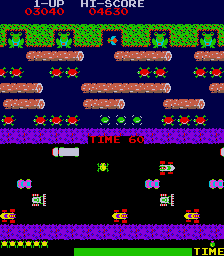
For instance Frogger had been used as a (learning free) reward at school – a carrot for finishing work on time or doing well but even then maybe 5 people would be crammed into the (open) cupboard awaiting their turn the moment you killed your frog.


Having just replayed the game this week I can see why it was so frustrating – a very unsuccessful player can burn through froggy lives in about 2 minutes, controls are fiddly and reaction speed is a part of the challenge all of which, in a room full of enthusiastic 9 year olds, means it's very easy to kill your frog(s) with the smallest delay in reaction. Then one was left sitting there waiting the next turn exasperatedly for maybe half an hour.


I knew that arcade games existed out there in a sort of parallel urban universe but programme like Blue Peter, Press Gang and Grange Hill ran stories about how addictive and dangerous they were with little differentiation between One Armed Bandits and other types of arcade games. News Round highlighted people thieving money and bunking off school to support arcade playing habits. All of the above are surely the precursor to the current array of gaming scare stories though I'm sure there was a small kernel of truth there also. But, in any case, this was all very academic as we were living in a small village so an arcade seemed like a bizarre scary place. I think anything from sky diving clubs to film sets to strip bars probably all seem less bizarre and much more accessible to the average 10 year old growing up in the same place today. At the time though such establishments seemed very “There be dragons!” to us. Watching Ferris Bueller's Day Off I remember thinking how very mature and bad-ass the girl who is mistaken for Ferris in – gasp! - an arcade must have been. To this day I see arcade gaming machines as pricey, for other people, and pretty much equivalent to gambling thanks to all those media warnings about their addictiveness.

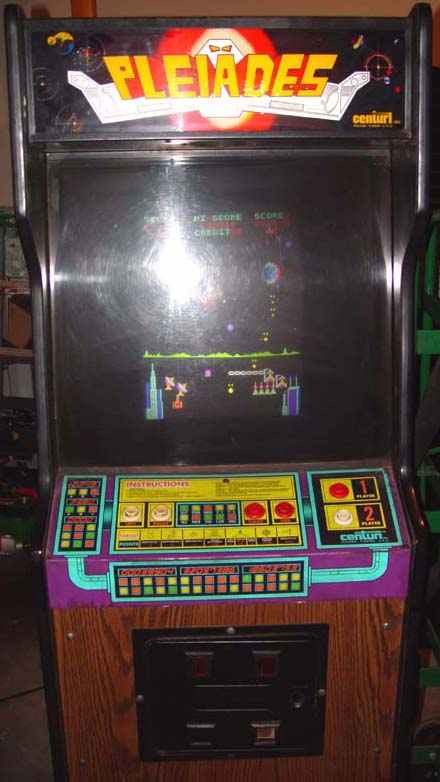


Some diversionary arcade-ish gaming was, however, permitted in the palace of tackiness that was the Laser-quest venue that opened up in Cardiff in the early 90s. Amongst my favourites here were the games that were hybrids of electronic and physical games – I particularly remember a basketball game where you threw real balls and the points were electronically totted up. It wasn't that clever but – like Laser-quest itself - it felt very high tech and gave you a very physical sense of feedback and sense of accomplishment – oddly the natural successors to these types of games are probably the WII and Project Natal (for Xbox). Indeed very few of the video/computer/digital games I encountered till the late '90s had anything to do with beating other people, most were about beating your own high score or a previously set high score. This was very different to the other types of games I was playing – from catch to bowling (bowling being the highlight of an 11 year olds life) or laser-quest (all very performed forms of play) to the many varieties of board games played with friends.


Next into my gaming life wandered the Nintendo Game Boy. It seemed like an excessively expensive treat and it was thus not me (busy with crafts) but my sister who asked for/part paid for a shiny new Game Boy to entertain her into her teens. Tetris was almost the only thing anyone in the house ever played on her Game Boy, in part because it had been bundled free but, in larger part, because it was a very simple and very addictive game to play. Although my sister also acquired such classics as Bill & Ted's Excellent Game Boy Adventure the gameplay rarely contended with Tetris. Indeed not only did I start poaching the Game Boy to play a few levels but so did my mum who became sufficiently addicted to get, if I recall correctly, the highest score in the house (when I mentioned this course the other week she commented on how addicted she had been to Tetris in fond but baffled terms).
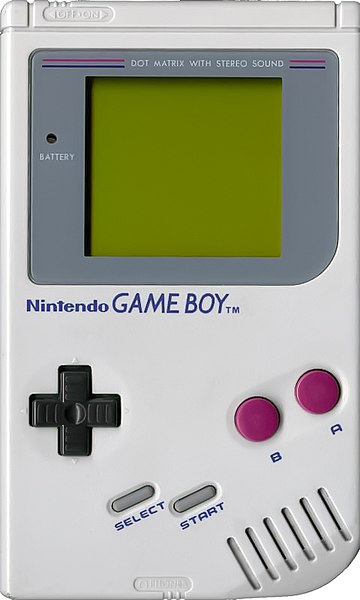


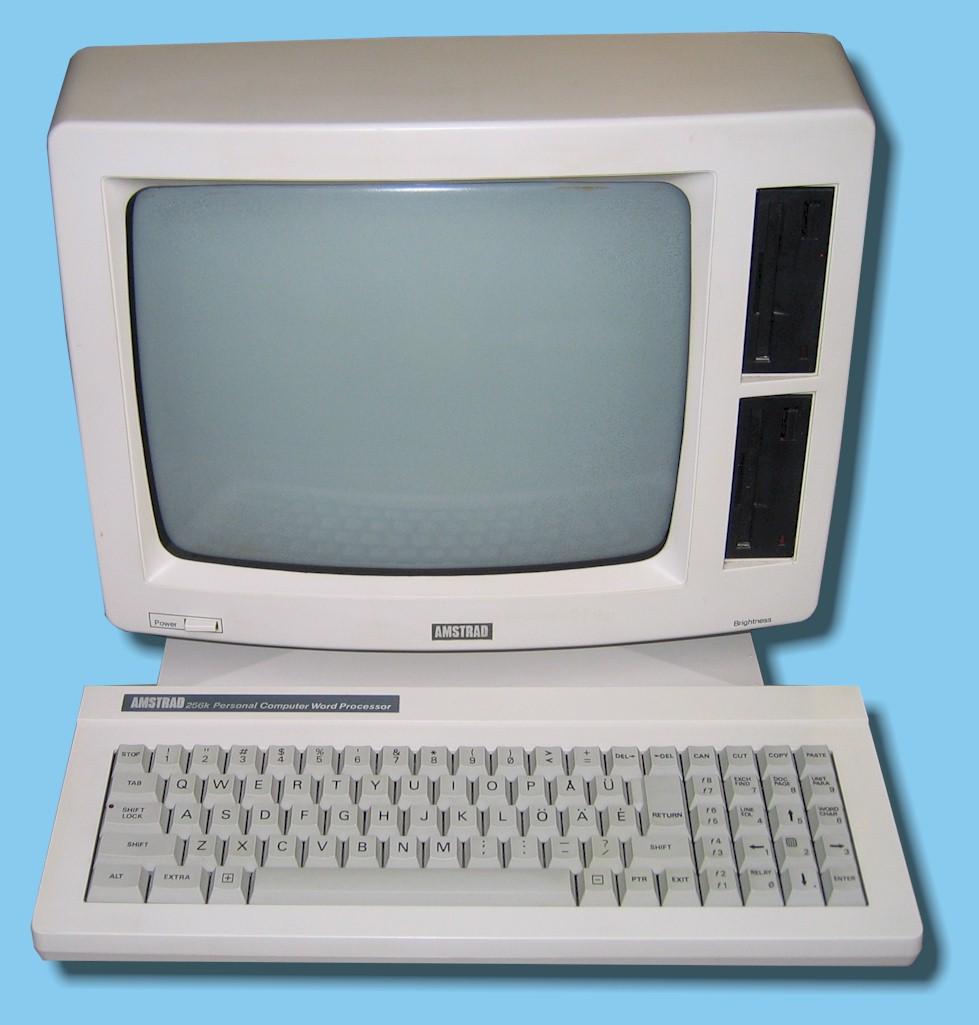
I never got interested enough for my own GameBoy but I did become fascinated with making pretty shapes on screen and, having just gotten access to my dad's very old Amstrad, I was largely entertaining myself trying to find ways to draw random pictures with text (also fun, of course, on typewriters) and experimenting with watching his vast archive of old films. Other digital games and entertainment largely passed me by as I really wanted more freedom and creativity in my gaming and platform games and puzzle games of the time were fairly dictatorial about how you could play the game. It was great to get absorbed in beating the clock but wasn't terribly satisfying.

Having said this a few games offered some short term distractions. A leisure centre near us offered a very underused and cheap Tekken arcade game and that, on a pleasing visceral level, became a good way for my sister and I to beat each other up in an acceptable and entertaining manner.

 At school the one room of PCs also had but one exciting game available. Snake, in all it's basic glory, looked vaguely like it could be a bit mathematical and somehow slipped through the academic net. Thus the room was oft packed with school peers playing for extended periods. I enjoyed it but found the opportunity to write up and format actual pieces of work more exciting in terms of the hours I would spend on the computers. Snake was fun but writing let me express myself rather than fill time. This, as you may notice, is a bit of a theme with my enjoyment of computer games and some of my attitude about what makes good games and thus good learning games. Reflecting on my previous gaming experience feels like a useful part of a process of understanding what would and could have truly engaged me as a learning gaming process. Graphics and interactivity has moved on substantially but conceptual elements of what makes a good game seem important even in the lowest tech computer games experiences.


As PCs were getting more sophisticated they started to be the main space I encountered games (leaving consoles to others at this point) including Solitaire, MineSweeper, Hearts (which I never did or have understood), and the curious Mavis Beacon touch typing game. It's only in recent years that I realise what a handy primer the latter game was. It didn't teach me to touch type but it did focus me, after years of watching my mother type like lightening when working from home, on thinking about which keys should do which keys when I actually learned speedy touch typing some years later through enthusiastic use of chat rooms on AOL when we finally got a (modern) PC at home.
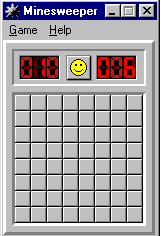

PCs also brought gaming to an older friend in my neighbourhood which also meant I started to see games that much more closely resemble what the term “computer game” means to most people these days. These were games like Doom, Civilisation, and Tomb Raider and, noticeably, these were adult games with gore or ridiculously proportioned stars or complex goals and game play. They were a world away from Mario or Tetris but, at the time, they looked both more life like and more disappointing – the bright garish animation of kids games suited the screens better and the power of the computers meant that Solitaire or minesweeper could move fast but games like Doom could move quite choppily with parts of the screen barely rendering in time for you to play them.

However by the time we had that first Windows machine at home the internet existed. Indeed we'd gotten the PC, in part, to allow my mum access to email for work. So my first experiments with the PC were about the enormous package of bundled CDs roms (including creative but random titles like an Alan Titchmarsh Gardening program), those included Windows 95 games and, most excitingly of all, very slow dial up internet explorations which would take me away from games for several years as I met new people across the world and read and wrote and chatted – all activities that seemed terribly exciting compared to gaming for hours to a teenager who was more than ready to move out of a small village and wanted to explore lots of things that school and friends weren't offering me about films, about my identity. It was a revelation and just couldn't compare with any other leisure pursuit for most of my late teens. But when I reached university the internet was plentiful, the real life opportunities greater and the call of games was thus a little stronger...


Keywords: gaming, IDGBL10, Mario

Posted by Nicola Osborne | 0 comment(s)

January 25, 2010


Last week, getting myself set for looking at computer games for this module, I started to think about what games I'd played before and was staggered by the variety and number of games I had, at some point, come into contact with.

Because both of my parents had computers purely for work at a time when Apricots and early Amstrads just didgn't come with any sort of game I probably started with Frogger on the BBC computer at school. There was one other game too but early Frogger is what I properly recall playing badly in the broom cupboard (where all the primary school computers used to be kept/used).


Around the same time as Frogger appeared I took possession of a little purple portable Snoopy Tennis game which, despite being effectively Pong with even less potential for game variance, kept me entertained for hours. This was the same portable gaming device (with only one pre-loaded game and fixes labelled buttons) that other people had Donkey Kong on but that was never my bag (playing it again this week it still isn't). I also vividly recall having, in parallel with Snoopy Tennis, small (but not as small) water games – you pressed a button to push balls around a water maze. They were fun too but they got broken or accidentally drained far faster than Snoopy Tennis' batteries died.


In the next few years several friends started getting various games. One friend had what, in retrospect, must have been one of the early (and expensive) Sinclair machines. I remember tapes, I remember baffling minutes of loading and finally blotchy graphics on a small colour telly. I have absolutely no recollection of the game or gameplay. Friends of my sister had Paperboy (an Atari game) involving a paper boy cycling his route – although I remember watching at least 4 rounds of people playing before realising that this was the plot as the graphics were very basic. As these friends got consoles (because that was pretty much what you played games on at the time) they became experts at the games they had available. But they pretty much all had different games. This meant visits to these friend's houses might involve watching them play but inevitably, if you had a turn, you would be dead in seconds and have to watch your friend gloat as they showed off their skills. There was a little peer learning and support but many of these kids assumed you would know all about the game too and some revelled in their status as an expert player. That said not many friends had games at all partly because of the cost (my home village is now well funded and very middle class but in the 80s incomes were modest and computer games prohibitively pricey) and partly because most of my sister and my friends were little girls. Memory of play at that age involved toys, various hours spent styling hair, making up dance steps to the Reynolds Sisters and doing little craft projects and Brownie badges. Computer games were just not a mainstream activity for anyone under 10 and most of the girls I knew just weren't that excited by them. Those that were tended to have brothers or lots of cousins that they were keen to keep ahead of.


My dad had been the sort to buy small robots and VCR machines (we always had two, the better for making amateur records of classic movies to remove Channel 4 ads) when he saw them but he was always more into things like Scalelextric, things with a physical note, but it probably wouldn't have been long until we would have had computer games or a console of our own in the house had his death not intervened when I was about 9. This pretty much ensured we wouldn't be in the mood, nor in any way able to afford much in the way of new technology for a while. My dad would go out and spend money in occasional overenthusiastic bursts on things that looked new and shiny, my mother however had always been less impressed with expensive gadgets and with cash short she certainly wasn't about to focus on games as a spending priority. She was working from home pretty much full time though and using a computer and laser printer to do so. Her boss occasionally came round with early laptops and, once, a very early modem so as friends started to get used to computers as gaming devices we were learning that computers were hugely powerful publishing tools. I think in the long term this probably fared both myself and my sister fairly well – when we first got access to PCs at secondary school we both found it easy to use them for work and research whilst peers seemed unable to tear themselves away from basic games like Snake. But that was later...


Keywords: 80s, games, IDGBL10, ItWasAcceptableInThe80s, Mario, SnoopyTennis, Sonic

Posted by Nicola Osborne | 0 comment(s)

January 24, 2010

This is a reflection on this week’s reading, my experience of playing the platform games of this week, and how I am relating it to my own work on supporting qualitative analysis through the use of software tools such as CAQDAS e.g. ATLAS.ti, NVivo, MAXqda etc.

I found Whitton’s thesis that good learning activities share similar characteristics to games as illuminating.  While a game may have more or less of the characteristics she defines – competition, challenge, exploration, fantasy, goals, interaction, outcomes, people, rules and safety, so too, can learning activities share some of these characteristics.  She acknowledges that some of these characteristics need to be understood with caution when applied to education e.g. safety is not usually relevant as the outcome of a course will have real-life consequences – however, safe activities can be constructed to aid learning e.g. in this module, our contribution to the discussion board is not graded but people use it as a way to test their ideas.  Her premise is that we as educators can learn from good game design and I look forward to reading more of her book.

Newman’s discussion about the context of where games are played helped me understand my frustration with the platform games we played with this week – Pacman, Donkey Kong and Frogger.  They were originally arcade games, designed to be played on coin-operated machines to generate money for the arcade owners.  Given this function they can’t last that long.  But also playing them was a public performance and observers could learn about patterns and tricks by observing how others played.  The noise, which I found irritating when I played (I turned off the sound), was an essential attraction of the games. Newman reminded me of the arcade halls in British piers – Brighton is the one I know.  And the sound of the games and the flashing lights was a way to attract kids – it made the pier an ‘exciting place’.  There are quite a few Youtube videos on arcade games and there is a big nostalgia for them.  The comments on the Youtube videos below support that. I am of a different generation so missed out on playing games in arcades.  My step-children did (and my daughter is of another generation yet again).

A more polished tribute to arcade games.

In relation to my own work, Newman’s discussion around paedia and ludus is pertinent.  I do consulting and training on supporting people who are analyzing qualitative data (i.e. unstructured data, such as indepth interviews, videos, graphics etc.)  I have always talked about ‘playing’ with the data when starting an analysis.  The CAQDAS software platforms I support can be seen as ‘playgrounds’ where the data is located and can be played with.  Although I am currently exploring (and have recently published an article) on how Web 2.0 tools have the potential to do the same.  There is a tension though, particularly with new students, between wanting and needing rules and the freedom to play.  But this tension is also apparent in different epistemological stances towards data analysis. In particular, those of a post-modern turn have been turned off these software tools because of a belief that they impose some rigid structure – are rule-bound in some way – whereas in fact they are flexible generic tools that the analyst decides how to use – much the same way Newman argues that the player has control over moving between paedia and ludus.  While I have always thought of qualitative data analysis as about playing with the data, I never thought of the platforms as similar to games before.   This week has given me a lot to think about!

 References

Newman, J. (2004) Chapter 2, 'What is a video game? Rules, Puzzles and Simulation'. In Videogames, London: Routledge.

Whitton, N. (2010) Chapter 2, 'Recognising the characteristics of digital games'. In Learning with Digital Games: A practical guide to engaging students in higher education, London: Routledge.

Keywords: videogames definitions pacman donkey_kong frogger platform_games Whitton Newman arcade_games IDGBL10

Posted by Silvana di Gregorio | 0 comment(s)

January 23, 2010

‘Popeye’

‘Popeye’ is an arcade platform game, developed and released by Nintendo in 1982, featuring an 8-bit rendering of the eponymous cartoon character, and features Olive Oyl, See Pea’, Wimpy, Bluto and Sea Hag.

http://en.wikipedia.org/wiki/Popeye_(arcade_game)

This game draws upon existing cultural references and uses the relations and enmities between the characters as the strategies and mini-plots, which span three levels. 

Keywords: IDGBL10

Posted by Hugh O'Donnell | 0 comment(s)

January 22, 2010

Sherlock Holmes: The Secret of the Silver Earring (PC)

Pupils are required to produce a piece of journal writing in 5 minutes at the beginning of each lesson – applicable only to S1 and S2 pupils.

For most pupils, this would descend into the more mundane repetitive nature of listing the subjects they had visited or a window on their limited experience at the weekend in a small community.

The pupils are undertaking curricular study of a drama adaptation of a classic Sherlock Holmes story, The Mazarin Stone, so I decided to use one of the suggested titles by Whitton at http://digitalgames.playthinklearn.net/

Having acquired a ‘walkthrough’ and a copy of the PC game I decided to allow the pupils to play the game for five minutes and then spend a further 5 minutes producing a journal entry of the investigation to date in the persona of either Holmes or Dr Watson.

Pupils are in groups of 2-3, and each day a group undertakes the game control and scribing activities, whilst they participate in a whole class discussion of investigation.  I, as teacher and ‘omniscient prompt’ offer suggestions and instigate elaborations of suggestions. 

Pupils are:

  • Collaborating
  • Following instructions
  • Deconstructing a flexible narrative
  • Using higher-order thinking skills (i.e. deduction)
  • Learning about and writing in register
  • Reconstructing narrative(s)

To date, 3 periods - w/b 17th to 22nd January – have been successful; pupils have been confident to adopt 1 of the 2 offered personas; 1 has adopted a 3rd person.

I will continue to monitor the interaction and final outcomes of this activity.

I am considering the suitability of narrative-rich games such as ‘Neverwinter Nights’ and ‘The Longest Journey’.

Keywords: IDGBL10

Posted by Hugh O'Donnell | 4 comment(s)

January 20, 2010

I experienced a combination of compulsion and frustration playing Pacman, Donkey Kong, and Frogger.  The compulsion was that I kept going – replaying the game, thinking this time I will get through to the next level.  Frustration was when I nearly made it but not quite.  I also experienced a kind of recklessness when I was close to completing a level – just rushing in to finish it instead of calming down and taking my time to finish.  There is definitely a physiological response – I found myself holding my breath, feeling slightly anxious and the adrenalin pumping around my body.  It was totally immersive but I partly resented this immersiveness.  The resentment is due to feeling that I was ‘wasting my time’ playing these games – although having to experience them for the course did give them a legitimacy for me. 

Newman looks at why do players play. He  cites Rouse’s key motivations: challenge, immersion and the fact that players expect to do, not watch.  Certainly, I have experienced the immersion.  It is interesting what Newman (2004) says about ‘challenge’ – that players expect to lose.  Maybe that is why I find them so frustrating – I don’t expect to lose (but I keep losing).  The pleasure he claims is through replaying and practicing until the performance gets better.  For me these platform games are too simple – in that I find the repetition too boring. Maybe I would enjoy it more if the rewards were more ‘real’ – rather than just getting to the next level.  Although I expect I would get elated if I ever make it to the next level.

 Newman, J. (2004) Chapter 2, 'What is a video game? Rules, Puzzles and Simulation'. In Videogames, London: Routledge.

Posted by Silvana di Gregorio | 2 comment(s)

January 18, 2010

As with Google Docs, are the developers and ROM collators involved in the MAME project acting in the best principles of preserving examples of our fledgling digital games culture? http://mamedev.org/ & http://mameworld.info/


Posted by Hugh O'Donnell | 0 comment(s)

<< Back Next >>